The best answer depends on your dog, the context, and the full pattern of behavior. Look at multiple signals rather than one isolated action.
Good grooming is about much more than making your dog look clean and fluffy. A consistent grooming routine can help remove dirt, loose hair, and mats while giving you regular opportunities to notice changes in your dog’s skin, coat, paws, ears, and nails.
The best dog grooming tips are simple: use the right tools, brush according to your dog’s coat type, bathe when necessary, keep nails at a comfortable length, inspect the ears and paws, and make every session as calm as possible. Grooming should support your dog’s comfort and health—not become a stressful chore.
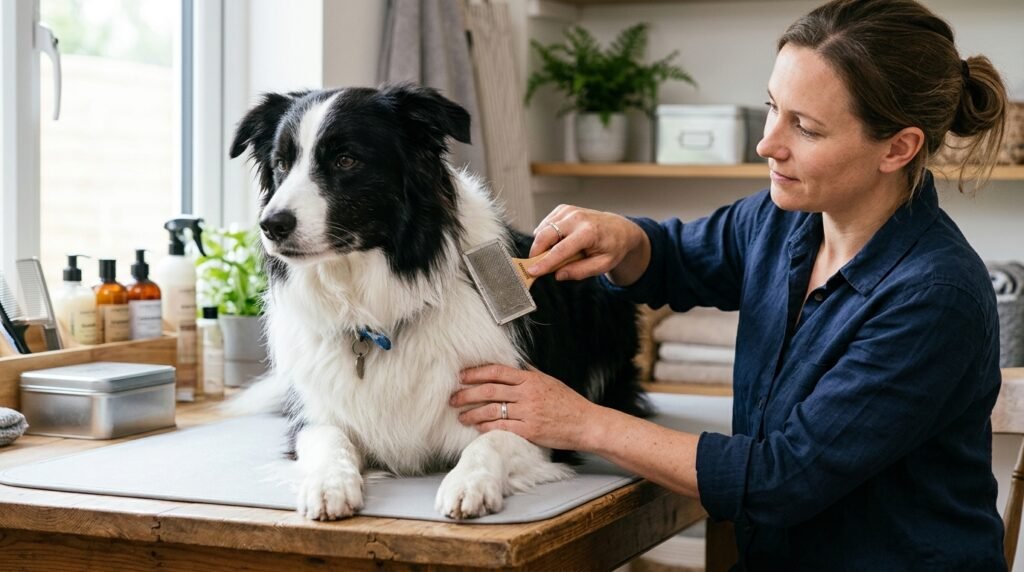
Regular grooming can also help you spot problems early. A new lump, persistent itching, redness, unusual odor, excessive shedding, scabs, or painful area may deserve veterinary attention rather than simply another bath or brushing session. The American Kennel Club’s dog skincare guidance explains why caring for the skin underneath the coat matters just as much as maintaining the visible fur.
In this guide, you’ll learn practical dog grooming tips for brushing, bathing, nail trimming, ear care, paw care, coat-specific grooming, professional grooming, and building a routine your dog can actually tolerate.
Table of Contents
Why Dog Grooming Tips Matter for Your Dog’s Health
A healthy coat begins with healthy skin. Hair and fur can hide irritation, parasites, mats, wounds, or other abnormalities, particularly in dogs with thick or long coats.
Regular grooming helps you become familiar with what is normal for your individual dog. That familiarity makes it easier to recognize changes.
Grooming supports healthy skin
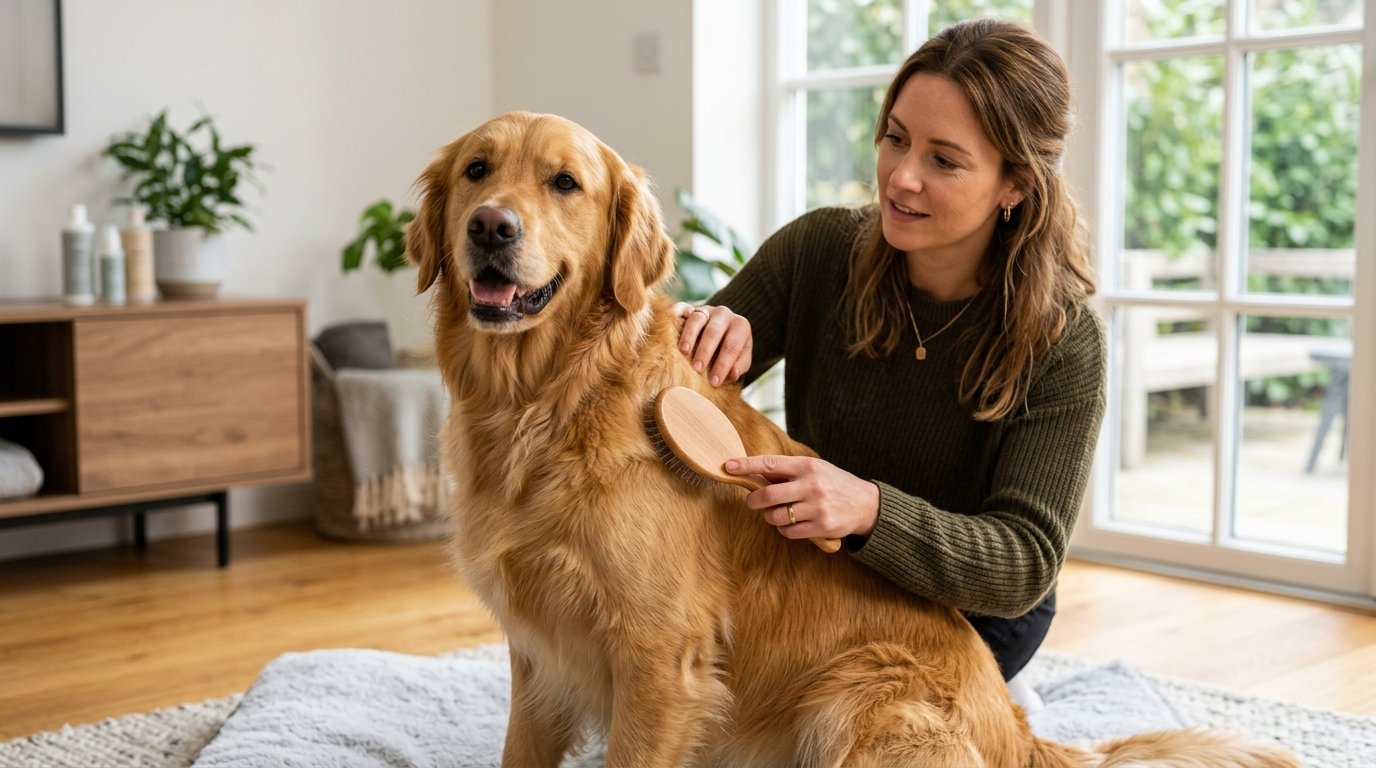
Brushing removes loose hair, dirt, and debris while distributing some of the coat’s natural oils. It can also give you a chance to check the skin for redness, flakes, parasites, bumps, or tender areas.
The Merck Veterinary Manual’s routine dog-care guidance recommends regular brushing because loose hair and mats can irritate the skin.
Grooming helps prevent painful mats
Mats are more than cosmetic problems. Tight tangles can pull on the skin, trap moisture and debris, and make ordinary movement uncomfortable.
Long-haired, curly-coated, and heavily feathered dogs may need frequent brushing to prevent small tangles from becoming large mats.
If your dog already has severe matting, don’t immediately reach for household scissors. Professional guidance from VCA Animal Hospitals on grooming and coat care specifically warns about cutting mats because the skin can be pulled tightly into the tangled hair.
Grooming creates an early-warning system
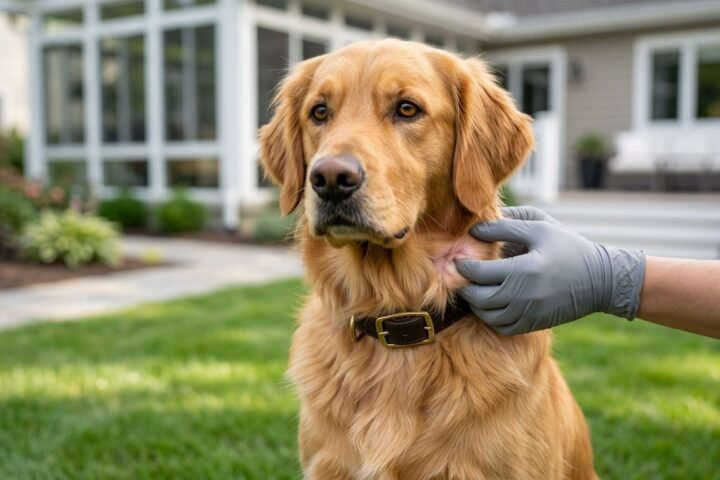
One of the most useful dog grooming tips is to treat grooming sessions as mini health checks.
While brushing or bathing, look for:
- Red or inflamed skin
- Persistent dandruff or scaling
- New lumps or bumps
- Bald patches
- Fleas or ticks
- Crusts or scabs
- Unusual skin odor
- Excessive licking or scratching
- Ear discharge or strong odor
- Cracked paw pads
- Nails that are excessively long
- Areas that seem painful when touched
Grooming doesn’t replace veterinary care, but it can help you notice changes sooner.
Dog Grooming Tips for Brushing the Right Way
Brushing is one of the most important parts of a home grooming routine. However, there is no single brush or schedule that works for every dog.
The correct approach depends on coat length, texture, density, shedding pattern, and whether your dog has a single or double coat.
Choose the brush for the coat
Common grooming tools include:
- Bristle brushes: Often useful for short, smooth coats.
- Slicker brushes: Helpful for removing loose hair and working through certain tangles.
- Undercoat rakes: Designed for many double-coated dogs.
- Metal combs: Useful for checking whether tangles remain after brushing.
- Rubber grooming brushes: Often effective for short-haired, shedding dogs.
- Deshedding tools: Useful for some coats when used correctly.
The AKC guide to choosing dog brushes emphasizes choosing tools according to coat type and notes that brushing can help remove dirt and dead hair while allowing owners to notice unusual areas.
Brush gently instead of aggressively
More pressure does not mean better grooming.
A brush dragged forcefully through the coat can irritate the skin and make your dog associate grooming with discomfort. Instead, use controlled, gentle strokes and work in manageable sections.
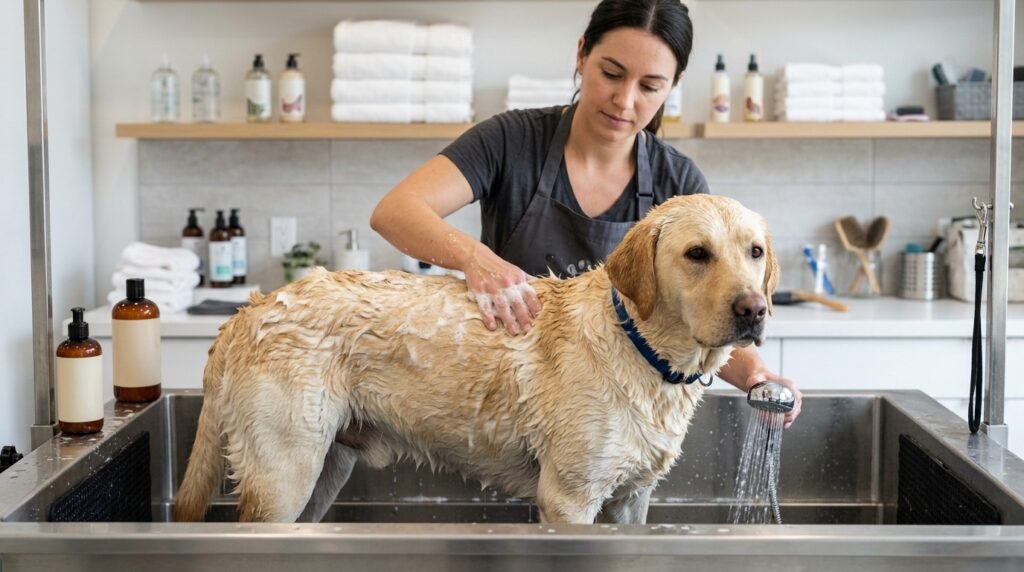
For long coats, separate the hair into sections and gradually work through it. A comb can then help you determine whether the coat is actually tangle-free.
Pay attention to difficult areas
Some of the easiest places to miss include:
- Behind the ears
- Under the collar
- Around the armpits
- Behind the legs
- Under the tail
- Around the belly
- Between the toes
- Feathering on the legs
These areas often experience friction and can collect moisture or debris.
One of the most practical dog grooming tips is to make these hidden areas part of every brushing session rather than waiting until a problem becomes obvious.
How often should you brush?
There is no universal schedule.
A short-haired dog may need relatively little brushing, while a long-haired or double-coated dog may need brushing several times per week or even daily during heavy shedding periods.
The AKC’s at-home grooming guidance recommends regular brushing and explains that grooming needs vary substantially between breeds and coat types.
The goal is simple: brush often enough that loose hair and small tangles do not become a problem.
Essential Dog Grooming Tips for Bathing
Bathing can make a dramatic difference in your dog’s cleanliness, but more baths are not automatically better.
Your dog’s ideal bathing schedule depends on coat type, lifestyle, activity level, skin condition, and veterinary recommendations.
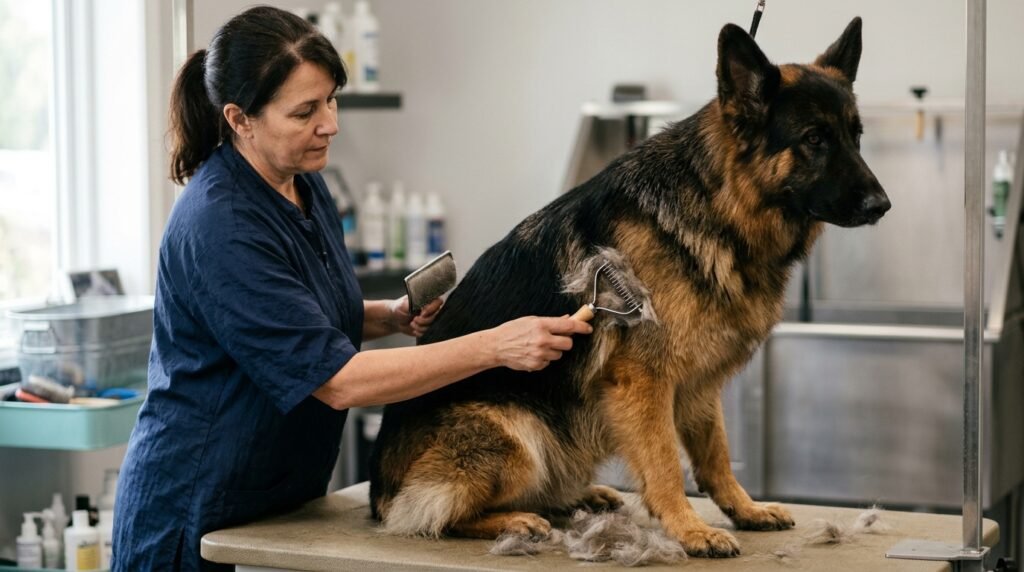
Don’t automatically bathe every week
Some dogs get dirty frequently and need regular baths. Others may only need occasional bathing.
Overbathing can contribute to dryness or irritation in some dogs, especially if inappropriate products are used. Conversely, dogs with certain skin conditions may need a specific bathing schedule prescribed by a veterinarian.
The AKC’s guidance on how often dogs should be washed explains that bathing frequency should take the dog’s individual needs into account.
Always brush before the bath
This is one of the most important dog grooming tips for long-haired dogs.
Loose hair and small mats can become harder to remove after getting wet. Brush through the coat before placing your dog in the tub.
If you find significant matting, deal with it before bathing rather than assuming shampoo will loosen it.
Use a dog-formulated shampoo
Human shampoo is not the default choice for dogs.
Instead, select a product designed for canine skin and coat care. If your dog has allergies, recurrent itching, infections, or another skin problem, ask your veterinarian whether a medicated or specially formulated shampoo is appropriate.
The ASPCA’s dog grooming guidance recommends pet-formulated shampoo and notes that dogs with particular skin needs may require veterinary guidance.
Use lukewarm water
Water should be comfortably warm rather than hot.
Very hot water can irritate the skin, while extremely cold water can make the experience unpleasant and stressful.
Wet the coat thoroughly, apply the appropriate shampoo, massage gently, and rinse extremely well.
Rinse more than you think you need to
Leftover shampoo can irritate the skin.
Pay particular attention to:
- Chest
- Belly
- Armpits
- Between the legs
- Under the tail
- Feet
- Thick or dense coat areas
The AKC’s bathing instructions emphasize thorough rinsing and safe drying practices.
Dry the coat properly
Towel-dry your dog gently and make sure the coat is thoroughly dry.
If you use a dryer, avoid excessive heat and keep the airflow at a safe distance. Dogs with thick coats may remain damp near the skin long after the surface feels dry.
A damp coat can encourage discomfort and may contribute to skin problems in susceptible dogs.
Dog Grooming Tips for Long-Haired and Double-Coated Dogs
Dogs with long or dense coats require more planning because their fur can hide tangles and trap debris.
Examples include many retrievers, shepherds, spaniels, collies, and other breeds with substantial coats.
Long-haired dogs need section-by-section brushing
Don’t simply brush the surface.
Part the coat into sections and work gradually toward the skin without aggressively scraping it. Follow brushing with a comb when appropriate.
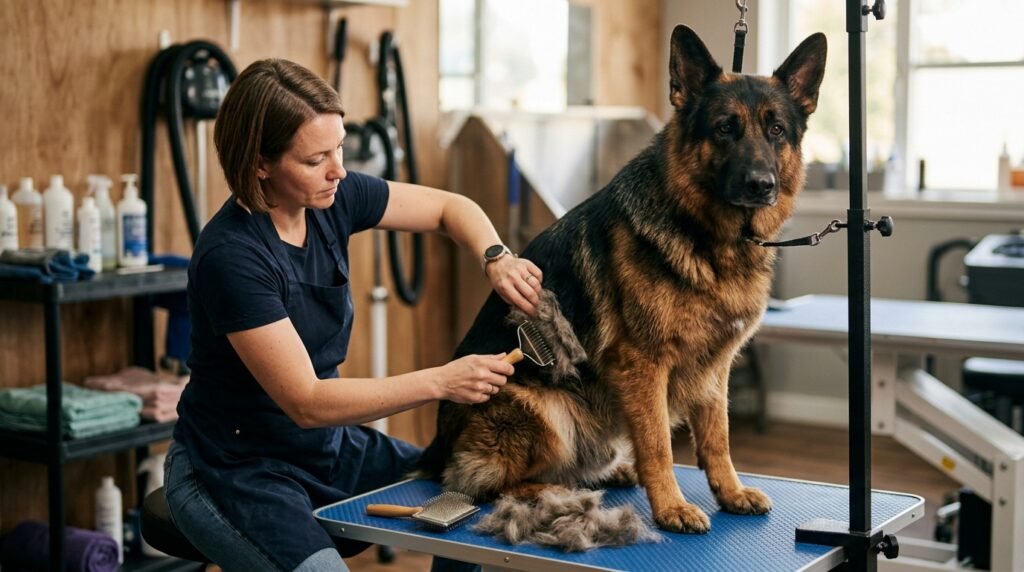
A useful routine is:
- Start in a calm area.
- Separate the coat into sections.
- Brush small areas at a time.
- Check difficult areas carefully.
- Use a comb to find remaining tangles.
- Reward your dog throughout the session.
Double coats need special consideration
Double-coated dogs have a topcoat and undercoat. Their grooming needs are different from those of dogs with continuously growing hair.
The AKC’s double-coat grooming guide recommends regular brushing and explains the importance of selecting appropriate tools for the coat.
Avoid assuming that shaving a double-coated dog is the easiest way to manage shedding or summer heat. Coat removal decisions should be based on the individual dog and discussed with a qualified groomer or veterinarian when necessary.
Don’t ignore seasonal shedding
Many dogs shed more heavily during particular seasons.
During these periods, you may need to increase brushing frequency and spend more time removing loose undercoat.
More frequent brushing is usually preferable to allowing large amounts of loose hair to accumulate and form tangles.
Dog Grooming Tips for Nails, Paws, and Feet
Nail and paw care are often overlooked because they are less visible than a shiny coat.
However, healthy feet are essential for comfortable walking.
Keep nails at a comfortable length
Overgrown nails can affect the way a dog stands and walks. In severe cases, long nails can curl, catch on surfaces, or become painful.
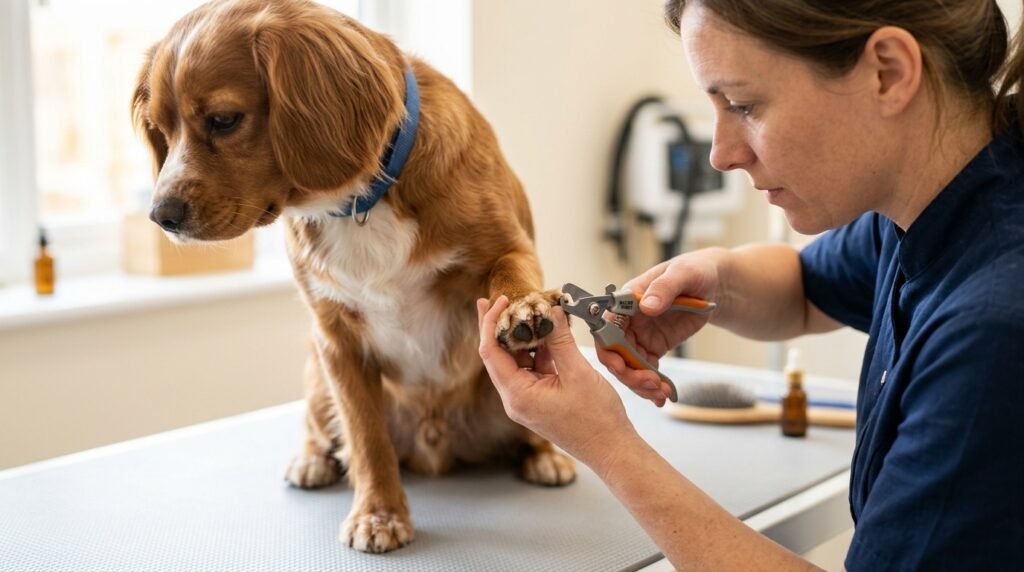
If you’re comfortable trimming nails, use proper canine nail clippers or an appropriate grinder and take small amounts at a time.
Dark nails can make the quick difficult to see. If you’re uncertain, ask a veterinarian or experienced professional groomer to demonstrate safe trimming.
Inspect paw pads
Look between the toes and around the pads for:
- Cracks
- Cuts
- Burrs
- Foreign objects
- Excessive hair
- Redness
- Swelling
- Licking or chewing
Dogs that spend a lot of time outdoors may collect grass awns, seeds, mud, or other debris between their toes.
Be cautious with paw hair
Some dogs grow substantial hair between their pads. Whether it should be trimmed depends on the dog’s coat, environment, and individual needs.
Don’t aggressively cut close to the skin without knowing what you’re doing. Sensitive paw areas can be easy to injure.
Dog Grooming Tips for Ear and Eye Care
Ears and eyes deserve gentle attention because they are sensitive areas.
Check the ears regularly
You don’t necessarily need to clean every dog’s ears on the same schedule.
Instead, inspect them regularly and look for changes such as:
- Strong odor
- Excessive wax
- Redness
- Swelling
- Discharge
- Frequent scratching
- Head shaking
- Sensitivity when touched
The AKC’s home grooming guidance recommends regular ear inspection and notes that redness, discharge, swelling, or unpleasant odor can indicate a problem requiring veterinary attention.
If an ear looks painful or infected, don’t repeatedly clean it at home and hope the problem disappears.
Keep water out during bathing
Careful bathing technique can help reduce unnecessary moisture exposure.
The AKC’s puppy bathing guidance explains why owners should take care around the ears and rinse shampoo thoroughly.
Clean around the eyes gently
Some dogs naturally produce small amounts of eye discharge. Use a clean, damp cloth to gently wipe away superficial debris.
If you notice persistent discharge, redness, swelling, cloudiness, squinting, or obvious discomfort, contact your veterinarian rather than treating it as ordinary grooming buildup.
Dog Grooming Tips for a Calm, Cooperative Dog
A technically perfect grooming routine is not successful if your dog is terrified every time the brush comes out.
Dogs can learn to tolerate—and sometimes enjoy—grooming when owners introduce it gradually.
Start with short sessions
Don’t expect a nervous dog to tolerate 30 minutes of brushing immediately.
Begin with one or two minutes.
Touch the brush to the coat, give a reward, and stop before your dog becomes overwhelmed. Gradually increase the duration.
Pair grooming with positive experiences
Use treats, praise, calm handling, and breaks.
If your dog becomes tense, don’t punish the reaction. Instead, reduce the difficulty and return to an easier step.
This approach is particularly important for puppies and dogs that have previously had frightening grooming experiences.
Watch your dog’s body language
Signs that your dog may need a break include:
- Turning away
- Lip licking
- Yawning
- Freezing
- Trying to escape
- Repeated paw lifting
- Excessive panting
- Growling
- Snapping
Understanding dog body language can help you recognize discomfort before it escalates.
Make grooming predictable
Dogs often cope better when they know what comes next.
Use the same general sequence:
Brush → inspect → paws → ears → reward → break
For baths, gather all supplies before starting so you don’t have to leave your dog unattended.
The Right Grooming Tools for a Home Routine
You don’t need an enormous collection of equipment.
A basic grooming kit may include:
- Coat-appropriate brush
- Metal comb if needed
- Dog shampoo
- Towels
- Dog nail clippers or grinder
- Dog toothbrush and toothpaste
- Appropriate ear-care supplies
- Grooming wipes or a soft cloth
- Non-slip bath mat
- Treats
Quality and suitability matter more than owning every grooming gadget available.
One of the smartest dog grooming tips is to learn what your dog’s particular coat needs before buying specialized tools.
For example, a short-haired dog may need a simple rubber brush, while a heavily coated dog may require multiple brushes and a comb.
When You Should Use a Professional Groomer
Home grooming is useful, but professional grooming is sometimes the safer option.
Consider professional help when:
- Your dog has severe matting.
- Your dog becomes extremely stressed during grooming.
- You need breed-specific trimming.
- You’re inexperienced with clippers.
- Nail trimming causes repeated struggles.
- Your dog’s coat requires specialized maintenance.
- You cannot safely reach certain areas.
- You are unsure how to remove a difficult mat.
Professional groomers have specialized tools and training for coat care. The AKC’s overview of professional grooming explains how groomers can handle brushing, mats, nail trimming, ear care, and coat trimming.
If a grooming issue involves pain, infection, persistent itching, abnormal skin changes, or another medical concern, a veterinarian—not simply a groomer—should evaluate your dog.
Nutrition and Coat Health Work Together
Grooming can keep the outside of your dog clean, but coat quality is also influenced by overall health and nutrition.
A dog with an appropriate, nutritionally complete diet generally has a better foundation for healthy skin and hair than a dog whose nutritional needs are not being met.
That doesn’t mean supplements are automatically necessary.
Before adding oils, vitamins, or other supplements, discuss your dog’s diet and individual needs with your veterinarian. A dull coat can have many possible explanations, and adding random supplements may not solve the underlying problem.
You can also explore more dog nutrition resources for practical information about feeding and overall wellness.
Common Grooming Mistakes to Avoid
Even well-intentioned owners can make grooming harder than it needs to be.
Mistake 1: Brushing only the visible surface
Surface brushing can leave tangles underneath.
Work methodically through the coat and use a comb when appropriate.
Mistake 2: Bathing too frequently
More baths don’t necessarily mean healthier skin.
Follow a schedule based on your dog’s lifestyle and coat, and ask your veterinarian for guidance if your dog needs frequent medicated bathing.
Mistake 3: Using human products
Human shampoos, fragrances, and other cosmetic products are not automatically appropriate for dogs.
Choose products made specifically for dogs unless your veterinarian recommends otherwise.
Mistake 4: Cutting mats with household scissors
This is a particularly risky shortcut.
Matted skin can be pulled upward into the hair, making it difficult to judge where the skin ends and the mat begins. Professional guidance is safer for serious matting.
Mistake 5: Ignoring the ears and paws
A shiny coat doesn’t tell you everything about your dog’s health.
Make ear, nail, and paw checks part of the routine.
Mistake 6: Forcing grooming
Holding a frightened dog down and continuing can make future grooming even harder.
Instead, use gradual desensitization and positive reinforcement.
Mistake 7: Treating every skin problem as a grooming problem
Persistent itching, hair loss, odor, redness, sores, and recurring ear problems may require medical evaluation.
Grooming can support health, but it cannot diagnose or treat every skin condition.
A Simple Weekly Grooming Routine
If you want an easy starting point, use this basic schedule and adjust it to your dog’s needs.
Daily
Spend a few seconds looking at your dog’s:
- Eyes
- Ears
- Paws
- Skin
- Coat
You don’t need a full grooming session every day.
Several times per week
Depending on coat type:
- Brush the coat.
- Check for tangles.
- Inspect difficult areas.
- Check paws.
- Look for unusual skin changes.
Weekly
Consider:
- More thorough brushing
- Nail inspection
- Ear inspection
- Teeth brushing
- Checking under the collar and around the tail
Monthly or as needed
Depending on your dog’s lifestyle and coat:
- Bath
- Nail trim
- Professional grooming
- Coat trimming where appropriate
The exact schedule should always be individualized. Some dogs need more frequent care, while others need less.
For broader pet care guidance, build grooming into your dog’s overall wellness routine rather than treating it as a separate cosmetic task.
A Practical Grooming Checklist for Dog Owners
Before every grooming session, prepare your supplies.
Before grooming
- Choose a quiet location.
- Have treats available.
- Select the correct brush.
- Check your dog’s coat condition.
- Look for mats or painful areas.
During grooming
- Work gently.
- Take short breaks.
- Reward calm behavior.
- Check the skin beneath the coat.
- Inspect paws and ears.
- Stop if your dog becomes overwhelmed.
After grooming
- Reward your dog.
- Make sure the coat is completely dry after bathing.
- Store grooming equipment safely.
- Note any unusual findings.
- Contact your veterinarian if you notice concerning changes.
These simple dog grooming tips can turn grooming from an occasional chore into a useful part of your dog’s routine health care.
When Grooming Changes Mean It’s Time for a Vet Visit
Sometimes the most important grooming decision is knowing when to stop grooming and seek professional medical advice.
Contact your veterinarian if you notice:
- Severe or persistent itching
- Sudden hair loss
- Open wounds
- Bleeding
- Recurrent hot spots
- Strong skin odor
- Persistent redness
- Swelling
- Pus or unusual discharge
- Pain during brushing
- Persistent ear odor or discharge
- Repeated head shaking
- Sudden changes in coat quality
- A new lump or rapidly changing skin lesion
A grooming session can reveal these problems, but treatment should be based on an appropriate veterinary assessment.
Frequently Asked Questions
1. How often should I groom my dog?
The answer depends on your dog’s coat type, breed, lifestyle, age, and health. Short-haired dogs may need relatively simple maintenance, while long-haired and double-coated dogs often need frequent brushing. Bathing should also be individualized rather than automatically performed on a fixed schedule.
2. What are the most important dog grooming tips for beginners?
Start with the basics: choose the correct brush, brush gently, use dog-specific shampoo, keep nails comfortable, inspect ears and paws, dry the coat thoroughly, and make grooming a positive experience. Don’t attempt complicated trimming or severe mat removal without proper training.
3. Can I use human shampoo on my dog?
It’s better to use a shampoo specifically formulated for dogs. Dogs have different skin characteristics and can react to fragrances or other ingredients in human products. If your dog has a skin condition, ask your veterinarian which shampoo is appropriate.
4. How do I know if my dog needs professional grooming?
Professional grooming can be helpful when your dog’s coat is difficult to maintain, severely tangled, requires breed-specific trimming, or when you cannot safely perform certain grooming tasks. Severe matting or grooming-related pain should receive professional attention.
Conclusion
A healthy coat isn’t created by one expensive shampoo or a single trip to the groomer. It comes from consistent, appropriate care that matches your dog’s individual needs.
The most useful dog grooming tips are also the simplest: brush regularly, choose the right tools, bathe when appropriate, rinse thoroughly, keep nails and paws comfortable, inspect the ears and skin, and introduce grooming patiently.
Most importantly, use grooming as an opportunity to understand your dog. A few minutes with a brush can help you notice a new lump, irritated patch, parasite, painful paw, or other change that might otherwise stay hidden beneath the coat.
When you combine thoughtful home care with professional grooming and veterinary support when needed, you give your dog a much better chance of staying comfortable, clean, and healthy from nose to tail.
Key Takeaways
- Consider the context around the behavior.
- Look for patterns instead of relying on one signal.
- Seek qualified help when behavior is sudden, severe, or unsafe.
Frequently Asked Questions
Is every behavior a sign of the same emotion?
Not necessarily. Dogs use combinations of signals, and context matters.
When should I contact a professional?
Consider veterinary or qualified behavior support for sudden, severe, escalating, or safety-related concerns.