
The best answer depends on your dog, the context, and the full pattern of behavior. Look at multiple signals rather than one isolated action.
When your dog suddenly becomes quiet, stops eating, or starts shivering, it is natural to wonder whether they have a fever. Dog fever symptoms can be subtle at first, and many of them overlap with other illnesses. A warm nose or ears alone also cannot tell you whether your dog truly has a fever.
The most reliable way to check is with a thermometer. A dog’s normal body temperature is generally around 100°F to 102.5°F, although individual dogs can vary. Temperatures above about 102.5°F to 103°F may indicate fever or hyperthermia, depending on the situation.
In this guide, you’ll learn the most common dog fever symptoms, how to recognize a potentially dangerous high temperature, how to check your dog’s temperature safely, and when a veterinarian should be involved.
Important: Fever is a symptom, not a disease itself. It can occur with infections, inflammation, immune-related conditions, and other illnesses. If your dog appears seriously unwell, contact a veterinarian rather than relying on home treatment.
Table of Contents
What Is a Fever in Dogs?
A fever occurs when a dog’s body deliberately raises its internal temperature as part of an immune response, often because of an underlying illness.
This is different from hyperthermia, which occurs when a dog’s temperature rises because the body is overheating—for example, after intense exercise, exposure to excessive heat, or heatstroke. These situations can become emergencies very quickly.
Possible causes of fever include:
- Bacterial infections
- Viral infections
- Fungal infections
- Inflammation
- Immune-mediated disease
- Certain cancers
- Infected wounds
- Dental infections
- Urinary tract infections
- Respiratory infections
- Some reactions after vaccination
Merck Veterinary Manual notes that infections, immune-mediated diseases, and cancer are among the important causes of persistent or unexplained fever in dogs.

Because many different conditions can produce similar symptoms, identifying the underlying cause is more important than simply trying to lower the temperature.
What Not to Feed Dogs – 10 Dangerous Foods Every Dog Owner Should Avoid
What Is a Normal Temperature for a Dog?
A dog’s normal temperature is higher than a human’s.
A commonly used normal range is approximately 100°F to 102.5°F. Some veterinary references use slightly different ranges, so your dog’s individual baseline also matters.
| Dog temperature | What it may mean |
|---|---|
| About 100°F–102.5°F | Generally within normal range |
| Above 102.5°F–103°F | May indicate fever or hyperthermia |
| 104°F or higher | Veterinary attention is important |
| 105°F or higher | Potential emergency |
| Around 106°F+ | Dangerous and potentially life-threatening |
The exact interpretation depends on how the temperature was measured, your dog’s behavior, recent activity, environmental heat, and other symptoms.
VCA Animal Hospitals advises veterinary attention when a pet’s temperature rises above 104°F, while temperatures above 104°F or below 99°F are described as emergency situations.
7 Dog Fever Symptoms to Watch For
Not every dog with a fever will show the same symptoms. Some may simply seem tired or unlike themselves, while others develop several obvious signs.
Here are seven important dog fever symptoms to watch for.
1. Lethargy or Unusual Tiredness
One of the most noticeable signs is a sudden reduction in energy.
A normally playful dog may:
- Sleep more than usual
- Avoid playing
- Move slowly
- Hesitate to get up
- Seem weak
- Show little interest in normal activities
Lethargy is not specific to fever. It can occur with many illnesses, pain, dehydration, and other medical problems. However, when unusual tiredness appears together with a high temperature, it deserves attention.
Veterinary sources commonly identify lethargy or reluctance to move as a sign seen in dogs with fever.
What to watch for: A dog that is simply tired after exercise may recover after resting. A dog that remains unusually weak or withdrawn, especially with other symptoms, may need veterinary evaluation.
2. Loss of Appetite
A dog that normally rushes toward their food bowl may suddenly refuse a meal.
Fever can make dogs feel generally unwell, which may reduce their appetite. However, appetite loss can also accompany infections, stomach problems, pain, stress, dental disease, and numerous other conditions.
Pay particular attention when your dog:
- Refuses multiple meals
- Refuses both food and water
- Appears weak
- Vomits repeatedly
- Has diarrhea
- Has a high temperature
A mild decrease in appetite may not always mean an emergency, but complete refusal to eat combined with significant illness should not be ignored.
3. Shivering or Trembling
Shivering is another possible dog fever symptom.
A dog may tremble because their body is attempting to regulate temperature. However, trembling can also result from anxiety, pain, fear, cold temperatures, neurological problems, or other medical conditions.
This is why shivering should never be interpreted by itself as proof of fever.
If your dog is shivering while also showing lethargy, poor appetite, vomiting, or an elevated temperature, contact your veterinarian for guidance.
4. Panting More Than Usual
Panting is normal for dogs, particularly after exercise or when they are warm.
But unexplained or excessive panting can occur when a dog is trying to release heat. Dogs with elevated body temperatures may pant more heavily.
Ask yourself:
- Is your dog panting while resting?
- Is the room comfortably cool?
- Did your dog recently exercise?
- Has your dog been exposed to hot weather?
- Is the panting accompanied by weakness or distress?
If excessive panting follows heat exposure or strenuous exercise, think beyond “fever.” Heat-related hyperthermia can be an emergency.
5. Glossy, Red, or Unusually Tired-Looking Eyes
Some dogs with fever may have eyes that appear glossy or red.
This sign is not diagnostic on its own. Red or irritated eyes can result from allergies, injury, infection, environmental irritation, or other eye problems.
However, when eye changes appear alongside lethargy, shivering, appetite loss, or an elevated temperature, they add to the overall picture that your dog may be sick.
Never rely on eye appearance alone to determine whether your dog has a fever.
6. Vomiting or Diarrhea
Digestive symptoms can accompany fever depending on the underlying cause.
Your dog may develop:
- Vomiting
- Diarrhea
- Reduced appetite
- Abdominal discomfort
- General weakness
These symptoms can occur with infections and many gastrointestinal conditions. Some infectious diseases can produce fever together with digestive signs.
Occasional mild stomach upset is not automatically a fever emergency. But repeated vomiting, bloody diarrhea, severe weakness, dehydration, or a high temperature warrants prompt veterinary advice.
7. Changes in Normal Behavior
Sometimes the first sign is simply that your dog doesn’t seem like themselves.
You may notice that your dog:
- Hides or withdraws
- Does not greet you normally
- Stops following you around
- Avoids walks
- Does not want to play
- Sleeps in unusual places
- Seems depressed or unusually quiet
Behavior changes are easy to overlook because they can be subtle.
You know your dog’s normal personality better than anyone. A sudden and persistent change is worth taking seriously, especially when combined with other dog fever symptoms.
How Can You Tell if Your Dog Has a Fever?
You cannot reliably diagnose a fever just by touching your dog.
The old idea that a hot or dry nose means a dog has a fever is unreliable. Environmental conditions, activity, hydration, and normal variation can change the temperature and moisture of a dog’s nose. PetMD specifically notes that touching the forehead or checking the nose is not an accurate way to determine whether a dog has a fever.
The better approach is to measure body temperature with an appropriate thermometer.
The Most Reliable Way to Check Temperature
Veterinary sources generally consider a properly taken internal temperature more reliable than judging temperature by touch.
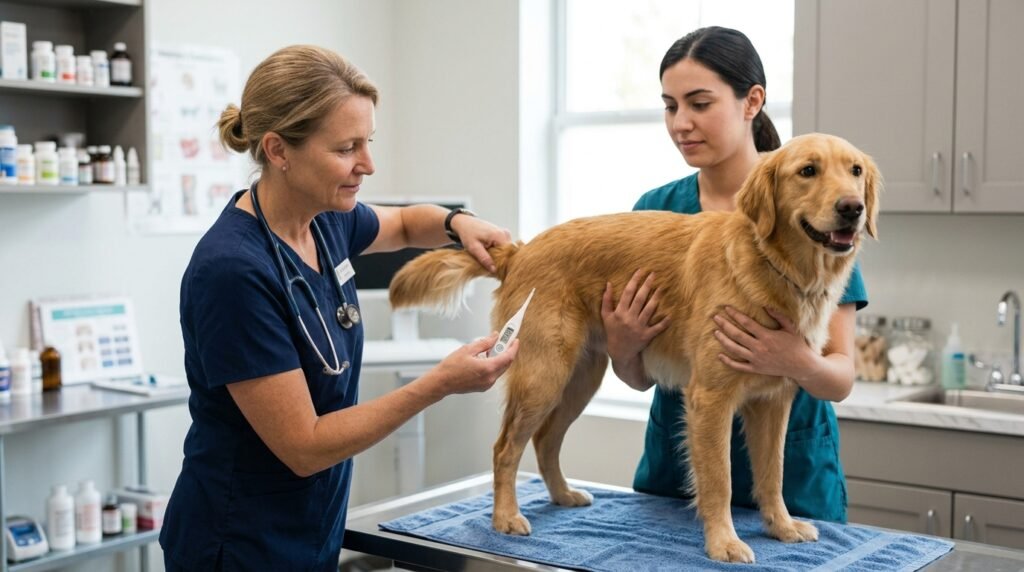
A digital thermometer can be used according to veterinary guidance. Rectal measurement is commonly considered the most accurate home method, while some pet-specific ear thermometers can also be used.
If your dog strongly resists temperature measurement, do not force it. You could injure your dog or yourself. VCA recommends allowing veterinary professionals to take the temperature when home measurement is unsafe or difficult.
How to Take Your Dog’s Temperature Safely
If your dog is calm enough and you have been shown how to do it safely, a digital thermometer may provide useful information.
Basic steps
- Use a digital thermometer.
- Apply an appropriate lubricant to the tip if taking a rectal temperature.
- Have another adult help restrain your dog gently if necessary.
- Follow the thermometer manufacturer’s instructions.
- Never force the thermometer if your dog is frightened or resisting.
- Record the temperature and the time it was taken.
- If the result seems unusually high, allow your dog to calm down and recheck when appropriate.
- Contact your veterinarian if the temperature remains elevated or your dog has concerning symptoms.
Excitement, anxiety, struggling, and recent activity can temporarily raise a dog’s temperature. VCA recommends allowing an agitated pet to settle and then rechecking an abnormal reading.
Never use a glass thermometer. A broken thermometer can cause serious injury.
Dog Fever vs. Heatstroke: Know the Difference
This distinction is extremely important.
A true fever is generally associated with an internal immune response to illness.
Hyperthermia, on the other hand, occurs when body temperature rises because the dog is unable to adequately dissipate heat. Heatstroke is a severe form of hyperthermia and can rapidly damage organs.
Fever may be associated with:
- Infection
- Inflammation
- Immune-mediated disease
- Certain cancers
- Other internal illnesses
Heat-related hyperthermia may follow:
- Hot weather
- Being left in a hot vehicle
- Intense exercise
- Poor ventilation
- Excessive environmental heat
If your dog’s temperature becomes elevated after heat exposure and they are panting heavily, weak, confused, collapsing, or otherwise distressed, do not assume it is simply a fever. Seek emergency veterinary care.

When Should You Call the Vet for Dog Fever?
Knowing when to call the vet is one of the most important parts of recognizing dog fever symptoms.
A mildly elevated temperature in a dog who is otherwise acting normally may sometimes be monitored with veterinary guidance. But a high temperature accompanied by significant illness requires faster action.
PetMD advises veterinary attention for a fever above 102.5°F and describes a temperature above 104.5°F, particularly with severe symptoms, as an emergency. VCA similarly identifies temperatures above 104°F as emergency situations.
Contact your veterinarian promptly if your dog has:
- A persistent elevated temperature
- Significant lethargy
- Refusal to eat
- Repeated vomiting
- Diarrhea
- Shivering
- Signs of pain
- Difficulty breathing
- Dehydration
- Unusual weakness
- A sudden major behavior change
Seek emergency veterinary care if:
- Temperature is around 104°F or higher
- Temperature continues rising
- Your dog was exposed to significant heat
- Your dog collapses
- Your dog becomes confused or extremely weak
- Your dog has difficulty breathing
- Your dog has seizures
- Your dog has blood in vomit or stool
- Your dog is severely lethargic or unresponsive
Very high body temperatures can cause serious organ damage. PetMD notes that temperatures above 106°F can have life-threatening effects, while VCA recommends emergency care for temperatures above 104°F.
When in doubt, it is safer to call your veterinarian or an emergency veterinary hospital.
What Causes Dog Fever?
Fever itself is not the underlying disease. It is a response that can occur because of different problems.
Infections
Bacterial, viral, and fungal infections can trigger an immune response and fever. Potential infection sites include the:
- Ears
- Urinary tract
- Respiratory system
- Skin
- Mouth and teeth
- Internal organs
- Wounds
Inflammation
Inflammatory conditions can also cause elevated body temperature.
Immune-Mediated Conditions
Sometimes the immune system becomes abnormally activated and attacks the body’s own tissues. These disorders can cause fever and other signs of illness.
Cancer
Certain cancers can be associated with fever. Persistent or unexplained fever may therefore require more extensive diagnostic testing.
Vaccination
Some dogs can develop a mild, temporary fever following vaccination because the immune system is responding to the vaccine. However, significant or persistent symptoms should be discussed with a veterinarian.
What Should You Do if Your Dog Has a Fever?
If you obtain an elevated temperature, don’t panic.
First, consider the entire situation:
What is the temperature?
Is your dog behaving normally?
Are they eating and drinking?
Are they vomiting or having diarrhea?
Were they recently exercising or exposed to heat?
Are there other signs of illness?
For a mildly elevated reading in a dog who otherwise seems well, contact your regular veterinarian for guidance and continue monitoring.
If your dog has a significantly elevated temperature or is clearly sick, veterinary evaluation is more appropriate than trying to treat the fever yourself.
The underlying cause needs to be identified.
Can You Treat a Dog’s Fever at Home?
There is no single home remedy that safely treats the underlying cause of every canine fever.
Some veterinary guidance recommends gentle cooling measures for certain moderately elevated temperatures, particularly when overheating may be involved. However, the appropriate response depends on whether the dog has a true fever or hyperthermia.
If your veterinarian recommends cooling:
- Move your dog to a comfortable, ventilated area.
- Offer small amounts of cool water.
- Use cool, damp cloths where appropriate.
- Monitor the temperature.
- Follow your veterinarian’s instructions.
Do not aggressively ice-cold your dog without veterinary guidance.
Most importantly, don’t let temporary cooling make you assume the problem is solved. A fever caused by an infection or another illness requires attention to the underlying condition.
Never Give Your Dog Human Fever Medicine Without Veterinary Instructions
This is one of the most important safety warnings for dog owners.
Do not give your dog ibuprofen, acetaminophen/Tylenol, aspirin, or another human medication to reduce a fever unless a veterinarian specifically instructs you to do so.
PetMD warns that common human medications can be toxic to dogs and may cause serious complications, including gastrointestinal, liver, or kidney damage.
Never guess the dose based on your dog’s weight.
If your dog accidentally swallowed human medication, contact a veterinarian or appropriate animal poison service immediately.
How Veterinarians Diagnose the Cause of a Fever
A veterinarian doesn’t simply treat the temperature. They will usually try to determine why the temperature is elevated.
The process may include:
- Medical history
- Physical examination
- Temperature measurement
- Blood tests
- Urinalysis
- Urine culture
- Imaging
- Additional infectious-disease testing
- Other tests based on symptoms

For persistent or unexplained fever, veterinarians may investigate infections, immune-mediated diseases, cancer, and other causes.
Tell your veterinarian about:
- When symptoms began
- Your dog’s temperature readings
- Recent vaccinations
- Recent travel
- Tick or insect exposure
- New foods
- Possible toxin exposure
- Recent injuries
- Medications
- Changes in appetite or drinking
- Vomiting or diarrhea
- Changes in urination
The more complete the history, the easier it may be for your veterinarian to identify the next diagnostic step.
A Simple Dog Fever Checklist
If you suspect your dog has a fever, use this quick checklist:
- Check for unusual lethargy or weakness.
- Monitor appetite and water intake.
- Look for vomiting or diarrhea.
- Watch for shivering or unusual panting.
- Consider recent heat exposure or exercise.
- Measure temperature safely if your dog tolerates it.
- Record the temperature and other symptoms.
- Contact your veterinarian for an elevated or persistent temperature.
- Seek emergency care for severe symptoms or dangerously high temperatures.
- Never give human fever medication without veterinary instructions.
Frequently Asked Questions About Dog Fever Symptoms
1. What are the most common dog fever symptoms?
Common dog fever symptoms can include lethargy, reduced appetite, shivering, panting, vomiting, diarrhea, and changes in normal behavior. However, these signs can also occur with many other illnesses, so symptoms alone cannot confirm a fever.
2. How can I tell if my dog has a fever without a thermometer?
You generally cannot reliably confirm a fever without measuring your dog’s temperature. A warm or dry nose, warm ears, or feeling your dog’s forehead is not an accurate diagnostic method. A suitable thermometer provides a much better assessment.
3. What temperature is considered a fever in dogs?
Veterinary sources commonly consider temperatures above approximately 102.5°F to 103°F potentially abnormal, although the exact interpretation depends on the individual dog and circumstances. Temperatures around 104°F or higher require urgent veterinary attention, and very high temperatures can become life-threatening.
4. Can I give my dog Tylenol or ibuprofen for a fever?
No, not unless your veterinarian specifically tells you to use a medication and provides appropriate instructions. Human medications such as acetaminophen and ibuprofen can cause serious or potentially fatal toxicity in dogs.
Conclusion
Recognizing dog fever symptoms can help you identify when your dog may need medical attention, but symptoms alone cannot tell you exactly what is wrong.
Watch for changes such as lethargy, appetite loss, shivering, unusual panting, vomiting, diarrhea, and major behavior changes. Most importantly, remember that a warm nose does not reliably diagnose a fever.
If you can safely take your dog’s temperature, record the reading and consider it alongside your dog’s overall condition. A significantly elevated temperature, particularly when combined with severe symptoms or recent heat exposure, deserves prompt veterinary attention.
And never try to lower a dog’s fever with human medication.
When your dog seems genuinely unwell, the safest approach is simple: measure what you can safely measure, monitor the symptoms, and contact your veterinarian when something doesn’t look right.
Key Takeaways
- Consider the context around the behavior.
- Look for patterns instead of relying on one signal.
- Seek qualified help when behavior is sudden, severe, or unsafe.
Frequently Asked Questions
Is every behavior a sign of the same emotion?
Not necessarily. Dogs use combinations of signals, and context matters.
When should I contact a professional?
Consider veterinary or qualified behavior support for sudden, severe, escalating, or safety-related concerns.