The best answer depends on your dog, the context, and the full pattern of behavior. Look at multiple signals rather than one isolated action.
Summer can be a great time to enjoy longer walks, backyard play, and outdoor adventures with your dog. But when temperatures climb, dogs can become overheated much faster than many owners realize. Learning how to keep your dog cool is one of the most important parts of summer safety, especially for dogs that struggle to handle heat.
The good news is that you do not need complicated equipment to help your dog stay comfortable. Fresh water, shade, smarter exercise timing, a cool indoor environment, and careful monitoring can make a major difference. In this guide, you’ll learn how to keep your dog cool at home, outdoors, during walks, and on especially hot or humid days.
Table of Contents
Why Dogs Can Overheat So Quickly
Before learning how to keep your dog cool, it helps to understand why dogs struggle with heat differently than humans.
People cool themselves primarily through sweating across much of the body. Dogs have limited sweat glands, mainly in their paw pads, and depend heavily on panting to release heat. As moisture evaporates from the tongue and respiratory passages, it helps carry heat away from the body.
This system works best when a dog has access to cooler air and enough water. Hot temperatures, direct sunlight, exercise, and high humidity can make it harder for a dog to release excess body heat.
Humidity is particularly important because panting depends on evaporation. When the air already contains a lot of moisture, evaporation becomes less efficient.
That means a day that does not seem extremely hot to you can still be uncomfortable or risky for your dog.
The safest approach is to pay attention to the whole situation:
- Air temperature
- Humidity
- Direct sunlight
- Your dog’s activity level
- Your dog’s age and health
- Coat type
- Breed characteristics
- How long your dog has been exposed to the heat
How Much Exercise Does a Dog Need? 7 Factors Every Owner Should Know
1. Know Which Dogs Need Extra Help Staying Cool
Every dog can overheat, but some need extra protection during hot weather.
Dogs at higher risk can include:
- Short-muzzled or flat-faced breeds
- Senior dogs
- Puppies
- Overweight dogs
- Dogs with thick coats
- Dogs with dark-colored coats
- Dogs with heart or respiratory problems
- Dogs that have previously experienced heat-related illness
Brachycephalic breeds, such as Pugs and Bulldogs, can have a particularly difficult time cooling themselves because their airway structure can make efficient panting more challenging. Cornell also identifies older, overweight, thick-coated, and certain medically vulnerable dogs as higher-risk groups.
This does not mean every dog in these groups must stay indoors all summer. It means you should be more conservative about heat exposure and activity.
For example, a young, healthy, athletic dog may tolerate a warm morning walk that would be too demanding for an elderly Bulldog.
Learning how to keep your dog cool means adapting your routine to your individual dog rather than relying on one universal temperature rule.
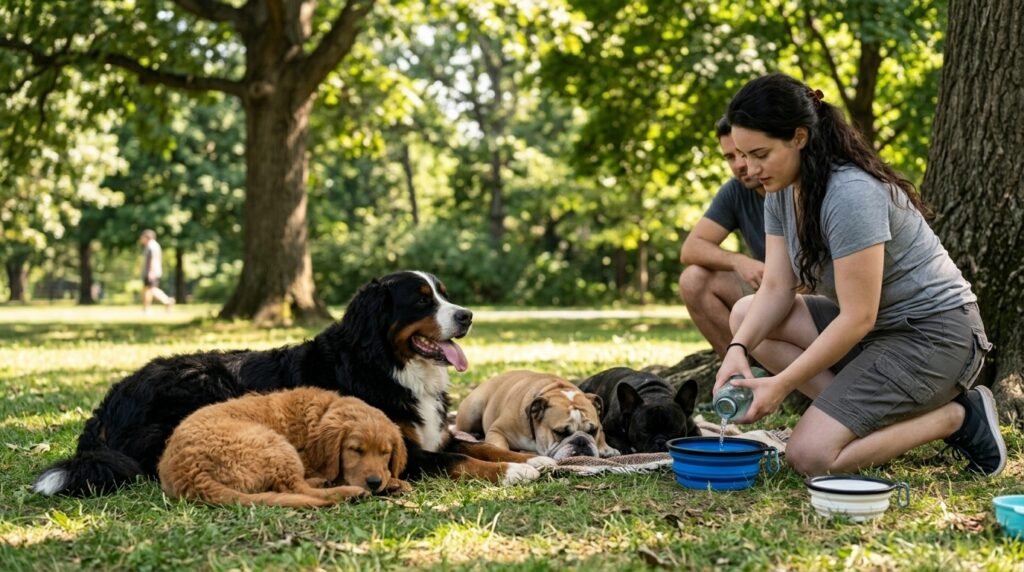
Pro Tip: If your dog starts slowing down, searching for shade, panting harder than usual, or showing less interest in walking, do not assume they are simply tired. Treat those changes as a reason to stop, rest, and cool down.
2. Create a Cooler Space at Home
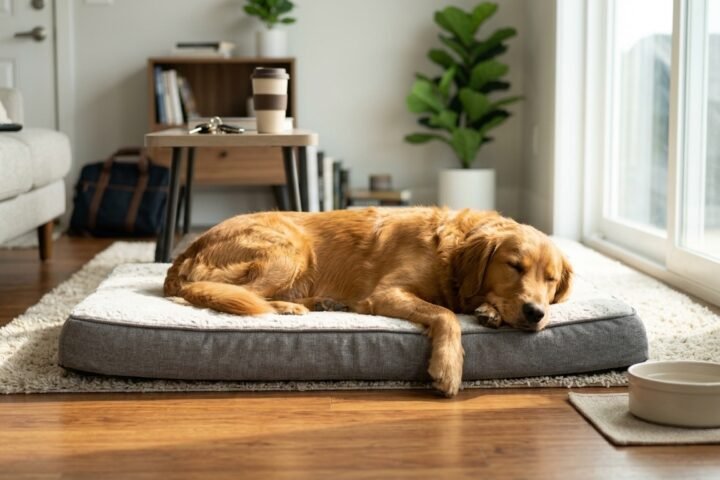
One of the easiest ways to keep dog cool in summer is to give them a comfortable indoor place where they can get away from direct heat.
Air conditioning is helpful, but it is not the only option. Fans can improve air circulation, and cooler areas of the home may provide relief during warmer parts of the day.
Try to give your dog access to:
- Fresh, clean drinking water
- A shaded indoor area
- Good ventilation
- A cool floor or comfortable resting surface
- A quiet place away from direct sunlight
Some dogs naturally choose tile, wood, or other cooler flooring when they feel warm. You can also provide a damp towel or a dog-safe cooling mat if your dog is comfortable using it.
If your home becomes unusually hot, avoid assuming that a fan alone will solve the problem. Dogs still need access to water and a cooler environment.
On extremely hot days, keeping your dog indoors during the hottest hours is often the safest choice. Cornell specifically recommends limiting outdoor exposure during extreme heat or humidity.
Keep water easy to reach
Place water bowls where your dog spends time rather than expecting them to travel across the house whenever they need a drink.
If you have multiple floors, consider keeping water available on each level.
Refresh the water regularly, especially if your dog spends time outdoors.
3. Change Your Walk Schedule During Hot Weather
Changing when you exercise your dog is one of the most effective answers to how to keep your dog cool during summer.
Instead of following the same walking schedule year-round, shift longer walks toward cooler parts of the day.
Early mornings and later evenings are often more comfortable than midday or late-afternoon heat. Cornell advises avoiding strenuous activity during the hottest and most humid conditions.
However, do not rely only on the clock.
A sunny evening after an extremely hot day can still leave sidewalks and pavement dangerously warm.
Before leaving home, consider:
- How hot and humid it is
- Whether your route has shade
- Whether your dog can take breaks
- Whether you can bring water
- Whether the walking surface may be hot
- Whether your dog is already panting heavily indoors
On very hot days, replace a long walk with shorter bathroom breaks and indoor enrichment.
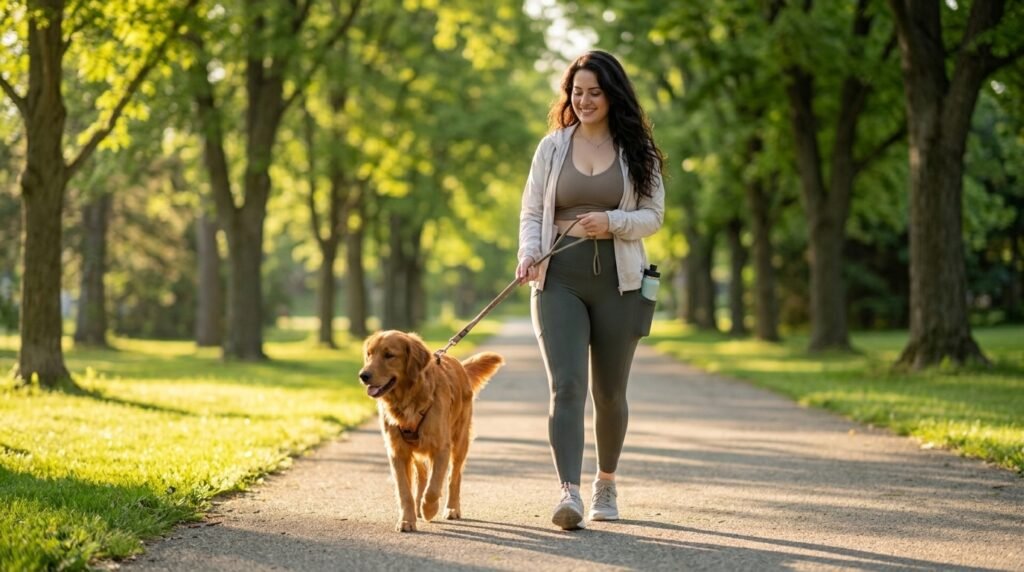
A few options include:
- Food puzzles
- Basic training sessions
- Scent games
- Hide-and-seek
- Gentle indoor play
Your dog does not need to run outside simply because it is part of the normal routine.
Bring water on longer outings
For walks, hikes, or other activities, bring enough water for both you and your dog.
Offer breaks before your dog appears desperate for water.
Remember that a dog may continue running or playing even when they are becoming too hot, especially if they are excited or highly motivated.
You may need to make the decision to stop before your dog chooses to.
4. Provide Shade, but Remember That Shade Is Not Always Enough
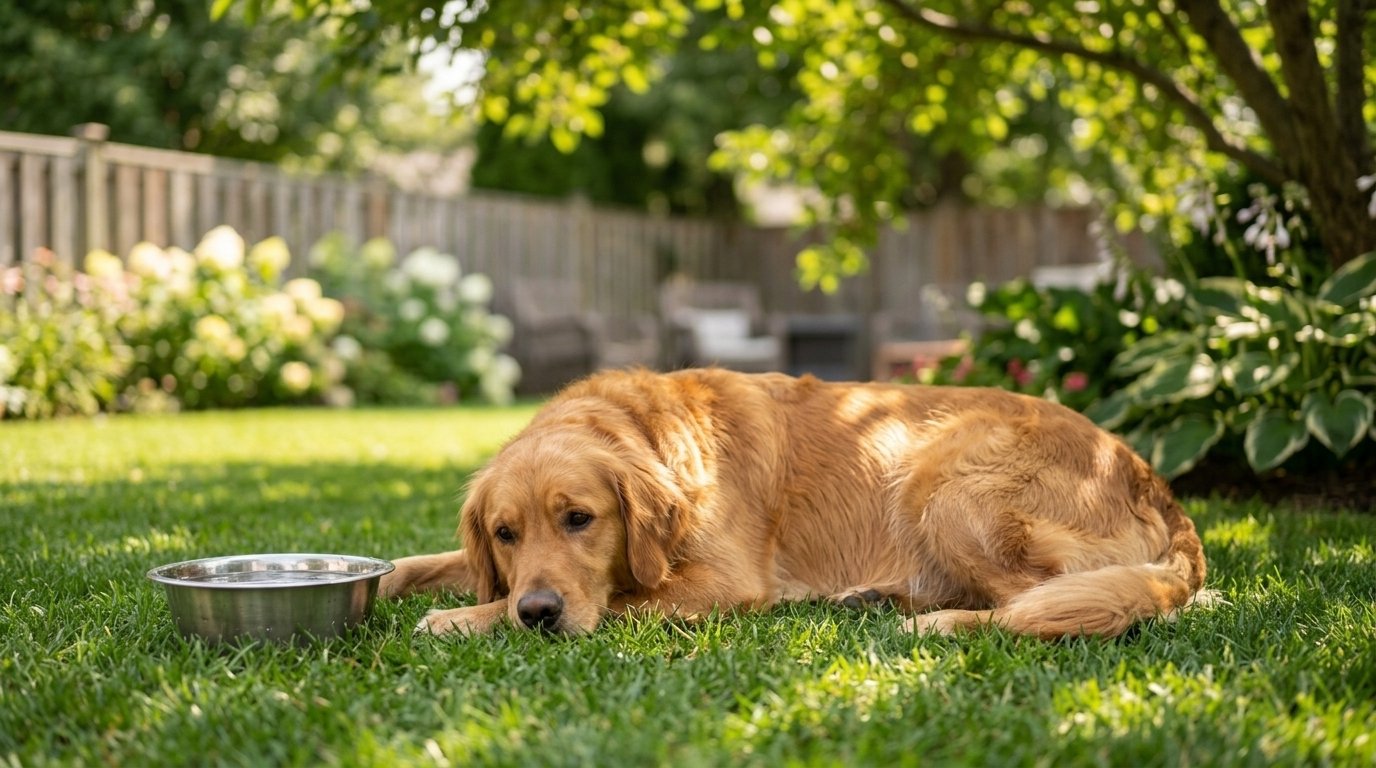
Shade is one of the simplest tools for keeping dogs comfortable outside.
Trees, covered patios, and other well-ventilated shaded spaces can reduce direct sun exposure.
But shade does not automatically mean the environment is safe.
A poorly ventilated structure can trap heat, and the surrounding temperature may still be high enough to make prolonged outdoor time uncomfortable or dangerous.
If your dog spends time outside, make sure they have:
- Continuous access to shade
- Fresh water
- A cooler place to rest
- Adequate airflow
- The ability to move away from the heat
Avoid treating a traditional doghouse as an automatic cooling shelter. Depending on its design and ventilation, an enclosed structure can become hot.
The goal is not simply to block sunlight. The goal is to give your dog a genuinely cooler environment.
5. Use Water and Cooling Tools Safely
Water can be useful when you’re figuring out how to keep your dog cool, but more extreme cooling is not necessarily better.
For everyday summer comfort, some dogs enjoy:
- A shallow splash pool
- A sprinkler
- Gentle hose play
- Swimming, if supervised and appropriate for the dog
- A damp cooling towel
- A cooling vest or bandana
Always consider your dog’s comfort and swimming ability. Not every dog enjoys water, and not every dog is a strong swimmer.
If you use a pool, provide easy entry and exit.
Cool water is safer than extreme cold
If your dog is becoming overheated, veterinary guidance generally recommends cooling with cool rather than ice-cold water while arranging veterinary care when serious symptoms are present.
Avoid assuming that an ice bath is the fastest or safest solution.
The goal is controlled cooling, not shocking the body with extreme cold.
Cooling products can also be useful, including:
- Cooling mats
- Cooling vests
- Damp wraps
- Elevated breathable beds
Think of these as supportive tools rather than replacements for shade, water, ventilation, and reduced activity.
6. Protect Your Dog’s Paws From Hot Pavement
Hot pavement is an easy summer danger to overlook.
Concrete, asphalt, and other surfaces can absorb and retain heat, sometimes becoming much hotter than the surrounding air.
Cornell advises using a simple practical check: if you cannot comfortably keep your own hand or bare foot on the surface for about 10 seconds, it is likely too hot for your dog’s paws.
Whenever possible:
- Walk on grass or shaded paths
- Choose cooler times of day
- Avoid dark asphalt during peak heat
- Shorten the walk when surfaces remain hot
- Check the ground before encouraging your dog to continue
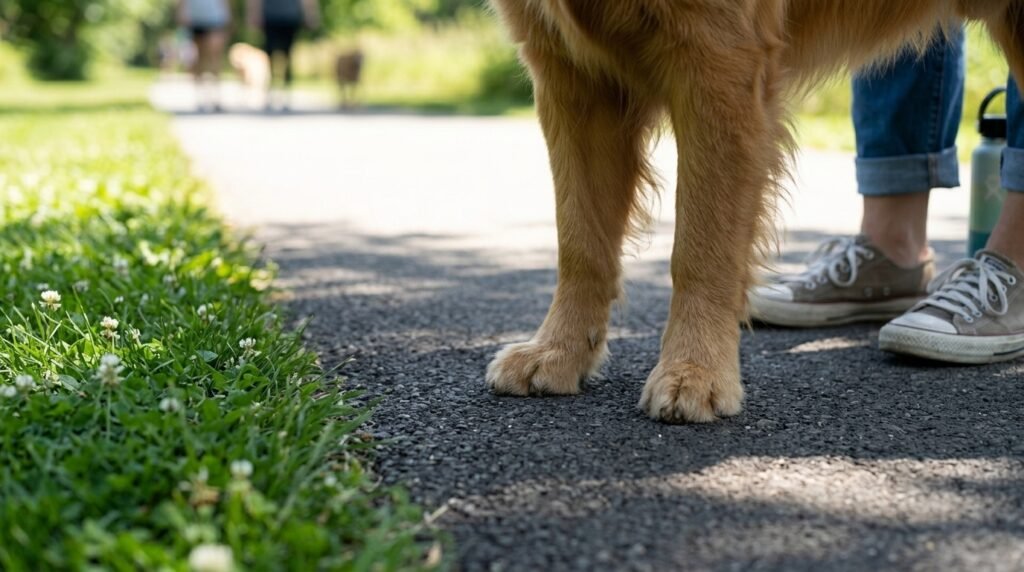
Paw burns can be painful, and a dog may not immediately show you that the surface is uncomfortable.
If your dog suddenly refuses to walk, starts lifting their paws, or repeatedly seeks cooler ground, stop and investigate.
7. Groom for Summer Without Overdoing It
Many owners assume that shaving a dog’s coat is the best way to keep them cool.
That is not always true.
A healthy coat can provide insulation, and the American Kennel Club specifically warns that shaving a double-coated dog can interfere with the coat’s protective function and potentially create other problems.
Instead of automatically shaving your dog, focus on appropriate grooming.
Regular brushing can help remove loose hair and reduce mats that may trap heat and moisture.
The right grooming routine depends on your dog’s breed and coat type.
For major coat changes, especially for double-coated breeds, ask a veterinarian or qualified groomer for advice.
Do not confuse grooming with heat protection
A clean, well-maintained coat can be beneficial.
But grooming does not make a dog invincible to summer heat.
You still need to manage exercise, hydration, shade, and environmental temperature.
8. Watch for Early Signs That Your Dog Is Getting Too Hot
Knowing how to keep your dog cool also means recognizing when your current cooling strategy is no longer enough.
Early warning signs can include:
- Heavy or increasingly intense panting
- Excessive drooling
- Seeking shade
- Slowing down
- Reluctance to continue walking or playing
- Whining
- Restlessness
- Weakness
Move your dog to a cooler environment, stop exercise, provide access to water, and monitor them closely.
More serious signs can include:
- Vomiting
- Diarrhea
- Confusion
- Loss of coordination
- Difficulty breathing
- Extreme weakness
- Collapse
- Seizures
- Unconsciousness
Heatstroke is a life-threatening medical emergency. Cornell advises immediate cooling and urgent veterinary care when serious symptoms occur.
Do not wait to see whether a collapsed or severely disoriented dog will recover on their own.
9. Know What to Do If Your Dog Starts Overheating
If your dog appears overheated, act quickly but calmly.
Step 1: Stop activity
Immediately stop walking, running, or playing.
Step 2: Move to a cooler location
Get your dog out of direct sun and into air conditioning or a cooler, shaded, well-ventilated environment.
Step 3: Begin gentle cooling
Use cool water on the dog’s body and improve airflow with a fan when appropriate.
Avoid extreme cooling methods unless specifically instructed by a veterinarian.
Step 4: Offer water if your dog can safely drink
Do not force water into your dog’s mouth.
Step 5: Contact a veterinarian for serious symptoms
Vomiting, collapse, confusion, seizures, major breathing difficulty, or loss of coordination can indicate a medical emergency.
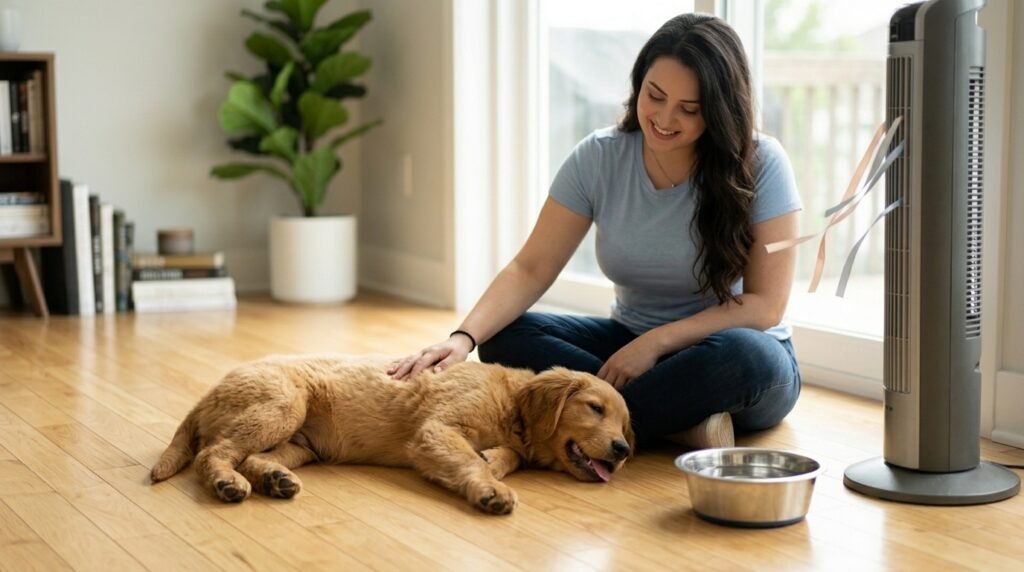
Merck Veterinary Manual identifies heatstroke as an emergency and recommends removing the animal from the heat, beginning cooling, and seeking veterinary care promptly.
Even if your dog seems better after cooling down, contact your veterinarian if you suspect significant overheating.
Common Summer Cooling Mistakes to Avoid
Sometimes knowing what not to do is just as important as knowing how to keep your dog cool.
Mistake 1: Waiting until your dog looks severely distressed
Prevention is much easier than responding to heatstroke.
Pay attention to early changes in behavior and breathing.
Mistake 2: Assuming every dog handles heat the same way
Breed, age, weight, coat, health, and activity level all matter.
Mistake 3: Exercising according to habit instead of conditions
A normal afternoon walk may be perfectly fine in spring and unsafe during a heat wave.
Mistake 4: Forgetting about humidity
High humidity can make panting less effective and increase the risk of overheating.
Mistake 5: Leaving a dog in a parked car
Never leave your dog unattended in a parked vehicle during warm weather. Vehicle temperatures can rise rapidly, even when the outdoor temperature does not seem extreme.
Mistake 6: Automatically shaving a double-coated dog
The coat plays an important protective role. Ask a professional before making major changes to your dog’s coat.
Mistake 7: Using ice-cold water as the default response
Cool, controlled cooling is generally preferred over suddenly exposing an overheated dog to extreme cold.
FAQs
What is the best way to keep a dog cool in summer?
The best approach combines fresh water, shade, a cooler indoor environment, reduced activity during hot periods, and close monitoring for signs of overheating. The right strategy depends on your dog’s age, breed, health, coat, and the temperature and humidity.
Can I put ice in my dog’s water?
For a healthy dog relaxing on a warm day, a few ice cubes in drinking water are generally different from using an ice bath to rapidly cool an overheated dog. If your dog is showing signs of significant overheating, use appropriate cooling methods and contact a veterinarian rather than relying on ice water alone.
Should I shave my dog to keep them cool?
Not necessarily. Some dogs, particularly double-coated breeds, should not be shaved simply to deal with summer heat. Regular brushing and appropriate coat care are often better choices. Ask your veterinarian or groomer about your individual dog’s coat.
How do I know if my dog is dangerously overheated?
Heavy panting and drooling can be early warning signs, but vomiting, confusion, weakness, difficulty breathing, loss of coordination, collapse, or seizures are much more serious. These signs require urgent veterinary attention.
Conclusion
Learning how to keep your dog cool is not about finding one perfect cooling product or following a single temperature rule. The safest approach is to manage your dog’s environment, activity, hydration, and exposure to heat.
Provide fresh water, create access to cooler spaces, choose safer times for walks, check hot surfaces, and pay close attention to changes in your dog’s breathing and behavior.
Most importantly, remember that heat-related illness can become serious quickly. When temperatures or humidity are high, it is always better to shorten an activity, take a break, or stay indoors than to push your dog beyond their ability to stay cool.
Key Takeaways
- Consider the context around the behavior.
- Look for patterns instead of relying on one signal.
- Seek qualified help when behavior is sudden, severe, or unsafe.
Frequently Asked Questions
Is every behavior a sign of the same emotion?
Not necessarily. Dogs use combinations of signals, and context matters.
When should I contact a professional?
Consider veterinary or qualified behavior support for sudden, severe, escalating, or safety-related concerns.