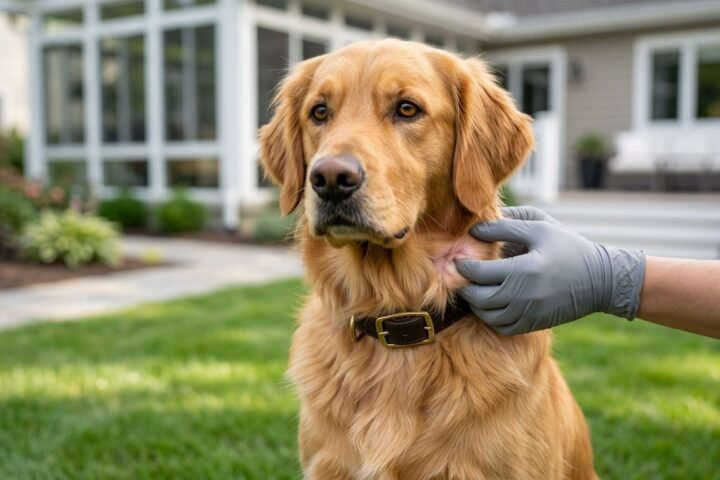
The best answer depends on your dog, the context, and the full pattern of behavior. Look at multiple signals rather than one isolated action.
A dog runny nose can be completely harmless when your dog has a small amount of clear discharge and otherwise acts normal. But persistent dripping, thick or colored mucus, blood, one-sided discharge, facial swelling, or breathing trouble can point to a problem that needs veterinary attention.
The tricky part is that nasal discharge is a symptom, not a diagnosis. Allergies, irritation, respiratory infections, foreign objects, dental disease, fungal infections, and other conditions can all cause a dog’s nose to run.
In this guide, you’ll learn the 7 common causes of a dog runny nose, what different types of discharge may mean, which symptoms deserve a veterinary call, what you can safely do at home, and when a runny nose becomes an emergency.
Table of Contents
Is a Dog Runny Nose Normal?
Sometimes, yes.
Dogs naturally produce mucus in their nasal passages, and a small amount of clear, watery moisture can occasionally appear around the nostrils. A dog may also have temporary nasal discharge after exercise, excitement, exposure to cold air, or mild environmental irritation.
If your dog has a little clear discharge but is:
- eating and drinking normally,
- breathing comfortably,
- active and alert,
- not coughing repeatedly,
- not showing facial pain or swelling,
- and otherwise behaving normally,
you may be able to monitor the situation closely for a short period.
However, a continuously runny nose is different from occasional moisture. Veterinary guidance recommends evaluation when nasal discharge is excessive, persistent, crusting, or accompanied by other concerning symptoms.
The most important thing is to look at the whole picture, not just the wetness around your dog’s nose.
A clear discharge by itself may be relatively minor. Clear discharge combined with breathing difficulty, lethargy, appetite loss, or another significant symptom deserves more attention.
7 Common Causes of a Dog Runny Nose
There are many reasons a dog’s nose may run. The seven below cover several of the most important possibilities dog owners should understand.
1. Allergies and Environmental Irritation
Allergies can cause nasal irritation and discharge in some dogs. Environmental triggers may include pollen, dust, mold, smoke, perfumes, aerosols, and strong cleaning products.
A dog with allergies may have other signs too, such as:
- sneezing,
- itchy skin,
- licking or chewing the paws,
- watery eyes,
- rubbing the face,
- or recurring symptoms during particular seasons.
Not every runny nose is an allergy, though. If symptoms persist or repeatedly return, your veterinarian can help determine whether allergies or another condition are more likely.

You can reduce unnecessary irritation by keeping your dog away from cigarette smoke, strong fragrances, dusty areas, and harsh airborne chemicals.
2. Respiratory Infections
Respiratory infections are another common explanation for a dog runny nose, especially when nasal discharge occurs alongside sneezing, coughing, lethargy, or eye discharge.
Dogs can develop contagious respiratory illnesses after exposure to other dogs in places such as boarding facilities, grooming salons, daycare, dog parks, and other group settings. The American Animal Hospital Association notes that canine respiratory infections can produce signs including coughing, sneezing, runny nose or eyes, lethargy, decreased appetite, and, in more severe cases, breathing difficulty.
A respiratory infection does not automatically mean your dog has a severe illness. However, puppies, older dogs, dogs with other health problems, and dogs showing significant symptoms may need closer veterinary monitoring.
If your dog has a cough as well as nasal discharge, especially if the cough is persistent or your dog seems unwell, contact your veterinarian.
Household Items Poisonous to Dogs: 15 Common Hazards to Avoid
3. A Foreign Object in the Nose
Dogs explore the world with their noses, so small pieces of grass, plant material, seeds, dirt, or other debris can sometimes become lodged in a nasal passage.
A foreign object is particularly suspicious when the problem begins suddenly and your dog develops:
- repeated or violent sneezing,
- pawing at the face,
- sudden nasal discharge,
- discomfort around the nose,
- or discharge mainly from one nostril.
Veterinary references specifically note that sudden one-sided discharge can suggest a foreign object in the nasal passage.
Do not try to dig around inside your dog’s nose with tweezers or another tool. You could push an object deeper, injure delicate tissue, or cause bleeding.
If you suspect your dog inhaled something, call your veterinarian for guidance.
4. Dental Disease
Your dog’s teeth and nasal passages are closer together than many owners realize.
Problems involving an upper tooth, particularly an infection around a tooth root, can sometimes affect structures near the nasal cavity. This can result in nasal discharge, sneezing, facial discomfort, or other signs.
Dental disease becomes more suspicious when a runny nose occurs with:
- bad breath,
- difficulty chewing,
- dropping food,
- reluctance to eat,
- swelling around the face,
- mouth pain,
- or discharge that seems to come from one side.
This is one reason a veterinary examination may include looking carefully at both the mouth and nose rather than treating the nasal symptom alone.
5. Nasal or Fungal Infection
Some dogs develop fungal disease affecting the nasal passages. These conditions are less common than simple irritation or respiratory infections, but they matter because they may require specific diagnostic testing and treatment.
Fungal or chronic inflammatory disease may cause:
- persistent nasal discharge,
- repeated sneezing,
- nose discomfort,
- pawing at the face,
- reduced airflow,
- or sometimes bloody discharge.
Merck Veterinary Manual notes that chronic nasal disease can involve fungal infection, foreign bodies, tumors, parasites, trauma, dental problems, or chronic inflammatory conditions.
A runny nose that does not resolve, especially when it changes character or becomes bloody, deserves veterinary investigation rather than repeated home treatment.
6. Nasal Mites or Other Less Common Problems
Nasal mites are not among the most common reasons for a dog’s nose to run, but they can cause significant sneezing and nasal irritation.
Other less common causes include congenital abnormalities, trauma, chronic inflammatory rhinitis, and problems affecting the structure of the nasal passages.
The important point is that a persistent symptom does not necessarily mean your dog simply has “a cold.”
If the problem keeps returning, your veterinarian may need to investigate beyond the most obvious causes.
7. Nasal Growths or Tumors
Nasal masses are less common than allergies or respiratory infections, but they become more important when nasal discharge is chronic, progressive, bloody, one-sided, or accompanied by facial changes.
A persistent problem may begin with relatively ordinary-looking discharge and become more concerning over time.
Merck notes that chronic nasal discharge that begins on one side and later becomes bilateral, or changes from mucus or pus to blood-tinged discharge, can be associated with more serious nasal disease.
This does not mean that a bloody or one-sided dog runny nose automatically means cancer. It means those patterns deserve professional evaluation rather than guesswork.
What the Color of Nasal Discharge May Tell You
The appearance of nasal discharge can provide useful clues, but color alone cannot diagnose the underlying problem.
Clear and watery discharge
A small amount of clear discharge can occur with:
- mild irritation,
- allergies,
- excitement,
- environmental exposure,
- or some respiratory illnesses.
If your dog feels completely normal and the discharge is brief, monitoring may be reasonable.
If it becomes persistent or is accompanied by other symptoms, contact your veterinarian.
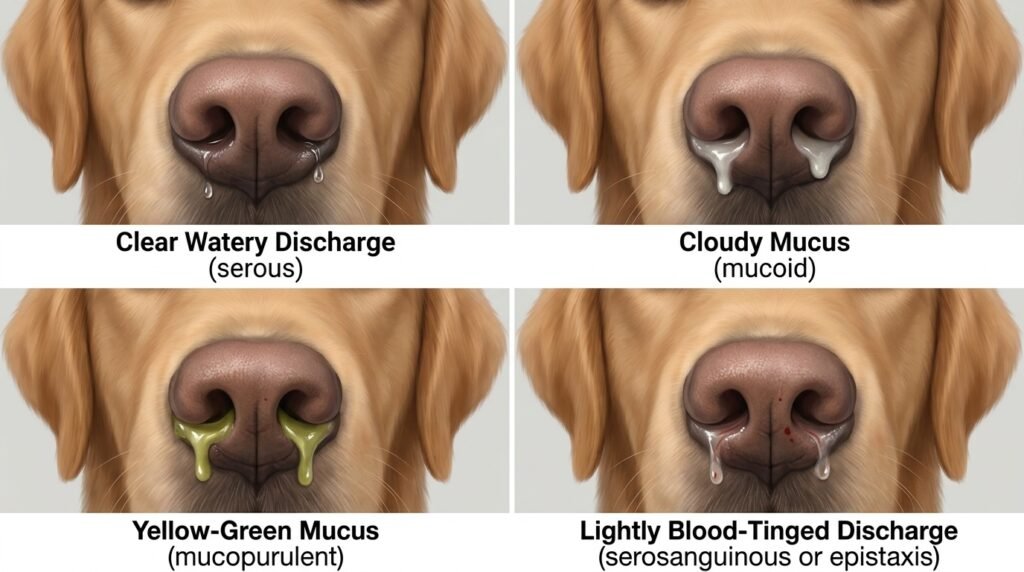
White, cloudy, yellow, or green discharge
Thicker or discolored discharge can indicate inflammation or infection, although the color by itself does not tell you exactly what caused the problem.
A dog with thick discharge plus coughing, lethargy, appetite loss, fever, or breathing changes should be evaluated.
Bloody discharge
Blood from the nose deserves more attention, particularly when it is recurring, heavy, unexplained, or accompanied by facial swelling or illness.
Possible causes range from trauma and irritation to foreign bodies, infections, inflammatory disease, clotting problems, and nasal masses.
Do not assume that a bloody nose is simply the result of dry air.
Foul-smelling discharge
A strong unpleasant odor can be another reason to arrange a veterinary examination, especially when discharge is persistent or one-sided.
Dental disease, infection, foreign material, and other nasal problems can sometimes produce abnormal odor.
One Nostril vs. Both: Why It Matters
One of the most useful observations you can make is whether the discharge comes from one nostril or both.
Discharge from both nostrils
Bilateral discharge can occur with conditions affecting the nasal passages more generally, including allergies, respiratory infections, and inflammatory disease.
It still needs to be interpreted alongside your dog’s other symptoms.
Discharge from one nostril
One-sided discharge can raise suspicion for a localized problem.
Potential possibilities include:
- a foreign object,
- dental disease,
- fungal disease,
- a nasal mass,
- or another localized nasal condition.
Merck specifically identifies acute unilateral discharge, particularly when paired with pawing at the face, as a clue that a foreign body may be present.

The important lesson is not to diagnose your dog based on the nostril alone. Instead, use this observation as useful information to tell your veterinarian.
When a Dog Runny Nose Needs a Vet
Not every dog runny nose requires an emergency visit, but some patterns should not be ignored.
Call your veterinarian promptly if:
- the discharge continues or keeps returning,
- it becomes thick, cloudy, yellow, or green,
- you see blood,
- your dog is sneezing repeatedly,
- your dog develops a persistent cough,
- your dog is less interested in food,
- your dog becomes unusually tired,
- there is eye discharge,
- your dog’s face or nose becomes swollen,
- the discharge comes from only one nostril,
- the nose develops a bad smell,
- or your dog seems painful.
VCA advises veterinary evaluation for ongoing sneezing, repeated coughing, continuously runny noses, excessive nasal discharge, or discharge that becomes crusted around the nose.
Seek emergency veterinary care if:
Your dog’s breathing is the biggest priority.
Seek emergency care if your dog:
- is struggling to breathe,
- is breathing with the mouth open because of respiratory distress,
- appears severely weak or collapses,
- has blue, gray, or unusually pale gums,
- has severe facial swelling affecting breathing,
- or has significant or uncontrolled nasal bleeding.
Breathing difficulty should never be treated as something to monitor at home.
What You Can Safely Do at Home
If your dog has mild, clear nasal discharge and is otherwise acting normally, supportive care may help keep them comfortable while you monitor the situation.
Gently clean the nose
Use a soft, clean, damp cloth to gently wipe away discharge.
Avoid scrubbing the nose or pulling firmly on dried crusts.
The goal is simply to keep accumulated discharge from becoming uncomfortable.
Remove obvious airborne irritants
Keep your dog away from:
- cigarette smoke,
- vaping fumes,
- strong perfumes,
- aerosol sprays,
- dusty environments,
- harsh cleaning fumes,
- and other strong airborne irritants.
This is particularly useful when irritation may be contributing to nasal symptoms.
Provide fresh water
Make sure your dog has easy access to clean drinking water.
If your dog is unwell and is drinking significantly less than normal, that is another reason to contact your veterinarian.
Keep your dog comfortable
Rest may be helpful when a dog is recovering from a respiratory illness.

If your dog may have a contagious respiratory infection, avoid unnecessary close contact with other dogs until your veterinarian advises you about returning to normal activities. Respiratory infections can spread between dogs in group environments.
Never give human cold medicine without veterinary guidance
This is especially important.
Do not assume that a human decongestant, cold medicine, nasal spray, or allergy product is automatically safe for dogs.
Some human medications contain ingredients that can be dangerous to pets. The ASPCA warns that certain decongestants can cause serious effects in pets, and combination cold or allergy products may contain multiple ingredients with different toxicity risks.
If your dog needs medication, ask your veterinarian about the appropriate product and dose.
What Your Veterinarian May Check
The veterinary examination will depend on your dog’s symptoms, age, history, and how long the nasal problem has been present.
Your veterinarian may begin with:
- a physical examination,
- examination of the nose and mouth,
- listening to the heart and lungs,
- checking the eyes and face,
- reviewing vaccination and exposure history,
- and asking when the discharge began.
If the cause is not obvious, additional testing may be recommended.
Possible diagnostic tools include blood testing, infectious-disease testing, nasal swabs or cultures, imaging such as X-rays or CT, rhinoscopy, and biopsy when appropriate.
A rhinoscopy allows a veterinarian to look more closely inside the nasal passages and may help identify foreign material or abnormal tissue.
The purpose of testing is not simply to “treat the runny nose.” It is to determine what is causing it so that treatment can be directed at the underlying problem.
For example, an allergic problem, foreign object, dental infection, fungal disease, and nasal mass would require very different approaches.
A Simple Decision Guide for Dog Owners
When you first notice a dog runny nose, ask yourself five questions:
1. What does the discharge look like?
Clear and watery is generally less concerning than thick, bloody, or foul-smelling discharge.
2. Is it coming from one nostril or both?
One-sided discharge can provide an important clue about a localized problem.
3. How long has it been happening?
A brief episode is different from a persistent or repeatedly returning problem.
4. How does my dog feel otherwise?
Normal appetite, energy, and breathing are reassuring. Lethargy, appetite loss, coughing, pain, or breathing changes are not.
5. Is my dog’s breathing normal?
If breathing is difficult or severely abnormal, skip home monitoring and seek emergency veterinary care.
Taking a short video of sneezing, unusual breathing, or discharge can also be useful when speaking with your veterinarian.
Frequently Asked Questions
Is a dog runny nose normal?
A small amount of occasional clear discharge can occur in an otherwise healthy dog and may not indicate a serious problem. Persistent discharge, colored or bloody mucus, breathing changes, lethargy, appetite loss, or other symptoms should prompt a veterinary call.
Why does my dog have a runny nose and keep sneezing?
A combination of nasal discharge and sneezing can occur with irritation, allergies, respiratory infections, foreign objects, inflammatory nasal disease, and other conditions. Sudden intense sneezing with one-sided discharge can be particularly suggestive of something irritating or lodged in a nasal passage.
Is clear nasal discharge in dogs something to worry about?
Not necessarily. A small amount of clear discharge may be minor if your dog is eating, drinking, breathing normally, and behaving normally. However, persistent clear discharge or clear discharge accompanied by other symptoms should be discussed with your veterinarian.
Can I give my dog human cold medicine for a runny nose?
No—not unless your veterinarian specifically tells you to use a particular medication and provides appropriate guidance. Human cold, flu, allergy, and decongestant products can contain ingredients that are dangerous to dogs.
Conclusion
A dog runny nose can have a simple explanation, such as temporary irritation, but it can also be associated with respiratory infections, allergies, foreign objects, dental disease, fungal conditions, or more serious nasal problems.
The most useful clues are the appearance of the discharge, whether it affects one or both nostrils, how long it lasts, and whether your dog has other symptoms.
If your dog is comfortable, eating normally, breathing normally, and has only a small amount of clear discharge, close monitoring may be reasonable. If the discharge persists, changes color, becomes bloody, appears on only one side, or occurs with coughing, lethargy, appetite loss, facial swelling, or pain, contact your veterinarian.
And if your dog’s breathing is difficult, treat that as an emergency.
Your dog’s nose can tell you that something is happening—but only a veterinarian can determine the underlying cause when the problem persists or becomes concerning.
Key Takeaways
- Consider the context around the behavior.
- Look for patterns instead of relying on one signal.
- Seek qualified help when behavior is sudden, severe, or unsafe.
Frequently Asked Questions
Is every behavior a sign of the same emotion?
Not necessarily. Dogs use combinations of signals, and context matters.
When should I contact a professional?
Consider veterinary or qualified behavior support for sudden, severe, escalating, or safety-related concerns.