Learning how to store dry dog food correctly is one of the most critical steps in safeguarding your dog’s daily health, vitality, and immune strength. When exposed to circulating air, ambient humidity, heat, and direct sunlight, commercial dry kibble undergoes rapid fat oxidation, sensitive vitamins degrade, and dangerous molds or microscopic pests multiply. Many pet parents ask veterinarians how to store dry dog food to keep nutrients intact, prevent early fat oxidation, and protect their pets from preventable gastrointestinal distress.
Many dog owners assume that because dry kibble is extruded, dry, and shelf-stable, it can sit open in an average household pantry for months without issue. In reality, commercial dry dog food is sprayed with an exterior coating of animal fats, essential fatty acids, and heat-sensitive micronutrients right before final packaging.
The moment you cut the manufacturer’s seal, atmospheric oxygen and ambient humidity start degrading those delicate surface fats. Without understanding how to store dry dog food properly, premium pet food can lose its aroma, flavor, and nutritional benefits within just a few weeks.
Understanding the environmental triggers of canine food degradation ensures every bowl you serve remains safe, appetizing, and packed with full nutritional value. Here is an evidence-based, veterinarian-aligned guide to keeping dry kibble fresh and safe from the day you open the bag to the final scoop.
Table of Contents
The Science Behind How to Store Dry Dog Food: What Actually Ruins Kibble?
Before exploring practical solutions, it helps to understand the exact biochemical processes that break down dry dog food. Kibble spoils primarily through four environmental mechanisms: oxygen exposure, ambient moisture, elevated temperature, and ultraviolet light. Recognizing these biological triggers is essential when learning how to store dry dog food safely over several weeks.
When unsaturated fats and animal tallows on the surface of kibble contact ambient oxygen, they undergo lipid peroxidation. This chemical reaction breaks fatty acids down into volatile compounds such as peroxides, aldehydes, and ketones. Aside from creating a harsh, paint-like rancid odor that turns dogs away from the bowl, ingesting oxidized fats on a regular basis exposes your dog’s digestive tract to cellular-damaging free radicals, depleting the body of fat-soluble vitamins like vitamins A, D, and E.
Moisture is another constant threat. While commercial dry kibble typically maintains a low water activity level to prevent bacterial multiplication, elevated ambient humidity easily penetrates unsealed bags. When local moisture levels rise, dormant spores of molds such as Aspergillus can germinate, producing dangerous mycotoxins like aflatoxins that pose severe risks of acute liver failure. At the same time, warm, damp environments create ideal breeding conditions for harmful bacteria such as Salmonella, which the U.S. Food and Drug Administration (FDA) identifies as a major health concern for pets and the humans who handle their food.
Finally, heat and UV radiation act as catalysts. Storing food near hot kitchen appliances or in sunlit rooms speeds up chemical breakdown, drives residual moisture out of pellets into container air pockets, and encourages condensation that accelerates spoilage.
1. Keep the Kibble in Its Original Bag (The Bag-in-Bin Method)
When learning how to store dry dog food, the most important rule is never to pour kibble directly into a bare plastic bin. The common mistake pet parents make is pouring dry dog food directly out of the retail sack and into an empty plastic storage container. While this neat, organized look is visually appealing on a pantry shelf, emptying the bag directly into a container significantly increases the rate of food spoilage.
High-grade pet food packaging is engineered specifically for long-term food stability. These multi-layer sacks incorporate puncture-resistant outer materials, metallic or poly moisture-vapor barriers, and specialized inner coatings designed to keep volatile aromatic fats from leaching out and atmospheric humidity from seeping in.
When you dump dry food directly into a plastic tub, the fats and oils coating the kibble press against the plastic walls. Standard consumer plastics have microscopic pores that readily absorb animal lipids. Over days and weeks, these trapped oils begin to oxidize and turn rancid against the plastic surface. When you empty the bin and dump in a fresh bag of food, those rancid residual oils immediately transfer to the new kibble, contaminating the entire batch before your dog takes their first bite.
To prevent this issue, use the Bag-in-Bin Strategy:
- Open the bag cleanly along the top seam without tearing the body.
- Roll the top edge down tightly to push out excess air.
- Secure the folded top with a heavy-duty bag clip.
- Place the entire rolled bag directly inside an airtight storage bin.
Using the bag-in-bin method remains the gold standard for how to store dry dog food safely at home. This approach creates a reliable two-barrier defense: the manufacturer’s bag retains internal oils and guards against oxidation, while the secondary rigid bin keeps curious pets, insects, and rodents from chewing through the packaging.
2. Invest in a Certified Food-Grade Airtight Container
Selecting the right airtight container is another essential step in how to store dry dog food without risking pest infestations or moisture damage. If you use a secondary container to house your dog’s food bag, make sure it is made from safe, food-grade materials and seals completely. Standard storage bins from home improvement stores are often constructed from recycled industrial polymers containing plasticizers, phthalates, and bisphenol A (BPA) that can off-gas chemical odors and transfer toxins to your pet’s food.
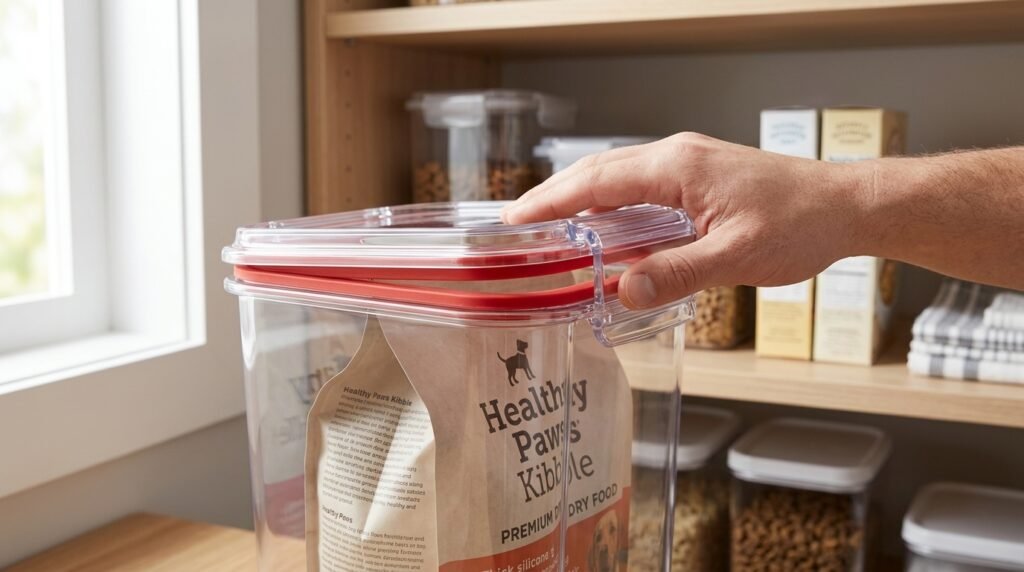
Choose containers manufactured from virgin, food-grade plastics—such as High-Density Polyethylene (HDPE, resin code 2) or Polypropylene (PP, resin code 5)—or durable food-grade stainless steel. These non-reactive materials do not absorb odors or release synthetic chemicals into your pet’s diet.
The seal itself is just as critical as the container’s material. A standard snap-on lid is not truly airtight; it still allows ambient air and humidity to cycle in and out with shifts in household air pressure and temperature. Look for a container that features a thick, continuous silicone or rubber compression gasket around the lid, secured with sturdy mechanical latches or a threaded screw-down top.
An airtight seal also forms your primary line of defense against household pests. Pests such as grain beetles, Indian meal moths, common house ants, and microscopic storage mites (Tyrophagus putrescentiae) can easily slip through loose-fitting lids. Once inside, storage mites feed on grain and fat dust, multiplying by the thousands and causing allergic skin reactions, ear infections, and digestive upset in sensitive dogs.
3. Regulate Climate: Avoid Garages, Basements, and Sunlit Pantries
Temperature regulation plays a massive role in how to store dry dog food during hot summer months and cold winters. Location determines how long dry food stays fresh. Many owners keep bulky food bins in utility rooms, unfinished basements, laundry areas, or attached garages to save kitchen space. Unfortunately, these areas experience significant temperature swings and high humidity, both of which degrade kibble quickly.
When dry pet food experiences ambient temperatures above 80°F (27°C), lipid oxidation accelerates exponentially. Heat breaks down the protective animal fats on the outside of each pellet, turning rich aromas into sour, rancid smells. In humid spaces like laundry rooms or basements, the warm air inside the container meets cooler container walls, forming condensation droplets. This moisture pools on the surface of the kibble, creating an ideal environment for mold and bacterial colonies to develop.
Follow these practical climate-control guidelines for food storage:
- Temperature: Keep food in a climate-controlled room maintained between 50°F and 70°F (10°C to 21°C).
- Humidity: Maintain a dry storage area with relative humidity kept under 15% to 50%.
- Light: Store containers out of direct sunlight and away from heat-generating appliances, including water heaters, furnaces, ovens, and refrigerators.
- Ground Contact: Keep storage bins slightly elevated on a low shelf or pallet rather than resting directly on bare concrete, which transfers dampness and cold to the bottom of the container.
As a general rule, if an area is too humid, hot, or cold for your own comfort, it is not a suitable environment for your dog’s food.
4. Obey the 6-Week Window and Buy the Right Bag Size
Understanding the feeding timeline changes the way you approach how to store dry dog food on a household budget. Buying the largest 40-pound bag on the shelf often feels like the most cost-effective decision. However, buying in bulk works against you if your dog cannot finish the food before its fats break down and its nutrients degrade.
According to nutritional feeding standards from the American Animal Hospital Association (AAHA), an opened bag of commercial dry kibble should be completely consumed within 4 to 6 weeks. Even in an airtight container under optimal pantry conditions, opening the lid once or twice daily introduces oxygen, humidity, and airborne microbes into the remaining food.
+--------------------------------------------------------------------------+
|                  KIBBLE SHELF-LIFE & DEGRADATION TIMELINE                |
+--------------+-----------------------------------------------------------+
| Post-Opening | State of Freshness & Nutritional Integrity                |
+--------------+-----------------------------------------------------------+
| Weeks 1 to 2 | Peak condition; volatile aromas intact; optimal nutrition.|
| Weeks 3 to 4 | Stable quality; trace oxidation begin; widely accepted.   |
| Weeks 5 to 6 | Safe nutritional threshold; sensitive dogs may hesitate.  |
| Week 7+      | High oxidation; vitamin degradation; elevated pest risks. |
+--------------+-----------------------------------------------------------+
Before choosing a bag size, calculate your pet’s actual daily intake:
- Review your dog’s measured daily feeding allowance in cups or grams.
- Calculate how many total pounds your dog consumes over a 30- to 40-day period.
- Select a bag size that aligns closely with that monthly consumption window.
If you care for a toy or small-breed dog (such as a Pomeranian, Shih Tzu, or French Bulldog), buy smaller 4- to 10-pound bags, even if the price per pound is slightly higher. The preserved freshness, palatability, and nutritional quality far outweigh the modest savings of buying bulk food that goes stale before you reach the bottom.
If you occasionally purchase excess food during sales, divide the fresh bag into smaller, heavy-duty airtight freezer bags, press out all excess air, and freeze them. Freezing halts lipid peroxidation and protects delicate vitamins until you are ready to thaw and feed.
5. Wash Scoops and Storage Bins Between Every Refill
Routine hygiene of your feeding accessories is a central part of how to store dry dog food hygienically. Maintaining a clean storage bin requires clean accessories. Kibble scoops and container interiors accumulate a layer of fine dust, broken crumbs, and oxidized animal oils over weeks of daily use.
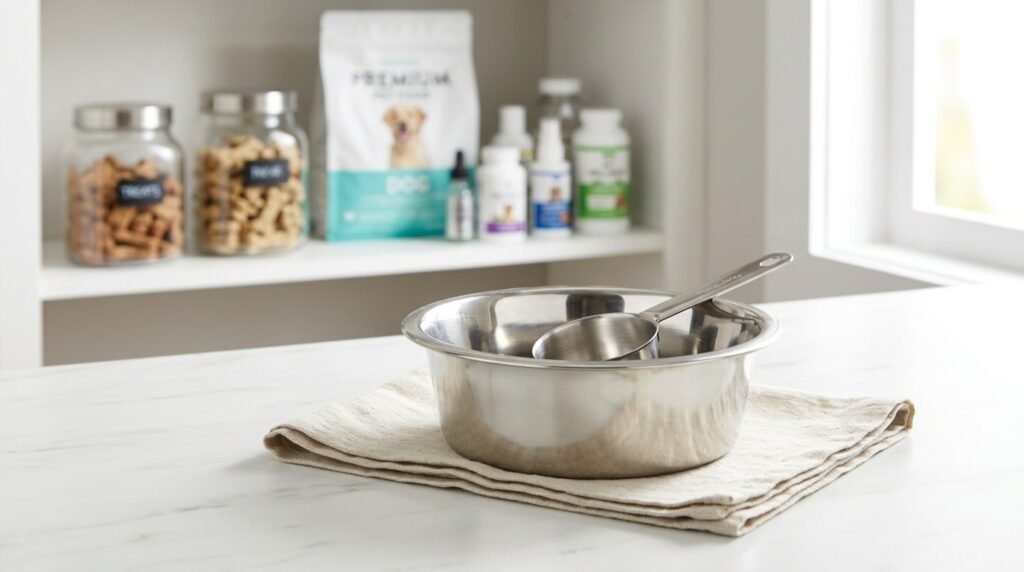
Every time you reach into the food bag, the measuring scoop picks up trace oils from the kibble, microscopic skin particles from your hands, and dust from the surrounding air. If the scoop is set down on a kitchen counter or left sitting inside the bag, it introduces bacteria and moisture directly into your dog’s food supply.
Incorporate these cleaning steps into your feeding routine:
- Wash measuring scoops weekly: Clean plastic, ceramic, or stainless steel scoops in hot, soapy water, or run them through the dishwasher’s sanitizing cycle once a week.
- Clean storage bins between bags: When a bag is finished, take the container to the sink, discard any stray crumbs at the bottom, and wash the interior, rim, and gasket using mild, unscented dish soap and warm water.
- Dry completely before reloading: Never place a new bag of food into a container that is still slightly damp. Trapped moisture quickly causes mold colonies to form. Let the container dry thoroughly in a well-ventilated area before adding fresh food.
These straightforward hygiene habits help protect your dog from common digestive issues, including mild bacterial gastroenteritis, stomach inflammation, and recurring bouts of loose stool.
6. Protect Lot Numbers and Expiration Dates for Safety
Tracking batch codes is a vital safety component when mastering how to store dry dog food in case of product recalls. Pet food recalls happen from time to time due to manufacturing errors, nutrient imbalances (such as excess vitamin D or inadequate thiamine), or microbial contamination. When pet parents discard the original bag and empty the food into an unmarked bin, they lose the critical tracking information needed during a safety recall: the exact brand variety, UPC barcode, manufacturing lot number, and expiration date.
The American Veterinary Medical Association (AVMA) emphasizes that lot codes are necessary to verify whether a particular bag is included in an active recall. Without that data, neither you nor your veterinarian can trace whether a sudden bout of illness is linked to a recalled batch of food.
If you choose not to place the full bag inside your container, take steps to preserve this information:
- Use kitchen shears to cut the printed lot code, UPC, and “Best By” panel cleanly from the sack.
- Tape this cutout directly to the top or side of your airtight storage bin.
- Take a clear photo of the printed code panel and purchase receipt with your smartphone each time you purchase a new bag.
Having this information on hand allows you to check active recall notices quickly and report any unusual product defects directly to the manufacturer or regulatory safety agencies.
7. Know How to Spot Rancid, Moldy, or Contaminated Kibble
Recognizing rancidity signs is just as important as knowing how to store dry dog food properly from day one. Even when you follow every storage guideline, transit delays, warehouse heat, or subtle tears in packaging can occasionally cause food to spoil prematurely. Being able to spot spoiled kibble before it reaches your dog’s bowl helps protect them from preventable digestive illness.
Physical Appearance and Texture
Inspect the kibble pellets carefully whenever you open a new bag and periodically during meal prep:
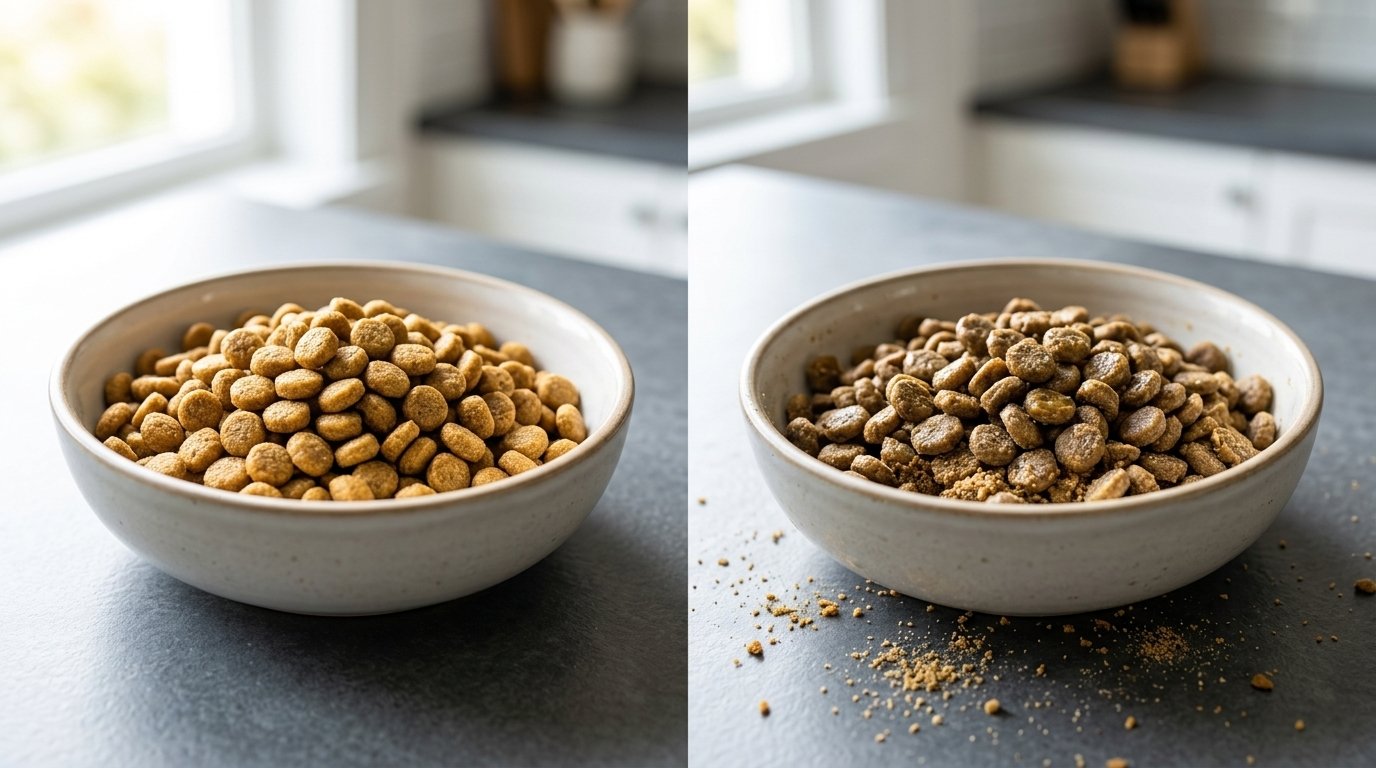
- Darkening or oily surface sheen: Pellets that appear abnormally wet, sticky, or unusually dark may indicate heat damage or oxidized fats that have migrated to the surface.
- Mold fuzz or fine webbing: Look for faint green, white, or grey spots, or web-like strands in the corners of the bag, which indicate insect larvae or active mold growth.
- Powdery dust at the bottom: A heavy layer of fine dust at the base of the bag often indicates storage mite activity, insect infestation, or excessive pellet breakdown.
Scent and Odor
Rancid fat produces a distinct, sour smell. Fresh dry dog food typically has a savory, roasted aroma of meat meals and grains. Spoiled food, by contrast, smells sour, stale, metallic, or remarkably like old paint, wet cardboard, or rancid cooking oil. If a bag smells unpleasantly bitter or chemically sharp, trust your senses and do not feed it to your pet.
Changes in Your Dog’s Eating Behavior
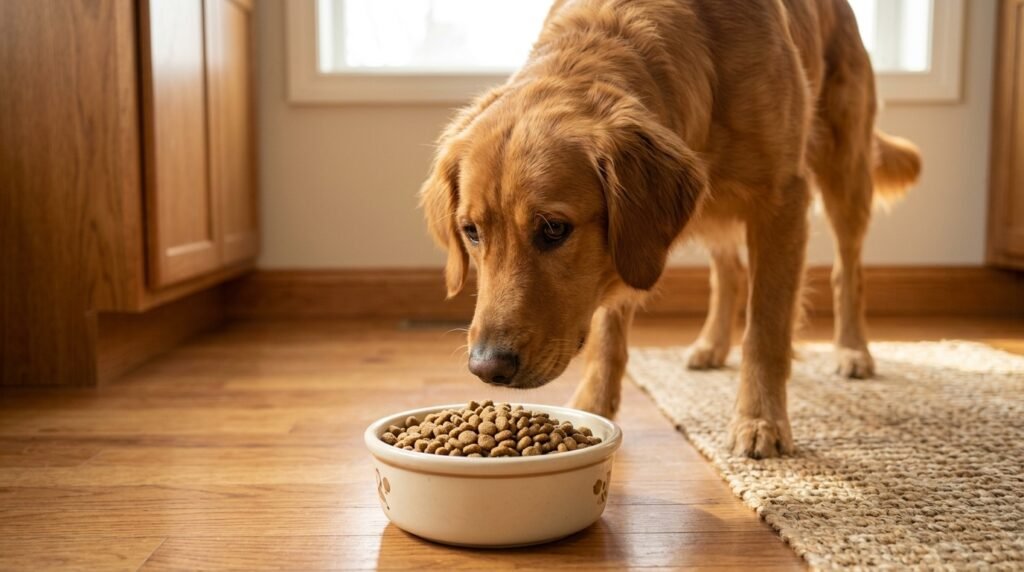
A dog’s sense of smell is far more sensitive than our own, allowing them to detect oxidized aldehydes and early fungal growth long before humans notice an odor. If a dog that normally eats enthusiastically suddenly sniffs the bowl, turns away, or refuses meals entirely, take that behavior seriously.
Do not force your dog to finish food they consistently refuse. For dogs experiencing sudden appetite changes or digestive sensitivities after eating stale food, understanding how to transition your dog to new food provides a gentle, step-by-step approach to introducing a fresh diet without causing stomach upset.
Quick Reference: Dry Dog Food Storage Rules
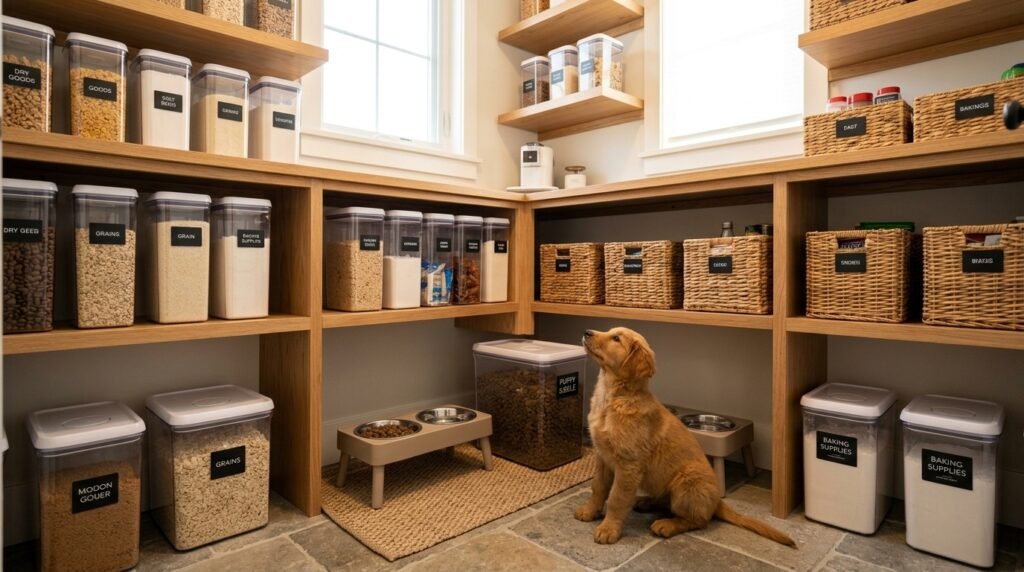
Applying the core guidelines of how to store dry dog food ensures maximum protection for your pet’s daily meals. Use this practical checklist to keep your food storage practices safe and effective:
+--------------------------------------------------------------------------+
|                     DAILY KIBBLE PRESERVATION CHECKLIST                  |
+--------------------------------------------------------------------------+
| [ ] Keep kibble inside its original manufacturer packaging.              |
| [ ] Place the rolled, clipped bag into an airtight food-grade bin.       |
| [ ] Ensure the lid gasket is pressed down and latched securely.          |
| [ ] Store in a cool, dry area between 50°F and 70°F (10°C–21°C).         |
| [ ] Avoid garages, basements, laundry rooms, and direct sunlight.        |
| [ ] Buy bag sizes your pet will easily finish within 4 to 6 weeks.       |
| [ ] Wash measuring scoops weekly in hot, soapy water.                    |
| [ ] Clean and dry the storage bin completely between bag refills.        |
| [ ] Save the lot code and expiration date on the outside of the container|
| [ ] Check for unusual chemical odors, moisture, or insect signs.         |
+--------------------------------------------------------------------------+
Frequently Asked Questions
Can I mix the bottom of an old bag of food with a brand-new bag in the same container?
No, you should never pour the remaining kibble or crumbs from an older bag into a newly opened bag of food. The leftover food has already undergone several weeks of oxidation and carries a higher bacterial load. Combining old food with fresh food transfers oxidized fats and residual dust directly to the fresh kibble, accelerating its spoilage. Always feed the older bag completely, wash and dry the storage container, and then open and store the new bag.
Is it safe to store dry dog food in an attached garage during winter?
Even during cold winter months, storing dry food in an attached garage is not recommended. Daily temperature changes between daytime highs and freezing nights cause condensation to form inside the bag. In addition, cold weather drives mice, rats, and insects indoors searching for warmth and food. Rodents can chew through packaging and containers, spreading pathogens like Leptospira through their urine and droppings. Keep dry food inside a climate-controlled home pantry instead.
Does freezing dry dog food damage its nutritional value?
No, freezing dry kibble does not damage its nutritional value. Freezing stops lipid oxidation, preserves heat-sensitive vitamins, and halts the reproductive cycle of storage mites or pantry pests. Divide bulk food into airtight freezer bags, squeeze out excess air, and store in the freezer for up to six months. When you remove a portion, let it thaw completely to room temperature while still sealed in the bag to prevent atmospheric humidity from condensing on the cold pellets.
What should I do if I find storage mites or insects in my dog’s food?
If you spot weevils, moths, or a moving brownish powder at the bottom of the container (a hallmark sign of storage mites), stop feeding the food immediately and dispose of the entire bag in an outdoor trash bin. Wash the storage bin and surrounding pantry shelves thoroughly with hot, soapy water to remove lingering eggs or larvae. Storage mites are a significant allergen that can cause intense itching, facial rubbing, and secondary skin infections in dogs. If your dog exhibits hives, vomiting, or diarrhea after eating from an infested bag, contact your veterinarian for evaluation.
Conclusion
Mastering how to store dry dog food is a simple, high-impact habit that preserves your dog’s daily vitality, digestive health, and dinner-time enjoyment. By keeping kibble sealed inside its specialized original packaging, setting that bag inside a food-grade airtight container, and storing it in a cool, climate-controlled space, you protect your companion from oxidized fats, dangerous molds, and pest infestations.
Practicing the best techniques for how to store dry dog food guarantees that every scoop provides the safe, balanced nutrition your dog needs to thrive. Choose bag sizes tailored to your dog’s monthly intake, clean feeding accessories regularly, and pay close attention to any changes in the food’s aroma, appearance, or your dog’s appetite. When you prioritize proper kibble preservation, you turn every meal into a reliable source of clean energy and long-term canine wellness.