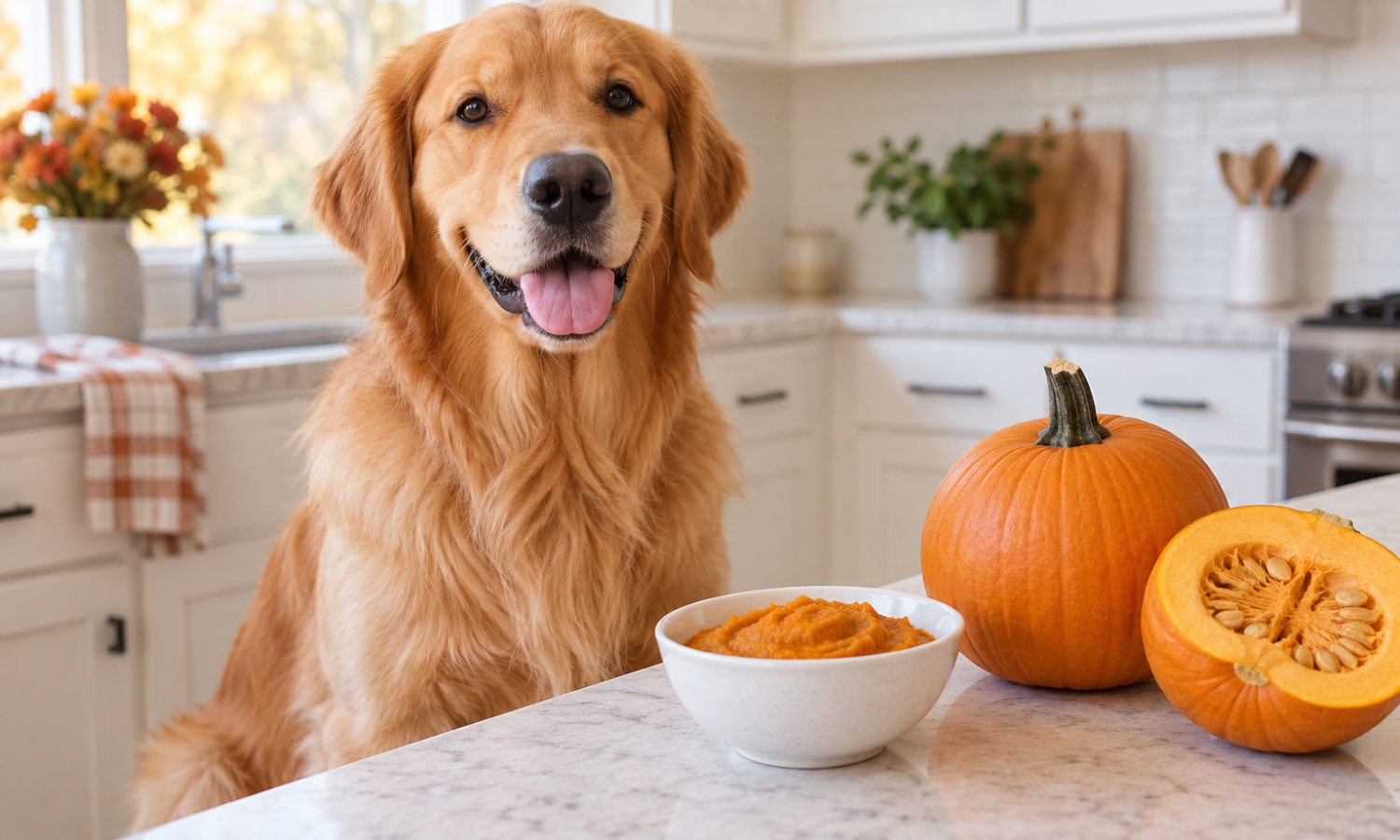
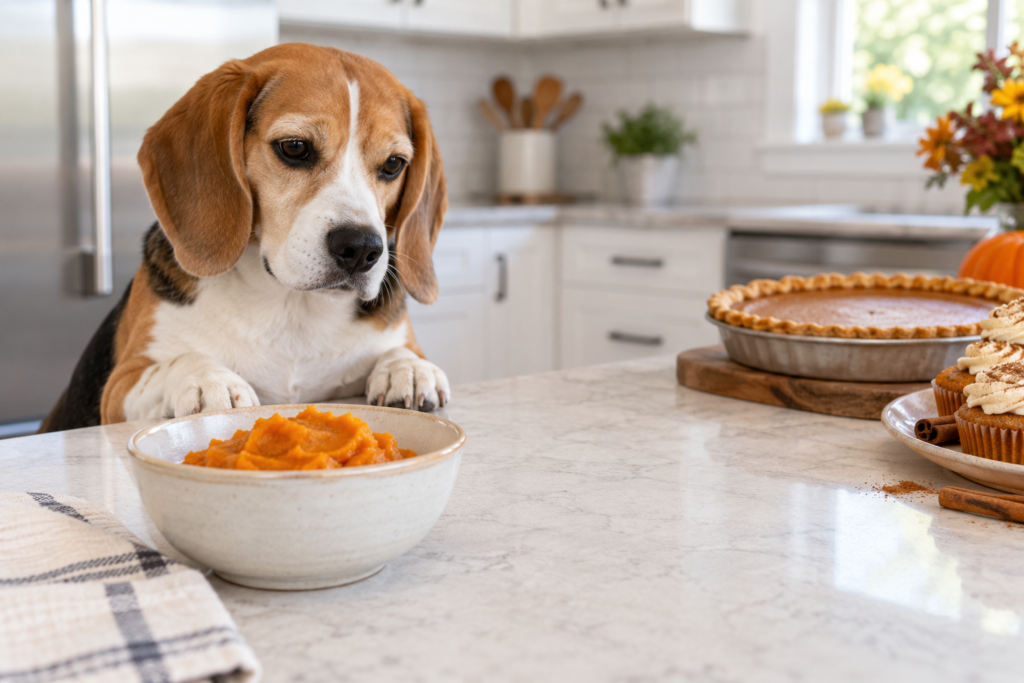
Can dogs eat pumpkin? Yes. Most healthy dogs can safely eat small portions of plain, cooked pumpkin or 100% pure canned pumpkin. Its moisture and fiber can make it a useful occasional food topper, and veterinarians may sometimes recommend it as part of a plan for mild digestive problems.
The important word is plain. Pumpkin pie filling, sweetened pumpkin desserts, heavily seasoned pumpkin, and sugar-free products are not safe substitutes. Even plain pumpkin can cause gas, loose stool, constipation, or an unbalanced diet when owners serve too much.
This guide explains which pumpkin products are safe, how much to offer, when pumpkin may support digestion, and when your dog’s symptoms require veterinary attention.
Table of Contents
Can Dogs Eat Pumpkin Safely?
Yes, dogs can eat pumpkin when it is cooked, unseasoned, and served in moderation. The simplest options are:
- 100% pure canned pumpkin
- Fresh pumpkin that has been cooked until soft
- Plain homemade pumpkin puree
- A dog-specific pumpkin product with a simple ingredient list
According to PetMD’s veterinarian-reviewed pumpkin guidance, plain cooked pumpkin and pure canned pumpkin are generally safe for dogs. Products containing sugar, salt, spices, sweeteners, or rich dairy ingredients should be avoided.
Pumpkin should normally be an addition to a dog’s regular food rather than a replacement for it. A complete and balanced dog food supplies carefully proportioned protein, fat, vitamins, minerals, and essential amino acids. Pumpkin alone cannot meet those nutritional requirements.
A small amount mixed with regular food is quite different from replacing an entire meal with pumpkin. Frequent substitutions can dilute the nutrition supplied by your dog’s normal diet, particularly in small dogs and puppies with limited daily calorie needs.
Quick pumpkin safety guide
| Pumpkin product | Safe for dogs? | Important conditions |
|---|---|---|
| 100% canned pumpkin | Yes | Must contain plain pumpkin only |
| Cooked fresh pumpkin | Yes | Remove stem, tough skin, and stringy material |
| Homemade plain puree | Yes | Do not add butter, oil, sugar, salt, or spices |
| Raw pumpkin flesh | Not recommended | Difficult to chew and digest |
| Pumpkin rind or stem | No | Tough and potentially hazardous if swallowed |
| Pumpkin pie filling | No | May contain sugar, fat, spices, or unsafe sweeteners |
| Pumpkin pie | No | Usually high in sugar and fat |
| Pumpkin-spice products | Usually no | Often contain sugar, dairy, caffeine, or other unsuitable ingredients |
| Plain pumpkin seeds | Only cautiously | Shells and excess fat may cause problems |
Is Pumpkin Good for Dogs?
Pumpkin can be a useful supplemental food, but it should not be treated as a cure-all or essential daily ingredient. Its primary practical benefit is its fiber content.
Fiber affects stool consistency, intestinal movement, and the environment in which intestinal microorganisms live. Pumpkin also contains water and several naturally occurring nutrients, including beta-carotene, which the body can convert into vitamin A.
Potential benefits include:
- Adding fiber to the diet
- Supporting normal stool consistency
- Providing a moist, low-fat food topper
- Adding variety to a dog’s treat rotation
- Making regular food more appealing to some dogs
- Supporting fullness when incorporated into a veterinarian-approved feeding plan
These benefits depend on the dog, portion, underlying condition, and rest of the diet. Pumpkin does not reliably produce the same effect in every dog.
A dog already eating a fiber-rich therapeutic diet may not benefit from additional pumpkin. Adding more fiber could instead cause gas or alter stool quality. Dogs with chronic digestive disease may require a specific type and amount of fiber rather than a general household food.
Owners interested in the broader relationship between diet, fiber, intestinal microorganisms, and stool quality can also review these practical strategies for supporting dog gut health.
Does pumpkin provide important nutrients?
Pumpkin contains carotenoids, moisture, fiber, and small amounts of various vitamins and minerals. However, its nutritional value should be kept in perspective.
A spoonful used as a topper supplies only a modest amount of these nutrients. If your dog already eats a complete and balanced food, pumpkin should be viewed primarily as a supplemental treat or fiber source—not as a vitamin supplement.
Serving excessively large portions in pursuit of more nutrients can do more harm than good. Too much may contribute to digestive upset while displacing the balanced food your dog actually needs.
Can Pumpkin Help Dogs With Diarrhea?
Pumpkin may help some dogs experiencing mild, uncomplicated loose stool because its soluble fiber can hold water and add bulk to feces. The American Kennel Club’s guidance on pumpkin and dog diarrhea also notes that fiber can influence stool consistency and the intestinal environment.
However, diarrhea is a symptom, not a diagnosis. It can develop because of:
- Sudden food changes
- Dietary indiscretion
- Stress
- Parasites
- Viral or bacterial infections
- Food intolerance
- Toxins
- Pancreatic disease
- Inflammatory digestive conditions
- Medication side effects
- Foreign-body obstruction
- Diseases outside the digestive tract
Pumpkin cannot correct all these causes. It should never be used to delay veterinary care when a dog is seriously ill.
For an otherwise bright, comfortable adult dog with a single mild episode of soft stool, a small amount of plain pumpkin may be reasonable if the dog has no relevant medical restrictions. Keep fresh water available and observe the dog closely.
Contact your veterinarian before trying home management if the dog is a young puppy, very small, elderly, pregnant, chronically ill, taking medication, or receiving a therapeutic diet.
The VCA overview of diarrhea in dogs explains that veterinarians evaluate factors such as duration, severity, accompanying signs, diet, exposure history, and the dog’s overall condition. This is why a spoonful of pumpkin should not be seen as a universal diarrhea treatment.
When pumpkin should not be your first response
Do not rely on pumpkin alone when diarrhea is:
- Bloody, black, or tar-like
- Profuse or completely watery
- Accompanied by repeated vomiting
- Associated with weakness, collapse, or marked lethargy
- Occurring in a puppy
- Accompanied by a painful or swollen abdomen
- Continuing or repeatedly returning
- Developing after possible toxin or foreign-object ingestion
If your dog cannot retain water, appears dehydrated, refuses food, or deteriorates quickly, contact a veterinarian promptly.
Can Pumpkin Help With Dog Constipation?
Pumpkin may help certain dogs with mild constipation because fiber can increase stool bulk and influence intestinal movement. Its moisture can also be useful when served as puree.
However, fiber without adequate water can sometimes worsen constipation. A dog receiving added pumpkin must have access to fresh water unless a veterinarian has prescribed a different fluid-management plan.
Constipation can be associated with:
- Dehydration
- Pain while squatting
- Ingested bones or foreign material
- Excessive hair consumption
- Reduced activity
- Certain medications
- Neurologic problems
- Pelvic injuries
- Prostate enlargement
- Masses or narrowing within the intestinal tract
Repeated straining does not always mean constipation. Dogs with urinary difficulty may repeatedly posture without producing much urine, and urinary obstruction can be an emergency.
Contact a veterinarian if your dog strains repeatedly, seems painful, has a tense abdomen, vomits, passes blood, cannot urinate normally, or has not produced stool within the time your veterinarian considers normal.
Pumpkin may be part of a veterinarian-recommended plan after serious causes have been excluded, but it should not replace an examination when the dog is uncomfortable or unwell.
What Kind of Pumpkin Can Dogs Eat?
The best choice is normally 100% pure canned pumpkin with no added ingredients. It is convenient, consistent, soft, and easy to measure.
Turn the can around and read the ingredient panel. Ideally, it should list only pumpkin. The front of the can can be misleading because pure pumpkin puree and pumpkin pie filling are often sold close together and may have similar packaging.
Canned pumpkin
Choose a product labeled:
- 100% pumpkin
- Pure pumpkin
- Pumpkin puree
Avoid products containing:
- Added sugar
- Syrups
- Salt
- Butter or oils
- Pumpkin-pie spice
- Artificial sweeteners
- Flavorings
- Dairy ingredients
Fresh cooked pumpkin
Dogs can eat the cooked flesh of an edible pumpkin. Sugar pumpkins or pie pumpkins generally have better flavor and texture than large decorative carving pumpkins.
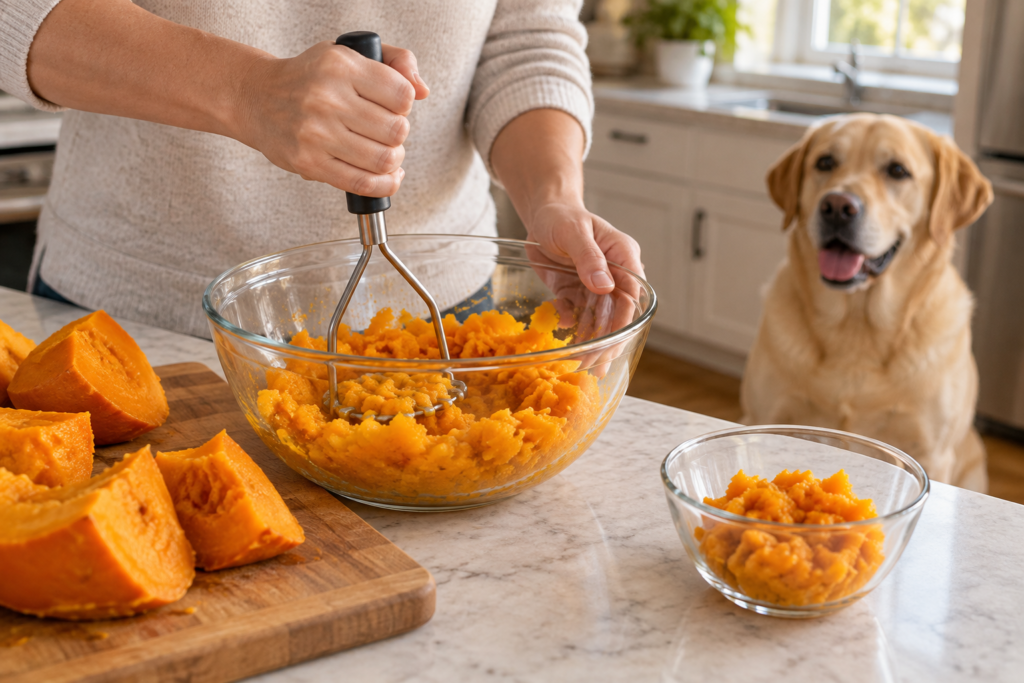
To prepare fresh pumpkin:
- Wash the outside before cutting.
- Remove the stem.
- Cut the pumpkin carefully.
- Scoop out the seeds and stringy material.
- Bake, steam, or boil the flesh without seasoning.
- Remove the tough skin.
- Mash or puree the soft flesh.
- Allow it to cool fully before serving.
- Refrigerate or freeze unused portions promptly.
Do not add butter, cooking oil, salt, sugar, milk, cream, cinnamon, nutmeg, or sweeteners.
Owners who regularly prepare food at home should remember that adding wholesome ingredients does not automatically create a complete diet. PawMindTips’ vet-informed homemade dog food guide explains why long-term homemade feeding requires careful nutritional formulation.
Raw pumpkin
A small accidental bite of raw pumpkin flesh is unlikely to be toxic to most dogs, but deliberately serving it is not recommended. Raw pumpkin is tougher to chew and digest than cooked pumpkin and may cause stomach upset.
Large hard pieces could also present a choking risk, particularly for small dogs, enthusiastic eaters, and dogs with dental problems.
Pumpkin skin, stem, and stringy pulp
Do not intentionally feed the tough rind, stem, or large amounts of stringy interior material. These parts are difficult to chew and digest. Large swallowed pieces may become lodged in the throat or digestive tract.
Decorative pumpkins may also have dirt, mold, wax, paint, preservatives, or environmental contaminants on their surfaces. Keep old porch pumpkins away from dogs, especially once they begin to soften or decay.
Pumpkin seeds
Plain, cleaned pumpkin seeds are not generally regarded as toxic, but they are not the best way to introduce pumpkin to most dogs. Whole seeds and shells can be difficult for small dogs to manage, and seasoned seeds may contain excessive salt, fat, garlic, onion, or spicy coatings.
Seeds are also more calorie-dense than puree. If you want to offer them, consult your veterinarian about whether a small amount of finely ground, plain seed is appropriate for your particular dog.
Pumpkin Products Dogs Should Avoid
A food containing the word “pumpkin” is not automatically dog-safe. Many seasonal pumpkin products are designed for people and contain far more sugar, fat, and flavoring than a dog needs.
Avoid giving your dog:
- Pumpkin pie filling
- Pumpkin pie
- Pumpkin bread
- Pumpkin muffins
- Pumpkin cheesecake
- Pumpkin-spice cookies
- Sweetened pumpkin puree
- Pumpkin-flavored coffee
- Pumpkin-spice lattes
- Pumpkin candy
- Sugar-free pumpkin desserts
- Heavily salted roasted pumpkin seeds
Rich, fatty foods may cause vomiting or diarrhea and can be especially risky for dogs with a history of pancreatitis. Baked products might also contain chocolate, raisins, macadamia nuts, or xylitol.
The ASPCA’s list of people foods to avoid identifies several ingredients commonly found in human desserts that can harm pets, including xylitol, chocolate, raisins, macadamia nuts, and excessive salt.
Why xylitol deserves special attention
Sugar-free does not mean dog-safe. Some low-sugar baked goods and desserts may contain xylitol, which may also appear on a label as birch sugar or wood sugar.
The U.S. Food and Drug Administration warns that xylitol is dangerous to dogs. It can trigger a rapid, profound drop in blood sugar and may cause weakness, poor coordination, collapse, seizures, or liver damage.
If your dog consumes a product containing xylitol, contact a veterinarian, emergency clinic, or animal poison-control service immediately. Do not wait for symptoms and do not induce vomiting unless a veterinary professional specifically instructs you to do so.
Learning to examine ingredient panels is important for all supplemental foods, not just pumpkin products. This guide to dangerous dog-food ingredients provides additional label-reading guidance.
How Much Pumpkin Can a Dog Eat?
There is no single medically appropriate pumpkin dosage for every dog. The best quantity depends on:
- Body weight
- Normal diet
- Daily calorie needs
- Existing fiber intake
- Stool quality
- Medical conditions
- Purpose for offering pumpkin
- Veterinarian recommendations
The safest general approach is to begin with a small amount and watch how your dog responds. The table below provides conservative starting portions for occasional use, not treatment doses.
| Dog’s size | Conservative starting amount |
|---|---|
| Toy dog under 10 pounds | ¼–½ teaspoon |
| Small dog, 10–25 pounds | ½–1 teaspoon |
| Medium dog, 26–50 pounds | 1–2 teaspoons |
| Large dog, 51–75 pounds | 1 tablespoon |
| Giant dog over 75 pounds | 1–2 tablespoons |
Mix the pumpkin into your dog’s usual food rather than serving a large bowl of it separately. If your dog has not eaten pumpkin before, begin at the lower end.
These portions can be divided between meals. Wait long enough to evaluate appetite, stool consistency, gas, and abdominal comfort before considering an increase.
Online recommendations sometimes suggest much larger quantities for diarrhea or constipation. Do not automatically apply those quantities to every dog. A four-pound Chihuahua, an eighty-pound Labrador, and a dog already receiving a high-fiber prescription diet have very different needs.
When pumpkin is being considered for a digestive symptom rather than as an occasional treat, ask your veterinarian for an appropriate amount and duration.
Keep extras within the treat allowance
Pumpkin and other supplemental foods should not crowd out a complete and balanced diet. As a widely used general guideline, treats and extras should collectively provide no more than about 10% of a dog’s daily calories, while the main diet supplies the remaining calories.
The appropriate limit may be lower for dogs that are:
- Overweight
- Very small
- Diabetic
- Receiving a prescription diet
- Prone to pancreatitis
- Managing kidney, liver, or heart disease
- Following a veterinary elimination-food trial
Plain pumpkin is relatively low in calories, but portion control still matters because nutritional dilution and excess fiber—not merely calories—can create problems.
How to Introduce Pumpkin to Your Dog
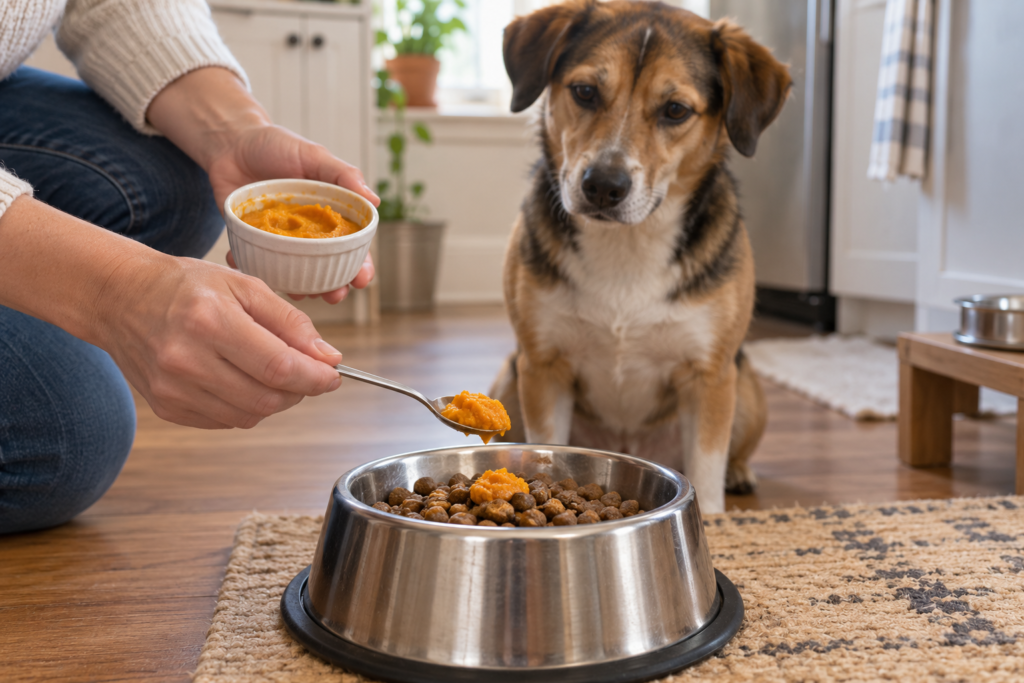
Introduce pumpkin gradually, even if your dog has a strong stomach.
- Confirm the ingredients. Use plain cooked pumpkin or a product containing 100% pumpkin only.
- Begin with a small portion. Use the lower end of the suggested starting range.
- Mix it into familiar food. This makes the portion easier to control and may reduce gulping.
- Keep water available. Adequate hydration is especially important when adding fiber.
- Avoid adding other new foods. Introducing several ingredients at once makes it difficult to identify what caused a reaction.
- Observe your dog. Watch appetite, energy, stool consistency, gas, vomiting, itching, and general comfort.
- Stop if symptoms develop. Do not keep increasing the amount to “push through” digestive upset.
Easy dog-safe serving ideas
Plain pumpkin can be:
- Stirred into regular dog food
- Spread in a thin layer on a lick mat
- Placed in a food-stuffable toy
- Frozen in tiny individual portions
- Combined with your dog’s usual food and frozen
- Used as an occasional topper
If you freeze pumpkin, use small molds so portions are easy to control. Thaw the appropriate amount in the refrigerator or add a suitably sized frozen portion to an enrichment toy if your dog safely handles frozen treats.
Refrigerate opened canned pumpkin in a covered container and follow the manufacturer’s storage instructions. Discard it if you notice mold, bubbling, an unusual odor, or other signs of spoilage.
Risks and Side Effects of Pumpkin for Dogs
Can dogs eat pumpkin without experiencing any problems? Many can, but no supplemental food agrees with every dog.
Possible side effects include:
- Gas
- Abdominal discomfort
- Loose stool
- More frequent bowel movements
- Constipation
- Reduced appetite for normal food
- Vomiting
- Nutritional imbalance from excessive use
Too much fiber can interfere with normal digestion and may affect how the body handles other nutrients. Suddenly introducing a large quantity is more likely to create problems than offering a small amount gradually.
Dogs that need additional caution
Speak with your veterinarian before adding pumpkin if your dog:
- Has diabetes
- Has kidney or heart disease
- Has chronic gastrointestinal disease
- Has a history of pancreatitis
- Has food allergies
- Eats a prescription or therapeutic diet
- Is participating in an elimination-food trial
- Takes medications or supplements
- Is underweight or has unexplained weight loss
- Is pregnant or nursing
- Is a very young puppy
Plain pumpkin itself is low in fat, but that does not make every pumpkin recipe appropriate for a dog with pancreatitis. Butter, cream, oils, pastry, and other rich ingredients substantially change the food.
Dogs participating in a strict food trial should not receive pumpkin unless the veterinarian supervising the trial approves it. Even a generally safe ingredient can interfere with the process of identifying a food reaction.
When to Call a Veterinarian
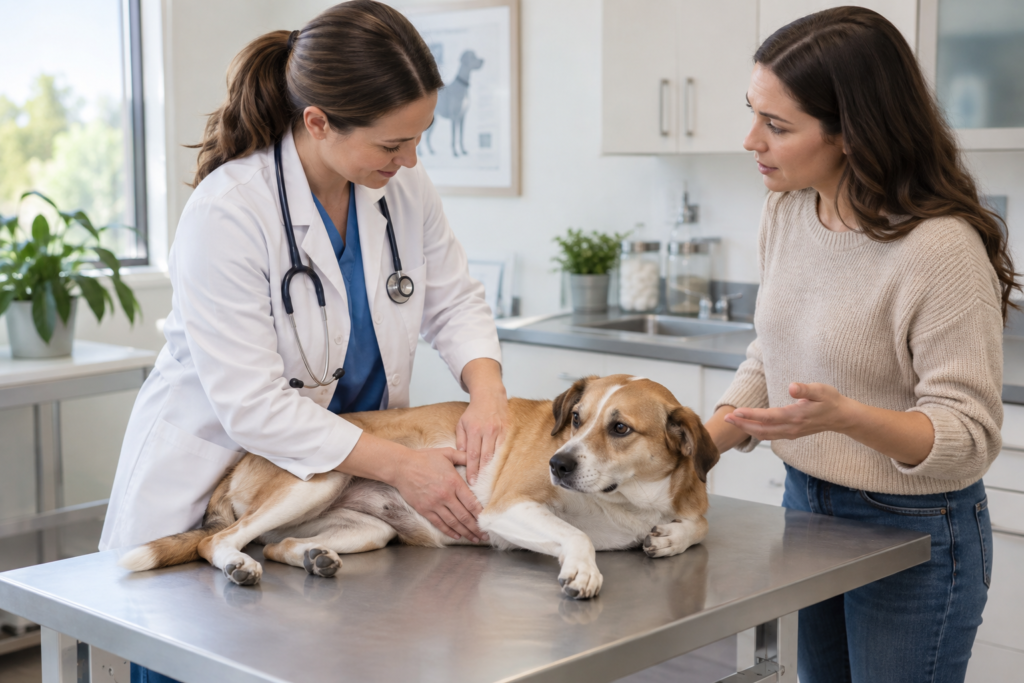
Pumpkin is food, not a diagnostic test or guaranteed treatment. Contact your veterinarian if digestive symptoms are significant, worsening, recurrent, or accompanied by changes in your dog’s general condition.
Seek prompt veterinary advice for:
- Repeated vomiting
- Blood in vomit or stool
- Black, tar-like stool
- Severe or watery diarrhea
- A swollen or painful abdomen
- Repeated unproductive straining
- Inability to urinate normally
- Weakness, trembling, or collapse
- Marked lethargy
- Refusal of both food and water
- Signs of dehydration
- Suspected toxin exposure
- Possible ingestion of rind, stem, packaging, or another foreign object
- Symptoms in a puppy, frail senior dog, or dog with chronic illness
A veterinarian may need to examine your dog and perform fecal, blood, urine, or imaging tests depending on the symptoms. Continuing to add pumpkin without knowing the cause could delay appropriate treatment.
Possible food or xylitol exposure
If your dog ate pumpkin pie filling or a pumpkin-flavored product, retain the packaging and review the complete ingredient list.
Contact a veterinary professional immediately if it contains or may contain:
- Xylitol
- Chocolate
- Raisins
- Macadamia nuts
- Alcohol
- Large amounts of onion or garlic
Tell the clinic:
- Your dog’s approximate weight
- The exact product
- Estimated amount eaten
- Time of ingestion
- Current symptoms
- Relevant medical conditions
Do not attempt an online home remedy or induce vomiting unless a veterinarian or poison-control professional gives explicit instructions.
Frequently Asked Questions
Can dogs eat canned pumpkin every day?
Some dogs can tolerate a small daily amount, but daily use should have a clear nutritional or veterinary purpose. Pumpkin should not displace complete dog food. Ask your veterinarian before making it a routine supplement, especially if your dog has a medical condition or therapeutic diet.
Can dogs eat pumpkin puree from a can?
Yes, provided the can contains 100% pure pumpkin without sugar, salt, spices, sweeteners, or other additives. Do not confuse plain puree with pumpkin pie filling.
How quickly does pumpkin work for a dog’s diarrhea?
There is no guaranteed timetable. Stool may improve after subsequent bowel movements when the cause is minor, but pumpkin will not resolve diarrhea caused by parasites, infection, toxins, obstruction, or many medical diseases. Contact your veterinarian if symptoms persist, worsen, or occur with other warning signs.
Can puppies eat pumpkin?
A healthy, weaned puppy may sometimes eat a very small amount of plain pumpkin, but diarrhea in puppies can become serious quickly. Do not use pumpkin to postpone veterinary advice, particularly when diarrhea is repeated, bloody, accompanied by vomiting, or affecting the puppy’s energy and appetite.
Conclusion
Can dogs eat pumpkin? Yes—plain cooked pumpkin and 100% canned pumpkin can be safe for most healthy dogs when introduced gradually and served in small portions.
Check the label carefully, avoid pumpkin pie filling and sweetened products, and treat pumpkin as a supplemental food rather than a meal replacement. If you are using it because your dog has diarrhea, constipation, or another digestive concern, remember that it may change stool consistency but cannot diagnose or correct every underlying cause.
Start small, monitor your dog, keep water available, and contact your veterinarian when symptoms are persistent, severe, painful, or accompanied by changes in energy, appetite, hydration, or behavior.