A dog food transition should usually happen gradually rather than in a single meal. Begin with approximately 25% new food and 75% old food, increase the new food every two days, and aim to complete the switch in seven to ten days. Dogs with sensitive digestion may need 10–14 days or longer.
Changing food too quickly can contribute to loose stool, gas, vomiting, nausea, or appetite changes. A slow schedule gives you time to see how your dog responds and pause before a minor problem becomes more uncomfortable.
This guide provides an easy transition chart, practical portion examples, signs to monitor, and clear instructions for slowing or stopping the process. It is intended for routine food changes in otherwise healthy dogs. Ask your veterinarian for an individualized plan if your dog has an illness, takes medication, eats a prescription diet, or is already experiencing digestive symptoms.
Table of Contents
Why a Gradual Dog Food Transition Matters
A dog’s digestive system becomes accustomed to the ingredients, nutrient levels, fat content, fiber, moisture, and digestibility of its usual food. A new formula may differ in several of these areas even when both products appear similar on the package.
Replacing the entire meal suddenly can introduce a substantial dietary change at once. Some dogs tolerate that change, but others develop:
- Soft or watery stool
- Increased gas
- Abdominal discomfort
- Vomiting
- Nausea or lip licking
- Reduced appetite
- More frequent bowel movements
- Changes in stool color or volume
These signs do not automatically mean the new food is dangerous or unsuitable. Sometimes they mean the transition moved too quickly. However, persistent or severe symptoms should not be dismissed as a normal adjustment.
A gradual dog food transition has another practical benefit: it helps you identify which change may be responsible if a problem develops. Avoid introducing multiple new treats, chews, supplements, toppers, or table foods during the same period. Otherwise, it becomes difficult to tell whether the new diet or another item caused the reaction.
What to Do Before Switching Dog Food
A successful switch begins before you mix the first bowl.
Confirm that the new food suits your dog
Choose a food appropriate for your dog’s life stage, health, body condition, and nutritional needs. The FDA’s explanation of complete and balanced pet food notes that a nutritional adequacy statement indicates whether a product is intended to supply complete nutrition as a sole diet for the stated life stage.
Check whether the label identifies the food for:
- Growth, including puppies
- Adult maintenance
- All life stages
- Supplemental or intermittent feeding
- Veterinary-supervised therapeutic use
“Premium,” “holistic,” or visually appealing ingredients do not prove that a food is nutritionally appropriate. The WSAVA guidelines for selecting pet food recommend evaluating nutritional expertise, quality-control practices, feeding information, research, and the nutritional adequacy statement.
If ingredient labels feel confusing, PawMindTips’ guide to understanding dog food fillers explains why the complete formula matters more than fear-based marketing around individual ingredients.
Compare calories, not just cups
Do not assume one cup of the new food contains the same number of calories as one cup of the old food. Feeding equal volumes of two calorie-different foods can unintentionally increase or reduce your dog’s energy intake.
Compare the calories per cup, can, tray, or kilogram on both packages. Then determine the appropriate daily serving of the new food using:
- Your dog’s current weight
- Body condition
- Activity level
- Life stage
- The new product’s calorie information
- Your veterinarian’s feeding recommendation
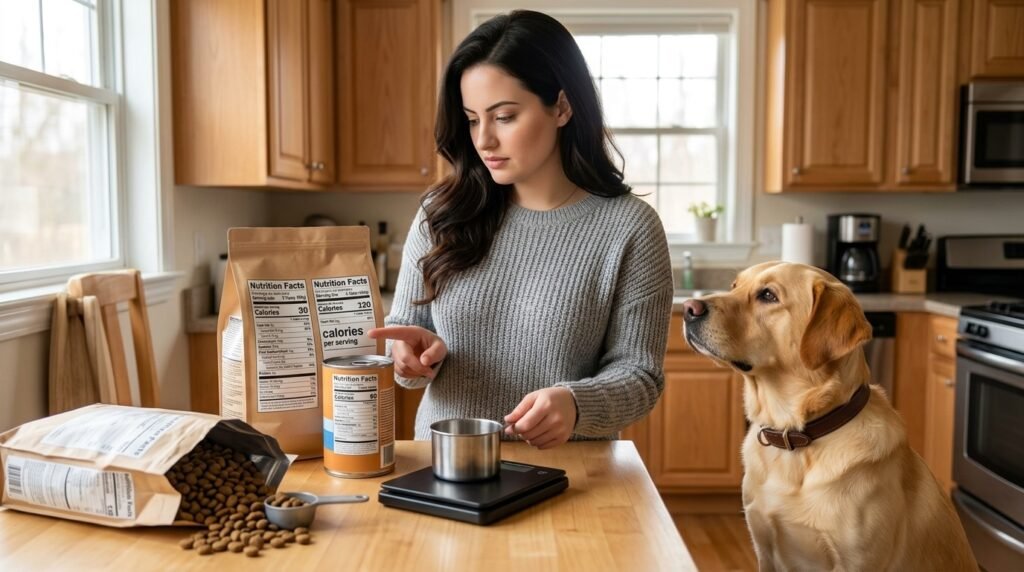
The percentage schedule in this guide refers to the proportion of the intended daily ration, not an instruction to add extra food on top of your dog’s usual amount.
Obtain enough of the old food
Keep at least several days of the current food available. If you wait until the old bag is empty, you may be forced into an abrupt change.
When buying a new bag, check its expiration or best-by date, packaging condition, and lot information. Store the old and new products separately in their original packaging so you can identify each food and retain the lot numbers.
PawMindTips’ guide on how to store dry dog food explains how to protect kibble from heat, moisture, pests, and loss of freshness.
Establish a simple baseline
Before beginning, note your dog’s normal:
- Appetite
- Stool firmness and frequency
- Energy
- Water consumption
- Skin and coat condition
- Body weight
- Treat intake
This baseline makes subtle changes easier to recognize. If your dog already has vomiting, diarrhea, appetite loss, or unexplained weight change, contact your veterinarian before assuming that a different food will solve the problem.
Dog Food Transition Schedule for Seven Days
The following schedule is suitable as a general starting point for many healthy adult dogs. Keep the total daily amount appropriate for your dog instead of adding the new food on top of the regular meal.
| Days | Old food | New food |
|---|---|---|
| Days 1–2 | 75% | 25% |
| Days 3–4 | 50% | 50% |
| Days 5–6 | 25% | 75% |
| Day 7 onward | 0% | 100% |
Veterinary-reviewed feeding guidance commonly recommends a gradual change over approximately seven days. The AKC’s guide to switching dog foods uses the same basic 25%, 50%, 75%, and 100% progression while emphasizing that dogs with digestive sensitivity may need more time.
Treat this chart as a starting framework, not an inflexible deadline. Advance only when your dog is eating normally and producing reasonably consistent stool.
Days 1–2: Introduce 25% new food
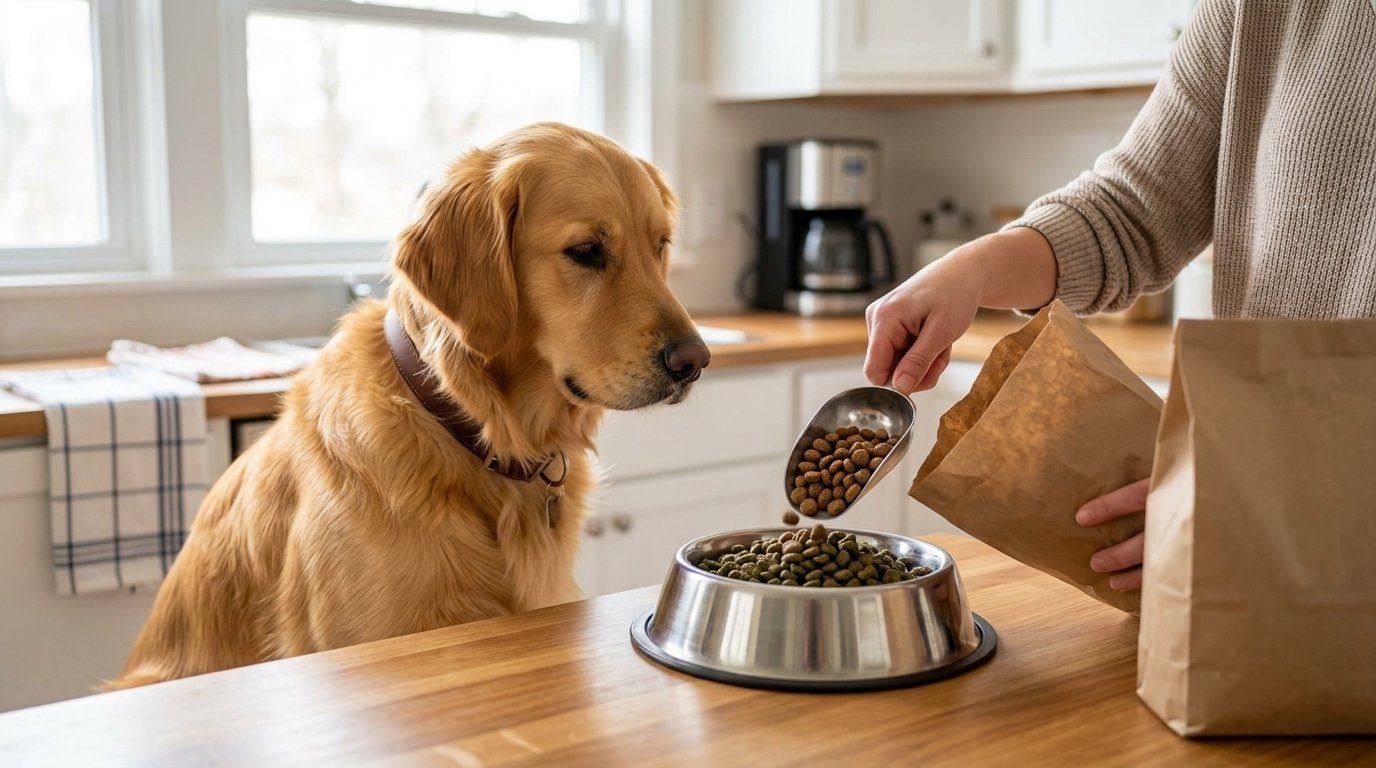
Serve approximately three parts old food and one part new food. Mix the foods evenly rather than placing the unfamiliar food in a separate pile.
During the first 48 hours, watch for:
- Willingness to eat
- Stool becoming substantially softer
- Unusual gas
- Vomiting
- Repeated lip licking or signs of nausea
- Itching, redness, or swelling
- Changes in energy
If your dog remains comfortable, move to the next stage. If mild soft stool develops, hold this ratio for another day or two instead of increasing the new food immediately.
Days 3–4: Move to a 50/50 mixture
Half of the planned ration now comes from the old food and half from the new one. This midpoint is often when differences in fat, fiber, protein, or moisture become more noticeable.
Continue normal meal timing. Do not compensate for hesitation by repeatedly adding rich toppers, cheese, meat drippings, or table scraps. Doing so changes the meal again and can encourage a dog to wait for increasingly appealing extras.
If your dog refuses the mixed meal, first verify that both foods smell fresh and were stored correctly. A little warm water may increase aroma, but do not add onion- or garlic-containing broth.
Days 5–6: Increase to 75% new food
At this stage, only one quarter of the ration comes from the old diet. Continue monitoring appetite, stool quality, energy, and comfort.
A slight difference in stool size, color, or frequency can occur because formulas differ. What matters is whether the change is mild and stabilizing or progressively worsening.
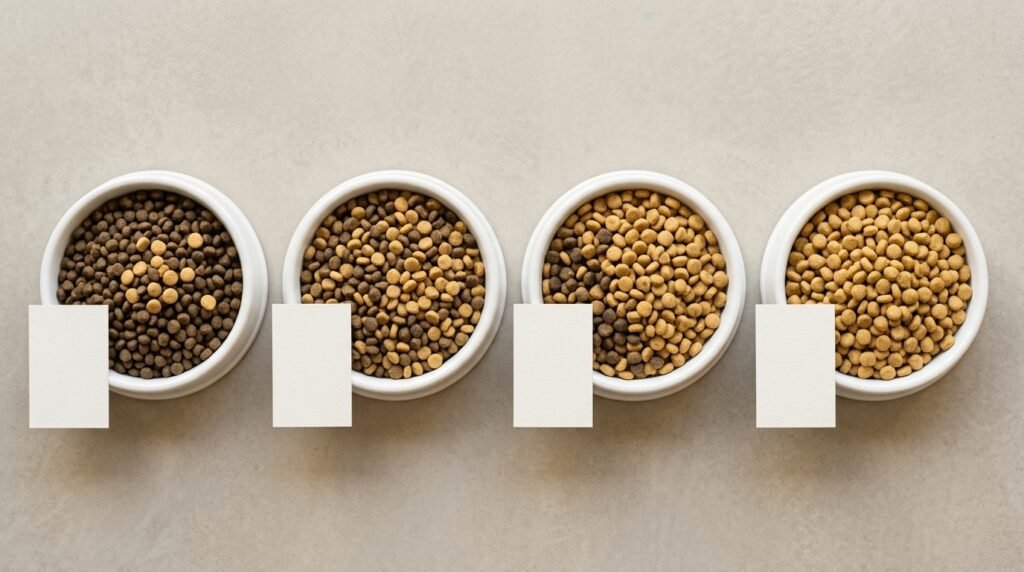
Stay at this stage longer if the stool becomes somewhat softer but your dog otherwise acts normal. Return to the previous well-tolerated ratio if the problem increases.
Day 7 and beyond: Feed 100% new food
Move to the full new diet when your dog has tolerated the earlier stages. Continue observation for at least another week because not every problem appears during the first meal.
Once the dog food transition is complete:
- Use the new product’s feeding amount as a starting point
- Monitor body weight and body condition
- Adjust portions with veterinary guidance
- Keep treats and toppers within an appropriate calorie allowance
- Retain the bag or label until the food is finished
- Record the product name, recipe, lot number, and purchase date
How to Calculate the Old and New Food Portions
Percentages are easier to follow when converted into actual amounts.
Suppose your dog’s calculated total daily ration during the transition is two cups, divided between breakfast and dinner.
| Stage | Old food per day | New food per day |
|---|---|---|
| 75% old/25% new | 1½ cups | ½ cup |
| 50% old/50% new | 1 cup | 1 cup |
| 25% old/75% new | ½ cup | 1½ cups |
| 100% new | None | 2 cups* |
*Two cups is only an example. The correct final amount may differ because the new diet can contain a different number of calories per cup.
For two meals daily, divide each daily amount in half. At the 75/25 stage, for example, each meal would contain ¾ cup old food and ¼ cup new food.
You can use the same method with ounces, grams, cans, trays, or measured portions:
- Determine the appropriate total daily amount.
- Multiply that amount by the required percentage.
- Divide the result among the day’s meals.
- Recalculate the final serving based on the new food’s calorie density.
A kitchen scale is often more consistent than a measuring cup, particularly for small dogs or calorie-dense kibble.
How to Tell Whether the Transition Is Working
A smooth dog food transition should be uneventful. Positive signs include:
- Normal interest in meals
- Formed, easy-to-pick-up stool
- No repeated vomiting
- No significant increase in gas
- Normal energy and behavior
- Stable water intake
- No new itching, hives, facial swelling, or ear irritation
- Stable body weight over time
Keep a short daily record if your dog has a sensitive stomach. Note the ratio fed, appetite, stool consistency, vomiting, treats, and any unusual behavior.
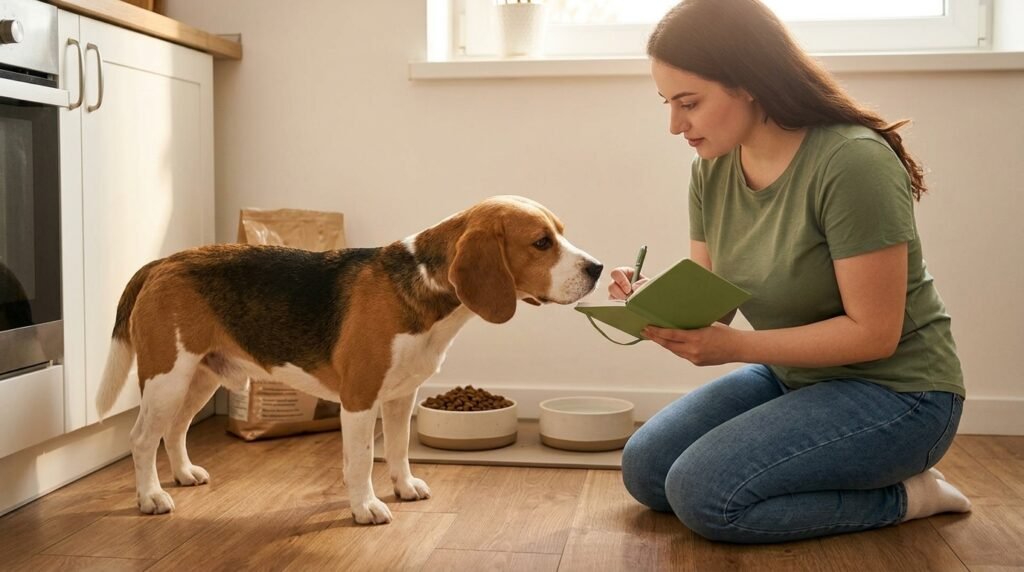
Avoid judging the food solely by one bowel movement. A single mildly soft stool in an otherwise energetic dog is different from repeated watery diarrhea, blood in the stool, or worsening lethargy.
Long-term results such as weight change, coat quality, or response to a veterinarian-directed therapeutic diet cannot always be evaluated in seven days. Continue monitoring after the mixing period ends.
What to Do If Your Dog Develops Digestive Upset
Your response should depend on the severity of the symptoms and your dog’s general condition.
For mild soft stool without other concerning signs
If your adult dog remains bright, hydrated, interested in food, and otherwise comfortable:
- Do not increase the new-food percentage.
- Hold the current ratio for an extra day or two.
- Keep treats and table food consistent and minimal.
- Ensure fresh water remains available.
- Return to the last well-tolerated ratio if the stool worsens.
- Contact your veterinarian if the problem persists or recurs.
Dogs that regularly struggle with dietary changes may benefit from a longer schedule. PawMindTips’ guide to choosing dog food for a sensitive stomach explains what to consider when digestive problems are more than a one-time reaction.
Do not automatically add pumpkin, probiotics, antidiarrheal medication, or supplements. Even commonly recommended products may be inappropriate for a particular dog, medical condition, or prescription diet.
If your dog vomits
One isolated episode can have several explanations, but repeated vomiting requires more caution. Pause the transition and call your veterinary clinic for advice, especially if your dog cannot keep water down or has another symptom.
Do not keep offering large meals to “test” the stomach. Puppies, toy breeds, seniors, and dogs with diabetes or other medical conditions may become ill more quickly and should receive prompt professional guidance.
If your dog refuses the new food
Check that:
- The food has not expired or spoiled
- The package is undamaged
- The bowl is clean
- The serving has not been increased accidentally
- Medication or illness is not affecting appetite
- Excess treats are not replacing meals
Do not attempt to outwait a puppy or medically vulnerable dog. An adult dog skipping food may also require veterinary attention when appetite loss persists or occurs with vomiting, diarrhea, pain, weakness, or unusual behavior.
If itching or skin symptoms appear
Diet-related reactions cannot be confirmed simply by switching among random commercial foods. VCA’s veterinary guidance on food allergies in dogs explains that diagnosis generally requires a carefully controlled elimination diet followed by a challenge under veterinary direction.
Stop experimenting and consult your veterinarian if the new food is associated with recurring itching, ear problems, gastrointestinal symptoms, or skin inflammation. Facial swelling, hives, breathing difficulty, weakness, or collapse requires urgent veterinary care.
When the Standard Schedule Needs Adjustment
Not every dog should use the same seven-day plan.
Dogs with sensitive stomachs
Use a 10–14-day dog food transition or a schedule recommended by your veterinarian. A cautious example is:
- Days 1–3: 10%–25% new food
- Days 4–6: 25%–40% new food
- Days 7–9: 50% new food
- Days 10–12: 75% new food
- Days 13–14: 100% new food
Only advance while digestion remains stable. Some dogs need even smaller changes.
Puppies
Puppies need food appropriate for growth, and large-breed puppies have particular nutritional considerations. Do not switch a puppy to adult food simply because the puppy looks nearly full-grown.
Ask your veterinarian when the life-stage change should occur and how much of the new diet to feed. Puppies can become dehydrated or experience problems from inadequate intake more quickly than healthy adult dogs.
Senior dogs
Age alone does not mean every dog needs a senior formula. Health conditions, muscle condition, activity, dental comfort, digestion, and calorie needs matter.
Arrange veterinary guidance if an older dog’s food change is motivated by weight loss, reduced appetite, increased thirst, vomiting, chronic diarrhea, or another unexplained change. Those signs warrant evaluation rather than a trial-and-error feeding strategy.
Prescription or therapeutic diets
Follow the prescribing veterinarian’s instructions. A veterinary diet may be intended to support kidney disease, urinary disease, food allergy testing, gastrointestinal illness, diabetes, weight management, or another condition.
Unapproved treats, toppers, chews, or leftovers can interfere with some therapeutic plans. Never dilute or discontinue a prescription diet without discussing it with the veterinary team.
Moving between dry, canned, fresh, or homemade food
Different formats may vary substantially in moisture and calorie density. A bowl of canned or fresh food cannot be exchanged cup-for-cup with kibble.
If moving toward home-prepared meals, remember that familiar ingredients do not automatically produce a nutritionally complete diet. PawMindTips’ homemade dog food guide explains why a long-term home-cooked diet should be formulated for the individual dog by an appropriately qualified veterinary nutrition professional.
Raw diets also raise nutritional-balance and pathogen concerns. Discuss the risks, household hygiene, and suitability with your veterinarian before making that change, particularly when children, older adults, pregnant people, or immunocompromised individuals live in the home.
When an Immediate Food Change May Be Necessary
Gradual transitioning is preferred for routine changes, but there are exceptions. The current food may have been recalled, contaminated, spoiled, discontinued, or specifically stopped by a veterinarian.
Check the FDA’s current animal-food recalls and withdrawals if you suspect a recall. Keep the package, lot code, best-by date, receipt, and remaining food unless public-health or veterinary instructions say otherwise.
If a product is recalled or appears spoiled:
- Stop feeding it according to the recall or veterinary instructions
- Do not mix it into the replacement food
- Contact the manufacturer when appropriate
- Ask your veterinarian how to replace it
- Monitor for symptoms described in the recall
- Seek veterinary help promptly if your dog becomes ill
An immediate replacement may be safer than continuing a hazardous food, but the substitute and feeding plan should reflect your dog’s age and medical needs. Do not withhold food from a puppy, diabetic dog, or medically fragile dog while trying to force acceptance of an unfamiliar diet.
When to Contact a Veterinarian
Contact your veterinarian when your dog experiences:
- Repeated vomiting
- Persistent or worsening diarrhea
- Blood in vomit or stool
- Black, tar-like stool
- Refusal of food lasting longer than expected
- Marked lethargy or weakness
- Abdominal pain or swelling
- Repeated unproductive retching
- Signs of dehydration
- Significant itching or recurring ear inflammation
- Unexplained weight loss
- Symptoms that continue after returning to the previous food
Seek urgent or emergency care for difficulty breathing, facial swelling, collapse, severe weakness, repeated unproductive retching with a swollen abdomen, significant bleeding, inability to keep water down, or rapidly worsening illness.
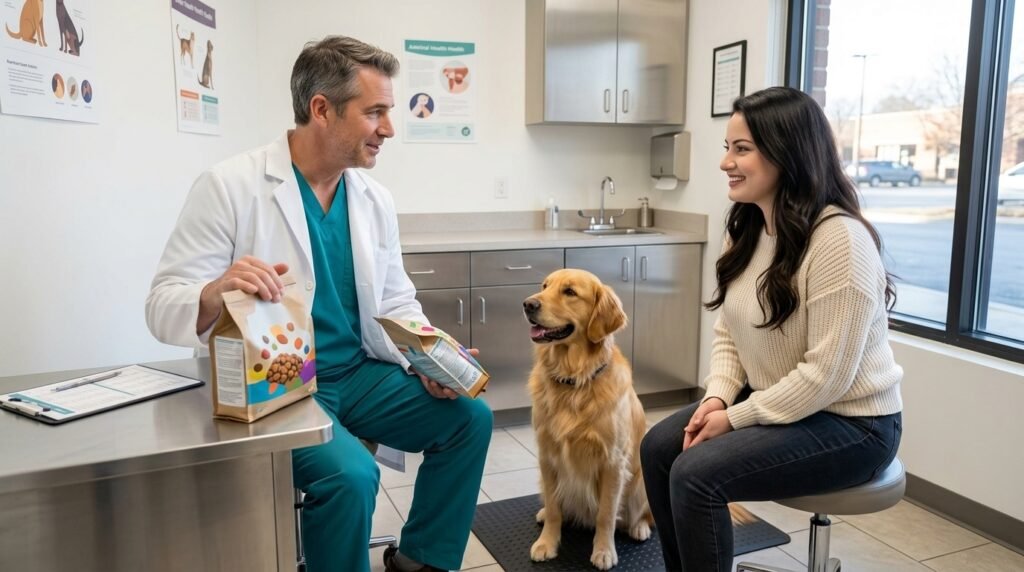
The AAHA nutrition and weight-management guidelines emphasize individualized nutritional assessment rather than treating food as a one-size-fits-all decision. Your veterinarian can consider body condition, muscle condition, disease risk, medications, life stage, and complete dietary history.
FAQs
How long should a dog food transition take?
Most healthy adult dogs can switch gradually over seven to ten days. A dog with sensitive digestion may need 10–14 days or longer. Advance according to the dog’s response rather than treating the final day as a strict deadline.
What should I do if my dog develops diarrhea while switching food?
Stop increasing the new food and return to the last ratio your dog tolerated. Keep other dietary items consistent and contact your veterinarian if diarrhea is persistent, severe, bloody, accompanied by vomiting or lethargy, or affecting a puppy or medically vulnerable dog.
Can I switch dog food without mixing the two foods?
Sometimes an immediate change is necessary because of a recall, contamination concern, or veterinary instruction. For routine changes, mixing the diets gradually is generally easier on digestion. Ask your veterinarian for help if the old food is unavailable or unsafe.
Can I use the same transition schedule when changing from kibble to wet food?
The same gradual proportions can provide a starting framework, but calculate each food according to calories rather than exchanging equal cup volumes. Wet food contains considerably more moisture, so its serving size will differ from kibble.
Conclusion
A successful dog food transition is guided by your dog’s response, not just the calendar. For many healthy adults, moving from 25% new food to 50%, then 75%, and finally 100% over seven to ten days provides a practical starting schedule.
Keep the total calories appropriate, avoid introducing several new dietary items simultaneously, and monitor appetite, stool, vomiting, energy, skin, and body weight. Slow down when mild problems appear and obtain veterinary help for persistent, severe, or rapidly worsening symptoms.
Changing food should support your dog’s health—not become a test of how quickly the new bag can replace the old one.