
The best answer depends on your dog, the context, and the full pattern of behavior. Look at multiple signals rather than one isolated action.
Dogs can’t tell us in words when something’s bothering them. They can’t say “I’m anxious” or “this situation is making me uncomfortable.” Instead, they talk to us through body language, behavior changes, and subtle physical cues that most owners miss entirely.
Here’s the hard truth: by the time most dog owners recognize the signs your dog is stressed, the dog has usually been showing them for a while. Stress in dogs isn’t always loud or obvious. Sometimes it’s a quick lip lick, a stiff tail, or a sudden disinterest in food. If you don’t know what to look for, it’s easy to write these moments off as “just a mood” or “being weird today.”
Learning to spot the signs your dog is stressed matters. Chronic, unaddressed stress in dogs can lead to behavioral issues, a weakened immune system, digestive problems, and a noticeable drop in quality of life. According to the American Kennel Club, recognizing stress early is one of the most important skills a dog owner can develop.
In this guide, we’re breaking down the 10 most common signs your dog is stressed, why they happen, and what you can actually do about each one.
Table of Contents
Why Do Dogs Get Stressed in the First Place?
Before jumping into the signs, it helps to understand where canine stress comes from. Dogs are highly sensitive animals, and their stress response is triggered by a wide range of situations:
- Loud noises (thunderstorms, fireworks, construction)
- Changes in routine or environment (moving homes, new furniture, travel)
- Separation from their owner
- New people or animals in the household
- Vet visits or grooming appointments
- Past trauma or lack of early socialization
- Overstimulation (too much noise, activity, or crowding)
- Physical pain or underlying illness
Some dogs are naturally more anxious due to breed tendencies or personality. Others develop the signs your dog is stressed because of one specific bad experience. Either way, the signals tend to look similar across most dogs, even if the root cause is different.
1. Excessive Panting: A Common Sign Your Dog Is Stressed
Panting is normal after a walk or play session. It’s how dogs regulate their body temperature since they don’t sweat the way humans do. But when a dog is panting heavily while sitting still, lying down, or in a cool environment, that’s one of the clearest signs your dog is stressed.
Stress panting usually looks different from regular panting. It tends to be quicker, shallower, and often paired with a tense jaw rather than a relaxed, open mouth. If your dog suddenly starts panting during a car ride, a vet visit, or when guests arrive, this is likely an anxiety response rather than a physical one.
What to do: Try to identify the trigger. Remove your dog from the stressful situation if possible, and give them a quiet space to decompress. Cooling mats and calm, low-energy environments can help bring the panting down.

2. Excessive Drooling
Just like humans get a dry mouth or excessive saliva during nervous moments, dogs experience similar physiological shifts. If your dog starts drooling more than usual, especially in situations like car rides, thunderstorms, or vet visits, it’s often tied to anxiety rather than hunger.
This is particularly common in dogs with travel anxiety or noise phobias. You might notice wet patches on the floor, excessive lip-smacking, or drool strings hanging from their mouth in situations where food isn’t even present.
What to do: If drooling only happens in specific scenarios (like the car), gradual desensitization training can help. Short, low-pressure exposure to the trigger, paired with positive reinforcement, teaches your dog that the situation isn’t actually dangerous. The ASPCA offers a detailed breakdown of desensitization techniques for anxious dogs.
3. Yawning (When They’re Not Tired)
Yawning is one of the most overlooked signs your dog is stressed because it seems so harmless. We associate yawning with sleepiness, but in dogs, it’s frequently a self-soothing mechanism, a way to release tension in an uncomfortable moment.
Watch for yawning that happens in clusters, especially during training sessions, introductions to new people or animals, or moments of conflict (like being scolded). If your dog yawns repeatedly while wide awake and alert, they’re likely trying to calm themselves down.
What to do: Take a step back and lower the intensity of whatever’s happening. If it’s a training session, shorten it. If it’s a social introduction, slow it down and give your dog more space.
4. Lip Licking and Nose Licking
A quick flick of the tongue across the lips or nose, without any food nearby, is one of the clearest calming signals in a dog’s communication toolkit. Trainers and behaviorists often call these “appeasement signals” because dogs use them to communicate discomfort or a desire to de-escalate a tense situation.
This sign is especially common when a dog is approached too quickly, hugged tightly, stared at directly, or placed in an unfamiliar environment. It’s subtle, but once you start noticing it, you’ll see it constantly in stressful moments.
What to do: Respect the signal. If your dog is lip-licking during a hug or close interaction, give them space. Forcing continued contact after this signal can escalate stress into fear or even defensive aggression.
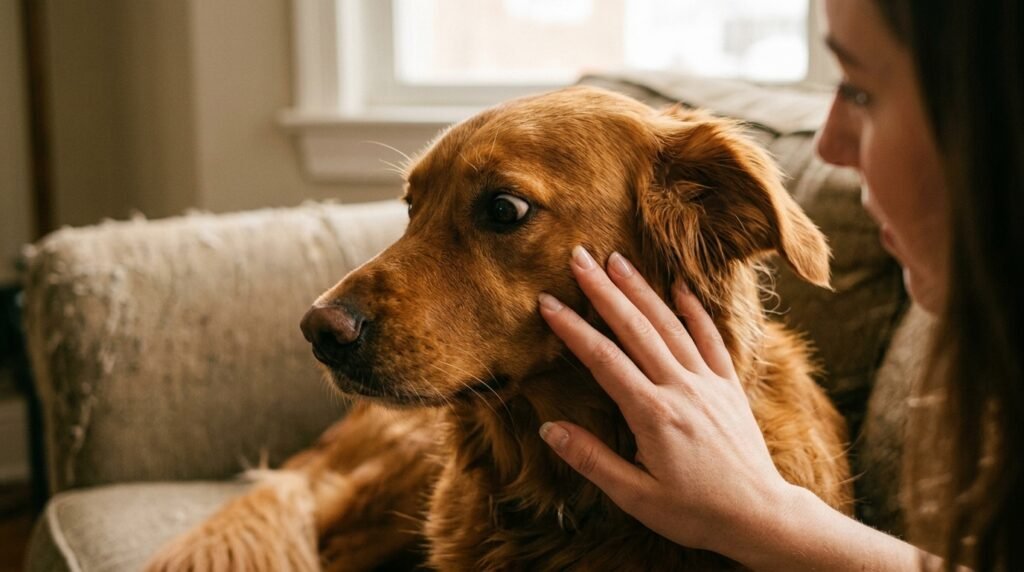
5. Whale Eye (Showing the Whites of the Eyes)
“Whale eye” refers to when a dog turns its head slightly away from something while keeping its eyes locked on it, causing the whites (sclera) to become visible in a half-moon shape. This is a strong indicator of discomfort, fear, or feeling cornered, and one of the more urgent signs your dog is stressed that owners should never ignore.
You’ll often see this when a dog is protecting a resource (like food or a toy), when a child approaches too closely, or during uncomfortable handling like nail trims. It’s the body’s way of saying, “I’m watching this, and I don’t like it.”
What to do: Whale eye is a warning sign that should never be ignored. Back off immediately and assess what’s causing the discomfort. Continuing the interaction can lead to growling, snapping, or biting as the next step in the warning ladder.
6. Tucked Tail or Low, Stiff Tail Position
A dog’s tail is one of the most expressive parts of their body, and its position tells you a lot about their emotional state. A relaxed, loosely wagging tail generally means a comfortable dog. A tail tucked tightly between the legs, or held low and stiff, is a classic sign your dog is stressed.
It’s a myth that a wagging tail always means a happy dog. A stiff, fast wag held high can actually indicate arousal or tension, not joy. Context matters just as much as the tail position itself. The VCA Animal Hospitals has a great visual guide breaking down different tail positions and what they mean.
What to do: Look at the whole body, not just the tail. If the tail is tucked or stiff alongside other stress signs on this list, remove your dog from the situation and let them settle in a familiar, safe space.
7. Pacing or Restlessness
An anxious dog often struggles to settle. You might notice them pacing back and forth, circling, or repeatedly getting up and lying back down without ever fully relaxing. This restlessness is the body’s way of burning off nervous energy, and it’s one of the more physically visible signs your dog is stressed.
This is especially common in dogs with separation anxiety right before their owner leaves, or during loud events like storms and fireworks. Some dogs will pace for hours if the underlying stressor isn’t addressed.
What to do: Create a designated calm zone with familiar bedding, a piece of your clothing, and minimal noise. For separation-related pacing, gradual alone-time training builds tolerance over weeks, not days.

8. Loss of Appetite or Refusing Treats
A dog that suddenly turns down food, especially treats they normally love, is often telling you something is wrong. Stress activates the same fight-or-flight response in dogs as it does in humans, and digestion is one of the first systems to shut down when the body prioritizes survival over comfort.
This sign is particularly telling because most dogs are food-motivated by nature. If your usually food-driven dog won’t take a treat during a vet visit, training session, or new environment, their stress levels are likely high enough to override their appetite.
What to do: Don’t force feeding in the moment. Instead, note the pattern. If appetite loss happens consistently in a specific situation, that’s your trigger. If it happens randomly or persists beyond a day, a vet check is a good idea to rule out illness. Check our Nutrition guide for more on healthy feeding routines.
9. Shedding More Than Usual
Ever notice how some dogs seem to shed heavily during a nail trim or vet visit, even outside of normal seasonal shedding? This isn’t a coincidence. Acute stress triggers a physical release response in dogs, and increased shedding is a common, if lesser-known, physical sign your dog is stressed.
Groomers and vets see this constantly. A dog that seems calm on the surface may still be releasing noticeable amounts of fur during a stressful handling session, a clear sign that their body is under more pressure than their behavior lets on.
What to do: Stress shedding is a good reminder to slow down whatever you’re doing, whether it’s grooming, nail trimming, or handling. Breaks, treats, and a calmer pace can reduce the physical stress response over time.
10. Hiding or Avoidance Behavior
When a stressed dog has had enough, they often seek an exit. This might look like retreating to another room, hiding under furniture, avoiding eye contact, or turning their body away from people or other animals. Of all the signs your dog is stressed, this one is often the clearest cry for space.
Hiding is a dog’s way of removing themselves from a situation they can’t otherwise control. It’s especially common during loud events, chaotic households, or when a dog feels overwhelmed by too much attention or activity.
What to do: Never pull a hiding dog out of their safe spot. Let them come out on their own terms. Providing a designated retreat space, like a crate or a quiet corner, gives your dog a healthy outlet rather than forcing them to cope in the open.

How to Help a Dog That Is Stressed (Long-Term Tips)
Spotting the signs your dog is stressed is only half the job. Here are a few practical strategies for reducing chronic stress in dogs:
- Stick to a routine. Predictability is calming for dogs. Consistent feeding, walking, and sleep schedules reduce overall anxiety levels.
- Give them a safe space. A crate, bed, or quiet room where they’re never disturbed builds a sense of security.
- Use positive reinforcement. Reward-based training builds confidence, while punishment-based methods often increase stress and fear.
- Exercise regularly. Physical activity burns off nervous energy and releases endorphins that naturally reduce anxiety.
- Try calming aids. Pheromone diffusers, weighted anxiety wraps, and calming chews can help in moderate cases.
- Consult a professional. For severe or persistent stress, a veterinarian or certified dog behaviorist can identify underlying causes and recommend targeted treatment.

When to See a Vet
Occasional stress is normal. Every dog gets nervous sometimes. But if you’re noticing several signs your dog is stressed happening frequently, or if things seem to be getting worse over time, it’s worth scheduling a vet visit. Chronic stress can sometimes be linked to underlying pain or medical conditions, and a professional evaluation rules out physical causes before you move forward with behavioral training.
Frequently Asked Questions
How can I tell the difference between excitement and stress in my dog? Excitement usually comes with loose, relaxed body language, a wiggly body, and a soft face. Stress tends to show up as stiffness, tension in the face and body, and avoidance behaviors. Context is key; a wagging tail at the park likely means excitement, while the same wag during a vet exam could signal nervous arousal.
Can stress in dogs cause physical illness? Yes. Prolonged stress can weaken the immune system, cause digestive issues like diarrhea or vomiting, and contribute to skin problems from excessive licking or scratching.
Is it normal for puppies to show more stress signs than adult dogs? Somewhat. Puppies are still learning to process the world around them, so mild stress responses during new experiences are common. However, the same calming and management strategies apply regardless of age.
How long does it take to reduce a dog’s stress levels? It depends on the cause and severity. Mild, situational stress can improve within days of addressing the trigger. Chronic anxiety rooted in past trauma or ongoing environmental stressors may take weeks or months of consistent training and management.
Final Thoughts: Recognizing When Your Dog Is Stressed
Your dog is constantly communicating with you, you just have to know what to look for. These 10 signs, panting, drooling, yawning, lip licking, whale eye, tail position, pacing, appetite loss, shedding, and hiding, are your dog’s way of saying “I’m not okay right now.”
The more familiar you become with the signs your dog is stressed, the faster you can step in, remove the stressor, and help your dog feel safe again. Over time, this kind of attentiveness builds trust and strengthens the bond between you and your dog in ways that go far beyond training commands.
Key Takeaways
- Consider the context around the behavior.
- Look for patterns instead of relying on one signal.
- Seek qualified help when behavior is sudden, severe, or unsafe.
Frequently Asked Questions
Is every behavior a sign of the same emotion?
Not necessarily. Dogs use combinations of signals, and context matters.
When should I contact a professional?
Consider veterinary or qualified behavior support for sudden, severe, escalating, or safety-related concerns.