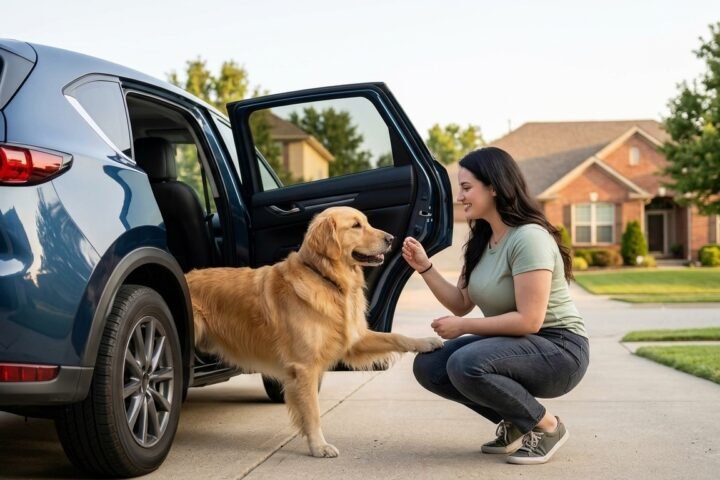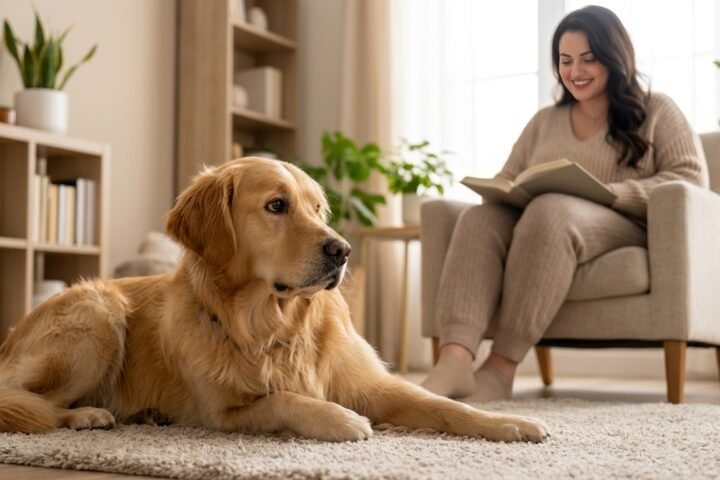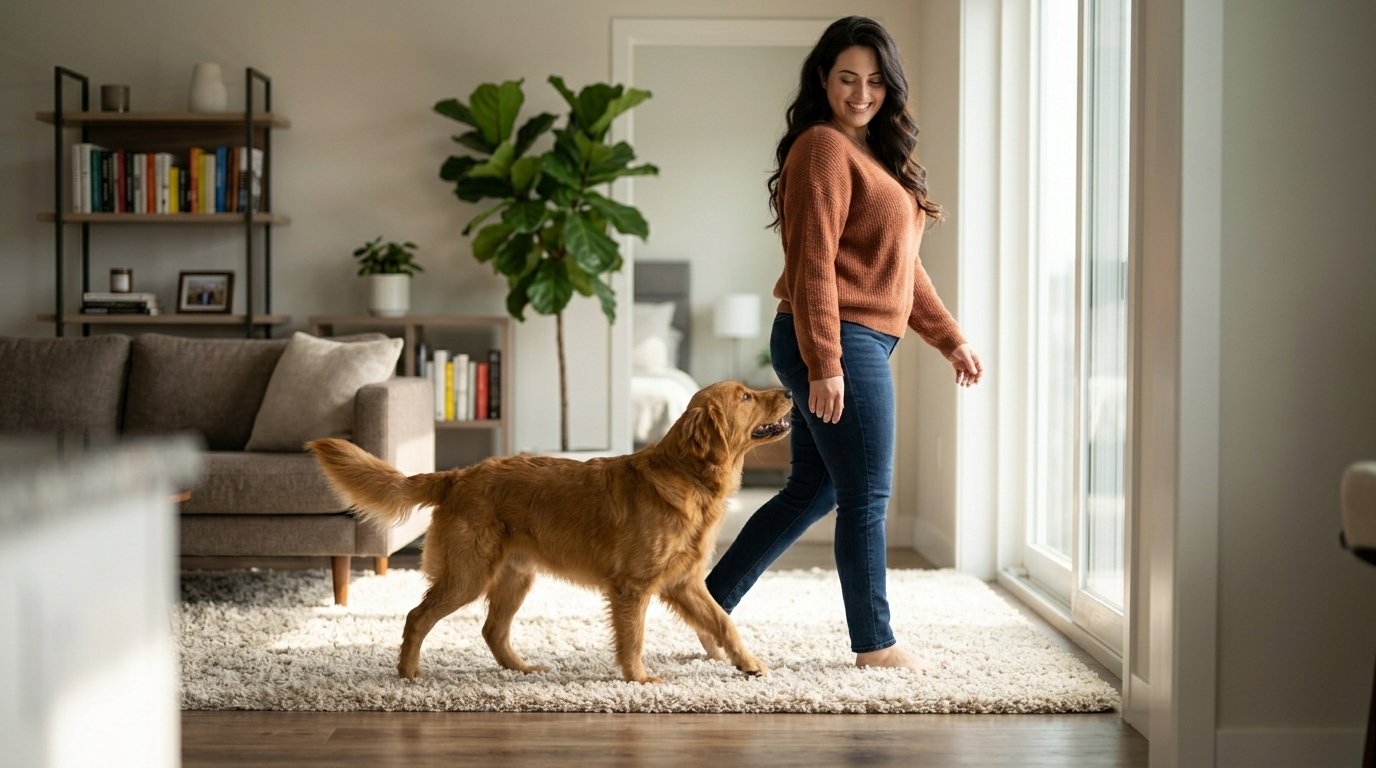
If you cannot walk from the living room to the kitchen without hearing four paws behind you, you may have wondered, why does my dog follow me everywhere? The short answer is that dogs often stay close to the people they trust and depend on. You may represent food, walks, safety, affection, entertainment, and companionship all at once.
But not every dog follows its owner for exactly the same reason.
Some dogs simply enjoy being near their favorite person. Others have learned that following you often leads to treats, attention, or something interesting. A dog may also shadow you because they are bored, curious, nervous, or unsure about being alone.
In some cases, especially when the behavior appears suddenly or becomes extreme, increased clinginess may deserve closer attention.
Here are nine possible reasons your dog follows you everywhere, how to tell whether the behavior is normal, and when it may be time to get help.
Table of Contents
Why Does My Dog Follow Me Everywhere?
When asking why does my dog follow me everywhere, it helps to look at the behavior in context.
A relaxed dog who follows you from room to room but happily naps alone is very different from a dog who becomes distressed the moment you walk away. The first dog may simply enjoy your company. The second may be struggling with insecurity or separation-related distress.
The most useful questions to ask are:
- Does your dog seem relaxed while following you?
- Do they settle down when you stop moving?
- Can they comfortably stay in another room?
- What happens when you leave the house?
- Has the behavior always been present, or did it begin suddenly?
- Are there other changes in appetite, sleep, energy, mobility, or behavior?
The answers can provide much more information than the following behavior alone.
9 Reasons Your Dog May Follow You Everywhere
1. Your dog enjoys your company
One of the simplest answers is also one of the most common: your dog likes being around you.
Dogs are highly social animals, and many develop strong relationships with the people they live with. Following you may simply be part of how your dog participates in family life.
You move, so something interesting might happen. You sit down, so your dog may settle nearby. You walk into another room, and your dog decides that being with you sounds better than staying behind.
This type of behavior is usually not a problem when your dog appears relaxed and can also spend time independently.
2. You are the person who provides the important things
Dogs quickly learn who controls access to valuable resources.
If you are the person who usually:
- fills the food bowl
- opens the door
- goes for walks
- gives treats
- starts playtime
- provides comfort
- handles training
your dog may have learned that following you is a smart strategy.
This can also explain why your dog follows you more than another family member. From your dog’s perspective, you may simply be the person most likely to make something good happen.
3. Your dog has learned that following you gets rewarded
Sometimes owners accidentally train a dog to become a professional shadow.
Imagine what happens when your dog follows you into the kitchen. Perhaps you give them a treat. When they follow you to the couch, you pet them. When they follow you into another room, you talk to them.
None of those things are inherently bad. However, repeated rewards can teach a dog that staying close to you is consistently worthwhile.
Dogs repeat behaviors that have worked for them before.
If your dog follows you everywhere and frequently receives food, affection, or attention as a result, learned behavior may be part of the explanation.
The goal is not to stop showing affection. Instead, you can also reward calm, independent behavior when your dog chooses to relax on their bed or spend time quietly away from you.
4. Your dog is curious about what you are doing
Dogs are observant.
Your movements may signal something interesting: food preparation, a walk, a visitor, a toy, or an opportunity to go outside.
From your dog’s perspective, getting up when you get up may simply be a way of making sure they do not miss anything.

This is especially common in curious, energetic, or highly people-focused dogs.
If your dog follows you, briefly checks what you are doing, and then wanders away again, curiosity may be the main explanation.
5. Your dog is bored or looking for something to do
A dog with nothing particularly interesting happening may decide that you are the most interesting thing in the house.
This does not necessarily mean your dog needs hours of additional exercise. The right amount of physical activity depends on factors such as age, breed, health, and individual temperament.
However, many dogs also benefit from mental activity.
You can provide healthy enrichment through:
- short training sessions
- scent games
- food puzzles
- supervised chewing activities
- hide-and-seek games
- scatter feeding when appropriate
- rotating toys
Sometimes a dog who follows you constantly is not specifically asking for attention. They may simply be waiting for something to happen.
Pro Tip: Try giving your dog an appropriate independent activity before you sit down to work or relax. If they can settle with something enjoyable to do, boredom may have been contributing to the constant shadowing.
6. Your dog feels safe near you
For some dogs, their person is a source of security.
A dog may follow more closely during:
- thunderstorms
- fireworks
- visits from unfamiliar people
- changes in routine
- travel
- unfamiliar environments
In these situations, following behavior may increase because your presence helps the dog feel safer.
Pay attention to body language. A relaxed dog may casually follow you with loose movements and a normal posture. A worried dog may also show signs such as trembling, panting, pacing, tucked posture, avoidance, or difficulty settling.
If fear seems to be driving the behavior, simply telling the dog to “go away” is unlikely to solve the underlying problem. Focus on identifying the trigger and helping your dog feel safe.
7. Your dog’s personality or breed tendencies may play a role
Some dogs are naturally more independent, while others strongly prefer close contact with people.
Dogs bred to work closely with humans may be especially attentive to movement and cues. Companion-oriented dogs may also enjoy staying physically close to their families.
That does not mean every dog of a particular breed will become a “Velcro dog.” Individual personality, early experiences, training, environment, and daily routines all matter.
Still, a naturally people-focused dog may simply prefer knowing where you are.
If your dog has always been affectionate and follows you while remaining calm when alone, the behavior may be part of their normal personality.
8. Your dog may be responding to changes in routine or your behavior
Dogs are excellent observers of familiar routines.
They may notice when you put on certain shoes, pick up your keys, enter the kitchen at a particular time, or start preparing for a walk.
A change in your own behavior may also make your dog pay closer attention.
For example, if you have recently started working from home, changed your schedule, moved, or spent much more time indoors, your dog’s following behavior may change as well.
Dogs can become accustomed to patterns. When the pattern changes, they may stay close while trying to understand what is happening.
9. Anxiety, discomfort, or another problem may be involved
Most of the time, following behavior alone does not mean something is medically wrong.
However, why does my dog follow me everywhere becomes a more important question when the behavior is sudden, intense, or accompanied by other changes.
A dog who has always been independent but suddenly refuses to leave your side may be experiencing stress, fear, discomfort, or another issue that should not be ignored.
Pay attention to additional signs such as:
- decreased appetite
- unusual tiredness
- difficulty getting up or moving
- limping
- changes in sleep
- trembling
- excessive panting at rest
- confusion
- increased vocalization
- changes in bathroom habits
- unusual aggression or irritability
These signs do not automatically point to one specific cause, but a sudden behavior change is a good reason to contact your veterinarian.
Why Does My Dog Follow Me and No One Else?
If several people live in your home, your dog may choose one person to follow more than everyone else.
That person is often the dog’s primary caregiver, but not always.
Your dog may prefer the person who:
- feeds them most often
- walks them
- plays with them
- gives the most treats
- spends the most time with them
- provides comfort when they are nervous
Sometimes there is no obvious explanation. Dogs, like people, can develop individual preferences and stronger relationships with particular family members.
A dog who follows only one person is not necessarily unhealthy or overly dependent.
The important question is whether they can remain calm and functional when that person is unavailable.
Why Does My Dog Follow Me to the Bathroom?
The bathroom may feel private to you, but your dog does not understand the social rules around bathroom privacy.
If your dog already follows you around the house, there is no obvious reason for them to stop at the bathroom door.
Your dog may also be curious about:
- where you are going
- why the door closes
- interesting smells
- changes in your routine
Sometimes the closed door itself becomes interesting because it creates a barrier between your dog and the person they usually follow.
If your dog calmly waits outside, this is generally just another version of normal following behavior.
If your dog panics, scratches frantically, vocalizes intensely, or cannot settle whenever a door separates you, that may suggest a stronger dependence or anxiety issue.
Is It Normal for a Dog to Follow You Everywhere?
Yes, in many cases, it is completely normal.
A healthy, relaxed dog may follow you around simply because they enjoy being close to you.
The behavior becomes more concerning when your dog cannot relax without constant access to you.

A useful distinction is this:
Normal attachment: Your dog likes being near you but can still eat, sleep, play, and relax independently.
Possible problem: Your dog becomes extremely distressed, destructive, panicked, or unable to function normally when separated from you.
The behavior itself is not the whole story. Your dog’s emotional response to separation matters more.
Velcro Dog vs. Separation Anxiety
A “Velcro dog” is an informal term for a dog that loves staying close to their person.
A Velcro dog may follow you everywhere, lean against you, sit beside you, and prefer physical contact.
That alone does not mean the dog has separation anxiety.
Separation anxiety involves significant distress associated with being separated from an attachment figure. Signs can include:
- persistent barking or howling when left alone
- pacing
- excessive panting or drooling
- destructive behavior
- scratching or damaging doors and windows
- attempts to escape
- accidents in the house despite reliable housetraining
One useful way to understand what happens is to safely record your dog’s behavior when you leave.
Does your dog settle after a few minutes?
Or do they remain distressed, vocalize continuously, pace, destroy things, or attempt to escape?
A dog who follows you from room to room may simply love your company. A dog who panics when you leave needs a different kind of support.
When Sudden Clinginess May Be a Warning Sign
A sudden increase in following behavior deserves more attention than a behavior your dog has shown for years.
Consider contacting your veterinarian if your dog suddenly becomes unusually clingy, particularly if you also notice:
- reduced appetite
- mobility problems
- pain-related behavior
- confusion
- unusual fatigue
- excessive panting
- trembling
- major changes in sleep
- changes in elimination
- sudden aggression or irritability
Older dogs may also experience changes in sensory ability or cognition that affect how confidently they move through their environment.
Do not assume that sudden clinginess is automatically affection.
Your veterinarian can help determine whether pain, illness, sensory changes, anxiety, or another issue could be contributing.
How to Encourage Healthy Independence
You do not need to reject an affectionate dog to help them become more independent.
The goal is to teach your dog that being away from you can also be safe and rewarding.
Reward calm independence
If your dog voluntarily settles on their bed instead of following you, quietly reward that choice.
You can offer praise, a treat, or another appropriate reward.
This helps your dog learn that independence can be worthwhile too.
Give your dog a comfortable place to settle
A bed, mat, or other designated resting area can give your dog a predictable place to relax.
Practice encouraging your dog to settle there while you remain nearby. Over time, gradually create small amounts of distance.
Keep training calm and positive.
Avoid making departures overly emotional
For some dogs, dramatic good-byes and highly excited reunions can increase the emotional intensity surrounding departures.
Try to keep leaving and returning relatively calm.
That does not mean ignoring your dog forever. It simply means helping departures become a normal part of daily life rather than a major event.

Build independence gradually
If your dog struggles when you move away, start with very small steps.
For example:
- Ask your dog to settle on a comfortable bed.
- Take one or two steps away.
- Return before the dog becomes distressed.
- Reward calm behavior.
- Gradually increase distance and duration.
Do not rush the process. If your dog becomes increasingly anxious, the training step may be too difficult.
Meet your dog’s physical and mental needs
A dog who receives appropriate exercise, enrichment, social interaction, rest, and training opportunities may find it easier to settle independently.
However, exercise alone is not a cure for separation anxiety or serious fear.
If your dog experiences genuine distress, professional guidance may be necessary.
When to Talk to Your Veterinarian
Contact your veterinarian if your dog’s following behavior:
- begins suddenly
- becomes dramatically more intense
- appears alongside physical changes
- involves severe fear
- interferes with normal daily life
- leads to destructive or self-injurious behavior
- is accompanied by intense distress when you leave
Your veterinarian can help rule out medical contributors and recommend the appropriate next steps.
For severe separation-related problems, your dog may benefit from a structured treatment plan involving your veterinarian and a qualified behavior professional.
Frequently Asked Questions
Why does my dog follow me everywhere and stare at me?
Your dog may be waiting for information, attention, food, play, or another activity. Dogs also learn to watch the people who control important resources. Look at what usually happens after the staring to identify what your dog may be expecting.
Why does my dog follow me everywhere but not my partner?
You may be your dog’s primary caregiver or the person most strongly associated with food, walks, play, training, or comfort. Dogs can also develop individual preferences and stronger attachments to one person.
Is it bad if my dog follows me everywhere?
Not necessarily. If your dog is relaxed and can also settle independently, following you is often normal. It becomes more concerning when the behavior is driven by intense fear or distress.
How do I stop my dog from following me everywhere?
Rather than punishing your dog for following you, encourage calm independence. Reward them for relaxing in their own space, provide appropriate enrichment, and gradually teach them to remain comfortable when you move away.
Conclusion
So, why does my dog follow me everywhere? In many cases, the answer is simple: your dog enjoys your company, trusts you, and has learned that staying close to you is rewarding.
But the details matter.
A relaxed dog who casually follows you around is very different from a dog who becomes distressed whenever you disappear from view. Watch your dog’s overall behavior, look for sudden changes, and pay attention to how they cope when left alone.
The healthiest goal is not to make your dog less attached to you. It is to help them enjoy your companionship while also feeling safe, confident, and comfortable on their own.