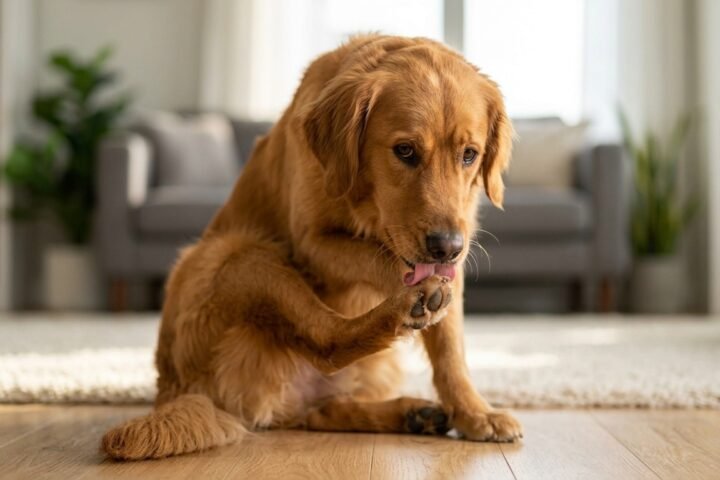
The best answer depends on your dog, the context, and the full pattern of behavior. Look at multiple signals rather than one isolated action.
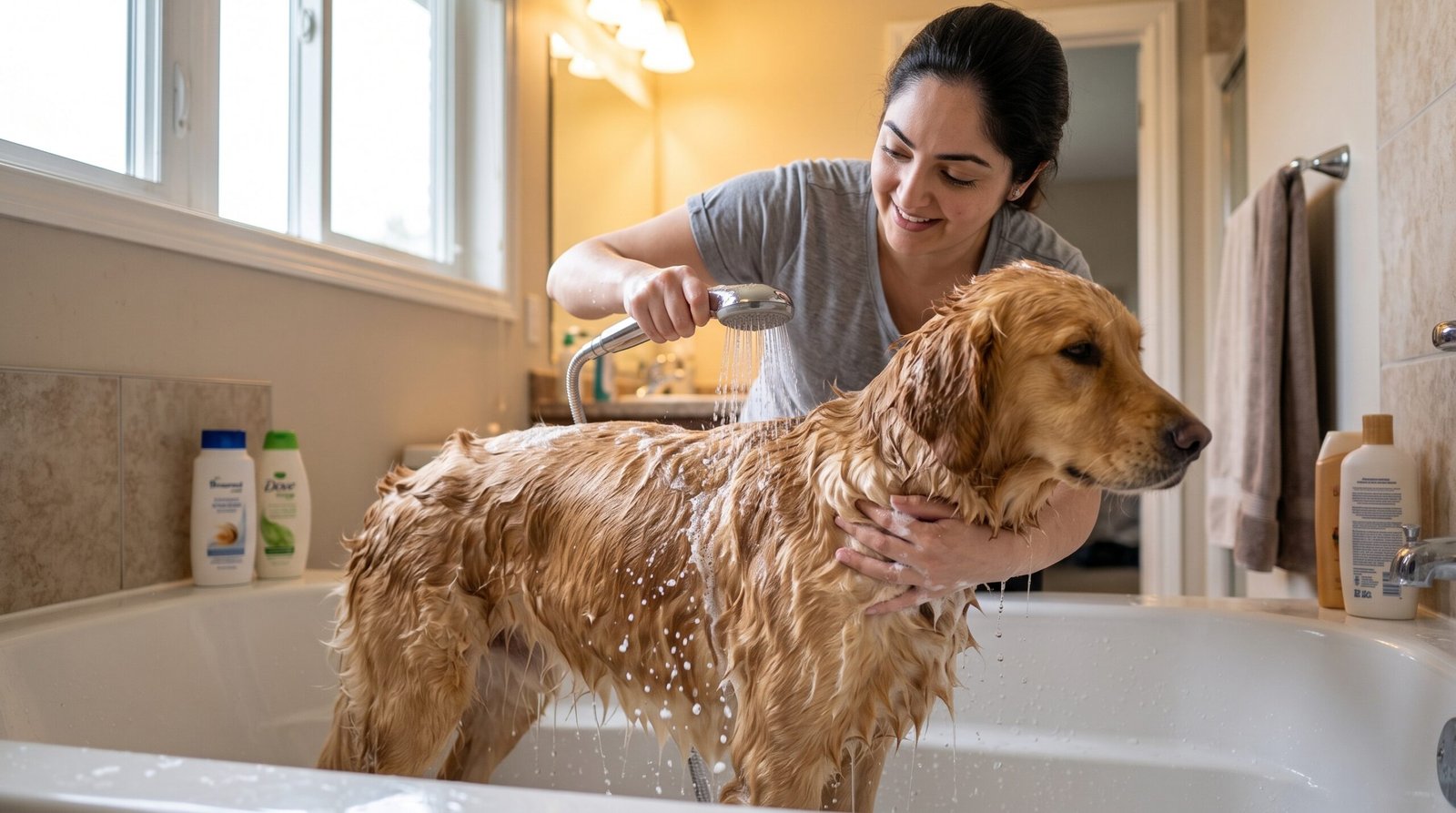
If you’ve ever ended a dog bath looking like you’re the one who needs a shower, you’re in good company. Anyone who’s tried to wrangle a wiggly, water-averse pup into a tub knows that bath time can feel more like a wrestling match than a grooming session. But here’s the good news: once you know how to bathe your dog at home the right way, it stops being a soggy battle and starts being one of those little bonding rituals you actually look forward to.
Regular baths aren’t just about keeping your house smelling fresh (although, let’s be honest, that’s a nice bonus). They play a real role in your dog’s skin health, coat condition, and even their emotional well-being. A calm, well-handled bath can reduce anxiety, prevent skin issues, and give you a regular chance to check your dog over for lumps, ticks, or irritated spots you might otherwise miss. This guide walks you through everything you need to confidently bathe your dog at home — from the supplies you’ll want on hand to the exact steps that turn bath time from chaos into a calm, doable routine. For more everyday grooming and wellness basics, check out our Pet Care category too.
Table of Contents
Why Bathing Your Dog at Home Matters
Before we get into the how-to, it helps to understand the why. Dogs’ skin has a different pH balance than ours, which is exactly why human shampoo is a no-go — it can strip natural oils and lead to dryness, itching, or irritation. Bathing at home, on the correct schedule with the right products, keeps your dog’s coat healthy, reduces allergens and dander in your home, and gives you a hands-on opportunity to notice changes in their body before they become bigger problems.
There’s also a psychological piece here that a lot of owners overlook. How a dog experiences bath time shapes how they’ll react to grooming, vet visits, and even general handling for years to come. A dog who’s bathed gently and confidently at home tends to be more relaxed during nail trims, ear cleanings, and vet exams down the line. If you want to understand more about how your dog reads your energy and body language during activities like this, our Body Language category breaks down what those tucked tails, lip licks, and yawns are really telling you.
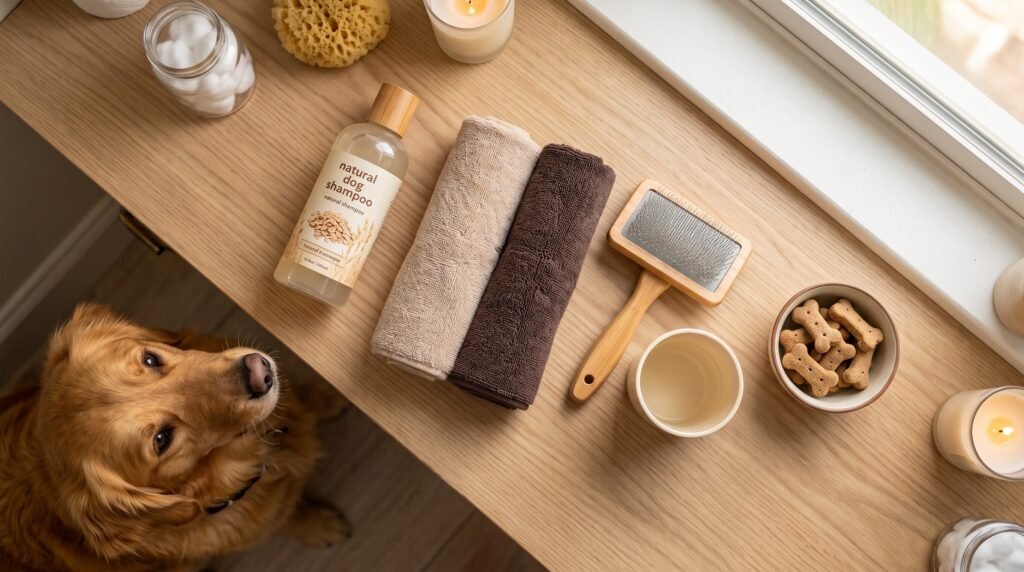
What You’ll Need Before You Bathe Your Dog at Home
Preparation is half the battle. Nothing derails a calm bath faster than realizing halfway through that you’re out of towels or the shampoo bottle is empty and you’ve got a soapy, dripping dog standing in your tub.
Supplies Checklist
- Dog-specific shampoo (and conditioner, if your dog has a longer or double coat)
- A non-slip mat for the tub or shower floor
- Two to three absorbent towels (microfiber towels work great and dry faster)
- A handheld sprayer or unbreakable cup for rinsing
- Cotton balls to gently protect ears from water
- Treats for positive reinforcement
- A slicker brush or comb for pre-bath detangling
- A blow dryer on a cool/low setting (optional, but helpful for thick coats)
According to the American Kennel Club, using lukewarm water and a shampoo formulated specifically for dogs is one of the most important steps for protecting your dog’s skin barrier during a bath. Skipping this step is one of the most common reasons dogs end up with dry, flaky, or irritated skin after a bath.
Step-by-Step: How to Bathe Your Dog at Home
Once you’ve got your supplies laid out and within arm’s reach, you’re ready to actually bathe your dog at home. Here’s a step-by-step breakdown that works whether you’ve got a tiny Chihuahua or a full-grown Labrador.
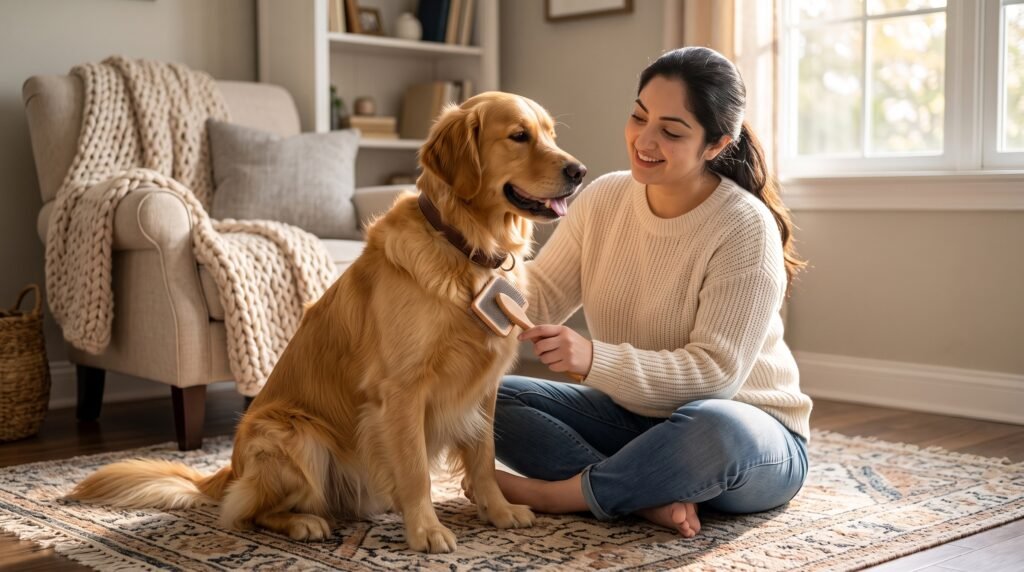
Step 1: Brush Before You Wet
Give your dog a quick brush-out before they get anywhere near water. This removes loose fur, dirt, and any early-stage mats, which are much harder (and more painful for your dog) to deal with once they’re wet.
Step 2: Protect the Ears and Eyes
Place a cotton ball gently at the entrance of each ear canal to help keep water out — this simple trick can meaningfully cut down on ear infections. Avoid spraying water directly at your dog’s face; instead, use a damp washcloth to wipe around their eyes, muzzle, and forehead.
Step 3: Wet the Coat Thoroughly
Use lukewarm water (never hot) and soak your dog’s coat all the way down to the skin. This usually takes longer than people expect, especially with thick or double-coated breeds, so be patient here.
Step 4: Apply Shampoo and Lather Gently
Work a dog-safe shampoo into the coat using your fingers in small, circular motions, starting at the neck and moving toward the tail. Avoid the eyes, ears, nose, and mouth entirely. This is a great moment to talk to your dog in a calm, soothing voice — it reinforces that bath time is safe, not scary.
Step 5: Rinse Until the Water Runs Clear
This step matters more than most people realize. Leftover shampoo residue is one of the leading causes of post-bath itching and skin irritation. Rinse thoroughly, then rinse again just to be sure.
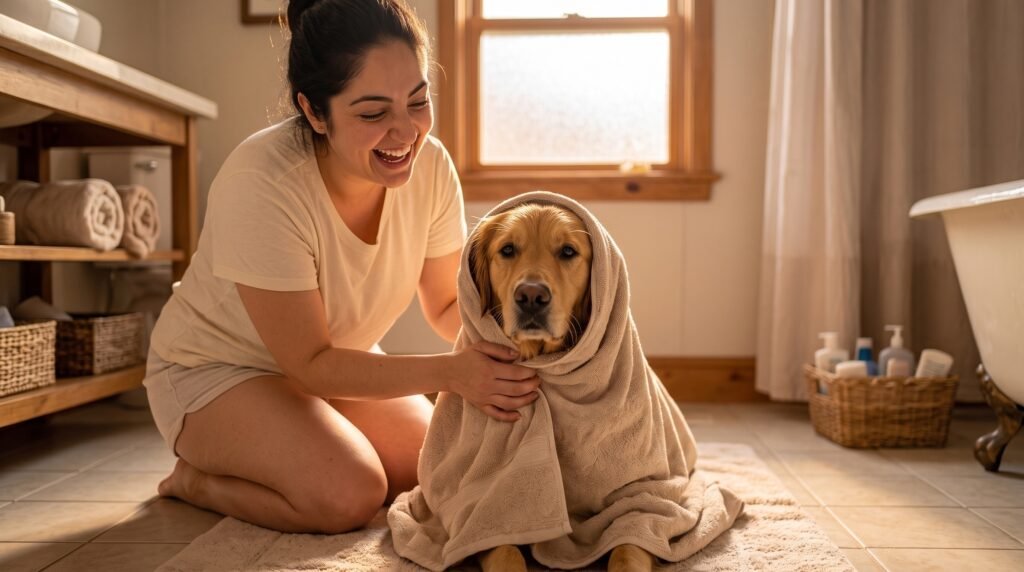
Step 6: Towel Dry and Reward
Wrap your dog in a towel immediately and squeeze out as much water as possible before they get the chance to shake (though a good shake is basically inevitable, so keep a towel handy for yourself too). Finish with a treat and some praise — ending on a positive note helps your dog build a good long-term association with baths.
Common Mistakes to Avoid When You Bathe Your Dog at Home
Even well-intentioned owners fall into a few predictable traps. Here’s what to watch for:
- Using human shampoo. It disrupts your dog’s skin pH and can lead to dryness or irritation.
- Water that’s too hot or too cold. Lukewarm is the sweet spot.
- Rushing the rinse. Leftover suds are itchy and irritating.
- Skipping the brush-out. Wet mats tighten and become much harder to remove.
- Bathing too often. Over-bathing can strip natural, protective oils from the skin.
- Ignoring stress signals. Pinned ears, whale eye, or a tucked tail mean it’s time to slow down, not push through.
If you notice your dog getting increasingly anxious during baths, it’s worth digging into the underlying psychology of that fear rather than just powering through it. Our Psychology section has more on how past experiences shape a dog’s reactions to handling and touch.
How Often Should You Bathe Your Dog at Home?
There’s no single answer that fits every dog — it really depends on breed, coat type, skin condition, and lifestyle. As a general guideline, most dogs do well with a bath every four to six weeks. Dogs with oily coats, skin conditions, or a habit of rolling in questionable backyard finds might need more frequent baths, while dogs with sensitive skin may do better stretched out longer.
The ASPCA notes that over-bathing can actually do more harm than good by stripping the skin of natural oils that keep the coat healthy and protected. When you bathe your dog at home, pay attention to their individual coat and skin rather than sticking rigidly to a calendar.
Signs Your Dog Needs a Bath Sooner
- Noticeable odor
- Visible dirt, grease, or debris in the coat
- Excessive scratching or licking
- Dull, flat-looking fur
Signs You Should Wait a Little Longer
- Coat looks shiny and healthy
- Skin appears calm with no flaking or redness
- No noticeable odor
Long-Term Grooming Tips for a Healthier Coat and Calmer Baths
Bathing is just one piece of a bigger grooming picture. If you want bath time to keep getting easier (instead of harder) as your dog grows, a few habits go a long way.
Build a Routine Early
Dogs, like most creatures of habit, do better with predictability. Bathing on a semi-regular schedule, in the same space, using the same calm tone of voice, helps your dog understand what to expect and reduces anxiety over time.
Brush Between Baths
Regular brushing distributes natural oils, reduces shedding, and catches mats before they become a bath-day nightmare. This is especially important for long-haired or double-coated breeds.
Pair Grooming With Nutrition
Coat health isn’t just about what goes on the outside — it’s heavily influenced by what your dog eats. Diets rich in omega-3 and omega-6 fatty acids support skin hydration and a shinier coat from the inside out. If your dog’s coat seems dull or their skin feels unusually dry no matter how gently you bathe them, it might be worth looking at their diet. Our Nutrition category covers what to look for in a coat-supporting diet.
Use Positive Reinforcement Consistently
Treats, praise, and a calm tone before, during, and after the bath help your dog build a lasting positive association. Over time, many dogs go from tolerating baths to genuinely not minding them.
Introduce Puppies to Water Early and Gently
If you’re working with a puppy, keep early baths short, warm, and low-pressure. Early positive experiences with water and handling set the tone for how they’ll respond to grooming for the rest of their life.
When to See a Vet or Professional Groomer
While most dogs can absolutely be bathed at home, there are times when it’s smarter to call in backup.
- Persistent skin issues: Redness, hot spots, excessive scratching, or a strong odor that doesn’t go away after bathing could point to an underlying skin condition or allergy that needs veterinary attention.
- Severe matting: Heavily matted fur can pull on the skin and cause pain; a professional groomer has tools and techniques to remove mats safely without a home haircut disaster.
- Anxiety or aggression during baths: If your dog becomes highly distressed, growls, or tries to bite during bath time, a professional groomer or a certified trainer can help you build a safer, more gradual desensitization plan.
- Specific medical shampoos: Dogs with diagnosed skin conditions sometimes need medicated shampoos with precise application instructions — always follow your vet’s guidance here.
According to VCA Animal Hospitals, unexplained changes in skin or coat condition are worth a veterinary visit, since they can sometimes signal underlying allergies, parasites, or hormonal issues rather than a simple grooming problem.
FAQ: Bathing Your Dog at Home
How often should I bathe my dog at home?
Most dogs do well with a bath every four to six weeks, though this varies based on coat type, activity level, and skin sensitivity. Dogs with skin conditions may need a different schedule set by their vet.
Can I use human shampoo to bathe my dog at home?
No. Human shampoo isn’t formulated for a dog’s skin pH and can cause dryness, irritation, or itching. Always use a shampoo made specifically for dogs.
What water temperature is safest when I bathe my dog at home?
Lukewarm water is best. Water that’s too hot can burn or dry out the skin, while cold water can make the experience uncomfortable and stressful for your dog.
My dog hates baths — what can I do?
Start small. Let your dog get comfortable in a dry tub with treats before introducing water, keep initial baths short, and always end on a positive note. If anxiety is severe, a professional groomer or trainer can help with gradual desensitization.
Conclusion
Learning how to bathe your dog at home doesn’t have to mean soggy floors, frazzled nerves, and a dog who bolts the second the water turns on. With the right supplies, a calm approach, and a little patience, you can turn bath time into a manageable — even enjoyable — part of your routine. Pay attention to your dog’s coat, skin, and body language along the way, and you’ll not only keep them clean, but you’ll also build trust that carries over into every other kind of handling they’ll experience throughout their life. The next time you bathe your dog at home, you’ll be doing it with confidence instead of dread — and honestly, so will they.
Key Takeaways
- Consider the context around the behavior.
- Look for patterns instead of relying on one signal.
- Seek qualified help when behavior is sudden, severe, or unsafe.
Frequently Asked Questions
Is every behavior a sign of the same emotion?
Not necessarily. Dogs use combinations of signals, and context matters.
When should I contact a professional?
Consider veterinary or qualified behavior support for sudden, severe, escalating, or safety-related concerns.