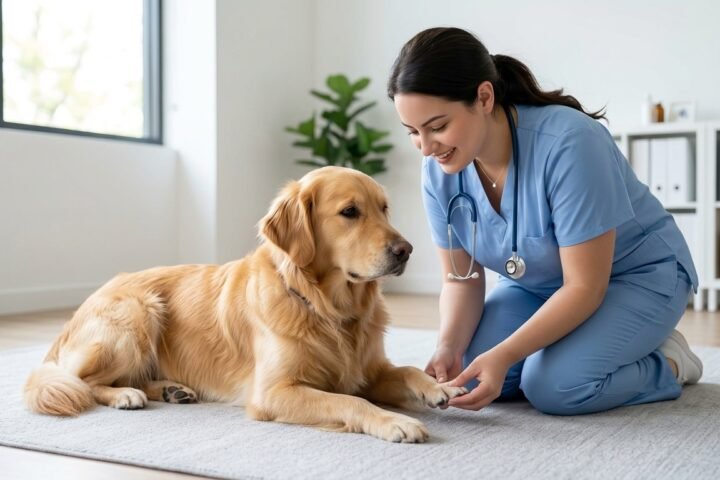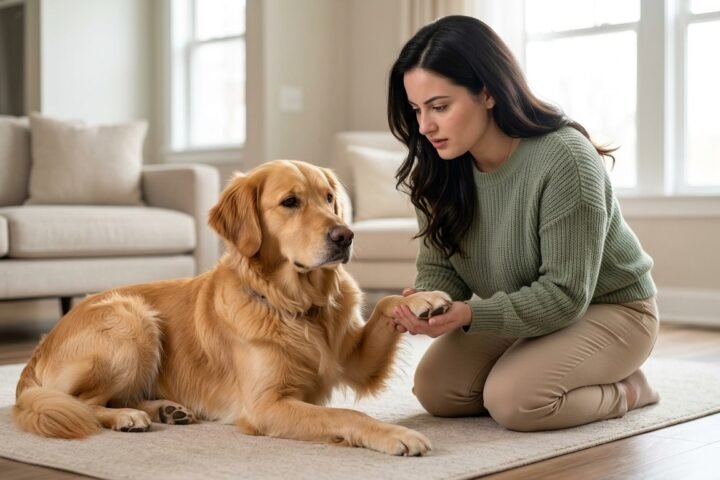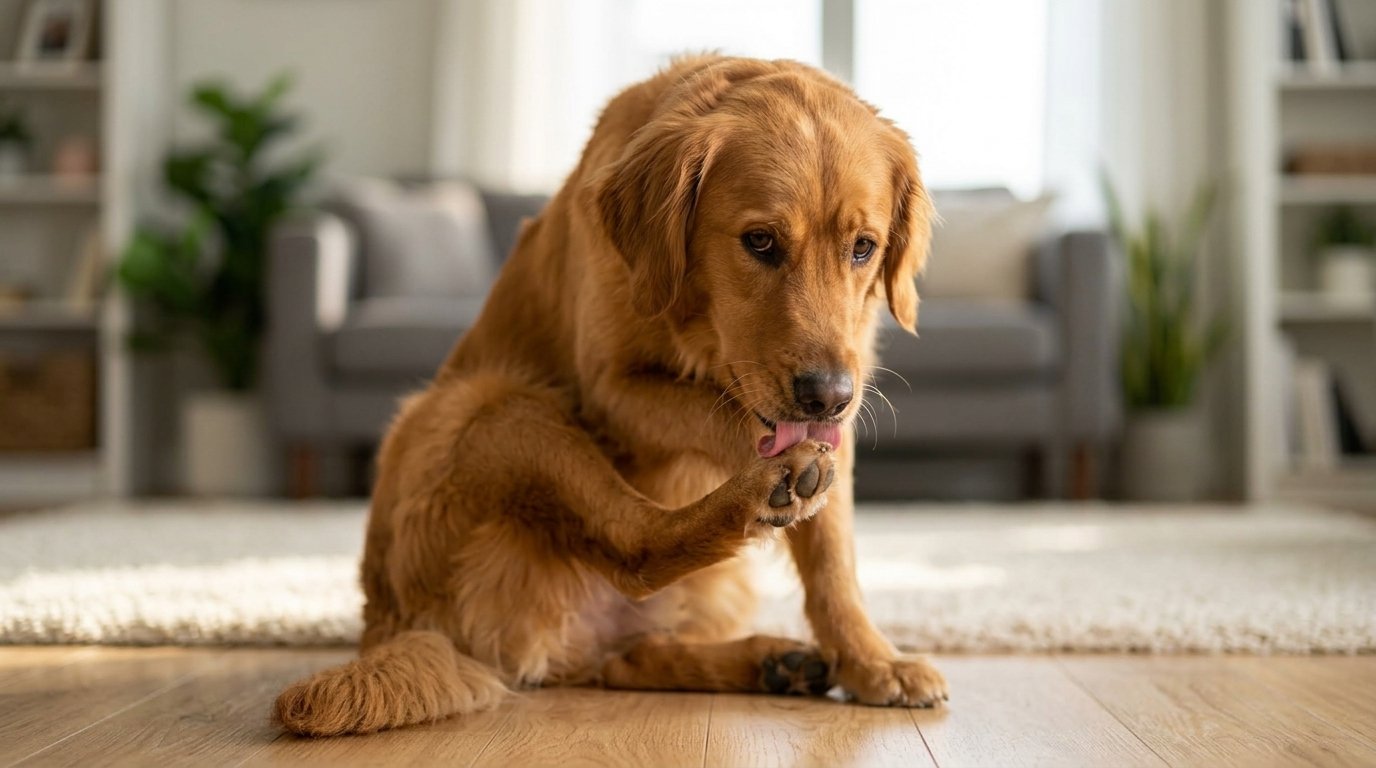
A dog licking their paws occasionally is usually normal. Dogs naturally groom themselves, investigate interesting smells, and clean small amounts of dirt from their feet. But if you are wondering why do dogs lick their paws constantly, repeatedly chewing between their toes, or returning to the same paw throughout the day, something may be irritating or bothering them.
Persistent paw licking can be associated with allergies, infections, injuries, parasites, environmental irritants, pain, or stress-related behavior. Veterinary sources also emphasize that excessive licking can create additional skin irritation and secondary infections.
The good news is that careful observation can give you useful clues. In this guide, you will learn the seven common causes of excessive paw licking, what you can safely do at home, which DIY remedies to avoid, and when your dog should be examined by a veterinarian.
Table of Contents
Why Do Dogs Lick Their Paws?
The first thing to know is that why do dogs lick their paws does not have one universal answer.
Occasional licking may simply be grooming. A dog might clean their paws after walking outside or investigate an interesting smell or taste. The behavior becomes more concerning when licking is frequent, difficult to interrupt, or causes visible changes to the paw.
Watch for signs such as:
- Red or inflamed skin
- Hair loss between the toes
- Brown or reddish staining
- Swelling
- Cracked paw pads
- Sores or scabs
- Bleeding
- Discharge
- An unpleasant odor
- Repeated chewing
- Limping
- Sensitivity when the paw is touched
Persistent licking can become a cycle. A dog feels itching or pain, so they lick. The licking irritates the skin, which can increase inflammation. Damaged skin can then become vulnerable to infection, potentially creating even more discomfort and licking. Pododermatitis, a general term for inflammation of the feet, has many possible causes including infection, allergies, parasites, trauma, and irritants.
So instead of focusing only on stopping the licking, the more useful question is: what is making your dog want to lick in the first place?
7 Common Reasons Dogs Keep Licking Their Paws
1. Allergies Are Making the Paws Itchy
Allergies are one of the most important causes to consider when asking why do dogs lick their paws repeatedly.
Dogs can develop allergic reactions to environmental substances such as pollen, grass, mold, and dust mites. Food-related allergies can also cause skin problems in some dogs.
Allergic dogs may lick or chew their feet because the skin becomes itchy and inflamed. Cornell University College of Veterinary Medicine notes that dogs with atopic dermatitis commonly lick and chew their feet, and the affected areas may eventually become red, hairless, darkened, or thickened.
Other allergy-related signs may include:
- Itchy ears
- Face rubbing
- Scratching
- Red skin
- Recurrent ear problems
- Recurrent skin infections
- Chewing other parts of the body
Seasonality can provide an important clue. If your dog starts licking their paws much more during spring or another particular season, environmental allergies may be worth discussing with your veterinarian.
However, paw licking alone does not prove that your dog has an allergy. Parasites, infections, injuries, and other conditions can look similar.
2. A Yeast or Bacterial Infection May Be Irritating the Paw
Another important answer to why do dogs lick their paws is infection.
Dogs can develop bacterial or yeast-related skin problems on their feet. This can happen as a primary problem or develop after another condition—such as allergies—damages the skin barrier.
Possible clues include:
- Redness
- Swelling
- Moist skin
- Hair loss
- Brown or reddish staining
- A noticeable odor
- Bumps or sores
- Discharge
- Persistent licking

VCA Animal Hospitals lists bacterial, yeast, fungal, and parasitic infections among the possible causes of canine pododermatitis.
This is one reason simply washing the paws may not solve persistent licking. Cleaning can remove irritants, but it cannot determine or treat every underlying cause.
If your dog’s paw is swollen, painful, producing discharge, or becoming increasingly inflamed, veterinary evaluation is appropriate.
3. Your Dog May Have an Injury or Foreign Object
If your dog suddenly starts licking one paw, inspect it carefully.
A cut, torn nail, thorn, splinter, grass seed, small piece of debris, insect sting, or another foreign object can cause localized discomfort.
Injuries may also occur after:
- Running on rough surfaces
- Hiking
- Playing outdoors
- Stepping on sharp objects
- Walking on very hot surfaces
- Contact with irritating substances
PetMD notes that paw injuries can include stings, cuts, nail injuries, cracked pads, fractures, and burns from hot surfaces or winter chemicals.
Compare the affected paw with the other paws. Look between the toes, around the nails, and across the pads.
Do not dig deeply into the paw trying to find an object. If something appears embedded, the paw is bleeding, your dog is limping, or the injury looks significant, contact your veterinarian.
4. Parasites Can Cause Intense Itching
Fleas and certain mites can contribute to itching and excessive licking.
Although owners often associate fleas with scratching around the body or tail, parasites can contribute to skin irritation in multiple areas. Flea allergy dermatitis can be particularly itchy because the dog’s immune system reacts to substances in flea saliva.
Parasites are especially worth considering when paw licking occurs alongside:
- General scratching
- Chewing the legs or body
- Hair loss
- Red skin
- Flea dirt
- Skin irritation elsewhere
A dog does not have to be covered in visible fleas for flea-related skin disease to be possible.
Your veterinarian can help determine whether parasites are involved and recommend an appropriate prevention or treatment plan.
5. Outdoor or Household Irritants Are Bothering the Paws
Sometimes why do dogs lick their paws has a surprisingly simple answer: something they walked through irritated their feet.
Possible irritants include:
- Grass
- Lawn treatments
- Cleaning residues
- Road salt
- Ice-melting products
- Dirt and debris
- Rough surfaces
- Other outdoor chemicals
Winter de-icers deserve particular attention. The ASPCA notes that rock salt and other de-icing products can irritate dogs’ paws, and dogs may ingest chemicals when licking their feet afterward.
Summer can create another problem. Hot pavement can burn paw pads, causing redness, blistering, pain, and licking. ASPCA recommends avoiding hot pavement or sand and watching for signs such as blisters and damaged skin.
If licking appears soon after outdoor walks, try gently rinsing the paws with clean water and drying them thoroughly, particularly between the toes.
6. Pain or Joint Problems May Be Triggering the Licking
Not every dog licking their paws is experiencing an itchy skin problem.
Pain can also cause licking.
A dog may focus on a paw or nearby area because something hurts. Potential sources include a nail injury, pad injury, joint discomfort, arthritis, or another painful condition.
This becomes more concerning when licking is accompanied by:
- Limping
- Favoring one leg
- Difficulty getting up
- Reluctance to walk
- Avoiding stairs
- Whimpering
- Pulling away when touched
- Reduced activity
A sudden change is particularly important.
If your dog normally ignores their paws but suddenly begins intensely licking one foot while limping, do not assume it is simply an allergy.
A veterinarian can examine the paw and determine whether pain, injury, inflammation, or another medical issue may be involved.
7. Boredom, Stress, or a Repetitive Habit May Be Contributing
Medical problems should generally be considered first when a dog develops persistent licking.
But behavior can also become part of the picture.
Some dogs lick themselves as a self-soothing behavior when they are bored, stressed, anxious, or understimulated. Over time, repetitive licking can become a learned habit that continues even after the original trigger has improved.
Best Friends Animal Society notes that repetitive licking can be associated with anxiety or boredom in some dogs, while also pointing out that injury, arthritis, and other physical problems can contribute to lick-related conditions.
Possible behavioral clues include:
- Licking mostly when resting
- Licking when left alone
- Increased licking after stressful events
- No obvious paw injury
- Repetitive licking despite normal-looking paws
- Other stress behaviors such as pacing or restlessness
That does not mean the behavior is “just psychological.” Medical causes should be appropriately investigated before assuming a behavioral explanation.
How to Tell What May Be Causing the Licking
One of the easiest ways to understand why do dogs lick their paws is to pay attention to the pattern.
If one paw is affected
Think first about:
- Injury
- Foreign object
- Nail problem
- Local irritation
- Sting
- Pain
If several paws are affected
Consider:
- Allergies
- Environmental irritation
- Skin disease
- Parasites
- Infection
If licking happens mainly after walks
Look for:
- Grass exposure
- Pollen
- Lawn chemicals
- Rough surfaces
- Hot pavement
- Road salt or de-icers
- Debris
If licking is worse at certain times of year
Environmental allergies become more worth considering.
If licking happens mostly when your dog is bored or resting
Behavioral reinforcement, boredom, or stress may be contributing—but medical causes should still be considered if the behavior is persistent.
If the paw looks red, swollen, or damaged
Do not rely on home care alone if the problem is worsening.
A simple symptom diary can help. Record:
When → Which paw → What happened before → What the paw looks like → Other symptoms
For example:
After evening walk → left front paw → dog began licking immediately → mild redness between toes → no limping.
This information can be surprisingly useful when discussing the problem with your veterinarian.
Safe Things You Can Do at Home
If your dog is otherwise comfortable and there is no obvious serious injury, several simple steps can help protect the paws while you monitor the situation.
1. Inspect the paws gently
Look at:
- Paw pads
- Between the toes
- Around the nails
- Top of the paw
- Hair between the toes
Do not force your dog if the paw is extremely painful.
2. Rinse paws after outdoor walks
A gentle rinse with clean, lukewarm water can help remove pollen, dirt, salt, and other residues.
This is particularly useful after walking on treated surfaces.
ASPCA recommends washing dogs’ paws after exposure to winter salt and chemicals.

3. Dry thoroughly
Moisture trapped between the toes can contribute to skin problems.
Use a clean towel and gently dry between the toes without aggressive rubbing.
4. Keep nails appropriately trimmed
Overgrown or damaged nails can change how a dog places weight on the foot and may contribute to discomfort.
If you are uncomfortable trimming nails yourself, have a groomer or veterinary professional do it.
5. Reduce exposure to obvious irritants
If your dog repeatedly licks after walking on a particular surface, change the walking route temporarily and observe whether the behavior improves.
6. Prevent the licking from causing further damage
If your dog is repeatedly chewing an irritated area, ask your veterinarian what type of barrier or protective device is appropriate.
The goal is not simply to stop the behavior. It is to prevent your dog from damaging the skin while the underlying cause is addressed.
Pro Tip: Take clear photos of the paws when the problem first appears. If the appearance changes before your veterinary appointment, the photos can help show how the condition developed.
Home Remedies You Should Avoid
When searching for why do dogs lick their paws, it is easy to find DIY recipes online. Be careful.
“Natural” does not automatically mean safe for dogs.
Avoid putting products on your dog’s paws unless your veterinarian has specifically recommended them.
That includes:
- Human medicated creams
- Pain-relief creams
- Essential oils
- Concentrated vinegar
- Harsh disinfectants
- Hydrogen peroxide unless specifically directed
- Unknown herbal preparations
- Products containing ingredients that could be harmful if swallowed
Dogs are likely to lick whatever you apply to their feet.
Some household products can also cause irritation or poisoning. The ASPCA specifically warns that certain cleaning products and human products can be harmful if pets ingest them.
Do not attempt to “burn out” an infection with harsh substances.
Do not use leftover antibiotics or antifungal medication.
And do not give human pain medication unless a veterinarian specifically instructs you to do so. Human medications can be dangerous to dogs.
The safest home approach is usually simple: inspect, gently clean when appropriate, dry, reduce exposure to irritants, and monitor for worsening symptoms.
When Paw Licking Needs a Veterinarian
Knowing when to call a veterinarian is just as important as knowing why do dogs lick their paws.
Make a veterinary appointment if the licking:
- Continues for several days
- Keeps returning
- Is becoming more frequent
- Causes hair loss
- Causes redness or sores
- Is accompanied by an odor
- Causes swelling
- Produces discharge
- Interferes with sleep or normal activity
- Happens with repeated chewing
Persistent or obsessive licking that causes skin irritation, hair loss, wounds, or changes in normal behavior generally deserves veterinary evaluation.
Seek prompt veterinary attention for red flags
Contact a veterinarian promptly if your dog has:
- Significant swelling
- Active bleeding
- Severe pain
- A deep wound
- Pus or other discharge
- Marked limping
- Refusal to put weight on the leg
- A suspected embedded foreign object
- A serious burn
- Rapidly worsening symptoms
PetMD similarly identifies bleeding, swollen paws, limping, discharge, and pain as reasons to seek veterinary attention.
If your dog may have walked through or ingested a potentially toxic chemical, contact your veterinarian or an animal poison service rather than trying to treat the exposure yourself. The ASPCA recommends immediate professional guidance for suspected toxic exposures.

How to Help Prevent Excessive Paw Licking
You cannot prevent every cause of paw licking, but good routine care can reduce some common triggers.
Check paws regularly
A quick inspection after walks can help you notice small problems before they become bigger ones.
Clean after exposure to irritants
If your dog regularly encounters grass, pollen, road salt, or treated surfaces, gently rinsing the paws afterward may reduce residue.
Keep the environment safe
Remove sharp objects from areas where your dog plays.
Keep cleaning products and chemicals secured.
Maintain parasite prevention
Follow your veterinarian’s recommendations for flea and parasite prevention.
Pay attention to seasonal patterns
If paw licking repeatedly worsens at a certain time of year, tell your veterinarian.
Provide appropriate enrichment
Dogs need more than physical exercise. Sniffing activities, training, food puzzles, play, and appropriate interaction can provide mental stimulation.
If stress appears to be contributing to repetitive licking, addressing the underlying emotional or environmental trigger is more useful than simply trying to interrupt the licking.
Do not punish paw licking
Punishing your dog may increase stress and will not address an allergy, injury, infection, or other physical cause.
Instead, investigate why the behavior is happening.
Frequently Asked Questions
Why do dogs lick their paws constantly?
Why do dogs lick their paws constantly? Common possibilities include allergies, infection, parasites, injury, environmental irritation, pain, and stress-related or repetitive behavior. Persistent licking is usually a symptom rather than a diagnosis, so the other signs and circumstances matter.
Is it normal for dogs to lick their paws?
Occasional paw licking can be normal grooming. It becomes more concerning when licking is frequent, intense, difficult to interrupt, or causes redness, hair loss, wounds, swelling, odor, or other changes.
What can I put on my dog’s paws to stop licking?
Avoid applying human creams, essential oils, harsh chemicals, or other DIY products unless your veterinarian recommends them. Because dogs can lick anything placed on their paws, an apparently harmless product may cause irritation or illness. Gentle cleaning and drying are safer basic measures while you determine the cause.
When should I worry about my dog licking their paws?
You should be more concerned when paw licking is persistent or accompanied by swelling, bleeding, discharge, severe redness, sores, limping, significant pain, or changes in normal activity. These signs warrant veterinary evaluation rather than continued home treatment.
Conclusion
If you have been asking why do dogs lick their paws, remember that occasional grooming is normal, but constant or intense licking deserves attention.
The seven major possibilities include allergies, infection, injury or foreign objects, parasites, environmental irritation, pain, and stress or repetitive behavior. The pattern can provide useful clues: one suddenly affected paw points you toward a different group of possibilities than several itchy paws.
At home, keep the paws clean and dry, inspect them gently, reduce obvious irritants, and avoid unproven DIY remedies. Most importantly, do not focus only on stopping the licking. The goal is to identify and address whatever is causing your dog to keep returning to their paws.
If licking persists, causes skin damage, or occurs alongside swelling, discharge, limping, bleeding, or significant pain, involve your veterinarian. Early evaluation can help prevent a relatively small paw problem from becoming a painful, chronic skin issue.