The best answer depends on your dog, the context, and the full pattern of behavior. Look at multiple signals rather than one isolated action.
If your dog jumps on guests, drags you down the block, or barks the second the doorbell rings, you’re not alone — and you don’t need months to see real change. Good manners training is simply the process of teaching your dog to make calm, polite choices in everyday situations, and most dogs can learn the basics in about a week of short, consistent sessions. This guide breaks the process down into a realistic seven-day plan, built around the way dogs actually learn: in small, rewarding steps rather than one long, overwhelming lesson.
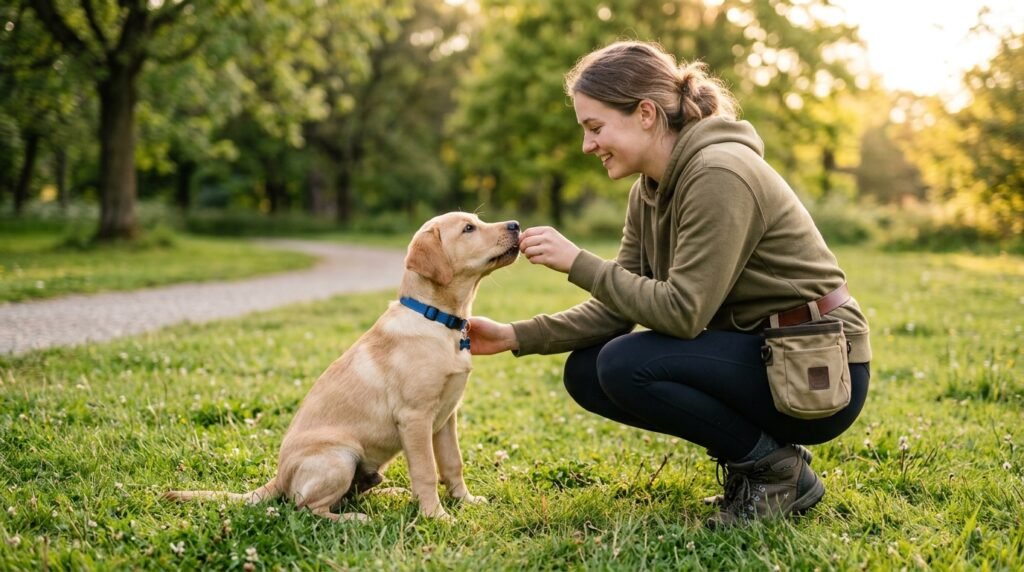
You won’t need special equipment, a dog-training degree, or hours of free time. What you do need is a pocketful of treats, a few five-minute windows in your day, and a willingness to be consistent. By the end of the week, your dog will have a stronger foundation in the commands, impulse control, and social skills that make everyday life together so much smoother — for you, for your dog, and for everyone your dog meets along the way.
Table of Contents
What Is Good Manners Training and Why It Matters
Good manners training isn’t the same as competition obedience. It’s not about perfect heeling or flawless retrieves — it’s about the everyday behaviors that make a dog pleasant to live with and easy to take out into the world. Understanding your dog’s everyday body language and behavior signals makes this whole process easier, since reading your dog well helps you reward the right moments. That includes sitting instead of jumping when greeting people, walking without dragging you down the sidewalk, staying calm when the doorbell rings, and settling down instead of demanding attention every waking minute.
According to the American Kennel Club, following basic courtesy guidelines around cleanliness, calm behavior, and leash laws is part of what makes a dog a welcome member of its community, and structured manners work is the foundation of programs like the Canine Good Citizen test. This kind of everyday polite behavior training matters because it directly affects your dog’s quality of life. A dog with solid house manners for dogs and reliable impulse control gets invited on more trips, welcomed by more visitors, and trusted with more freedom. A dog without that foundation, on the other hand, often ends up more isolated — kept away from guests, skipped on outings, or surrendered altogether when the behavior becomes unmanageable.
There’s also a safety component. A dog that has been through consistent training work is less likely to bolt out an open door, less likely to injure someone by jumping, and less likely to end up in a dangerous situation because it won’t come when called. For puppies especially, the early weeks are a critical window: the Merck Veterinary Manual notes that continued socialization after a puppy comes home, alongside reward-based learning principles, plays a major role in preventing behavior problems later in life.
Before You Start: Setting Up for a Successful Training Week
A little preparation makes the rest of this seven-day plan go far more smoothly.
Gather your tools. You’ll want a well-fitted flat collar or harness, a standard four-to-six-foot leash, and small, soft training treats your dog genuinely loves. Pea-sized pieces work best because your dog can eat them quickly and get right back to training.
Choose a marker word. Pick one word — “yes” or “good” work well — that you’ll say the instant your dog does something right, followed immediately by a treat. This marker tells your dog exactly which behavior earned the reward, which speeds up learning considerably. As PetMD points out, keeping sessions short and pairing a consistent marker with a reward your dog genuinely wants makes reward-based training far more effective.
If you’re starting with a young puppy, pairing this week with the basics covered in our puppy training fundamentals guide will help you layer these manners lessons on top of housetraining and crate routines without overwhelming your dog.
Pick your practice spots. Start in a low-distraction area like your living room or a quiet hallway. You’ll gradually add distractions as the week goes on, which mirrors how these skills have to generalize beyond a quiet room.
Set realistic session lengths. Five to ten minutes, two or three times a day, beats one long, tiring session. Dogs — especially puppies — lose focus quickly, and short bursts of practice keep both of you motivated and successful.
Get everyone in the house on the same page. If one family member allows jumping on the couch while another discourages it, your dog will stay confused no matter how much time you put in. This kind of upfront agreement is what makes good manners training actually stick. Agree on the household rules before day one.
Day 1–2: Foundation Commands for Good Manners Training
The first two days of this plan are about building the core vocabulary your dog will lean on for the rest of the week: sit, down, and stay.
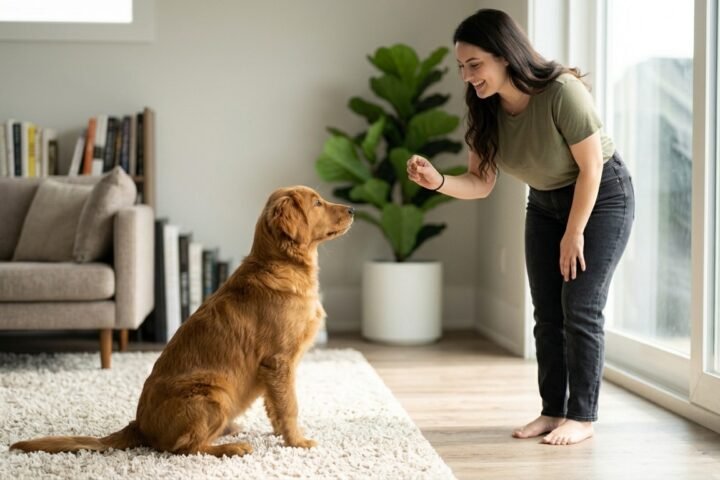
Teaching sit. Hold a treat close to your dog’s nose, then slowly raise it up and back over their head. As their nose follows the treat, their bottom will naturally lower to the ground. The moment it touches down, mark with your word and reward. Repeat five or six times per session.
Teaching down. From a sit, hold a treat at your dog’s nose and lower it straight to the floor between their front paws. Most dogs will follow the treat down into a lying position. Mark and reward the instant their elbows touch the ground.
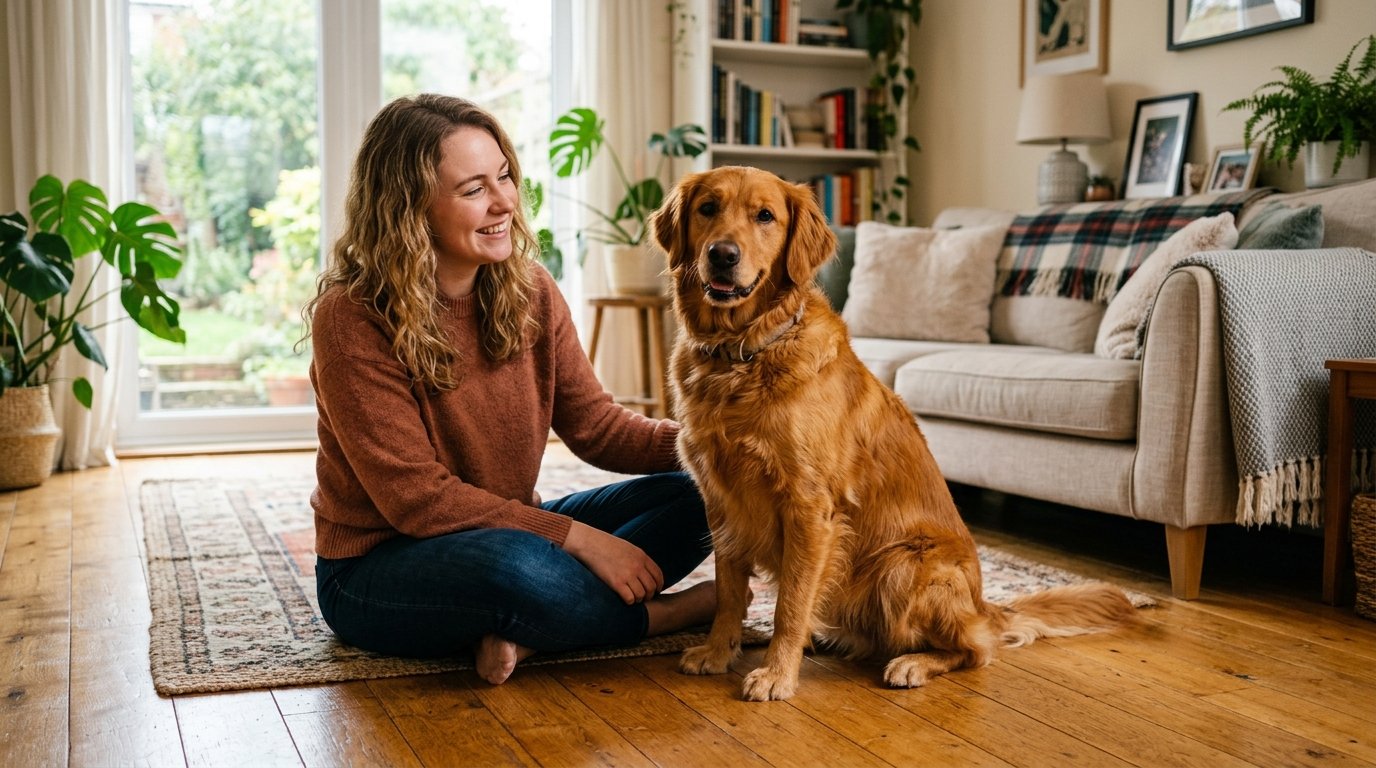
Teaching stay. Ask for a sit, then hold your palm out and say “stay.” Wait just one or two seconds before marking and rewarding, then gradually build up the duration. This part of the process tends to go faster than owners expect, because you’re rewarding tiny wins rather than demanding perfection right away.
Practice loose recall. In a hallway or fenced yard, crouch down, say your dog’s name and “come,” and reward enthusiastically when they arrive. This lays the groundwork for later reliability, which is one of the most valuable things dog obedience training gives you long term.
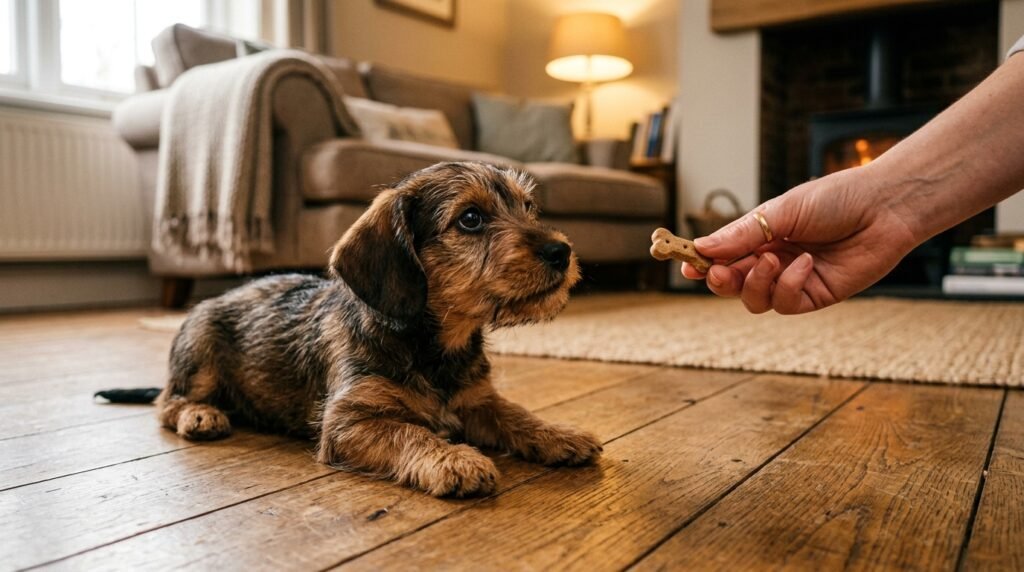
By the end of day two, most dogs can reliably sit and hold a short stay, which sets the stage for the trickier social skills covered next. These foundation commands are the backbone that the rest of your good manners training will build on.
Day 3–4: Teaching Polite Greetings and Impulse Control
Jumping on people is one of the most common complaints owners bring to a trainer, and days three and four tackle it directly, along with related impulse-control skills.
Curing the jump. The trick is consistency: every single time your dog jumps, all attention stops. No pushing them off, no eye contact, no talking — just turn away silently. The instant all four paws are on the floor, mark and reward. Practice with a family member acting as a “guest” who enters, waits for four-on-the-floor, and then greets calmly.
Teaching “leave it.” Show your dog a treat in a closed fist. They’ll likely sniff, lick, or paw at your hand — ignore this completely. The moment they back off or look away, mark, reward from your other hand, and repeat. This single skill of impulse control prevents everything from counter-surfing to grabbing dropped medication off the floor.
Practicing “wait” at doorways. Ask your dog to sit before opening any door — the front door, the car door, the crate. Only release them with a cue word like “okay.” This small ritual dramatically reduces bolting and door-darting, two behaviors that account for a surprising number of preventable dog injuries.
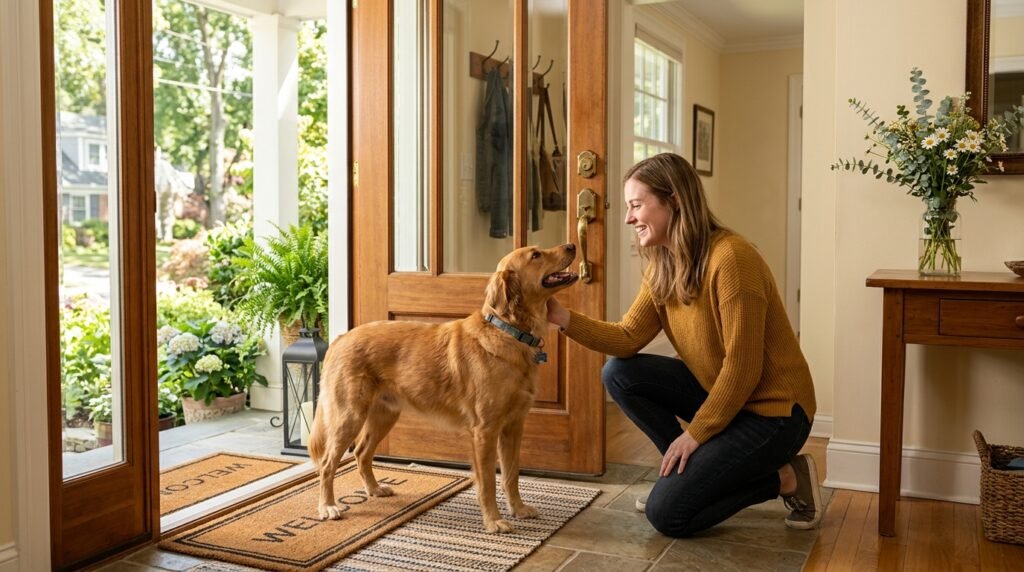
Adding mild distractions. Once your dog is responding reliably in a quiet room, introduce a toy on the floor or a second person walking by while practicing sit and leave it. This is where good manners training starts to generalize into the messier, more distracting real world.
Day 5: Leash Manners and Loose-Leash Walking
Pulling on the leash is exhausting for owners and can be genuinely unsafe, so day five of good manners training is dedicated entirely to loose-leash walking.
Start indoors or in the yard. With your dog on leash, take a step. If the leash stays loose, mark and reward. If your dog pulls ahead, simply stop walking — don’t yank or scold, just become a statue until the leash slackens again, then continue.
Reward position, not just pace. Treat your dog periodically whenever they’re walking near your side, even if you haven’t asked for a formal heel. This reinforces the position you want without turning every walk into a rigid drill.
Practice direction changes. Randomly turn left, right, or reverse direction without warning, rewarding your dog for staying tuned in and following along. This keeps their attention on you rather than pulling toward every smell down the block.
Use real outdoor sessions gradually. Take short walks around the block, rewarding loose-leash behavior frequently at first, then less often as it becomes a habit. The American Kennel Club explains that positive reinforcement works because dogs repeat behaviors that reliably earn something good, which is exactly why frequent, well-timed rewards on walks pay off so quickly.
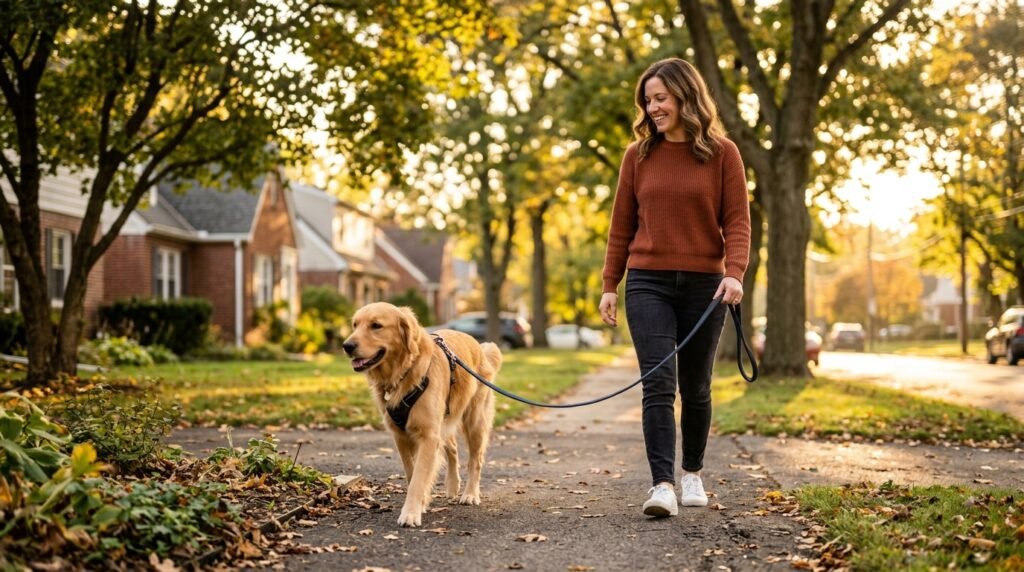
If your dog struggles significantly with leash pulling even after focused practice, a front-clip harness can offer extra mechanical control while you continue building the underlying skill through good manners training. For a deeper dive into gear options and troubleshooting, our leash training guide covers the topic in more detail.
Day 6: Good Manners Training Around the House
Day six shifts the focus indoors, building the calm, settled behavior that makes daily life pleasant.
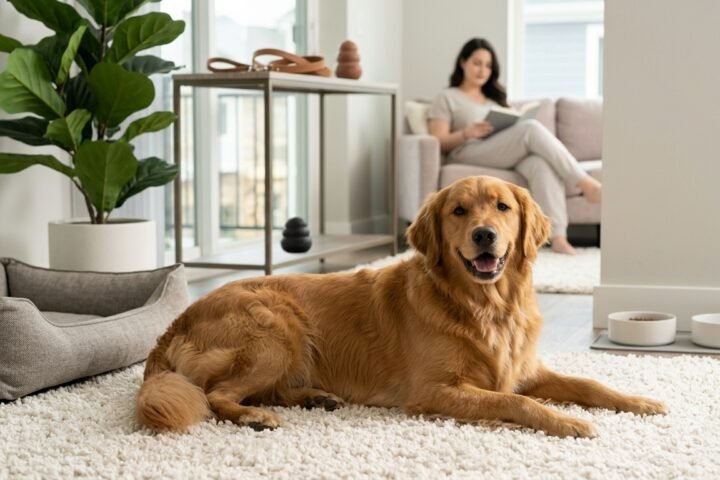
Teach a “place” or settle command. Choose a mat or dog bed, lure your dog onto it, and reward for lying down there. Gradually extend how long they’re expected to stay on the mat, using it during meals, guests’ visits, or whenever you need your dog out from underfoot.
Address counter-surfing and begging. Never feed from the table, and use the “leave it” skill from earlier in the week whenever your dog approaches food left within reach. Consistency here is everything — one accidental table scrap can undo days of progress.
Practice calm door greetings. Combine the “wait” skill with the settle command: when the doorbell rings, send your dog to their place before opening the door. This is one of the most requested outcomes of this entire process, since a barking, lunging dog at the door is stressful for everyone involved, including guests.
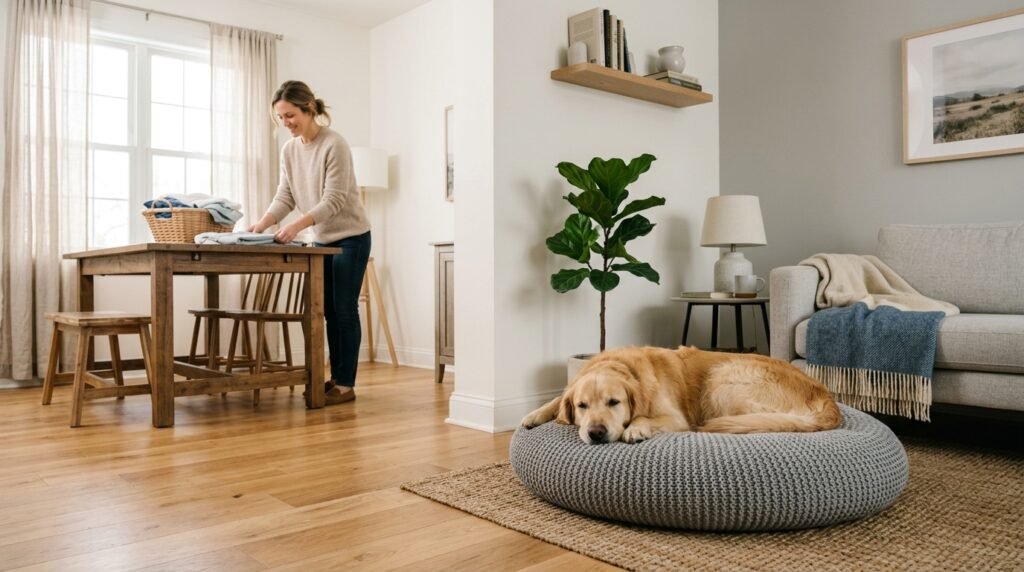
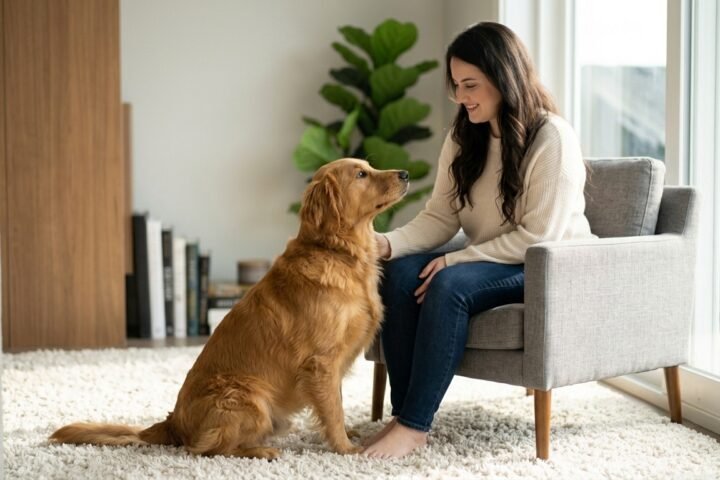
Reinforce quiet time. Reward your dog for lying calmly nearby while you do something else entirely — folding laundry, working at a desk, watching TV. Dogs that are only ever rewarded during active training sessions can struggle to understand that calm behavior is valuable too. If barking at the door or windows is a recurring issue in your house, our guide to house manners for dogs walks through additional troubleshooting steps.
Day 7: Testing and Reinforcing Your Dog’s New Skills
The final day of your training week is about proofing what you’ve built, not cramming in new material.
Run a mini “manners test.” In sequence, ask your dog to sit at the door, wait while you open it, walk on a loose leash to the yard or hallway, hold a stay, and settle on their mat once you’re back inside. This walk-through highlights which skills are solid and which need another few days of focused repetition.
Invite a real distraction. Have a friend come by to practice greetings, or take a short walk somewhere with more foot traffic. Real-world proofing is where good manners training either sticks or falls apart, so treat this as valuable information rather than a failure if things get a little messy.
Start fading the treats. Move to rewarding every second or third correct response instead of every single one, mixing in praise and life rewards — like access to a walk or a favorite toy — in place of food. This variable schedule, as trainers at VCA Animal Hospitals note, keeps behaviors strong because your dog can never predict exactly when the next reward is coming.
Set a maintenance schedule. Plan two or three short refresher sessions a week going forward. Raising a well-mannered dog isn’t a one-and-done project; it’s an ongoing relationship built on small, regular check-ins.
Common Mistakes That Undermine Good Manners Training
Even a well-designed good manners training plan can stall out if a few common pitfalls creep in.
- Inconsistency between family members. If one person enforces the rules and another doesn’t, your dog receives mixed signals that slow every part of the process.
- Sessions that run too long. Training past the point of engagement teaches frustration, not manners. Stop while your dog is still eager for more.
- Rewarding too late. A reward given even two or three seconds after the behavior can accidentally reinforce whatever your dog is doing at that moment instead — often something you didn’t intend, which can quietly work against your good manners training goals.
- Skipping the proofing stage. A dog that sits perfectly in the kitchen may fall apart at a busy park entrance. Good manners training has to be practiced in varied, gradually more distracting environments to truly stick.
- Relying on punishment instead of redirection. Yelling or physical corrections tend to create anxiety rather than understanding, which can make behavior problems worse over time rather than better.
How to Maintain Good Manners Training Results Long-Term
Once the initial seven days are behind you, the goal of good manners training shifts from teaching to maintaining. Weave short refreshers into daily routines — asking for a sit before meals, a wait before walks, a settle during dinner. These tiny moments keep the skills sharp without requiring dedicated sessions.
It also helps to keep expanding your dog’s world gradually: new places, new people, new sounds. A dog that only ever practices manners at home can regress the moment life gets more exciting. Rotate in occasional refresher sessions on leash manners, greetings, and impulse control, especially after any big life change like a move, a new pet, or a new baby, since routines can loosen during transitions and good manners training benefits from regular check-ins.
Finally, keep rewarding good behavior for life, not just during the initial learning phase. Occasional treats, enthusiastic praise, and the freedoms your dog earns by behaving well — off-leash time, couch privileges, more independence around the house — are what keep those results from fading months down the road.
Frequently Asked Questions About Good Manners Training
How long does good manners training really take? Most dogs show noticeable improvement within a single focused week of good manners training, but true reliability — especially in distracting environments — usually takes several more weeks of regular practice. Puppies and adolescent dogs may need longer simply because of their shorter attention spans.
Can older dogs still benefit from good manners training? Absolutely. Adult and senior dogs are often easier to train than puppies because they can focus for longer stretches. Good manners training works at any age, whether you’re starting with a brand-new puppy or an older rescue; it just may take a few extra repetitions to override old habits.
What if my dog only behaves well when I have treats? This usually means the transition off food rewards happened too quickly. Fade treats gradually, as described on day seven, replacing them with praise, play, and real-life privileges so your good manners training generalizes beyond “treat mode.”
Is professional help ever necessary for good manners training? For most everyday issues like jumping, pulling, or door manners, a structured plan like this one is enough. However, if you’re dealing with fear-based reactivity, aggression, or severe anxiety, it’s worth consulting a certified trainer or veterinary behaviorist, since those issues go beyond basic manners work and benefit from individualized guidance.
Conclusion
Good manners training doesn’t require perfection, expensive equipment, or a complete personality overhaul for your dog — it requires short, consistent, reward-based sessions repeated across a focused week, followed by ongoing maintenance for life. By working through foundation commands, greetings, leash skills, and household routines in this order, you’re giving your dog a realistic, achievable path toward becoming the calm, polite companion you both deserve. Stick with the plan, celebrate the small wins along the way, and remember that every short session adds up to a dog who’s easier, safer, and more enjoyable to live with every single day.
Key Takeaways
- Consider the context around the behavior.
- Look for patterns instead of relying on one signal.
- Seek qualified help when behavior is sudden, severe, or unsafe.
Frequently Asked Questions
Is every behavior a sign of the same emotion?
Not necessarily. Dogs use combinations of signals, and context matters.
When should I contact a professional?
Consider veterinary or qualified behavior support for sudden, severe, escalating, or safety-related concerns.