The best answer depends on your dog, the context, and the full pattern of behavior. Look at multiple signals rather than one isolated action.
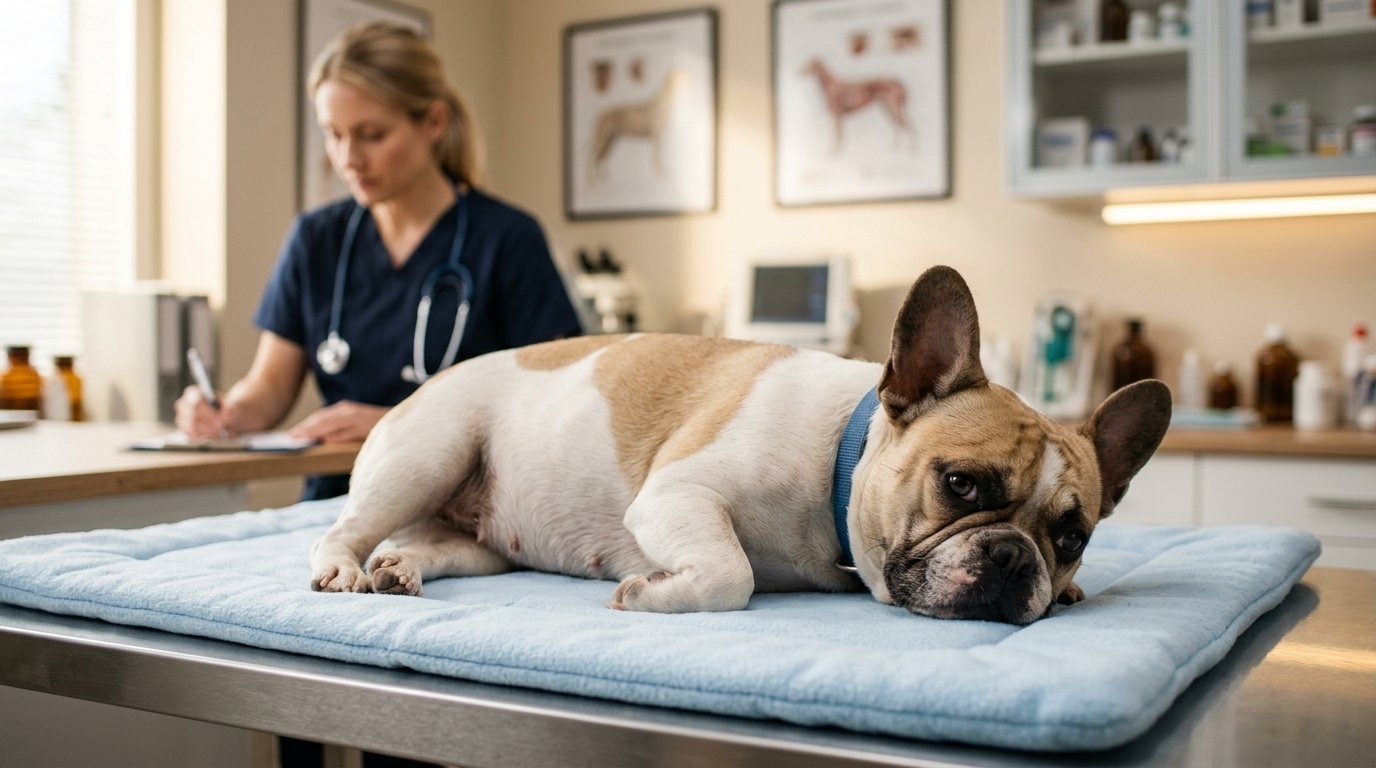
Dystocia in dogs is a serious complication in which a mother cannot deliver her puppies normally without assistance. Although difficult labor can happen in any breed, certain dogs are much more vulnerable, particularly brachycephalic breeds such as Bulldogs, French Bulldogs, Pugs, and Boston Terriers.
The issue is important because labor can deteriorate quickly. A delay may place both the mother and unborn puppies in danger, making prompt veterinary assessment essential. Cornell University describes dystocia as a difficult birth in which a dog cannot deliver puppies without medical assistance and emphasizes knowing the normal stages of labor and when emergency care is needed.
The uploaded source highlights the same concern: shortened, widened skulls in brachycephalic breeds can be associated with puppies having relatively large heads compared with the mother’s pelvic canal, making natural delivery more difficult.
Understanding the causes, warning signs, risk factors, and available veterinary interventions can help dog owners and responsible breeders make safer decisions.
Table of Contents
What Is Dystocia in Dogs?
Dystocia in dogs means difficult, prolonged, or obstructed labor that prevents a female dog from delivering her puppies normally.
Normal canine labor progresses through recognizable stages. During the first stage, the uterus begins contracting and the cervix dilates. During the active delivery stage, visible abdominal contractions help push puppies through the birth canal.
Problems arise when contractions are too weak, the birth canal is obstructed, a puppy is abnormally positioned, or a puppy is too large to pass safely.
Cornell lists maternal causes such as uterine inertia, narrow pelvic anatomy, masses, illness, exhaustion, and stress. Fetal causes can include oversized puppies, abnormal positioning, developmental abnormalities, or deceased fetuses.
The condition is not simply a prolonged version of normal labor. It can become an emergency requiring medication, assisted delivery, or a cesarean section.
Why Does Dystocia in Dogs Happen?
There is rarely one universal cause. Veterinary sources generally divide the causes into maternal factors, fetal factors, or a combination of both.
Maternal causes
The mother may have difficulty delivering puppies because of:
- Weak or absent uterine contractions
- Uterine exhaustion after prolonged labor
- A narrow pelvic canal
- Previous pelvic injury
- Abnormal pelvic anatomy
- Uterine disease
- Excessive body condition
- Poor physical condition
- Illness or metabolic problems
- Stress or pain-related inhibition of labor
Uterine inertia is particularly important. Merck Veterinary Manual identifies uterine inertia as the most common cause of dystocia in dogs.
Fetal causes
The puppies themselves may contribute to difficult birth when:
- A puppy is unusually large
- A puppy is positioned incorrectly
- The puppy has a developmental abnormality
- There is fetal death
- The size of the puppy is disproportionate to the mother’s birth canal
Merck explains that fetal oversize, malposition, malposture, and developmental abnormalities can all contribute to difficult labor.
Why Are Brachycephalic Dogs at Higher Risk?
One of the most important aspects of dystocia in dogs is breed-related anatomy.
Brachycephalic dogs have relatively short and broad skulls. Popular examples include English Bulldogs, French Bulldogs, and Pugs. Their distinctive appearance has been produced through selective breeding, but some anatomical traits associated with that appearance can create reproductive challenges.
The uploaded source explains that puppy head size and maternal pelvic anatomy can create a mismatch that makes passage through the birth canal difficult.
Cornell similarly reports that brachycephalic breeds can have intervention rates exceeding half of births because the puppies’ relatively large heads and the mother’s birth canal can make natural delivery difficult.
Research specifically examining English Bulldogs found significantly smaller pelvic dimensions and a narrower pelvic outlet compared with non-brachycephalic dogs.
This does not mean every short-nosed dog will experience complications. The risk varies between individuals, pregnancies, and breeds. However, breed history should be considered when a veterinarian evaluates a pregnant dog.
Which Breeds Have a Higher Risk?
Dystocia in dogs is possible in any breed, but veterinary references identify several groups that deserve particular attention.
Higher-risk breeds include:
- English Bulldogs
- French Bulldogs
- Pugs
- Boston Terriers
- Chihuahuas
- Some other small breeds
- Dogs with a previous history of difficult labor
Merck Veterinary Manual notes that the overall incidence of dystocia is around 5% of pregnancies but can approach 100% in some breeds, particularly certain brachycephalic and achondroplastic types.
That statistic should not be interpreted as meaning every dog in these breeds will experience dystocia. Rather, it demonstrates why breed-specific reproductive planning can be important.
Warning Signs of Dystocia in Dogs
Recognizing the warning signs is one of the most valuable things an owner can do.
Dystocia in dogs should be treated as an emergency when labor stops progressing or the mother or puppies appear distressed.
Seek veterinary help immediately if your dog:
- Has strong contractions for an extended period without producing a puppy
- Has unusually weak contractions with no progress
- Has a prolonged interval between puppies
- Develops abnormal vaginal discharge
- Has heavy bleeding
- Becomes extremely exhausted
- Appears to be in significant pain
- Becomes weak, collapsed, or seriously ill
- Has a puppy visibly stuck in the birth canal
Cornell advises immediate veterinary attention for signs including strong contractions without a puppy, prolonged intervals between puppies, abnormal discharge, severe exhaustion or pain, and a puppy becoming stuck.
Merck also considers difficult labor an emergency condition requiring rapid evaluation.
How Long Is Too Long During Dog Labor?
Timing matters, but owners should not rely on a single number without considering the entire clinical situation.
According to Cornell, strong contractions lasting more than about 20–30 minutes without a puppy, weak contractions continuing for more than 1–2 hours without progress, or more than 2–4 hours between puppies without active contractions can warrant immediate veterinary assessment.
Merck’s veterinary guidance also identifies prolonged labor, excessive intervals between puppies, and maternal or fetal distress as reasons for intervention.
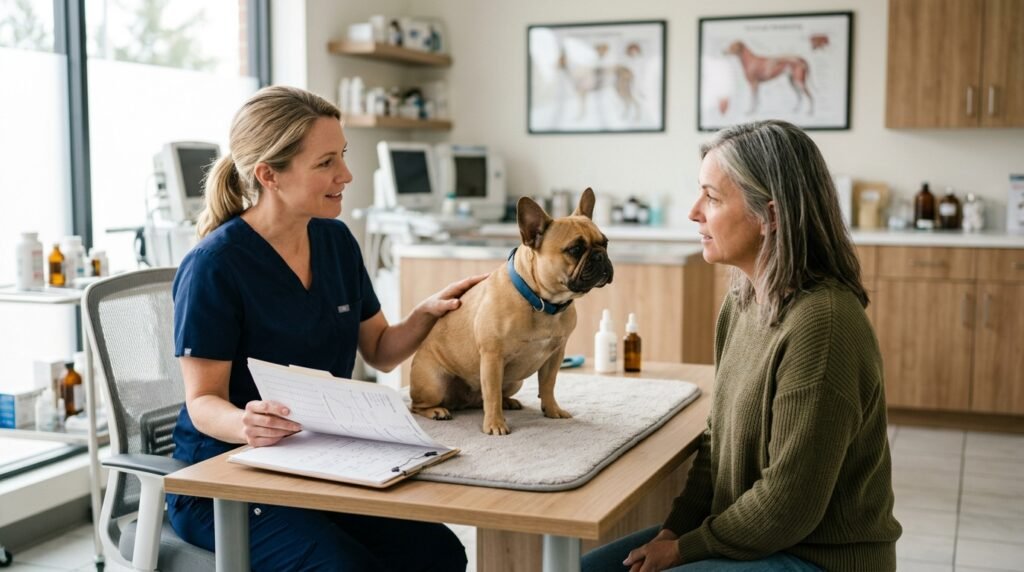
Because individual pregnancies vary, owners should establish a labor plan with their veterinarian before the expected delivery date, especially when the dog belongs to a high-risk breed.

How Veterinarians Diagnose Dystocia in Dogs
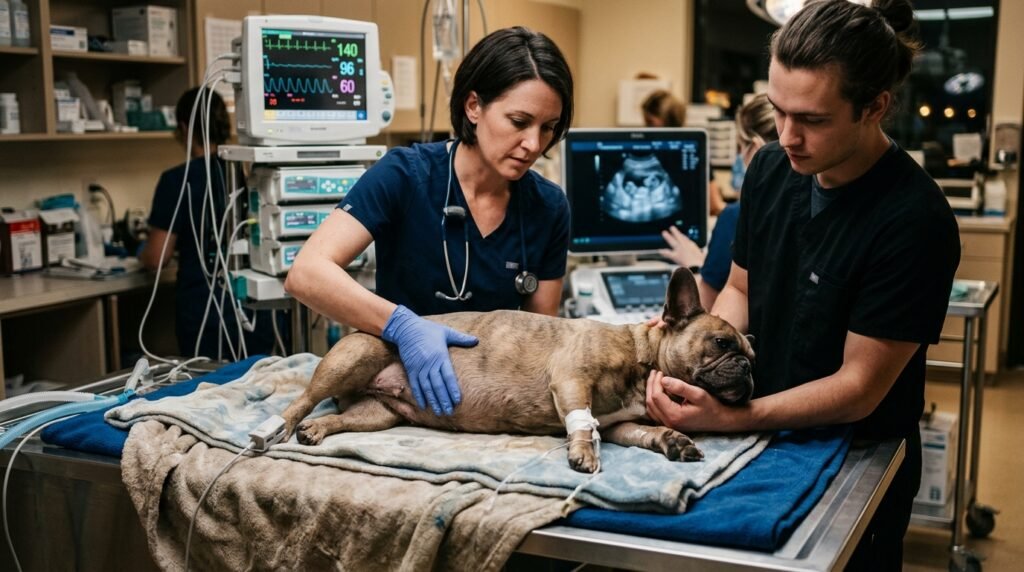
When dystocia in dogs is suspected, the veterinarian first evaluates the mother, labor history, and condition of the puppies.
The veterinarian may ask:
- When did labor begin?
- When was the last puppy delivered?
- How strong and frequent are the contractions?
- Has abnormal discharge appeared?
- Has the dog previously experienced difficult labor?
- How far along is the pregnancy?
Physical examination can help identify obstruction or other problems.
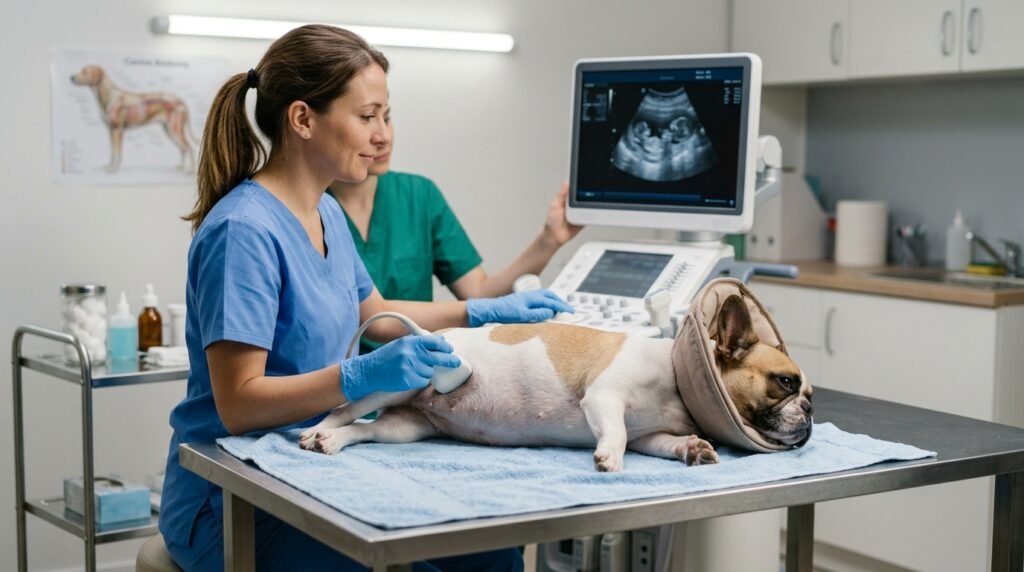
Veterinarians may also use:
X-rays
Radiographs can help determine the number, size, position, and approximate relationship of puppies to the maternal pelvis.
Ultrasound
Ultrasound can help assess fetal viability, including fetal heart activity. Cornell notes that fetal heart-rate assessment can be particularly useful when deciding whether puppies are in distress.
Blood testing
Blood tests may help identify metabolic problems, including abnormalities involving calcium or glucose.
The goal is not simply to determine whether labor is slow. The veterinarian must establish whether continued vaginal delivery is safe or whether surgical intervention is needed.
Can Dystocia in Dogs Be Treated Without Surgery?
Not every case requires immediate surgery.
If the mother is stable, there is no physical obstruction, and the puppies are not showing significant distress, a veterinarian may consider medical management.
Treatment can involve carefully selected medications such as oxytocin or calcium when uterine inertia is responsible. However, these medications must be used under veterinary supervision.
Merck specifically warns that oxytocin should not be used when obstructive dystocia is present because stimulating stronger contractions against an obstruction can be dangerous.
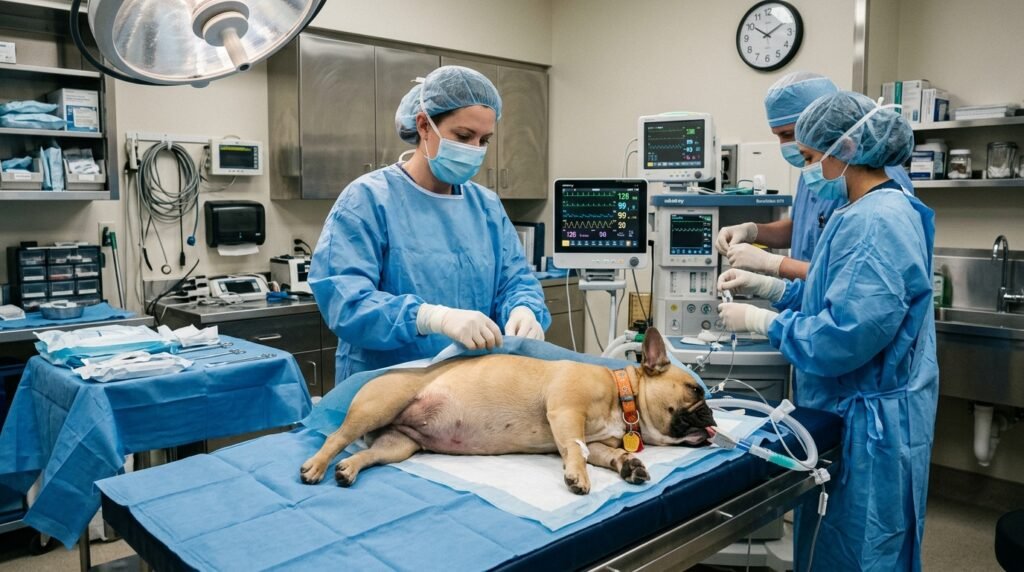
If there is an obstruction, fetal distress, serious maternal illness, or failure of appropriate medical management, a cesarean section may be required.
When Is a C-Section Necessary?
A cesarean section may become necessary when vaginal delivery is unsafe or unsuccessful.
Common indications include:
- Obstruction of the birth canal
- Abnormal puppy positioning that cannot be corrected
- Fetal distress
- Fetal death
- Prolonged or severe labor
- Uterine inertia that does not respond to treatment
- Serious illness in the mother
- Anatomical abnormalities
- Relative fetal oversize
High-risk brachycephalic dogs may also be considered for planned cesarean delivery based on individual veterinary assessment.
Cornell lists high-risk breeds, obstruction, fetal distress, maternal illness, and failed medical treatment among situations in which C-section may be recommended.
The uploaded source similarly emphasizes that planned surgical care is sometimes used for short-nosed breeds because waiting for an emergency can place both mother and puppies at greater risk.
Planned C-Section vs. Emergency C-Section
For some high-risk pregnancies, veterinarians may recommend planning a C-section rather than waiting for labor to become an emergency.
The reasoning is straightforward: a controlled procedure allows the veterinary team to prepare for anesthesia, surgery, neonatal support, and possible respiratory complications.
However, a planned C-section is still surgery and is not risk-free.
A recent PubMed-indexed report examining fatal complications after canine C-sections found that brachycephalic breeds were substantially represented among the cases studied. The report reinforces that surgical delivery itself requires careful veterinary management, particularly in dogs with airway-related risks.
Therefore, the decision should be individualized rather than based solely on breed.
What Should Owners Do During a Difficult Birth?
If you suspect dystocia in dogs, the safest approach is to contact a veterinarian immediately rather than attempting home remedies.
Keep the mother calm and minimize unnecessary handling.
Before labor begins, owners should prepare:
- A clean and quiet whelping area
- Contact information for the regular veterinarian
- The location of the nearest emergency veterinary hospital
- A method of transportation
- A written record of the pregnancy and expected due date
- A way to record delivery times
- Clean towels and basic whelping supplies
Do not give oxytocin, calcium, pain medication, or other drugs unless specifically instructed by a veterinarian.
Do not attempt forceful pulling of a stuck puppy. Merck recommends gentle obstetrical techniques only when appropriate and emphasizes avoiding aggressive manipulation.
Responsible Breeding and Dystocia in Dogs
The discussion around dystocia in dogs extends beyond emergency medicine. It also raises important questions about responsible breeding.
Breed appearance should never be prioritized over health and functional anatomy.
The uploaded source makes this welfare concern explicit, explaining that when breeding repeatedly results in dogs requiring veterinary intervention to reproduce, the issue becomes more than a simple breeding characteristic.
Responsible breeders should consider:
- The health history of both parents
- Previous pregnancy and delivery history
- Maternal pelvic anatomy
- Breed-specific reproductive risks
- Body condition
- Genetic and inherited health problems
- Access to emergency veterinary care
- Whether the proposed breeding is likely to promote healthier offspring
A previous difficult birth should also be discussed with a veterinarian before another pregnancy.
Can Dystocia Be Prevented?
There is no guaranteed way to prevent every case of dystocia in dogs.
However, careful breeding and veterinary planning can reduce avoidable risks.
Cornell recommends breeding healthy dogs, maintaining appropriate body condition, knowing the expected due date, understanding normal labor, preparing a safe whelping environment, and considering elective C-section in selected high-risk dogs.
Pregnancy monitoring can also help veterinarians identify concerns before delivery.
Owners should avoid assuming that a dog will deliver normally simply because previous pregnancies appeared uncomplicated. Each pregnancy can be different.
For breeders working with brachycephalic dogs, reproductive planning deserves particular attention.
Why Early Veterinary Planning Matters
The most important lesson about dystocia in dogs is that preparation is easier than reacting to a crisis.
A veterinary consultation before delivery can help establish:
- The estimated delivery date.
- Whether the breed or individual dog has elevated risk.
- Whether imaging is appropriate.
- What labor signs should trigger an emergency visit.
- Which veterinary hospital should handle an after-hours emergency.
- Whether planned surgical delivery should be discussed.
This preparation can be especially valuable when the mother has a previous history of difficult labor or belongs to a breed with a high incidence of reproductive complications.
Merck’s guidance emphasizes that abnormal labor can require either medical or surgical management and that medications should not be administered without veterinary direction.
Frequently Asked Questions
1. What is dystocia in dogs?
Dystocia in dogs is difficult or obstructed labor in which the mother cannot safely deliver her puppies without veterinary assistance. Causes can involve the mother, puppies, or both.
2. Which dogs are most at risk of difficult labor?
Brachycephalic breeds such as Bulldogs, French Bulldogs, Pugs, and Boston Terriers have elevated risk. Some small breeds can also be vulnerable because individual puppies may be relatively large compared with the mother’s birth canal.
3. How do I know if my dog needs an emergency C-section?
An emergency C-section may be necessary when there is obstruction, fetal distress, severe maternal illness, prolonged ineffective labor, or failure of appropriate medical treatment. Only a veterinarian can determine whether surgery is necessary.
4. Can a dog with a previous difficult birth have puppies again?
Possibly, but the previous complication should be carefully evaluated by a veterinarian before another pregnancy. The underlying cause, breed, anatomy, age, health, and previous delivery history all matter.
Conclusion
Dystocia in dogs is a potentially life-threatening reproductive emergency, but informed preparation can make a major difference.
Short-nosed breeds deserve particular attention because their anatomy can increase the likelihood of difficult delivery. Research and veterinary guidance support careful reproductive planning for breeds such as English Bulldogs and other brachycephalic dogs.
The key warning signs are prolonged or ineffective contractions, unusually long intervals between puppies, abnormal discharge, severe exhaustion, significant pain, or a puppy becoming stuck.
Most importantly, owners should never attempt to manage a suspected obstruction or serious labor complication with home remedies. Prompt veterinary assessment gives the mother and puppies the best opportunity for a safe outcome.
Responsible breeding means putting health and functional anatomy ahead of appearance. As the source material emphasizes, a dog’s physical appearance should never become more important than its ability to breathe, move, reproduce, and live safely.
Key Takeaways
- Consider the context around the behavior.
- Look for patterns instead of relying on one signal.
- Seek qualified help when behavior is sudden, severe, or unsafe.
Frequently Asked Questions
Is every behavior a sign of the same emotion?
Not necessarily. Dogs use combinations of signals, and context matters.
When should I contact a professional?
Consider veterinary or qualified behavior support for sudden, severe, escalating, or safety-related concerns.