The best answer depends on your dog, the context, and the full pattern of behavior. Look at multiple signals rather than one isolated action.
Hot summer days can make your dog’s normal routine harder to maintain. Long walks may need to be shortened, outdoor play may become uncomfortable, and some dogs simply prefer staying inside when temperatures rise.
That’s where dog enrichment ideas can make a real difference.
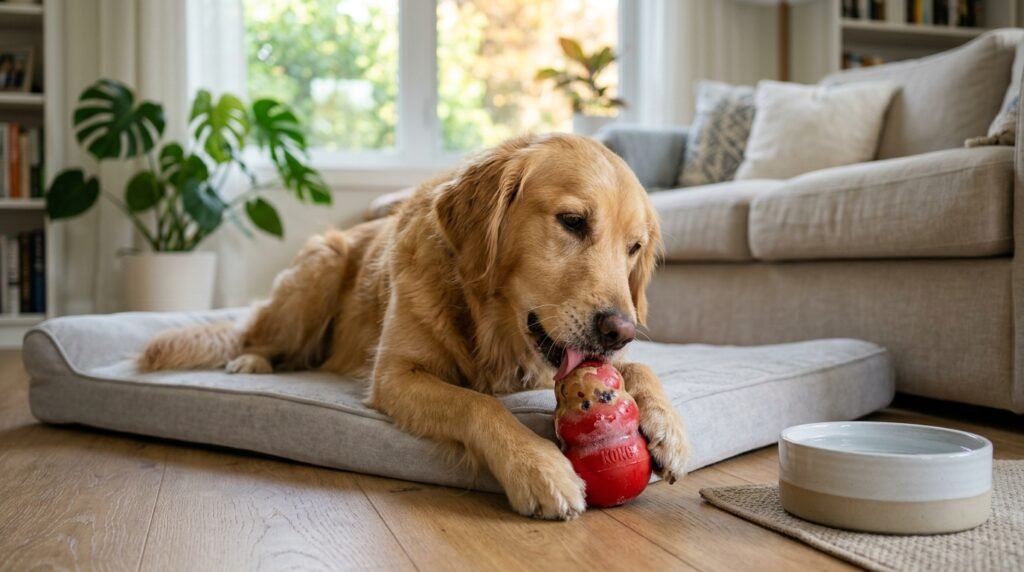
Enrichment does not mean keeping your dog busy every minute of the day. It means giving your dog appropriate opportunities to sniff, explore, solve problems, learn, play, chew, and interact with you. Humane Colorado describes enrichment as adding something to a dog’s life that makes it more interesting, with both physical and mental enrichment contributing to a dog’s well-being.
During hot weather, the goal is to shift some of your dog’s activity indoors while still providing mental stimulation and safe movement. Below are practical dog enrichment ideas that can help prevent boredom without relying on strenuous exercise in the heat.
Table of Contents
Why Dogs Need Enrichment During Summer
Dogs naturally use their senses and brains throughout the day. They investigate smells, interact with their environment, learn from their owners, chew, play, and make choices.
When extreme heat limits outdoor activity, some of those opportunities disappear.
A dog that suddenly gets much less stimulation may look for its own entertainment. Depending on the dog, boredom can contribute to behaviors such as excessive barking, chewing inappropriate objects, pestering family members, or general restlessness.
The solution isn’t always to exercise harder.
Mental stimulation can be an important part of a balanced routine. Humane Colorado recommends activities such as puzzle toys, search games, sniffing, and training to engage a dog’s brain.
The best summer routine combines:
- Mental stimulation
- Safe physical activity
- Scent-based games
- Food enrichment
- Training
- Interactive play
- Chewing and licking
- Plenty of rest
Your dog’s age, health, breed, temperament, and individual preferences should determine which activities you choose.
1. Turn Your Dog’s Meal Into a Puzzle
One of the easiest dog enrichment ideas is to make part of your dog’s normal mealtime more interactive.
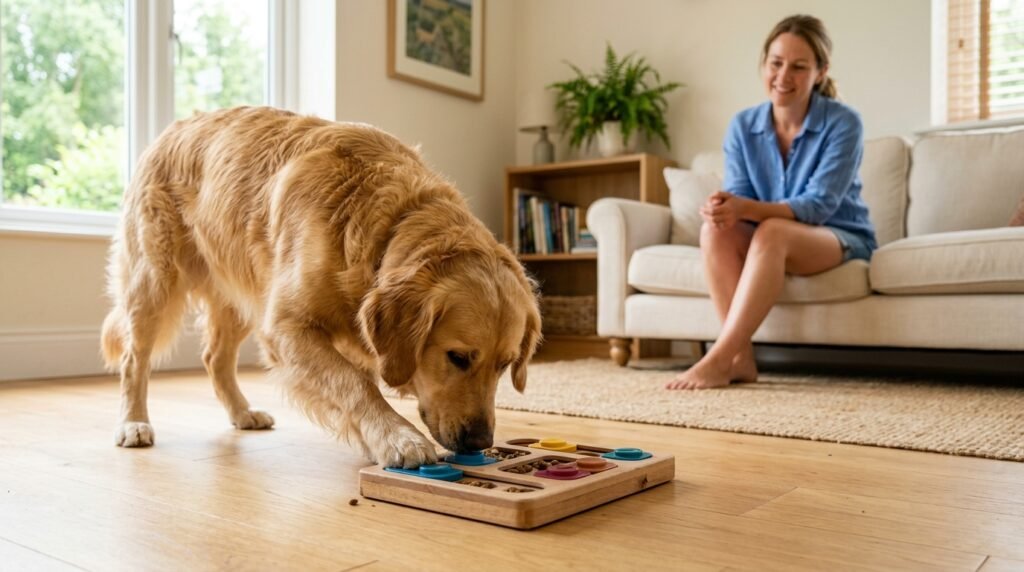
Instead of serving every meal in a standard bowl, consider using an appropriate food puzzle or enrichment feeder. Your dog may need to sniff, paw, nudge, or manipulate the toy to access the food.
This turns eating into a simple problem-solving activity.
Purina recommends using feeding time for mental enrichment, including puzzle toys and allowing dogs to search for food.
You don’t have to replace every meal with a puzzle. Start with part of one meal and see how your dog responds.
Keep food puzzles safe
Choose a product appropriate for your dog’s size and chewing habits. Supervise your dog when introducing a new enrichment item, particularly if your dog tends to destroy toys.
Also remember that treats and food used in enrichment still count toward your dog’s daily calorie intake. Purina specifically warns that extra treats can contribute to overfeeding and recommends accounting for treat calories.
Using a portion of your dog’s regular meal for enrichment can be a practical way to avoid unnecessary extra calories.
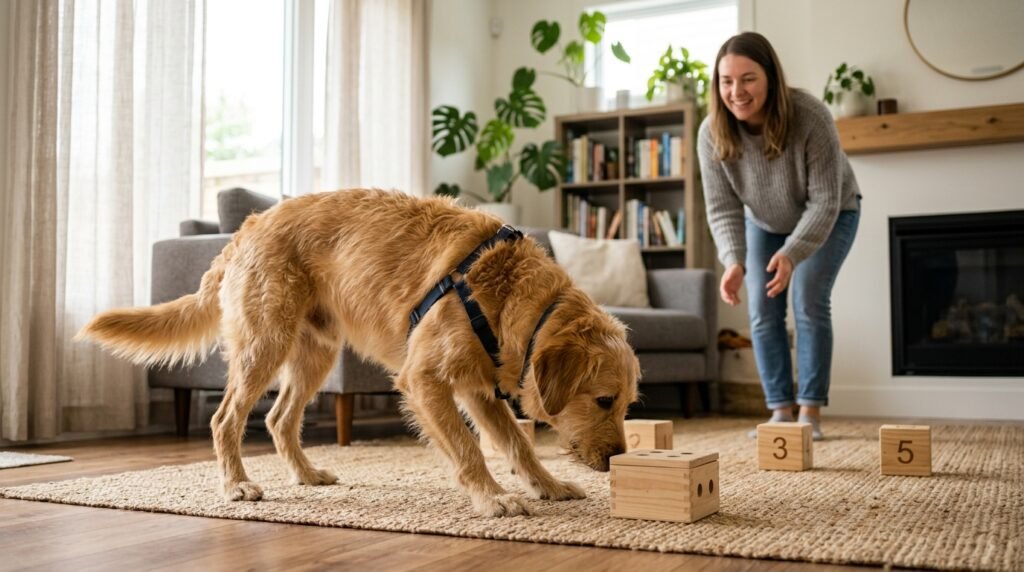
2. Play an Indoor “Find It” Game
Dogs experience the world through their noses, so scent-based activities are among the most useful dog enrichment ideas for hot weather.
Start with a small amount of your dog’s regular food or an appropriate treat.
Let your dog see you place it somewhere easy to find. Then encourage your dog to search.
Once your dog understands the game, gradually increase the difficulty.
You can hide food:
- Near a dog bed
- Behind a safe piece of furniture
- In another accessible room
- Along a short scent trail
- Around a designated indoor search area
Keep the difficulty appropriate. The objective is to encourage investigation, not frustration.
Humane Colorado specifically recommends search and “find-it” games because they engage a dog’s sense of smell and provide mental stimulation.
You can also scatter part of your dog’s normal meal in a safe area and allow your dog to sniff it out.
3. Freeze a Food-Filled Enrichment Toy
Summer is an excellent time to combine enrichment with something cooling.
A suitable food toy can be filled with part of your dog’s normal food or another dog-safe filling and then frozen. The frozen texture can make the activity last longer while giving your dog something interesting to lick and work on.
Purina recommends freezing food-filled toys as a way to provide a longer-lasting activity, while also reminding owners to consider the calories involved.
A simple routine is:
- Choose an appropriate enrichment toy.
- Add a suitable food filling.
- Freeze it.
- Give it to your dog in a cool area.
- Supervise the first few sessions.
If your dog has dietary restrictions or a health condition, don’t introduce new ingredients without appropriate veterinary guidance.
4. Teach a New Trick in Short Sessions
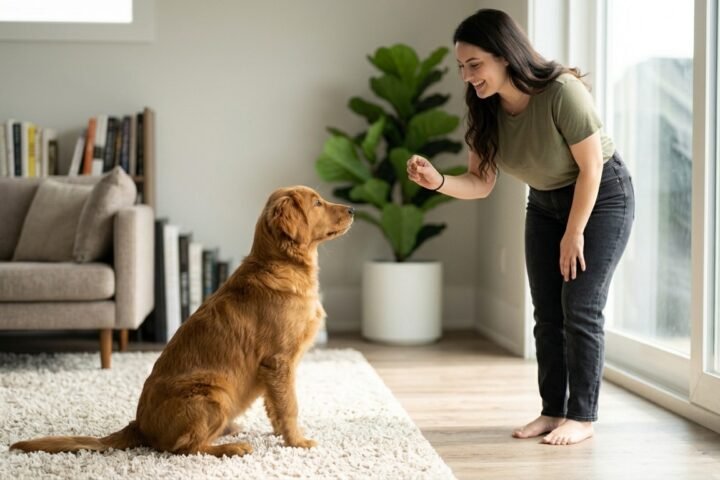
Training is one of the most effective dog enrichment ideas because your dog has to concentrate, process information, and respond to you.
You don’t need a long training session.
Try five-minute sessions several times throughout the day.
You could teach or practice:
- Touch
- Sit
- Stay
- Go to bed
- Spin
- Find your toy
- Drop it
- Wait
- Hand targeting
Use reward-based training and stop while your dog is still interested.

Purina recommends teaching new tricks as a form of mental stimulation, while Humane Colorado also includes training among its mental enrichment activities.
Short sessions can be especially useful during the hottest part of the day when vigorous exercise isn’t appropriate.
5. Create a Simple Indoor Obstacle Course
You don’t need professional agility equipment to give your dog something interesting to do.
Create a simple route using safe areas and household objects.
For example:
- Walk around a chair.
- Touch your hand.
- Go to the dog’s bed.
- Walk through a clear hallway.
- Find a toy.
- Return to you.
Keep the movements controlled.
The goal isn’t to make your dog run around the house. It’s to combine movement with listening and problem-solving.
Avoid jumping or strenuous activity if your dog is older, overweight, recovering from an injury, or has mobility problems. For dogs with physical limitations, gentler enrichment is usually a better choice.
6. Try a Snuffle Mat or Supervised Sniffing Activity
A snuffle mat can turn mealtime into a search game.
Place small portions of your dog’s regular food throughout the mat and allow your dog to sniff for each piece.
The activity encourages natural searching behavior and can slow down food consumption.
If you don’t have a snuffle mat, you can use another purpose-made enrichment product designed for safe food searching.
DIY enrichment can also work, but supervision matters. Humane Colorado includes household-item-based DIY enrichment among its enrichment resources.
If your dog starts tearing apart or swallowing the material, stop the activity immediately.
7. Rotate Your Dog’s Toys
You don’t need to buy new toys every week to keep your dog interested.
Instead, rotate the toys you already own.
Keep some safely stored away and bring out a different combination every few days.
For example:
Day 1: Puzzle toy + chew
Day 2: Tug toy + training
Day 3: Sniffing game + favorite toy
Day 4: Food enrichment + calm play
This creates variety without constantly adding more possessions to your home.
Different toys can also serve different purposes. A puzzle can encourage problem-solving, a chew can provide quiet engagement, and an interactive toy can strengthen your bond.
8. Have a Short Indoor Tug Session
Tug can be one of the easiest dog enrichment ideas when outdoor temperatures are uncomfortable.
Choose a safe open area and keep the session controlled.
You can also incorporate training into the game. Ask your dog for a known behavior, restart the game, pause, and practice “drop it” if your dog understands the cue.
Humane Colorado recommends fetch and tug as physical enrichment while emphasizing regular breaks so dogs don’t become excessively worked up.
Purina also lists tug as an indoor game option and recommends ending play before it becomes excessive or overstimulating.
During hot weather, short sessions are preferable to turning tug into an exhausting workout.
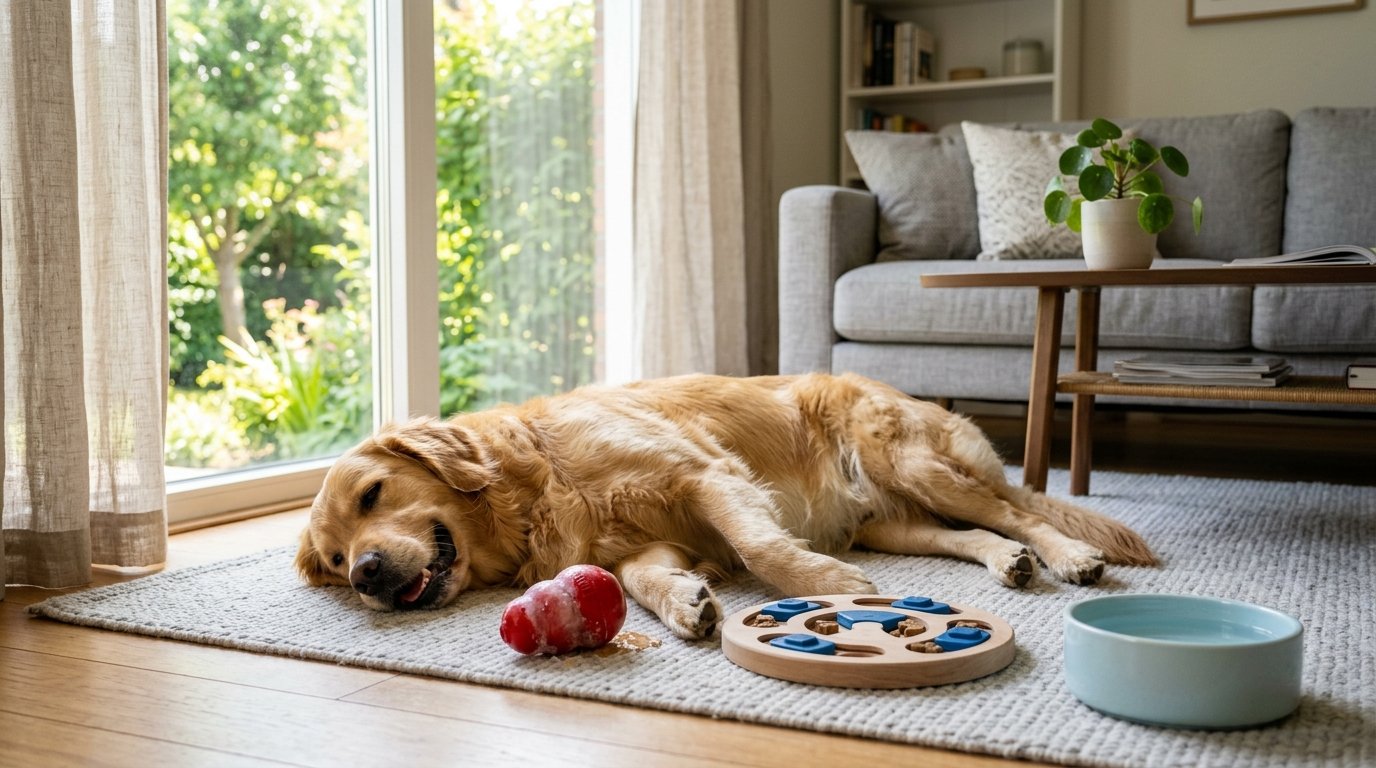
9. Give Your Dog a Quiet Cooling Space
Not every enrichment activity needs to involve play.
Sometimes one of the best things you can provide is a comfortable place to relax.
Set up a quiet area where your dog can retreat without being constantly touched, called, or disturbed.
Provide:
- A comfortable bed
- Fresh water
- Shade from direct sunlight
- Good ventilation or appropriate cooling
- A favorite safe toy
A designated safe space is particularly useful when the household is busy.
Purina recommends creating a safe spot that family members respect so a dog can have uninterrupted quiet time when needed.
This is an important reminder: rest is enrichment too.
Your dog doesn’t need to be entertained continuously.
10. Use the Coolest Part of the Day for Outdoor Sniffing
Indoor enrichment should complement—not necessarily replace—all outdoor activity.
If temperatures are safe, move your dog’s walks to cooler periods, such as early morning or evening.
Instead of focusing only on distance, allow your dog time to sniff.
Humane Colorado notes that stopping to sniff during walks provides mental engagement in addition to physical activity.
However, don’t force an outdoor walk simply because it is part of your normal schedule.
If the weather is dangerously hot, prioritize safety and use indoor enrichment instead.
11. Play Hide-and-Seek
Hide-and-seek is another simple option that requires almost no equipment.
Ask your dog to wait if they reliably know the cue, then move to another safe room or location.
Call your dog.
When your dog finds you, reward them with praise, affection, or an appropriate reward.
You can eventually make the game more challenging by hiding behind a doorway or in another accessible location.
Purina also recommends hide-and-seek and similar search games as interactive activities that can create a problem-solving opportunity for dogs.
Keep hiding places safe and never encourage your dog to climb furniture or enter dangerous spaces to reach you.
12. Give Your Dog a Supervised Cardboard Exploration Activity
Some dogs enjoy investigating cardboard boxes.
You can place a few pieces of your dog’s regular food or a safe toy inside an empty box and allow your dog to explore.
The dog may sniff, paw, nudge, and investigate the box.
But this activity isn’t suitable for every dog.
If your dog immediately starts eating the cardboard, remove it.
DIY dog enrichment ideas should always be based on your individual dog’s behavior. Something that is perfectly manageable for one dog may be unsafe for another.
13. Teach “Find Your Toy”
Turn your dog’s favorite toy into a search game.
Start by placing the toy somewhere obvious.
Say a consistent cue such as “find your toy.”
When your dog locates it, reward the behavior.
Gradually make the hiding place more challenging.
This combines scent, memory, movement, and training in one activity.
It can also make a familiar toy feel new again.
14. Try a Lick-Based Activity
Licking can provide a calm form of engagement for some dogs.
A suitable lick mat or food toy can be used with part of your dog’s regular food or another appropriate filling.
Keep portions reasonable and supervise the first few sessions.
The goal is not to provide a huge quantity of treats. It’s to make a small amount of appropriate food last longer while giving your dog an engaging activity.
This can be particularly useful during the afternoon when your dog needs something to do but intense play isn’t appropriate.
15. Let Your Dog Work for Attention and Rewards
Not every activity needs a toy.
Ask your dog for a simple behavior before giving access to something they already enjoy.
For example:
Sit → toy
Touch → praise
Go to bed → chew
Find it → reward
This turns everyday interactions into small learning opportunities.
The idea isn’t to make your dog perform constantly. Instead, it gives your dog opportunities to think and communicate with you.
How to Choose the Right Enrichment for Your Dog
The best dog enrichment ideas are not necessarily the most complicated ones.
Choose activities according to your dog’s individual needs.
Puppies
Puppies generally benefit from short, simple activities.
Try:
- Easy food puzzles
- Short training sessions
- Gentle toy games
- Supervised exploration
- Simple scent games
Avoid turning enrichment into exhausting physical exercise.
Adult Dogs
Healthy adult dogs may enjoy a wider combination of mental and physical activities.
Rotate:
- Training
- Puzzle feeding
- Scent games
- Interactive play
- Toy searches
- Safe outdoor activity during cooler periods
Senior Dogs
Older dogs may need lower-impact activities.
Scent games, gentle training, food puzzles, and calm interaction can provide mental stimulation without placing unnecessary stress on the body.
If your senior dog’s mobility has changed, discuss appropriate exercise with your veterinarian.
High-Energy Dogs
High-energy dogs may require more creativity when heat limits exercise.
Instead of simply trying to make them run harder, combine several types of enrichment.
For example:
5 minutes of training → 10 minutes of scent work → rest → frozen food toy
This provides different forms of stimulation without requiring a long, intense workout.
Signs Your Dog Needs a Break
More enrichment isn’t automatically better.
A dog can become overstimulated just as easily as bored.
Watch your dog’s body language.
Your dog may need a break if they:
- Walk away repeatedly
- Stop engaging
- Become unusually frustrated
- Have difficulty settling
- Become excessively excited
- Start showing signs of stress
- Pant heavily when the activity itself should not cause significant exertion
If your dog chooses to rest, allow them to rest.
Purina specifically recommends maintaining periods of quiet time rather than attempting to keep pets occupied all day.
A successful enrichment routine should include both engagement and downtime.
Summer Safety Comes Before Enrichment
The purpose of summer enrichment is to keep your dog engaged without exposing them to unnecessary heat risk.
Dogs can develop dangerous heat-related illness, and some dogs are more vulnerable than others.
Avoid strenuous activity during extreme heat and provide access to fresh water. The American Kennel Club recommends taking precautions during hot weather and avoiding excessive exercise when temperatures are unsafe.
For additional guidance, see the American Kennel Club’s summer safety information.
Keep these principles in mind:
- Provide fresh drinking water.
- Keep indoor areas comfortably cool.
- Avoid intense exercise during peak heat.
- Never leave your dog in a parked car.
- Check pavement before walking.
- Give your dog regular opportunities to rest.
- Pay extra attention to puppies, seniors, overweight dogs, brachycephalic breeds, and dogs with health conditions.
If your dog shows signs of possible heatstroke—including severe panting, weakness, vomiting, confusion, difficulty breathing, collapse, or seizures—treat it as an emergency and seek veterinary care immediately.
The American Animal Hospital Association provides additional heatstroke prevention guidance for dogs and cats.
A Simple Summer Enrichment Routine
You don’t need to plan a completely different activity every hour.
A simple routine can provide enough variety.
Morning
If outdoor conditions are safe, take your dog for a walk during a cooler period.
Allow plenty of sniffing.
Midday
Move activities indoors.
Try:
- Five minutes of training
- A food puzzle
- A scent game
- A frozen enrichment toy
Then allow your dog to rest.
Afternoon
Choose something calm.
A lick mat, chew, toy search, or relaxed interaction can provide engagement without excessive physical exertion.
Evening
If temperatures are comfortable, provide another appropriate outdoor opportunity.
You can finish the day with a short training session, scent game, or quiet bonding activity.
Humane Colorado recommends creating a daily enrichment plan that combines different types of physical and mental activities rather than relying on one activity alone.
Common Summer Enrichment Mistakes
Trying to Exhaust Your Dog
Summer isn’t the time to compensate for shorter walks with intense indoor exercise.
Mental stimulation can be a better way to add activity without generating unnecessary heat.
Giving Too Many Treats
Food-based enrichment is useful, but treats still contain calories.
Whenever possible, use part of your dog’s normal food allowance.
Ignoring Rest
Dogs don’t need constant entertainment.
Quiet time is a normal and necessary part of the day.
Making Activities Too Difficult
If your dog cannot solve the puzzle, the activity can become frustrating.
Start easy and gradually increase the challenge.
Using Unsafe DIY Materials
DIY activities should be supervised.
Remove anything your dog tries to swallow, shred, or break into dangerous pieces.
Treating Every Dog the Same
A young high-energy dog and an elderly dog can have very different enrichment requirements.
Adjust activities to your dog’s physical abilities and preferences.
Frequently Asked Questions
What are the best dog enrichment ideas for hot summer days?
Some of the most practical dog enrichment ideas include scent games, food puzzles, short training sessions, frozen food toys, indoor hide-and-seek, toy searches, lick-based activities, and gentle interactive play.
The best options depend on your dog’s age, health, temperament, and interests.
How can I mentally stimulate my dog indoors?
Use activities that encourage sniffing, searching, problem-solving, learning, chewing, or working for food.
Puzzle feeders, scent games, trick training, toy searches, and appropriate food enrichment are all useful options.
How do I keep my dog entertained when it’s too hot outside?
Move activities indoors during the hottest part of the day.
Try short training sessions, food puzzles, scent games, frozen enrichment, toy searches, and calm interactive play.
When outdoor temperatures become safe, a gentle sniff-focused walk can provide additional stimulation.
Can enrichment replace exercise?
No.
Enrichment is an important part of your dog’s routine, but it doesn’t automatically replace their physical activity needs.
During extreme heat, however, indoor mental stimulation can help reduce the need for strenuous activity while outdoor conditions are unsafe.
Do dogs need activities all day?
No.
Dogs need a balance of activity and rest. Keeping a dog continuously busy can actually make it harder for some dogs to settle.
Purina recommends maintaining quiet rest periods rather than attempting to occupy pets throughout the entire day.
What should I do if my dog seems overheated?
Move your dog to a cooler environment and contact a veterinarian immediately if you suspect heatstroke.
Severe panting, weakness, vomiting, difficulty breathing, confusion, collapse, or seizures can be serious warning signs.
For detailed prevention information, consult the American Animal Hospital Association’s heat safety guidance.
Final Thoughts
Hot summer weather doesn’t have to mean a boring day for your dog.
The best dog enrichment ideas work with your dog’s natural instincts instead of simply trying to exhaust them physically. A few minutes of scent work, a food puzzle, a short training session, a frozen enrichment toy, or a simple search game can turn an ordinary afternoon into something engaging.
The key is variety.
Give your dog opportunities to sniff, think, learn, chew, play, interact, and rest. Rotate activities to keep them interesting, adapt them to your dog’s individual needs, and prioritize heat safety whenever temperatures rise.
A happy summer dog doesn’t necessarily need more activity.
They need the right kind of activity at the right time.
Key Takeaways
- Consider the context around the behavior.
- Look for patterns instead of relying on one signal.
- Seek qualified help when behavior is sudden, severe, or unsafe.
Frequently Asked Questions
Is every behavior a sign of the same emotion?
Not necessarily. Dogs use combinations of signals, and context matters.
When should I contact a professional?
Consider veterinary or qualified behavior support for sudden, severe, escalating, or safety-related concerns.