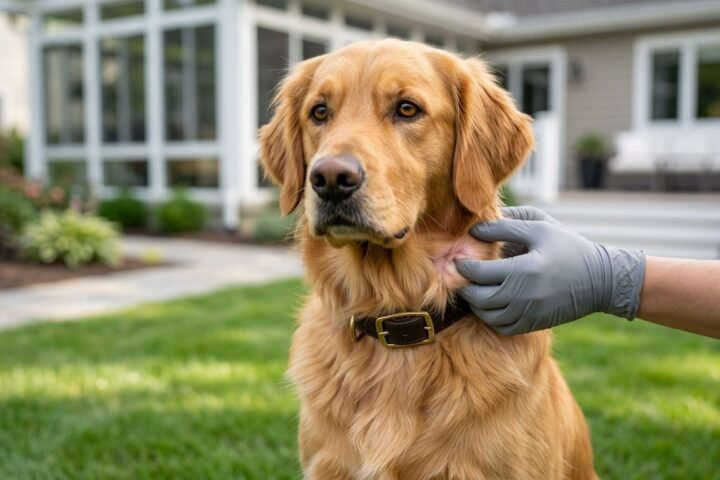
The best answer depends on your dog, the context, and the full pattern of behavior. Look at multiple signals rather than one isolated action.
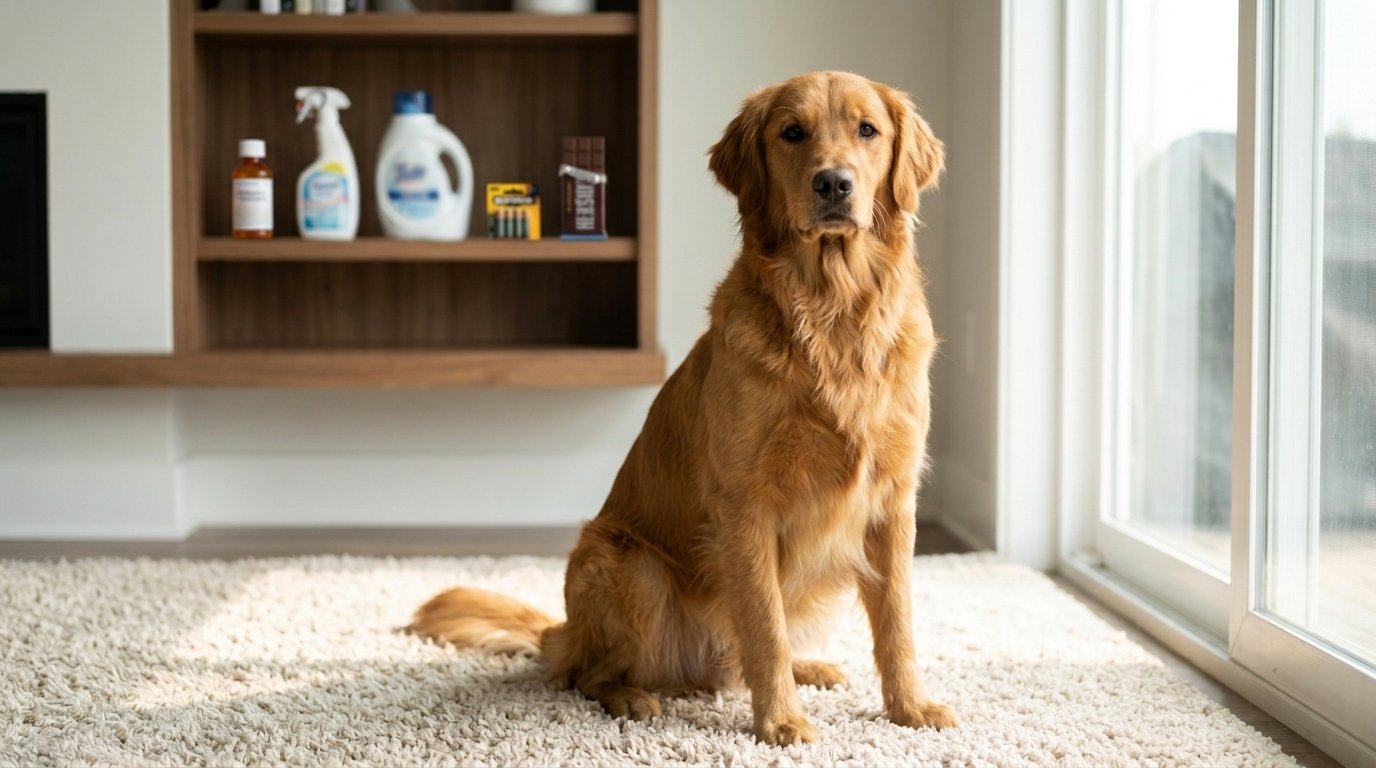
Your home may feel like the safest place for your dog, but some everyday products can become dangerous within minutes. Household items poisonous to dogs include more than obvious chemicals—medications, laundry products, certain foods, batteries, pesticides, personal-care products, and even items sitting in your kitchen can create serious risks.
The good news is that most accidental exposures can be reduced with simple storage and pet-proofing habits. The important part is knowing what to watch for and what to do if your dog gets access to something potentially toxic.
In this guide, you’ll learn which household items poisonous to dogs deserve the most attention, which warning signs to watch for, and what you should—and should not—do after a suspected exposure.
Table of Contents
What Household Items Are Poisonous to Dogs?
The most concerning household items poisonous to dogs generally fall into several categories:
- Human medications and supplements
- Cleaning and disinfecting products
- Laundry detergent and dryer sheets
- Xylitol-containing foods and personal-care products
- Chocolate and caffeine
- Batteries
- Antifreeze and automotive chemicals
- Rat and mouse poison
- Insecticides and pesticides
- Nicotine products
- Certain plants
- Alcohol and raw yeast dough
The FDA also lists antifreeze, pesticides, lawn products, household cleaners, fabric softener sheets, rat and mouse bait, paints, solvents, and several foods among potentially dangerous items for pets.
One important distinction is that dangerous does not always mean poisonous.
For example, a swallowed battery can cause chemical injury, while a food bag or piece of packaging may create a choking or intestinal obstruction risk. The FDA specifically warns that some non-toxic objects can still cause serious physical problems if swallowed.
That is why responsible dog-proofing should focus on both toxic substances and dangerous objects.
15 Household Items Poisonous to Dogs
1. Human Pain Medications
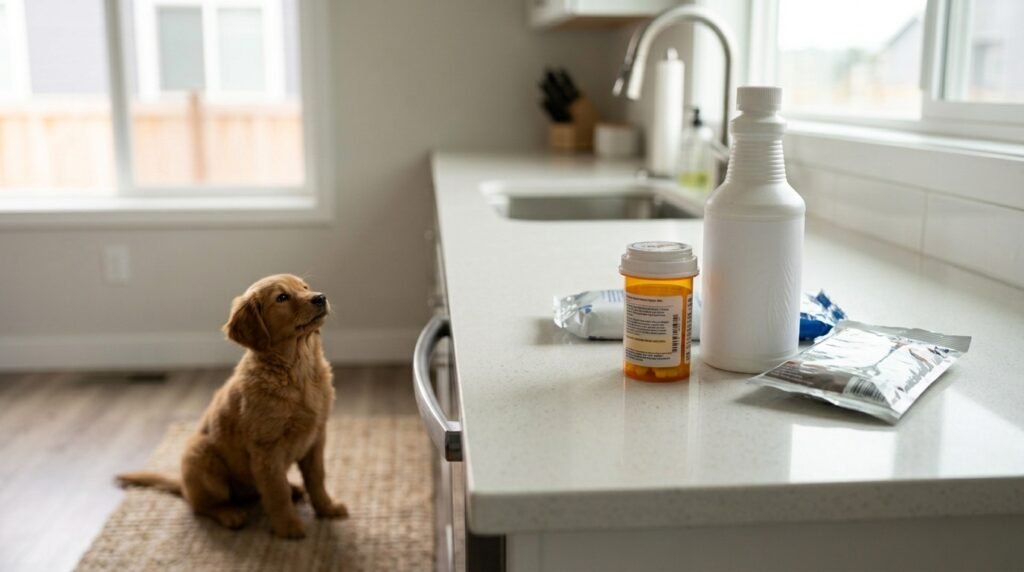
Human medications are among the most important household items poisonous to dogs because they are common, small, and easy for a curious dog to reach.
Potentially dangerous medications include:
- Ibuprofen
- Naproxen
- Certain cold and flu medications
- Some antidepressants
- Certain supplements
- Other medications intended for people
The FDA specifically warns that medications intended for humans—or another animal—should not be given to pets unless directed by a veterinarian. Human NSAIDs such as ibuprofen and naproxen can be harmful to pets.
A bottle left on a nightstand, medication dropped on the floor, or an open purse can therefore become an unexpected poisoning risk.
Safer habit: Store all human medications behind a closed cabinet door, and never assume a child-resistant bottle makes the contents completely inaccessible to a determined dog.
2. Xylitol in Sugar-Free Products
Xylitol deserves special attention because it can appear in products that don’t look like traditional poisons.
It may be found in:
- Sugar-free gum
- Sugar-free candy
- Some peanut or nut butters
- Toothpaste
- Mouthwash
- Cough syrups
- Some supplements
- Certain medicines
- Sugar-free baked goods
The FDA warns that xylitol can cause a rapid and potentially dangerous drop in a dog’s blood sugar and can lead to severe illness. It may also appear under names such as birch sugar or wood sugar.
If you suspect your dog has eaten something containing xylitol, don’t wait to see whether symptoms appear. Contact your veterinarian, emergency clinic, or an animal poison-control service immediately.
Safer habit: Read labels on sugar-free products before bringing them into areas your dog can access.
3. Chocolate and Caffeine
Chocolate is one of the most familiar food hazards for dogs, but caffeine can also be a problem.
Potential sources include:
- Chocolate bars
- Baking chocolate
- Cocoa powder
- Coffee grounds
- Coffee beans
- Tea
- Energy drinks
- Caffeinated supplements
The FDA includes chocolate and caffeine among potentially dangerous foods for pets.
The risk can vary depending on the product and amount consumed, so don’t try to judge the seriousness of an exposure based only on the size of the chocolate piece.
If your dog eats chocolate or another concentrated caffeine source, keep the packaging and contact a veterinarian for advice.
Worst Ingredients in Dry Dog Food: 10 Dangerous Additives to Avoid
4. Household Cleaning Products
Cleaning products are another major group of household items poisonous to dogs.
Common examples include:
- Bleach
- Toilet-bowl cleaners
- Disinfectants
- Drain cleaners
- Concentrated surface cleaners
- Certain floor-cleaning products
- Strong chemical solutions
Not every cleaner has the same toxicity. ASPCA explains that many cleaning products can be used safely around pets when the label directions are followed, while concentrated products can cause irritation or more serious injury.
For example, concentrated or undiluted bleach can injure the mouth and esophagus if swallowed. Properly diluted bleach that is thoroughly rinsed and allowed to dry is a different situation.
Safer habit: Keep your dog away while using strong cleaners and follow the product’s directions about ventilation, dilution, rinsing, and drying.
5. Laundry Detergent Pods and Liquid Detergent
Laundry products are easy to overlook because they are normally stored in the laundry room.
However, detergent pods and concentrated liquid laundry products can cause problems if a dog bites into or swallows them.
ASPCA notes that laundry detergent can irritate the mouth and throat and may cause gastrointestinal problems, while serious symptoms can occur in some exposures.
Laundry pods can be especially tempting to dogs because of their small size and colorful appearance.
Safer habit: Keep detergent pods and liquid detergents inside closed cabinets or secured containers.
6. Dryer Sheets and Fabric Softener
Dryer sheets are another household hazard that many dog owners don’t immediately recognize.
ASPCA reports that many dryer sheets contain cationic detergents that can cause severe chemical burns and ulcers in the mouth, esophagus, and stomach. Swallowed sheets can also create a foreign-body obstruction.
Fabric softeners can present a similar chemical hazard.
This is a good example of why household items poisonous to dogs don’t always look dangerous. A product designed to make clothes smell fresh can still be unsafe when swallowed.
Safer habit: Dispose of used dryer sheets in a closed trash container and keep unused sheets and fabric softeners out of reach.
7. Batteries
Batteries can be dangerous when chewed or swallowed.
This includes:
- Button batteries
- Watch batteries
- Remote-control batteries
- Toy batteries
- Rechargeable batteries
- Loose household batteries
Depending on the type of battery and exposure, dogs may experience chemical burns, tissue damage, or gastrointestinal complications.
Don’t assume a small battery is harmless because of its size.
Safer habit: Store replacement batteries in closed containers and regularly check toys, remotes, and electronics for loose or damaged batteries.
8. Antifreeze and Automotive Chemicals
Antifreeze is one of the most serious household items poisonous to dogs because some formulations contain ethylene glycol, a highly toxic substance.
Potential exposure can happen through:
- Garage spills
- Leaking containers
- Automotive maintenance
- Contaminated surfaces
- Improperly stored antifreeze
The FDA identifies antifreeze as a potentially dangerous non-edible household or yard substance.
Merck Veterinary Manual also includes household chemicals and automotive-related alcohols among substances that can cause poisoning in pets.
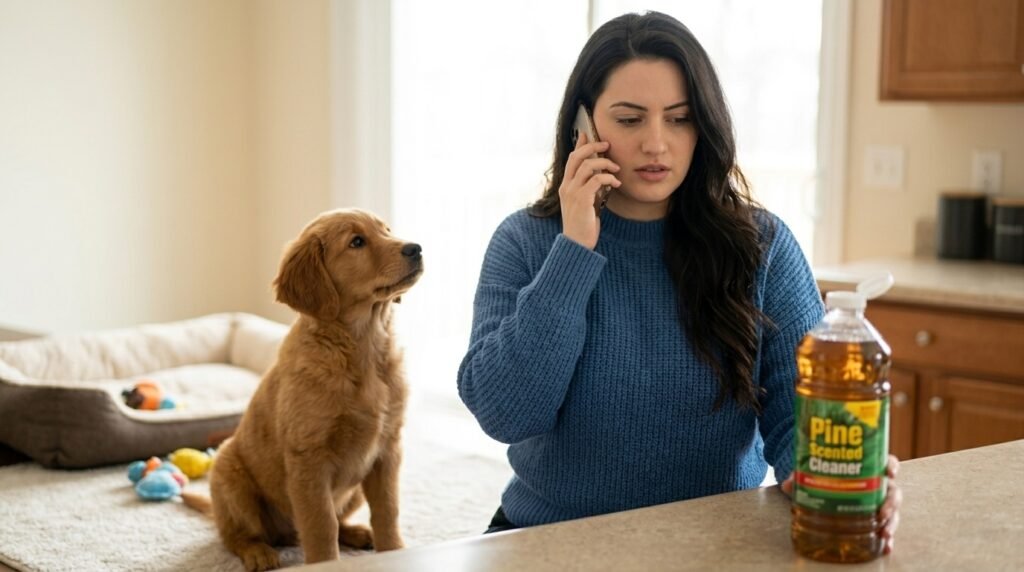
If you think your dog has swallowed antifreeze, treat the situation as an emergency and contact a veterinarian immediately.
Safer habit: Keep automotive chemicals sealed and inaccessible, and clean garage spills immediately.
9. Rat and Mouse Poison
Rodenticides are another important household hazard.
Different rat and mouse poisons contain different active ingredients, so the effects can vary. Some may interfere with blood clotting, while others can produce neurological or other serious effects.
Never assume that a bait station automatically makes rodent poison safe.
If your dog gets access to a rodenticide, save the original package if possible. The active ingredient can help veterinary professionals determine the appropriate response.
Safer habit: Use only products according to their labels and keep all rodenticides completely inaccessible to pets.
10. Insecticides, Pesticides, and Lawn Chemicals
Pesticides may be found in kitchens, garages, sheds, gardens, and yards.
Examples include:
- Insect sprays
- Ant killers
- Weed killers
- Lawn treatments
- Garden pesticides
- Certain flea and tick products
- Fertilizers
The FDA specifically identifies insecticides, pesticides, fertilizers, and weed killers as potential pet hazards.
Some flea and tick products can also be dangerous when incorrectly applied or used on the wrong animal.
Safer habit: Follow every product label carefully and keep your dog away from treated areas for the period specified by the manufacturer.
11. Nicotine and Vaping Products
Nicotine products should never be left within a dog’s reach.
Potential hazards include:
- Cigarettes
- Cigarette butts
- Cigars
- Nicotine pouches
- E-cigarettes
- Vape cartridges
- Liquid nicotine
The FDA lists tobacco products, including e-cigarettes and their refills, among potentially dangerous substances for pets.
Vape liquids can be particularly concerning because they may contain concentrated nicotine.
Safer habit: Keep nicotine products in a closed, inaccessible location and use a secure trash container for cigarette waste.
12. Toothpaste and Mouthwash
Toothpaste is another example of household items poisonous to dogs that can easily be overlooked.
Some human toothpastes contain xylitol, while others contain fluoride. ASPCA notes that xylitol can cause low blood sugar and potentially liver injury in dogs when enough is ingested.
The FDA also lists toothpaste and mouthwash among products that may contain xylitol.
Important: Use toothpaste specifically formulated for dogs rather than human toothpaste.
13. Alcohol and Alcohol-Containing Products
Alcohol can be found in obvious products such as beer and liquor, but it can also occur in other household materials.
Potential sources include:
- Alcoholic beverages
- Some mouthwashes
- Certain medications
- Rubbing alcohol
- Some household products
- Raw yeast dough
Merck Veterinary Manual explains that ethanol can be found in alcoholic beverages and fermenting bread dough, while other alcohols occur in products such as rubbing alcohol and some automotive fluids.
The FDA also lists alcoholic drinks and foods containing alcohol among potentially dangerous edible exposures for pets.
Safer habit: Never give alcoholic beverages to a dog and keep alcohol-containing products secured.
14. Raw Yeast Dough
Raw yeast dough can become dangerous after a dog eats it.
The dough can expand inside the stomach while fermentation produces alcohol. ASPCA warns that yeast dough can cause painful gas accumulation and potentially dangerous stomach expansion or twisting.
The combination of physical expansion and alcohol production makes raw dough different from ordinary baked bread.
Safer habit: Keep rising dough away from counters that your dog can reach, especially during holidays and baking sessions.
15. Certain Houseplants
Some houseplants and decorative plants can be harmful if eaten.
Examples include:
- Sago palm
- Oleander
- Azalea
- Rhododendron
- Certain lilies
- Daffodils
- Tulips
- Philodendron
- Pothos
- Yew
The FDA provides a larger list of plants and flowers that may be dangerous to pets.
Plant toxicity can vary depending on the species and the part of the plant eaten.
Safer habit: Check a plant’s safety before bringing it into a dog-accessible area.
Why Common Household Products Can Be Dangerous
One reason household items poisonous to dogs can be difficult to identify is that toxicity isn’t simply a matter of whether something is labeled “poison.”
The risk can depend on:
- The active ingredient
- Concentration
- Amount consumed
- Your dog’s size
- Route of exposure
- Time since exposure
- Whether the product was mixed with another substance
Merck Veterinary Manual explains that household chemicals such as alcohols, bleaches, and corrosive substances can cause poisoning in pets, and determining the exact substance and amount can sometimes be difficult.
For this reason, don’t assume an exposure is safe just because your dog appears normal.
Some toxic effects can develop after the initial exposure.
Signs of Poisoning in Dogs
The symptoms associated with household items poisonous to dogs can vary widely.
Possible signs include:
- Vomiting
- Diarrhea
- Excessive drooling
- Mouth irritation
- Weakness
- Trembling
- Difficulty walking
- Confusion
- Unusual sleepiness
- Agitation
- Breathing problems
- Collapse
- Seizures
Xylitol exposure, for example, can produce vomiting followed by weakness, staggering, collapse, or seizures as blood sugar drops.
However, don’t use symptoms as your only decision-making tool.
If you know your dog swallowed a potentially toxic substance, contact your veterinarian or a poison-control service even if your dog currently appears normal. The FDA specifically recommends acting quickly after suspected exposure.
What to Do If Your Dog Eats Something Toxic
If your dog gets into one of the household items poisonous to dogs, your first priority should be preventing additional exposure and getting professional advice.
1. Remove your dog from the area
Move your dog away from the product, spill, plant, medication, or other hazard.
If multiple pets are present, check the others as well.
2. Identify what was involved
Find the original package or container.
Try to determine:
- Product name
- Active ingredient
- Approximate amount missing
- Time of exposure
- Your dog’s weight
- Any symptoms
Take the package with you if veterinary treatment is needed.
3. Call your veterinarian or poison control
The FDA advises contacting your veterinarian or a pet poison-control center promptly after suspected exposure.
In the United States, you can contact:
ASPCA Animal Poison Control: (888) 426-4435
ASPCA Poison Control states that its service is available 24/7 for animal poison-related emergencies.
Pet Poison Helpline: (855) 764-7661
Your veterinarian or emergency veterinary hospital can also guide you based on your dog’s individual situation.
4. Follow professional instructions
Don’t improvise treatment.
The appropriate response depends on the substance and exposure. A veterinarian or veterinary toxicology professional may recommend monitoring, immediate examination, decontamination, or other treatment depending on the circumstances.
5. Go directly to an emergency clinic when necessary
If your dog is:
- Unconscious
- Having seizures
- Having difficulty breathing
- Collapsing
- Bleeding
- Showing severe neurological signs
seek immediate veterinary care.
ASPCA recommends taking a pet directly to a veterinary clinic when severe signs such as unconsciousness, breathing difficulty, bleeding, or seizures are present.
What You Should Not Do After Suspected Poisoning
One of the most important things to remember is:
Do not automatically make your dog vomit.
Whether vomiting is appropriate depends on what your dog swallowed and the circumstances of the exposure.
For example, bringing a corrosive substance back through the esophagus could cause additional injury. Other situations may carry an aspiration risk.
Don’t give your dog random home remedies such as:
- Salt
- Oil
- Mustard
- Milk
- Human medication
- Homemade “antidotes”
unless a veterinary professional specifically instructs you to do so.
The ASPCA recommends contacting a veterinarian or Poison Control immediately rather than trying to manage a suspected toxic exposure yourself.
Pro Tip
If possible, take a photo of the product’s ingredient label before calling. If the package is available, keep it with you. The exact product name and active ingredients can make the veterinary assessment much more precise.
How to Prevent Poisoning at Home
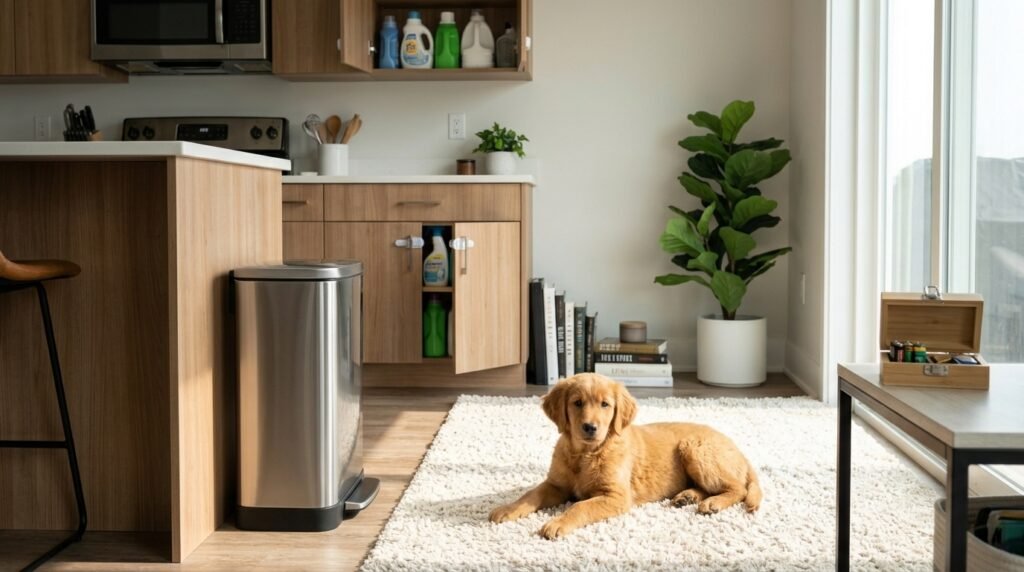
Preventing access to household items poisonous to dogs is easier than dealing with an emergency after ingestion.
Store medications behind closed doors
Don’t leave pills on bedside tables, counters, desks, or inside an open purse.
Lock away cleaning products
Use closed cabinets for:
- Bleach
- Disinfectants
- Toilet cleaners
- Laundry detergent
- Fabric softeners
- Other concentrated chemicals
Secure your trash
A dog can find medication wrappers, food scraps, cigarette butts, dryer sheets, and packaging inside an ordinary trash can.
Choose a container your dog cannot easily open or knock over.
Check ingredient labels
Pay special attention to products labeled:
- Sugar-free
- Low-sugar
- Dental
- Herbal
- Supplement
- Sugar substitute
Check for xylitol before giving any human food or product to your dog. The FDA specifically recommends checking labels because xylitol can occur in unexpected products.
Keep batteries secured
Store spare batteries in a closed container rather than a drawer your dog can open.
Pet-proof the garage
Keep antifreeze, solvents, paints, pesticides, fertilizers, and automotive products securely stored.
Check plants before buying them
Don’t assume a decorative houseplant is safe simply because it is common.
Keep laundry products inaccessible
Laundry rooms should not become free-access areas for dogs, particularly when detergent pods and dryer sheets are present.
Teach everyone in the household
Children and visitors may not know that something harmless to humans can be dangerous to dogs.
A simple household rule works well:
If you don’t know whether a product is safe for dogs, keep it out of reach until you check.
Frequently Asked Questions
What are the most common household items poisonous to dogs?
Some of the most important hazards include human medications, xylitol-containing products, chocolate, cleaning products, laundry products, batteries, pesticides, rodenticides, nicotine products, antifreeze, alcohol, raw yeast dough, and certain plants. The actual risk depends on the substance, amount, concentration, and individual dog.
Are cleaning products poisonous to dogs?
Some cleaning products can be dangerous, particularly concentrated products or substances that are corrosive or strongly irritating. However, ASPCA notes that many household cleaners can be used safely around pets when the label directions are followed correctly.
What should I do if my dog eats a poisonous household item?
Move your dog away from the substance, identify the product and approximate amount involved, keep the packaging, and contact your veterinarian or an animal poison-control service promptly. Don’t give home remedies or induce vomiting unless a veterinary professional tells you to do so.
How can I keep household items poisonous to dogs away from my pet?
Store medications, cleaners, laundry products, pesticides, batteries, nicotine products, and other hazards behind closed doors or in secure containers. Also secure trash, check plant safety, and inspect new products for ingredients such as xylitol before bringing them into dog-accessible areas.
Conclusion
Many household items poisonous to dogs are not obvious poisons. A medication on a nightstand, a detergent pod in the laundry room, sugar-free gum in a purse, a battery on the floor, or antifreeze in the garage can all create unnecessary risk.
The simplest protection is prevention.
Keep potentially toxic products secured, check labels carefully, store medications and chemicals behind closed doors, and don’t leave tempting items where your dog can investigate them.
If your dog does get into something potentially toxic, don’t wait for symptoms or experiment with a home remedy. Contact your veterinarian or an animal poison-control service promptly and provide the exact product information whenever possible.
A few simple pet-proofing habits can make your home significantly safer for your dog.
Key Takeaways
- Consider the context around the behavior.
- Look for patterns instead of relying on one signal.
- Seek qualified help when behavior is sudden, severe, or unsafe.
Frequently Asked Questions
Is every behavior a sign of the same emotion?
Not necessarily. Dogs use combinations of signals, and context matters.
When should I contact a professional?
Consider veterinary or qualified behavior support for sudden, severe, escalating, or safety-related concerns.