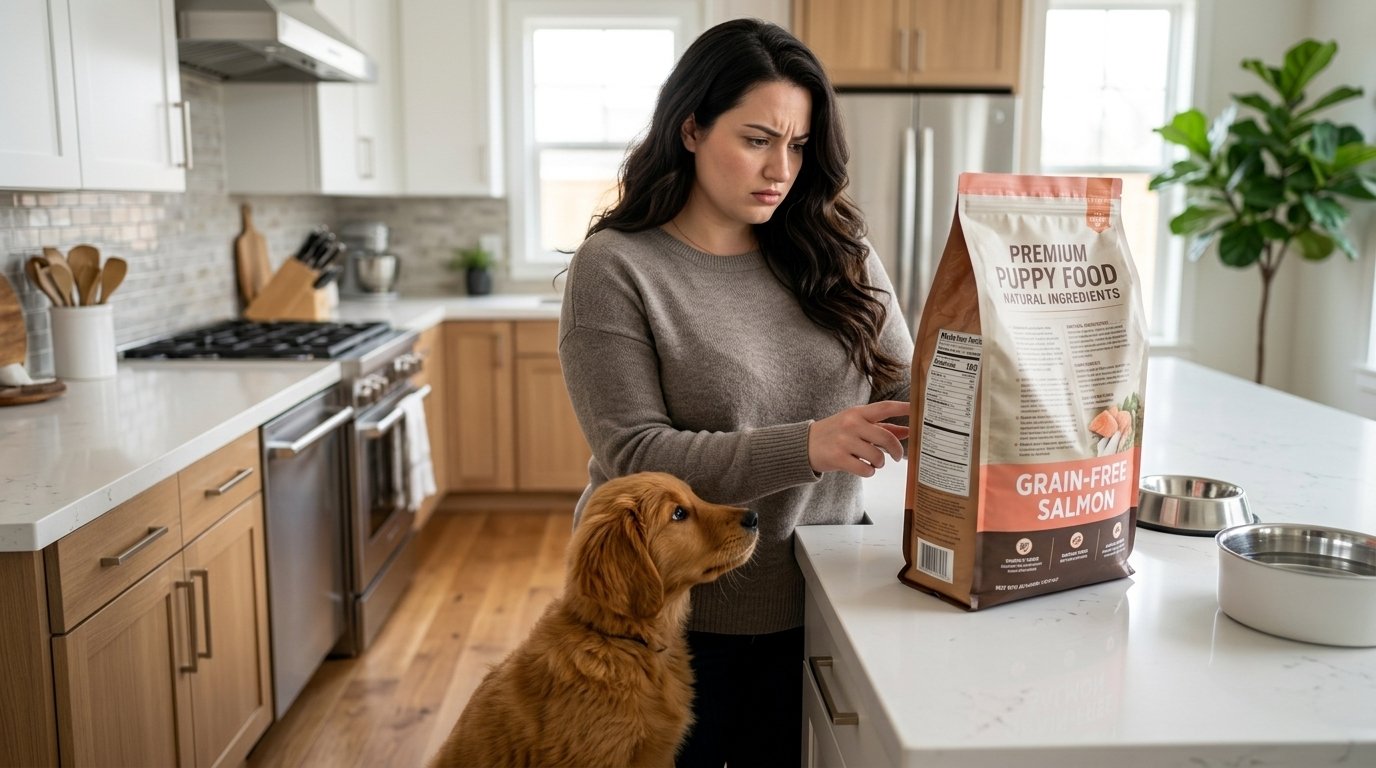
Searching for the worst ingredients in dry dog food often leads to long lists of supposedly dangerous grains, preservatives, and by-products. But an unfamiliar ingredient name does not automatically mean a food is harmful, and a “natural” or “premium” label does not establish nutritional quality.
The more useful questions are whether the food meets your dog’s nutritional needs, how the manufacturer checks its products, and whether your dog has a medical reason to avoid a particular ingredient.
This guide examines 10 commonly criticized ingredients and ingredient groups, separates documented concerns from unsupported claims, and explains what to check before changing your dog’s food.
Table of Contents
Worst Ingredients in Dry Dog Food: What Labels Can Tell You
In the United States, pet food is subject to federal and state requirements. The FDA explains how pet food is regulated, including requirements for safety, manufacturing conditions, and truthful labeling.
Ingredients are listed by weight, but their position does not reveal digestibility, overall nutrient balance, or manufacturing quality. Start with the nutritional adequacy statement and intended life stage, then consider the manufacturer’s expertise and quality controls.

1. BHA, BHT, and Ethoxyquin (Chemical Preservatives)
1. BHA, BHT, and Ethoxyquin: Evaluate the Conditions of Use
Preservatives help protect fats against oxidation and rancidity. Calling an ingredient “synthetic” does not establish that the finished food will harm your dog.
BHA and BHT have permitted uses subject to specified limits, while ethoxyquin has its own use and labeling requirements. Findings from high-dose laboratory experiments should not be presented as proof that ordinary consumption of a compliant dog food causes liver damage or cancer.
If you prefer a different preservative system, ask the manufacturer how it protects the food throughout its shelf life. The FDA’s ethoxyquin guidance explains why the amount and conditions of use matter.
2. Propylene Glycol: Dog and Cat Safety Differ
Propylene glycol helps retain moisture in some soft foods and treats, so it is more relevant to semi-moist products than ordinary dry kibble.
It has permitted uses in dog food under applicable conditions, but it is prohibited in cat food. The cat-specific risk should not be used as proof that its permitted use in dog food causes the same harm. AAFCO’s ingredient guide explains this distinction.
3. Added Colors: Appearance Is Not Nutritional Quality
Added colors change how food looks rather than supplying essential nutrients. Choosing a food without added colors is a reasonable preference, but colored kibble alone does not prove poor ingredient quality or toxicity.
Color additives must meet the requirements for their intended use. Avoid treating every dye as a demonstrated cause of cancer, hyperactivity, or severe allergies in dogs; those claims require evidence for the particular substance and exposure.

4. Meat Meals and By-Products: Names Need Context
Meat meals and by-products are not automatically unsafe. By-products can include nutritious organs, and ingredient definitions place conditions on what these terms mean.
A named animal source can help owners seeking more specific information, but a generic name does not prove that an ingredient is unregulated or contaminated. For a dog with a suspected food allergy, ask your veterinarian about an appropriate diagnostic diet rather than relying on label wording alone.
5. Corn, Wheat, and Soy: Not Automatically Fillers
What They Are:
These ingredients can contribute protein, energy, and other nutrients to a properly formulated diet. Calling them “fillers” does not describe their nutritional value.
Some dogs have food allergies, but grains are not universally unsuitable, and animal proteins can also trigger allergies. Persistent itching or digestive symptoms need veterinary assessment rather than an automatic switch to grain-free food. Tufts’ nutrition FAQs explain common misconceptions about grains.
6. MSG and Flavor Enhancers: Avoid Unsupported Claims
Monosodium glutamate is a flavor enhancer. Its name alone does not establish whether a finished dog food is nutritionally suitable.
Claims that MSG makes dogs addicted to low-quality food or routinely causes neurological damage require evidence specific to dogs and the amounts consumed. Without that evidence, they should not be presented as established facts.
If you have concerns about a flavoring ingredient, ask the manufacturer about its purpose and discuss the complete formula with your veterinarian.
7. Added Sugar and Xylitol: Different Concerns
Added sugar contributes calories, so consider it alongside the food’s calorie content, feeding amount, and your dog’s weight. Its presence alone does not establish that a diet will cause diabetes or other disease.
Xylitol is a separate concern: it is toxic to dogs and may cause dangerously low blood sugar and liver injury. It can occur in human foods and other household products; it should not be described as a routine ingredient in low-quality dog food.
If your dog may have swallowed xylitol, contact a veterinarian or animal poison-control service immediately. Do not wait for symptoms.
8.Animal Digest: Processing Does Not Prove Contamination
Animal digest is made by breaking down animal tissue through chemical or enzymatic hydrolysis and can be used to improve flavor. AAFCO’s definition specifies clean, undecomposed tissue.
The term does not itself establish that the food contains toxins, spoiled material, or dangerous residues. Ingredient sourcing and manufacturing controls matter. If identifying the animal source is important for your dog’s diet, ask the manufacturer for details.
9. Menadione: Consider the Form and Amount
Menadione sodium bisulfite complex is a source of vitamin K activity used in animal feeds, including pet foods. Its synthetic origin alone does not establish that the finished diet is unsafe.
The FDA’s vitamin K guidance discusses different vitamin K substances and their uses. Safety depends on the specific compound, amount, species, and route of administration.
Evidence about excessive doses should not be turned into a claim that ordinary dietary inclusion damages a dog’s liver or immune system. Do not add vitamin supplements to a complete diet without veterinary guidance.
10. Rice Flour and Starches: Assess the Whole Formula
Cooked starches supply energy and help form kibble. Rice and other carbohydrate ingredients are not automatically harmful, and their presence alone does not show that a food lacks sufficient protein.

Consider the complete nutrient profile, calorie density, portion size, and your dog’s medical needs. Dogs with conditions requiring dietary management should have an individualized feeding plan rather than follow a blanket rule against starch.
What to Check Before Choosing Dry Dog Food
| What to check | Practical question |
|---|---|
| Nutritional adequacy | Is this food complete and balanced for my dog’s life stage? |
| Formulation expertise | Who formulates it, and what are their qualifications? |
| Quality controls | How are ingredients and finished batches checked? |
| Calories | How many calories are in the measured daily portion? |
| Individual suitability | Does my dog have a medical reason to avoid an ingredient? |
| Manufacturer support | Can the company answer questions about its food? |
The WSAVA guidelines for selecting pet foods provide questions to ask manufacturers. A premium price or appealing ingredient list is not a substitute for nutritional assessment.
Once you choose an appropriate food, follow its storage instructions. Our guide to how to store dry dog food explains practical storage steps.
FAQs
What are the worst ingredients in dry dog food?
There is no universal blacklist that reliably identifies a poor diet. Ingredients unsuitable for a particular dog, contamination, and nutritional imbalance are more useful concerns than unfamiliar names. Evaluate the complete food and your dog’s individual needs.
Are grain-free diets safer for dogs?
Not automatically. The FDA has investigated possible dietary contributions to non-hereditary dilated cardiomyopathy, with reports involving both grain-free and grain-containing foods. The relationship is complex; an ingredient’s presence does not prove that it causes heart disease. Discuss diet selection with your veterinarian.
Can the first five ingredients tell me whether dog food is good?
No. Ingredient order reflects weight, including moisture, and does not reveal the full nutritional value of the finished food. Check the nutritional adequacy statement and ask about formulation and quality controls.
Should I switch foods because an ingredient sounds harmful?
Not solely for that reason. Review the specific concern with your veterinarian, especially if your dog eats a prescribed diet. If a change is appropriate, follow an individualized transition plan; our dog food transition guide explains gradual switching.
Conclusion
Understanding the worst ingredients in dry dog food means separating specific, evidence-based concerns from broad ingredient myths. Grains, by-products, preservatives, and synthetic nutrients should not all be treated as dangerous simply because their names sound unfamiliar.
Choose food using its nutritional suitability, the manufacturer’s expertise and quality controls, and your dog’s health needs. If your dog develops persistent symptoms, seek veterinary advice rather than diagnosing an ingredient problem from the label alone.