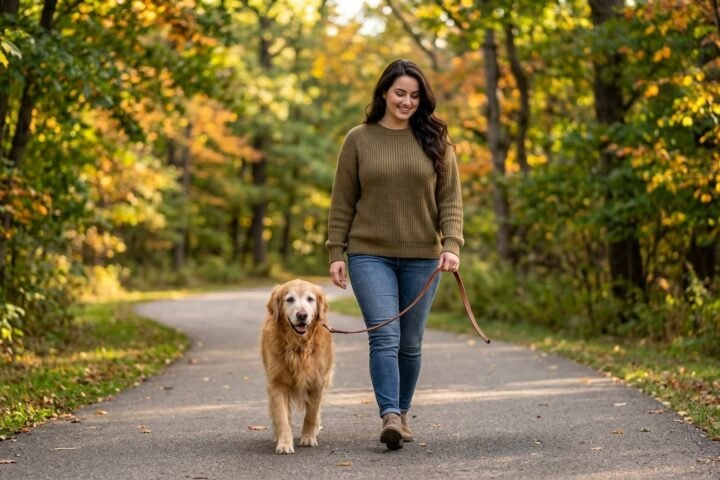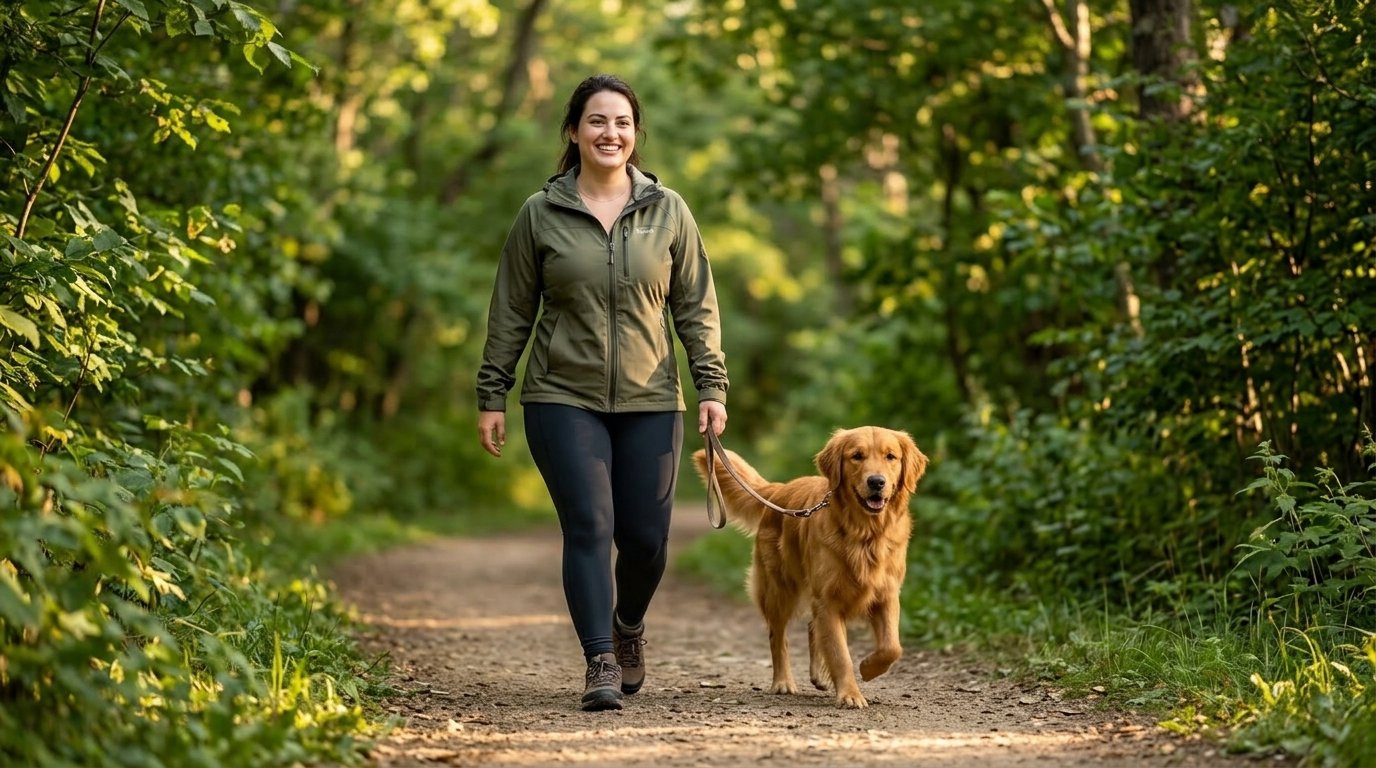
If you’re interested in preventing arthritis in dogs, the best time to start is before your dog shows stiffness, limping, or difficulty getting up. Arthritis cannot always be prevented because genetics, developmental joint problems, injuries, and other factors can contribute to osteoarthritis. However, lifelong habits can help reduce unnecessary stress on the joints and may delay or lessen joint problems.
The biggest priorities are surprisingly practical: keep your dog lean, provide regular age-appropriate exercise, support healthy growth during puppyhood, prevent avoidable injuries, feed an appropriate diet, and pay attention to changes in mobility.
Here’s how to approach joint health from puppyhood through the senior years.
Table of Contents
Can Arthritis in Dogs Really Be Prevented?
Not completely.
Arthritis, commonly referring to osteoarthritis (OA), is a progressive joint condition involving changes to cartilage and other structures within a joint. It can develop for many reasons, including developmental abnormalities, previous injuries, ligament problems, genetics, excess body weight, and repetitive stress.
Cornell University College of Veterinary Medicine notes that osteoarthritis can occur at any age and is not exclusively a senior-dog disease. Conditions such as hip or elbow dysplasia, patellar problems, cruciate ligament damage, previous fractures, and high-impact activity can contribute to joint degeneration.
That means preventing arthritis in dogs is better understood as reducing risk rather than promising that arthritis will never occur.
Some factors are outside your control. Your dog may inherit a predisposition to orthopedic disease, suffer an unexpected injury, or develop arthritis despite excellent care.
What you can control is the environment around those risks.
Think of joint protection as a long-term strategy:
- Maintain a healthy body condition.
- Give your dog consistent, appropriate movement.
- Avoid unnecessary high-impact activity.
- Support healthy puppy growth.
- Feed an appropriate, nutritionally complete diet.
- Address injuries and mobility changes promptly.
- Work with your veterinarian when your dog has known orthopedic risks.
Merck Veterinary Manual identifies weight optimization as a primary preventive strategy for slowing the development of osteoarthritis in dogs and also supports regular, controlled exercise.
When Should Arthritis Prevention Start?
Earlier than many owners realize.
You don’t need to wait until your dog is middle-aged or elderly.
Joint health begins during growth. Puppies, especially rapidly growing large and giant breeds, need appropriate nutrition, controlled activity, and a healthy body condition while their bones and joints are developing.
That does not mean keeping a puppy inactive.
Quite the opposite: puppies need movement, play, exploration, and opportunities to develop coordination and muscle strength. The goal is to avoid turning normal puppy activity into excessive, repetitive or forced physical stress.
For a puppy, joint-friendly habits include:
- Short, age-appropriate walks
- Gentle play
- Free movement on safe surfaces
- Supervised exploration
- Basic training
- Scent games
- Plenty of rest between active periods
Avoid treating a young puppy like a miniature endurance athlete.
Long-distance running, repetitive jumping, forced exercise and prolonged high-impact activity can place unnecessary stress on developing structures. Cornell’s current guidance for growing dogs similarly recommends regular age-appropriate exercise while avoiding repetitive high-impact or forced activity during rapid growth.
Adult dogs
Adulthood is an excellent time to establish habits that can continue for years.
Rather than thinking about arthritis only when your dog gets older, make joint protection part of the normal routine.
Your adult dog’s priorities should include:
- Stable body weight
- Regular exercise
- Adequate muscle conditioning
- Appropriate nutrition
- Injury prevention
- Routine veterinary care
Senior dogs
Getting older does not mean your dog should stop moving.
Senior dogs often benefit from continued regular activity, but the type and intensity may need to change.
A younger adult dog may comfortably hike, run or play more vigorously. An older dog may benefit more from shorter walks, sniffing opportunities, gentle play, swimming or veterinarian-guided conditioning.
The goal is not to exhaust a senior dog.
The goal is to preserve comfortable movement and muscle strength for as long as possible.
1. Keep Your Dog at a Lean, Healthy Weight
If you remember only one principle from this guide, make it this one.
Weight management is one of the most important things you can do for your dog’s joints.
Extra body weight increases the physical load placed on the musculoskeletal system. Body fat also has biological effects beyond simply adding weight; adipose tissue produces inflammatory mediators that can contribute to chronic inflammation.
Merck Veterinary Manual describes weight optimization as the primary preventive method for slowing osteoarthritis development in dogs.
The American Veterinary Medical Association also explains that maintaining a healthy weight can lower a pet’s risk of arthritis and joint injuries while supporting overall health and quality of life.

Don’t rely only on the scale
A number on the scale does not tell the whole story.
Two dogs can weigh the same amount and have very different body conditions.
Ask your veterinarian to show you how to assess your dog’s body condition. You should be able to feel the ribs without a thick layer of fat, while your dog’s waist and abdominal tuck should be appropriately visible for their body type.
If your dog is gaining weight, don’t simply cut food dramatically.
Start by discussing:
- Daily calorie intake
- Treats
- Table scraps
- Portion sizes
- Activity level
- Current food
- Underlying medical factors
AAHA recommends regular nutritional assessment and body-condition monitoring throughout a dog’s life rather than treating nutrition as a one-time decision.
If you’re already struggling to determine whether your dog’s daily activity is appropriate, our guide on how much exercise a dog needs can help you evaluate exercise according to age, breed, health and lifestyle.
2. Choose Regular, Joint-Friendly Exercise
Exercise protects joints partly by helping maintain muscle strength, mobility and a healthy body condition.
But more exercise is not automatically better.
A sudden increase in running, repeated jumping, intense ball chasing or other high-impact activity may create unnecessary stress, particularly in dogs that are overweight, unconditioned, young, elderly or already experiencing orthopedic problems.
Merck supports regular, controlled exercise for dogs at risk of osteoarthritis.
Good options can include:
- Walking
- Sniff walks
- Controlled hiking for appropriately conditioned dogs
- Swimming for dogs that enjoy and safely tolerate it
- Gentle play
- Reward-based training
- Veterinarian-guided conditioning
Build activity gradually
If your dog has been inactive, don’t suddenly turn a short walk into a long run.
Increase activity progressively and watch how your dog responds during the activity and afterward.
A useful routine might involve:
Morning: Moderate walk with plenty of sniffing.
Afternoon: Short training or enrichment session.
Evening: Another appropriate walk or gentle play.
The exact duration should depend on your dog’s age, breed, fitness, body condition and health.
If your dog becomes unusually stiff, sore, reluctant to move or lame after an activity, that is a reason to reduce the intensity and consider veterinary advice.
Avoid the weekend-warrior pattern
A dog that receives very little activity all week and then spends Saturday running, jumping and chasing a ball for hours may be exposed to more physical stress than a dog receiving consistent daily movement.
Consistency generally makes more sense than occasional extreme exercise.
3. Protect Growing Puppies From Excessive Joint Stress
Puppyhood deserves special attention because bones, joints and supporting tissues are still developing.
This is particularly important for large and giant breeds, which may continue growing for considerably longer than small breeds.
One of the most important puppy habits is feeding appropriately rather than encouraging rapid growth.
Overfeeding can cause excessive weight gain during development. Cornell recommends appropriate nutrition and avoiding overfeeding in growing puppies, along with regular age-appropriate exercise rather than forced high-impact activity.
Puppy activities to reconsider
You don’t have to eliminate all movement.
Instead, be sensible about repetitive stress.
Use caution with:
- Repetitive jumping from heights
- Long-distance running
- Forced jogging
- Excessive stair use
- Repeated hard-surface sprinting
- Intense games that involve constant twisting and stopping
Puppies naturally zoom, wrestle and play. You don’t need to micromanage every movement.
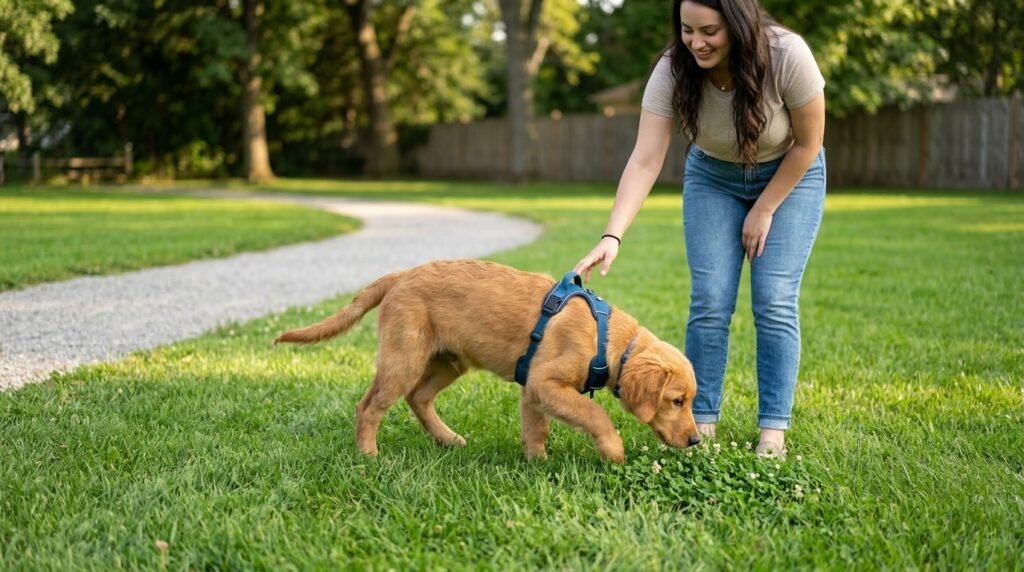
The goal is to avoid deliberately creating an intense exercise program before the puppy’s body is ready.
Choose the right puppy diet
A complete and balanced puppy diet appropriate for the dog’s life stage and size is generally preferable to experimenting with additional calcium or other supplements.
Growing puppies have different nutritional requirements from adult dogs.
If you have a large- or giant-breed puppy, ask your veterinarian whether the diet and feeding amount are appropriate for the puppy’s growth pattern.
4. Feed for Healthy Growth and Long-Term Weight Control
Nutrition affects arthritis prevention indirectly and directly through several important pathways.
A suitable diet helps your dog maintain:
- Healthy body weight
- Muscle mass
- Normal growth
- Appropriate nutrient intake
- Overall physical condition
The objective isn’t to find a magical “arthritis-prevention food.”
There is no single ingredient that guarantees your dog will avoid arthritis.
Instead, focus on the fundamentals.
Feed the right amount
Even an excellent dog food can contribute to weight gain if you consistently feed more calories than your dog needs.
Treats count too.
If your dog receives frequent treats during training, dental chews, table food and other snacks, those calories can add up.
Adjust with age
A dog’s energy requirements can change as activity levels change.
A senior dog that becomes less active may need fewer calories than they did during their energetic adult years.
Cornell recommends monitoring body condition and weight as dogs age because reduced activity can increase obesity risk.
Don’t chase supplement claims
Some products are marketed as if they can prevent arthritis entirely.
Be skeptical of guarantees.
Joint-support products may have a role in some dogs, but they should not replace weight management, appropriate exercise, proper nutrition or veterinary care.
If your dog has an orthopedic condition or a high risk of joint disease, ask your veterinarian whether a particular nutritional strategy is appropriate.
5. Prevent and Address Joint Injuries Early
Injuries can have long-term consequences for joint health.
Cornell lists previous fractures, cruciate ligament damage and other orthopedic problems among factors that can contribute to osteoarthritis.
That makes injury prevention an important part of preventing arthritis in dogs.
You cannot prevent every accident, but you can reduce some avoidable risks.
Make active areas safer
Consider your dog’s environment.
Slippery flooring can make it harder for a dog to maintain traction. Repeated jumping off furniture can also create unnecessary impact.
Simple environmental adjustments can include:
- Non-slip rugs on slippery floors
- Secure footing around feeding and resting areas
- Ramps where appropriate
- Keeping nails appropriately trimmed
- Removing obstacles from frequently used pathways
- Providing comfortable resting areas
These changes become particularly useful as a dog ages or develops mobility problems.
Don’t ignore a limp
A dog that suddenly limps should not simply be encouraged to “walk it off.”
A mild problem may improve, but persistent, worsening or severe lameness needs veterinary evaluation.
The same applies to:
- Sudden reluctance to climb stairs
- Refusal to jump when previously willing
- Difficulty getting up
- Repeated stiffness
- Pain when touched
- Changes in gait
- Reduced willingness to exercise
An underlying orthopedic problem may be contributing to future joint degeneration, so early evaluation can matter.
6. Build a Joint-Friendly Daily Routine
Prevention becomes easier when it is built into ordinary life rather than treated as a special project.
A practical routine for a healthy adult dog might include:
Morning
- Bathroom break
- Regular walk
- Sniffing and exploration
- Breakfast measured according to the dog’s feeding plan
Midday
- Short training session
- Gentle play
- Puzzle or scent-based enrichment
- Rest
Evening
- Another appropriate walk
- Calm interactive activity
- Dinner
- Comfortable rest
This doesn’t mean every dog needs exactly this schedule.
A working breed, young adult, senior dog and dog with orthopedic disease may need completely different routines.
The principle is consistent movement appropriate for the individual dog.
Think beyond walks
Joint health isn’t only about walking distance.
Muscle conditioning matters too.
A dog with strong supporting muscles may have better functional stability than a poorly conditioned dog, but strengthening exercises should be appropriate for the dog’s health and physical ability.
If your dog already has pain, arthritis, an orthopedic diagnosis or a previous injury, ask your veterinarian whether a veterinary rehabilitation professional would be appropriate.
7. Consider Joint Supplements Carefully
Joint supplements are one of the most common questions owners have when thinking about preventing arthritis in dogs.
The important point is that supplements should not become the foundation of your prevention plan.
Cornell recommends discussing joint supplements with a veterinarian and notes that different products may have varying evidence and purposes.
There is also disagreement among veterinary sources regarding the effectiveness of particular ingredients. For example, VCA’s current arthritis nutrition guidance states that glucosamine and chondroitin are not effective for treating osteoarthritis, while omega-3 fatty acids, particularly EPA and DHA, have evidence supporting their role in modifying chronic joint inflammation.
That is exactly why you should avoid assuming that every “joint supplement” works the same way.
Before giving your dog a supplement, discuss:
- The dog’s age
- Breed and size
- Current diet
- Existing medical conditions
- Medications
- Reason for using the supplement
- Appropriate product and dosage
Supplements should also be stored safely because more is not necessarily better.
Most importantly, don’t let a supplement distract you from the fundamentals.
A lean dog with appropriate exercise and good nutrition is better positioned for joint health than an overweight dog relying on a supplement.
What Are the Early Signs of Arthritis in Dogs?
Recognizing changes early can be just as important as prevention.
Arthritis does not always begin with an obvious limp.
Cornell lists signs such as stiffness, changes in gait, reduced activity, difficulty with stairs or jumping, trouble getting up and muscle loss among possible signs of osteoarthritis.
Watch for subtle changes such as:
- Taking longer to stand up
- Hesitating before stairs
- Avoiding furniture they once jumped onto
- Walking more slowly
- Sleeping more than usual
- Becoming reluctant to play
- Stiffness after resting
- Favoring one leg
- Reduced range of movement
- Losing muscle over the hindquarters
- Becoming unusually irritable when handled
A single slow morning doesn’t necessarily mean your dog has arthritis.
Look for patterns and changes from your dog’s normal behavior.
If a normally active dog repeatedly becomes reluctant to move, that deserves attention.
When Should You Take Your Dog to the Vet?
Routine veterinary care is part of long-term joint protection because your veterinarian can monitor body condition, growth, mobility and orthopedic risk.
You should contact your veterinarian if your dog develops persistent:
- Limping
- Stiffness
- Difficulty getting up
- Reduced exercise tolerance
- Difficulty climbing stairs
- Reluctance to jump
- Pain during handling
- Changes in gait
- Loss of muscle
- Sudden behavior changes associated with movement
Seek prompt veterinary care for severe pain, inability to use a limb, significant trauma, sudden severe weakness or other symptoms that appear urgent.
Don’t give your dog human pain medication unless a veterinarian specifically tells you to do so. Medications used for human pain can be dangerous for dogs, and even veterinary NSAIDs require appropriate dosing and monitoring. Cornell’s veterinary guidance emphasizes discussing risks, benefits and monitoring requirements with your veterinarian when NSAIDs are used.
Can Senior Dogs Still Exercise?
Yes.
One of the biggest mistakes owners can make is assuming that an older dog should simply rest because they’re old.
Regular, controlled movement can help maintain mobility and muscle function.
The important change is often how the dog exercises.
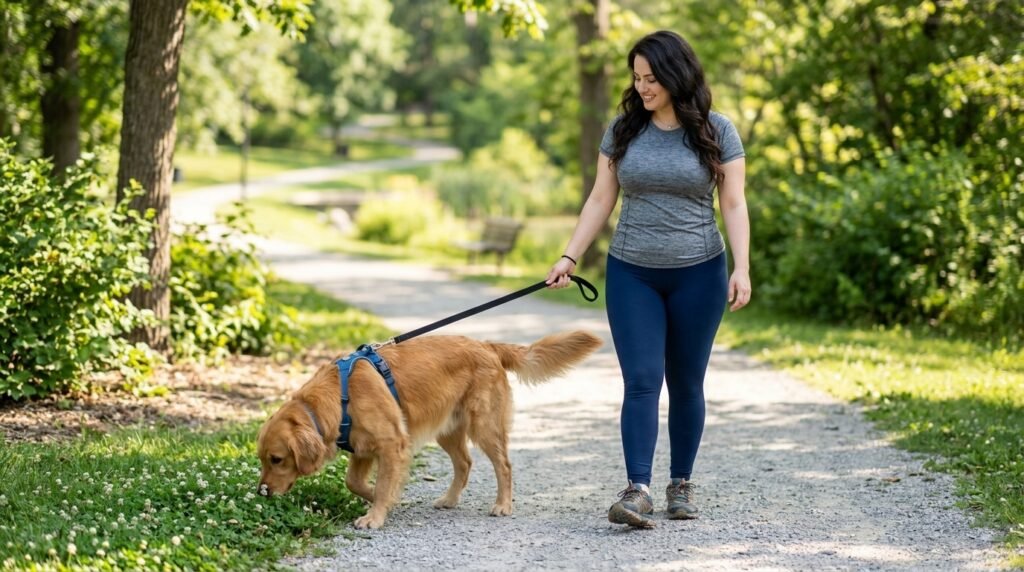
Instead of encouraging an older dog to run until exhausted, consider:
- Shorter walks
- More frequent movement
- Gentle sniff walks
- Controlled swimming when appropriate
- Short training sessions
- Low-impact enrichment
- Veterinary-guided rehabilitation
If your senior dog appears painful, don’t simply reduce activity without finding out why.
Pain can create a cycle in which the dog moves less, loses muscle, gains weight and becomes even less mobile.
Your veterinarian can help determine what type of movement is appropriate.
The Biggest Mistakes to Avoid When Protecting Your Dog’s Joints
Sometimes arthritis prevention is less about adding another product and more about removing harmful habits.
Mistake 1: Letting your dog become overweight
Extra weight is one of the most important modifiable risks.
Mistake 2: Suddenly increasing exercise
An inactive dog shouldn’t go from short walks to strenuous activity overnight.
Mistake 3: Treating puppies like adult athletes
Growing dogs need appropriate movement, not forced endurance exercise.
Mistake 4: Ignoring minor mobility changes
Small changes can be early clues that something is wrong.
Mistake 5: Assuming supplements replace good care
No supplement can compensate for poor weight management or inappropriate exercise.
Mistake 6: Stopping movement when a dog gets older
Aging usually calls for adaptation, not automatic inactivity.
Mistake 7: Waiting for obvious pain
Dogs can show subtle changes before owners recognize them as pain-related.
A Simple Lifelong Plan for Joint Health
If you want a straightforward approach to preventing arthritis in dogs, think in stages.
Puppy
Focus on:
- Appropriate growth
- Complete nutrition
- Healthy body condition
- Age-appropriate activity
- Avoiding forced high-impact exercise
Adult
Focus on:
- Lean body condition
- Consistent exercise
- Muscle maintenance
- Injury prevention
- Appropriate nutrition
- Routine veterinary care
Senior
Focus on:
- Maintaining mobility
- Adjusting exercise intensity
- Monitoring weight
- Watching for stiffness
- Providing comfortable footing
- Getting mobility changes evaluated early
This approach is much more useful than waiting until an older dog develops obvious arthritis and then trying to reverse years of accumulated joint stress.
FAQ
The most common questions about arthritis prevention usually come down to age, weight, exercise and supplements.
1. Can arthritis in dogs be completely prevented?
No. Genetics, developmental joint problems, injuries and other factors can cause arthritis even when an owner provides excellent care. However, maintaining a healthy weight, appropriate exercise and good overall joint health can help reduce risk or delay progression.
2. What age should I start preventing arthritis in my dog?
Start during puppyhood. Healthy growth, appropriate nutrition, a lean body condition and age-appropriate exercise can support long-term joint health. Prevention should continue through adulthood and the senior years.
3. Does exercise help prevent arthritis in dogs?
Regular, controlled exercise can support muscle strength, mobility and healthy body weight. However, excessive or high-impact exercise can increase injury risk, particularly in growing puppies, unconditioned dogs and dogs with orthopedic problems.
4. Do joint supplements prevent arthritis in dogs?
Joint supplements should not be considered a guaranteed way to prevent arthritis. Evidence varies by ingredient and product. Discuss supplements with your veterinarian, particularly if your dog has orthopedic risk factors or an existing joint condition.
Conclusion
Preventing arthritis in dogs is not about finding one perfect food, supplement or exercise routine.
It is about reducing avoidable stress on the joints throughout your dog’s life.
Start during puppyhood by supporting healthy growth and avoiding excessive forced exercise. During adulthood, prioritize a lean body condition, consistent activity, appropriate nutrition and injury prevention. As your dog ages, adapt the routine while continuing to encourage safe movement.
You cannot eliminate every risk. Genetics, developmental orthopedic conditions and unexpected injuries can still lead to arthritis.
But your everyday choices matter.
Keeping your dog at a healthy weight, providing appropriate exercise, protecting growing joints, watching for mobility changes and involving your veterinarian when something seems wrong can all contribute to better long-term joint health.
The goal isn’t simply to prevent a diagnosis.
It’s to help your dog stay comfortable, mobile and able to enjoy normal daily activities for as long as possible.