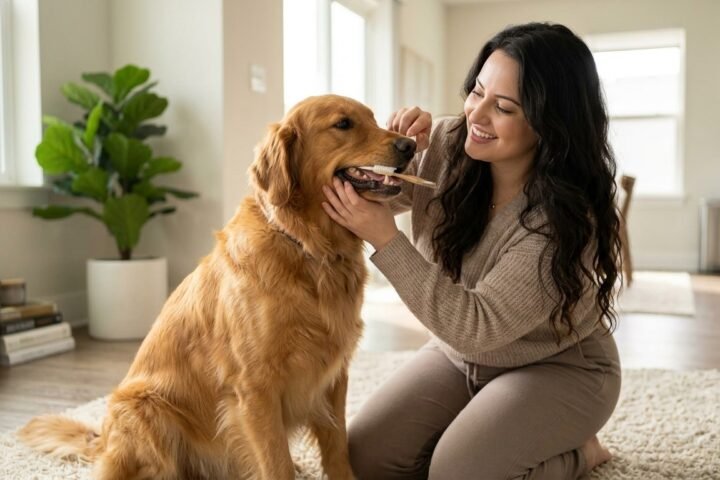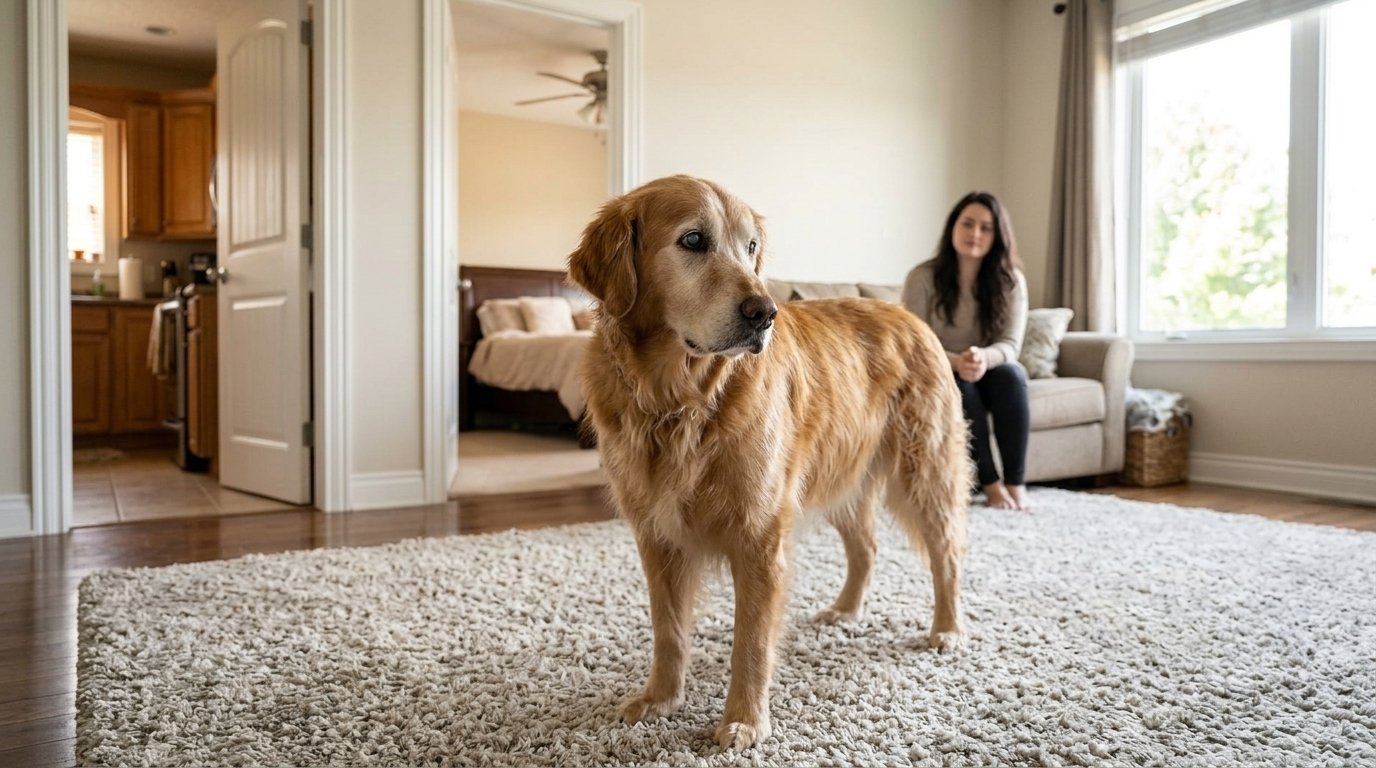
Canine cognitive dysfunction signs can include getting lost in familiar rooms, pacing at night, forgetting learned routines, having indoor accidents, and interacting differently with family members. These changes are sometimes dismissed as normal aging, but they can indicate canine cognitive dysfunction syndrome—a progressive, age-related disorder affecting a dog’s brain and behavior.
One unusual moment does not prove that a dog has dementia. Pain, vision loss, hearing impairment, seizures, infections, and several other medical problems may produce similar behavior. However, repeated changes or a worsening pattern deserve a veterinary evaluation. Recognizing the warning clues early gives your veterinarian an opportunity to identify treatable problems and develop a plan that may preserve your dog’s comfort and quality of life.
Table of Contents
What Is Canine Cognitive Dysfunction?
Canine cognitive dysfunction syndrome, commonly called CCD, CDS, dog dementia, or canine dementia, is an age-related neurobehavioral condition. It affects memory, awareness, learning, sleep, activity, and social behavior.
According to the Cornell University College of Veterinary Medicine, dogs may begin developing the condition at around nine years of age or later. The gradual nature of the changes means owners may initially assume that their dog is simply getting old.
Changes associated with the condition can include deterioration of neurons and accumulation of beta-amyloid protein in the brain. These processes interfere with communication between brain cells. As a result, a dog may have increasing difficulty processing information, remembering routines, navigating familiar spaces, or maintaining a normal sleep-wake cycle.
Cognitive dysfunction is progressive, but its course varies. Some dogs experience subtle changes for an extended period, while others develop several problems that noticeably affect daily life. Early intervention cannot cure the underlying degeneration, but it may help manage symptoms and maintain a better quality of life.
7 Canine Cognitive Dysfunction Signs to Watch For
Veterinary professionals often organize canine cognitive dysfunction signs using the acronym DISHAA:
- Disorientation
- Interaction changes
- Sleep-wake changes
- House-soiling and changes in learning or memory
- Activity changes
- Anxiety
Learning this framework makes it easier to observe patterns and give your veterinarian specific information.
1. Disorientation in Familiar Places
Disorientation is one of the most recognizable signs of cognitive decline. A dog who has navigated the same home for years may suddenly appear unsure of where to go.
You may notice your dog:
- Becoming trapped behind furniture
- Standing on the wrong side of a familiar door
- Staring at a wall or into a corner
- Wandering into a room and appearing unable to leave
- Looking confused in the yard
- Failing to locate a food bowl, bed, or doorway
- Waiting at the hinge side of a door instead of the opening
Occasional staring can have multiple explanations. If your dog is frequently unresponsive, seems confused afterward, or displays unusual movements, read more about a dog spacing out and when it may require veterinary attention.
Sudden, severe disorientation is not something to monitor casually. It can also accompany poisoning, seizures, vestibular disease, low blood sugar, head trauma, or other urgent problems.
2. Changes in Social Interaction
A dog with cognitive dysfunction may behave differently toward familiar people or animals. An affectionate dog may withdraw, while an independent dog may begin following a family member constantly.
Possible changes include:
- Seeking less attention
- Walking away from petting
- No longer greeting family members normally
- Appearing not to recognize a familiar person
- Becoming unusually clingy
- Reacting irritably when approached
- Showing less interest in household animals
- Becoming startled by ordinary touch
Changes in interaction are not always caused by dementia. Arthritis may make physical contact uncomfortable, and hearing or vision loss can make an approaching person startling. A dog experiencing discomfort may also withdraw or become defensive. Familiarize yourself with common signs that a dog may be in pain and report behavioral changes to your veterinarian.
3. Disrupted Sleep-Wake Cycles
Dogs with cognitive dysfunction may sleep much of the day and remain restless at night. This reversal can be difficult for both the dog and the household.
Signs may include:
- Pacing after bedtime
- Waking repeatedly
- Barking, whining, or howling at night
- Wandering through the house
- Appearing confused in darkness
- Sleeping more during daylight hours
- Wanting to go outside repeatedly without eliminating
- Struggling to settle after waking
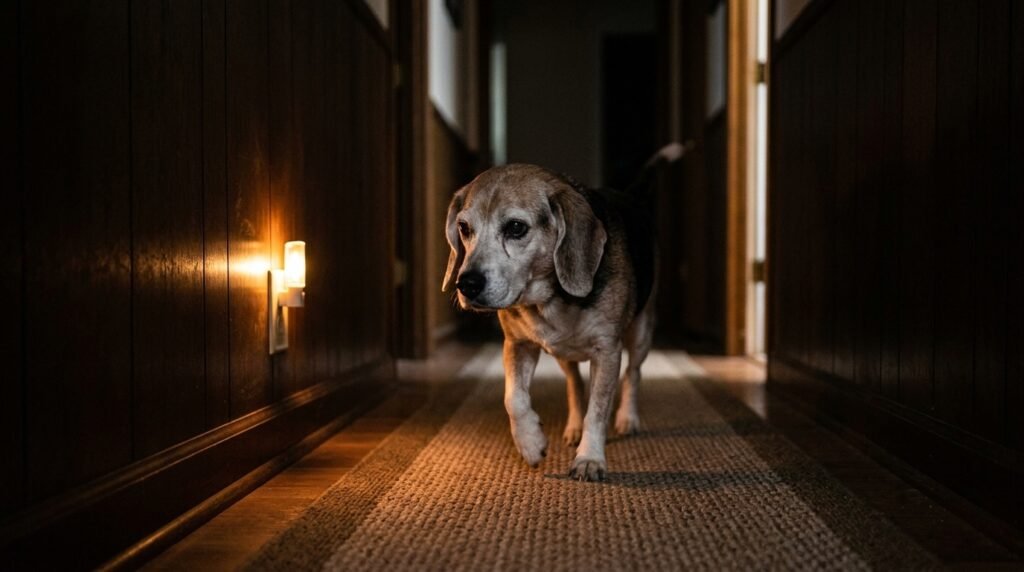
Nighttime confusion is sometimes informally compared with “sundowning” in people, although owners should not use that observation as a diagnosis. Pain, urinary disease, digestive discomfort, anxiety, and an increased need to eliminate can also interrupt sleep.
Track the time at which the behavior starts, how long it lasts, and whether anything appears to trigger it. A video of the nighttime episode may help your veterinarian evaluate what is happening.
4. House-Soiling and Loss of Learned Behaviors
A previously house-trained senior dog may begin urinating or defecating indoors. The dog might eliminate shortly after returning inside, appear to forget how to signal at the door, or show no awareness that an accident occurred.
Cognitive changes may also cause a dog to:
- Stop responding reliably to familiar cues
- Forget established household routines
- Struggle to learn a simple new task
- Wait in the wrong place for meals
- Forget how to use a dog door
- Appear unable to find the way back inside
- Repeat an action without reaching its apparent goal
Never assume that new accidents are behavioral or cognitive without a medical examination. Urinary tract disease, kidney disease, diabetes, gastrointestinal illness, mobility limitations, and medication effects are among the other possibilities.
Do not punish accidents. Punishment cannot restore memory and may increase fear or anxiety. Offer more frequent bathroom opportunities, keep the route outside easy to navigate, and clean accidents calmly.
5. Changes in Activity
Another group of canine cognitive dysfunction signs involves changes in purposeful activity. A dog may lose interest in play and exploration or become unusually repetitive and restless.
Owners may observe:
- Aimless wandering
- Repetitive pacing
- Circling
- Reduced interest in toys
- Less environmental exploration
- Difficulty settling
- Repeatedly approaching and leaving a bowl
- Licking or investigating the same object again and again
- Spending long periods staring
- Walking without an obvious destination
Reduced activity can also result from arthritis, weakness, heart disease, respiratory problems, or pain. Conversely, pacing may reflect physical discomfort rather than cognitive disease. Note whether the behavior occurs at a particular time or follows exercise, meals, medication, or rest.
6. Increased Anxiety, Fear, or Irritability
A dog who once tolerated everyday events may develop new fears. Confusion, reduced sensory ability, and difficulty predicting what will happen next can make familiar situations feel unsafe.
Possible signs include:
- Increased separation distress
- Fear of familiar places
- Sensitivity to sounds
- New reluctance to go outdoors
- Panting without an obvious physical reason
- Trembling or inability to settle
- Irritability when disturbed
- Increased vocalization
- Startling more easily
- Seeking constant reassurance
Separation-related behavior in an older dog does not automatically mean cognitive dysfunction. Compare the pattern with the typical features of
and ask your veterinarian or a qualified veterinary behavior professional to help identify the cause.
New aggression is particularly important to investigate. Pain, impaired vision, hearing loss, neurologic disease, and fear can all change how a dog responds to handling.
7. Changes in Learning, Memory, and Responsiveness
Cognitive decline may affect a dog’s ability to remember cues, people, locations, and daily patterns. These changes may be subtle at first.
A dog may:
- Respond more slowly to familiar cues
- Seem to forget a well-established command
- Lose focus during a simple interaction
- Have trouble solving an easy food puzzle
- Stop anticipating established routines
- Repeatedly make the same navigation error
- Appear not to recognize a familiar location
- Require more prompting to begin a routine task
Make sure your dog can see and hear the cue before interpreting nonresponse as memory loss. A hearing-impaired dog may still respond well to a hand signal, while a dog with reduced vision may respond more consistently to verbal or scent cues.
Early Versus More Advanced Signs
Early canine cognitive dysfunction signs are easy to overlook because they may appear only occasionally. A dog might hesitate at a doorway, wake once during the night, become slightly less social, or need an extra reminder for a familiar cue.
More advanced cognitive dysfunction can cause:
- Frequent disorientation
- Regular nighttime wandering
- Recurrent indoor accidents
- Substantial loss of learned behavior
- Persistent anxiety
- Difficulty eating or drinking without assistance
- Inability to navigate familiar spaces safely
- Reduced engagement in enjoyable activities
Progression is not always smooth. A dog may have better and worse days, and another illness can cause an abrupt decline. A sudden change should therefore be treated as a new medical concern rather than automatically attributed to existing dementia.
A weekly diary can reveal changes that are difficult to recognize from memory. Record sleep, accidents, appetite, navigation problems, social behavior, anxiety, mobility, and engagement. Short videos are also valuable.
Normal Aging or Canine Cognitive Dysfunction?
Healthy aging can bring slower movement, longer sleep, reduced stamina, and mild changes in sensory ability. Cognitive dysfunction involves behavioral changes that interfere with familiar routines or quality of life.
| Possible age-related change | More concerning pattern |
|---|---|
| Takes longer to rise | Wanders without recognizing familiar spaces |
| Sleeps somewhat more | Sleeps all day and repeatedly paces at night |
| Responds slowly due to hearing loss | Appears to forget cues even when they are clearly perceived |
| Plays for shorter periods | Loses interest in nearly all familiar activities |
| Occasionally needs an extra bathroom trip | Repeatedly forgets house training |
| Seeks more comfort | Develops persistent anxiety or cannot settle |
This comparison cannot diagnose the condition. A veterinarian must interpret the behavior alongside your dog’s physical health, sensory abilities, medications, and neurologic status.
Medical Problems That Can Look Like Dog Dementia
Canine cognitive dysfunction is commonly considered a diagnosis of exclusion. That means a veterinarian looks for other explanations before attributing the changes to cognitive decline.
According to Cornell’s veterinary guidance, similar signs can be associated with pain, arthritis, systemic disease, seizure disorders, and vision or hearing loss. Other possibilities include:
- Urinary tract or kidney disease
- Diabetes
- Liver disease
- Endocrine disorders
- Dental pain
- Medication side effects
- Brain tumors
- Vestibular disease
- Gastrointestinal illness
- Sleep disorders
- Anxiety
- Neurologic disease
This overlap is why an online checklist should never be used as a final diagnosis. It is also possible for a dog to have cognitive dysfunction and another medical condition at the same time.
How Veterinarians Diagnose Cognitive Dysfunction
There is no single routine test that conclusively confirms canine cognitive dysfunction in every dog. Diagnosis generally combines the owner’s behavioral observations with an examination and appropriate testing.
The appointment may include:
- A detailed history of behavioral changes
- A physical and neurologic examination
- Assessment of pain, mobility, vision, and hearing
- Blood and urine testing
- Additional imaging or specialized testing when indicated
- A structured cognitive questionnaire
The DISHAA framework helps organize changes in disorientation, interaction, sleep, house training and memory, activity, and anxiety. Other structured instruments, such as the Canine Dementia Scale, may also help assess severity and monitor progression.
Research on early detection of canine cognitive dysfunction explains that commonly used rating tools can be useful while also having limitations, especially when trying to identify very early changes.

Prepare for the appointment by listing:
- When each behavior began
- How often it happens
- Whether it is becoming more frequent
- What time of day it occurs
- Changes in eating, drinking, or elimination
- Current medications and supplements
- Changes in mobility, sight, or hearing
- Videos of unusual episodes
Specific observations are much more useful than saying only that your dog “seems old.”
Can Canine Cognitive Dysfunction Be Treated?
There is currently no cure that reverses canine cognitive dysfunction. Treatment focuses on managing symptoms, addressing concurrent disease, supporting brain health, and protecting quality of life.
A veterinarian may recommend a combination of:
- Environmental adjustments
- Predictable daily routines
- Gentle physical activity
- Appropriate mental enrichment
- Dietary changes
- Veterinarian-selected supplements
- Medication for cognitive or behavioral symptoms
- Treatment of pain and other medical conditions
Cornell notes that selegiline is used for cognitive dysfunction treatment in North America. It is not suitable for every dog and may interact with other drugs. Never begin, stop, or combine prescription medication without veterinary direction.
Dietary and supplement claims should also be approached carefully. Some therapeutic diets contain antioxidants, fatty acids, or medium-chain triglycerides intended to support brain function. Evidence and suitability vary, so ask your veterinarian before changing food or introducing a supplement—particularly if your dog has kidney, liver, pancreatic, or gastrointestinal disease.
The goal is not to make an aging dog perform difficult tasks. It is to keep life safe, predictable, comfortable, and mentally engaging without causing frustration.
Helping a Dog With Cognitive Dysfunction at Home
Once medical problems have been evaluated, thoughtful home changes may reduce confusion.
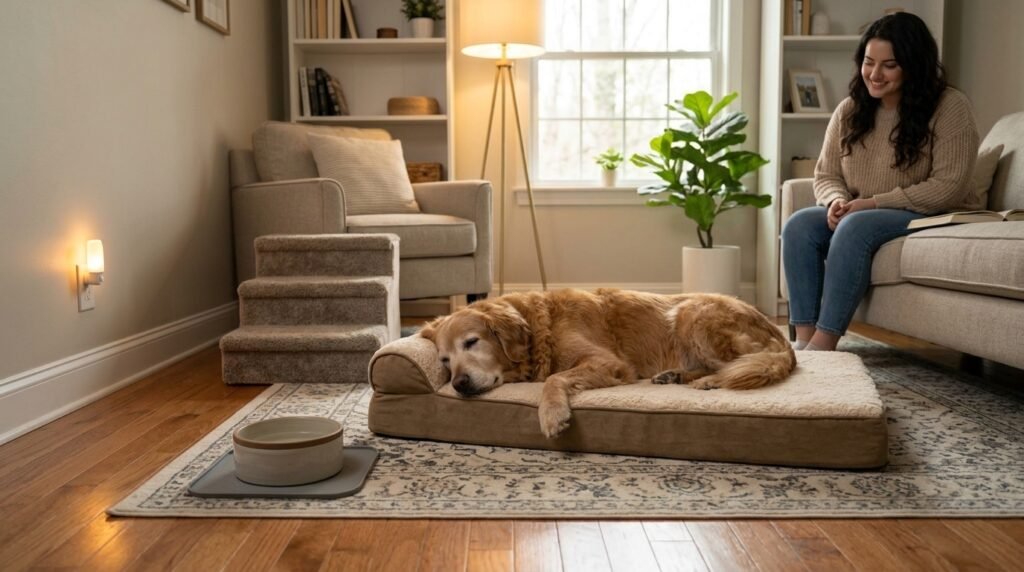
Helpful strategies include:
- Keep meals, walks, medication, and bedtime consistent.
- Avoid frequently rearranging furniture.
- Use nonslip rugs on slippery floors.
- Block stairs or other dangerous areas.
- Keep food and water in predictable locations.
- Add night-lights along sleeping and bathroom routes.
- Offer more frequent bathroom breaks.
- Provide a quiet, comfortable resting area.
- Use ramps when mobility is limited.
- Keep identification and microchip information current.
- Supervise outdoor time if wandering is possible.
- Use gentle scent, verbal, or visual cues based on your dog’s abilities.
Choose enrichment that the dog can complete successfully. Short sniffing walks, easy food puzzles, gentle cue practice, and relaxed social interaction may be more appropriate than complex new challenges. Stop if an activity causes fatigue or frustration.
Do not punish confusion, accidents, nighttime vocalization, or slow responses. These behaviors are not deliberate disobedience.
Monitor quality of life as well as individual symptoms. Consider appetite, hydration, comfort, mobility, rest, hygiene, social connection, interest in enjoyable activities, and the balance between good and difficult days.
When to Call a Veterinarian
Arrange an appointment when you notice repeated or progressive canine cognitive dysfunction signs, even if they initially seem mild. Earlier assessment can identify treatable conditions and establish a baseline for future comparison.
Contact your veterinarian promptly if your senior dog develops:
- New indoor accidents
- Repeated nighttime pacing
- Persistent confusion
- New anxiety or aggression
- Noticeable memory loss
- Reduced interest in food or family
- Major sleep changes
- Frequent staring or unresponsive episodes
Seek immediate veterinary care for:
- Sudden collapse
- Seizures
- Abrupt severe disorientation
- Inability to stand
- Head trauma
- Suspected poisoning
- Repeated vomiting
- Difficulty breathing
- Extreme weakness
- Continuous circling with loss of balance
- Sudden blindness
- Severe pain
Cognitive dysfunction usually progresses gradually. A dramatic change over minutes or hours raises concern for another urgent problem.
FAQs
At what age do canine cognitive dysfunction signs begin?
They are most often recognized in senior or geriatric dogs. Cornell reports that dogs may begin developing the condition at around nine years of age or older. Size, health, and individual aging patterns can influence when changes appear.
Is pacing at night always a sign of dog dementia?
No. Nighttime pacing can result from pain, anxiety, urinary urgency, digestive discomfort, sensory loss, medication effects, or other medical conditions. A veterinarian should investigate new or persistent pacing.
Can a dog with cognitive dysfunction still have a good life?
Many affected dogs can continue enjoying food, gentle activity, affection, and familiar routines. Treatment of concurrent disease, environmental support, and appropriate veterinary management may help maintain quality of life.
How quickly does canine cognitive dysfunction progress?
Progression varies considerably. Some dogs decline gradually over months or years, while concurrent illness can make changes appear faster. Tracking symptoms and arranging regular veterinary reassessments helps guide care.
Conclusion
Recognizing canine cognitive dysfunction signs is about identifying patterns, not attaching a diagnosis to one unusual behavior. Disorientation, interaction changes, disrupted sleep, indoor accidents, altered activity, anxiety, and memory problems all deserve attention when they become persistent or progressive.
Record what you observe and arrange a veterinary examination. The behavior may result from cognitive dysfunction, a different treatable condition, or a combination of problems. Although canine dementia cannot currently be cured, early, individualized support can make daily life safer, calmer, and more comfortable for a senior dog.