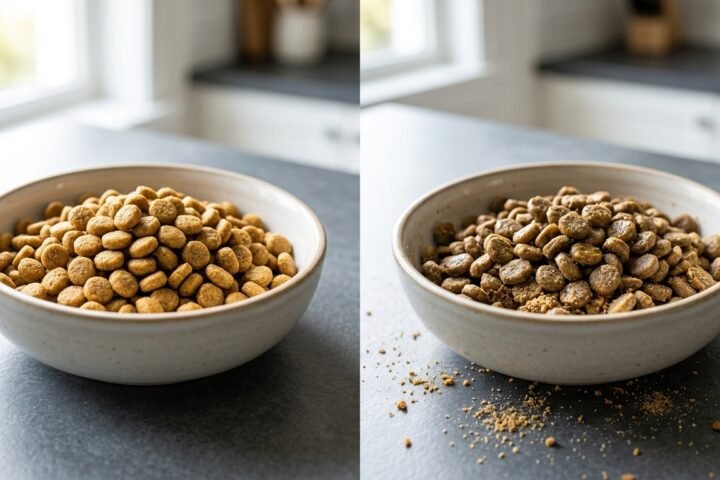
Finding the best dog food for sensitive stomach problems can be frustrating because digestive symptoms do not have one universal dietary solution. A food that produces firm, predictable stools in one dog might cause gas or diarrhea in another.
The best starting point is usually a nutritionally complete and balanced food appropriate for your dog’s life stage that your dog can digest comfortably. Depending on the problem, that may mean a highly digestible diet, a carefully selected protein source, an appropriate amount of fiber and fat, or—in dogs with suspected food allergy or chronic gastrointestinal disease—a veterinary therapeutic diet.
Most importantly, repeated vomiting, persistent diarrhea, blood in the stool, abdominal pain, unexplained weight loss, or significant lethargy should not simply be treated by trying another bag of food.
Here is how to make a more informed choice.
Table of Contents
What Does a “Sensitive Stomach” Mean in Dogs?
“Sensitive stomach” is a useful everyday description, but it is not a veterinary diagnosis.
Owners commonly use the term when their dogs experience symptoms such as:
- Loose or inconsistent stools
- Excessive gas
- Occasional vomiting
- Frequent digestive upset
- Changes in appetite
- Abdominal discomfort
- Problems after eating particular foods
- Digestive problems after sudden diet changes
Many different problems can produce these signs.
Dietary intolerance may be involved, but parasites, infections, stress, dietary indiscretion, pancreatitis, chronic enteropathy, medication effects, and other gastrointestinal disorders can cause similar symptoms.
That is why food selection should be based on the pattern of your dog’s symptoms rather than the words “sensitive stomach” printed on the front of a package.
If you want to understand the broader digestive picture first, PawMindTips’ guide to supporting dog gut health and better digestion explains how diet consistency, gradual food changes, hydration, fiber, stress, and the intestinal microbiome can affect digestion.
A dog that has one soft stool after stealing table scraps is also very different from a dog that has experienced diarrhea every week for two months.
The second dog needs more than a new flavor of kibble.

Best Dog Food for Sensitive Stomach: 7 Things to Look For
There is no single formula that deserves to be called the best choice for every sensitive dog. Instead, evaluate foods using several criteria.
1. Complete and Balanced Nutrition
Start here before worrying about trendy ingredients.
For a food intended to be your dog’s primary diet, check the package for a nutritional adequacy statement indicating that it is complete and balanced for the appropriate life stage.
The FDA’s animal-food labeling guidance explains that pet-food labels contain information about the product and its safe and effective use.
This matters because a diet can contain appealing ingredients without necessarily being appropriate as your dog’s sole long-term food.
A sensitive digestive system still needs complete nutrition.
Do not become so focused on eliminating ingredients that you lose sight of whether the finished diet meets your dog’s overall nutritional requirements.
2. A Protein Source Your Dog Tolerates
Protein deserves attention, but the goal is not simply to find whichever package puts the most attractive meat ingredient on the front.
The important question is whether your dog tolerates the diet.
Some dogs do perfectly well eating chicken. Others may require another protein source. Dogs being evaluated for a genuine adverse food reaction may need a veterinarian-supervised diet containing a novel protein or hydrolyzed protein.
This distinction matters because digestive sensitivity and food allergy are not interchangeable terms.
The Merck Veterinary Manual’s food-allergy guidance explains that a controlled elimination diet is used to investigate food allergy and that blood and skin tests are not reliable substitutes for a proper dietary trial.
Therefore, do not randomly remove chicken, beef, grains, dairy, and several other ingredients at once just because your dog has loose stools.
If food allergy is genuinely suspected, use a structured veterinary plan.
3. Appropriate Digestibility
The best dog food for sensitive stomach problems should provide nutrients in a form the individual dog can digest and absorb effectively.
You cannot reliably determine digestibility just by deciding that an ingredient sounds “natural” or “premium.”
Consider the complete formula.
A veterinarian may recommend a highly digestible diet for some gastrointestinal problems. Depending on the dog’s condition, this can involve carefully selected protein, carbohydrate, fiber, and fat levels.
Watch what happens after feeding as well.
Useful observations include:
- Stool consistency
- Stool frequency
- Gas
- Vomiting
- Appetite
- Body weight
- Energy
- Abdominal comfort
Keeping a simple food-and-symptom diary is often more useful than trying a different food every few days.
Write down the food and treats your dog receives, any supplements, stool quality, vomiting episodes, appetite, and unusual symptoms. Patterns become much easier to recognize when you have a record instead of relying on memory.
4. The Right Amount and Type of Fiber
Fiber is frequently promoted for digestive health, but “more fiber” is not automatically better.
Different fiber sources have different properties, and different gastrointestinal problems may require different nutritional approaches.
Some fibers can influence stool quality and provide substrates for beneficial intestinal microbes. But adding too much fiber—or abruptly adding a new source—can sometimes increase gas or change stool consistency.
This is also why ingredients such as beet pulp should not automatically be dismissed as useless “fillers.”
Our guide to understanding dog food fillers explains why an ingredient’s nutritional function matters more than whether marketing language makes it sound desirable or undesirable.
When comparing sensitive-stomach foods, check the fiber information, but interpret it as one part of the complete formulation rather than a standalone quality score.

5. A Fat Level Appropriate for Your Dog
Fat is an essential nutrient, but the appropriate amount depends on the dog and the medical situation.
Some gastrointestinal conditions require specific dietary fat management. A dog with a history of pancreatitis or another diagnosed condition should not simply be placed on a generic sensitive-stomach diet without veterinary input.
This is another reason two foods marketed for digestive support can have very different nutritional profiles.
Read the guaranteed analysis and calorie information instead of assuming every “digestive care” product is nutritionally interchangeable.
If your dog has a diagnosed disease, ask your veterinarian whether there is a specific fat target or therapeutic diet you should use.
6. Useful Prebiotic or Digestive-Support Components
Some sensitive-stomach diets contain prebiotic fibers intended to support beneficial intestinal microorganisms.
Prebiotics and probiotics are not the same thing.
Prebiotics are substances—often particular types of fiber—that can support beneficial microbes already present in the gastrointestinal tract.
Probiotics contain live microorganisms intended to provide a benefit when given appropriately.
Both can have roles in canine digestive health, but neither should be viewed as a magic fix for chronic gastrointestinal symptoms.
A food does not automatically become the best choice because “with probiotics” appears prominently on the bag.
Consider the complete formulation and your dog’s response.
If your dog has persistent diarrhea, vomiting, weight loss, or another recurring gastrointestinal problem, adding supplements without identifying the underlying problem can delay appropriate treatment.
7. A Formula That Fits the Actual Problem
This may be the most important criterion.
Instead of asking only:
“What is the best sensitive-stomach dog food?”
ask:
“What nutritional strategy best fits my dog’s problem?”
For example:
| Situation | Food strategy to discuss |
|---|---|
| Mild sensitivity during food changes | Highly digestible, complete diet with gradual transition |
| Recurrent soft stools | Veterinary assessment plus appropriate digestibility/fiber strategy |
| Suspected food reaction | Veterinarian-guided novel or hydrolyzed diet trial |
| Chronic GI disease | Therapeutic diet based on diagnosis |
| Previous pancreatitis | Veterinarian-directed diet and fat level |
| Healthy dog with occasional mild upset | Review diet, treats, table scraps and transition habits |
Veterinary guidance becomes particularly important when symptoms are recurrent.
The Merck Veterinary Manual’s chronic enteropathy guidance notes that dietary trials play an important role in managing some chronic intestinal conditions, but the appropriate strategy depends on the patient and disease.
The takeaway is simple: match the food to the dog rather than matching the dog to the marketing claim.
Which Type of Dog Food Is Best for a Sensitive Stomach?
Several types of diets may be considered depending on what is causing the symptoms.
Highly Digestible Diets
A highly digestible complete diet can be a reasonable option for dogs whose digestive systems do poorly on their current food.
These diets are designed so nutrients can be efficiently digested and absorbed and may contain carefully selected protein, carbohydrate, fiber, and fat sources.
However, “easy to digest” should not be confused with “contains only ingredients I recognize.”
Pet-food nutrition is more complicated than ingredient familiarity.
Limited-Ingredient Diets
Limited-ingredient diets use a narrower selection of ingredients and may be useful in certain situations.
Their biggest advantage is simplicity.
But the words “limited ingredient” do not automatically prove that the food will solve digestive problems or that your dog has a food allergy.
If you are conducting a true elimination trial, veterinary guidance is preferable because every dietary exposure can matter.
Novel-Protein Diets
A novel protein is one the dog has not previously eaten.
Depending on the dog’s diet history, a veterinarian may consider a novel-protein strategy when investigating an adverse food reaction.
The problem is that “novel” is dog-specific.
A protein that is unusual for one dog may already have been eaten repeatedly by another through food, treats, chews, supplements, or flavored medications.
Hydrolyzed Diets
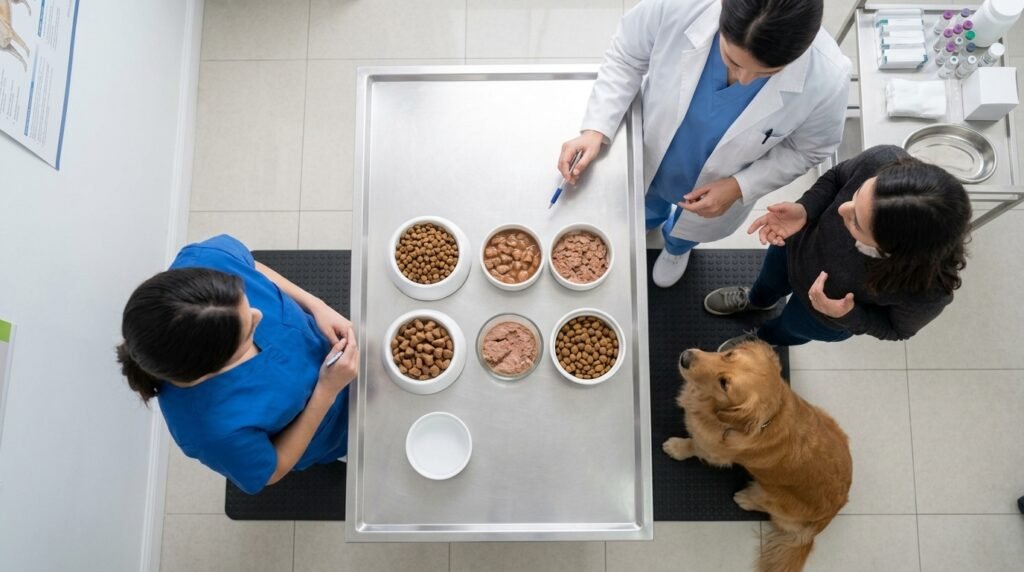
Hydrolyzed veterinary diets contain proteins broken into smaller components.
They are commonly used as part of veterinary dietary trials when food allergy or another food-responsive problem is suspected.
VCA’s current elimination-challenge diet guidance for dogs explains that gastrointestinal signs such as excess gas or loose stool can sometimes prompt investigation of food allergy, but a veterinarian should first assess the dog because many conditions can cause those signs.
A prescription hydrolyzed diet is therefore not simply a premium version of ordinary sensitive-stomach kibble. It has a specific clinical purpose.
Homemade Diets
Home cooking gives you substantial control over ingredients, which may sound ideal for a sensitive dog.
The nutritional challenge is balance.
Chicken, rice, vegetables, and other familiar foods can make a meal without necessarily supplying every essential nutrient in the correct amounts for long-term feeding.
If you are considering this route, read PawMindTips’ homemade dog food guide before replacing a complete commercial diet. Long-term home-prepared diets should ideally be formulated for the individual dog rather than improvised.
Are There Ingredients You Should Avoid?
This is where sensitive-stomach advice often becomes unnecessarily simplistic.
There is no universal list of ingredients that every sensitive dog must avoid.
For example, grain-free food is not automatically better for digestive sensitivity. Neither is a food automatically poor quality because it contains a grain, by-product, beet pulp, or a processed ingredient.
Look at the purpose of the ingredient and the quality of the overall formulation.
Similarly, avoid assuming that:
- Chicken is bad for all sensitive dogs.
- Beef is bad for all sensitive dogs.
- Corn always causes digestive problems.
- Grain-free automatically means easier digestion.
- “Natural” automatically means healthier.
- “Premium” proves superior nutrition.
- The first ingredient alone determines food quality.
- A short ingredient list guarantees good digestion.
The better strategy is to identify what your dog tolerates while evaluating nutritional adequacy and the entire formula.
Of course, genuinely unsafe foods are a separate issue. PawMindTips’ guide to dangerous dog food ingredients covers toxic ingredients such as xylitol, chocolate, grapes and raisins, onions, and garlic.
Digestive intolerance and toxicity should never be treated as the same thing.
Sensitive Stomach vs. Food Allergy
A dog can have digestive problems without having a food allergy.
Food allergy involves an immune response to dietary components. Food intolerance and other digestive reactions can occur through different mechanisms.
Food allergies can also produce skin-related signs, including persistent itching and recurring ear or skin problems.
If allergy is suspected, repeatedly jumping among retail foods can make the situation more confusing.
The Merck Veterinary Manual identifies dietary elimination followed by controlled challenge as the reliable method for diagnosing food allergy rather than simply assuming an ingredient is responsible.
During a genuine veterinary elimination trial, seemingly minor extras can matter, including treats and other flavored products.
Follow the prescribed trial strictly.
Do not add random treats because they seem harmless. Otherwise, you may be unable to tell whether the diet itself is working.
How to Switch to Sensitive-Stomach Dog Food
Even an appropriate new food can cause digestive trouble if you switch too abruptly.
Unless your veterinarian gives you different instructions, transition gradually.
A practical transition might look like:
Days 1–2: Mostly old food with a small amount of new food.
Days 3–4: Increase the proportion of new food.
Days 5–6: Feed mostly new food with a smaller amount of old food.
Day 7 onward: Move toward the new diet if your dog is tolerating the transition.
This is only a general framework.
Dogs with a history of significant gastrointestinal disease may need a slower or otherwise individualized transition. Conversely, certain medical situations may require a veterinarian to recommend an immediate dietary change.
During the transition, monitor:
- Stool consistency
- Vomiting
- Gas
- Appetite
- Energy
- Abdominal comfort
Try not to introduce new treats, chews, toppers, and supplements at the same time.
Changing five variables at once makes it nearly impossible to determine which change helped—or which caused a problem.

When a Sensitive Stomach Needs a Veterinarian
Food experimentation has limits.
Contact your veterinarian when digestive symptoms are persistent, recurrent, severe, or accompanied by other concerning changes.
Seek prompt veterinary attention for:
- Repeated vomiting
- Severe or persistent diarrhea
- Blood in the stool or vomit
- Black, tarry stool
- Significant abdominal pain
- A swollen or distended abdomen
- Marked weakness or lethargy
- Collapse
- Refusal to eat or drink
- Difficulty keeping water down
- Signs of dehydration
- Unexplained weight loss
- Repeated digestive episodes
Puppies, senior dogs, and dogs with existing medical conditions can also warrant earlier evaluation.
These symptoms may result from problems that changing food cannot diagnose or treat.
A veterinarian may need to investigate parasites, infection, pancreatitis, foreign-body obstruction, adverse food reactions, chronic enteropathy, or another medical condition.
The goal is not to find a bag of food capable of hiding symptoms. It is to determine why the symptoms are happening and then choose nutrition that fits the diagnosis.
Frequently Asked Questions
What is the best dog food for sensitive stomach problems?
The best dog food for sensitive stomach problems is a complete and balanced diet appropriate for your dog’s life stage, digestive needs, medical history, and individual tolerance. Some dogs benefit from highly digestible formulas, while others may require veterinarian-guided novel-protein, hydrolyzed, or therapeutic diets.
Is grain-free dog food better for sensitive stomachs?
Not automatically. Grain-free does not mean more digestible, and grains are not universally responsible for digestive sensitivity. Choose food based on your dog’s nutritional needs and response rather than using the absence of grains as a quality test.
What protein is easiest on a dog’s stomach?
There is no single protein that is easiest for every dog. Individual tolerance and the complete diet matter. If a veterinarian suspects an adverse food reaction, they may recommend a carefully selected novel-protein or hydrolyzed diet rather than randomly changing protein sources.
How long does it take a dog to adjust to new food?
Some dogs adjust within several days, while others need a slower transition. Gradually introducing a new food can reduce unnecessary digestive disruption. If diarrhea, vomiting, loss of appetite, or other symptoms become significant or persist, contact your veterinarian instead of continuing to experiment.
Conclusion
Choosing the best dog food for sensitive stomach problems is less about finding one universally superior brand and more about finding the nutritional approach that fits your individual dog.
Start with a complete and balanced diet appropriate for your dog’s life stage. Consider digestibility, protein sources, fiber, fat, calorie content, manufacturer information, and your dog’s actual response rather than relying solely on front-of-package claims such as “premium,” “natural,” “grain-free,” or “limited ingredient.”
Make dietary changes gradually and change one major variable at a time whenever possible.
And remember that “sensitive stomach” describes symptoms—it does not diagnose their cause.
Occasional mild digestive upset and chronic gastrointestinal disease are not the same situation. If your dog experiences persistent diarrhea, repeated vomiting, blood in the stool, weight loss, significant lethargy, abdominal pain, or recurring digestive problems, veterinary evaluation should come before another round of food experimentation.
The best food is ultimately the one that provides appropriate nutrition, fits your dog’s individual health needs, and keeps digestion, body condition, appetite, and overall well-being consistently on track.