The best answer depends on your dog, the context, and the full pattern of behavior. Look at multiple signals rather than one isolated action.
If you’ve ever wondered how much exercise does a dog need, you’re asking an important question. Regular physical activity helps dogs maintain a healthy body, manage their weight, stay mentally stimulated, and avoid boredom-related behaviors.
But there isn’t one number that works for every dog.
How much exercise a dog needs depends on several factors, including age, breed, health, energy level, personality, body type, and lifestyle. A relaxed senior dog may be perfectly comfortable with short walks and gentle activities, while a young working dog may need several hours of combined physical and mental activity throughout the day.
So instead of following a rigid exercise rule, it’s better to understand your dog’s individual needs and adjust the routine accordingly.
In this guide, you’ll learn how much exercise does a dog need each day, which factors matter most, how exercise needs change with age, how to recognize too little or too much activity, and how to create a practical routine your dog can enjoy.
Table of Contents
How Much Exercise Does a Dog Need Each Day?
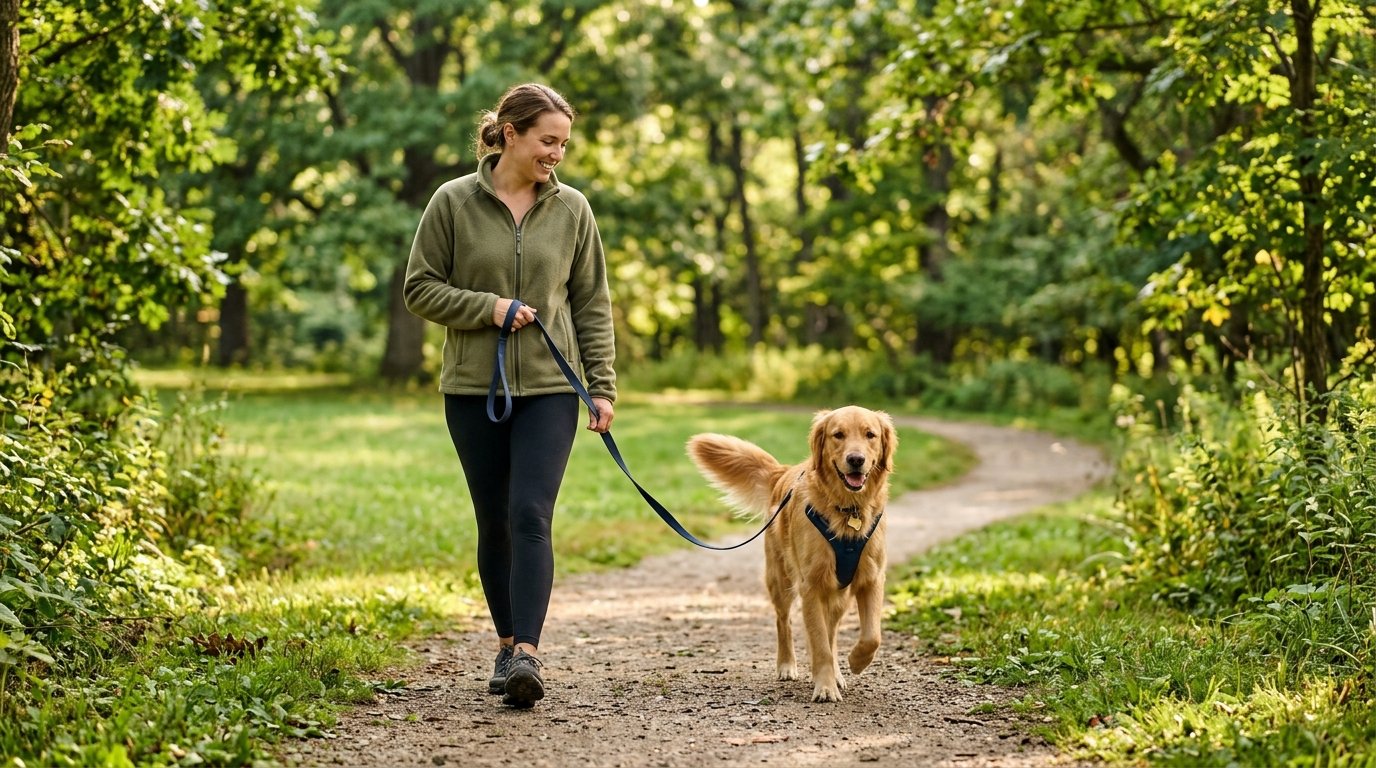
For many healthy adult dogs, daily activity can range from roughly 30 minutes to two hours or more, depending on the individual dog. Lower-energy dogs may need less, while active working, sporting, and herding breeds can require considerably more physical and mental stimulation.
That broad range explains why there is no universal answer to how much exercise does a dog need.
Chewy’s veterinary-reviewed guidance notes that some dogs may need around 20–30 minutes of activity, while highly active working, sporting, and herding dogs may need two to three hours of exercise and enrichment.
A better starting point is to ask:
Is my dog getting enough activity to stay healthy, mentally engaged, and comfortably tired without becoming exhausted or sore?
Your dog’s behavior can provide useful clues.
A dog that settles comfortably after activity, maintains a healthy body condition, and remains interested in normal daily activities may be receiving an appropriate amount.
On the other hand, persistent restlessness, destructive behavior, excessive attention-seeking, or an inability to settle may suggest that your dog’s physical or mental needs aren’t being fully met.
However, those behaviors can also have other causes, including anxiety, inadequate training, boredom, pain, or medical problems.
7 Factors That Determine How Much Exercise a Dog Needs
There is no single exercise schedule that works for every dog. When deciding how much exercise your dog needs, consider these seven factors.
1. Age
Age has a major effect on exercise requirements.
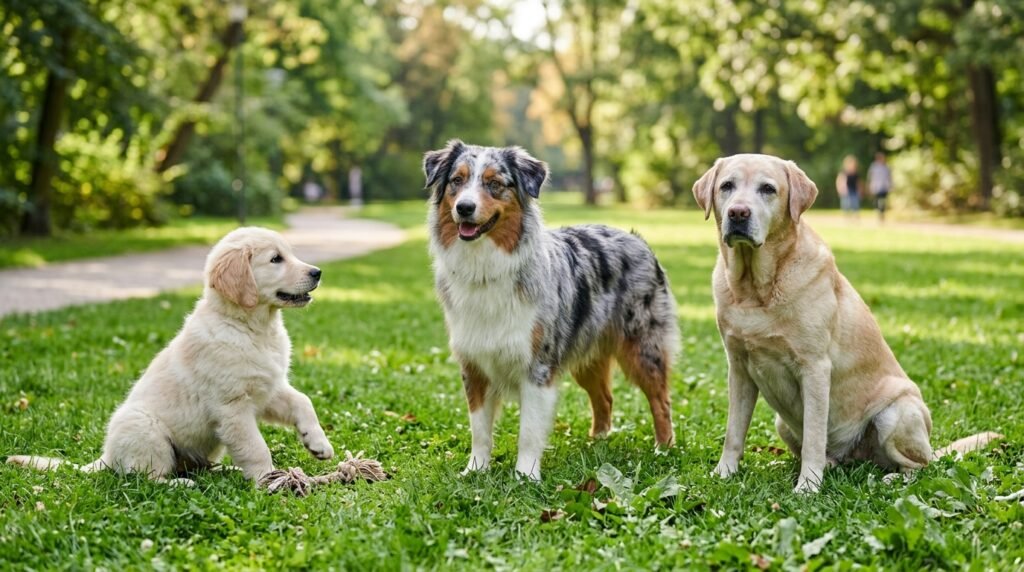
Puppies have plenty of energy, but that doesn’t mean they should receive long, strenuous workouts. Their bodies are still developing, so they generally benefit from short periods of age-appropriate activity followed by plenty of rest.
Good puppy activities include:
- Short walks
- Gentle play
- Safe exploration
- Basic training
- Sniffing games
- Food puzzles
- Supervised interaction with suitable dogs
Adult dogs usually have greater physical capacity, although their exercise requirements still depend heavily on breed and energy level.
Senior dogs often need continued daily movement, but their activity may need to become slower and lower impact.
When considering how much exercise does a dog need by age, think about physical development and current fitness rather than simply choosing a number based on the dog’s birthday.
A senior dog with arthritis, for example, may need a very different routine from a healthy senior dog with excellent mobility.
2. Breed
Breed can strongly influence exercise needs.
Dogs were developed for different purposes, and many breeds still retain the physical abilities and behavioral tendencies associated with their original jobs.
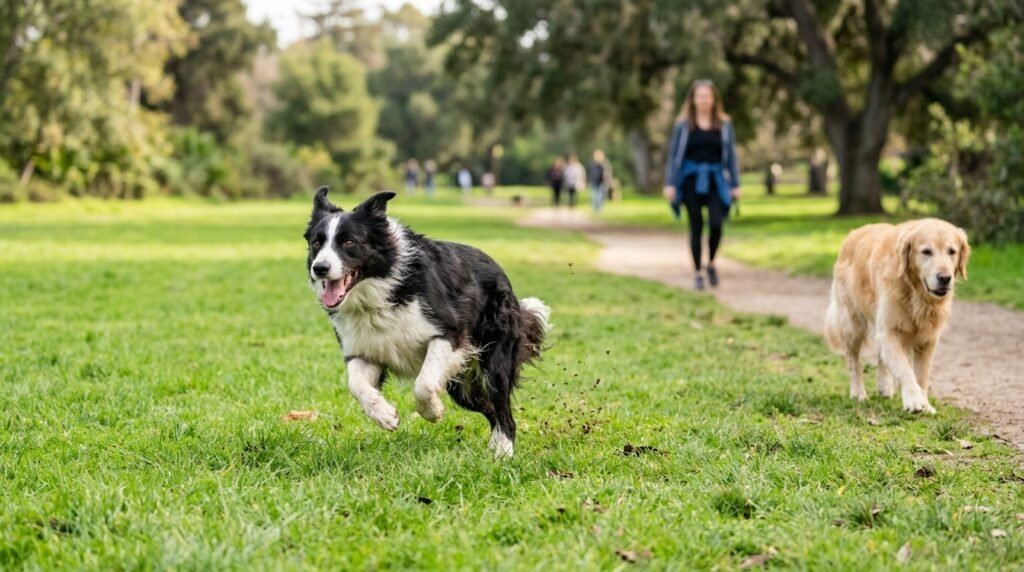
For example:
- Herding breeds may enjoy running, agility, training, and problem-solving.
- Sporting breeds often enjoy retrieving, swimming, hiking, and active games.
- Working breeds may need both physical activity and structured mental challenges.
- Terriers can have surprisingly high energy despite their smaller size.
- Lower-energy companion breeds may be satisfied with shorter walks and interactive play.
This is why how much exercise does a dog need based on breed can vary dramatically.
However, breed should be a starting point rather than a strict prescription.
Two dogs from the same breed can have very different energy levels. A mixed-breed dog may also inherit characteristics from several breeds, making individual observation particularly important.
3. Health
Health is another critical factor.
A healthy young adult dog may tolerate running, hiking, swimming, or extended play. A dog with arthritis, joint disease, obesity, heart disease, respiratory problems, or an injury may require a completely different approach.
Dogs recovering from surgery or illness may also have temporary exercise restrictions.
If your dog has a known medical condition, don’t rely on a generic internet exercise schedule. Your veterinarian can help determine which activities are appropriate and how quickly exercise should be increased.
This is especially important for dogs that experience:
- Limping
- Joint stiffness
- Breathing difficulty
- Exercise intolerance
- Chronic pain
- Unusual fatigue
- Mobility problems
The question isn’t only how much exercise does a dog need. It’s also what type of exercise is appropriate for that particular dog?
For some dogs, controlled low-impact activity may be more beneficial than high-impact running or jumping.
4. Energy Level
Energy level can differ substantially even among dogs of the same breed, age, and size.
Some dogs naturally prefer relaxing for much of the day. Others seem to have an endless supply of energy.
A high-energy dog may benefit from combining several activities, such as:
- Brisk walking
- Fetch
- Hiking
- Running when physically appropriate
- Training
- Scent work
- Agility
- Swimming
- Interactive play
A lower-energy dog may prefer shorter walks, gentle exploration, and several small activity sessions.
Don’t compare your dog’s exercise needs with another owner’s dog.
Instead, observe how your dog behaves before, during, and after activity.
If your dog remains restless after a reasonable workout, you may need to add more activity or mental stimulation. If your dog becomes unusually tired, sore, or reluctant to continue, the routine may be too demanding.
5. Personality
Personality is sometimes overlooked when people discuss how much exercise does a dog need, but it can make a noticeable difference.
Not every dog enjoys the same activities.
One dog may love chasing a ball. Another may become bored after five minutes of fetch but happily spend half an hour exploring new smells.
Some dogs prefer:
- Sniff walks
- Fetch
- Tug
- Swimming
- Hiking
- Training
- Puzzle toys
- Scent games
The best exercise routine is one your dog actually enjoys and can safely perform.
Mental stimulation also matters. Dogs experience the world heavily through their senses, especially smell, so allowing your dog time to sniff and investigate safe surroundings can make an ordinary walk more engaging.
A 30-minute exploratory walk may provide a very different experience from 30 minutes of walking quickly along the same route.
6. Size and Body Type
Size alone cannot tell you how much exercise a dog needs.
Some small dogs are extremely energetic, while some large dogs are relatively calm.
Body structure matters as well.
For example, brachycephalic, or flat-faced, dogs can have greater difficulty tolerating intense exercise, especially in hot or humid weather. Older dogs and overweight dogs can also be at increased risk of overheating.
A dog’s physical structure can influence which activities are appropriate.
Repeated jumping may not be suitable for every dog. Long-distance running may not be appropriate for a young puppy. A steep hike may be difficult for a dog with mobility problems.
Consider what your dog’s body can comfortably handle rather than focusing only on size or weight.
7. Lifestyle and Environment
Your dog’s everyday lifestyle can significantly change exercise requirements.
A dog that spends the day playing in a secure yard, training with its owner, exploring new environments, or interacting with other suitable dogs may already receive considerable stimulation.
A dog that spends most of the day sleeping indoors may need more structured activity.
Weather is another important consideration.
Hot and humid conditions can make exercise dangerous, while snow, ice, extreme cold, or poor air quality may also require changes to your normal routine.
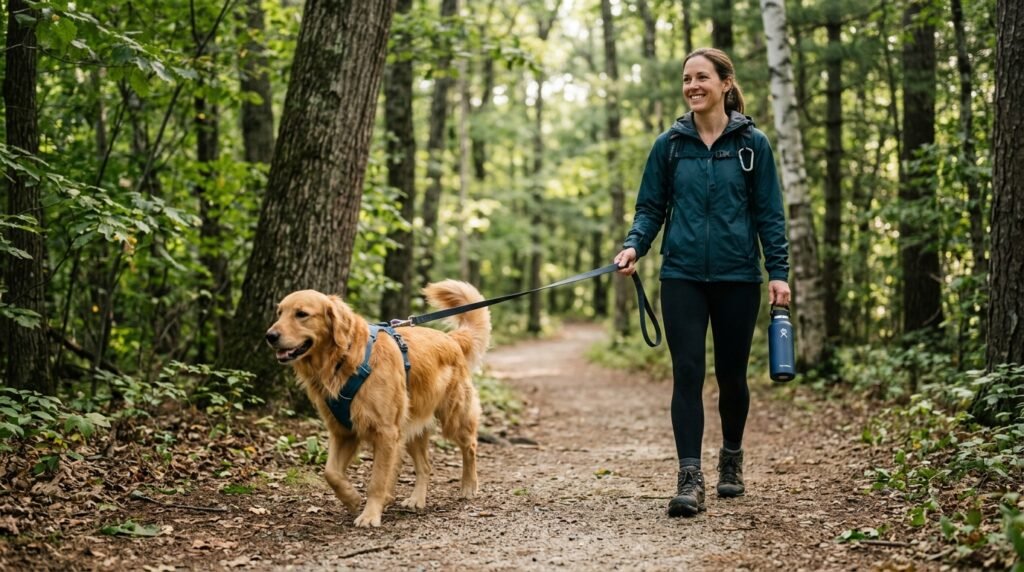
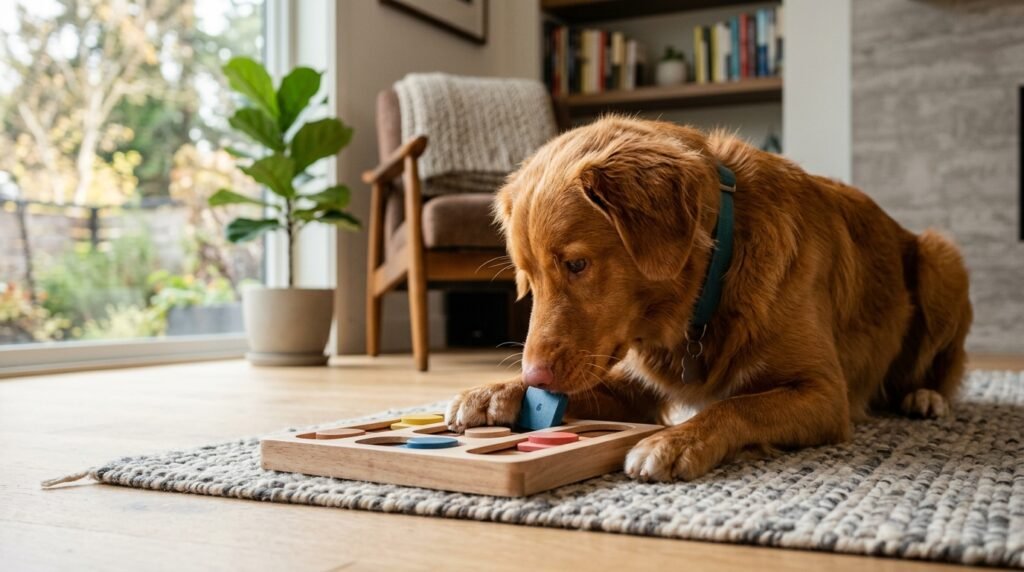
During extreme weather, consider replacing a long outdoor session with indoor activities such as:
- Puzzle toys
- Scent games
- Obedience practice
- Indoor fetch in a safe area
- Trick training
- Food-dispensing toys
Cornell University College of Veterinary Medicine warns that heatstroke can become a life-threatening emergency, particularly when dogs exercise in hot or humid conditions.
How Much Exercise Does a Dog Need at Different Life Stages?
Exercise requirements change as dogs grow older.
Puppies
Puppies need regular opportunities to move, play, explore, and learn, but they shouldn’t be treated like miniature adult athletes.
Short, age-appropriate sessions are generally better than prolonged strenuous exercise.
A puppy’s daily routine can include:
- Several short play sessions
- Brief walks
- Gentle exploration
- Training
- Scent games
- Interactive toys
- Rest periods
Avoid suddenly introducing long-distance running, repetitive jumping, or intense endurance workouts.
If you’re unsure about how much exercise does a dog need during puppyhood, ask your veterinarian about your puppy’s breed, growth pattern, joints, and current physical development.
Adult Dogs
Healthy adult dogs often have the greatest flexibility when it comes to exercise.
A moderate-energy adult might do well with around an hour of combined activity each day, while a high-energy working or sporting breed may need considerably more.
A balanced adult routine can combine:
- Walking
- Play
- Training
- Hiking
- Fetch
- Swimming
- Scent work
- Other appropriate activities
The key is variety.
Instead of trying to make every exercise session longer, combine physical movement with mental stimulation.
Senior Dogs
Senior dogs still benefit from regular movement.
However, exercise may need to become gentler as mobility and stamina change.
Appropriate activities can include:
- Short walks
- Slow sniff walks
- Gentle play
- Controlled swimming
- Easy training
- Food puzzles
- Scent activities
Watch for changes in mobility.
If your older dog begins limping, struggles to stand, refuses activities they previously enjoyed, or appears painful after exercise, contact your veterinarian.
The goal is to preserve mobility and quality of life—not to exhaust an aging dog.
How Do You Know If Your Dog Needs More Exercise?
Understanding how much exercise does a dog need becomes easier when you learn to recognize behavioral clues.
A dog that isn’t receiving enough physical or mental stimulation may show:
- Restlessness
- Destructive chewing
- Excessive barking
- Repeated attention-seeking
- Difficulty settling
- Weight gain
- Excessive excitement
- Persistent attempts to initiate play
GoodRx also identifies behaviors such as restlessness, destructive behavior, excessive barking, and weight gain as signs that owners may need to evaluate their dog’s activity level and overall health.
But don’t automatically assume that every unwanted behavior means your dog needs more exercise.
For example, destructive behavior could be caused by separation anxiety, stress, lack of training, or another behavioral issue.
A sudden change in behavior should also raise the possibility of pain or illness.
A practical approach
If your dog is healthy and your veterinarian hasn’t recommended exercise restrictions, try making a modest adjustment to the daily routine.
For example, you might add:
- A 10-minute sniff walk
- A short training session
- A scent game
- An additional play session
Then observe your dog.
If your dog becomes comfortably relaxed and continues behaving normally, the additional activity may be helpful.
If your dog becomes unusually tired, sore, stiff, or reluctant to move afterward, reduce the intensity and consider whether veterinary advice is needed.
Can a Dog Get Too Much Exercise?
Yes.
More exercise isn’t always better.
Dogs can become exhausted, overheated, sore, or injured when activity is increased too quickly or becomes excessive.
This is particularly important for:
- Puppies
- Senior dogs
- Overweight dogs
- Dogs recovering from injury
- Dogs with medical conditions
- Dogs that are normally sedentary
Signs that your dog may be struggling include:
- Excessive panting
- Slowing down dramatically
- Refusing to continue
- Limping
- Stiffness
- Weakness
- Vomiting
- Difficulty breathing
- Collapse
- Unusual confusion
Heatstroke is especially serious. Cornell identifies heavy panting, drooling, vomiting, diarrhea, weakness, and collapse among potential signs of heatstroke.
If you notice severe symptoms during or after exercise, stop the activity and seek veterinary care.
Never assume that an enthusiastic dog will always know when to stop.
7 Ways to Give Your Dog Enough Daily Exercise
Once you understand how much exercise does a dog need, the next question is how to provide it.
1. Take Regular Walks
Walking is one of the easiest ways to build daily activity into your dog’s routine.
Don’t feel pressured to make every walk fast.
Allow your dog to sniff and investigate safe surroundings.
This provides physical movement while also giving your dog valuable environmental stimulation.
2. Play Fetch
Fetch can provide short bursts of energetic activity.
However, repetitive high-speed chasing isn’t appropriate for every dog.
Use a safe area and stop if your dog becomes tired, overheated, or reluctant to continue.
3. Try Scent Games
Scent work is an excellent option when you want to challenge your dog’s brain.
Hide treats around a safe room or yard and encourage your dog to find them.
You can also create simple scent trails or use appropriate puzzle toys.
4. Practice Training
Training can be surprisingly tiring for dogs.
Practice:
- Sit
- Stay
- Recall
- Place
- Leave it
- Tricks
- Impulse control
Short sessions are usually easier to maintain than one long training session.
5. Go Hiking
Healthy adult dogs that enjoy longer walks may benefit from hiking.
Choose terrain appropriate for your dog’s fitness and physical ability.
Bring water and take breaks when needed.
6. Consider Swimming
Swimming can provide low-impact exercise for dogs that enjoy the water.
Introduce water gradually and supervise your dog at all times.
Never force a dog into water.
7. Combine Physical and Mental Exercise
The most effective routine doesn’t necessarily involve making walks longer.
Instead, combine physical activity with mental challenges.
For example:
Morning: 20–30 minute walk with sniffing
Afternoon: 10-minute training session
Evening: Walk plus interactive play
This type of routine gives your dog several opportunities to move, explore, learn, and interact with you.
How to Build the Right Daily Exercise Routine
When deciding how much exercise does a dog need every day, avoid trying to copy another dog’s schedule.
Start with your dog’s:
- Age
- Breed
- Health
- Energy level
- Personality
- Body type
- Lifestyle
Then choose activities your dog enjoys.
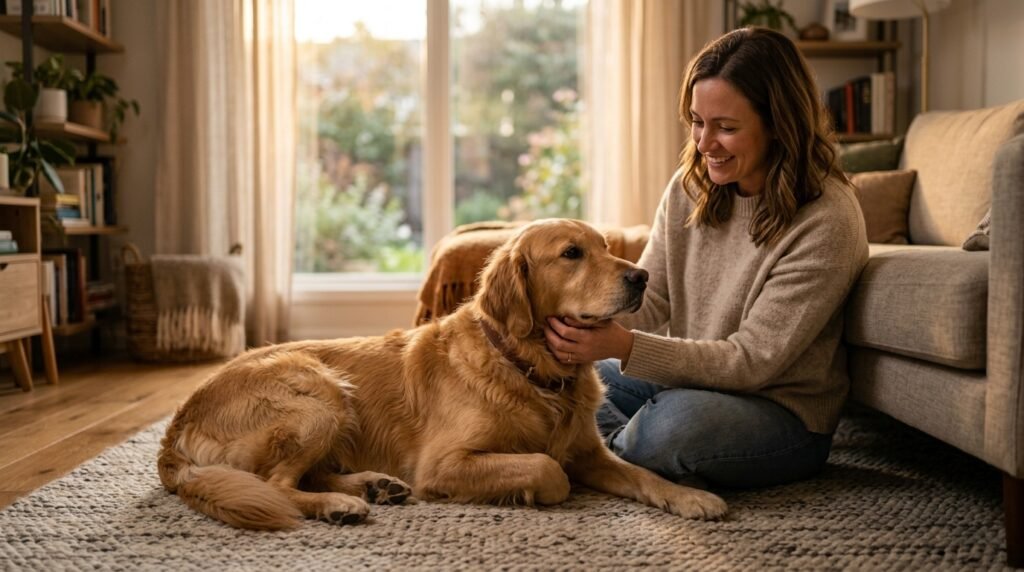
For a healthy moderate-energy adult dog, a sample routine might look like:
Morning
20–30 minutes: Walk, allowing time for sniffing and exploration.
Afternoon
10–15 minutes: Training, puzzle toy, or scent game.
Evening
20–30 minutes: Walk followed by moderate interactive play.
This is only an example—not a universal prescription.
A high-energy working dog may require significantly more activity. A senior dog may need shorter, gentler sessions.
The most important principle is gradual adjustment.
If your dog has been inactive, don’t suddenly increase exercise dramatically.
Gradually increase duration or intensity while monitoring how your dog responds.
Cornell’s veterinary guidance also emphasizes gradual increases in activity rather than suddenly demanding strenuous exercise from an unconditioned dog.
FAQs
How much exercise does a dog need every day?
The answer depends on the dog’s age, breed, health, energy level, personality, and lifestyle. Some dogs may do well with 20–30 minutes of activity, while active working or sporting dogs may need two hours or more of combined exercise and enrichment.
Is 30 minutes of exercise enough for a dog?
Thirty minutes may be enough for some lower-energy dogs, but it may not be enough for a young, active, or working breed. Instead of treating 30 minutes as a universal rule, evaluate your dog’s behavior, physical condition, and individual needs.
How much exercise does a puppy need?
Puppies generally benefit from short, age-appropriate periods of activity, play, exploration, and training rather than long strenuous workouts. Because puppies are still developing, ask your veterinarian for breed- and age-specific guidance.
How much exercise does a senior dog need?
Senior dogs still need regular movement, but they may benefit from shorter, lower-impact sessions. Their routine should account for mobility, arthritis, weight, stamina, and other health factors.
Can a dog get too much exercise?
Yes. Excessive exercise can cause fatigue, soreness, injury, and overheating. Puppies, senior dogs, overweight dogs, and dogs with health conditions may require additional caution.
What are the signs that my dog needs more exercise?
Restlessness, destructive behavior, excessive attention-seeking, difficulty settling, weight gain, and persistent energy can indicate that your dog’s physical or mental needs aren’t being fully met. However, these behaviors can have other causes, so sudden or severe changes should be discussed with a veterinarian.
Conclusion
So, how much exercise does a dog need? There isn’t one perfect number for every dog.
Your dog’s age, breed, health, energy level, personality, body type, and lifestyle all influence the right amount and type of activity.
Instead of focusing entirely on minutes, create a balanced routine that combines physical exercise, mental stimulation, rest, and activities your dog genuinely enjoys.
For some dogs, that might mean several short walks and training sessions. For others, it could include hiking, running, swimming, agility, or longer periods of active play.
The key is to start at an appropriate level, increase activity gradually, and pay attention to your dog’s response.
If your dog develops pain, limping, unusual fatigue, breathing difficulty, or signs of overheating, stop the activity and consult your veterinarian.
The goal isn’t to make your dog exhausted.
The goal is to help your dog stay healthy, mentally engaged, physically comfortable, and happy.
Key Takeaways
- Consider the context around the behavior.
- Look for patterns instead of relying on one signal.
- Seek qualified help when behavior is sudden, severe, or unsafe.
Frequently Asked Questions
Is every behavior a sign of the same emotion?
Not necessarily. Dogs use combinations of signals, and context matters.
When should I contact a professional?
Consider veterinary or qualified behavior support for sudden, severe, escalating, or safety-related concerns.