How do dogs apologize to humans? There is no established evidence that dogs offer apologies in the same way people do. Behaviors such as crouching, looking away, licking, or approaching cautiously may reflect fear, appeasement, or a desire for social contact. They do not, by themselves, prove guilt or remorse.
Those behaviors can look exactly like a human apology. But canine communication is more nuanced. Dogs do not have to think, “I broke a rule, therefore I should say sorry,” for their behavior to function as reconciliation. In many cases, they are responding to social tension and communicating that they want the interaction to become safe and calm again.
That distinction matters. Research on the famous “guilty look” suggests that dogs can display these behaviors in response to human scolding even when they did not actually commit the supposed offense. In other words, a dog can look apologetic without necessarily understanding the event as a moral mistake.
So, how do dogs apologize to humans in everyday life? The best answer is to watch the whole body, the timing, and what happens immediately before and after the behavior.
So, do dogs apologize to humans? Not in exactly the same deliberate way that people apologize. However, dogs can respond to social tension and use behaviors that may help reduce conflict and restore connection. A lowered posture, cautious approach, gentle licking, offering a toy, or choosing to stay nearby may be part of that social response.
Important: The signs below should be understood as possible appeasement or reconciliation behaviors, not proof that a dog experiences human-style guilt or remorse.
Table of Contents
How Do Dogs Apologize to Humans? Start With Canine Body Language
Before interpreting any single behavior as an apology, look at the context. Dogs communicate through posture, facial expression, tail and ear position, movement, vocalization, scent, and touch. Veterinary behavior guidance emphasizes that the same action can have different meanings depending on the dog’s emotional state and the surrounding signals.
For example, a dog rolling onto their back may be inviting a belly rub when relaxed, but the same posture can be an appeasement display when the dog is tense, avoiding eye contact, holding the tail low, or freezing.
That is why how do dogs apologize to humans is not really a question about one magic gesture. It is a question about a sequence of social signals.
The difference between apology and appeasement
Humans usually define an apology as recognition of wrongdoing followed by an attempt to repair the relationship. Dogs may perform behaviors that serve the second part—reducing tension and restoring social contact—without showing evidence of the first part.
A 2009 study by Alexandra Horowitz found that the behaviors owners commonly call a “guilty look” were more strongly associated with owner scolding than with whether the dog had actually disobeyed.
This does not make your dog’s behavior meaningless. Quite the opposite. It tells you that the dog is paying attention to you and responding to your emotional and physical cues.
Understanding how do dogs apologize to humans starts with recognizing that a small, quiet posture is often about reducing pressure rather than admitting wrongdoing.
How Do Dogs Apologize to Each Other?
Dogs may show friendly contact or other affiliative behaviors after conflict. Researchers have studied reconciliation between dogs, but this does not establish that dogs understand wrongdoing or apologize as humans do. A play bow, head turn, or muzzle lick must be interpreted in context. Findings about dog-to-dog interactions should not automatically be treated as proof of an apology to a person.
1. Your Dog Makes Their Body Look Small
One of the clearest behaviors people notice when asking how do dogs apologize to humans is the sudden “shrinking” of the dog.
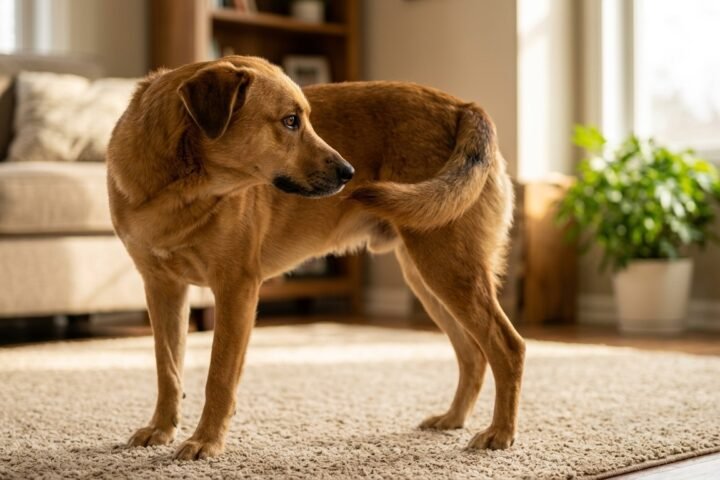
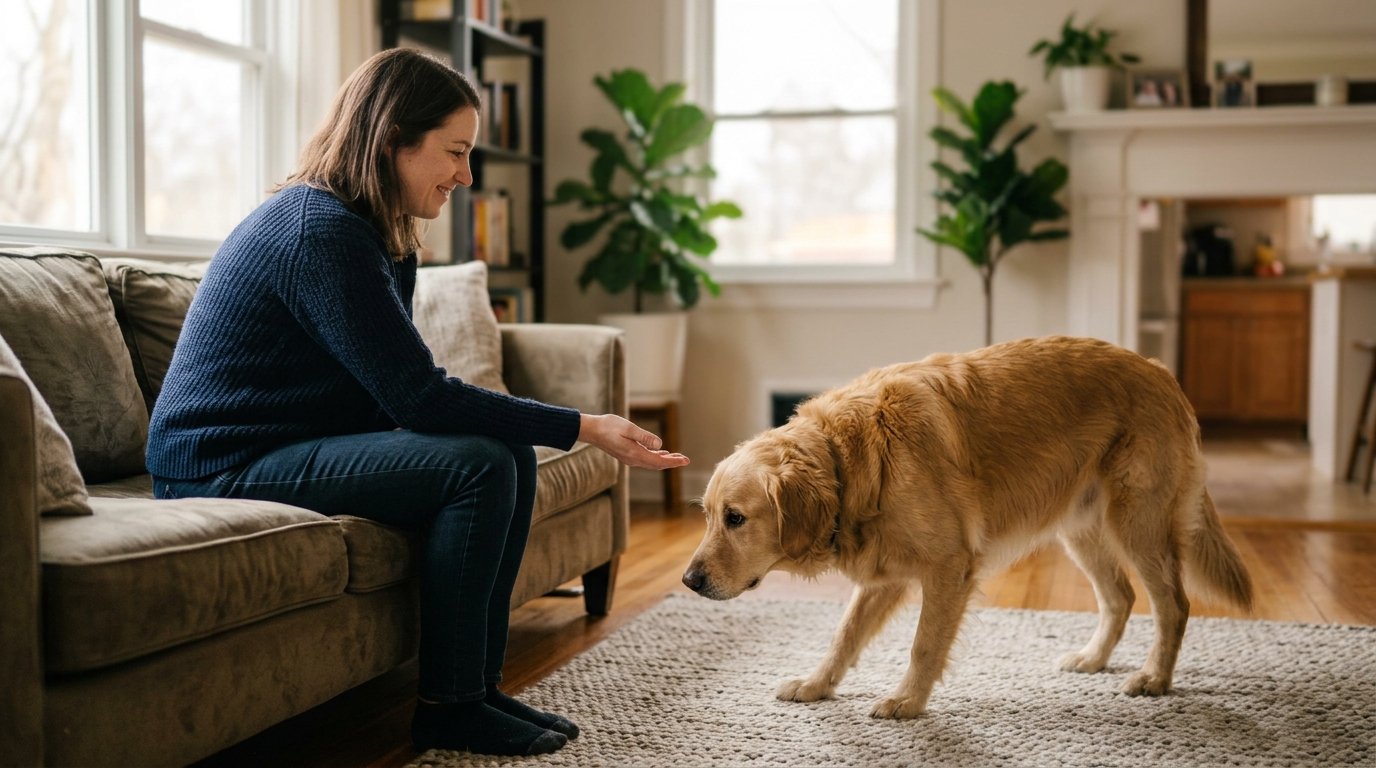
After a tense moment, a dog may lower their head and neck, crouch, flatten their ears, avoid direct eye contact, lower their tail, or press their body closer to the floor. These are classic appeasement signals. Our dog body language resources cover similar communication cues. VCA describes lowered posture, averted gaze, low tail carriage, crouching, and rolling over as signals that can communicate a desire to reduce a perceived threat.
The message is less “I understand my moral mistake” and more “I do not want this conflict to continue.”
That is an important distinction for owners. If your dog is already displaying fear or appeasement, continuing to scold may increase stress rather than teach the lesson you intended.
What should you do?
- Lower your own intensity: Avoid looming over the dog, staring directly into their eyes, grabbing them, or continuing a confrontation. Give them a little space and use a calm voice.
- Manage the environment: If the behavior involved something dangerous or destructive, deal with the environment and teach an alternative behavior later. The tense moment is usually a poor time for a long lecture.
Understanding how do dogs apologize to humans helps you read communication instead of treating appeasement as proof of guilt. You can also explore our pet care guidance for everyday relationship-building.
2. They Suddenly Become a Wiggle Machine
Another clue in how do dogs apologize to humans can appear when the tension finally breaks.
Imagine that your dog has been unusually still while you are frustrated. Then your voice softens. You stop confronting them. Suddenly their tail begins moving, their rear end wiggles, their body becomes loose, and they bounce toward you.
That does not necessarily mean the dog instantly forgot what happened. It can be a visible shift from tension toward social engagement.
Dogs often use movement to communicate emotional state, and a loose, wiggly body generally means something very different from a rigid body, fixed stare, or tightly held tail. VCA recommends reading the entire posture rather than interpreting a tail wag in isolation.
Watch for the full-body change
A relaxed dog may have a soft face, loose muscles, natural ear position, and fluid movement. A stressed dog can wag while remaining tense. That is why the body matters more than the tail alone.
If your dog moves from stiff and withdrawn to loose and social, you are seeing useful information: the emotional temperature of the interaction has changed.
3. They Bring You a Favorite Toy or Object
A surprisingly touching answer to how do dogs apologize to humans is the sudden appearance of a favorite toy.
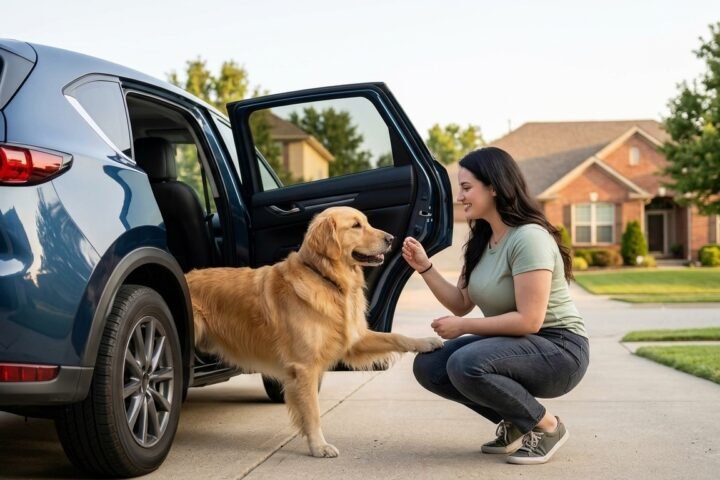
You might correct your dog for chewing something inappropriate, walk away, and then notice them approaching with a ball, rope, stuffed toy, or another familiar object. They may hold it gently, wag slowly, or simply stand nearby and watch your reaction.
Sometimes this is just an invitation to play.
Bringing a toy may be an invitation to play or a learned way to get attention. Even when it happens after a tense interaction, it does not demonstrate an apology. Notice whether your dog is relaxed and voluntarily seeking interaction, rather than assigning a specific intention to the toy.

How should you respond?
- If the dog is relaxed: Calmly acknowledge the offering. You can take the toy, offer a gentle game, or simply praise the calm approach.
- If the dog is tense: Do not snatch the object away. Let them choose whether to remain close. Respecting the dog’s signals helps prevent an already stressful situation from becoming more intense.
4. They Lick Your Hands or Face
If you are researching how do dogs apologize to humans, licking is probably one of the behaviors you have seen most often.
Dogs lick for many reasons. Licking can be social, attention-seeking, exploratory, food-related, or associated with stress and appeasement. Veterinary behavior resources describe lip licking and related signals as context-dependent signs that can occur when a dog is cautious, concerned, or trying to reduce social tension.
After conflict, an unprompted approach followed by gentle licking can be an affiliative or appeasing gesture. Your dog may be attempting to reestablish contact without using force or escalating the interaction.
That is why timing matters so much.
A dog licking you while relaxed on the couch is not automatically apologizing. A dog licking your hand immediately after a stressful interaction, while keeping their body low and avoiding confrontation, is giving you a much richer set of signals.
Should you always allow licking?
Not necessarily. You are allowed to have boundaries. If you do not want your face licked, calmly redirect your dog without turning the moment into another confrontation.

The important lesson is not that every lick equals “sorry.” The lesson is that licking can be part of a dog’s social communication, and context tells you more than the behavior alone.
5. They Roll Onto Their Back and Go Very Still
The fifth behavior is where how do dogs apologize to humans becomes especially easy to misunderstand.
A dog may roll onto their back, expose their belly, keep their paws raised, turn their head away, and become unusually still. Many owners see a belly and immediately think, “They want a belly rub.”
Sometimes they do.
But a belly-up posture is not automatically an invitation for touch. VCA notes that submissive rolling can indicate fear or deference and should not automatically be interpreted as a request for petting. The surrounding body language matters.
If the dog is loose, playful, wiggly, and actively soliciting your hand, a belly rub may be welcome. If the dog is frozen, tense, avoiding eye contact, holding the tail low, or showing other appeasement signals, the same posture can mean something very different.
The best response is often less touch, not more
If your dog rolls over in a tense moment, pause. Keep your posture relaxed. Avoid reaching directly over them. Give them the opportunity to get up and move when they feel comfortable.
A dog that exposes their vulnerable underside is communicating something important about the social situation, but the safest interpretation is not “my dog is surrendering because they know they were wrong.”

It is more accurate to say that the dog may be using a strong appeasement signal to reduce perceived conflict.
6. They Quietly Follow You From Room to Room
The most subtle answer to how do dogs apologize to humans may be the one that looks like nothing at all.
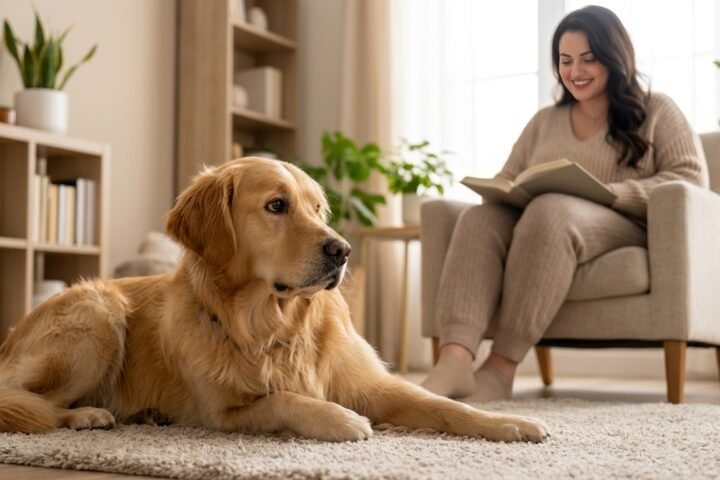
After a disagreement, your dog may not lick you, bring a toy, or demand attention. Instead, they simply stay nearby.
You walk into the kitchen and they lie near the doorway. You move to the couch and they settle a few feet away. You go to another room and they quietly follow.
That behavior can be meaningful because dogs are highly social animals, and proximity itself can be part of social communication. Merck Veterinary Manual notes that dogs communicate through body postures, facial expressions, tail and ear positions, vocalizations, scents, and touch, and that they are highly social animals.
Still, we should avoid claiming that every quiet follower is consciously trying to repair a broken relationship. Dogs may follow because they want company, anticipate food, prefer a particular room, or have learned that their owner is a source of security.
The strongest clue is the sequence: tension, cautious distance, then voluntary proximity and relaxation.
Give them the choice to reconnect
This is one situation where doing less can be better.

If they eventually approach with a loose body and relaxed expression, you can offer calm affection or a reward. Respecting choice is part of building trust.
What the “Guilty Look” Really Means
When people ask how do dogs apologize to humans, they often start with the classic guilty face: lowered head, tucked tail, flattened ears, wide eyes, and avoidance.
It is one of the most emotionally convincing expressions a dog can give you. The American Kennel Club’s overview of dog guilt summarizes the same research caution. But scientific evidence tells us to be careful about calling it guilt.
Horowitz’s study found that the behaviors associated with the “guilty look” increased when owners scolded their dogs, regardless of whether the dogs had actually disobeyed. A later study of owners’ reports also found that owners were not reliably able to determine from greeting behavior whether their dogs had committed the supposed transgression.
For a broader look at canine emotions, our dog psychology category provides related guidance. This is why the phrase “apology” should be used carefully.
Your dog may not be thinking, “I know I chewed the shoe, and I regret it.” Instead, they may recognize that you are angry, worried, disappointed, or behaving differently than usual. Their body language then attempts to reduce the social pressure.
Do Dogs Get Their Feelings Hurt?
Dogs can experience fear and stress, and they may respond to a person’s tone, posture, and previous interactions. However, we cannot identify a specific human-like emotion from an expression alone. A dog that looks “hurt” may be frightened, uncertain, or avoiding conflict. Respond by reducing pressure and allowing space rather than assuming the dog is trying to apologize or make you happy.
What to Do When Your Dog Tries to Reconnect
Understanding how do dogs apologize to humans is useful only if it changes what you do next.
- Lower the emotional intensity: If the dog is showing appeasement, stop escalating. A calm voice and relaxed posture are more useful than another round of scolding. VCA specifically notes that persistent punishment can increase fear and defensive responses in dogs showing deference or appeasement.
- Give your dog space to recover: Stop the confrontation and allow your dog to move away. Do not reach for an object the dog is guarding. Once your dog is relaxed, offer an appropriate activity or a familiar, easy cue. If the dog remains tense or avoids you, allow more space instead of asking for interaction.
- Do not force physical affection: A dog approaching you does not automatically mean they want to be hugged or held. Watch for loose muscles, voluntary approach, relaxed facial expression, and continued willingness to stay.
- Reward the behavior you want: If your dog calmly approaches, settles, releases an object, or follows a cue after a difficult moment, reinforce that useful behavior. Reward-based training gives dogs clear information about what will work in the future.
- Prevent the original problem: If your dog repeatedly destroys objects, jumps on people, guards resources, or reacts aggressively, the solution is not simply to accept the apology. Identify the trigger and teach an alternative response. For serious fear or aggression, work with a qualified veterinary behavior professional.
FAQ: How Do Dogs Apologize to Humans?
Do dogs actually know when they did something wrong?
Not necessarily. Research on the “guilty look” suggests that many behaviors owners interpret as guilt are strongly influenced by human cues such as scolding. Dogs can learn household rules, but that does not mean they experience wrongdoing exactly as humans do.
How do dogs apologize to humans after being scolded?
They may lower their body, avoid direct eye contact, lick, approach cautiously, offer a toy, become loose and wiggly when tension ends, or stay near you without demanding contact. These behaviors are best interpreted in context as possible appeasement or reconciliation signals.
Should I hug my dog when they look guilty?
Not automatically. If the dog is tense, frozen, avoiding contact, or showing appeasement signals, give them space rather than forcing affection. Some dogs enjoy belly rubs, while a belly-up posture in a tense situation can indicate submission or fear.
How Do Dogs Say Sorry to Humans?
Dogs may appear to say sorry by using behaviors that reduce tension and encourage social connection. Depending on the situation, your dog might lower their body, avoid direct eye contact, lick your hand, bring you a favorite toy, become loose and wiggly, or quietly stay near you.
However, how dogs say sorry to humans is not about one specific gesture. These behaviors are better understood as possible appeasement, reconciliation, or attempts to restore a calm social interaction rather than proof that a dog experiences human-style guilt.
Conclusion
So, how do dogs apologize to humans?
If you have ever wondered, “How do dogs say sorry to humans?” the answer is usually found in a combination of body language, timing, and attempts to reconnect rather than one specific apology gesture.
They do not use a single canine version of the human word “sorry.” Instead, they may use a collection of social behaviors that reduce tension and reopen the door to connection: making themselves small, becoming loose and wiggly, offering a favorite object, licking, rolling over in appeasement, or quietly staying near you.
The most important part is not deciding whether your dog feels guilt exactly as you do. It is learning to recognize what their body is communicating in the moment.
If your dog approaches after a difficult interaction, resist the urge to punish the “guilty” expression. Look at the whole body. Lower your intensity. Give them a safe way to calm down. Then teach the behavior you want when everyone is relaxed.
That is how a confusing moment can become a trust-building moment.