The best answer depends on your dog, the context, and the full pattern of behavior. Look at multiple signals rather than one isolated action.
Reverse sneezing in dogs can be alarming the first time you see it. Your dog may suddenly stop, stretch out their neck, make repeated snorting or honking sounds, and appear to be struggling to breathe.
Fortunately, a typical episode of reverse sneezing in dogs is often brief. Many dogs return to their normal behavior within seconds or minutes.
Still, it is important to understand what you are seeing. Some breathing problems, coughing episodes, and choking events can look similar. Knowing the common signs can help you stay calm while also recognizing when veterinary attention may be necessary.
This guide explains what reverse sneezing looks like, the most common triggers, what you can do during an episode, and when unusual symptoms should be checked by a veterinarian.
Table of Contents
What Is Reverse Sneezing in Dogs?
Reverse sneezing in dogs is a sudden episode of repeated, forceful inhalation through the nose. Unlike a normal sneeze, which pushes air outward, a reverse sneeze involves rapidly pulling air inward.
During an episode, your dog may:
- Stop suddenly
- Extend the head and neck
- Stand with a stiff posture
- Make loud snorting or honking sounds
- Rapidly inhale through the nose
- Appear briefly distressed
The episode can look dramatic, but many dogs return to normal immediately afterward.
Reverse sneezing is sometimes described as paroxysmal respiration. It can occur when the nasal passages, throat, or soft palate become irritated.
Why Does Reverse Sneezing in Dogs Happen?
The exact cause is not always obvious. However, reverse sneezing in dogs is often associated with irritation affecting the nose, throat, or upper airway.
Possible triggers include environmental irritants, allergies, excitement, pressure around the neck, anatomical factors, and certain medical conditions.
Understanding the circumstances surrounding each episode can help identify a possible pattern.
Here are seven common causes.
1. Dust, Pollen, and Environmental Irritants
Dust, pollen, grass particles, smoke, perfumes, and aerosol sprays can irritate a dog’s sensitive nasal passages.
For some pets, exposure to these irritants may trigger reverse sneezing in dogs, particularly during walks or while sniffing through grass and vegetation.
Potential irritants include:
- Dust
- Pollen
- Smoke
- Air fresheners
- Perfumes
- Cleaning sprays
- Grass particles
- Other airborne substances
If your dog repeatedly has episodes in the same environment, try to identify possible triggers.
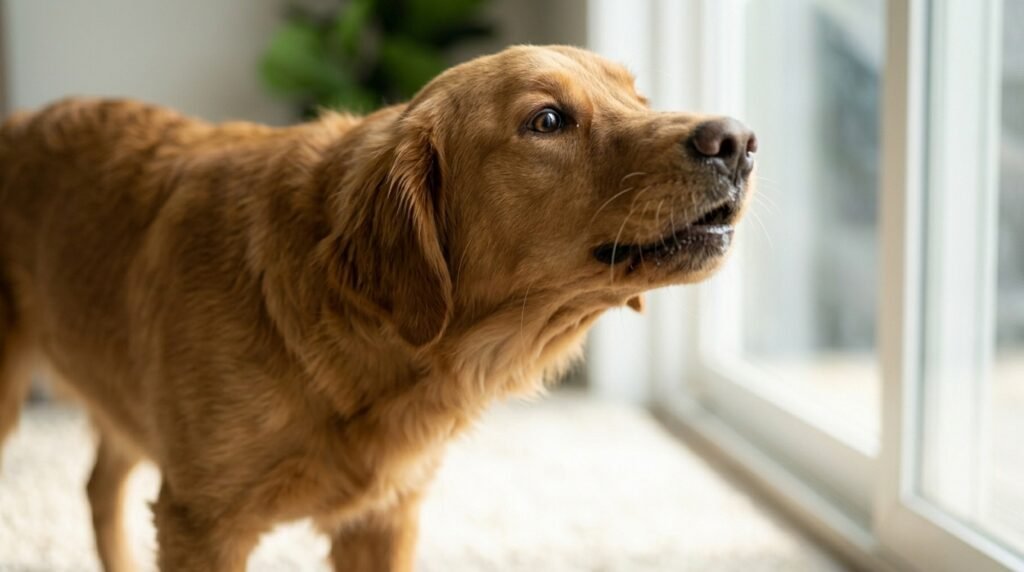
Reducing unnecessary exposure to strong fragrances and airborne irritants may help some sensitive dogs.
2. Allergies and Airway Sensitivity
Environmental or seasonal allergies may contribute to irritation in some dogs.
You may notice more frequent episodes during particular times of the year or after exposure to grass, pollen, or dusty environments.
However, recurring reverse sneezing in dogs should not automatically be blamed on allergies. Frequent or worsening symptoms may need veterinary evaluation.
Pay attention to whether your dog also experiences:
- Itchy skin
- Watery eyes
- Nasal discharge
- Frequent sneezing
- Coughing
Recording these symptoms can help your veterinarian identify patterns.
3. Excitement and Sudden Changes in Breathing
Some dogs experience episodes after becoming overly excited.
Common situations may include:
- Greeting visitors
- Playing intensely
- Barking repeatedly
- Running suddenly after resting
- Eating or drinking
Excitement can change a dog’s breathing pattern and may contribute to irritation in sensitive dogs.
If your dog regularly experiences reverse sneezing in dogs after certain activities, take note of the timing and circumstances.
A short video can also be useful when discussing the episodes with your veterinarian.
4. Pressure From Collars or Leashes
Pressure around the neck and throat may irritate the upper airway.
Dogs that pull strongly against a collar may experience repeated irritation in this area.
If episodes tend to happen during walks, consider whether your dog’s collar is properly fitted.
A comfortable harness may reduce unnecessary pressure around the neck for some dogs.
While changing equipment will not prevent every case of reverse sneezing in dogs, it may be helpful when neck pressure appears to be a consistent trigger.
5. Breed and Airway Anatomy
Some dogs may be naturally more prone to noisy breathing or upper-airway irritation.
Flat-faced breeds, also called brachycephalic breeds, may experience respiratory noises more frequently because of their facial and airway anatomy.
Examples include:
- Pugs
- Bulldogs
- Boston Terriers
- Shih Tzus
- Pekingese
Small dogs may also experience episodes, although reverse sneezing in dogs can occur in breeds of all sizes.
If your dog belongs to a breed with known airway challenges, avoid assuming that every breathing sound is harmless. Persistent breathing problems should always be evaluated by a veterinarian.
6. Nasal Irritation or Foreign Material
Sometimes something irritating the nasal passages may trigger repeated episodes.
Possible causes include:
- Grass seeds
- Dust or debris
- Nasal irritation
- Upper respiratory infections
- Other foreign material
Dogs that suddenly begin experiencing frequent reverse sneezing in dogs, especially after sniffing through tall grass or bushes, may need veterinary attention.
Other warning signs can include nasal discharge, nosebleeds, repeated pawing at the nose, or persistent discomfort.
7. An Underlying Medical Problem
Although many episodes are harmless, reverse sneezing in dogs can sometimes occur alongside another condition affecting the respiratory system or upper airway.
A veterinarian may consider possible issues such as:
- Respiratory infections
- Nasal conditions
- Foreign objects
- Airway abnormalities
- Other causes of unusual breathing
This does not mean that every reverse sneeze is serious.
The important factor is the overall pattern. Frequent, worsening, prolonged, or unusual episodes deserve professional evaluation.
What to Do During Reverse Sneezing in Dogs
The first thing to do is stay calm.
Your dog may appear frightened or uncomfortable, but panic can make the situation more stressful for both of you.
During a typical episode of reverse sneezing in dogs, you can:
Stay Nearby and Observe
Allow your dog space while carefully watching what happens.
Avoid grabbing, shaking, or forcefully restraining your dog.
Speak Calmly
Use a calm and reassuring voice. Some dogs settle more quickly when the environment becomes quieter.
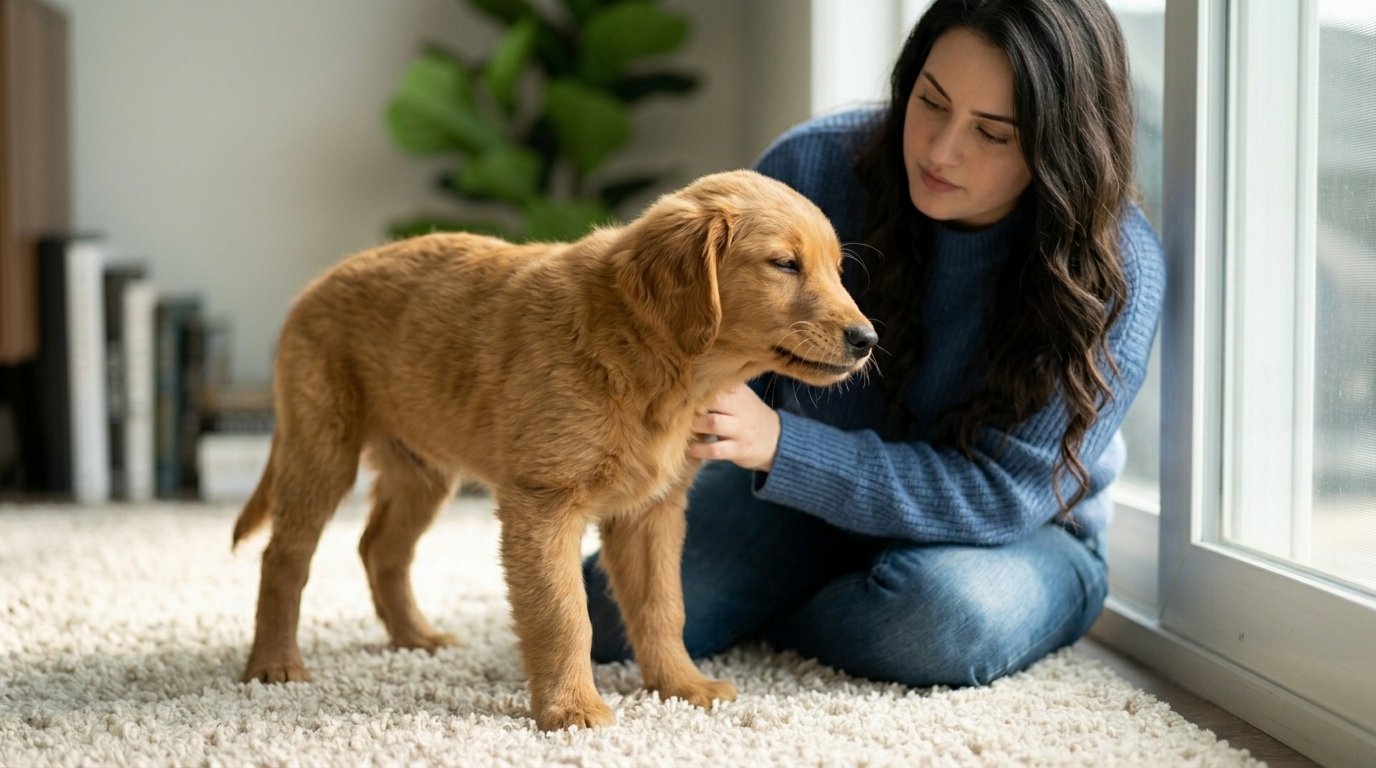
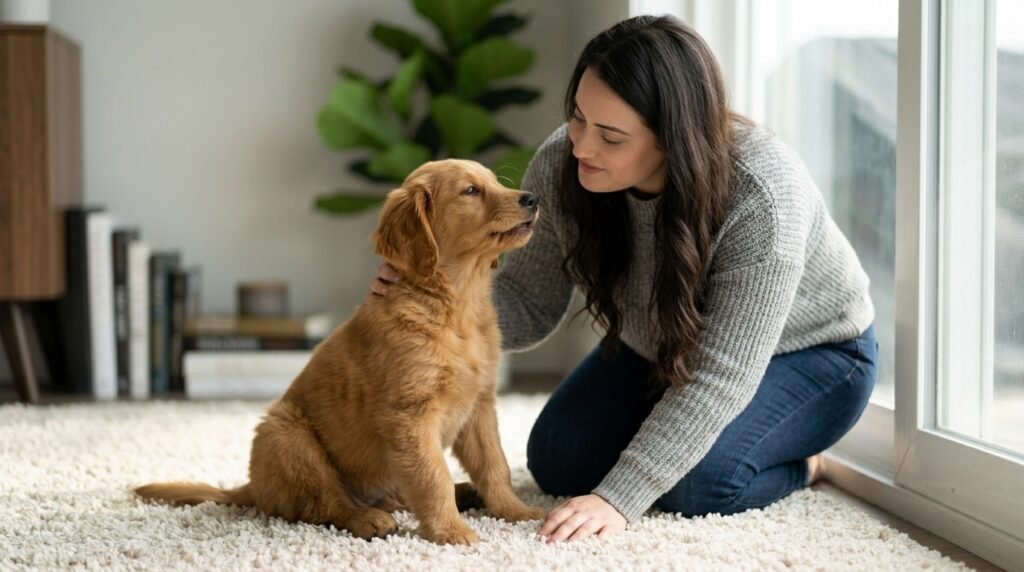
Gently Comfort Your Dog
Gentle stroking around the head or neck may help some dogs relax.
Do not interfere with your dog’s airway or force anything into the mouth.
Record the Episode
If episodes happen regularly, try to record one on your phone.
A video can be extremely useful because your veterinarian may not see the event during an appointment.
What Not to Do During an Episode
When reverse sneezing in dogs looks frightening, owners may feel tempted to intervene aggressively.
Avoid:
- Putting fingers into your dog’s mouth
- Forcing the mouth open
- Shaking your dog
- Covering the nose for an extended period
- Giving medication without veterinary advice
- Assuming every breathing episode is harmless
If you are unsure whether your dog is choking, coughing, or experiencing another breathing problem, contact a veterinarian.
Reverse Sneezing vs. Coughing or Choking
A reverse sneeze can sometimes be confused with other respiratory problems.
Reverse Sneezing
The dog rapidly pulls air inward through the nose while making repeated snorting or honking sounds. The neck may extend, and the episode often resolves quickly.
Coughing
A cough generally pushes air outward and may continue repeatedly.
Persistent coughing can have many possible causes and should be discussed with a veterinarian.
Choking
A choking dog may show persistent distress, paw at the mouth, drool excessively, or struggle to move air.
If your dog cannot breathe normally, treat the situation as an emergency.
Learning the difference between reverse sneezing in dogs and other breathing problems can help you react appropriately.
When Should You Call a Veterinarian?
Occasional brief episodes followed by completely normal behavior are often less concerning.
However, reverse sneezing in dogs should be discussed with a veterinarian if episodes:
- Become increasingly frequent
- Last longer than usual
- Become more intense
- Occur alongside persistent coughing
- Include nasal discharge
- Are accompanied by nosebleeds
- Occur with lethargy
- Happen alongside appetite changes
- Are followed by continued breathing difficulty
A change in your dog’s normal pattern is often more important than the episode itself.
If something seems different or progressively worse, it is better to ask for professional guidance.
Dog Fever Symptoms: 7 Signs of a High Temperature and When to Call the Vet
Emergency Warning Signs
Seek urgent veterinary care if your dog:
- Cannot breathe normally
- Shows continuous respiratory distress
- Collapses
- Has blue, gray, or unusually pale gums
- Continues struggling for air after the episode
These symptoms may indicate something more serious than a typical reverse sneeze.
Can You Prevent Reverse Sneezing in Dogs?
You cannot always prevent reverse sneezing in dogs, particularly when the exact trigger is unknown.
However, reducing potential irritants may help some dogs.
Consider:
- Reducing dust in your home
- Avoiding cigarette smoke
- Limiting strong perfumes
- Using fewer aerosol sprays
- Monitoring seasonal triggers
- Checking whether neck pressure is contributing
- Keeping track of when episodes occur
An episode journal can be especially useful.
Write down:
- Date and time
- How long the episode lasted
- What your dog was doing beforehand
- Possible environmental triggers
- Other symptoms
Over time, this information may reveal a useful pattern.
For more practical dog-care guidance, explore related articles on PawMindTips about dog health, behavior, nutrition, and everyday wellness.
How Veterinarians Evaluate Reverse Sneezing in Dogs
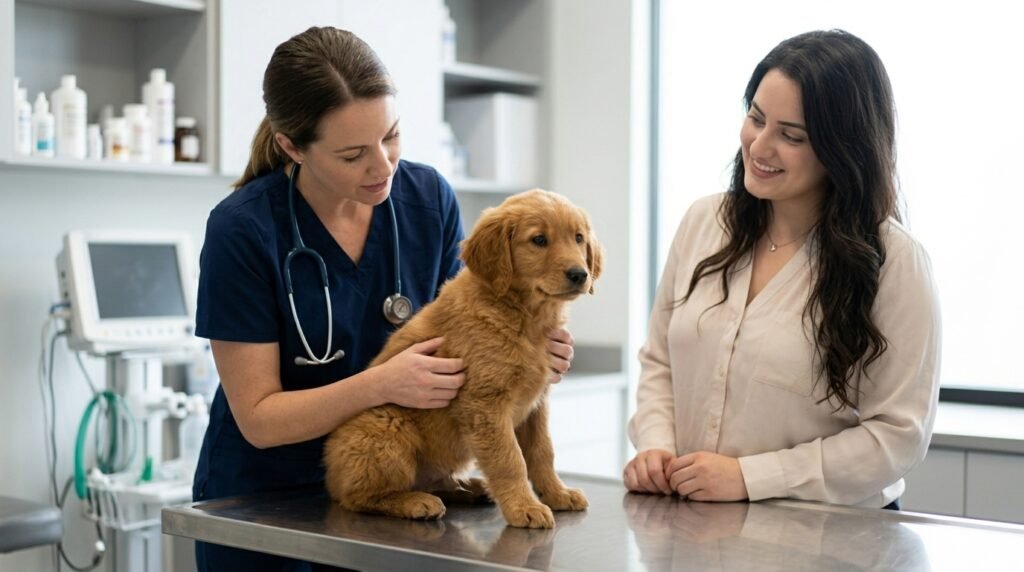
When episodes become frequent or unusual, your veterinarian will usually begin by reviewing your dog’s history and symptoms.
You may be asked:
- When did the episodes begin?
- How often do they happen?
- How long do they last?
- What seems to trigger them?
- Does your dog have coughing or nasal discharge?
- Have you noticed changes in appetite or energy?
Depending on the symptoms, further examination or testing may be recommended to rule out other causes of abnormal breathing.
A recorded video of reverse sneezing in dogs can help your veterinarian determine whether the event appears consistent with a typical reverse sneeze or another respiratory issue.
Does Reverse Sneezing in Dogs Need Treatment?
Most occasional episodes do not require specific treatment.
The main goal is to identify whether an underlying cause is contributing to frequent episodes.
If your veterinarian identifies allergies, an infection, nasal irritation, or another medical condition, treatment will focus on that underlying problem.
Do not give antihistamines, decongestants, or other medication specifically for reverse sneezing in dogs without veterinary guidance.
The right approach depends on your dog’s individual health and the cause of the symptoms.
FAQs
Is Reverse Sneezing in Dogs Dangerous?
In many cases, reverse sneezing in dogs is brief and harmless. The dog often returns to normal immediately afterward.
However, frequent, prolonged, or unusual episodes should be evaluated because other respiratory conditions can sometimes produce similar symptoms.
Why Is My Dog Reverse Sneezing So Often?
Frequent episodes may be linked to environmental irritants, allergies, excitement, airway anatomy, nasal irritation, or an underlying condition.
If the frequency is increasing, contact your veterinarian.
Can Reverse Sneezing in Dogs Happen at Night?
Yes, an episode can occur while your dog is resting or sleeping, especially if irritation or another trigger is present.
Frequent nighttime episodes or additional breathing symptoms should be discussed with a veterinarian.
Should I Try to Stop a Reverse Sneezing Episode?
Stay calm and monitor your dog.
Gentle reassurance may be helpful, but avoid forceful techniques or anything that interferes with breathing.
If you are uncertain about what you are seeing, contact a veterinarian.
Consclusion
Reverse sneezing in dogs can look much more serious than it actually is. The sudden snorting sounds, stretched neck, and rapid inhalation may be alarming, but many episodes are brief and resolve naturally.
The most important thing is to understand your dog’s normal pattern.
Pay attention to how often episodes happen, what may trigger them, how long they last, and whether your dog returns to normal immediately afterward.
Occasional episodes may not require treatment, but frequent or changing symptoms deserve attention.
By understanding reverse sneezing in dogs, staying calm during an episode, and knowing when to contact a veterinarian, you can make better decisions for your dog’s comfort and safety.
Key Takeaways
- Consider the context around the behavior.
- Look for patterns instead of relying on one signal.
- Seek qualified help when behavior is sudden, severe, or unsafe.
Frequently Asked Questions
Is every behavior a sign of the same emotion?
Not necessarily. Dogs use combinations of signals, and context matters.
When should I contact a professional?
Consider veterinary or qualified behavior support for sudden, severe, escalating, or safety-related concerns.