The best answer depends on your dog, the context, and the full pattern of behavior. Look at multiple signals rather than one isolated action.
A consistent dog routine can give your dog something many pets quietly need: a sense of predictability. Dogs may not understand clocks or calendars like people do, but they quickly learn patterns. They can recognize when it is time to eat, go outside, play, train, relax, or settle down for the night.
A healthy routine is about much more than feeding your dog at the same time every day. It should provide regular opportunities for exercise, mental stimulation, bathroom breaks, positive interaction, quiet rest, training, and independent relaxation.
The goal is not to create a rigid schedule that causes problems whenever life changes. Instead, a good dog routine creates a flexible daily rhythm that helps your dog know what to expect while still allowing reasonable changes.
In this guide, you will learn nine practical habits that can support your dog’s physical needs, emotional well-being, confidence, and ability to settle calmly at home.
Table of Contents
Why Dogs Benefit From a Consistent Routine
Dogs often become comfortable with predictable patterns. When important parts of the day happen in a familiar sequence, your dog may have an easier time anticipating what comes next.
For example, your dog may learn that waking up is followed by a bathroom break, breakfast, and a morning walk. Later, a short training session might be followed by rest. In the evening, dinner, a final walk, and quiet time can signal that bedtime is approaching.
That predictability is one reason a well-designed dog routine can be useful for everyday emotional well-being.
However, consistency does not mean every activity has to happen at exactly the same minute.
A dog that expects a walk at 7:00 a.m. should also be able to cope when the walk happens at 7:30 or 8:00 on an occasional busy morning.
Think of the schedule as a framework rather than a stopwatch.
A useful dog routine should provide reliable access to your dog’s basic needs while allowing enough flexibility for ordinary life.
This is particularly important because excessive rigidity can create problems of its own. Your dog should learn that small changes are safe and manageable.
The aim is simple: predictability without unnecessary inflexibility.
What Should a Healthy Dog Routine Include?
A balanced dog routine should cover more than exercise and feeding. Dogs have physical, mental, social, and behavioral needs that work together.
Physical activity
Dogs need movement appropriate for their age, breed, health, fitness level, and individual energy. Walking, play, supervised outdoor activities, and other appropriate forms of exercise can help meet these needs.
There is no single exercise schedule that works for every dog.
Mental stimulation
Mental activity can include scent games, food puzzles, training, exploration, interactive play, and opportunities to investigate safe environments.
Mental enrichment is especially useful for breaking up long periods of inactivity.
Rest and sleep
Dogs need plenty of rest. A schedule that keeps a dog active throughout every waking hour is not necessarily healthier.
Quiet downtime should be a deliberate part of your dog’s day.
Positive social interaction
Dogs generally benefit from positive interaction with people they trust. This can include play, training, gentle grooming, walking together, or simply relaxing nearby.
Independent relaxation
Your dog should also have opportunities to settle without constant human attention. This can help create a healthier balance between companionship and independence.
Basic care
Meals, fresh water, bathroom opportunities, grooming, dental care, prescribed medication, and veterinary care should fit naturally into your overall dog routine.
When these elements work together, the result is a daily rhythm rather than a collection of unrelated tasks.
9 Powerful Daily Habits for a Happier Dog
1. Start the Day With a Predictable Morning
The morning is a natural place to establish the day’s rhythm.
A simple dog routine might begin with waking up, going outside for a bathroom break, drinking fresh water, eating breakfast, and then getting some appropriate physical activity.
The exact order can vary.
What matters most is that your dog becomes familiar with the general sequence.
Try to avoid unnecessary chaos immediately after waking. If your household is busy in the morning, give your dog a predictable place where they can relax while everyone gets ready.
For example:
- Wake up
- Bathroom break
- Fresh water
- Breakfast
- Short rest
- Walk or age-appropriate activity
- Calm transition back indoors
You do not need to follow this exact sequence every day. The goal is to establish familiar patterns that make the morning easier for your dog to understand.
A calm beginning can also make it easier to transition into the rest of the day’s activities.
2. Give Your Dog Regular Opportunities to Move
Physical activity should be a regular part of a healthy dog routine, but the right amount varies greatly between individuals.
A young, energetic dog may need substantially more activity than an older dog. A dog with mobility limitations or certain health conditions may need a gentler plan.
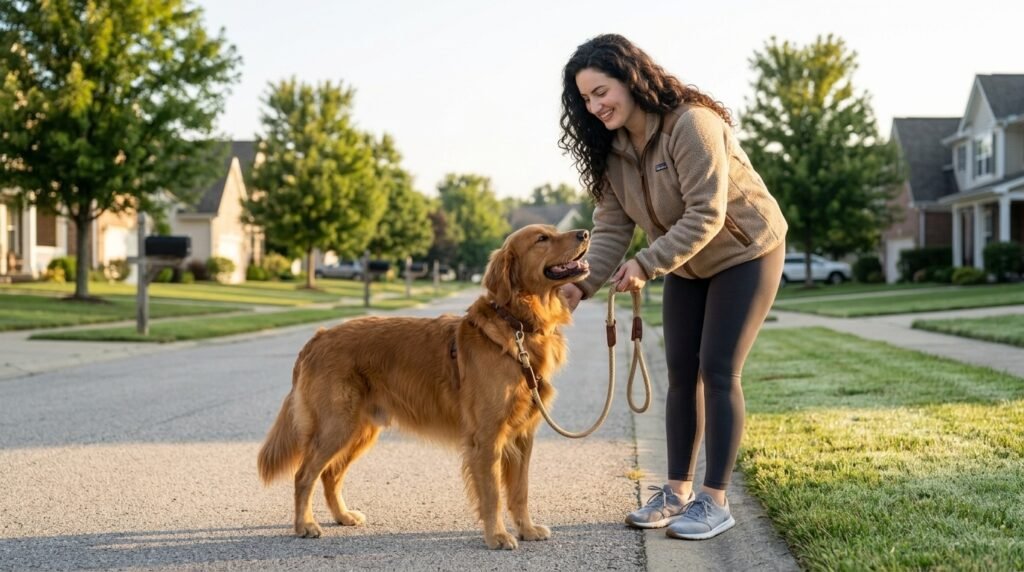
Instead of assuming that every dog needs the same number of minutes, consider your dog’s individual needs.
Walking can provide both physical movement and opportunities to sniff and explore. Play may provide bursts of activity, while slower walks can allow your dog to investigate the environment.
Your goal should be appropriate activity rather than simply exhausting your dog.
Watch how your dog responds.
A healthy activity level should generally leave your dog able to recover comfortably rather than consistently appearing exhausted, sore, or overwhelmed.
If you are unsure about your dog’s exercise needs, your veterinarian can help you determine an appropriate level based on age, health, and physical condition.
3. Add Daily Mental Enrichment
A good dog routine should challenge your dog’s brain as well as their body.
Dogs naturally use their senses to investigate their surroundings. Allowing appropriate opportunities for sniffing, searching, exploring, and problem-solving can make ordinary days more interesting.
You can rotate activities such as:
- Scent games
- Food puzzles
- Scatter feeding
- Short training sessions
- Finding hidden pieces of regular food
- Safe chew activities
- Interactive play
- Exploring a different walking route
- Learning a new trick
You do not need expensive toys to provide meaningful enrichment.
For example, you could hide several pieces of your dog’s normal food in safe and accessible areas and allow your dog to search for them.
Another simple option is to spend several minutes practicing basic commands before breakfast or dinner.
The key is to choose activities that are appropriate for your dog’s abilities.
Mental enrichment should be interesting rather than frustrating. If your dog becomes confused or overwhelmed, make the activity easier.
Rotating activities can also prevent your daily schedule from becoming monotonous.
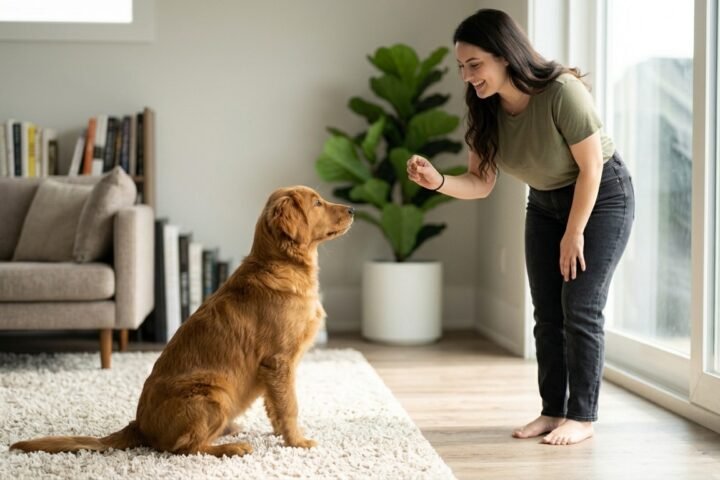
4. Include Short, Positive Training Sessions
Training can be one of the easiest ways to add mental stimulation to your dog routine.
You do not need to conduct long formal sessions.
Even a few minutes of positive-reinforcement training can provide useful mental exercise and strengthen communication between you and your dog.
You might practice:
- Sit
- Stay
- Come
- Wait
- Leave it
- Settle
- Go to bed
- Walking calmly
- Responding to their name
Training can also be incorporated into ordinary moments.
Ask your dog to sit before putting down their food. Practice waiting before going through a door. Reward your dog for settling quietly on a bed while you work.
These small interactions can turn everyday activities into learning opportunities.
Keep training sessions positive and short enough that your dog remains engaged.

Avoid using harsh punishment to force compliance. If a behavior is difficult or your dog becomes fearful, frustrated, or reactive, consider working with a qualified positive-reinforcement trainer or veterinary behavior professional.
5. Protect Quiet Rest Time
A common mistake is assuming that a happy dog should always be active.
Rest is an important part of a balanced dog routine.
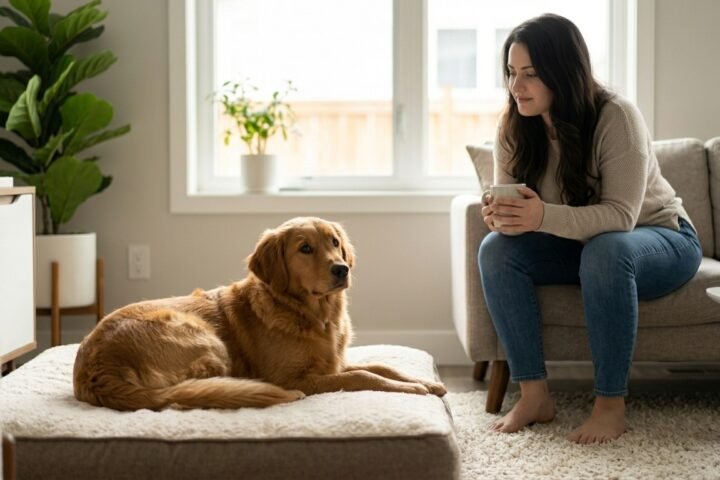
After exercise, play, training, or social interaction, give your dog an opportunity to settle in a comfortable location.
Depending on your household, this might be:
- A dog bed
- A mat
- A quiet room
- A crate that has been positively introduced
- Another safe resting area
The goal is not simply to confine your dog.
Your dog should have a comfortable place where they can relax without being constantly disturbed.
Some dogs naturally settle after activity, while others need to learn how to switch from excitement to relaxation.
You can reward calm behavior when your dog chooses to lie down quietly.
Avoid filling every quiet moment with stimulation. Learning that nothing exciting needs to happen all the time is itself a valuable life skill.
A good dog routine therefore includes both activity and deliberate downtime.
6. Build Predictable One-on-One Connection
Emotional well-being is not only about exercise and food.
Your dog also needs positive opportunities to interact with you.
That does not mean providing attention every second.
Instead, build several meaningful moments into the day.
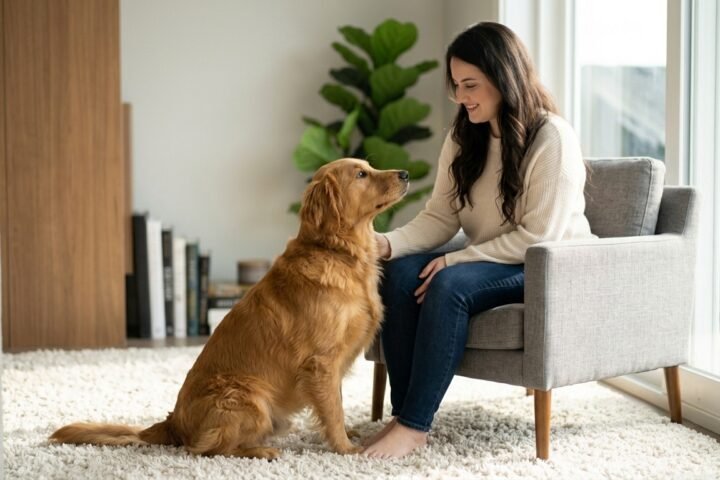
You might spend five minutes training, take a relaxed walk together, play a favorite game, gently groom your dog, or simply sit together while your dog rests nearby.
For some dogs, quiet companionship may be more valuable than high-energy play.
Pay attention to your dog’s body language and preferences.
If your dog enjoys being petted, offer calm physical affection. If they prefer simply lying beside you, allow that too.
The best dog routine creates predictable opportunities for positive interaction without making constant attention the expectation.
This distinction matters because a dog can enjoy a strong bond with their owner while still learning to relax independently.
7. Include Some Independent Time
A balanced dog routine should not revolve entirely around human attention.
If your dog is constantly beside you and rarely practices relaxing independently, changes in your availability may become more difficult.
Start with small periods of independent relaxation.
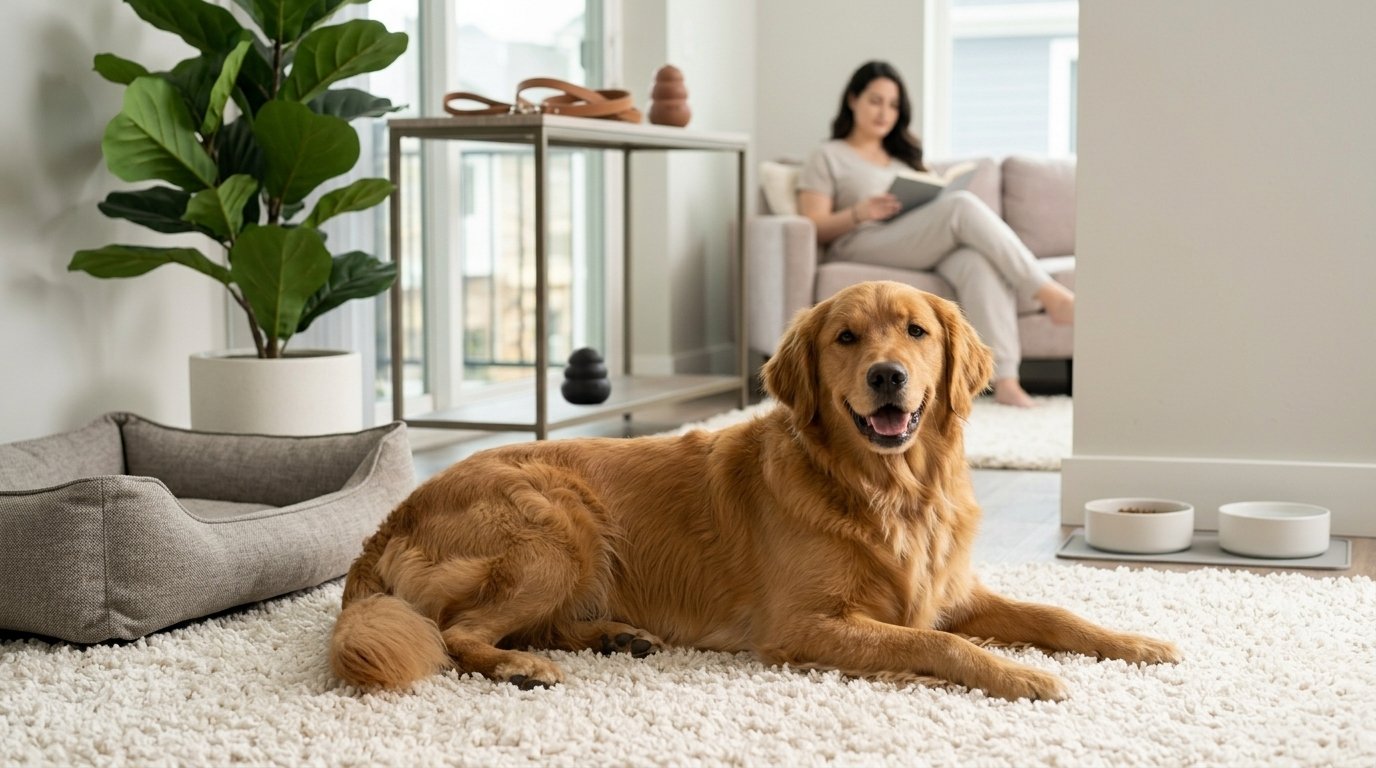
For example, encourage your dog to settle on a comfortable mat while you work nearby. Reward calm behavior without constantly calling them over.
Over time, your dog can learn that being separate from you for short periods does not mean something bad is happening.
However, there is an important distinction between healthy independence and serious separation anxiety.
If your dog experiences intense distress when you leave, such as destructive escape attempts, persistent vocalization, panic, or self-injury, simply increasing alone time may not solve the problem.
Dogs with established separation-related problems may need a carefully structured behavior plan and professional support.
A routine can be part of that foundation, but it should not be presented as a universal treatment.
8. Create a Calm Evening Wind-Down
The evening is another useful opportunity to make your dog routine predictable.
After the day’s main activities, gradually reduce stimulation.
A simple evening pattern might include:
- Dinner
- Bathroom opportunity
- Appropriate walk or gentle activity
- Quiet companionship
- Final bathroom break
- Bedtime
If your dog becomes extremely energetic immediately before bed, consider moving intense play earlier in the evening.
The final portion of the night should gradually become calmer.
You might dim the household activity, encourage your dog to settle on their bed, and avoid introducing exciting new games right before sleep.
Over time, the repeated sequence can become a familiar signal that nighttime rest is approaching.
The timing does not have to be identical every night.
A flexible pattern is usually more practical than trying to enforce a perfect bedtime.
9. Keep Basic Care Predictable
The final part of a useful dog routine is often the simplest: make everyday care consistent.
Your dog’s schedule may include:
- Regular meals
- Fresh drinking water
- Bathroom opportunities
- Grooming
- Dental care
- Nail care
- Coat checks
- Prescribed medication
- Routine veterinary care
Not every task needs to happen every day.
For example, tooth brushing may become part of an evening habit, while nail trimming may happen every few weeks.
The benefit of incorporating care into your routine is that important tasks become easier to remember.
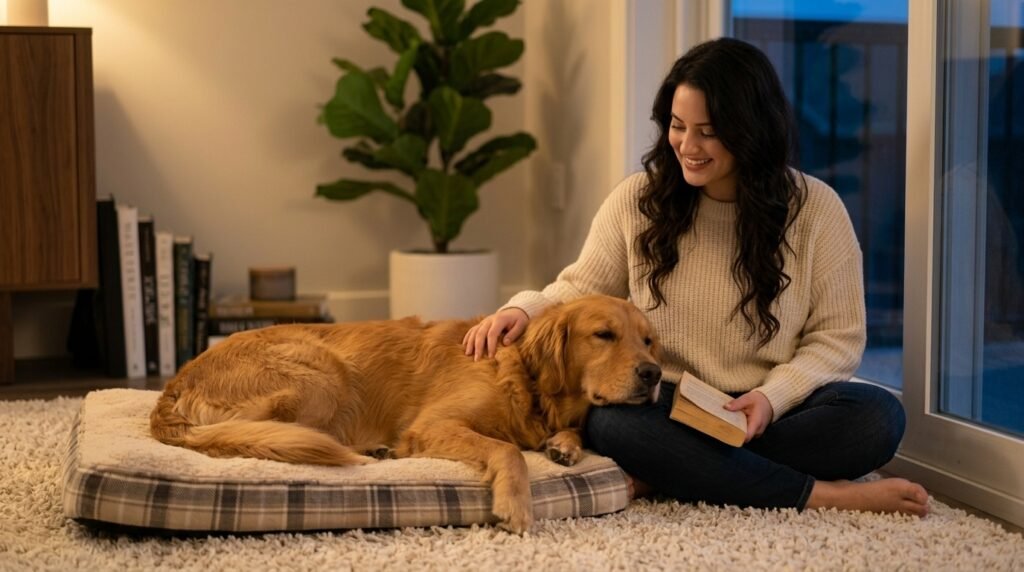
Regular care can also help you notice changes in your dog’s normal condition.
You may notice that your dog is eating less, moving differently, avoiding touch, developing a skin problem, or behaving unusually.
Those observations can be useful when discussing changes with your veterinarian.
A Simple Morning-to-Night Dog Routine
There is no single perfect daily schedule for every dog.
Age, breed, health, energy level, weather, household schedule, and individual temperament all influence what works.
The following example is a framework rather than a strict timetable.
Morning
Wake-up: Give your dog an appropriate bathroom opportunity and provide fresh water.
Breakfast: Feed an appropriate meal according to your dog’s nutritional needs.
Activity: Take a walk, provide sniffing time, or engage in suitable physical activity.
Training: Spend a few minutes practicing useful behaviors.
Rest: Allow your dog to relax while the household moves into the day.
Midday
Bathroom break: Provide another suitable opportunity to eliminate.
Mental enrichment: Use a food puzzle, scent game, short training activity, or another appropriate enrichment option.
Quiet time: Let your dog rest without constant interaction.
Afternoon
Movement: Provide another opportunity for exercise or play based on your dog’s needs.
Connection: Spend some intentional one-on-one time together.
Independent relaxation: Encourage your dog to settle calmly while you perform another activity.
Evening
Dinner: Provide the appropriate meal.
Activity: Take a walk, play, or allow calm sniffing and exploration.
Wind-down: Gradually reduce excitement as bedtime approaches.
Final bathroom break: Give your dog a final opportunity to go outside before sleeping.
Night
Sleep: Provide a comfortable, safe, and quiet sleeping environment.
This kind of dog routine gives the day recognizable anchors without requiring every event to happen at precisely the same time.
How to Keep a Dog Routine Flexible
A routine that only works when everything goes according to plan is not very practical.
Real life includes unexpected changes.
You may work late, have guests, experience bad weather, travel, change your work schedule, or need to move a walk to a different time.
Your dog should gradually learn that these changes are manageable.
One useful approach is to keep the most important needs consistent while allowing the timing or activity to change.
For example, your dog may normally take a morning walk, but bad weather could mean replacing that outdoor activity with indoor scent games and short training sessions.
The activity changed, but your dog’s needs were still addressed.
Similarly, a delayed meal does not have to turn into a stressful event if your dog has learned that schedules can vary within reasonable limits.
The best dog routine therefore has both structure and flexibility.
You are teaching your dog what to expect while also teaching them that occasional changes are safe.
How to Change Your Dog’s Routine Without Causing Stress
Sudden changes can be
especially when several parts of their environment change at once.
Whenever possible, introduce major changes gradually.
Suppose your work schedule is changing and your dog’s normal morning walk will need to happen later.
Instead of suddenly moving the walk by several hours, gradually adjust the timing while keeping other parts of the day familiar.
You can also maintain familiar activities during the transition.
For example, if your dog moves to a new home, keep familiar feeding patterns, resting areas, toys, and basic cues as consistent as possible.
Major changes may include:
- Moving to a new home
- A new work schedule
- A new family member
- A new pet
- Different walking times
- Travel
- Changes in feeding arrangements
- Changes in the household
When one element changes, keeping other elements predictable can provide useful continuity.
If your dog reacts strongly to changes despite gradual transitions, discuss the behavior with your veterinarian or an appropriately qualified behavior professional.
Signs Your Dog Routine Is Working
A successful dog routine does not mean your dog will behave perfectly every day.
Instead, look for signs of overall balance.
Your dog may:
- Settle more easily after activity
- Sleep comfortably
- Show normal interest in food
- Engage with family members
- Enjoy appropriate play
- Explore their environment
- Participate willingly in training
- Relax without demanding constant attention
- Recover reasonably well from ordinary changes
- Show interest in familiar activities
Every dog has a different personality.
A quiet senior dog should not be expected to behave like a highly energetic young dog.
What matters most is your dog’s individual baseline.
For example, if your normally playful dog suddenly becomes withdrawn, the issue may not be the schedule itself.
Likewise, a sudden increase in pacing, vocalization, destructive behavior, fear, or withdrawal deserves attention.
A routine should support your dog’s normal behavior, not be used to dismiss meaningful changes.
When a Routine Isn’t Enough
A good dog routine can provide structure, enrichment, exercise, and opportunities for rest, but it cannot solve every behavioral or medical problem.
Some signs require more than adjusting the daily schedule.
Contact your veterinarian if your dog develops significant or persistent changes such as:
- Sudden aggression
- Persistent pacing
- Major appetite changes
- Sudden withdrawal
- Signs of pain
- Repeated escape attempts
- Severe fear
- Self-injury
- Significant destructive behavior
- Major changes in bathroom habits
- Persistent difficulty settling
Behavioral changes can sometimes have physical or medical causes.
For example, pain or illness can affect a dog’s sleep, appetite, activity level, mood, and behavior.
If a behavior is severe, sudden, persistent, or interfering with normal life, professional evaluation is appropriate.
For dogs with serious anxiety or separation-related distress, your veterinarian may recommend a more specific behavior-management approach.
The purpose of a daily schedule is to create a supportive foundation—not to replace professional care when your dog needs it.
FAQs
What should a dog’s daily routine include?
A healthy dog routine should include appropriate food and water, bathroom opportunities, physical activity, mental enrichment, rest, positive interaction, training, and some independent relaxation. The exact schedule should be adjusted to your dog’s age, health, energy level, and lifestyle.
Does a dog routine help with anxiety?
A predictable dog routine may help some dogs feel more secure because familiar patterns make daily events easier to anticipate. However, a routine alone is not a complete treatment for significant anxiety, fear, or separation-related problems.
How strict should a dog’s routine be?
A dog routine should be consistent without becoming excessively rigid. Keep important needs predictable while allowing reasonable changes in timing and activities. This helps your dog learn that occasional changes are normal and manageable.
What is the best time to walk a dog?
There is no universal best time to walk every dog. Choose times that are appropriate for your dog’s age, health, energy level, weather conditions, and household schedule. Consistency can be useful, but the exact clock time is less important than meeting your dog’s needs safely and regularly.
Conclusion
A healthy dog routine is not about making every day identical. It is about creating a dependable rhythm in which your dog can expect regular opportunities for movement, mental enrichment, training, rest, companionship, basic care, and independent relaxation.
Start with a few practical habits rather than trying to redesign your dog’s entire day overnight.
Keep the important parts consistent, introduce major changes gradually, and pay attention to your individual dog’s response.
Remember that emotional well-being depends on the whole picture. A predictable routine can provide a strong foundation, but persistent fear, anxiety, pain, illness, or major behavior changes deserve professional attention.
For many dogs, the combination of structure, enrichment, appropriate exercise, positive interaction, adequate rest, and reasonable flexibility can make everyday life calmer, more predictable, and more rewarding.
Key Takeaways
- Consider the context around the behavior.
- Look for patterns instead of relying on one signal.
- Seek qualified help when behavior is sudden, severe, or unsafe.
Frequently Asked Questions
Is every behavior a sign of the same emotion?
Not necessarily. Dogs use combinations of signals, and context matters.
When should I contact a professional?
Consider veterinary or qualified behavior support for sudden, severe, escalating, or safety-related concerns.