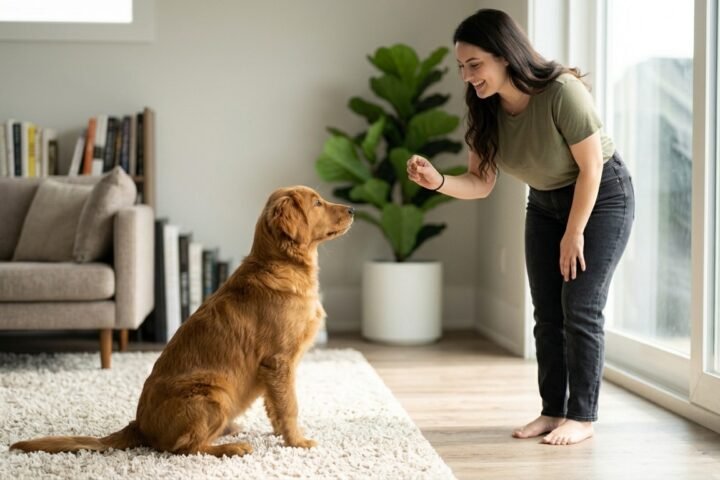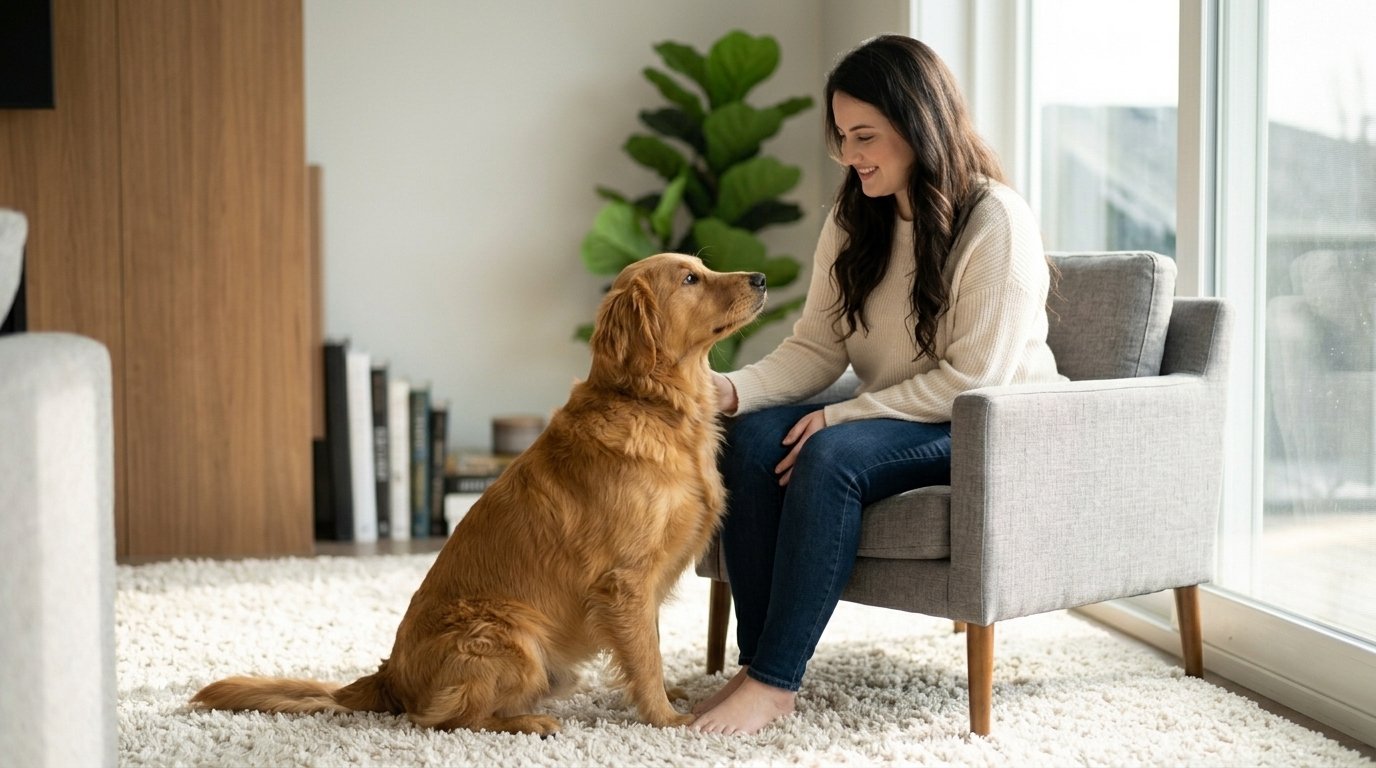
The best answer depends on your dog, the context, and the full pattern of behavior. Look at multiple signals rather than one isolated action.
You may be damaging your dog’s trust without realizing it.
Most habits that destroy dog trust do not look cruel or neglectful. They can look completely normal: giving your dog a hug, correcting them when they misbehave, skipping a walk because you’re busy, changing a household rule, or ignoring a subtle signal because you assume your dog is fine.
The problem is that dogs communicate differently from people. They rely heavily on body language, predictable routines, consequences, and the emotional tone of their interactions with us. When those signals repeatedly create confusion, fear, frustration, or discomfort, the relationship can suffer.
The good news is that trust is not something you either have or do not have. Everyday interactions can strengthen it, and small changes in the way you handle your dog can make those interactions safer and more predictable.
In this guide, we will look at 6 habits that destroy dog trust, why they can create problems, the signs your dog may be uncomfortable, and what you can do instead.
Table of Contents
What Does It Mean When a Dog Trusts You?
A trusting dog does not necessarily follow you everywhere or constantly seek physical affection.
Trust is better understood through how comfortably your dog interacts with you and handles everyday situations.
A dog that feels secure around you may:
- Approach you voluntarily
- Relax in your presence
- Seek you out when uncertain
- Accept appropriate handling
- Recover relatively quickly from normal stress
- Respond to your cues without appearing frightened
- Feel comfortable moving away when they need space
- Show relaxed body language around you
Trust also depends on the individual dog. A naturally cautious dog may need more time and space than a confident, outgoing dog.
The goal is not to make your dog dependent on you. It is to become someone your dog can predict, understand, and feel safe around.
That is why recognizing habits that destroy dog trust is so important. Understanding these patterns can help you replace them with interactions that make your dog feel safer and more understood.
1. Forcing Physical Affection When Your Dog Wants Space
One of the easiest ways to misunderstand your dog is to assume that affection always feels good to them.
You may love hugging your dog, kissing their face, holding them close, or reaching over their head for a long cuddle. Your dog may tolerate some of these interactions, but tolerance does not always mean enjoyment.
Dogs communicate their comfort level primarily through body language. A dog that becomes stiff, turns their head away, shows the whites of their eyes, repeatedly licks their lips, or tries to move away may be telling you that the interaction has become uncomfortable.
That does not mean dogs never enjoy cuddling or physical affection. Many dogs actively seek petting and close contact with their favorite people.
The important distinction is choice and context.
Signs Your Dog May Want You to Stop
Watch for combinations of signals such as:
- Turning the head away
- Moving the body away from your hand
- Becoming unusually still or stiff
- Repeated lip licking
- Yawning during an interaction
- Showing whale eye
- Flattening the ears
- Attempting to leave
- Growling
A growl should not simply be punished or dismissed. It can be an important warning that the dog is uncomfortable and wants the situation to change.
How to Build Trust Instead
Try giving your dog more control over physical interactions.
Pet your dog gently on the chest or shoulder for a few seconds, then pause. If your dog moves closer, nudges your hand, or clearly solicits more interaction, you can continue.
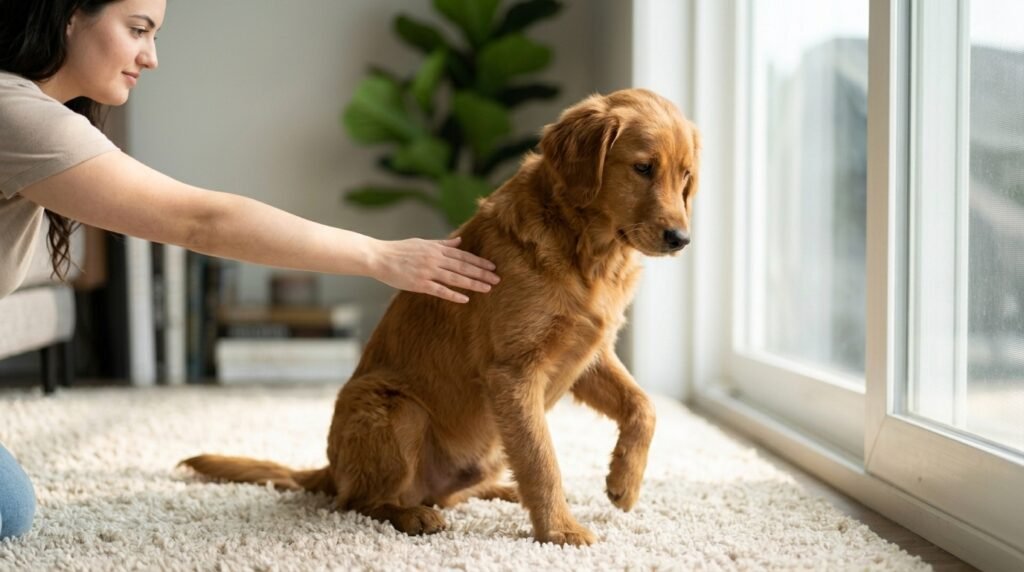
If they turn away or leave, let them have that space.
This simple habit teaches your dog an important lesson:
“When I communicate discomfort, my person listens.”
That response is the opposite of one of the common habits that destroy dog trust: continuing an interaction after the dog has clearly asked for space.
2. Using Punishment Instead of Teaching What to Do
When a dog does something frustrating, it can be tempting to react immediately.
You may yell, jerk the leash, use physical corrections, intimidate the dog, or punish them after an unwanted behavior.
These reactions can feel effective because they may stop the behavior in the moment. But stopping something is not the same as teaching a dog what you want them to do instead.
Veterinary behavior guidance warns that punishment and confrontational training can increase fear, avoidance, and other behavior problems. Reward-based approaches are generally recommended for teaching appropriate behavior.
Why Punishment Can Damage Trust
Dogs learn through associations and consequences.
If interactions with you repeatedly predict yelling, painful corrections, intimidation, or other unpleasant experiences, your dog may begin to feel less comfortable around you.
This can be especially problematic when punishment is connected with situations that already make the dog nervous.
For example, imagine your dog sees another dog on a walk and begins barking. If you respond with harsh corrections, your dog may not simply learn “barking is wrong.”
They may also become more worried about the other dog, the leash, or the entire situation.
Merck Veterinary Manual notes that punishment-based and confrontational methods can contribute to fear, avoidance, and increased aggression.
What to Do Instead
Teach your dog what you want them to do.
Instead of only saying “No,” give them an alternative behavior.
For example:
- Jumping → reward four paws on the floor
- Pulling → reward walking near you
- Barking at visitors → teach a mat or place behavior
- Stealing objects → teach a reliable trade
- Begging → reward settling on a designated bed
- Running toward the door → teach waiting before release
Reward the behavior you want to see.
The goal is to make good choices easy to understand and worthwhile.
One of the most useful ways to avoid habits that destroy dog trust is to replace confrontation with clear communication and reward-based teaching.
3. Ignoring Your Dog’s Physical and Mental Enrichment Needs
A quick bathroom trip outside is not necessarily enough activity for every dog.
Dogs vary enormously in their exercise and enrichment needs. Age, breed, health, fitness, temperament, environment, and individual personality all matter.
Some dogs are satisfied with relatively moderate activity. Others need substantially more physical movement, sniffing, exploration, play, training, or problem-solving.
When those needs are consistently neglected, the result can look like a behavior problem.
You may suddenly find your dog:
- Chewing furniture
- Barking excessively
- Pacing around the house
- Jumping on people
- Stealing household objects
- Digging
- Pulling excessively on walks
- Struggling to settle
That does not automatically mean the dog is “bad.”
Sometimes the dog simply has needs that are not being met.
Exercise Is Only Part of the Equation
Mental enrichment matters too.
A dog can become physically tired from activity while still needing opportunities to sniff, explore, learn, and make choices.
Consider adding:
- Sniff-heavy walks
- Food puzzles
- Snuffle mats
- Interactive toys
- Short training sessions
- Trick training
- Safe exploration
- Appropriate play
- Food-dispensing toys
- Simple scent games
The best routine is one that matches your dog’s individual needs rather than following a one-size-fits-all number of minutes.
A Better Trust-Building Routine
Instead of thinking only about “tiring out” your dog, think about shared experiences.
Take a walk where your dog gets appropriate opportunities to sniff.
Practice a few simple behaviors with rewards.
Play a game together.
Let your dog work for part of their food through an enrichment activity.
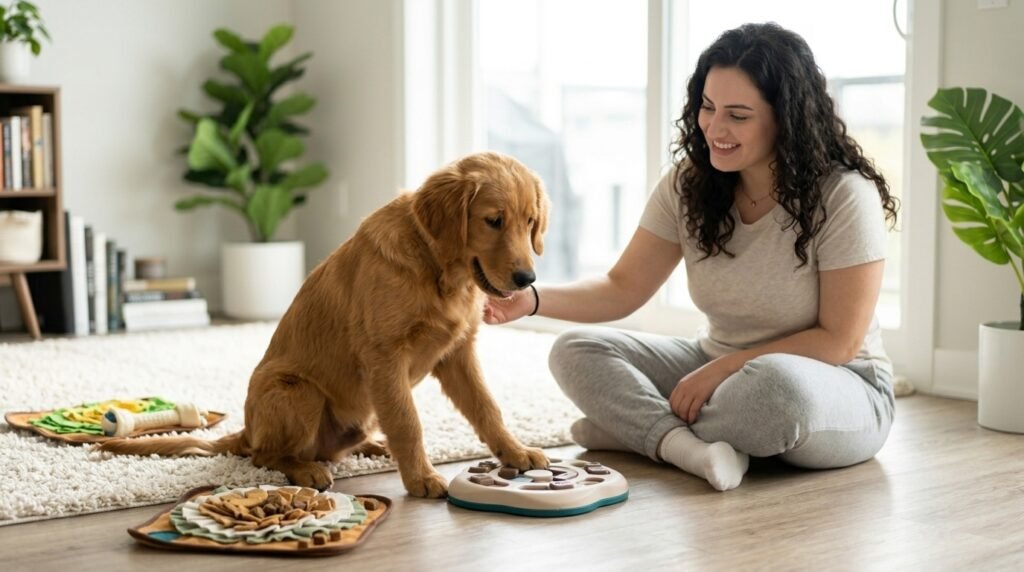
These activities can provide stimulation while also giving you opportunities to communicate clearly and positively.
A dog that regularly experiences you as a source of enjoyable, predictable activities has more opportunities to build a positive association with you.
Neglecting enrichment is therefore worth considering alongside other habits that destroy dog trust, particularly when frustration and unmet needs repeatedly affect your dog’s daily life.
4. Changing the Rules Depending on Your Mood
Dogs do not understand household rules the way humans do.
Imagine that your dog is allowed on the couch when you are relaxing alone but is suddenly punished for getting on it when guests arrive.
Or perhaps jumping up is funny when you come home from work but unacceptable when you are wearing nice clothes.
Maybe begging at the table is rewarded one night and punished the next.
From a human perspective, these situations may seem obvious.
To your dog, the rules have changed.
Why Consistency Matters
Dogs learn from repeated patterns.
If the same behavior produces completely different outcomes depending on the person, time, or situation, learning becomes harder.
This does not mean your household needs military-level rules.
It means everyone should agree on the important boundaries.
For example:
If the couch is off-limits, everyone should follow that rule.
If jumping on guests is not allowed, guests should not reward jumping.
If begging is discouraged, family members should not secretly feed the dog from the table.
Create a Simple Household Agreement
Choose a few important rules and make sure everyone follows them.
Decide:
- Where the dog is allowed to sleep
- Whether furniture is allowed
- How guests should greet the dog
- How jumping will be handled
- Where the dog should wait before going outside
- What behaviors receive rewards
- Which behaviors should be redirected
Consistency does not mean being harsh.
In fact, predictable rules can make life easier for your dog because they do not have to constantly guess what will happen next.
A dog that understands the rules has a better opportunity to make successful choices.
Keeping expectations consistent is one simple way to prevent habits that destroy dog trust from becoming part of your dog’s everyday experience.
5. Assuming Extreme Excitement Always Means Happiness
Few things make dog owners feel more loved than an enthusiastic greeting.
Your dog spins in circles.
They jump.
They whine.
Their tail moves rapidly.
They race around the room.
It is easy to think, “My dog is so happy to see me!”
Sometimes they genuinely are excited and happy.
But excitement and emotional comfort are not always the same thing.
A dog can become highly aroused without being calmly comfortable. Dogs may also become overwhelmed when multiple exciting or stressful events happen close together.
The important thing is to look at the whole body and the situation, rather than interpreting one behavior in isolation.
For example, tail wagging does not automatically mean happiness. Tail movement reflects emotional arousal, and the position, speed, and overall body language provide additional context.
Healthy Excitement vs. Overwhelming Arousal
A dog who is excited but comfortable may eventually be able to:
- Take treats
- Respond to familiar cues
- Relax after the initial greeting
- Move normally
- Engage appropriately with people
- Return to a calm state
A dog who is overwhelmed may struggle to settle, become frantic, repeatedly jump, pace, vocalize, or lose the ability to respond normally.
How to Encourage Calm
When you arrive home, you do not have to match your dog’s energy.
Instead:
- Enter calmly.
- Give your dog a moment to settle.
- Avoid encouraging frantic jumping.
- Reward four paws on the floor.
- Offer attention when your dog is calmer.
- Practice calm greetings regularly.
You are not ignoring your dog.
You are teaching them that calm behavior also earns attention.
Over time, this can help your dog develop better emotional regulation and make everyday greetings easier for everyone.
6. Ignoring the Subtle Language Your Dog Uses
This may be the most important habit to change.
Your dog is communicating with you all day.
They may not use words, but their ears, eyes, mouth, tail, posture, movement, and distance from you provide valuable information.
The problem is that humans often interpret these signals through a human lens.
A dog looks away and we call them stubborn.
A dog yawns and we assume they are tired.
A dog freezes and we assume they are being obedient.
A dog growls and we call them aggressive.
A dog rolls onto their back and we assume they want a belly rub.
But context matters.
Common Signals Worth Learning
| Signal | What it may indicate |
|---|---|
| Lip licking | Possible discomfort, stress, or anticipation |
| Looking away | Possible discomfort or an attempt to reduce social pressure |
| Whale eye | Stress or anxiety in context |
| Yawning | May occur during stress or other situations |
| Freezing | Significant discomfort or overwhelm can be possible |
| Growling | A warning that the dog is uncomfortable or concerned |
| Tucked tail | Fear, stress, or uncertainty |
| Pacing | Difficulty relaxing, anxiety, excitement, or sometimes a health issue |
These signals should never be interpreted completely on their own.
For example, dogs may lick their lips after eating, yawn when tired, or wag their tails during several different emotional states.
Look at the entire dog, the environment, and what happened immediately before the behavior.
The American Kennel Club similarly emphasizes that body language needs to be interpreted in context, while identifying signals such as lip licking, yawning, whale eye, avoidance, freezing, and tucked tails as potential signs of stress or discomfort.
Ignoring these signals repeatedly can turn ordinary misunderstandings into habits that destroy dog trust, because your dog may learn that communicating discomfort does not change what happens next.
What Happens When You Listen?
Suppose your dog turns away when a child approaches.
Instead of forcing the interaction, you create distance.
Your dog learns:
“My person noticed.”
Suppose your dog becomes uncomfortable when someone reaches over their head.
Instead of insisting on the interaction, you change how the person approaches.
Your dog learns:
“My signals matter.”
That is how trust grows in everyday life.
How to Rebuild Trust With Your Dog
If you recognize several of these habits in your own routine, do not panic.
You do not need to become a perfect dog owner overnight.
Start with a few simple changes.
1. Make Your Interactions Predictable
Use consistent cues, routines, and household rules.
Predictability reduces unnecessary confusion.
2. Stop Forcing Interactions
Let your dog move away when appropriate.
Give them a safe place where they can rest undisturbed.
3. Reward Good Choices
Notice what your dog does right.
Reward calm behavior, appropriate greetings, coming when called, settling, walking near you, and other behaviors you want repeated.
4. Learn Your Dog’s Body Language
Spend a few minutes each day simply observing your dog.
What does their relaxed posture look like?
What happens to their ears when they become uncomfortable?
What does their tail look like when they are calm?
Learning your dog’s personal baseline makes changes easier to recognize.
5. Give Them Appropriate Enrichment
Provide physical activity, sniffing opportunities, play, training, and mental challenges suited to your dog’s age and individual needs.
6. Avoid Escalating Conflict
If your dog is frightened, frustrated, or overwhelmed, adding more pressure may make the situation worse.
Create distance, lower the intensity, and seek professional guidance when necessary.
These changes directly address many of the habits that destroy dog trust by making your interactions more predictable, respectful, and rewarding.
When a Change in Behavior Needs a Veterinarian
Not every trust problem is actually a trust problem.
Pain, illness, aging, sensory changes, and other medical conditions can affect how a dog behaves.
If a normally friendly dog suddenly becomes withdrawn, irritable, unusually sensitive to touch, reluctant to move, or aggressive, do not automatically assume that they have “lost trust.”
A sudden behavior change deserves veterinary attention, especially when it occurs alongside changes in appetite, movement, sleep, activity, or tolerance for handling. Pain can sometimes appear first as a change in behavior.
Your veterinarian can help determine whether a medical issue may be contributing to the behavior before you focus entirely on training or relationship changes.
If the issue is primarily behavioral, a qualified, reward-based trainer or veterinary behavior professional can help you create an appropriate plan.
The Biggest Lesson About Dog Trust
The habits that destroy dog trust are often surprisingly ordinary.
You may force affection because you love your dog.
You may punish because you are frustrated.
You may skip enrichment because your schedule is busy.
You may change a rule because the situation feels different.
You may celebrate frantic excitement because it makes you feel loved.
And you may miss a subtle body-language signal simply because you did not know what it meant.
None of these automatically makes you a bad dog owner.
What matters is what you do after you recognize them.
Your dog does not need you to be perfect.
They need you to become more predictable, more observant, and more responsive.
When your dog communicates discomfort, listen.
When they make a good choice, reward it.
When they need space, give it.
When they are confused, make the situation clearer.
When behavior suddenly changes, consider their health as well as their training.
Trust grows through thousands of small interactions. Every calm greeting, every respected boundary, every reward for good behavior, and every moment when you listen to your dog’s body language is another opportunity to strengthen the relationship.
If you have been practicing some of these habits that destroy dog trust, you can start changing them today.
Your next interaction with your dog is already an opportunity to do something differently.
Frequently Asked Questions
What are the habits that destroy dog trust?
Common habits that destroy dog trust include forcing physical affection, relying on punishment, failing to provide appropriate enrichment, changing household rules inconsistently, encouraging or misunderstanding extreme arousal, and repeatedly ignoring the dog’s body-language signals.
How do I know if my dog does not trust me?
A dog that is uncomfortable around you may avoid interaction, move away when approached, become unusually tense during handling, show stress signals, or become reluctant to engage. However, these behaviors can have many causes, including fear, pain, illness, or environmental stress, so they should be interpreted in context.
Can I rebuild my dog’s trust?
Yes. Start by making interactions predictable, respecting your dog’s space, using reward-based training, providing appropriate enrichment, and learning to recognize body-language signals. If your dog has significant fear or aggression, professional guidance may be appropriate.
Does punishment ruin a dog’s trust?
Punishment does not automatically mean a dog will permanently lose trust, but punishment-based and confrontational methods can increase fear, avoidance, and other behavior problems. Reward-based training is recommended by veterinary behavior organizations.
Does hugging my dog destroy their trust?
Not necessarily. Some dogs enjoy close physical contact, while others find hugs uncomfortable or restrictive. Watch your individual dog’s body language and stop when they show signs of discomfort.
Why does my dog suddenly avoid me?
Sudden avoidance can have many causes, including fear, a negative experience, environmental changes, or pain. If the change is sudden or accompanied by other physical or behavioral changes, speak with your veterinarian.
Can inconsistent rules make a dog anxious?
Inconsistent responses can make learning more difficult because the dog receives unpredictable consequences for the same behavior. Consistent household expectations make it easier for dogs to understand what is expected of them.
What is the best way to build trust with a dog?
Focus on predictable routines, reward-based training, appropriate exercise and enrichment, respectful handling, and learning your dog’s individual body language. Trust develops through repeated positive and predictable interactions rather than one single training session.
Conclusion
The habits that destroy dog trust are often small, everyday behaviors that owners may never realize are affecting their dogs. Forcing affection, using punishment, neglecting enrichment, changing rules inconsistently, encouraging excessive excitement, or overlooking body-language signals can gradually make a dog feel less secure.
But recognizing these habits is already an important first step.
You do not need to become a perfect dog owner to build a stronger relationship with your dog. Start by listening more carefully, respecting your dog’s boundaries, rewarding the behaviors you want, keeping important household rules consistent, and giving your dog appropriate opportunities to exercise, explore, and relax.
Most importantly, pay attention to what your dog is communicating. When your dog learns that you notice their signals and respond appropriately, everyday interactions can become more predictable and comfortable.
If you recognize some of these habits that destroy dog trust in your own routine, do not feel discouraged. Start with one small change today. Over time, those small changes can create a safer, calmer, and more trusting relationship with your dog.
Key Takeaways
- Consider the context around the behavior.
- Look for patterns instead of relying on one signal.
- Seek qualified help when behavior is sudden, severe, or unsafe.
Frequently Asked Questions
Is every behavior a sign of the same emotion?
Not necessarily. Dogs use combinations of signals, and context matters.
When should I contact a professional?
Consider veterinary or qualified behavior support for sudden, severe, escalating, or safety-related concerns.