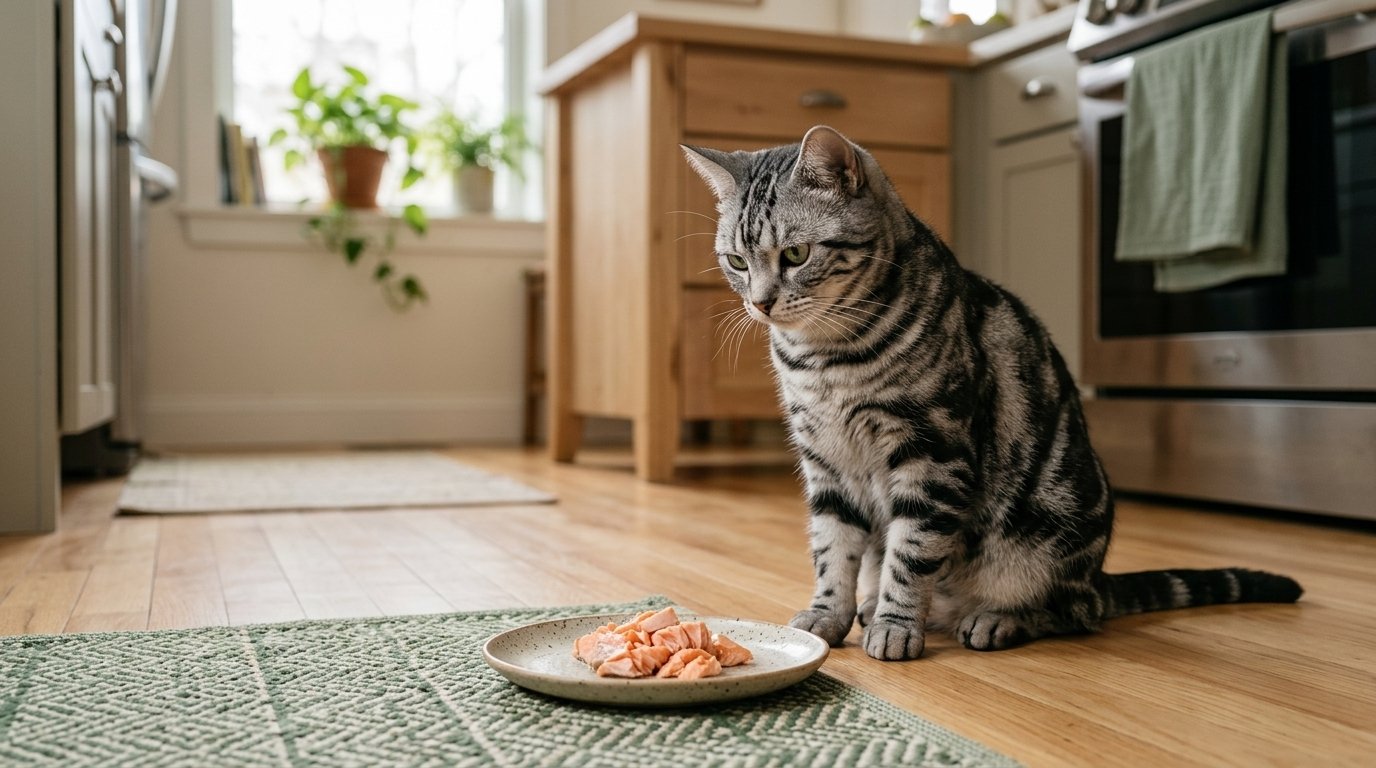
Can cats eat fish every day? Although many cats love the smell and taste of fish, feeding plain fish daily is not the same as feeding a nutritionally complete cat food made with fish. Fish can provide protein and omega-3 fatty acids, but relying on it too heavily may leave your cat short of essential nutrients or expose them to avoidable risks.
The safest approach is to make a complete and balanced cat food the foundation of your cat’s diet. Plain, thoroughly cooked, boneless fish can sometimes be offered as a small treat, provided it suits your cat’s health and does not displace their regular meals.
In this guide, you’ll learn why fish appeals to cats, what can go wrong with a seafood-only diet, whether tuna is safe, how to prepare fish properly, and what to do if your cat expects fish at every meal.
Table of Contents
Can Cats Eat Fish Every Day? The Short Answer
Fish should not be the sole or main unbalanced component of a cat’s diet every day. A nutritionally complete commercial cat food containing fish can be suitable for daily feeding when it is appropriate for your cat’s life stage and health. Plain fish, however, does not automatically provide everything a cat needs.
Cats are obligate carnivores, meaning their bodies depend on nutrients naturally associated with animal tissues. They need an appropriate balance of protein, fats, vitamins, minerals, and other essential nutrients. Simply offering a protein-rich food does not guarantee that all these requirements are met.
According to the Cornell Feline Health Center’s guidance on feeding cats, commercially prepared cat foods are formulated to provide the correct balance of nutrients, while some human foods and improperly formulated diets can create nutritional problems.
Here is the important distinction:
| Type of fish food | Suitable for daily feeding? |
|---|---|
| Complete and balanced commercial cat food containing fish | Generally yes, if appropriate for your cat |
| Plain, thoroughly cooked, boneless fish as a treat | Occasionally, in small amounts |
| Human canned tuna as a regular meal replacement | Not recommended |
| Raw fish as a regular diet | Not recommended |
| Fish alone as a homemade daily diet | Not without professional nutritional formulation |
The label matters. Check that the cat food is described as complete and balanced for the relevant life stage, rather than being intended only for supplemental or intermittent feeding.
If your cat eats a complete fish-based diet and is doing well, there is no automatic reason to change it just because fish is listed as an ingredient. The greater concern is a diet that relies on plain fish, treats, or human canned seafood instead of balanced feline nutrition.
Why Do Cats Love Fish?
Not every cat likes fish, but its smell, taste, and texture make it appealing to many felines. Fish is also used in a wide range of wet foods, dry foods, and treats.
There are several reasons fish can be an attractive food for cats.
Fish provides animal protein
Protein supplies amino acids that cats need to maintain muscles, support normal body functions, and repair tissues. Fish can contribute useful protein, but the protein content alone does not determine whether a food is nutritionally complete.
A fish fillet may contain plenty of protein while lacking the proper balance of other nutrients required for long-term feeding.
Fish contains omega-3 fatty acids
Certain fish provide EPA and DHA, two omega-3 fatty acids that play important roles in normal physiological functions. Their usefulness depends on the type of fish, the amount consumed, and the cat’s overall diet.
However, giving extra fish is not automatically the best way to manage inflammation, joint problems, skin disease, or other medical concerns. Cats with a diagnosed condition may need a specific diet or a veterinarian-recommended supplement.
Its smell can encourage eating
Fish has a strong aroma that may attract a cat that is reluctant to eat. That can make a small amount useful as a topper in some situations.
There is an important limitation, though. If your cat repeatedly receives fish instead of regular meals, they may begin rejecting their usual food. A cat that consistently refuses a complete diet needs a thoughtful feeding plan, not simply more fish.
Fish is a common commercial cat-food ingredient
Manufacturers can formulate fish-based foods to meet feline nutritional requirements. Such foods are different from a homemade serving of salmon or a spoonful of canned tuna.
A balanced commercial recipe accounts for nutrients that cannot be reliably supplied in the right amounts by a single fish species.
Seven Risks of Feeding Fish Every Day
Fish is not inherently harmful to cats. The concern is the way it is prepared, the amount served, the fish species involved, and whether it replaces a complete diet.
1. Nutritional deficiencies from an unbalanced diet
This is one of the most important concerns with feeding plain fish every day.
A fish fillet does not reliably provide the full range and appropriate proportions of nutrients that a cat needs. The problem becomes more serious when fish replaces most or all of the cat’s normal food.
Cats require carefully balanced nutrition, including essential amino acids, fatty acids, vitamins, and minerals. Adding random supplements to a fish-only diet does not reliably correct these deficiencies because nutrient requirements interact with one another.
For example, a homemade diet may contain sufficient protein but still provide inappropriate amounts of calcium, phosphorus, or other essential nutrients.
What to do: Use a complete and balanced feline diet as the nutritional foundation. If you want to feed a home-prepared fish diet regularly, ask your veterinarian for a referral to a board-certified veterinary nutritionist who can formulate a recipe for your cat.
2. Thiamine deficiency associated with raw fish
Thiamine, also called vitamin B1, is essential for normal energy metabolism and nervous system function.
Some raw fish contain an enzyme called thiaminase, which breaks down thiamine. Repeatedly feeding susceptible raw fish, particularly as a major part of a cat’s diet, can contribute to a deficiency.
The Merck Veterinary Manual’s nutritional guidance explains that thiaminase is found in raw freshwater fish and certain other foods. Cooking destroys this enzyme.
Possible signs of severe thiamine deficiency in cats include:
- Reduced appetite
- Weakness
- Abnormal coordination or difficulty walking
- Changes in head or neck posture
- Neurological abnormalities
- Seizures in severe cases
These signs can have several causes, so they should not be used to diagnose a nutritional deficiency at home.
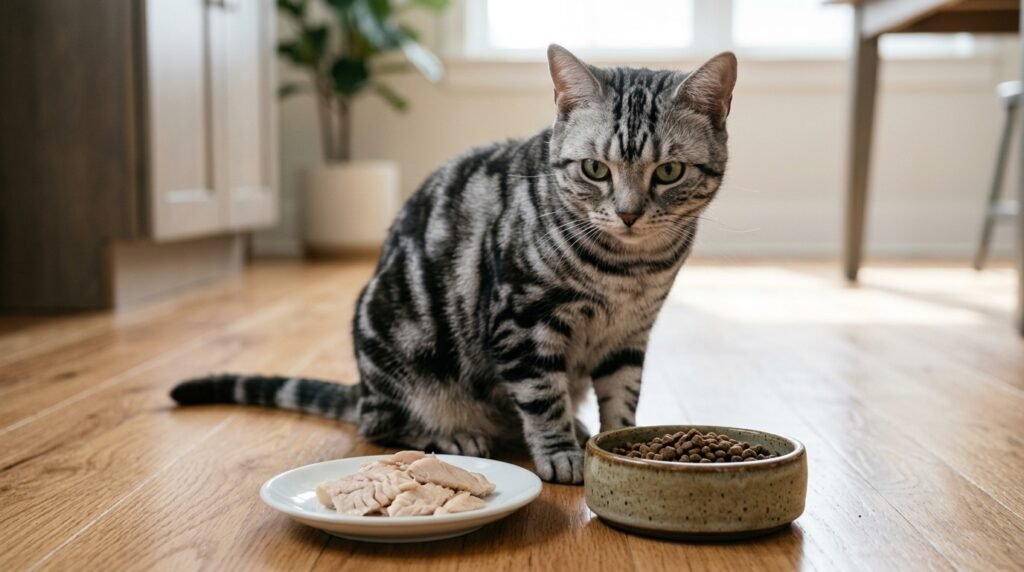
What to do: Avoid raw fish as a regular food or treat. If your cat has been eating a raw-fish-heavy diet and develops neurological signs, seek urgent veterinary care.
3. Mercury and other contaminant exposure
Some fish accumulate mercury and other contaminants through their food chain. The amount varies with species, size, source, and environmental conditions.
Large predatory fish, including some types of tuna, can have higher mercury levels than many smaller fish. Repeatedly relying on the same fish product can therefore be less desirable than feeding an appropriately formulated diet.
However, it would be inaccurate to claim that all fish contain dangerous amounts of mercury or that a single small serving will poison a cat.
The practical concern is repeated exposure, particularly when human fish products make up a large share of the diet. Commercial cat foods are formulated for feline nutrition, but the presence of fish on the label alone does not tell you the contaminant level or overall nutritional quality.
What to do: Do not use tuna or another single fish species as your cat’s everyday replacement food. Choose complete commercial cat food from a reputable manufacturer, and discuss concerns about a particular fish product with your veterinarian.
4. Vitamin and mineral imbalances
Different fish species have different nutrient profiles. Some provide more fat, while others are leaner. None should be assumed to meet all feline nutritional requirements simply because it is a natural animal protein.
A fish-only diet can supply too little of certain nutrients or inappropriate amounts of others. The consequences depend on the ingredients, preparation, and length of time the diet is fed.
Cats are particularly vulnerable to problems caused by poorly formulated diets because they have specific nutritional requirements that differ from those of humans.
For example, a cat needs taurine from its diet. Taurine is essential for normal vision, heart function, and other body processes. A plain fish fillet should not be treated as a dependable substitute for a complete diet formulated to meet taurine requirements.
What to do: Do not attempt to balance a fish-only diet by adding individual vitamins or minerals without professional guidance. A veterinary nutritionist can account for the entire recipe rather than correcting one nutrient in isolation.
5. Raw fish can carry infectious organisms
Raw fish may contain parasites or harmful microorganisms. Preparation and storage also affect food safety.
Cats can become ill after exposure to contaminated raw food, and people handling that food can also be exposed. Freezing does not make every raw fish product completely safe, and home preparation does not eliminate all risks.
The Cornell Feline Health Center’s feeding guidance advises against raw food because of the potential for infectious disease.
What to do: Serve fish thoroughly cooked, plain, and free of bones. Keep raw seafood separate from ready-to-eat food, wash your hands and utensils, and refrigerate leftovers promptly.
If your cat develops repeated vomiting, diarrhea, marked lethargy, or refuses food after eating raw fish, contact a veterinarian. Seek emergency care for collapse, difficulty breathing, severe weakness, or other serious symptoms.
6. Fish bones can cause injuries
Cooked or raw fish bones can become lodged in the mouth or throat, cause choking, or injure the digestive tract. Small bones can be difficult to spot, especially in flaked fish.
Do not assume that bones are safe simply because they are soft, small, or mixed into a moist meal.
What to do: Remove bones carefully before offering fish, and inspect the serving under good lighting. Avoid feeding fish scraps when you cannot confidently identify and remove the bones.
If you suspect your cat has swallowed a bone, contact your veterinarian for advice. Choking, breathing difficulty, repeated gagging, or an inability to swallow warrants urgent veterinary attention. Do not try to force a bone down with food or induce vomiting.
7. Salt, oils, seasonings, and digestive upset
Fish prepared for people may contain ingredients that are unsuitable for cats. Smoked fish, brined seafood, seasoned fillets, and fish cooked with rich sauces are not equivalent to plain cooked fish.
Avoid fish prepared with:
- Garlic or onion
- Heavy salt or brine
- Spicy seasonings
- Butter or rich sauces
- Breading and deep-frying oils
Garlic and onions are particularly important to avoid because they can damage cats’ red blood cells. Excessive fat and unfamiliar foods may also cause digestive upset.
Even plain fish can disagree with an individual cat. Vomiting, diarrhea, itching, or other recurring symptoms after eating a particular food deserve attention, especially if they happen repeatedly.
What to do: Offer only a small amount of plain, fully cooked, boneless fish when your cat can safely have it. Stop offering it if symptoms develop, and ask your veterinarian whether the reaction needs investigation.
Is Fish-Based Commercial Cat Food Safe Every Day?
Yes, a fish-based commercial cat food can be appropriate for daily feeding when it is complete and balanced for your cat’s life stage and meets their individual health needs.
The key is to distinguish the main ingredient from the complete formulation.
A properly formulated fish-based cat food may include other ingredients and carefully measured nutrients to meet feline requirements. It is not nutritionally equivalent to a bowl containing only cooked salmon, cod, or tuna.
How to check the food label
Before making a fish-based food your cat’s main diet, check:
- Nutritional adequacy: Look for a statement that the food is complete and balanced for the intended life stage.
- Life stage: Kittens, adult cats, and pregnant or nursing cats may have different nutritional requirements.
- Feeding instructions: Follow the manufacturer’s directions and adjust portions to maintain a healthy body condition.
- Veterinary needs: Cats with kidney disease, food allergies, urinary problems, or other conditions may need a particular formulation.
The word fish on the ingredient list does not automatically make a food unsafe. Similarly, the words natural or high protein do not guarantee nutritional completeness.
If your cat eats a complete fish-based food and tolerates it well, there is generally no need to remove it solely because it contains fish.
What about fish-flavored dry food?
Fish-flavored dry food can also be suitable when properly formulated. What matters is its nutritional adequacy, suitability for the cat, and how much the cat eats.
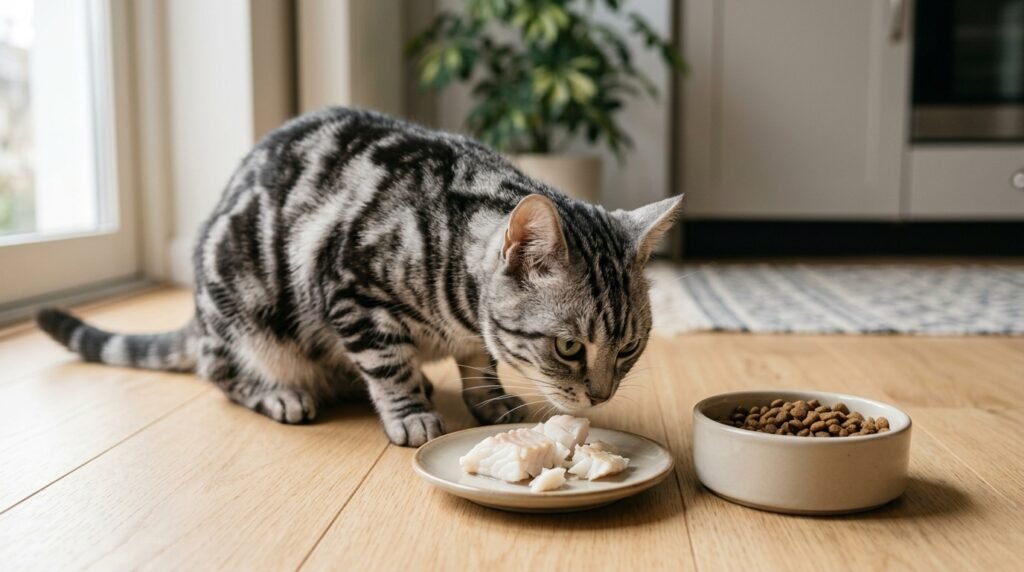
A dry food that is complete and balanced is very different from feeding dried fish pieces or human fish snacks as the main source of nutrition.
How to Feed Fish to Your Cat More Safely
If your cat enjoys fish, you usually do not need to eliminate it completely. The goal is to keep it as a small extra rather than allowing it to replace balanced meals.
Choose plain, thoroughly cooked fish
Plain cooked salmon, cod, or another suitable fish can be offered in small amounts if your cat tolerates it. No particular species is automatically the best choice for every cat.
Bake, poach, or steam the fish without added salt, sauces, or seasonings. Let it cool before serving.
Avoid raw fish, smoked fish, heavily salted seafood, and leftovers containing ingredients unsafe for cats.
Remove every bone you can find
Flake the cooked fish into small pieces and check carefully for bones. Never feed a cat fish scraps when bones cannot be reliably removed.
Keep portions small
Fish offered as a treat should not displace the complete food your cat needs. Veterinary nutrition guidance commonly recommends that treats and other extras make up no more than about 10% of a cat’s daily calories, with the main diet providing the rest.
That is a general ceiling, not a target every cat should reach. A smaller amount may be more appropriate for a cat with weight concerns, a sensitive stomach, or a medical condition.
There is no single tablespoon measurement that is right for every cat. Calorie content varies with the type of fish and preparation, while cats differ in size, age, activity, and daily energy requirements.
Avoid making tuna a daily habit
Human canned tuna is not a complete cat food. It may contain added salt, and tuna alone does not provide the full nutrient balance a cat needs.
A small taste of plain tuna is different from using tuna as a daily meal. If you offer it, choose a plain product without seasonings, drain it, check for bones, and keep the serving small and infrequent.
Do not assume tuna packed in oil or brine is equivalent to plain cooked fish.
Introduce new foods carefully
When offering a new treat, start with a small amount and watch for digestive upset or other unusual symptoms. If your cat has a known food allergy, a prescribed elimination diet, or a medical feeding plan, ask your veterinarian before introducing fish.
For cats on a therapeutic diet, even a seemingly harmless extra can interfere with the intended nutritional plan.
Keep fresh water available
Your cat should always have access to clean drinking water. Wet food can contribute to overall water intake, but a fish treat is not a substitute for appropriate hydration.
If your cat suddenly drinks much more than usual, urinates excessively, or shows a persistent change in appetite, arrange a veterinary evaluation rather than trying to correct the issue by changing fish portions.
What If Your Cat Already Eats Fish Every Day?
If fish has become a daily habit, there is no need to panic. First, determine exactly what your cat is eating.
A cat eating complete and balanced fish-based cat food every day is in a different situation from one eating human tuna or plain fish fillets for most meals.
Step 1: Review the current diet
Write down the food brands, product names, approximate daily amounts, treats, and supplements your cat receives. Check whether the main food is labelled complete and balanced.
If fish is replacing regular meals, make a note of how long this has been happening. That information will help your veterinarian assess whether a nutritional review is needed.
Step 2: Arrange a veterinary nutrition review when necessary
Contact your veterinarian if your cat has relied on plain fish, human canned tuna, or an unbalanced homemade diet for an extended period.
The veterinarian can review the diet, assess body condition, and decide whether examination or testing is appropriate. Do not give vitamin supplements or attempt to treat a suspected deficiency on your own.
Step 3: Transition to a complete diet
If your cat needs to move away from an unbalanced fish-based routine, ask your veterinarian how to introduce an appropriate complete food.
For a healthy cat, a gradual transition over roughly 7–10 days is often practical, although the pace depends on the cat and the foods involved. Start by mixing a small amount of the new food into the familiar food, then gradually increase the proportion of the new food as tolerated.
Some cats need a slower transition or a different strategy, particularly if they have a medical condition or a history of refusing food.
Do not allow the transition to become prolonged starvation. Cats that eat too little can develop serious complications, especially if they are overweight or already unwell. If your cat refuses food, contact your veterinarian promptly rather than repeatedly offering treats as a substitute for meals.
Step 4: Watch for changes
Monitor appetite, weight, energy, stool quality, vomiting, and any unusual behavior. These observations can help your veterinarian decide whether further assessment is necessary.
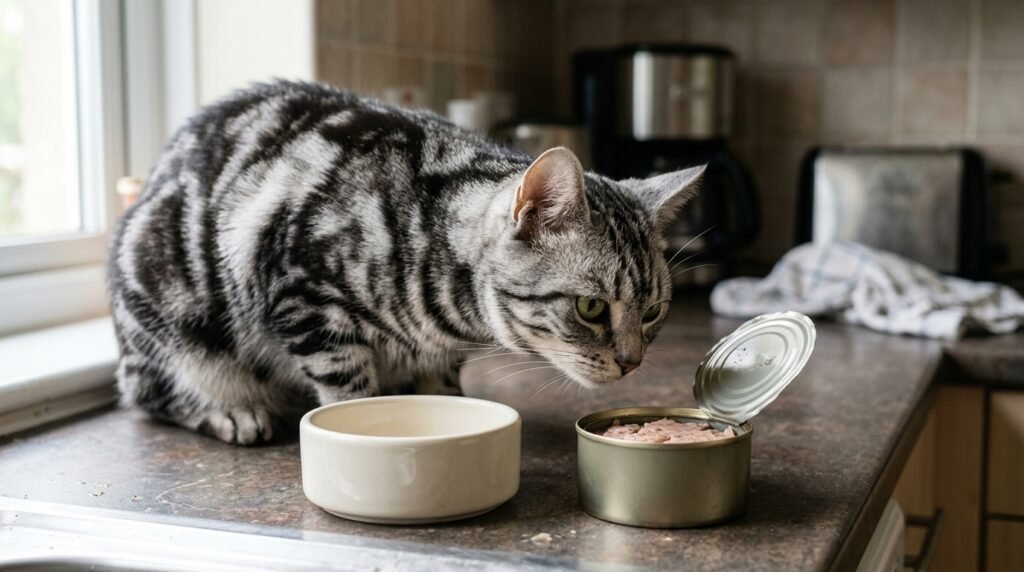
If a cat has been eating an unbalanced diet for a long time, changing food does not guarantee that any existing deficiency or illness will resolve immediately.
When Should You Contact a Veterinarian?
A cat that has eaten a small piece of plain, cooked, boneless fish and is behaving normally will often need no special treatment. The situation changes if the food was raw, contained bones or unsafe seasonings, or formed most of the cat’s diet for an extended period.
Contact a veterinarian if you notice:
- Persistent vomiting or diarrhea
- A noticeable decrease in appetite
- Unexplained weight loss
- Ongoing lethargy or weakness
- Repeated digestive symptoms after fish
- A prolonged diet consisting mostly of plain fish or human canned tuna
Seek urgent or emergency veterinary care if your cat has trouble breathing, collapses, develops seizures, shows severe weakness or abnormal coordination, or may have a bone lodged in the throat.
Do not wait for several symptoms to appear before seeking help when a serious warning sign is already present.
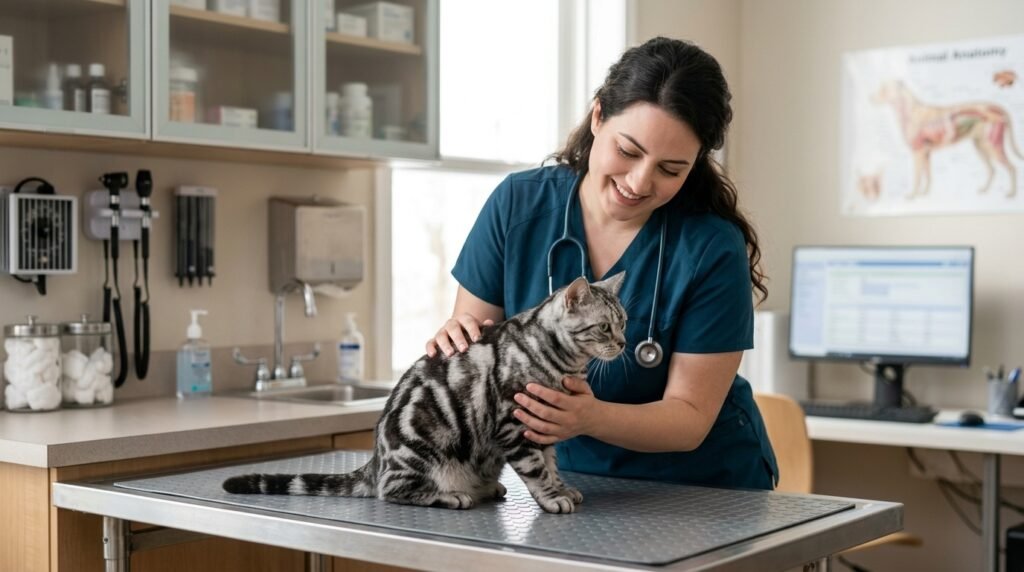
A veterinarian can assess the specific exposure, review the cat’s diet, and recommend appropriate next steps. The type and amount of fish eaten, how it was prepared, and the cat’s current symptoms all matter.
FAQs
1. Can cats eat cooked fish every day?
Plain cooked fish may be tolerated in small amounts, but it should not replace a complete and balanced cat food. Daily feeding of plain fish can create nutritional imbalances if it displaces the cat’s regular diet. A complete commercial fish-based cat food is a different matter and can be suitable for daily feeding.
2. Can cats eat tuna every day?
No. Human canned tuna should not become a cat’s daily staple because it is not formulated to meet all feline nutritional requirements. Keep it as an occasional small treat, if appropriate, and use a complete cat food for regular meals.
3. Is raw fish safe for cats?
Raw fish is not recommended as a regular food or treat. It may contain harmful microorganisms or parasites, and some raw fish contain thiaminase, which breaks down vitamin B1. Thorough cooking reduces these risks, but the fish should still be plain and boneless.
4. What should I do if my cat refuses food without fish?
Avoid repeatedly replacing balanced meals with tuna or plain fish. Try a gradual transition to a suitable complete food and ask your veterinarian for help if your cat persistently refuses it. If your cat stops eating, contact a veterinarian promptly, especially if there are other symptoms or an existing medical condition.
Conclusion
So, can cats eat fish every day? A complete and balanced fish-based cat food can be suitable for daily feeding, but plain fish should not become the foundation of an unbalanced diet.
Fish can provide useful protein and fats, but raw fish, bones, unsuitable seasonings, and excessive reliance on tuna or other single fish products create avoidable risks.
Choose a complete diet suited to your cat’s life stage, keep plain cooked fish as a small occasional treat, and speak with your veterinarian if fish has replaced your cat’s normal meals or if you notice changes in appetite, digestion, coordination, or energy.
The goal is not to eliminate a food your cat enjoys. It is to make sure that enjoyment never comes at the expense of balanced nutrition and long-term health.