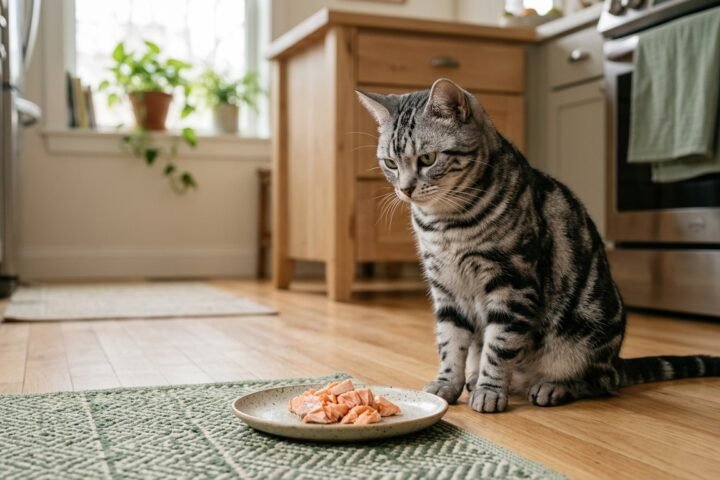
Can cats eat cheese? Some healthy adult cats tolerate a tiny amount of plain cheese, but cheese is unnecessary and can cause digestive upset. Many cats have difficulty digesting lactose, and even low-lactose cheese can add substantial calories, fat, and salt. Seasonings such as onion, garlic, or chives create a separate poisoning concern.
If your cat just stole a crumb, start by checking the ingredients and how much is missing. A small bite of plain cheese is different from eating a garlic spread, swallowing packaging, or developing breathing problems.
The most useful approach is to understand your cat’s health, identify the actual product, and choose treats that fit their normal feeding plan. Here is how to make that decision without turning a snack into a daily habit.
Table of Contents
Can Cats Eat Cheese Without Getting Sick?
Some can, but tolerance varies. Plain cheese is not generally treated as a poison in itself. That does not make it suitable for every cat or a recommended addition to their meals.
Think about three separate questions: Does the product contain a dangerous ingredient? Can this individual cat tolerate dairy? Does the extra food fit their diet? A cheese can pass the first check and still fail the other two.
Your cat does not need cheese for calcium or protein. The Cornell Feline Health Center’s feeding guidance emphasizes appropriately balanced feline nutrition and notes that dairy can cause gastrointestinal problems in lactose-intolerant cats.
For an owner asking, “Can cats eat cheese as part of dinner?”, the practical answer is to keep the regular meal intact. Adding shreds to every bowl can quietly become a substantial extra, especially when several people share snacks.
Why your cat may want your cheese
A strong smell, interesting texture, and previous rewards can make cheese appealing. Your cat may also investigate simply because you are handling food. Interest does not establish a dietary need or show that the food will agree with their stomach.
Notice the setting. Does your cat appear whenever the refrigerator opens, or only when someone sits down with a snack? Does a family member occasionally hand over a piece? Those details help explain the routine without assuming a nutrient deficiency.
If your cat is following you around the house, food anticipation may be one explanation among several. Review their normal intake and behavior rather than automatically offering more treats.
Lactose Intolerance, Dairy Allergy, and Digestive Upset
Lactose is milk sugar. Lactase is the enzyme that helps digest it. Many cats have less ability to handle lactose as they mature, so dairy can lead to loose stool, gas, bloating, or vomiting.
VCA’s general feeding guidelines for cats explain that most kittens lose much of their ability to digest milk sugar by about 12 weeks. Individual tolerance varies, and cheese products differ in their lactose content.
Can cats eat cheese if they never reacted to milk? A previous uneventful taste does not establish a safe serving. The amount, recipe, and your cat’s current health can all differ the next time.
Intolerance and allergy are different
Lactose intolerance concerns digestion of a sugar. A food allergy involves an immune response to food proteins. Removing lactose does not remove all dairy proteins, so a lactose-free product is not automatically appropriate for a cat with a diagnosed dairy allergy.
Digestive symptoms alone do not tell you which problem is present. A cat can also become ill for reasons unrelated to cheese. Avoid repeatedly testing dairy at home to see whether symptoms return.
A useful record includes the product name, amount eaten, other foods offered, and when symptoms appeared. Photograph the label rather than relying on a description such as “a little white cheese.” Your veterinarian can use that history when deciding what needs investigation.
Signs worth noticing
Watch for changes in stool, vomiting, unusual hiding, apparent abdominal discomfort, reduced activity, or loss of interest in food. Compare your cat with their normal behavior rather than another pet in the house.
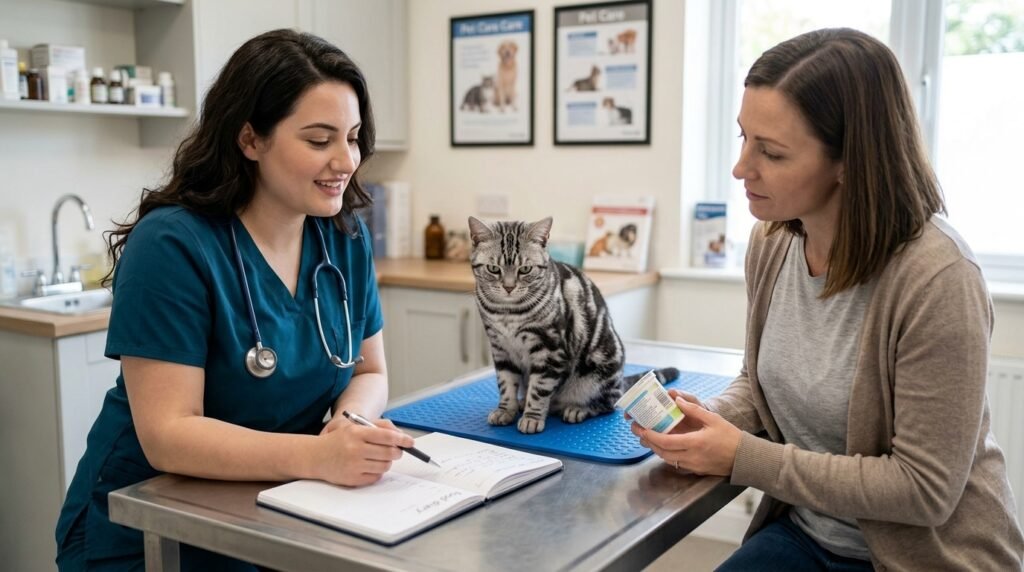
One cat may approach you while uncomfortable; another may retreat. Neither behavior diagnoses lactose intolerance. If illness develops, stop the extra food and ask your veterinarian for guidance instead of assuming that all dairy reactions are mild.
Which Types of Cheese Are Less Risky?
Can cats eat cheese more easily when it is aged? Aging generally lowers lactose in many cheeses, but it does not eliminate every concern. The recipe, amount, salt content, dairy proteins, and your cat’s health still matter.
When considering “can cats eat cheese?”, use the following table to compare concerns rather than select foods your cat should try. There is no nutritional reason to work through the options until you find a cheese they tolerate.
| Cheese or product | Main concern | Practical choice |
|---|---|---|
| Plain aged cheddar or Swiss | Often lower lactose, but concentrated calories and dairy proteins remain | Prefer a cat-appropriate treat; any use should fit individual veterinary advice |
| Parmesan | Often low lactose; concentrated and commonly salty | Avoid using it as a routine food topper |
| Mozzarella or string cheese | Formulation and lactose vary; large pieces are inappropriate | Do not share strings or chunks |
| Cream cheese, cottage cheese, or ricotta | Lactose, fat, and sodium vary by product | Do not assume soft texture or lower fat makes a product suitable |
| Feta | Often salty; still a dairy food | Skip it as a treat |
| Goat cheese | Still contains dairy proteins and may contain lactose | Do not treat it as automatically hypoallergenic or easiest to digest |
| Blue cheese or spoiled cheese | Additional concern from mold-associated compounds or spoilage | Avoid feeding; seek exposure advice if eaten |
| Processed slices or cheese spread | Variable sodium, fat, and added ingredients | Check the actual label; choose another reward |
| Vegan cheese | No dairy lactose, but recipe-dependent oils, salt, and seasonings | Do not assume dairy-free means cat-safe |
Check the ingredients before the cheese name
A plain product and a flavored version can require very different decisions. Read the entire ingredient list, including seasoning blends. Garlic powder, onion powder, and chives can appear in spreads, dips, flavored cheeses, and prepared meals.
VCA’s guidance on onion, garlic, chive, and leek poisoning in cats explains that raw, cooked, and powdered forms can be poisonous. Contact a veterinarian promptly after suspected ingestion rather than waiting for symptoms.
Can cats eat cheese from pizza or a sandwich? Evaluate the whole food. Sauce, meat toppings, condiments, and seasonings matter, and picking away visible pieces does not reliably remove ingredients mixed into a recipe.
Low lactose is only one consideration
“Lactose-free,” “organic,” “natural,” and “reduced fat” describe different features. None is a blanket feeding recommendation for cats. A lactose-free cheese may still contain dairy proteins, and a reduced-fat product may still be unsuitable for a restricted diet.
Similarly, the word “goat” does not guarantee tolerance. Product differences make sweeping rankings unreliable. When a label is unclear or your cat has a known sensitivity, choosing a familiar approved treat is simpler than experimenting.
How Much Cheese Is Too Much for a Cat?
There is no universal cheese allowance. Body size, daily calorie needs, medical conditions, other treats, and the specific product all affect the decision. For a sensitive cat, the appropriate amount may be none.
Can cats eat cheese every day if the piece is small? Daily sharing is best avoided. It creates a habit around a food that is unnecessary, and small extras become harder to track when several people offer them.
The WSAVA guide to feeding treats to cats recommends keeping treats below 10% of daily calories. That limit includes all extras, including food used to administer medicine. It is not a recommended cheese allowance.
A calorie example makes the size issue clearer
WSAVA lists approximately 120 calories in 28 grams of cheddar. Using that example, a 5-gram piece supplies about 21 calories. For a hypothetical cat prescribed 200 calories daily, that single piece would already exceed a 10% treat ceiling.
The 200-calorie figure is an illustration, not a feeding prescription for your cat. Check the product label and ask your veterinary team about your pet’s actual requirements. An ordinary-looking human snack can be a large extra in a cat’s day.
Count everything that is offered
Write down dental treats, lickable snacks, training rewards, table scraps, and medication food. Include what other people give. A shared household list often reveals extras that no single person realized were accumulating.
For example, one person may give a morning treat, another may share lunch, and a third may use a snack at bedtime. Each person sees one small serving; the cat receives the total.
Can cats eat cheese occasionally if your veterinarian approves? Follow the amount and frequency discussed for your individual pet, serve it separately in an appropriately small form, and stop if any adverse signs occur. Do not treat a successful first taste as permission to increase the amount.
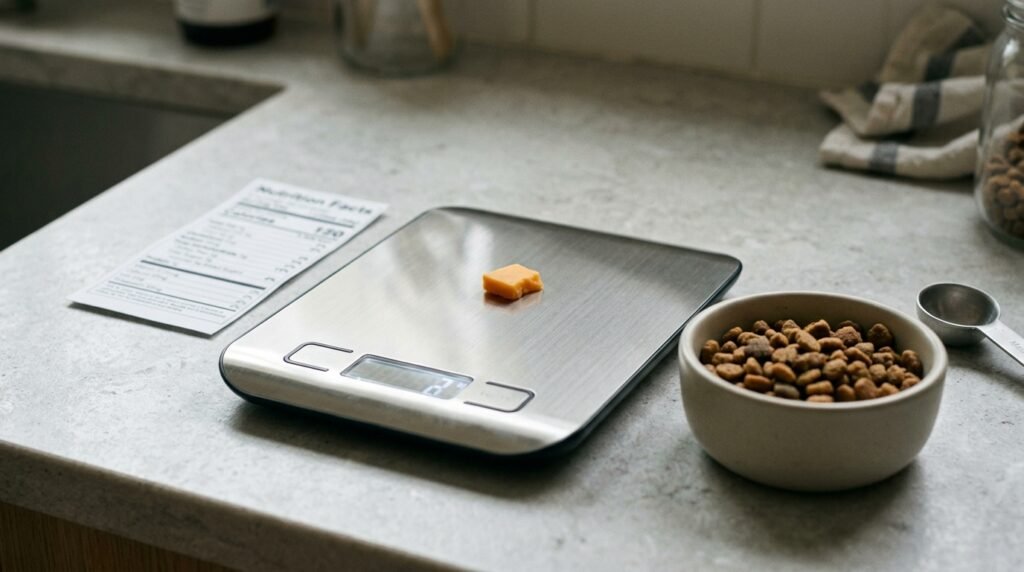
There is also no need to fill the entire treat budget. Enjoyment can come from play, exploration, or attention. A cat who already likes their ordinary food may be just as pleased with a few pieces reserved from the measured daily ration.
What to Do If Your Cat Ate Cheese
Start with the product, the estimated amount, and your cat’s condition. Can cats eat cheese accidentally without an emergency visit? A healthy adult cat who swallowed a tiny amount of plain cheese and remains well may only need observation, but concerning ingredients or symptoms change that decision.
1. Remove the food and identify the exposure
Put away the remaining cheese and collect the packaging. Check whether anything else is missing, including plastic wrap, foil, a rind covering, or part of a serving container. Tell the veterinarian about possible packaging ingestion as well as the food.
Record approximately when it happened and how much may have been eaten. If several pets had access, say that the amount is uncertain rather than guessing confidently. A photograph of the product and remaining portion can help explain the situation.
2. Call promptly when the ingredients are concerning
If the cheese contained onion, garlic, or chives, contact your veterinarian or an animal poison service immediately for assessment. Do the same for spoiled food, concerning mold exposure, a large or uncertain amount, or possible swallowed packaging.
Do not wait for a cat to look ill before asking about a potentially hazardous ingredient. Save the label so the professional assessing the exposure can review the actual recipe.
3. Observe only when the situation is low risk
For a small plain-cheese exposure in an otherwise healthy, symptom-free adult cat, watch appetite, energy, vomiting, stool, and general comfort. Keep fresh water available. Do not offer more dairy or an assortment of new foods to settle the stomach.
If your cat has a medical condition or a restricted diet, ask your veterinarian sooner. The advice appropriate for a healthy adult may not fit a kitten, an older unwell cat, or a pet receiving treatment.
4. Get veterinary help when illness appears
Call your veterinarian for vomiting, diarrhea, reduced appetite, or unusual behavior after the exposure. Seek immediate care for difficulty breathing, collapse, tremors, seizures, severe weakness, or repeated vomiting with inability to keep water down.
The Cornell Feline Health Center’s information on vomiting explains that vomiting accompanied by other changes can require prompt evaluation. Cheese should not become a reason to dismiss signs of another illness.
Avoid human stomach remedies, forced feeding, or attempts to make your cat vomit. Ask for instructions tailored to the exposure. When speaking with the clinic, mention age, approximate weight, existing conditions, medications, and every symptom you have observed.
Kittens, Medical Diets, and Cheese for Pills
Can cats eat cheese when they are young? Cheese is not an appropriate routine kitten food or a substitute for kitten milk replacer. A growing kitten needs nutrition matched to its life stage, and an unweaned kitten needs specific feeding guidance.
Being able to digest the mother’s milk early in life does not mean a kitten should receive cheese or cow’s milk. If a kitten is not nursing normally, seek veterinary advice rather than improvising a dairy feeding plan.
Cats whose diet needs extra care
Before offering any extra food, consult the treating veterinarian if your cat has a diagnosed food allergy, chronic digestive disease, a weight-management plan, or another condition requiring a special diet. The same applies during a supervised food trial.
A tiny food exposure can complicate interpretation of a diet trial even when it does not cause an obvious immediate reaction. Keep the approved food list available to everyone who feeds the cat, including visitors and pet sitters.
Can cats eat cheese while taking medicine? Ask about the exact medication before using dairy to hide it. Food instructions and potential interactions differ, and a cat’s dietary restrictions may rule out cheese regardless of the drug.
A medication snack needs its own plan
VCA’s guidance on giving pills to cats discusses hiding suitable medication in a small amount of food and checking that the dose is swallowed. Ask whether a small portion of the regular wet food or an approved pill treat is appropriate.
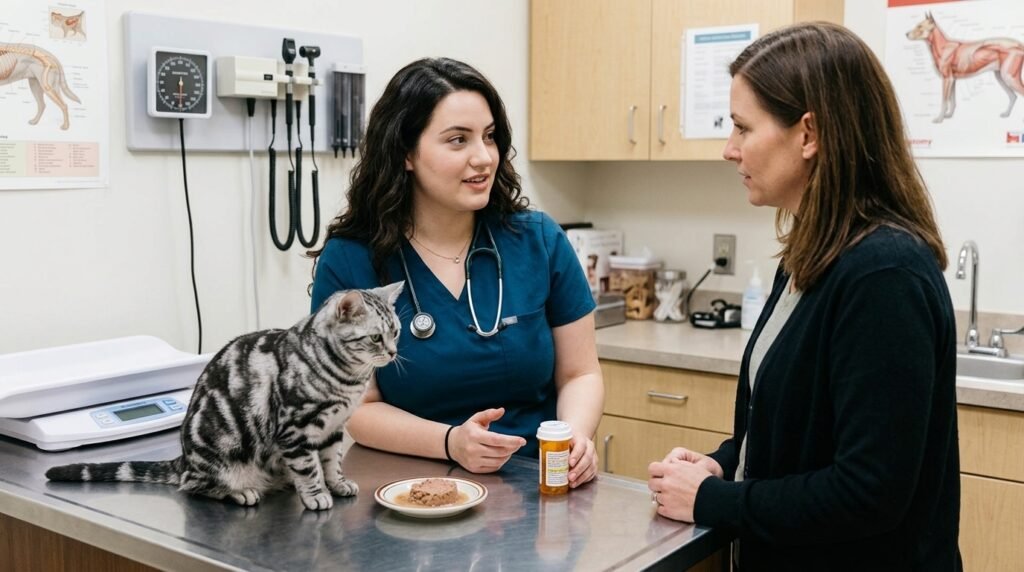
Do not crush, split, or open medication without permission. If your cat eats around the pill or you are unsure how much was swallowed, contact the clinic before repeating a dose. Repeatedly adding cheese to persuade a reluctant cat can turn one unsuccessful attempt into several untracked snacks.
Safer Alternatives to Cheese
Can cats eat cheese simply because they refuse other treats? You do not need to find a human-food substitute for every preference. Start with what your cat already eats comfortably and what their veterinarian allows.
Use part of the regular ration
Reserve a few pieces of kibble from the measured daily amount for a simple reward. If your cat prefers wet food, offer a small portion from the day’s allowance separately. This can make reward time feel different without adding an unfamiliar ingredient.
The FDA’s explanation of complete and balanced pet food describes how the nutritional adequacy claim relates to a food’s intended use. Choose the main diet for your cat’s life stage; treats and toppers should not displace it.
Consider an appropriate commercial cat treat
Look for a product with a clear ingredient list and calorie information. Match texture and size to your cat’s abilities. A product marketed for cats still needs to fit any medical restrictions, and “natural” does not remove the need for portion control.
Introduce only one unfamiliar treat at a time so it is easier to notice a reaction. You do not need a large variety or a daily selection of snacks to provide good care.
Keep human-food treats simple if approved
A tiny amount of plain, thoroughly cooked, boneless, unseasoned chicken or turkey may suit some healthy cats. Avoid skin, sauces, bones, and seasoning. These foods remain extras, not complete meals, and are inappropriate if they conflict with an allergy trial or prescribed diet.
Can cats eat cheese instead of their normal food when they seem picky? Do not use it to cover up persistent food refusal. If your cat is eating noticeably less, speak with your veterinarian rather than building a sequence of increasingly rich toppers.
Food-related movements can also be misleading. For example, scratching around the food bowl does not automatically mean the cat dislikes dinner or needs cheese added. Look at actual intake and overall health.
Preventing Cheese Stealing and Mealtime Begging
Can cats eat cheese from an unattended plate? That is an exposure you can prevent more reliably than you can predict digestive tolerance. Put dairy foods away promptly and keep wrappers, cheese boards, and serving utensils out of reach.
Agree on one household approach. If one person shares while another refuses, the cat still has a reason to keep investigating. Use measured approved rewards in a consistent place instead of handing over pieces from the table.
Before preparing your meal, set up a comfortable nearby resting spot and offer an appropriate activity. Keep the arrangement easy: a familiar mat, a toy, or a small approved portion of the regular ration may be enough. Reward calm behavior before your cat starts reaching for food.
Avoid chasing, shouting, or turning food theft into an exciting interaction. Calmly remove access, clean up, and improve the setup for next time. Keep trash and food storage secure, especially after parties or meals with unfamiliar ingredients.

Can cats eat cheese when a visitor offers “just one bite”? Explain the household rule ahead of time. Visitors do not need to evaluate lactose content or medical restrictions; they can use the treats you provide.
If food seeking suddenly increases, particularly with weight loss, greater thirst, or other changes, arrange a veterinary assessment. A new appetite pattern deserves attention even when the cat looks enthusiastic about snacks.
FAQs
Can cats eat cheese if it is lactose-free?
Lactose-free cheese may reduce one digestive concern, but dairy proteins, calories, fat, salt, and added ingredients remain relevant. It is not automatically suitable for a cat with a dairy allergy or restricted diet. A familiar approved cat treat is usually simpler.
Can cats eat cheddar cheese or a little cream cheese?
Plain aged cheddar generally contains less lactose than many fresh dairy products, but neither choice is necessary. Cream cheese recipes vary and may contain unsafe flavorings. Avoid feeding dairy to a cat with known intolerance or allergy, and ask your veterinarian before deliberate sharing.
Can cats eat cheese every day in tiny amounts?
Daily cheese is best avoided. Small servings add up, and tolerating one bite does not make cheese an appropriate routine food. Keep the main diet balanced and count all approved extras within your cat’s individual feeding plan.
Is a small bite of cheese an emergency?
A tiny bite of plain cheese in a healthy, symptom-free adult cat is often low risk. Call promptly for concerning ingredients, large or uncertain amounts, swallowed packaging, or illness. Breathing problems, collapse, seizures, or severe weakness require immediate veterinary care.
Conclusion
Can cats eat cheese? Some healthy adults tolerate a tiny plain taste, but cheese offers no necessary benefit and may cause problems. Low lactose does not remove concerns about dairy allergy, extra calories, or added ingredients.
Choose an approved treat or part of the normal ration instead. After an accidental exposure, check the label and amount, watch your cat’s condition, and contact your veterinarian when ingredients or symptoms raise concern. This article provides general information and does not replace advice for your individual cat.