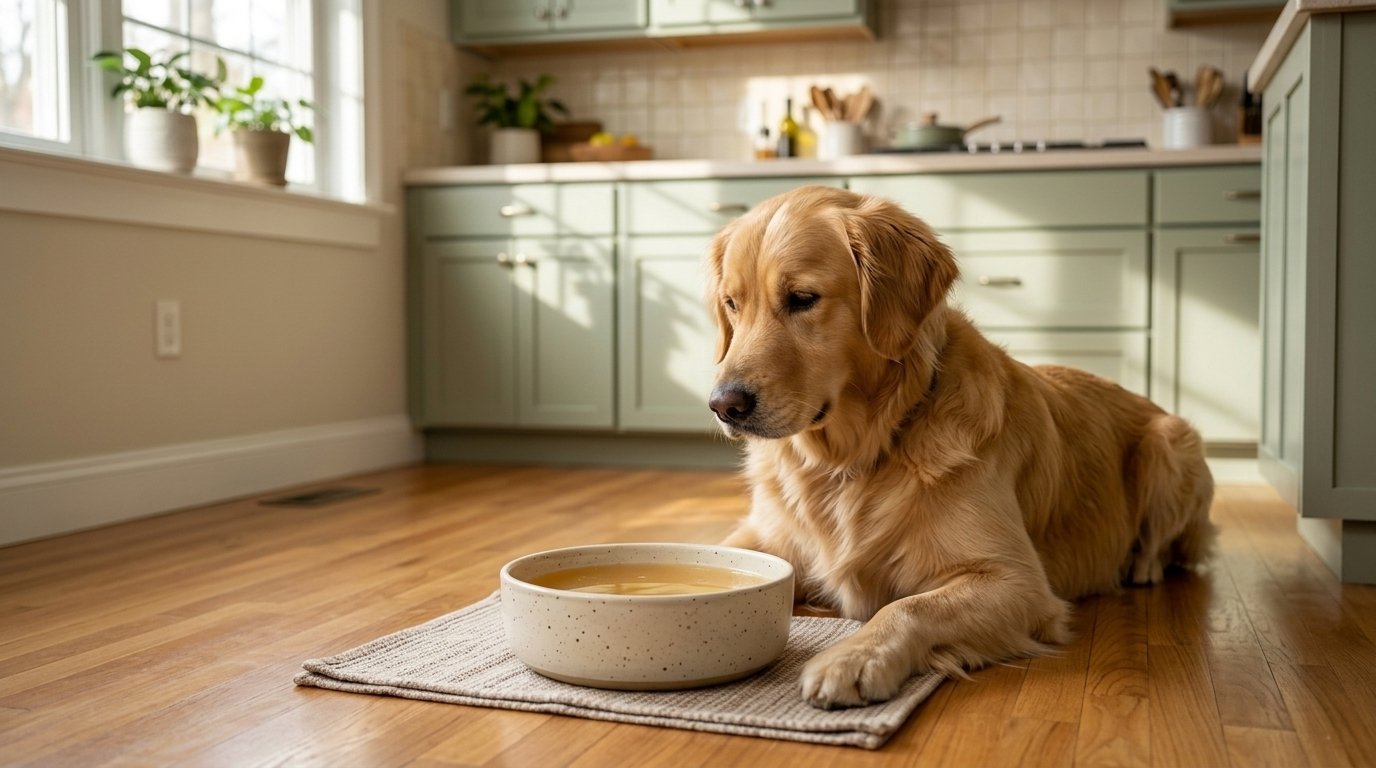
Homemade bone broth for dogs is a simple way to add flavor and moisture to your dog’s regular meals. Made by slowly simmering animal bones in water, it produces a savory liquid that many dogs enjoy as a food topper or occasional treat. The key is preparing it without unsafe ingredients, removing every bone fragment, and serving an appropriate amount.
You do not need an elaborate recipe or expensive equipment. A pot, water, suitable beef or chicken bones, and a little patience are enough to make a basic batch at home.
However, bone broth is not a complete dog food, and its nutritional content can vary depending on the ingredients and cooking method. Although it provides moisture and may contain gelatin, collagen-derived compounds, and small amounts of minerals, it should not be treated as a proven treatment for arthritis, digestive disease, or other medical conditions.
This guide explains how to make homemade bone broth for dogs, which ingredients to choose, how to serve it safely, and how to store leftovers for later use.
Table of Contents
What Is Bone Broth, and Is It Good for Dogs?
Bone broth is a liquid made by simmering animal bones and connective tissues in water for an extended period. Beef and chicken are common choices, although turkey bones can also be used.
During cooking, some proteins and other compounds from the bones and connective tissues enter the liquid. The finished broth may become gelatinous when chilled, depending on its composition and concentration.
Potential benefits of bone broth for dogs
When prepared appropriately, plain bone broth may offer several practical benefits.
- Adds moisture: Mixing a little broth into kibble can increase the moisture content of your dog’s meal.
- Makes food more appealing: Its savory aroma may encourage some dogs to show more interest in their regular food.
- Provides some protein-derived compounds: Gelatin and amino acids may be present, although the quantities vary between batches.
- Offers a convenient food topper: Small frozen portions make it easy to add a little flavor to meals without preparing broth every day.
These benefits should be kept in perspective. There is limited direct clinical evidence that ordinary homemade bone broth improves joint function, repairs the intestinal lining, or treats disease in dogs. Its presence in a dog’s diet does not replace appropriate veterinary treatment.
If your dog has suddenly stopped eating, is losing weight, or seems unwell, do not rely on broth to solve the problem. Contact your veterinarian to investigate the cause.
Ingredients for Homemade Bone Broth for Dogs
The simplest recipe uses bones and water. Keeping the ingredients minimal makes it easier to avoid potentially harmful additives.
What you will need
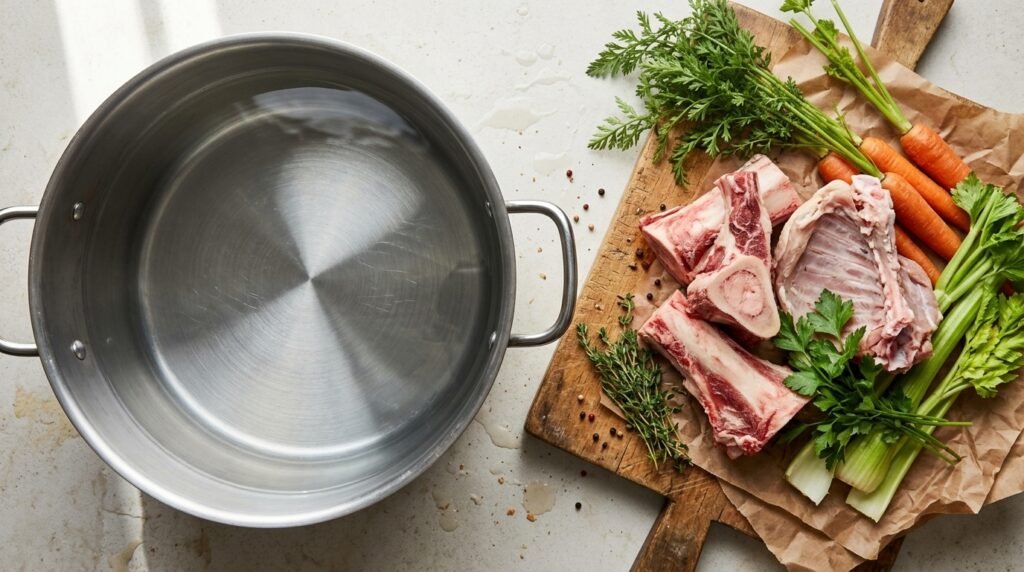
- 2–3 pounds of beef bones or chicken backs and carcasses
- Approximately 6–8 cups of water, or enough to cover the bones in your cooking pot
- A large stockpot or slow cooker
- A fine-mesh strainer
- A heat-resistant bowl or container
- An airtight storage container or ice cube tray
Choose bones from a reliable food source and handle raw animal products hygienically. Avoid bones that smell spoiled or have been stored improperly.
Beef knuckle bones and other bones with connective tissue can work well. Chicken backs and carcasses are also suitable starting ingredients. Marrow-rich bones may contribute more fat, so the finished broth should be chilled and the solidified fat removed when appropriate.
Can you add vegetables?
You can make a simple broth without vegetables. If you want additional flavor, a small amount of plain carrot or celery may be used, provided your dog tolerates it.
Avoid onions, garlic, chives, leeks, and seasoning mixes. Never add stock cubes or prepared soup bases unless a veterinarian has confirmed that every ingredient is appropriate for your dog.
The Merck Veterinary Manual explains that onions and garlic can damage red blood cells in dogs, including when consumed in cooked or concentrated forms. Read its guidance on onion and garlic toxicity in animals.
You do not need salt, butter, oil, or spices to make this recipe.
How to Make Homemade Bone Broth for Dogs
The following method works with either a stovetop stockpot or a slow cooker. Cooking times are approximate and depend on the bones, equipment, and desired consistency.
Step 1: Prepare the bones
Place the beef bones or chicken carcasses in a large stockpot or slow cooker.
Handle raw bones and meat carefully. Wash your hands, clean preparation surfaces, and keep raw ingredients away from ready-to-eat food.
Do not add cooked bones left over from a meal directly to your dog’s bowl. The bones used in broth must also be discarded after cooking.
Step 2: Add water
Pour in enough water to cover the bones. Leave sufficient space at the top of the pot to prevent spills during cooking.
If you are using vegetables, add only a small quantity of plain carrot or celery. Do not add onions, garlic, salt, stock cubes, or seasoning blends.
Step 3: Bring the mixture to a gentle simmer
For stovetop cooking, bring the water to a boil, then reduce the heat to maintain a gentle simmer.
For a slow cooker, follow the manufacturer’s instructions and use the appropriate low setting.
Avoid allowing the mixture to boil vigorously for long periods. A gentle simmer makes it easier to control splashing and evaporation.
Step 4: Cook the broth
For chicken bones, approximately 4–8 hours of gentle simmering is a reasonable starting point. Beef bones may require approximately 8–12 hours or longer, depending on the recipe and desired consistency.
These times are practical recipe guidelines rather than a guarantee of a particular nutrient content. Longer cooking does not automatically make broth healthier, and a finished batch can vary substantially in thickness, fat content, and mineral concentration.
Never leave a stovetop unattended while it is operating. If using a slow cooker for an extended period, follow its safety instructions and ensure the appliance is suitable for the cooking duration.
Step 5: Strain the broth thoroughly
Turn off the heat and carefully strain the liquid into a clean, heat-resistant container.
Remove all bones, cartilage pieces, vegetable solids, and other debris. A fine-mesh strainer is useful; cheesecloth can provide an additional filtering step.
Never feed your dog the cooked bones. Cooking can make bones brittle, and swallowed fragments may injure the mouth or digestive tract or cause an obstruction. The bones should be discarded securely once the broth has been strained.
Inspect the finished liquid before serving. If you cannot confidently remove the solid fragments, do not offer that batch to your dog.
Step 6: Cool and remove excess fat
Transfer the strained broth into shallow containers to help it cool more quickly. Refrigerate it promptly rather than leaving a large pot at room temperature for hours.
Once the broth has chilled, fat may solidify on the surface. Remove this layer when appropriate, particularly if you want to limit the fat in the finished product.
This matters for dogs that need a low-fat diet. Dogs with a history of pancreatitis or another condition requiring dietary fat restriction should not receive homemade broth without veterinary approval. See VCA Animal Hospitals’ guidance on pancreatitis in dogs.
Step 7: Portion the broth
Divide the cooled broth into small portions before storing it.
Ice cube trays are convenient because you can thaw only the amount you need for a meal. Once frozen, the portions can be transferred to a suitable freezer container or bag.
Label each container with the preparation date so you can track how long it has been stored.
Beef vs. Chicken Bone Broth for Dogs
Both beef and chicken can be used to make dog-friendly bone broth. Neither option is automatically superior for every dog.
Beef bone broth
Beef bones with connective tissue can produce a rich, full-bodied broth. The finished liquid may contain a noticeable amount of fat, especially when marrow-rich bones are used.
After chilling, inspect the fat layer and remove excess fat before serving. If your dog has a medical condition that requires a restricted diet, ask your veterinarian whether this type of broth is appropriate.
Chicken bone broth
Chicken backs and carcasses can produce a lighter broth with a familiar savory flavor. The final result depends on the amount of skin, fat, and connective tissue included.
Chicken broth is not necessarily lower in fat than beef broth. The amount of fat remaining after preparation is more important than the animal source alone.
Which one should you choose?
Start with whichever plain, unseasoned option is appropriate for your dog’s dietary needs and readily available to you.
If your dog has a known food allergy, choose ingredients that avoid the suspected allergen. If your veterinarian has prescribed a therapeutic diet, check before introducing either type.

Ingredients and Mistakes to Avoid for Dog Safety
A homemade recipe can still be unsafe if ingredients are added without checking whether they are appropriate for dogs.
Onions, garlic, and seasoning blends
Do not use onions, garlic, chives, or leeks. This includes powders and dried seasonings, which may be concentrated sources of the same potentially toxic compounds.
Commercial soup bases, bouillon cubes, and human cooking broths may also contain these ingredients or excessive sodium.
Excessive fat
Fat from marrow and animal tissues can remain in the broth. Chilling and skimming the surface helps reduce the amount, although it does not guarantee that the remaining broth is low in fat.
Excessively fatty additions can be problematic for some dogs, especially those with a history of pancreatitis or a veterinary recommendation for fat restriction.
Cooked bones and fragments
Never serve the bones used to prepare broth. Do not assume that long cooking makes them safe to chew.
Discard the bones and strain the liquid carefully. If you notice a fragment in your dog’s serving, remove it before offering the broth.
Unsafe temperature
Hot broth can burn your dog’s mouth. Let it cool to room temperature or gently warm it only until it is slightly warm, never hot.
Always test the temperature before putting the broth into your dog’s bowl.
Using broth as a meal replacement
Bone broth does not provide all the nutrients required for a complete and balanced canine diet. It should complement your dog’s regular food rather than replace it.
For a broader perspective on keeping your dog’s diet nutritionally appropriate, see PawMindTips’ guide to transitioning dog food safely.
How Much Bone Broth Can You Give Your Dog?
There is no single serving amount that is appropriate for every homemade batch. The broth’s calorie content, fat content, concentration, and your dog’s size and medical needs all matter.
A sensible approach is to begin with a very small amount, such as a teaspoon mixed into a meal, and observe how your dog responds. If your dog tolerates it, you can discuss an appropriate serving amount with your veterinarian.
Do not automatically increase the portion just because your dog likes the taste.
General serving considerations
- Small dogs: Begin with a teaspoon or less.
- Medium-sized dogs: Start with a small splash mixed into the regular meal.
- Large dogs: Introduce a small amount first rather than assuming a large serving is appropriate.
- Dogs with dietary restrictions: Get veterinary guidance before offering broth.
These are cautious starting approaches, not medically established daily doses. The right quantity may be lower for a dog with food sensitivities, a weight-management plan, or a condition that requires dietary restrictions.
How often can dogs have bone broth?
Some dogs may tolerate a small amount occasionally, while others may be better off without it. There is no requirement to give bone broth daily.
Treats and extras should generally account for no more than about 10% of a dog’s daily calories, with the remainder coming from complete and balanced food. Bone broth’s calorie contribution varies, so avoid assuming that every homemade batch contains negligible calories.
Cornell University College of Veterinary Medicine discusses the importance of limiting extras in its guide to evaluating a dog’s diet.
How to Store, Freeze, and Reheat Homemade Bone Broth
Proper storage helps reduce the risk of food spoilage and makes homemade broth easier to use.
Refrigerating broth
Transfer the broth into clean, covered containers and refrigerate it promptly. As a conservative household guideline, use refrigerated homemade broth within 3–4 days.
Discard broth that has been left out too long, smells unusual, shows signs of spoilage, or has been stored under uncertain conditions. Smell alone cannot establish that food is safe.
Freezing broth
Freezing is a convenient option if you have prepared more broth than you can use within a few days.
- Allow the broth to cool safely.
- Divide it into individual portions.
- Place the portions in freezer-safe containers or ice cube trays.
- Label each container with the date.
- Store at a consistent freezer temperature.
For best quality, aim to use frozen portions within approximately 2–3 months.
Leave room for expansion when freezing liquid in containers. Do not place a tightly sealed glass jar filled to the top into the freezer.
Thawing and reheating
Thaw frozen portions in the refrigerator or use a suitable method that maintains food safety. Warm only the portion you intend to serve.
Never give your dog hot broth straight from a saucepan or microwave. Stir thoroughly and check the temperature, since microwaving can create uneven hot spots.
Avoid repeatedly warming and cooling the same batch. Thawing individual portions makes it easier to manage leftovers.
Can you freeze bone broth in ice cube trays?
Yes. Ice cube trays are useful for portioning broth into small amounts. Once the cubes are frozen, transfer them to a labeled freezer-safe bag or container to save space.
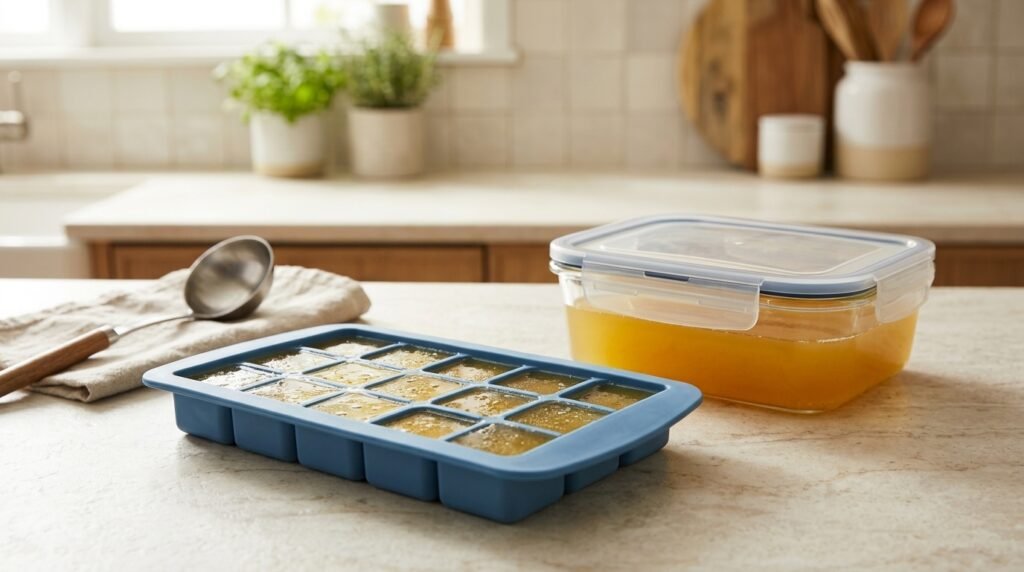
Thaw a cube safely before serving, or add it to food that can cool it without leaving the meal dangerously hot.
When to Ask Your Veterinarian Before Giving Bone Broth
For a healthy dog, a small amount of plain broth may be a reasonable food extra. However, certain circumstances call for more care.
Check with your veterinarian before introducing bone broth if your dog:
- Has pancreatitis or needs a low-fat diet.
- Has kidney disease or another condition requiring controlled nutrient intake.
- Has a known food allergy or suspected food intolerance.
- Eats a prescription diet that should not be supplemented without approval.
- Is experiencing persistent vomiting, diarrhea, poor appetite, or unexplained weight loss.
- Is recovering from surgery or illness and has specific feeding instructions.
Broth is not a substitute for an examination when your dog is unwell. If your dog refuses food, repeatedly vomits, appears weak, has abdominal pain, or develops other concerning symptoms, contact your veterinarian promptly. Severe weakness, collapse, or significant breathing difficulty warrants emergency veterinary attention.
If you suspect your dog has eaten onion or garlic in the broth, contact a veterinarian or animal poison service for advice. Do not wait for symptoms, because signs of red blood cell damage may be delayed.
The safest approach is to treat bone broth as an optional food addition, not as a remedy for an underlying health problem.
Frequently Asked Questions
Can dogs have homemade bone broth every day?
Some dogs may tolerate small amounts regularly, but daily feeding is not necessary and may not be appropriate for every dog. Consider the broth’s calories and fat, your dog’s regular diet, and any medical restrictions. Ask your veterinarian about a suitable amount if you plan to offer it frequently.
Is beef or chicken bone broth better for dogs?
Neither is automatically better. Both can provide moisture and flavor, but their fat content and nutritional composition vary with the ingredients and preparation. Choose a plain recipe that suits your dog’s needs and remove excess fat when appropriate.
Can I use store-bought broth instead of homemade bone broth?
You can consider a commercial product specifically suitable for dogs, but read the ingredient label carefully. Avoid products containing onion, garlic, excessive sodium, or other unsuitable ingredients. If your dog has a medical condition or follows a prescription diet, check with your veterinarian first.
Does bone broth help dogs with arthritis or upset stomachs?
Bone broth may make food more appealing and add moisture, but it is not a proven treatment for arthritis or gastrointestinal disease. If your dog has joint pain, persistent digestive symptoms, or a reduced appetite, seek veterinary advice instead of relying on broth.
Conclusion
Homemade bone broth for dogs can be a simple way to add flavor and moisture to regular meals when it is prepared and served carefully. Use plain beef or chicken bones, simmer them gently in water, avoid unsafe seasonings, strain the liquid thoroughly, and discard every cooked bone.
Cool the broth promptly, remove excess fat when appropriate, and store it in small refrigerated or frozen portions. Introduce a little at first, and remember that serving amounts should reflect your dog’s diet, size, and health.
Most importantly, bone broth is an optional food topper—not a complete meal or a medical treatment. When your dog has dietary restrictions, a history of pancreatitis, or symptoms of illness, consult your veterinarian before adding it to the menu.