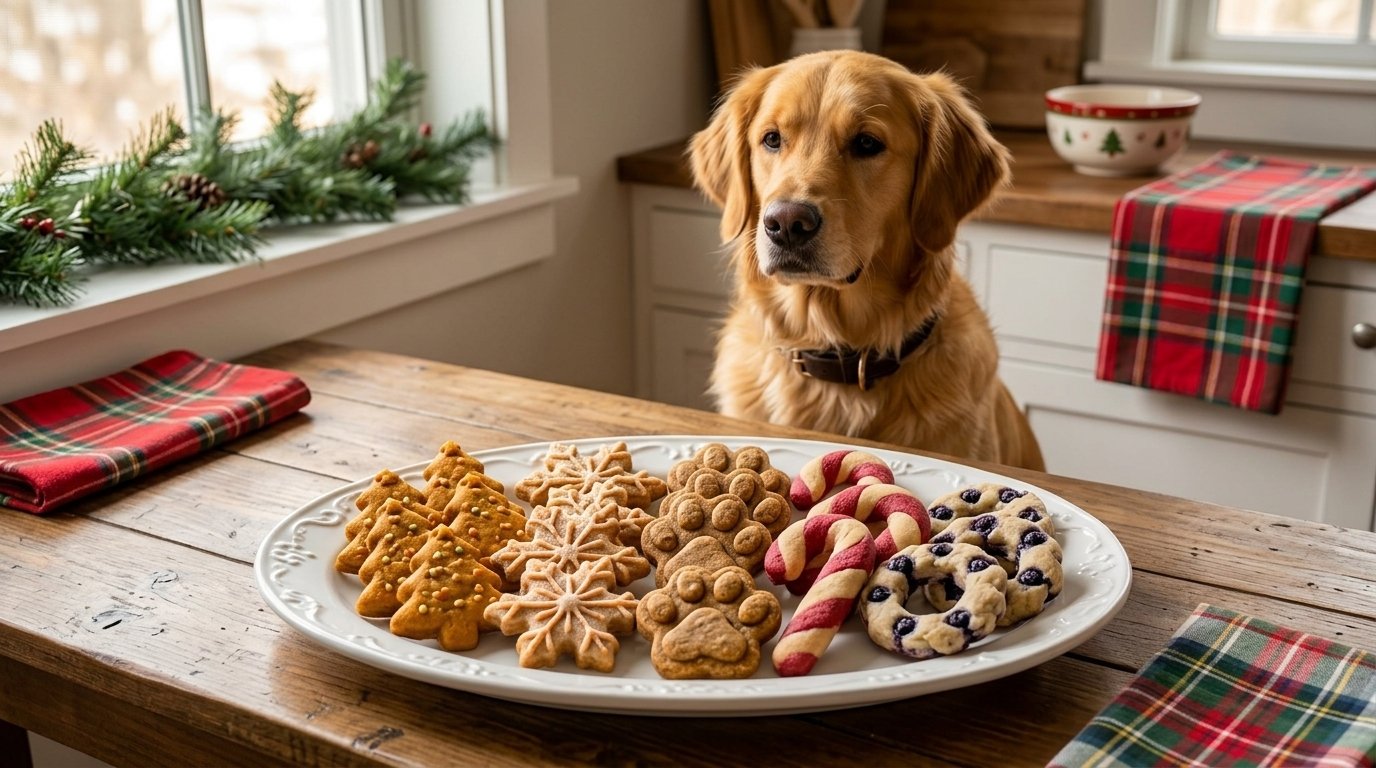
Homemade dog Christmas treats can make the holiday season more enjoyable for your pup while helping you control exactly what goes into each bite. With simple dog-friendly ingredients, festive cookie cutters, and sensible portions, you can prepare treats that look special without relying on chocolate, sugary frosting, or potentially dangerous decorations.
The five recipes below include baked biscuits and frozen treats in cheerful holiday colors. You will also learn which ingredients to avoid, how to adjust treat sizes, how to store each batch, and how to package homemade treats safely if you plan to give them to another dog.
These recipes are intended as occasional treats for generally healthy adult dogs. They are not complete meals and may not suit dogs with allergies, diabetes, pancreatitis, kidney disease, gastrointestinal conditions, or prescription-diet requirements.
Table of Contents
Are Homemade Dog Christmas Treats Safe?
Homemade dog Christmas treats can be safe when you use appropriate ingredients, prevent cross-contamination, bake or freeze them correctly, and serve sensible portions. Homemade does not automatically mean healthy, however. Calories, allergies, fat content, and individual medical needs still matter.
Holiday kitchens often contain foods that dogs should never eat. The ASPCA’s list of people foods to avoid includes chocolate, grapes, raisins, onions, garlic, alcohol, macadamia nuts, and products containing xylitol.
Keep these ingredients away from every dog-treat recipe:
- Chocolate or cocoa powder
- Raisins, grapes, currants, or sultanas
- Xylitol or birch sugar
- Onions, garlic, or seasoning powders containing them
- Macadamia nuts
- Alcohol
- Nutmeg
- Highly salted nut butters
- Sugary frosting
- Cooked bones
- Candy and sprinkles intended for people
Pay particularly close attention to peanut butter labels. Some sugar-free products contain xylitol, a sweetener that can cause dangerously low blood sugar and liver injury in dogs. Use only peanut butter whose complete ingredient list you have checked.
Treats are extras rather than a replacement for balanced dog food. If you are considering preparing your dog’s regular meals at home, PawMindTips’ vet-informed homemade dog food guide explains why a collection of wholesome ingredients is not automatically nutritionally complete.
Follow the 10% principle
For most healthy adult dogs, treats and other extras should contribute no more than about 10% of daily calories. The remaining calories should come from complete and balanced food suitable for the dog’s life stage.
That does not mean every dog can safely eat 10% of its calories in rich holiday biscuits. A dog’s appropriate allowance depends on its:
- Size
- Weight
- Age
- Activity level
- Body condition
- Regular diet
- Medical history
- Treat size and calorie content
When in doubt, make each biscuit smaller. A tiny dog should not receive the same Christmas-tree cookie as a Labrador.
Ingredients and Tools You Will Need
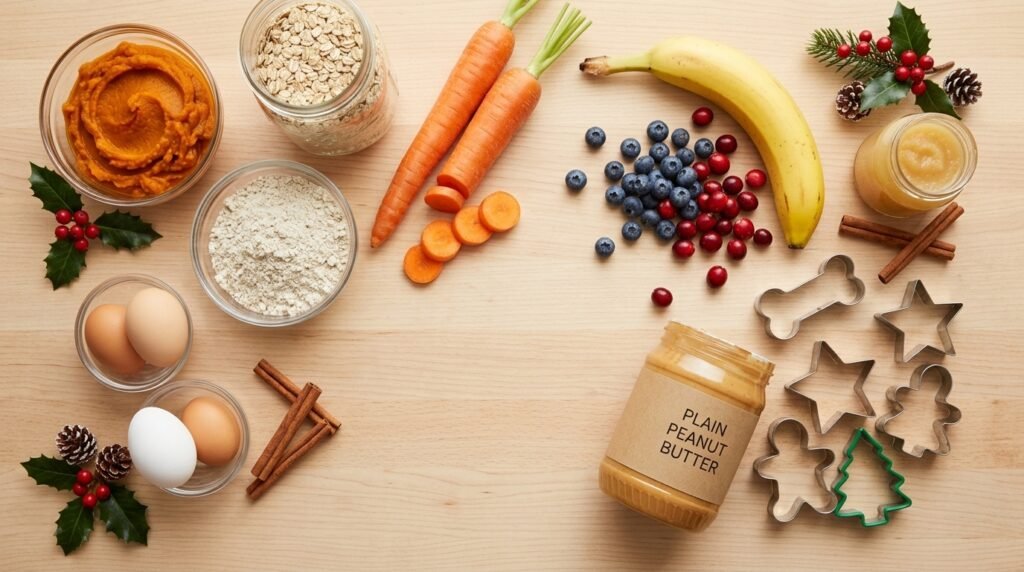
These homemade dog Christmas treats rely on familiar ingredients rather than artificial red and green decorations. Pumpkin, carrots, cranberries, blueberries, and dog-safe peanut butter create appealing flavors and natural color.
Basic pantry ingredients
Depending on the recipes you select, you may need:
- Plain pumpkin puree
- Unsweetened applesauce
- Carrots
- Rolled oats or oat flour
- Whole-wheat flour
- Eggs
- Ripe banana
- Xylitol-free peanut butter
- Fresh or unsweetened frozen cranberries
- Plain unsweetened Greek yogurt
- Blueberries
- Ground cinnamon
Check labels carefully. Pumpkin pie filling is different from plain pumpkin puree and may contain added sugar or spices. Applesauce should be unsweetened, while yogurt must be plain and free from artificial sweeteners.
Whole-wheat flour works for many dogs, but it is not appropriate for every dog. Oat flour may be used in several recipes, although substitutions can affect how much liquid the dough needs.
If your dog has a known food allergy, do not assume that baking makes the allergen safe. Ask your veterinarian before using unfamiliar ingredients.
Useful kitchen tools
- Large mixing bowl
- Fork or potato masher
- Measuring cups and spoons
- Rolling pin
- Parchment-lined baking sheet
- Holiday cookie cutters
- Cooling rack
- Silicone freezer mold
- Airtight storage container
Wash your hands, utensils, counters, and baking sheets before starting. Keep dog-treat ingredients separate from chocolate, raisins, candies, and other human holiday-baking supplies.
1. Pumpkin and Peanut Butter Christmas Trees
These orange-gold biscuits hold their shape well and work especially nicely with Christmas-tree, star, or bone-shaped cutters. Pumpkin adds moisture, while a small quantity of peanut butter makes the dough more enticing.
Ingredients
- 1 cup plain pumpkin puree
- 2 large eggs
- 2 tablespoons xylitol-free unsalted peanut butter
- 2½ cups whole-wheat flour
- ½ cup rolled oats
- ½ teaspoon ground cinnamon
- 2–4 tablespoons water, if needed
Instructions
- Preheat the oven to 350°F.
- Line a baking sheet with parchment paper.
- Combine the pumpkin, eggs, and peanut butter in a large bowl.
- Stir in the flour, oats, and cinnamon.
- Mix until a firm dough forms. If the dough is crumbly, add water one tablespoon at a time. If it feels excessively sticky, add a little flour.
- Place the dough on a lightly floured surface.
- Roll it to approximately ¼-inch thickness.
- Cut the dough with Christmas-tree or star-shaped cutters.
- Transfer the shapes to the prepared baking sheet.
- Bake for approximately 20–25 minutes, depending on their size and thickness.
- Turn off the oven and leave the biscuits inside for another 10–15 minutes if you want a drier texture.
- Cool completely before serving or packing.
Practical tip
Separate large and small shapes onto different baking sheets. Tiny biscuits can become overbaked before larger treats are sufficiently firm.
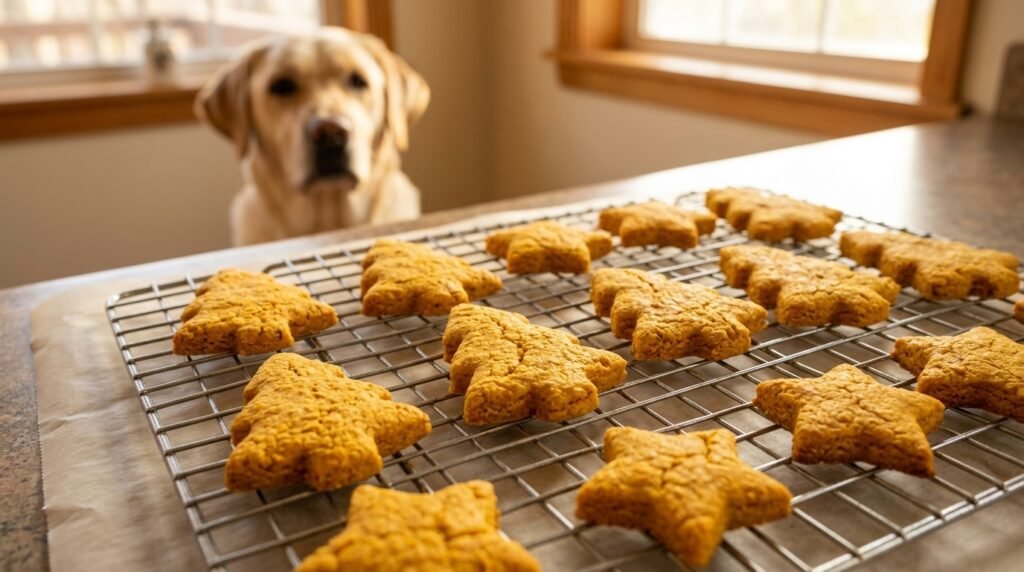
For a crispier gift biscuit, allow the treats to dry thoroughly on a cooling rack. Softer biscuits retain more moisture and generally spoil faster.
2. Apple and Carrot Snowflake Biscuits
Apple and carrot create a mildly sweet flavor without added sugar. Their light golden-orange color works well for snowflakes, stockings, stars, or miniature gift shapes.
Ingredients
- 1 cup unsweetened applesauce
- ½ cup finely grated carrot
- 1 large egg
- 2 cups oat flour
- ½ cup rolled oats
- ¼ teaspoon ground cinnamon
- 1–3 tablespoons water, if required
You can make oat flour by processing plain rolled oats until they reach a fine, flour-like consistency.
Instructions
- Preheat the oven to 350°F.
- Line a baking sheet with parchment paper.
- Place the applesauce, carrot, and egg in a bowl and mix thoroughly.
- Add the oat flour, rolled oats, and cinnamon.
- Stir until the mixture forms a workable dough.
- Let the dough rest for five minutes so the oats can absorb moisture.
- Add a little more oat flour if it remains sticky or a spoonful of water if it is too dry.
- Roll the dough to approximately ¼-inch thickness between two sheets of parchment paper.
- Cut it into small festive shapes.
- Bake for 20–25 minutes or until the edges are firm and lightly browned.
- Transfer the biscuits to a rack and allow them to cool completely.
Ingredient note
Remove the apple’s stem, seeds, and core if you are making applesauce yourself. Do not add sugar, nutmeg, butter, caramel, or pie seasoning.
These biscuits contain fiber, but that does not make unlimited portions appropriate. Too many new treats can lead to gas, soft stool, or diarrhea.
3. Banana-Oat Gingerbread Dogs
Traditional gingerbread made for people may contain large amounts of sugar, butter, nutmeg, frosting, or raisin decorations. This dog-friendly version obtains moisture and sweetness from ripe banana.
Ingredients
- 1 large ripe banana
- 1 large egg
- 1 tablespoon xylitol-free peanut butter
- 2 cups oat flour
- ½ cup whole-wheat flour
- ½ teaspoon ground ginger
- ¼ teaspoon ground cinnamon
- 1–3 tablespoons water, if necessary
Instructions
- Preheat the oven to 350°F and prepare a parchment-lined baking sheet.
- Mash the banana until nearly smooth.
- Mix in the egg and peanut butter.
- Add the oat flour, whole-wheat flour, ginger, and cinnamon.
- Stir and then gently knead until a firm dough forms.
- Add water gradually only if the mixture is too dry to roll.
- Roll the dough to about ¼-inch thickness.
- Use a gingerbread-person, dog, bone, or star cutter.
- Arrange the shapes on the baking sheet without overlapping them.
- Bake for 18–23 minutes.
- Cool fully before offering one to your dog.
Decoration warning
Do not use raisins, chocolate chips, candy eyes, royal icing, or sugar-free frosting for faces and buttons. The safest option is to leave the biscuits plain.
You can create simple impressions with the rounded end of a clean chopstick before baking. This adds visual detail without introducing questionable decorations.
4. Naturally Red Cranberry Candy-Canes
Fresh cranberries give these biscuits a subtle pink-red appearance. Unlike traditional candy canes, they contain no peppermint candy, concentrated essential oils, or added sugar.
Ingredients
Plain dough
- 1 cup oat flour
- ½ cup whole-wheat flour
- 1 large egg
- ⅓ cup unsweetened applesauce
Cranberry dough
- 1 cup oat flour
- ½ cup whole-wheat flour
- 1 large egg
- ⅓ cup pureed unsweetened cranberries
- 1–3 tablespoons water, if needed
Instructions
- Preheat the oven to 350°F and line a baking sheet with parchment paper.
- To make the plain dough, mix its four ingredients in one bowl.
- In a second bowl, combine the ingredients for the cranberry dough.
- Adjust each mixture with a little water or flour until both have similar, firm consistencies.
- Pinch off a small piece of each dough.
- Roll each piece into a thin rope of equal length.
- Gently twist one plain rope around one cranberry rope.
- Curve the top into a candy-cane shape.
- Repeat while keeping the remaining dough covered.
- Bake for approximately 18–22 minutes.
- Let the candy canes cool completely on a rack.
Cranberry precautions
Use fresh or unsweetened frozen cranberries—not sweetened dried cranberry mixes. Some dried products contain large amounts of sugar and may be packaged alongside raisins.
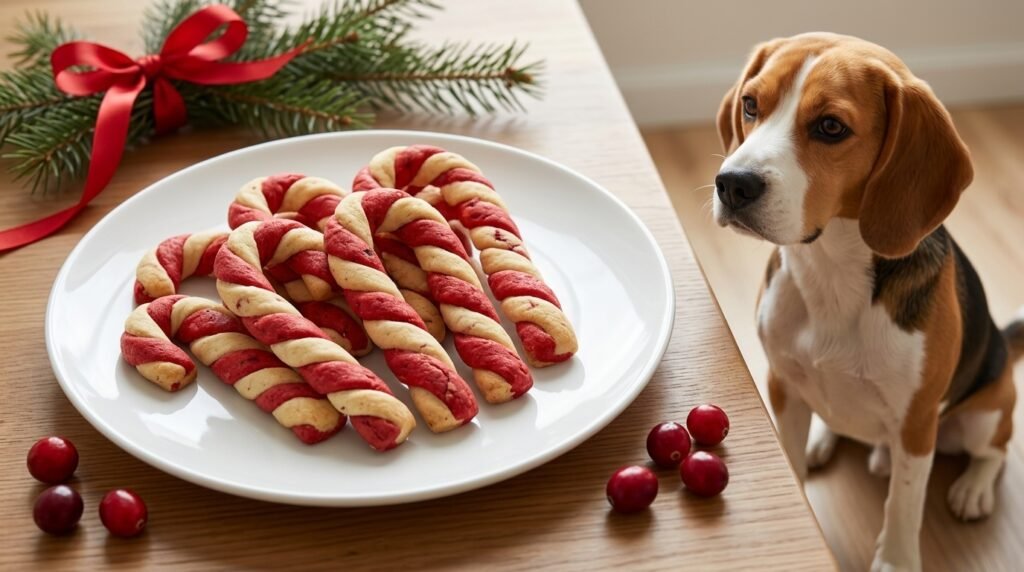
Plain cranberries can taste tart, so not every dog will enjoy them. Offer a small sample before preparing a large gift batch.
The ingredient name alone never tells the entire nutritional story. PawMindTips’ guide to understanding dog food ingredients and fillers explains why owners should consider quantity, purpose, formulation, and the dog’s individual needs.
5. Frozen Blueberry Yogurt Wreaths
These no-bake homemade dog Christmas treats are useful when you want a colorful option that requires minimal preparation. They must remain frozen, so they are best for serving at home or giving to someone nearby with freezer access.
Ingredients
- 1 cup plain unsweetened Greek yogurt
- ½ cup blueberries
- 2 tablespoons plain pumpkin puree
- Water, if necessary
Instructions
- Check the yogurt label for added sugar and artificial sweeteners.
- Place one or two blueberries into each cavity of a small silicone mold.
- Mix the yogurt with the pumpkin puree.
- Spoon the mixture over the berries.
- Tap the mold gently against the counter to release trapped air.
- Freeze for at least four hours or until solid.
- Remove one treat at a time immediately before serving.
- Store the remaining treats in a covered freezer-safe container.
Serving guidance
Select a mold appropriate for your dog’s size. A large frozen piece may be difficult for a small dog to manage. Supervise your dog and do not offer frozen treats to a dog that tends to swallow food whole.
Some dogs do not tolerate dairy well. If your dog has never eaten plain yogurt, begin with a very small quantity or choose one of the baked recipes instead. Avoid yogurt entirely if your veterinarian has advised against it.
How to Store Homemade Dog Christmas Treats
Storage life varies according to moisture, ingredients, baking time, room temperature, and handling. A homemade biscuit does not contain the same preservatives as many commercial treats.
Baked biscuits
As a cautious general guide:
- Cool biscuits completely before storing.
- Keep soft, moist treats refrigerated.
- Refrigerate most homemade biscuits for up to five days.
- Freeze extra biscuits in portioned, airtight containers.
- Discard treats that smell unusual or show mold, moisture buildup, or texture changes.
- Do not seal warm treats inside a bag because trapped condensation encourages spoilage.
Very dry biscuits may remain usable longer, but it is safer not to promise a long room-temperature shelf life without laboratory testing.
Frozen yogurt treats
Keep frozen yogurt treats in an airtight freezer container and return the container to the freezer promptly. Do not mail or leave them under a Christmas tree.
Label every gift
A homemade dog-treat gift should carry a clear label containing:
- Treat name
- Complete ingredient list
- Preparation date
- Refrigeration or freezing instructions
- Suggested use-by date
- “For occasional feeding only”
- Allergy warning when relevant
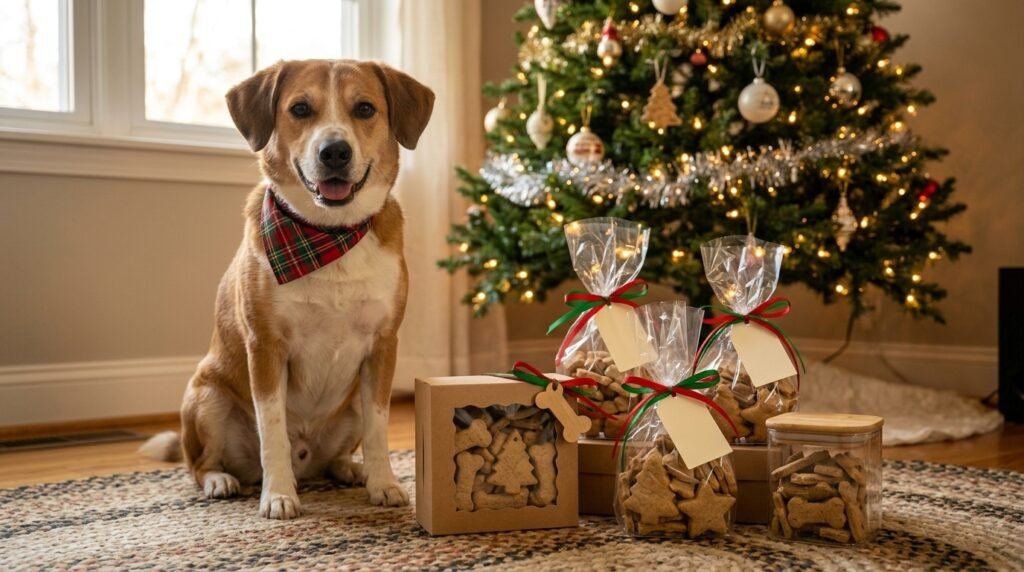
Ask the recipient about the dog’s allergies and medical conditions before giving food. A beautiful gift is not useful if the dog cannot safely eat it.
Serving Christmas Treats Without Overfeeding
Christmas dinner, table scraps, training rewards, chews, and homemade dog Christmas treats all contribute calories. Owners often count each extra separately and underestimate the total.
Use these strategies:
- Make miniature cookies instead of human-sized biscuits.
- Break larger treats into several pieces.
- Reduce other treats on baking days.
- Do not replace balanced meals with biscuits.
- Introduce only one new recipe at a time.
- Watch for vomiting, diarrhea, itching, or appetite changes.
- Keep gifts beyond your dog’s reach.
- Tell guests not to feed treats without permission.
The VCA general feeding guidelines for dogs emphasize that feeding amounts vary with life stage, activity, body condition, health, and the calorie content of the food.
Dogs with obesity, diabetes, pancreatitis, kidney or liver disease, food allergies, chronic digestive problems, or prescription diets require individual guidance. Ask their veterinarian before offering homemade treats.
If your dog consumes chocolate, raisins, xylitol, macadamia nuts, or another potentially toxic food, do not wait for symptoms. Contact your veterinarian, an emergency veterinary clinic, or an animal poison-control service immediately.
Frequently Asked Questions
Can dogs eat homemade Christmas cookies?
Dogs can eat cookies made specifically with dog-appropriate ingredients and served in small portions. Human Christmas cookies may contain chocolate, raisins, xylitol, nutmeg, excessive sugar, or other unsuitable ingredients and should not be shared.
How long do homemade dog Christmas treats last?
Moist homemade biscuits should generally be refrigerated and used within several days. Freeze larger batches for longer storage. Exact shelf life varies, so discard any treat showing mold, unusual odor, condensation, or a change in texture.
Can I give homemade dog treats as Christmas gifts?
Yes, but ask about the recipient dog’s allergies and health first. Include a complete ingredient list, preparation date, storage directions, and suggested use-by date. Avoid gifting frozen treats unless you can maintain safe frozen storage.
What flour is best for homemade dog treats?
Whole-wheat and oat flour work for many dogs, but no flour is universally best. Choose an ingredient your dog already tolerates. Dogs with suspected allergies, gastrointestinal disease, or prescription diets should receive veterinarian-approved ingredients.
Final Thoughts
Homemade dog Christmas treats can add a thoughtful, personal touch to your holiday celebrations. Pumpkin Christmas trees, apple-carrot snowflakes, banana-oat gingerbread dogs, cranberry candy canes, and frozen blueberry wreaths provide five festive options without unsafe human-cookie decorations.
Use verified dog-friendly ingredients, keep portions small, cool and store each batch correctly, and label edible gifts carefully. Most importantly, consider the individual dog. If a dog has allergies, digestive sensitivities, weight concerns, or a diagnosed medical condition, consult the dog’s veterinarian before putting homemade treats under the tree.