You reach for the taco seasoning, and your dog appears beside the kitchen counter. This is the moment to set some chicken aside. You can make chicken tacos for dogs with plain cooked chicken, a little soft carrot, and the bowl your dog already knows.
Think of it as a tiny taco bowl. The chicken is the filling, the carrot adds a little color, and the bowl does the work of a shell. You can put it together while the family gets dinner ready, without making dough or buying special dog treats.
Below you’ll find the amounts for a small batch, how to decide what goes into one serving, and what to do if the chicken has already met the seasoning. Start with a clean spoon and an empty dish.
Quick Answer
Set aside boneless, skinless chicken before adding seasoning. Cook it to 165°F, cool it, and shred it finely. Mix a small spoonful with soft, mashed carrot for a shell-free taco bowl. Serve a taste within your dog’s daily treat allowance. If your dog already ate taco filling containing onion or garlic, call your veterinarian or animal poison control for advice.
Chicken tacos for dogs at a glance
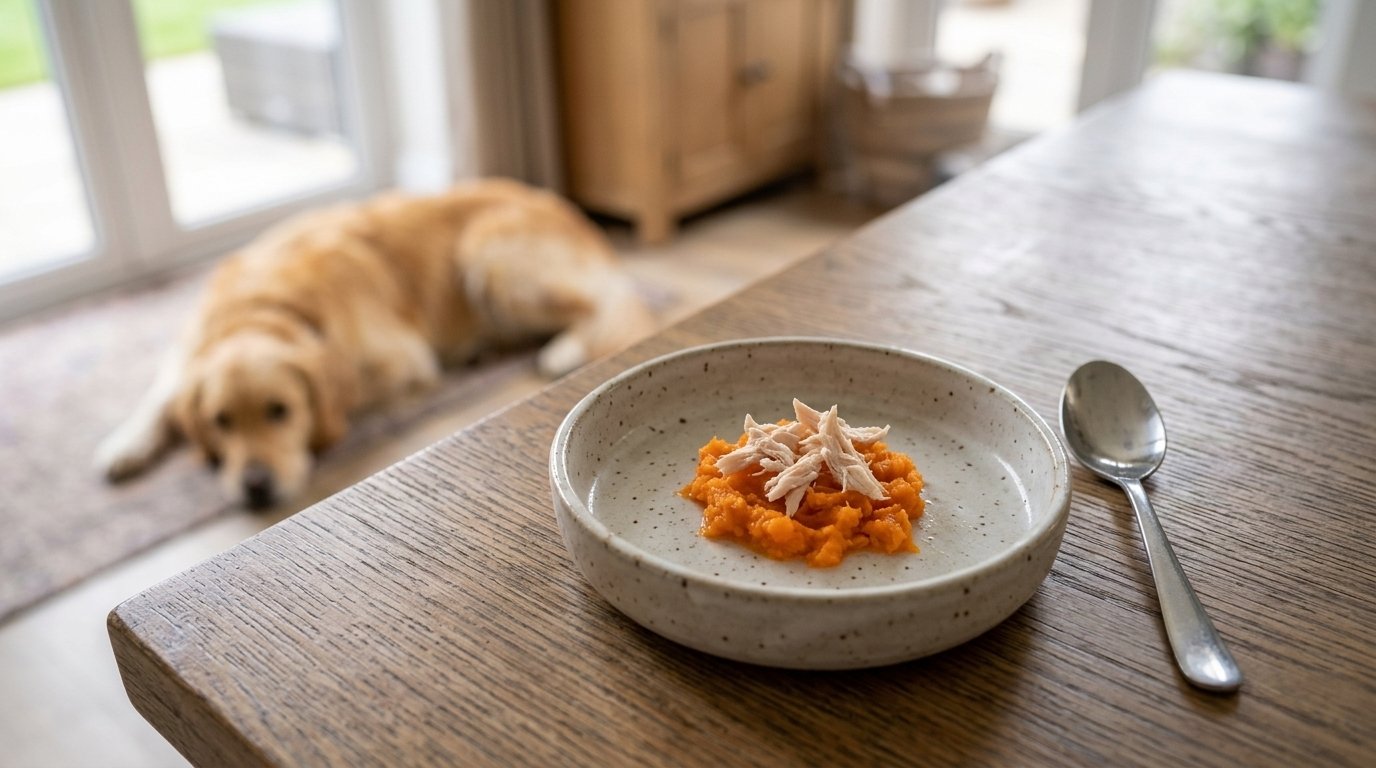
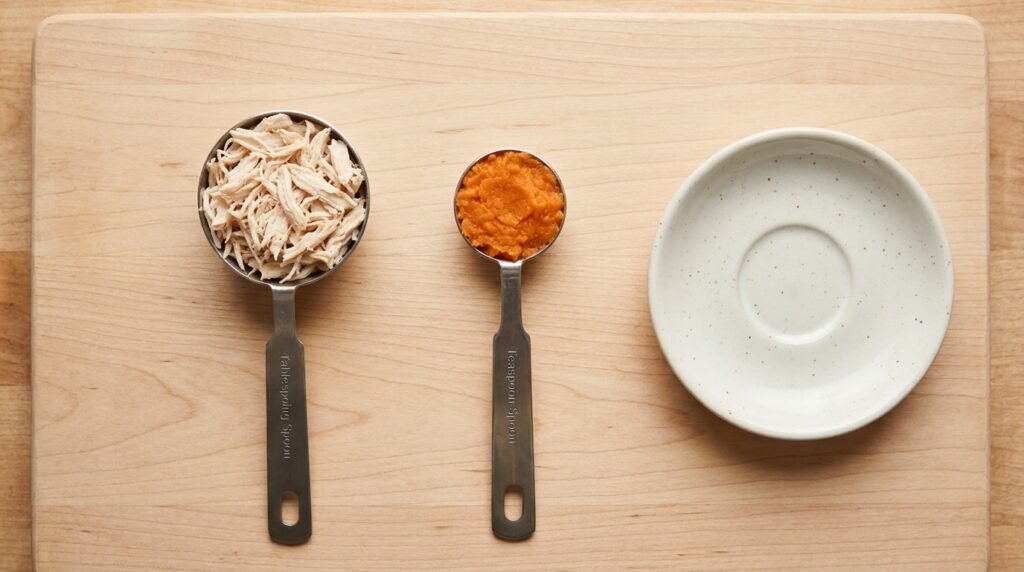
For one small batch, measure one tablespoon of finely chopped, cooked chicken breast and one teaspoon of plain, cooked, mashed carrot. That makes four teaspoons of loose filling before you add water. Use a level measuring spoon for each ingredient. You can leave out the carrot if your dog has never eaten it or simply prefers chicken. The yield then becomes three teaspoons.
Place the carrot in a shallow dish and press it flat with the back of a fork. Scatter the chopped chicken over it in a short strip, like the filling down the middle of a taco. If the mixture is dry, stir in a few drops of plain water. You should be able to lift a little of both ingredients on the tip of a teaspoon. There is no shell to fold or hold together.
Allow about five minutes to assemble the bowl if both ingredients are already cooked and cool. Starting with raw chicken or a whole carrot takes longer. Four teaspoons is the batch yield, so there is no need to finish it in one sitting. Decide how much your dog can have before you bring the bowl to the floor. Keep the rest in a clean container that your dog hasn’t licked.
Decide whether chicken belongs in your dog’s bowl
Has your dog eaten plain chicken recently without trouble? Is carrot already familiar? For a healthy adult dog who tolerates both, it makes sense to use them together. If one ingredient is new, keep the familiar one and save the other for another day. That makes it easier to tell what agreed with your dog.
Check any feeding instructions from your veterinary team before making a special dish. During an allergy trial, even a small taste can interfere with the result. VCA explains which extras can interfere with an elimination diet.
You can still include a dog who has a restricted diet. Set aside a spoonful of their usual approved food from dinner. Serve it in the same little dish while everyone sits down.
Pick the chicken before you pick the toppings
Look for boneless, skinless chicken breast with a short ingredient list. A package that looks like plain chicken can contain broth, salt, or flavorings. Turn it over and read the small print. If you cannot tell what went into it, choose a piece you can identify or use your dog’s usual food tonight.
At home, choose the dog’s piece before anyone adds marinade, spice rub, or sauce. If you are cooking for several people, a small separate saucepan is handy. You can also cook the whole family’s chicken plain, move a piece to a clean plate, and season the rest afterward.
Already have plain cooked chicken in the fridge? Check who cooked it, what they used, and when it went into the refrigerator before you measure a spoonful.
Cook, check, and shred the chicken
Put the plain breast in a small saucepan with enough water to cover it. Bring the water to a simmer and cook until a food thermometer reads 165°F in the thickest part. A thin piece and a whole breast cook at different speeds, so a timer alone cannot tell you when yours is ready. Follow the federal safe minimum temperature for poultry. If the tip touches the pan, reposition it in the center of the meat and check again.
While the chicken cooks, wash your hands and the surfaces that touched raw poultry. Get a fresh fork, a clean plate, and a clean cutting board for the cooked meat. It is easy to grab the tongs you used to lower raw chicken into the pot. Move those to the sink first. Lift the cooked piece onto the clean plate and pull it apart with two forks so the heat can escape.
Once it has cooled enough to handle, look through the meat as you shred it. Remove any hard fragment or tough strip, then chop across the long fibers. Aim for short, soft flakes that lift easily on a spoon. Measure the tablespoon after chopping. If the chicken is still hot in the middle of the pile, spread it out again and let the portion cool before serving.
Make a soft carrot base without a shell
Wash a carrot, cut off the stem end, and slice off a few thin coins. Simmer them in plain water until a fork slides through without much pressure. Drain the pieces and mash them on a clean plate. Measure one level teaspoon after mashing so the amount is easy to repeat.
The texture matters more than the shape. Rub a little cooled mash between your fingers. If you find a firm center, return the pieces to the pan. You want a base that breaks apart as soon as your dog starts to lick it.
For a two-color bowl, leave the carrot underneath the chicken. For a dog who picks out favorite pieces, mix the flakes through the mash. Either presentation uses the same two ingredients and the same measured batch.
Work out how much of the batch to serve
Start with the daily calorie target your veterinarian recommends. UC Davis advises keeping all treats within ten percent of daily calories. For a dog whose target is 400 calories, that gives a ceiling of 40 calories for all extras together. A dental chew worth 30 calories and two training treats worth four each leave just two calories. In that example, saving the chicken for another day is easier than trying to measure a two-calorie taste.
If you need a closer estimate, weigh the cooked chicken and carrot separately on a kitchen scale before mixing. Use calorie values for the cooked forms you actually used. Multiply each weight in grams by its calories per gram, then add the two results. Divide by four for the average calories in one level teaspoon of a four-teaspoon batch mixed evenly. Water changes the volume, so do this calculation before adding any, or divide the entire batch into four equal portions by weight.
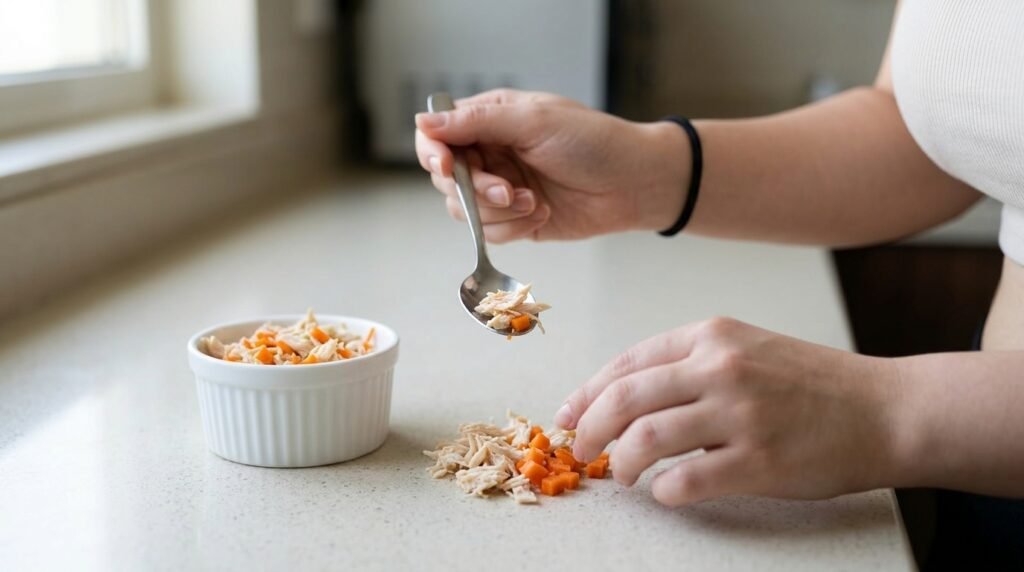
For a first taste, the tip of a teaspoon is a useful way to offer a few flakes without committing to a full spoonful. It is fine to stop there. If you regularly run out of room for extras, review how to count food, chews, and treats together. If you use this mixture on dinner, the same allowance applies. PawMindTips explains how to measure a topper before adding it to the bowl.
What stays on the family taco bar?
Leave onion, garlic, scallions, chives, salsa, and taco seasoning on the human side of the counter. Check packets for onion powder and garlic powder. A pinch scattered over the whole skillet is easy to forget once the chicken has cooled. Removing the visible pieces from cooked filling does not remove seasoning mixed through the juices.
The Merck Veterinary Manual explains how onion and garlic can damage red blood cells. Cooked and powdered forms count, too. If your dog ate some, call your veterinarian or animal poison control promptly, even if your dog looks comfortable now.
For your own taco, add the cheese, sour cream, chips, and salsa after the dog’s portion is put away. The little bowl already has everything this recipe calls for.
Serve one small dish away from the table
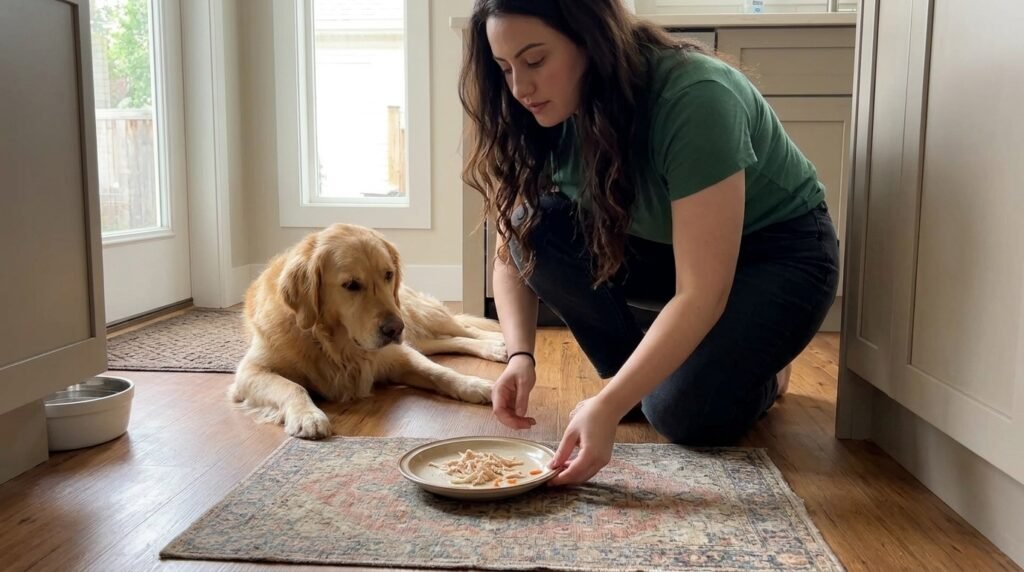
Take the amount you have chosen and put it in a shallow dish on the floor. If your dog tends to gulp, spread the filling thinly so it comes up in little licks. Stay nearby as your dog eats. For everyday meals, explore ways to slow down a dog who eats quickly.
Pick a spot where your dog normally eats in peace. In a home with two dogs, use their separate feeding places and collect both dishes afterward. That lets each dog finish their own share without rushing to reach the other bowl.
Ask one person to serve the treat. When the family sits down, everyone knows the dog has had a turn. A calm mealtime plan for a dog who begs can help with the rest of dinner.
Use what you have when dinner plans change
If the carrot is still raw and everyone is ready, leave it in the fridge. A few cooled chicken flakes can go straight into the dish. If you mashed the carrots with butter and seasoned salt for dinner, leave those for people and use the chicken by itself.
If the only chicken in the house is marinated, take a small amount of your dog’s usual food from their measured dinner instead. A spoonful of their familiar canned food pressed into the dish works well. You can scatter a few pieces of their usual kibble on top if both come from their normal ration.
For guests who want to help, give them the finished dish to set down. This keeps the decision about ingredients with the person who prepared it.
If your dog already ate a family taco
First, move the plate out of reach and find out what was in the taco. If the filling contained onion or garlic, or you suspect a harmful ingredient, call your veterinarian or ASPCA Animal Poison Control at (888) 426-4435 now. Onion and garlic can cause signs days later. Waiting to see how your dog feels after dinner can delay care. If your dog collapses, has trouble breathing, or has a seizure, go directly to an emergency veterinary clinic.
Have someone photograph the seasoning packet or ask the restaurant what went into the filling, while another person makes the call. Estimate how much food is missing, when it disappeared, and how much your dog weighs. Mention any missing wrapper, foil, skewer, or bone. If two dogs had access, say so. It is better to give an honest range than a confident guess about which dog ate what.
Follow the ASPCA’s steps after a suspected pet poisoning. Avoid inducing vomiting or giving a home remedy unless a veterinary professional specifically directs you. A dog who ate a few flakes of known plain cooked chicken and is acting normally is a different situation. Observe how they feel, stop offering extras if their stomach seems upset, and contact your veterinarian if vomiting recurs or your dog seems unwell.
Store the plain filling before dinner starts
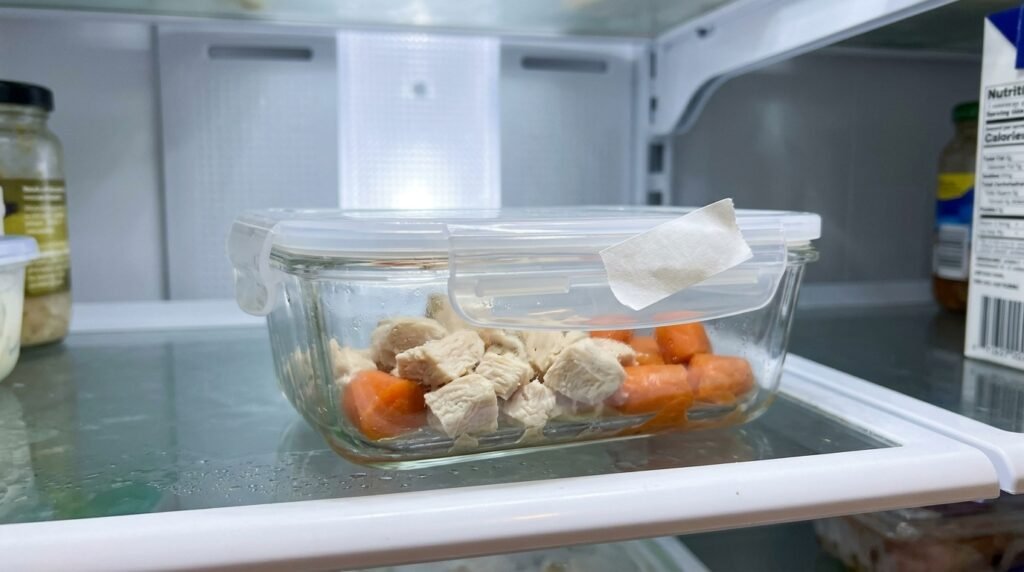
Move untouched cooked chicken and carrot into a clean, shallow container and refrigerate promptly. Write the cooking date on the lid. If yesterday’s chicken goes into today’s bowl, yesterday is still the date that matters. Mixing it with freshly cooked carrots does not restart the clock.
Follow the federal time limits for leftovers and food left out. Refrigerate perishable food within two hours, or within one hour when the temperature is above 90°F. Use refrigerated cooked leftovers within three to four days. Discard food that sat out too long, even if it still smells fine.
For a picnic or backyard dinner, take out only the portion you plan to serve. Discard what the dog licks and wash the dish. Keep the clean reserve covered in the refrigerator.
Make the next taco night easier
When you cook plain chicken for another meal, set aside a little before seasoning and freeze it in small, dated portions. Flattening each portion in a freezer-safe container makes it easy to see how much you saved. Thaw what you need in the refrigerator. Use a clean spoon to lift out the serving.
Keep a note of what worked. A useful entry says which ingredients you used, how much you offered, and whether your dog ate comfortably. That gives another family member something more precise to follow than “give him a little chicken.”
If your dog ignored the carrot or walked away from the bowl, let dinner end there. Next time you can use the plain chicken alone or give your dog their usual dinner while you enjoy yours.
FAQs
Can I use chicken from a rotisserie bird?
Only use chicken you can confirm was prepared without seasoning, brine, or other added ingredients. Removing the skin cannot tell you what went into the meat. If the label or cook cannot confirm how it was made, choose plain chicken you prepare yourself.
Do chicken tacos for dogs need a tortilla?
No. A shallow dish holds the chicken and carrot, and you can see exactly how much you are serving. If your family wants the taco look, arrange a little stripe of shredded chicken across the orange mash before you put it down.
Can I give this to my dog every Tuesday?
For a healthy adult who tolerates the ingredients, an occasional measured taste can fit. Check what else your dog has had that day. A Tuesday with a dental chew and a long training session may have little room left for another extra.
Is this recipe enough for my dog’s dinner?
No. Chicken and carrot alone do not provide complete and balanced nutrition. Serve the measured taste alongside your dog’s regular feeding routine. For a dog who needs a home-cooked main diet, ask your veterinarian for a referral to a veterinary nutritionist.
Conclusion
Next time you open a package of chicken on taco night, put a clean plate next to the stove. That bit of preparation gives you an easy place to set aside plain cooked meat before the seasoning goes in. The rest of your family can build their tacos however they like.
For your dog, measure the chicken, add a little soft carrot if it suits them, and serve just the amount that fits today. Put the reserve away before anyone starts handing out second helpings. A dog who gets a few flakes has shared the occasion just as much as one with a fuller bowl.
If tonight’s chicken is already seasoned, save the recipe for another Tuesday. Your dog can join you with a small serving from their usual dinner.