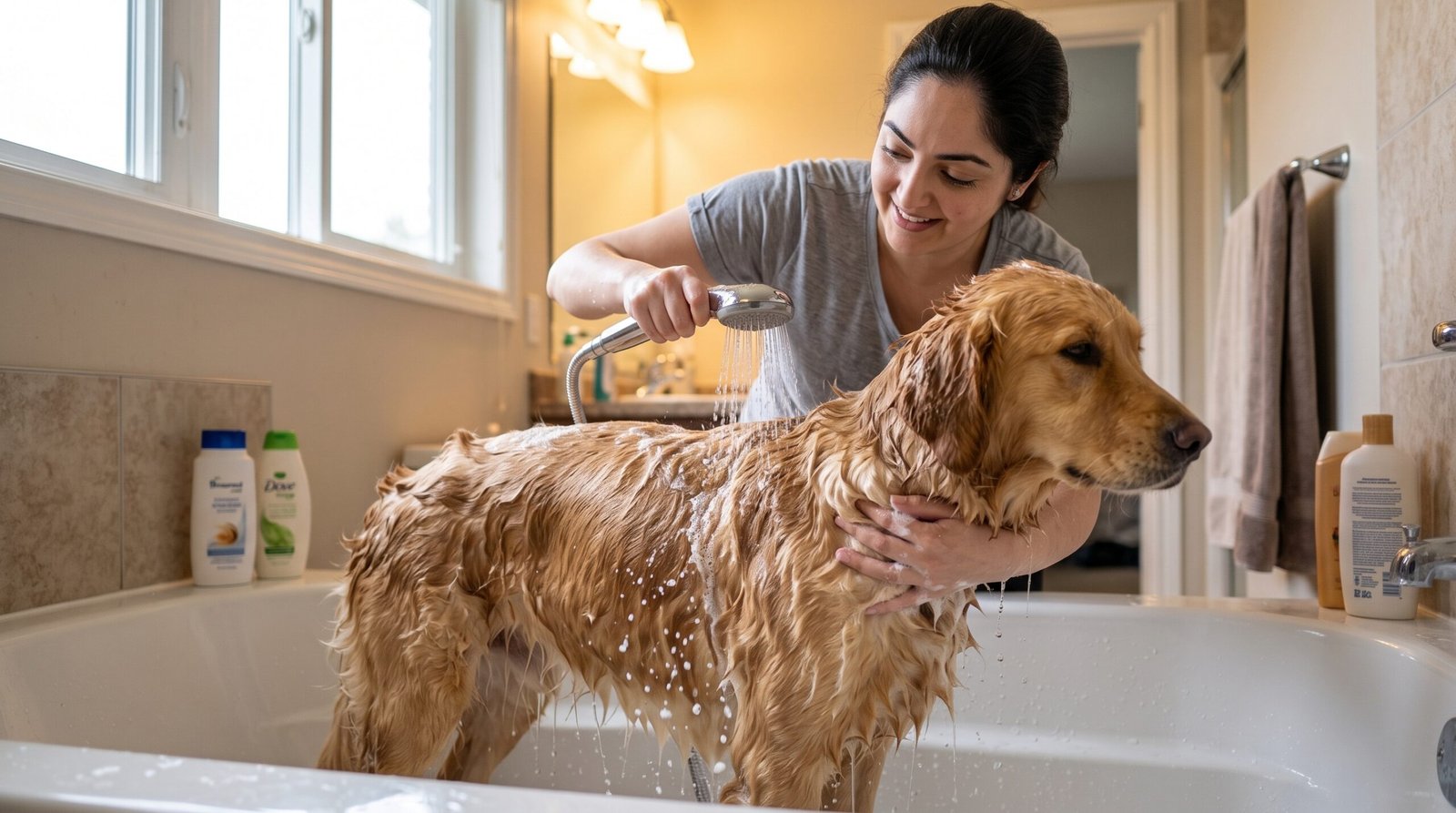
To bathe your dog at home, prepare your supplies first and keep the session gentle and manageable. Your dog’s comfort matters as much as getting the coat clean.
This guide covers preparation, six bathing steps, and situations that need a groomer or veterinarian. For care between baths, see our dog grooming tips for healthy skin and coat.
Table of Contents
Why Bathing Your Dog at Home Matters
Bathing removes dirt, while grooming gives you an opportunity to notice changes in your dog’s skin and coat. Use products made for dogs and ask your veterinarian about persistent irritation.
Watch your dog throughout the session. If they freeze, repeatedly try to escape, or become distressed, pause and reassess. Our guide to signs of a stressed dog explains why the whole situation matters.
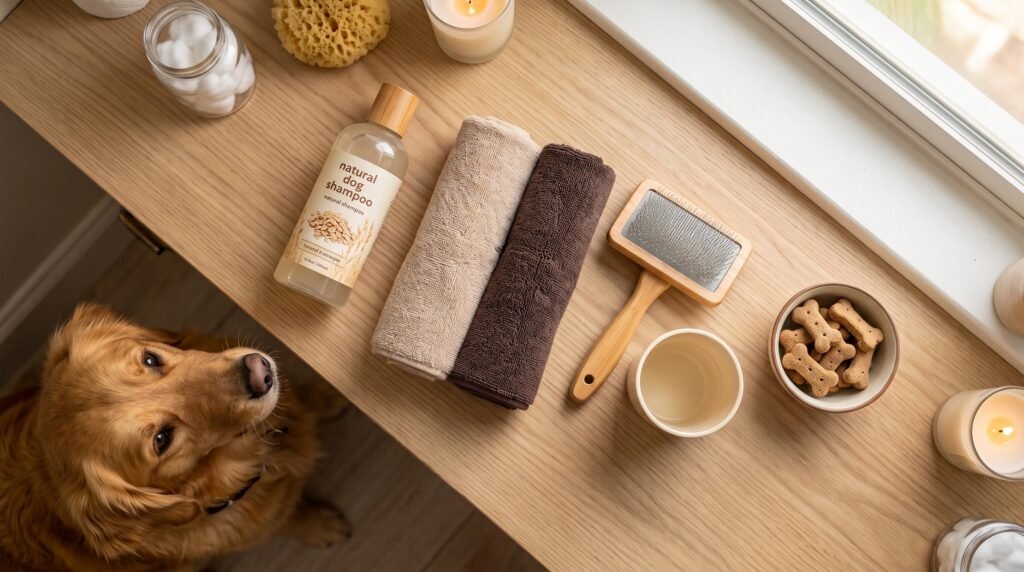
What You’ll Need Before You Bathe Your Dog at Home
Preparation is half the battle. Nothing derails a calm bath faster than realizing halfway through that you’re out of towels or the shampoo bottle is empty and you’ve got a soapy, dripping dog standing in your tub.
Supplies Checklist
- Dog-specific shampoo; conditioner if appropriate for your dog’s coat or recommended by your veterinarian
- A non-slip mat for the tub or shower floor
- Two to three absorbent towels (microfiber towels work great and dry faster)
- A handheld sprayer or unbreakable cup for rinsing
- A soft washcloth for cleaning the face
- Treats for positive reinforcement
- A brush or comb suited to your dog’s coat
- Optional dryer on a cool, low-airflow setting, only if your dog tolerates it
Keep supplies within reach and use a non-slip surface. Never leave your dog unattended in the bath. The ASPCA’s grooming guidance offers additional bathing and handling advice.
Step-by-Step: How to Bathe Your Dog at Home
Once you’ve got your supplies laid out and within arm’s reach, you’re ready to actually bathe your dog at home. Here’s a step-by-step breakdown that works whether you’ve got a tiny Chihuahua or a full-grown Labrador.
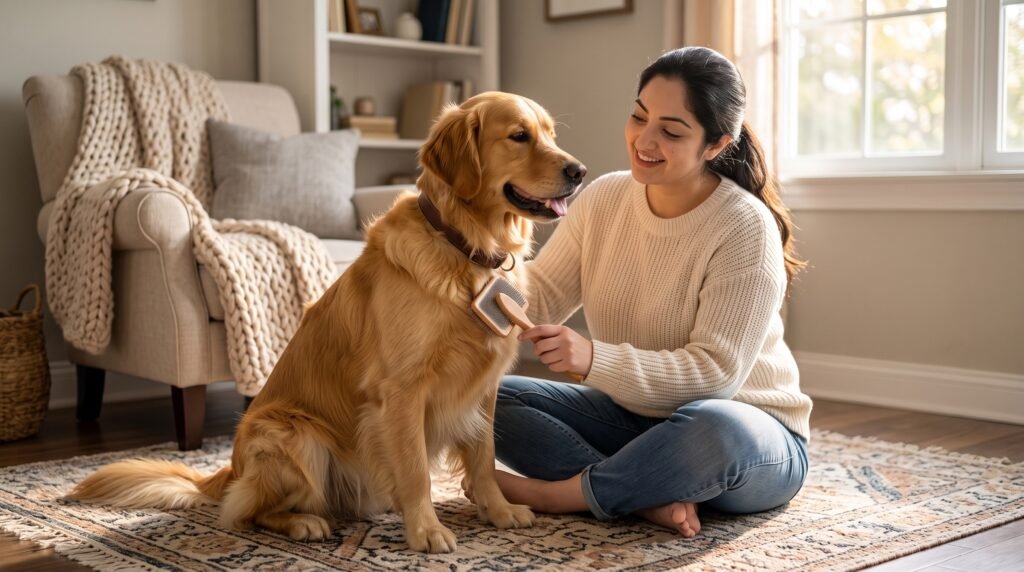
Step 1: Brush Before You Wet
Gently remove loose hair and minor tangles before bathing. Stop if brushing pulls painfully. Tight or extensive mats need a groomer or veterinarian; do not cut them out with scissors.
Step 2: Protect the Ears and Eyes
Keep the spray away from the ears, eyes, nose, and mouth. Use a damp washcloth on the face. Do not push cotton or other objects into the ear canals; ask your veterinarian about ear protection if your dog has recurring ear problems.
Step 3: Wet the Coat Thoroughly
Use lukewarm water (never hot) and soak your dog’s coat all the way down to the skin. This usually takes longer than people expect, especially with thick or double-coated breeds, so be patient here.
Step 4: Apply Shampoo and Lather Gently
Apply dog shampoo according to the label, including any dilution or contact-time instructions. Massage gently and avoid the face. For medicated shampoo, follow your veterinarian’s directions.
Step 5: Rinse the Coat Thoroughly
Rinse thoroughly, including the underside and areas where shampoo can collect. Residue can irritate the skin; clear runoff alone does not confirm that every area has been rinsed.
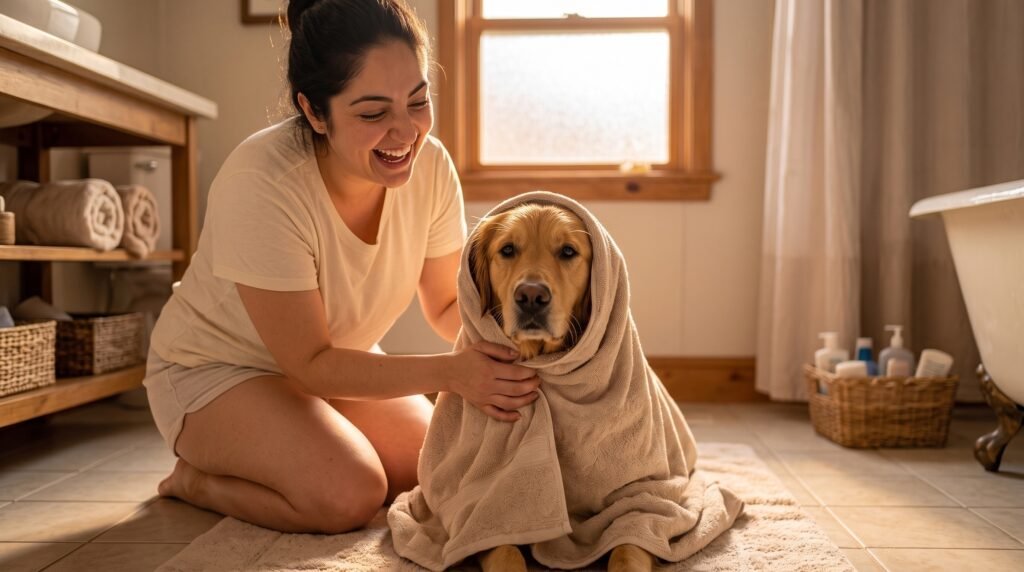
Step 6: Towel Dry and Reward
Gently pat and squeeze water from the coat with a towel. Avoid vigorous rubbing or holding your dog tightly in the towel. If using a dryer, keep it moving on a cool, low setting and stop if your dog becomes distressed. Offer praise and a reward.
Common Mistakes to Avoid When You Bathe Your Dog at Home
Even well-intentioned owners fall into a few predictable traps. Here’s what to watch for:
- Using human shampoo. It disrupts your dog’s skin pH and can lead to dryness or irritation.
- Water that’s too hot or too cold. Lukewarm is the sweet spot.
- Rushing the rinse. Leftover suds are itchy and irritating.
- Skipping the brush-out. Wet mats tighten and become much harder to remove.
- Using an unsuitable bathing schedule. Frequency should match the dog and product; a prescribed medicated-bath schedule may differ from routine grooming.
- Ignoring distress. Pause if your dog becomes tense or tries to escape; do not force a frightened dog through the session.
For gradual confidence-building outside bath time, see how to help a nervous dog
How Often Should You Bathe Your Dog at Home?
There is no universal four-to-six-week schedule. Coat type, activity, products, and health affect bathing needs. Some dogs need occasional washing; others need a more structured grooming or veterinary treatment schedule.
Dirt or a muddy coat may call for cleaning. Persistent itching, licking, unusual odor, or a dull coat should not automatically trigger another bath—ask your veterinarian whether there is an underlying problem.
Follow a prescribed bathing schedule even if it differs from general advice. The AKC’s bathing-frequency guide explains why recommendations vary between dogs.
Long-Term Grooming Tips for a Healthier Coat and Calmer Baths
Bathing is just one piece of a bigger grooming picture. If you want bath time to keep getting easier (instead of harder) as your dog grows, a few habits go a long way.
Build a Routine Early
Dogs, like most creatures of habit, do better with predictability. Bathing on a semi-regular schedule, in the same space, using the same calm tone of voice, helps your dog understand what to expect and reduces anxiety over time.
Brush Between Baths
Regular brushing distributes natural oils, reduces shedding, and catches mats before they become a bath-day nightmare. This is especially important for long-haired or double-coated breeds.
Pair Grooming With Nutrition
A complete and balanced diet supports skin and coat health. Persistent dryness or coat changes deserve veterinary assessment rather than automatically adding supplements or changing food.
Use Positive Reinforcement Consistently
Treats, praise, and a calm tone before, during, and after the bath help your dog build a lasting positive association. Over time, many dogs go from tolerating baths to genuinely not minding them.
Introduce Puppies to Water Early and Gently
If you’re working with a puppy, keep early baths short, warm, and low-pressure. Early positive experiences with water and handling set the tone for how they’ll respond to grooming for the rest of their life.
When to See a Vet or Professional Groomer
While most dogs can absolutely be bathed at home, there are times when it’s smarter to call in backup.
- Persistent skin issues: Redness, hot spots, excessive scratching, or a strong odor that doesn’t go away after bathing could point to an underlying skin condition or allergy that needs veterinary attention.
- Severe matting: Heavily matted fur can pull on the skin and cause pain; a professional groomer has tools and techniques to remove mats safely without a home haircut disaster.
- Distress during baths: Stop if your dog growls, snaps, or panics. Ask your veterinarian about possible pain or skin discomfort, especially if this is new. A groomer experienced in low-stress handling and a reward-based behavior professional can help plan future sessions.
- Specific medical shampoos: Dogs with diagnosed skin conditions sometimes need medicated shampoos with precise application instructions — always follow your vet’s guidance here.
According to VCA Animal Hospitals, unexplained changes in skin or coat condition are worth a veterinary visit, since they can sometimes signal underlying allergies, parasites, or hormonal issues rather than a simple grooming problem.
FAQ: Bathing Your Dog at Home
How often should I bathe my dog at home?
The right interval depends on coat type, lifestyle, skin health, and the products used. Ask your groomer or veterinarian for a suitable schedule, particularly if your dog has a skin condition.
Can I use human shampoo to bathe my dog at home?
No. Human shampoo isn’t formulated for a dog’s skin pH and can cause dryness, irritation, or itching. Always use a shampoo made specifically for dogs.
What water temperature is safest when I bathe my dog at home?
Lukewarm water is best. Water that’s too hot can burn or dry out the skin, while cold water can make the experience uncomfortable and stressful for your dog.
My dog hates baths — what can I do?
Start small. Let your dog get comfortable in a dry tub with treats before introducing water, keep initial baths short, and always end on a positive note. If anxiety is severe, a professional groomer or trainer can help with gradual desensitization.
Conclusion
A successful bath is one your dog can manage comfortably. Prepare first, handle gently, rinse thoroughly, and adjust the routine to your dog’s needs. If bathing repeatedly causes distress or skin problems, seek professional help before the next session.