A dog paw pad injury can look small and still be painful, slow to heal, or easily reopened every time your dog takes a step. If the paw is bleeding heavily, has a deep or gaping wound, contains an embedded object, looks burned or discolored, or your dog cannot bear weight, contact a veterinarian or emergency clinic now. For a mild, stable injury, calm your dog, control bleeding with gentle pressure, rinse away surface dirt, cover the paw loosely, and arrange veterinary advice.
This guide explains how to assess the paw without causing more pain, provide conservative first aid, recognize urgent warning signs, and protect the healing tissue. It is general education, not a diagnosis or a substitute for veterinary care.
Table of Contents
Dog Paw Pad Injury: When Is It an Emergency?
Begin with the whole dog, not just the foot. A painful dog may bite even if normally gentle, so move slowly. If your dog is weak, collapsing, struggling to breathe, unusually pale in the gums, or bleeding heavily, prioritize immediate transport.
Seek urgent or emergency veterinary care for a dog paw pad injury when you notice any of the following:
- Bleeding that is heavy, spurting, soaking through dressings, or not stopping after about 10 minutes of uninterrupted gentle pressure
- A deep, gaping, or widely separated cut
- A large flap of pad tissue or tissue hanging from the paw
- Exposed deeper tissue, bone, tendon, or an injury that crosses between the toes
- Glass, metal, a fishhook, or another object embedded deeply in the paw
- A puncture from an unknown object, animal bite, or contaminated source
- Blisters, peeling tissue, white, gray, dark, or charred areas after heat or chemical exposure
- Severe swelling, obvious deformity, or a possible fracture
- Refusal to place any weight on the leg, severe pain, shaking, or persistent crying
- A wound involving a nail that is torn near its base or bleeding persistently
- Possible exposure to a caustic chemical, especially if your dog is also licking the substance
Garden State Veterinary Services’ emergency guidance likewise identifies bleeding that continues despite pressure, deep tissue exposure, inability to bear weight, and raw or blistered burns as reasons for prompt emergency evaluation.
Call the clinic while preparing to leave. Describe the bleeding, wound depth, cause if known, weight-bearing ability, and any substance involved. The team can tell you how urgently to come in and whether you should rinse the paw during transport preparation.
How to Recognize the Type and Severity of Paw Injury
Paw pads are thick, shock-absorbing structures that provide traction and help protect the feet from rough ground and temperature extremes. They are durable, but they are not armor. Because they bear weight and contact the ground repeatedly, even a shallow dog paw pad injury can become contaminated or split open again.
Common signs of a dog paw pad injury include:
- Limping, shortening the stride, or holding one paw up
- Repeated licking, chewing, or guarding of one foot
- Blood spots on the floor or paw prints
- Redness, swelling, warmth, or tenderness
- A visible scrape, crack, puncture, split, blister, or loose flap
- Dirt, gravel, a thorn, or other debris between the toes
- An unusual odor or discharge
- Reluctance to walk on pavement, stairs, or rough ground
If licking is the first sign you notice, remember that it has many possible causes. Paw pain is only one of them; allergies, irritation, parasites, and other problems may also contribute. The PawMindTips guide to dogs licking their paws constantly explains those broader possibilities.
Scrape or abrasion
An abrasion usually removes the outer surface rather than creating a deep gap. The area may look pink or raw and ooze slightly. Even this dog paw pad injury needs protection because friction can enlarge it.
Cut or laceration
A cut has defined edges and may bleed significantly because paw pads contain blood vessels. The visible length does not reveal the full depth. Cuts made by glass or metal may leave fragments behind.
Puncture or foreign object
A puncture may look like a tiny hole while carrying material or bacteria deep into tissue. Thorns, splinters, grass awns, and glass can migrate or break. Do not assume a small opening means a minor injury.
Thermal or chemical burn
Hot asphalt, fire pits, ice, road salt, and corrosive products can damage more than one paw. Burns may become more obvious over several hours, with redness, blisters, peeling, color change, or exposed raw tissue.
Torn or cracked pad
A pad can split from dryness, repeated friction, rough terrain, or sudden activity. A dangling flap should not be cut away at home; a veterinarian must decide what tissue is viable and whether trimming, wound management, or another procedure is appropriate.
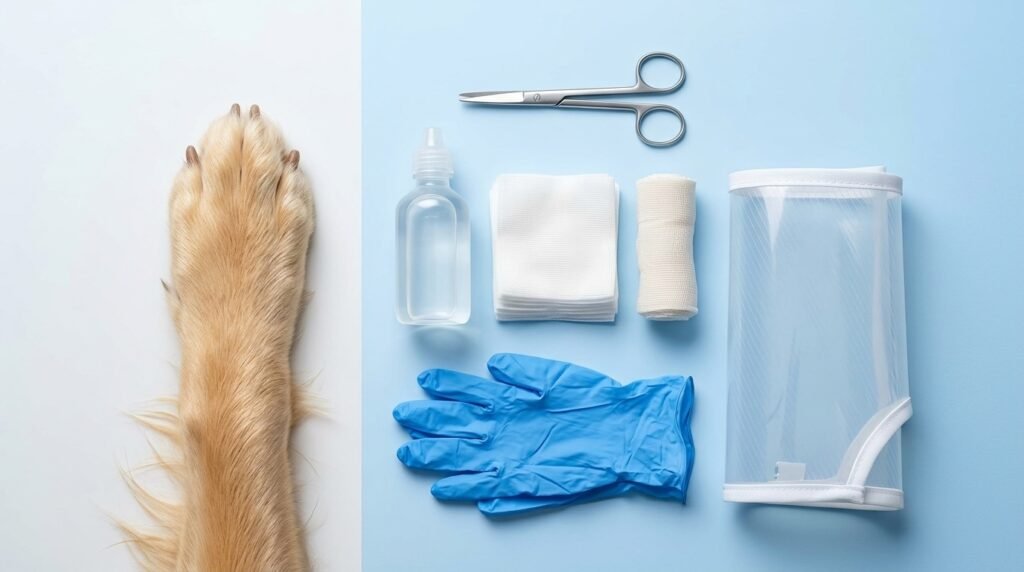
First Aid for a Dog Paw Pad Injury: 7 Safe Steps
First aid is meant to limit contamination, control bleeding, and protect the paw until professional advice or care is available. It is not a way to determine wound depth or rule out a retained foreign body.
1. Keep your dog still and protect yourself
Move to a well-lit, quiet area. Use a leash and ask another adult to help if available. Pain can change behavior suddenly. Do not put your face near the dog’s mouth, wrestle with a panicking dog, or improvise a muzzle if the dog is vomiting, having breathing difficulty, or has a facial injury.
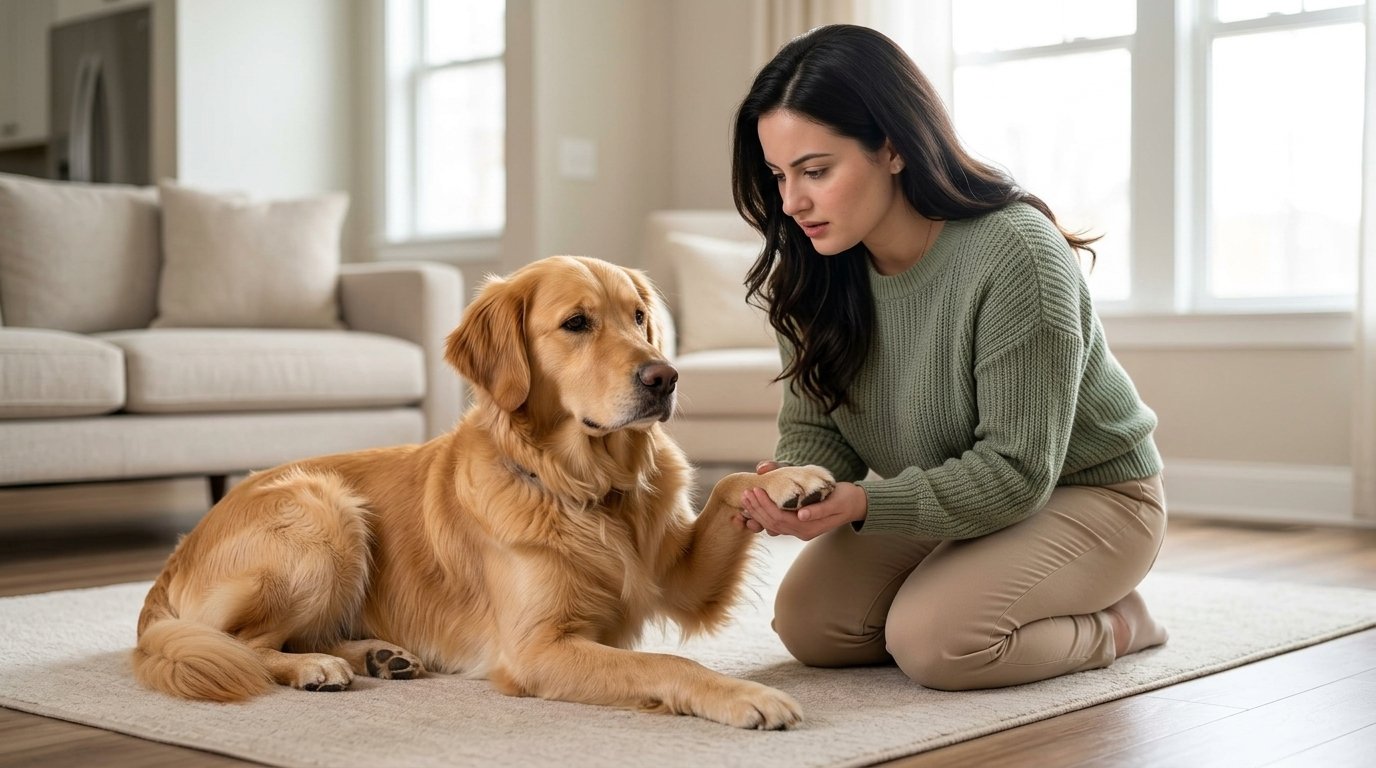
2. Check the entire paw gently
Look at the large central pad, toe pads, spaces between the toes, nails, and top of the foot. Compare the injured paw with the opposite paw. Stop if your dog reacts strongly. A painful examination can worsen distress, and forceful handling may push debris deeper.
3. Control active bleeding
Place clean gauze or a clean folded cloth directly over the wound and maintain steady, gentle pressure. Do not lift it every few seconds to check; that can disturb the forming clot. If blood comes through, place more clean material on top rather than pulling off the first layer.
The veterinary guidance from VCA on torn or injured foot pads advises direct pressure and treats bleeding that does not stop within roughly 10–15 minutes as an emergency. Do not use a tourniquet unless a veterinarian or emergency professional specifically directs you; incorrect use can cause severe tissue damage.
4. Rinse surface contamination
Once bleeding is controlled enough to inspect the paw, gently rinse dirt from a mild wound with clean lukewarm water or sterile saline. Do not scrub exposed tissue. Avoid pouring hydrogen peroxide, rubbing alcohol, essential oils, bleach, or harsh household antiseptics into the wound. These can irritate tissue, delay healing, or be dangerous if licked.
5. Handle foreign material conservatively
You may rinse away loose surface grit. If a tiny, superficial splinter is clearly visible, easily grasped, and slides out without resistance, cautious removal may be reasonable. Stop if it is deep, painful, barbed, broken, or difficult to grasp. Never dig, squeeze, probe with a needle, or pull out a large penetrating object; it may be limiting bleeding or lying near important structures.
6. Cover the paw for transport
Place a sterile nonstick pad or clean gauze over the area, add soft padding, and apply a loose temporary wrap. Include the paw rather than wrapping a narrow strip tightly around one spot. You should be able to slide two fingers beneath the upper edge. If you are unsure how to wrap safely, hold clean padding in place during transport instead.
7. Prevent walking and licking
Carry a small dog when practical or use the shortest controlled route to the car. Keep larger dogs on leash and minimize weight-bearing. A properly fitted recovery collar may prevent licking, but it does not replace a protective plan. For future emergencies, the PawMindTips dog emergency plan can help you organize transport details, veterinary contacts, and supplies before they are needed.
What to Do for Cuts, Burns, Punctures, and Torn Pads
Different mechanisms create different risks. The safest response to a dog paw pad injury depends on what happened, how deep the damage appears, how much it hurts, and whether contamination or heat is involved.
Small surface scrape
Rinse gently, prevent licking, and restrict running. Even if your dog walks normally, contact your regular veterinarian if the raw area is extensive, keeps reopening, or fails to show steady improvement. A superficial-looking scrape may be more uncomfortable than it appears.
Bleeding cut
Apply direct pressure first. Do not repeatedly wash a wound that is actively bleeding. Once bleeding is controlled, use a clean temporary dressing and ask your veterinarian whether the cut needs an examination. Paw-pad tissue can be difficult to close and may heal slowly because it is repeatedly loaded during walking.
Puncture or embedded object
Punctures deserve veterinary attention because material and bacteria may be carried below the surface. Do not close the hole with glue, tape, or ointment. If an object remains embedded, stabilize the paw without pushing on it and transport your dog. A veterinarian may need pain control, imaging, sedation, exploration, or flushing.
Hot-surface burn
Move the dog away from the heat source. Cool the affected paws with cool or room-temperature running water; do not use ice or very cold water. Burns may continue to evolve after the initial exposure, so call a veterinarian even if the damage first appears mild. Multiple affected feet, blistering, peeling, or altered pad color need prompt care. The VCA guidance also recommends room-temperature water for temperature-related pad burns and veterinary care when pads discolor or underlying tissue becomes exposed.
Chemical exposure
Protect yourself with gloves, prevent licking, remove contaminated footwear or material if it can be done safely, and flush the paw with plenty of running water. Do not attempt to neutralize one chemical with another because that reaction can generate heat or worsen tissue damage. Call a veterinarian or animal poison resource with the product label available. The ASPCA Animal Poison Control Center provides U.S. poison guidance by phone, although a consultation fee may apply.
Torn flap or cracked pad
Do not cut, peel, or glue the flap. Cover it gently in its natural position and have the paw assessed. The veterinary team will decide whether the tissue should remain, be trimmed, or receive another form of treatment.
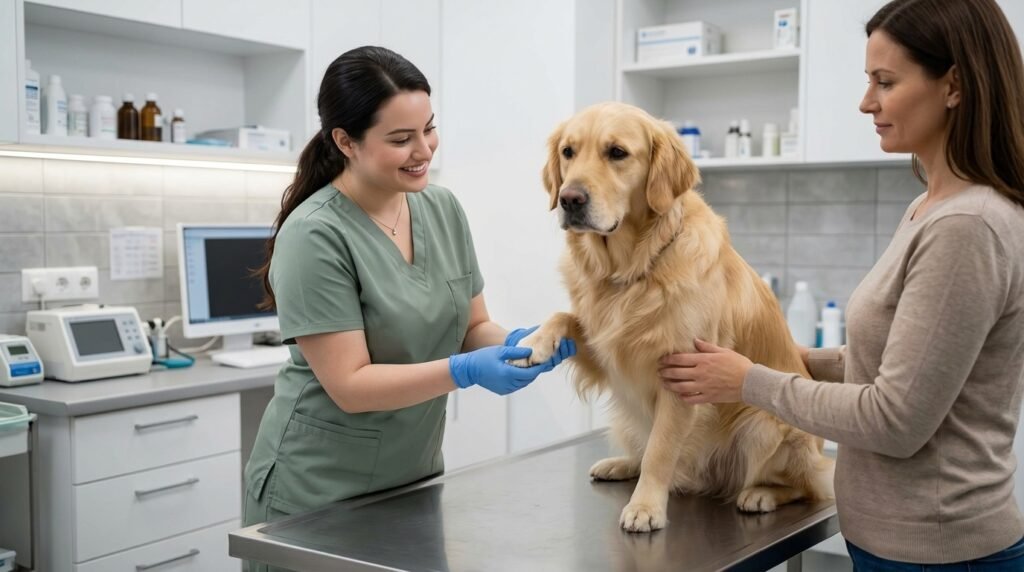
How to Bandage an Injured Dog Paw Safely
A bandage can protect a dog paw pad injury, but a tight, wet, slipped, or chewed wrap can create a second dog paw pad injury. If a veterinary professional has not shown you how to bandage, use it only as a loose temporary cover during transport.
A basic temporary paw covering generally has three functions:
- A nonstick contact layer protects the wound.
- Soft gauze padding absorbs fluid and distributes pressure.
- A light outer layer holds the padding in place.
Never stretch self-adhering wrap tightly as you apply it; it can continue constricting the leg. Do not place tape directly on fur or skin, and do not wrap only the toes while leaving a tight band above them. VCA recommends covering the toes and extending the bandage to include the wrist or ankle area so it is less likely to slip, while leaving enough room to insert two fingers.
Check exposed toes several times a day if your veterinarian has instructed you to maintain a wrap. Remove the temporary bandage and contact the clinic immediately if the toes become swollen, cold, hot, discolored, painful, or separated; if the bandage slips; or if a foul odor or discharge develops. Keep the dressing dry. A waterproof cover may be used briefly outdoors, but remove it immediately afterward so moisture does not become trapped.
Do not keep rebandaging a wound indefinitely without veterinary input. The appropriate dressing, change schedule, and need for an open versus covered wound depend on the injury. Never apply a human pain-relief cream or medication beneath the bandage.
What Not to Put on a Dog’s Injured Paw
The desire to disinfect or relieve pain can lead to products that damage tissue or poison a dog when licked. Until your veterinarian recommends a specific treatment, avoid:
- Hydrogen peroxide or rubbing alcohol in the wound
- Concentrated antiseptics or household disinfectants
- Essential oils
- Powders, spices, or homemade pastes
- Superglue or liquid bandage products
- Numbing creams
- Human antibiotic ointments unless your veterinarian approves the exact product
- Human pain relievers such as ibuprofen, naproxen, acetaminophen, or aspirin unless a veterinarian has prescribed a specific drug and dose for that dog
The U.S. Food and Drug Administration warns owners to talk with a veterinarian before giving pain relievers to pets, because medications intended for people—or even for another dog—may be unsafe.
Do not let the absence of dramatic bleeding create false reassurance about a dog paw pad injury. A puncture can seal over contaminated tissue, a burn can worsen, and a narrow cut may hide deeper damage. Do not encourage your dog to “walk it off.”
Veterinary Treatment and Dog Paw Pad Injury Recovery
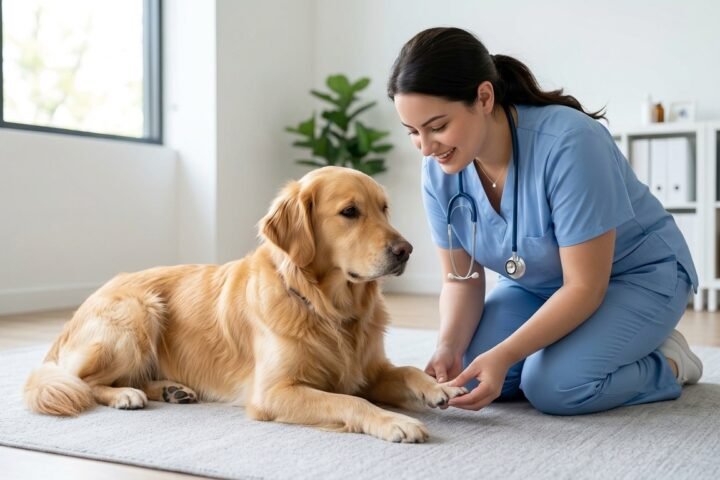
At the clinic, the veterinarian may assess circulation, sensation, gait, nails, joints, wound depth, contamination, and the spaces between the toes. Fur may be clipped and the area thoroughly flushed. Pain control or sedation may be needed for a complete and humane examination.
Depending on the dog paw pad injury, treatment may include removal of debris or damaged tissue, a professional dressing, prescription pain relief, antibiotics when clinically indicated, imaging for a retained object or bone injury, or a procedure to manage deeper damage. Not every cut can or should be sutured. The pad’s weight-bearing surface and limited ability to hold stitches can complicate closure.
Recovery from a dog paw pad injury varies. A mild abrasion may improve within days, while a deeper cut, burn, puncture, infection, or tissue loss can require weeks. Look for less pain and swelling, a clean surface, improving comfort, and no reopening. Follow the clinic’s instructions rather than a generic timeline.
During recovery:
- Give every prescribed medication exactly as directed.
- Keep activity restricted for the recommended period.
- Use a leash for bathroom trips.
- Prevent licking and chewing.
- Keep dressings clean and dry.
- Attend bandage changes and rechecks on schedule.
- Do not resume long walks merely because your dog seems eager.
Veterinary expenses vary with wound depth, emergency timing, sedation, imaging, medication, and repeat dressings. The PawMindTips overview of dog care costs can help owners plan a broader emergency-care budget, but it should never delay urgent treatment.
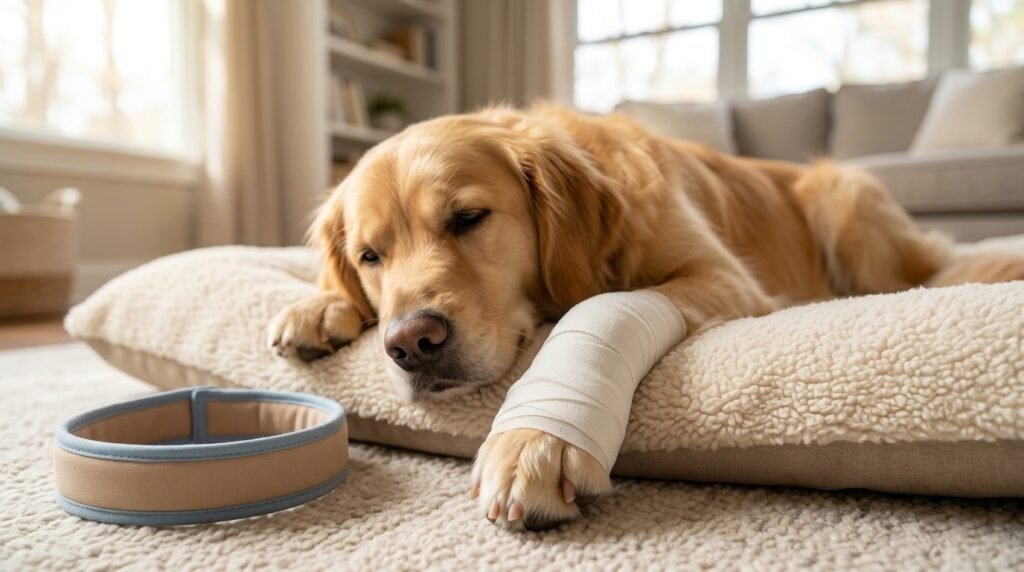
Signs the Dog Paw Pad Injury Is Infected or Not Healing
Inspect the paw only as often as your veterinarian recommends and avoid repeatedly disturbing new tissue. Contact the clinic if a dog paw pad injury worsens, stops improving, or develops:
- Increasing redness, warmth, or swelling
- Yellow, green, cloudy, or bloody discharge
- A foul smell
- New or worsening pain
- Renewed bleeding
- A wound that opens whenever the dog walks
- Darkening or dying-looking tissue
- Persistent licking despite protection
- Lethargy, reduced appetite, feverish behavior, or other whole-body changes
- New swelling above or below a bandage
Do not wait for pus before asking for help. Infection may begin as increased pain, warmth, swelling, or slower-than-expected progress. If the paw was punctured, contaminated, burned, or exposed to a foreign body, the threshold for reassessment should be especially low.
Photographs taken in consistent lighting can help you describe changes to the veterinarian, but they cannot show depth, circulation, or retained material. If your dog’s behavior and the picture tell different stories, trust the dog’s change in comfort and seek advice.
How to Prevent Future Paw Pad Injuries
Prevention starts with choosing the walking surface and checking the feet after exposure. These habits reduce another dog paw pad injury:
- Walk during cooler parts of hot days and choose shade or grass where safe.
- Test pavement with your own hand; when it feels uncomfortably hot, choose another route rather than relying on a fixed number of seconds.
- Follow the PawMindTips guide to keeping dogs cool during summer when planning warm-weather activity.
- Inspect trails, yards, garages, and play areas for glass, wire, burrs, sharp rocks, and construction debris.
- Rinse and dry paws after exposure to road salt, ice melt, or unknown chemicals.
- Introduce distance and rough terrain gradually so pads can adapt without being overworked.
- Keep nails maintained; overgrown or damaged nails can change how the foot contacts the ground.
- Check between the toes and around each nail after hikes or yard work.
- Consider properly fitted dog boots for heat, ice, chemicals, or rough terrain, and condition your dog to them gradually.
- Keep sterile saline, nonstick pads, gauze, and your veterinary contact details in a portable first-aid kit.
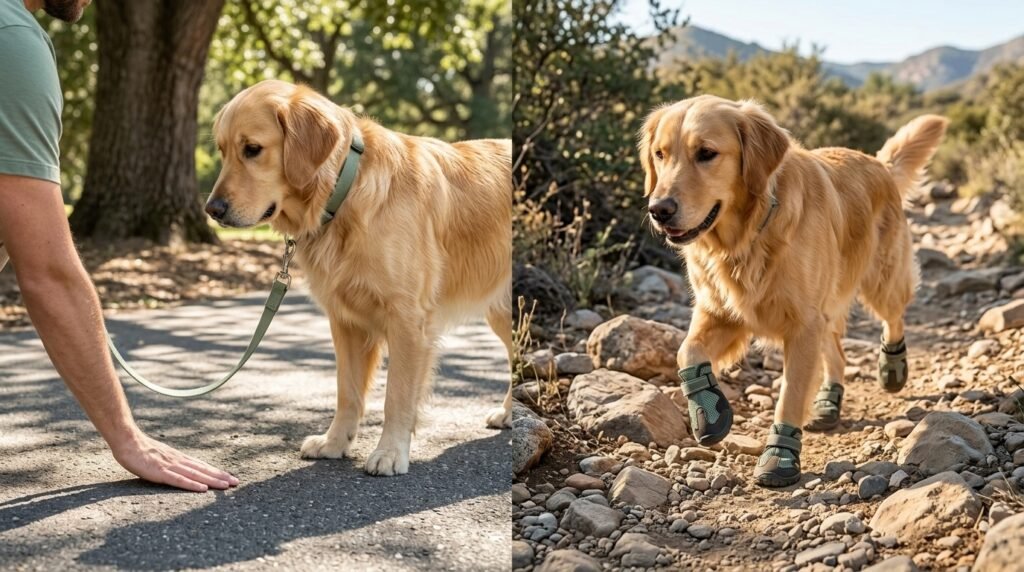
Boots are not foolproof. Poorly fitted boots can rub, trap moisture, interfere with movement, or fall off. Inspect paws before and after use, keep sessions short at first, and replace damaged footwear.
FAQs
Can a dog paw pad injury heal on its own?
A very small superficial abrasion may heal with protection, rest, and monitoring, but it can be hard to judge depth or contamination at home. Contact your veterinarian if the wound is painful, bleeding, gaping, punctured, burned, repeatedly reopening, or not steadily improving.
How long should I keep my dog from licking an injured paw?
Prevent licking throughout healing and for as long as your veterinarian recommends. Licking adds moisture and bacteria and can remove fragile new tissue. A properly fitted recovery collar is generally more reliable than repeated verbal interruption.
Can I walk my dog with a cut paw pad?
Limit walking to brief, controlled bathroom trips until a veterinarian advises otherwise. Running, long walks, rough ground, and repeated pressure can reopen the cut. A temporary cover does not make normal activity safe.
Should I use hydrogen peroxide on a dog paw pad injury?
No. Hydrogen peroxide can irritate healthy tissue and delay healing. For basic first aid, gently rinse surface dirt with clean lukewarm water or sterile saline, then ask your veterinarian what wound-care product, if any, is appropriate.
Conclusion
A dog paw pad injury deserves prompt attention because every step places pressure on the damaged area. Control active bleeding with steady pressure, gently rinse only when appropriate, avoid digging out embedded objects, protect the paw loosely, and prevent walking and licking.
Seek urgent veterinary care for uncontrolled bleeding, deep or gaping wounds, tissue flaps, punctures, embedded objects, severe pain, inability to bear weight, or blistered, discolored, or raw burns. When in doubt, call a veterinary clinic and describe what you see—the safest home first aid is the care that gets your dog comfortably to the right professional help.