If your dog watches every bite you eat with hopeful eyes, you may wonder which foods from your kitchen are actually safe to share. Fortunately, many simple whole foods can make healthy occasional treats when they are prepared correctly and given in moderation.
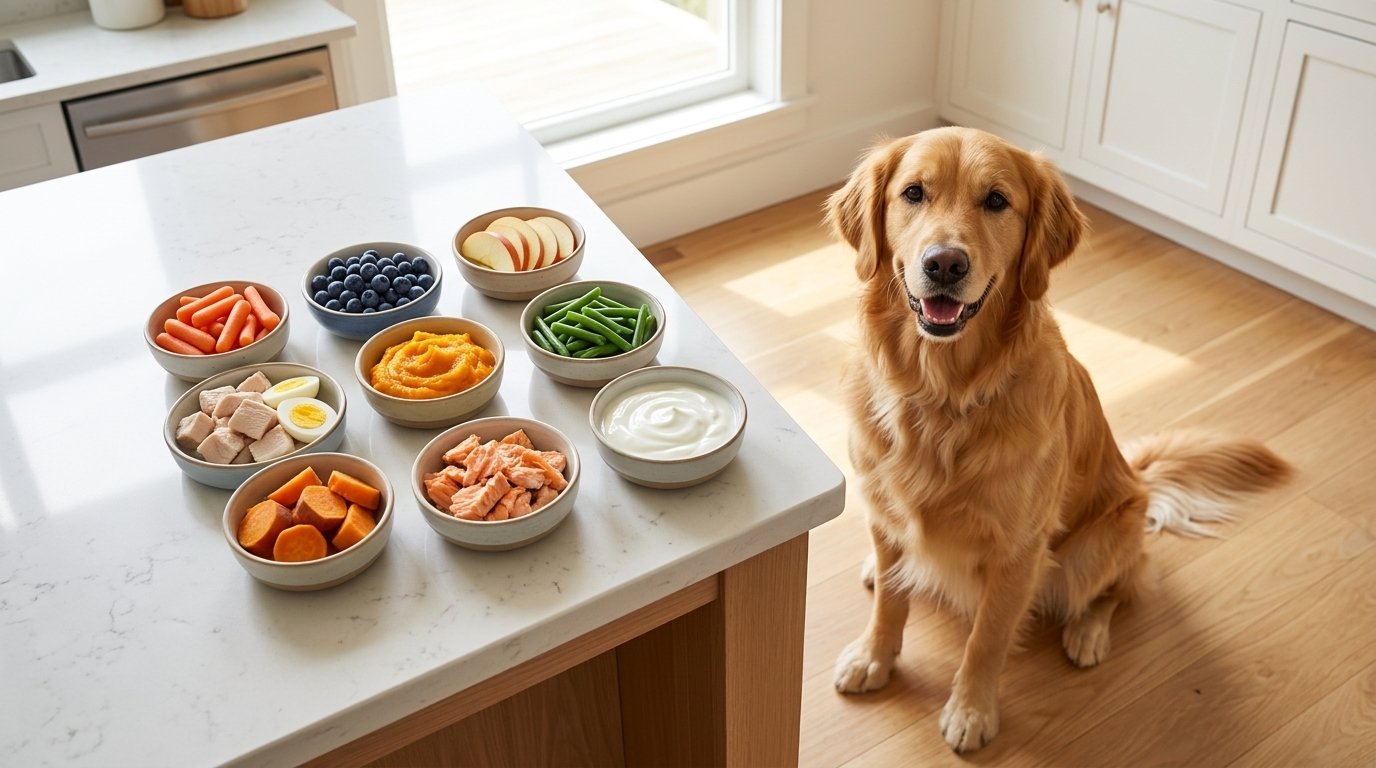
The best human foods for dogs are generally plain foods that provide useful nutrients without added salt, sugar, spices, sauces, or other potentially harmful ingredients. Options such as carrots, blueberries, plain chicken, pumpkin, green beans, apples, eggs, sweet potatoes, salmon, and plain yogurt can add variety to your dog’s diet.
However, “healthy for humans” does not automatically mean “safe for dogs.” Dogs process certain foods differently from people, and some common kitchen ingredients can cause serious illness. For example, grapes and raisins can damage a dog’s kidneys, while onions, garlic, and chives can damage red blood cells. Xylitol, an artificial sweetener found in some sugar-free products, can also be extremely dangerous.
That is why choosing the best human foods for dogs involves more than picking nutritious ingredients. You also need to know how to prepare them, how much to give, and which foods should never reach your dog’s bowl.
In this guide, you’ll discover 10 safe and healthy options, practical serving tips, foods to avoid, and simple rules for sharing human food safely.
Table of Contents
What Are the Best Human Foods for Dogs?
The best human foods for dogs are not necessarily expensive or complicated. In many cases, simple whole foods are the easiest choices.
Good options generally have several things in common:
- They are minimally processed.
- They contain no toxic ingredients.
- They can be prepared without added salt or seasoning.
- They can be served in small portions.
- They provide useful nutrients.
- They can complement a complete and balanced dog diet.
The American Kennel Club explains that many people foods can be safe for dogs when they are prepared plainly and offered in moderation, but they should not replace a balanced dog-food diet.
This distinction is important. A carrot, for example, can be a healthy treat, but feeding large quantities of carrots instead of nutritionally complete dog food would not provide everything your dog needs.

Human food should therefore be viewed as an occasional treat, topper, or enrichment option, rather than the foundation of your dog’s nutrition.
1. Carrots
Carrots are one of the easiest best human foods for dogs to add as an occasional treat.
They are naturally crunchy, relatively low in calories, and provide fiber and beta-carotene. Many dogs enjoy raw carrot pieces, while lightly cooked carrots can be easier for some dogs to chew and digest.
The key is portion size.
Large chunks can be difficult for small dogs to handle, so cut carrots into appropriately sized pieces. AKC also lists carrots among dog-friendly vegetables that can work as low-calorie treats.
How to Give Carrots to Your Dog
- Wash the carrot thoroughly.
- Remove any damaged portions.
- Cut it into bite-sized pieces.
- Serve it plain.
- Avoid butter, salt, sauces, and seasoning.
You can offer a few small carrot pieces as a training reward or occasional snack.
PawMindTips tip: Frozen carrot pieces can be a refreshing treat during warm weather, but always choose a size your dog can safely chew.
2. Blueberries
Blueberries are another excellent choice when you’re looking for the best human foods for dogs.
These small berries provide fiber, vitamin C, antioxidants, and other plant compounds. They are also naturally small, which makes them convenient for training rewards.
The AKC describes blueberries as a nutrient-rich food that can be included in a dog’s diet in moderation.
How to Serve Blueberries
Wash fresh blueberries before giving them to your dog and start with a small amount.
You can:
- Give them individually as treats.
- Mix a few into regular dog food.
- Freeze them for an occasional cold snack.
- Mash a small amount into another dog-safe food.
Avoid blueberry muffins, sweetened blueberry products, syrups, and desserts because these may contain excessive sugar or other ingredients that are not appropriate for dogs.
3. Plain Cooked Chicken
Plain cooked chicken is one of the most useful best human foods for dogs because it provides high-quality protein and is highly palatable to many dogs.
Chicken can be especially useful as a small training reward or meal topper. However, the way you prepare it matters.
Chicken cooked for humans often contains salt, garlic, onion, butter, oils, marinades, or spices. Those additions can turn a potentially dog-safe food into an unsafe meal.

How to Prepare Chicken for Dogs
For your dog, chicken should be:
- Fully cooked.
- Plain.
- Boneless.
- Free from excessive fat and skin.
- Free from onion and garlic.
- Cut into small pieces.
Never give cooked chicken bones. Poultry bones can splinter and potentially cause choking, blockage, or gastrointestinal injury.
For more guidance, see the AKC’s guide to foods dogs can and can’t eat.
4. Plain Pumpkin
Plain pumpkin can be a useful addition to the list of best human foods for dogs because it contains fiber and can be easy to incorporate into meals.
Choose plain cooked pumpkin or plain canned pumpkin without added sugar or spices.
Be careful with canned pumpkin products. Pumpkin pie filling is not the same as plain pumpkin. Pie filling may contain added sugar, spices, and other ingredients your dog does not need.
How to Serve Pumpkin
A small amount of plain pumpkin can be mixed into your dog’s regular food.
However, pumpkin should not be treated as a cure for ongoing digestive problems.
If your dog has repeated vomiting, persistent diarrhea, severe constipation, abdominal pain, lethargy, or loss of appetite, contact your veterinarian rather than relying on a food-based home remedy.
5. Green Beans
Green beans are another practical option among the best human foods for dogs.
They contain fiber and several vitamins and minerals while being relatively low in calories. Plain green beans can be served fresh, frozen, or lightly cooked.
Safe Green Bean Preparation
- Wash fresh green beans.
- Remove tough ends if needed.
- Cut them into appropriate pieces.
- Serve them plain.
- Avoid butter, salt, sauces, garlic, and onions.
Canned green beans can contain significant amounts of sodium, so choose fresh or plain frozen green beans whenever possible.
The AKC also identifies green beans among vegetables that can be appropriate for dogs when served correctly.
6. Apples
Apples can be a crunchy, refreshing treat and are often included among the best human foods for dogs.
They contain fiber and other nutrients, but preparation is essential.
Do not simply give your dog a whole apple.
Remove the stem, core, and seeds before serving. AKC specifically recommends removing seeds, pits, and other potentially problematic parts from fruits before giving them to dogs.
How to Give Apples Safely
- Wash the apple.
- Remove the stem.
- Cut out the entire core.
- Remove the seeds.
- Slice the remaining fruit into small pieces.
- Offer a modest portion.
Avoid apple pie, caramel apples, sweetened applesauce, and other processed apple products.
7. Fully Cooked Eggs
Fully cooked eggs can be a nutritious occasional treat because they provide protein and several nutrients.
They are also convenient because most households already have eggs available.
When preparing eggs for your dog, keep them simple.
Dog-Safe Egg Preparation
Good choices include:
- Hard-boiled eggs.
- Plain scrambled eggs.
- Plain cooked egg.
Avoid adding:
- Salt.
- Butter.
- Garlic.
- Onion.
- Hot sauce.
- Heavy seasoning.
- Large amounts of oil.
The AKC lists fully cooked eggs among people foods dogs can eat.
For routine feeding, cooked is preferable to raw because cooking reduces food-safety concerns.

8. Sweet Potatoes
Sweet potatoes can provide fiber and other nutrients, making them another useful option among the best human foods for dogs.
The safest approach is to cook them thoroughly and serve them plain.
How to Prepare Sweet Potato
- Wash the sweet potato.
- Cook it thoroughly.
- Allow it to cool.
- Remove difficult-to-digest skin if appropriate.
- Cut or mash it into small portions.
- Serve without toppings.
Do not turn your dog’s sweet potato into a dessert. Avoid brown sugar, marshmallows, butter, heavily seasoned preparations, and sweet potato casserole.
A small spoonful mixed with regular dog food can be enough.
9. Cooked Salmon
Cooked salmon is a nutrient-rich option because it provides protein and omega-3 fatty acids.
That makes it one of the more nutrient-dense choices among the best human foods for dogs.
However, salmon must be prepared carefully.
How to Give Salmon to Dogs
- Cook it thoroughly.
- Remove every visible bone.
- Let it cool before serving.
- Avoid salt.
- Avoid garlic and onion.
- Avoid sauces and marinades.
- Give only a small portion.
The AKC notes that salmon can provide protein and beneficial fats but should be fully cooked because raw or undercooked fish can carry parasites that can make dogs seriously ill.
Never assume that a seasoned restaurant salmon dish is appropriate for your dog. A plain piece prepared specifically for the dog is a much safer option.
10. Plain Unsweetened Yogurt
Plain yogurt can be one of the best human foods for dogs for owners looking for an occasional dairy-based treat.
Some plain yogurts contain live cultures, and yogurt can provide protein and calcium. However, dairy does not agree with every dog.
Some dogs have difficulty digesting lactose and may develop gas, loose stool, or diarrhea after eating dairy. The ASPCA also notes that milk and dairy products can cause digestive upset in pets that do not tolerate lactose well.
Choosing Yogurt for Dogs
Choose:
- Plain yogurt.
- Unsweetened yogurt.
- A product without xylitol.
- A product without chocolate or other unsafe additions.
Start with a very small amount.
If your dog develops digestive problems, stop offering yogurt and choose a different treat.
Quick Comparison: 10 Best Human Foods for Dogs
| Food | Main Benefit | How to Serve |
|---|---|---|
| Carrots | Fiber and beta-carotene | Plain and bite-sized |
| Blueberries | Antioxidants and fiber | Washed and plain |
| Chicken | Protein | Fully cooked and boneless |
| Pumpkin | Fiber | Plain cooked or canned |
| Green beans | Fiber and nutrients | Plain and appropriately cut |
| Apples | Fiber and nutrients | Core and seeds removed |
| Eggs | Protein | Fully cooked and plain |
| Sweet potatoes | Fiber and nutrients | Cooked and plain |
| Salmon | Protein and omega-3s | Fully cooked and boneless |
| Plain yogurt | Protein and calcium | Unsweetened and xylitol-free |
How Much Human Food Can a Dog Eat?
Even the best human foods for dogs can become unhealthy when your dog eats too much.
The amount your dog can safely receive depends on body size, age, activity level, current weight, health status, and the rest of the daily diet.
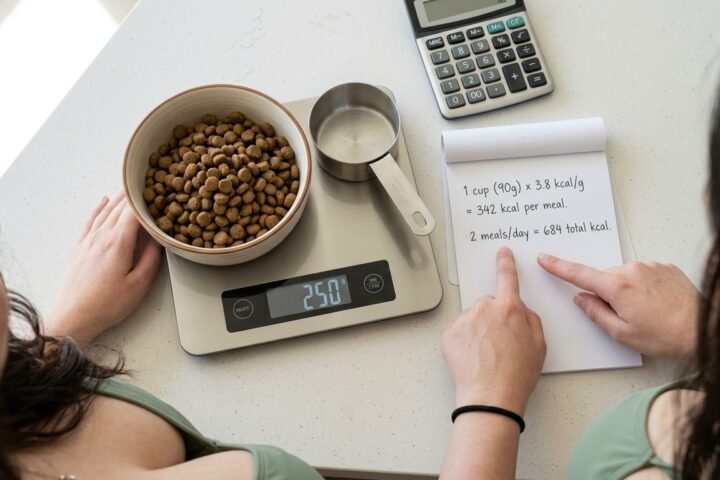
A commonly used veterinary guideline is to keep treats and other extras below about 10% of a dog’s daily calorie intake. PetMD’s veterinarian-authored guidance similarly recommends keeping human-food portions small and below 10% of daily calories.
For example, giving a few blueberries to a large dog may be very different from giving a large handful to a tiny dog.
Keep These Portions Small
Human foods should generally be:
- Occasional.
- Small.
- Appropriate for your dog’s size.
- Counted as part of daily treats.
- Added without replacing balanced dog food.
If your dog has obesity, diabetes, pancreatitis, food allergies, kidney disease, or another medical condition, ask your veterinarian before introducing new human foods.
7 Rules for Feeding Human Food Safely
Knowing the best human foods for dogs is only part of safe feeding. Preparation and portion control are equally important.
1. Keep It Plain
Avoid salt, sugar, sauces, butter, oils, and heavy seasonings.
2. Remove Dangerous Parts
Remove bones, pits, seeds, stems, cores, shells, and other parts that could create choking, obstruction, or toxicity risks.
3. Introduce One New Food at a Time
If your dog reacts badly, introducing foods individually makes it easier to identify the possible cause.
4. Start With a Small Amount
Even safe foods can cause stomach upset if introduced too quickly or fed in excessive quantities.
5. Read Ingredient Labels
This is especially important with peanut butter, yogurt, baked products, protein bars, and sugar-free foods.
Pay particular attention to xylitol. ASPCA warns that xylitol can cause dangerously low blood sugar and liver failure in dogs.
6. Keep Human Food as an Extra
Your dog’s main diet should remain complete and balanced.
PetMD notes that food being made from human-grade ingredients does not automatically mean it is nutritionally complete and balanced for dogs.
7. Ask Your Veterinarian When Unsure
General food lists cannot account for every dog’s individual nutritional needs.
Human Foods Dogs Should Never Eat
A guide to the best human foods for dogs should also make the dangerous foods clear.
Some common kitchen foods can cause serious poisoning.
Keep These Foods Away From Dogs
- Chocolate
- Grapes
- Raisins
- Onions
- Garlic
- Chives
- Xylitol
- Macadamia nuts
- Alcohol
- Foods containing toxic ingredients
The ASPCA specifically warns that grapes and raisins can cause kidney damage, while onions, garlic, and chives can damage red blood cells.
ASPCA’s more recent toxin reporting also continues to identify human food and drinks as a major source of pet poison exposures, with grapes, raisins, xylitol, onions, and garlic among important concerns.
For a detailed reference, see the ASPCA’s list of people foods to avoid feeding pets.
What About Chocolate?
Chocolate should never be intentionally fed to dogs. The risk depends on factors including the type and amount of chocolate and the dog’s size, but darker chocolate can be particularly dangerous.
If your dog eats chocolate, contact your veterinarian promptly rather than waiting for symptoms.
Can Dogs Eat Human Food Every Day?
Some individual dog-safe foods may be offered regularly in tiny portions, but that does not mean dogs should eat large amounts of human food every day.
The best human foods for dogs should supplement a nutritionally complete diet rather than replace it.
For example, a few pieces of carrot or blueberries may be perfectly reasonable as treats. But replacing a significant portion of your dog’s balanced food with vegetables, fruit, meat, or table scraps can interfere with nutritional balance.
Your dog needs appropriate levels of protein, fats, carbohydrates, vitamins, minerals, and other nutrients.

That is why “human food” and “human-grade dog food” are not interchangeable concepts. A food can contain ingredients suitable for people without automatically being nutritionally complete for dogs.
Can Human Foods Be Used for Dog Training?
Yes.
Small pieces of dog-safe human foods can make useful high-value rewards.
For example, tiny pieces of:
- Plain cooked chicken
- Cooked egg
- Carrot
- Blueberry
- Plain salmon
may motivate a dog during training.
The important word is tiny.
If you’re giving dozens of rewards during a training session, each piece should be small enough that the calories do not quickly add up.
You can also use your dog’s regular food as rewards and reserve higher-value human foods for especially difficult behaviors or distracting environments.
What If Your Dog Reacts to a Human Food?
Even foods included among the best human foods for dogs may not be appropriate for every individual dog.
Stop giving the food if your dog develops:
- Vomiting
- Diarrhea
- Excessive gas
- Itching
- Facial swelling
- Loss of appetite
- Unusual lethargy
- Abdominal discomfort
Mild digestive changes may resolve after stopping the new food, but severe or persistent symptoms require veterinary attention.
Dogs with known allergies, sensitive digestion, chronic disease, or prescription diets should receive individualized dietary advice from their veterinarian.
Frequently Asked Questions
What are the best human foods for dogs?
The best human foods for dogs include plain cooked chicken, carrots, blueberries, pumpkin, green beans, apples with the core and seeds removed, fully cooked eggs, sweet potatoes, cooked salmon, and plain unsweetened yogurt. They should be served in small portions and prepared without harmful seasonings or ingredients.
What human foods can dogs eat safely?
Dogs can eat several human foods safely when they are properly prepared. Common examples include carrots, blueberries, apples without seeds or cores, green beans, plain cooked chicken, cooked eggs, pumpkin, sweet potatoes, salmon, and plain yogurt.
What is the healthiest human food for dogs?
There is no single healthiest human food for every dog. A dog’s ideal treat depends on its size, age, health, calorie requirements, and dietary needs. Lean cooked protein and certain fruits and vegetables can all be useful choices.
Can dogs eat human food every day?
Small portions of appropriate human food may be used as treats, but human food should not replace a complete and balanced canine diet. Keep treats and extras limited and account for them in your dog’s daily calorie intake.
What human foods are toxic to dogs?
Chocolate, grapes, raisins, onions, garlic, chives, xylitol, macadamia nuts, and alcohol are among the foods and ingredients that can be dangerous to dogs.
Final Thoughts
The best human foods for dogs are simple, nutritious, and easy to prepare safely.
Carrots, blueberries, plain chicken, pumpkin, green beans, apples, cooked eggs, sweet potatoes, salmon, and plain yogurt can provide variety and make useful occasional treats for many dogs.
But healthy ingredients are only part of the equation. Always consider how the food is prepared, how much you are giving, and whether your individual dog can tolerate it.
Keep human food plain. Remove bones, seeds, pits, and cores when necessary. Avoid toxic ingredients such as chocolate, grapes, raisins, onions, garlic, and xylitol. Most importantly, keep treats and human-food extras from replacing your dog’s complete and balanced diet.
When you’re uncertain about a particular food—or your dog has a medical condition—your veterinarian is the best source of personalized dietary guidance.
A few carefully selected bites can be a healthy way to add variety while keeping your dog’s overall nutrition on track.