Dog growl meaning depends on the situation and your dog’s whole body language. Growling during loose, bouncy play can be normal. Growling with freezing, stiffness, avoidance, or guarding can signal discomfort and a risk of biting. Sound alone cannot reliably tell you the difference.
If you are unsure, pause the interaction and give your dog space. Do not punish the growl, reach for a guarded object, or keep touching a dog who seems uncomfortable. This guide explains common reasons for growling, the signs to watch for, and when veterinary or behavior support is needed.
Table of Contents
Why Dog Growl Meaning Matters More Than You Think
Growling is a form of communication. It may occur during play, but it can also be an aggressive warning that a dog wants an interaction to stop. Take the situation seriously without assuming that every growling dog is about to bite.
Look at posture, movement, facial tension, distance from the trigger, and what happened immediately before the growl. Some dogs show earlier signs of discomfort, but these can be subtle or absent. Dogs do not always follow a predictable sequence of warnings.
Punishment may suppress warning signals without resolving the underlying fear, pain, or discomfort. The safer response is to stop the concerning interaction, create space, and address the cause using reward-based methods.
Learning to recognize the signs of a stressed dog
5 Common Contexts for Dog Growling
These are overlapping situations, not five sounds you can reliably identify by ear. Fear, pain, and resource guarding can all produce warning growls. Read the circumstances and your dog’s body language together.
1. The Play Growl
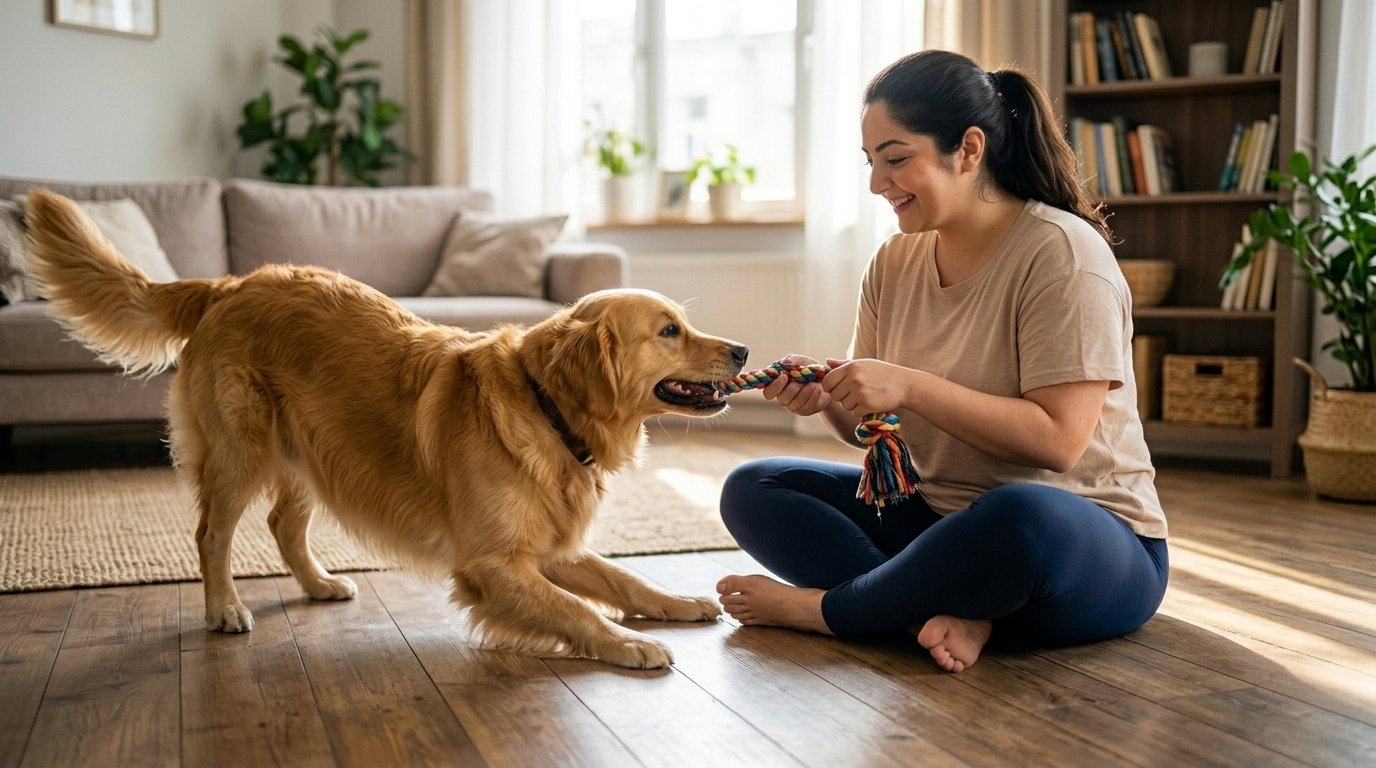
This is the growl most owners hear daily and it’s usually nothing to worry about. Play growls tend to happen during tug-of-war, wrestling with another dog, or rough-and-tumble games with a favorite human. They’re often accompanied by a loose, wiggly body, a relaxed or wagging tail, play bows (front end down, rear end up), and exaggerated, bouncy movements.
Look for loose, bouncy movements, voluntary pauses, and relaxed re-engagement. Growl sounds vary between dogs, so pitch or rhythm alone cannot reliably distinguish play from a warning. Pause the game if either dog becomes stiff, uncomfortable, or tries to move away.
2. The Warning Growl
This is the growl that deserves your full attention. A warning growl usually means your dog is uncomfortable, feels threatened, or wants space — right now. It often comes with stiff body posture, a fixed stare, raised hackles, a tucked or stiffly held tail, bared teeth.
This type of growl is your dog’s way of saying “back off” before things get more serious. According to the American Kennel Club, growling is a completely normal form of canine communication, and interpreting the exact dog growl meaning behind it is key to responding appropriately rather than reacting with punishment.

3. The Fear Growl
Fear-based growling often looks different from a confident warning growl. A fearful dog tends to growl while leaning away, tail tucked, ears pinned back, and body lowered — sometimes even trembling. This specific dog growl meaning says “I’m scared and I don’t know what else to do,” rather than “I’m confident and I’m telling you to stop.”
Fear growls are common around loud noises, unfamiliar people, vet visits, or overwhelming environments like crowded parks. Recognizing fear as the root cause changes how you respond — comforting and creating distance works far better than correction
For practical ways to reduce pressure and support a fearful dog, read our guide on how to help a nervous dog..
4. The Pain Growl
Sometimes a growl has nothing to do with behavior at all — it’s a health signal. A dog who suddenly growls when touched in a specific spot, when picked up, or when getting up from lying down may be dealing with an injury, arthritis, or another painful condition. This kind of dog growl meaning often comes on suddenly in a dog who has never growled before, which is itself a red flag worth taking seriously.
Our guide on how to tell if your dog is in pain explains other changes to discuss with your veterinarian.
The VCA Animal Hospitals resource on canine aggression notes that pain and underlying medical conditions are common — and often overlooked — triggers for sudden changes in a dog’s growling or aggressive behavior.
5. The Possessive (Resource Guarding) Growl
This growl shows up around food bowls, favorite toys, a comfortable spot on the couch, or even a specific person the dog considers “theirs.” It’s rooted in a dog’s instinct to protect valuable resources, and understanding this dog growl meaning helps you manage it safely through early, positive training.
How to Tell the Difference Between a Warning Growl and a Play Growl
Since play growls and warning growls can sound similar to an untrained ear, body language is really where the true dog growl meaning gets revealed. Here’s a quick side-by-side to help you read the room:
- Signs it’s likely play: Loose, bouncy movements; play bows; relaxed facial expressions; voluntary pauses; and a dog that comfortably chooses to return to the game.
- Signs it may be a warning: A stiff or frozen body; a hard stare; lip curling; attempts to move away; or tense guarding of food, toys, or a resting place.
A wagging tail does not guarantee friendliness, and raised hackles alone do not prove aggression. Consider the whole situation rather than the sound of the growl. If you are unsure, stop the interaction and give your dog space.

When in doubt, stop the interaction and give your dog space. Misreading a warning growl as playful — especially with kids around — is one of the most common causes of preventable dog bites. Learning to spot these subtle cues is a skill that pays off in every part of your relationship with your dog, and it ties directly into broader psychology work around canine emotional states.
What Your Dog’s Growl Says About Their Psychology
Growling isn’t random — it’s tied to your dog’s emotional state in that exact moment. Part of the deeper dog growl meaning lies in psychology, not just behavior: a growl usually reflects one of a few underlying feelings, such as fear, discomfort, overstimulation, territorial instinct, or protective drive over a resource or person.
Dogs who growl frequently in a wide range of situations may be dealing with chronic stress, poor early socialization, or unresolved anxiety. On the other hand, a dog who growls rarely — but clearly — when a genuine boundary is crossed is often a well-adjusted dog with healthy communication skills. The presence of growling itself isn’t the problem to fix; the frequency, triggers, and intensity are what matter for understanding your dog growl meaning and overall psychology.
This is also where consistency in your household matters. Dogs that are inconsistently corrected for growling — punished sometimes, ignored other times — can become more unpredictable, not less, because they’re not getting a clear signal about what’s expected of them.
What to Do When Your Dog Growls
Your response in the moment shapes what your dog learns for next time. Once you understand the dog growl meaning behind the sound, here’s a practical, level-headed approach to responding:
- Pause the interaction. Stop petting, playing, approaching, or reaching for the item involved.
- Create space safely. Avoid looming over your dog, staring, grabbing their collar, or physically confronting them.
- Keep others away. Move children and other pets away from the situation. Use separation or barriers when this can be done safely.
- Note the trigger afterward. Record what happened before the growl without deliberately repeating the situation to test your dog.
- Arrange a veterinary check for new or unusual growling. This is especially important when growling happens during touch or movement.
- Get help for recurring or escalating warnings. A qualified reward-based behavior professional can help plan gradual training at an intensity your dog can comfortably handle. Do not force exposure until the dog “gets used to it.”

Common Mistakes Owners Make When a Dog Growls
Misjudging dog growl meaning is easy to do, and a few common habits tend to make growling problems worse instead of better:
- Punishing the growl instead of addressing the root cause. This risks removing the warning without removing the underlying discomfort.
- Forcing interaction to “socialize” a scared dog. This usually backfires and increases anxiety.
- Ignoring pain as a possible trigger. A sudden change in growling behavior deserves a health check, not just a training plan.
- Inconsistent household rules. If one family member allows resource guarding and another doesn’t intervene at all, the dog gets mixed signals.
Long-Term Tips to Build Trust and Reduce Growling Problems
Understanding dog growl meaning in the moment is important, but the bigger win is reducing unnecessary growling over time by building a more secure, trusting relationship.
- Prioritize consistent, positive training. Reward-based training builds confidence and predictability, which naturally reduces fear-based reactions.
- Practice “drop it” and voluntary exchanges with safe, low-value toys when your dog is relaxed. If your dog already guards objects, avoid reaching for possessions or testing their reaction; seek an individualized behavior plan.
- Socialize thoughtfully, not overwhelmingly. Positive, low-pressure exposure to new people, dogs, and environments — especially during puppyhood — builds resilience. The ASPCA notes that early socialization and positive reinforcement are key tools for preventing many behavior issues, including aggression-related growling, later in life.
- Give your dog predictable routines. Structure reduces anxiety. Regular feeding times, walks, and rest give your dog a stable framework, which lowers overall stress reactivity.
- Watch body language daily, not just during growls. The more familiar you become with your dog’s baseline body language, the earlier you’ll catch stress signals — long before a growl is even necessary.

When to See a Vet or Professional Trainer
Some situations go beyond simple dog growl meaning and call for expert help rather than a DIY approach.
See a veterinarian if:
- Growling appears suddenly in a dog who’s never growled before.
- It’s tied to touch in a specific area of the body.
- It happens when your dog gets up, lies down, or climbs stairs.
- There are other signs like limping, appetite changes, or lethargy.
See a certified professional trainer or veterinary behaviorist if:
- Growling happens frequently across many situations.
- It’s escalating in intensity or frequency.
- There are young children in the home.
- You feel unsafe or unsure how to manage the behavior.
- Previous training attempts haven’t helped.

There’s no shame in bringing in a professional — growling issues are common, and a qualified trainer or behaviorist can often spot patterns an owner is too close to the situation to see.
FAQ: Dog Growl Meaning
Is it ever okay to let my dog growl?
Growling can occur during play or signal discomfort, fear, or pain. Understanding dog growl meaning requires looking at the situation and your dog’s whole body language. Do not punish the growl. If your dog appears uncomfortable—or you are unsure—stop the interaction, give them space, and address the underlying cause.
Should I punish my dog for growling at another dog? No. Punishment can suppress the warning signal without resolving the underlying tension, which can make future interactions less predictable and more risky.
Why does my dog growl when playing but never bite? Play growling is a normal part of rough-and-tumble games and is usually paired with loose body language, wagging tails, and play bows. As long as the overall body language stays relaxed, this is typically harmless fun.
Can a dog’s growl mean it’s in pain? Yes. A sudden onset of growling, especially when touched in a specific area or during movement, can signal pain or an underlying medical issue and is worth a veterinary check.
Conclusion
At the end of the day, understanding dog growl meaning comes down to context: body language, the situation, and what happened right before the sound started. A growl isn’t your dog being “bad” — it’s your dog trying to communicate something important, whether that’s “I’m having fun,” “I need space,” or “something hurts.” The more attention you pay to the full picture — posture, triggers, and patterns over time — the better you’ll get at responding in a way that keeps your dog, your family, and everyone around you safe and understood. When you truly grasp what’s behind the growl, you’re not just reacting to a sound — you’re building a relationship based on trust and clear communication.