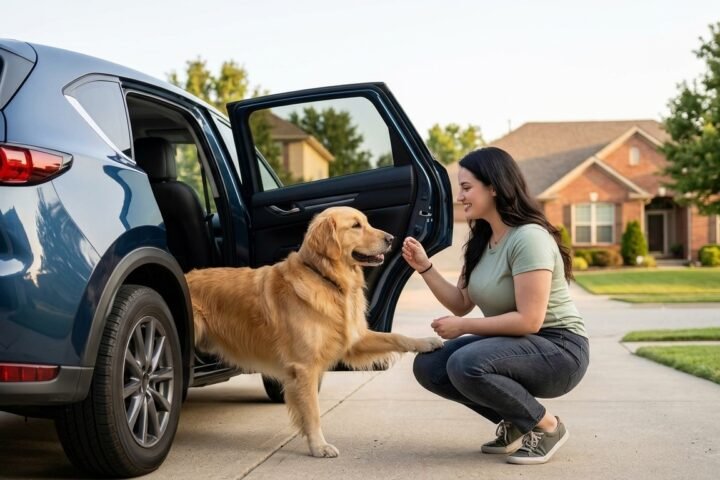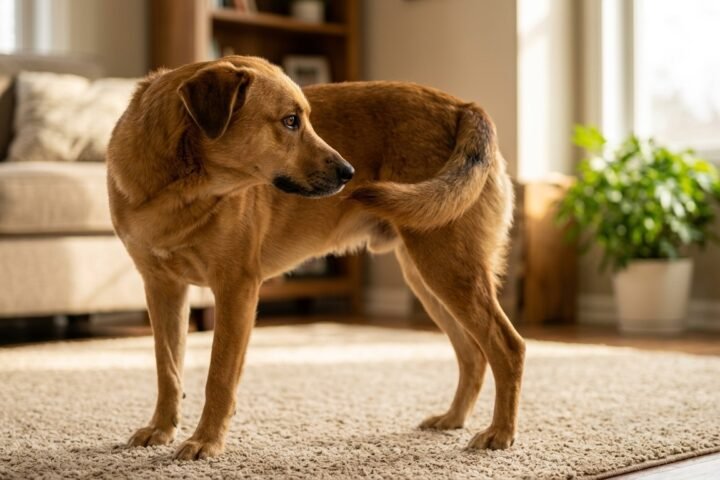
A dog side eye can look hilarious. Your dog turns their head, shifts their eyes toward you, and suddenly seems to be delivering a very human-looking expression of suspicion, judgment, or annoyance.
But dogs do not necessarily mean what we imagine they mean.
A sideways glance can occur when a dog is relaxed and casually watching something. In another situation, visible whites around the eyes—often called whale eye—may accompany fear, stress, guarding, or discomfort. The difference cannot reliably be determined from the eyes alone.
The safest way to understand dog side eye is to look at the whole dog: eye shape, facial tension, mouth, ears, tail, posture, movement, what happened immediately beforehand, and whether the dog is trying to create distance.
That context can tell you far more than the sideways glance itself.
Table of Contents
What Is Dog Side Eye?
Dog side eye is an informal description for a dog looking sideways, often while keeping their head facing partly or completely in another direction.
Sometimes very little white of the eye is visible. In other cases, you may see a noticeable crescent of white sclera.
That distinction matters because people often use “side eye” and “whale eye” interchangeably even though an ordinary sideways glance does not automatically indicate distress.
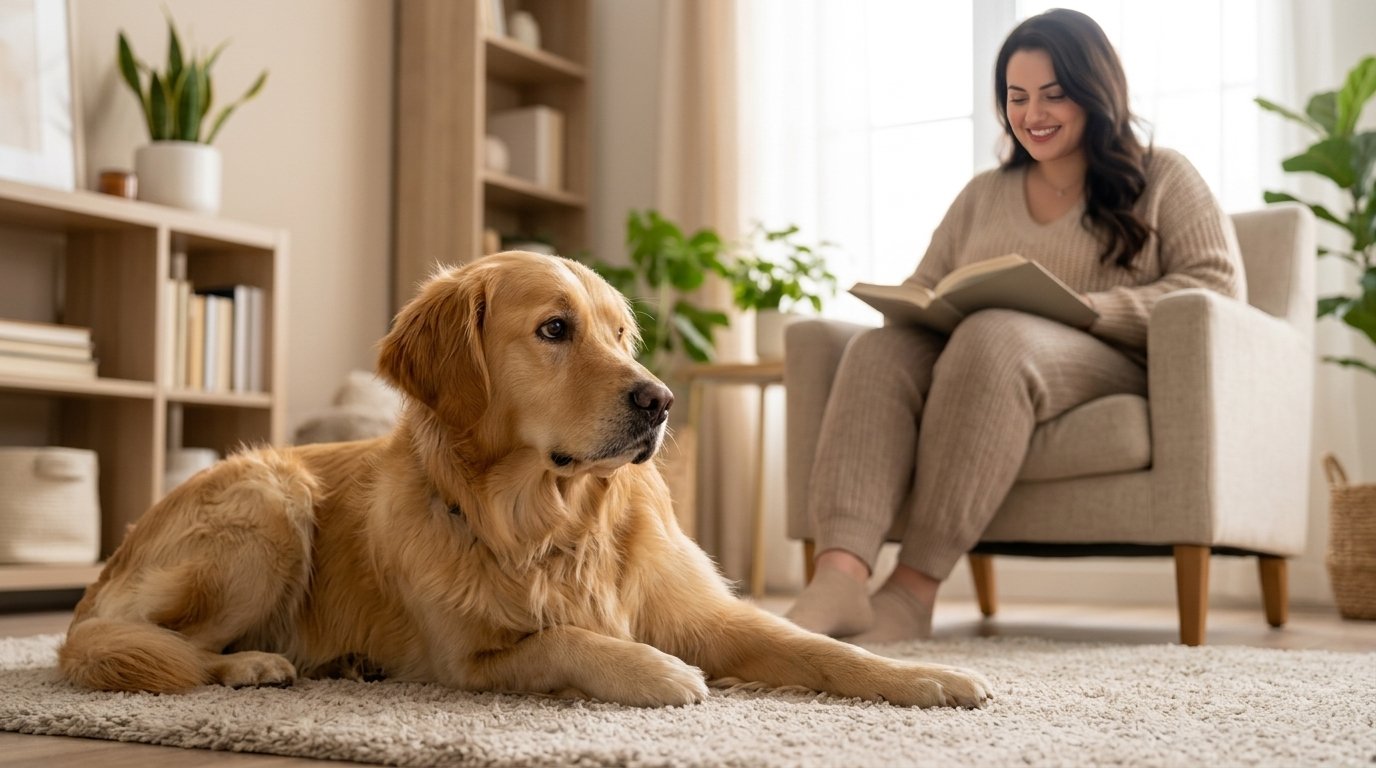
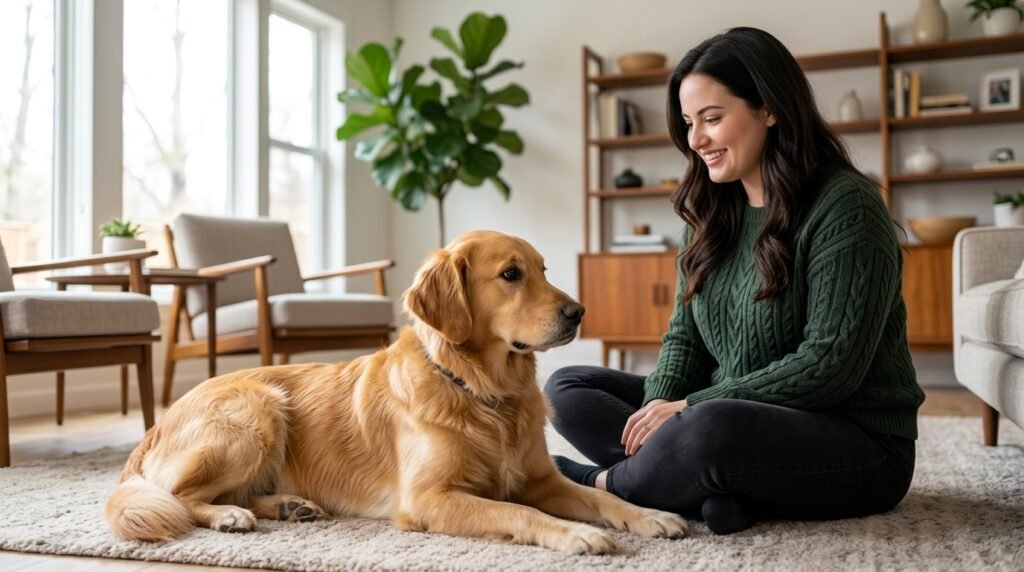
A relaxed dog might glance toward you because you moved, opened a food package, walked past their bed, or made an interesting sound. The eyes may move while the rest of the body stays loose.
By contrast, a dog who is uncomfortable may turn the head away while continuing to monitor the concerning person, animal, or object from the corner of the eye. The eyes may look wider or rounder than usual, and more white may become visible.
The ASPCApro canine body-language guide describes relaxed eyes as soft and notes that tense dogs can develop rounder-looking eyes with more visible sclera.
That is why the question should not simply be, “Can I see the whites of my dog’s eyes?”
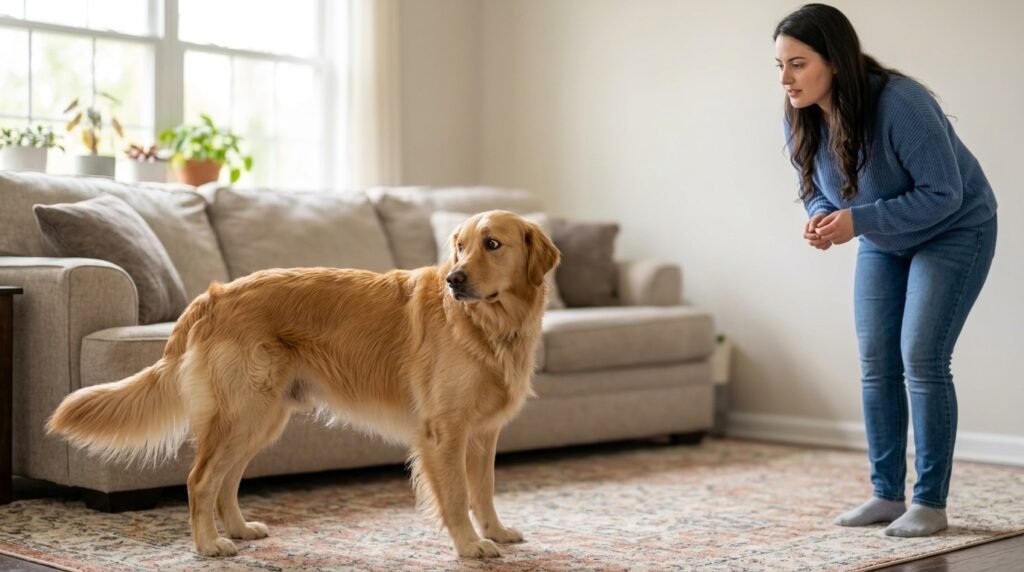
Ask instead:
What does my dog’s entire body look like, and what is happening around them?
Why Do Dogs Give the Side Eye?
Dogs look sideways for many reasons. Sometimes they are simply gathering information without moving their whole head.
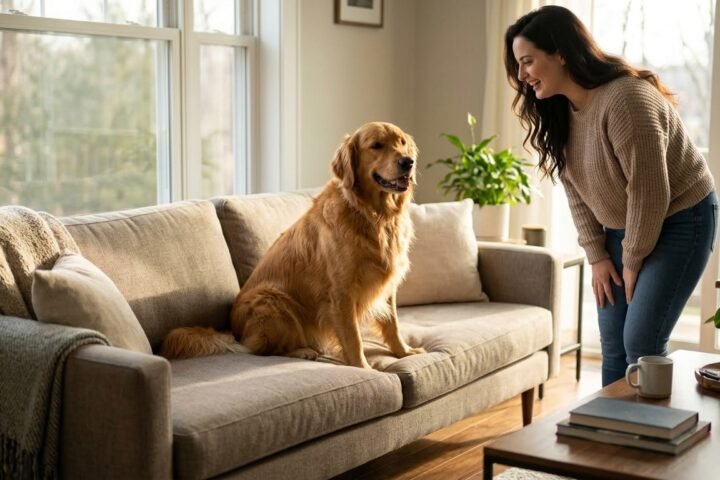
Imagine your dog resting on the couch when you walk into the room. They glance toward you but remain stretched out, loose, and comfortable. Their mouth and facial muscles remain soft, and they make no attempt to move away.
That brief dog side eye may simply mean, “I noticed you.”
Now change the situation.
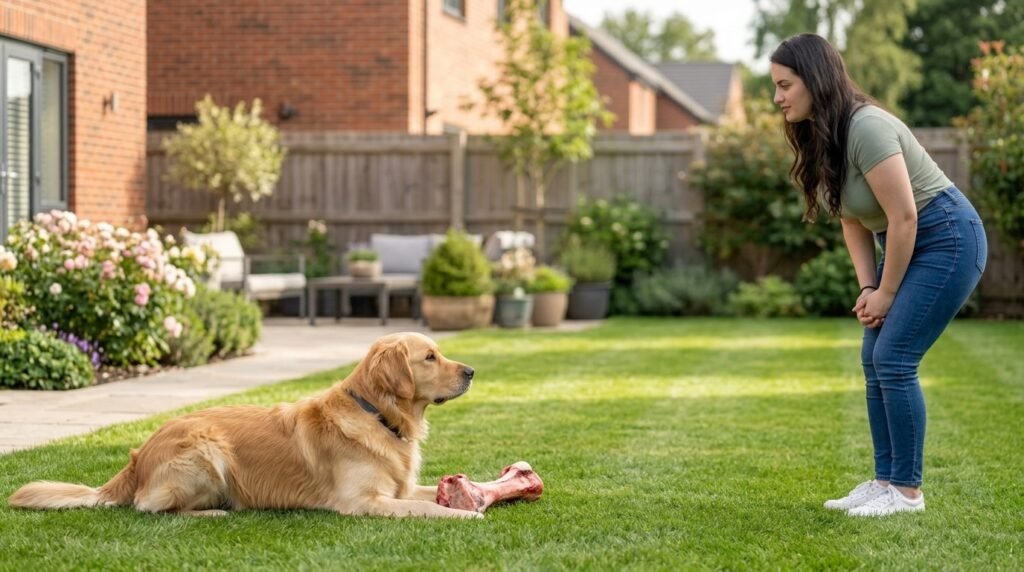
Your dog is chewing a high-value treat. You approach and reach toward it. The dog stops chewing, lowers their head over the chew, stiffens, closes their mouth, and watches your hand from the corner of their eye.
The eye movement may look superficially similar, but the behavioral context is completely different.
Dogs Trust emphasizes that canine body language should be interpreted according to the individual dog, the whole body, and the situation. The same behavior can have different meanings in different circumstances. Its detailed dog body-language guidance also notes that worried dogs may turn away, show visible eye whites, lick their lips, lean away, freeze, or use other signals suggesting that they need more space.
Side eye can therefore occur during:
- casual observation
- anticipation
- uncertainty
- conflict avoidance
- fear or anxiety
- uncomfortable physical contact
- guarding of food or objects
- attempts to monitor something without facing it directly
Avoid turning that list into a dog-emotion dictionary. A single glance cannot prove exactly what your dog is feeling.
Does dog side eye mean guilt or judgment?
It is tempting to narrate a dog’s expression in human terms: “She knows she did something wrong,” “He’s judging me,” or “She’s mad at me.”
Those descriptions may be funny on social media, but they are not reliable behavioral interpretations.
Dogs certainly respond to human expressions, posture, voice, previous experiences, and what is happening around them. But an expression that looks guilty to a human does not by itself establish that the dog is experiencing human-style moral guilt.
PawMindTips discusses this distinction in How Do Dogs Apologize to Humans?, where apparently apologetic behavior is better considered in relation to social tension, appeasement, and context rather than assumed to prove guilt.
Use the same caution with dog side eye.
Describe what you can actually observe first:
“My dog turned her head away, became still, and watched me from the corner of her eye.”
That observation is much more useful than immediately deciding:
“My dog is angry with me.”
Dog Side Eye vs. Whale Eye: What Is the Difference?
“Whale eye” generally refers to visible white sclera around a dog’s eye in a context suggesting tension, worry, fear, or discomfort.
The American Veterinary Society of Animal Behavior’s canine body-language guidance describes whale eye in situations such as a dog guarding a valued bone. It also contrasts the softer, almond-shaped eyes commonly seen in relaxed dogs with the rounder eyes that may appear as dogs become nervous or defensive.
So the practical distinction is not simply:
White visible = whale eye = danger.
Instead, compare the entire picture.
A casual sideways glance may look like:
- Loose facial muscles
- Soft-looking eyes
- Normal breathing
- Relaxed or neutral ears
- Loose body
- Ability to turn away easily
- Willingness to approach or move around normally
- No guarding, freezing, retreating, or escalating behavior
A concerning whale-eye context may include:
- Wider or rounder eyes than usual
- Noticeable sclera
- Sudden stillness or freezing
- Closed, tense mouth
- Head turned away while eyes monitor the trigger
- Ears pulled back or unusually rigid
- Leaning away
- Lowered or stiff posture
- Tucked or rigid tail
- Lip licking or yawning outside their usual context
- Growling, showing teeth, snapping, or trying to escape
If several of those signals appear together, treat the situation as meaningful communication rather than testing whether your dog will tolerate more pressure.
If you want to recognize other early signals that may occur alongside whale eye, PawMindTips’ guide to the signs of a stressed dog explains behaviors such as turning away, tension, pacing, changes in appetite, and other stress-related patterns.
Read Dog Side Eye With the Whole Body
One of the biggest mistakes in interpreting dog body language is isolating one body part.
A wagging tail does not always mean happiness. A growl does not have exactly the same meaning in every context. Showing the whites of the eyes should not be interpreted without looking at everything else either.
Start with your dog’s normal appearance.
Some dogs naturally show more sclera than others because of their facial structure and eye shape. What matters is often a change from that individual dog’s baseline.
Then work outward from the eyes.
Look at the mouth
A soft mouth may accompany relaxation. A mouth that suddenly clamps shut during an interaction can be more significant, particularly when the rest of the dog also becomes still.
Lip licking can sometimes accompany discomfort, but context matters. A dog licking their lips while food is being prepared is not equivalent to a dog repeatedly licking their lips while being restrained.
Look at the ears
Ear position depends heavily on breed and anatomy, so there is no universal ear position that proves one emotion.
Instead, watch for changes.
Did your dog’s ears suddenly pull back when you leaned over them? Did they become rigid as another dog approached the food bowl?
Combine that information with the rest of the posture.
Look at body tension
Body tension is particularly important.
A loose dog who briefly glances sideways presents a different picture from a dog who suddenly freezes.
The Dogs Trust body-language guide stresses the importance of reading the entire body and notes that dogs needing space may progress from subtle behaviors to more obvious responses such as growling or snapping if their earlier communication is unsuccessful.
Look at distance and choice
Ask whether your dog can move away.
A dog cornered between furniture, held in a hug, restrained for grooming, or approached while protecting a valued object may have fewer options for creating distance.
Giving a dog an appropriate way to move away can often reduce pressure.
This does not mean allowing dangerous behavior or ignoring a serious behavior problem. It means avoiding unnecessary confrontation while you work out what is triggering the response.
Dog Side Eye Around Food, Toys, Hugging, and Handling
The situation immediately surrounding dog side eye often provides the most useful information.
Side eye around food or toys
Pay close attention if your dog becomes still, hovers over an object, eats faster, lowers their head, or gives a hard sideways look when someone approaches food, chews, toys, stolen items, or another valued resource.
The American Veterinary Society of Animal Behavior describes freezing, hard staring, faster eating, growling, snarling, snapping, and biting as behaviors that can occur along a resource-guarding continuum. Its guidance on preventing food guarding specifically notes that a hard sidelong glance can occur when an owner approaches a dog while eating.
Do not repeatedly reach into the bowl or grab the object to prove that your dog must surrender it.
If you are seeing this pattern, PawMindTips’ Dog Resource Guarding guide covers safer management, warning signs, and situations in which professional assistance is appropriate.
Side eye during hugging
Humans commonly express affection through hugs, but individual dogs vary greatly in how they respond to close restraint.
Suppose your dog initially sits beside you voluntarily. You wrap both arms around them, and they suddenly stop moving. Their mouth closes, head turns away, eyes shift back toward you, and white becomes visible.
That cluster deserves more attention than the eye movement alone.
Release the pressure and allow your dog to choose whether to remain close.
This principle also fits with PawMindTips’ guide to habits that can damage dog trust, which explains why forcing physical affection after a dog communicates discomfort can undermine predictable, respectful interactions.
Side eye during petting or handling
You might notice dog side eye while touching paws, cleaning ears, brushing, putting on equipment, clipping nails, or examining part of the body.
Pause and consider why.
The dog could dislike the handling, feel trapped, have learned to expect something unpleasant, or potentially be experiencing pain.
A sudden new reaction to previously tolerated touch deserves particular attention.
Dogs Trust notes that pain, illness, and discomfort can change body language, reduce tolerance, and contribute to avoidant or defensive responses. If your dog’s normal behavior changes unexpectedly, veterinary assessment can help rule out a medical contributor.
How Should You Respond to Dog Side Eye?
Your response should depend on the full situation, but when dog side eye appears alongside obvious tension, the safest immediate goal is generally to reduce pressure rather than increase it.
1. Stop what you are doing
If the expression appeared immediately after you reached toward the dog, hugged them, leaned over them, approached their food, or began handling them, pause.
Do not keep repeating the action to see whether they “really mean it.”
2. Give appropriate space
Allow the dog to move away where it is safe to do so.
If another person is creating the pressure, calmly ask them to stop approaching.
The goal is not to frighten, corner, challenge, or physically overpower the dog.
3. Do not stare back
A prolonged hard stare can add social pressure. Keep your own movements calm and predictable instead of leaning closer to inspect the dog’s eyes.
4. Look for additional signals
Check:
- Is the body loose or frozen?
- Is the mouth soft or tightly closed?
- Is the dog leaning toward or away from you?
- Are they trying to leave?
- Are they guarding something?
- Is there growling?
- What happened immediately before the side eye?
- Does the dog relax when the trigger moves away?
Those observations are much more informative than the side eye by itself.
5. Do not punish warning signals
If dog side eye occurs alongside a growl, do not focus on suppressing the growl.
A growl provides information about the dog’s discomfort. PawMindTips’ Dog Growl Meaning guide explains why context is essential when distinguishing playful vocalization from a warning.
Punishment can also increase fear or suppress communication without resolving the reason for the behavior. The American Veterinary Society of Animal Behavior’s current humane training position recommends reward-based training and advises against aversive methods for behavior modification.
6. Record the pattern
If the behavior repeats, keep simple notes.
Record:
- Where it happened
- Who was present
- What the dog had access to
- What happened immediately beforehand
- The rest of the dog’s body language
- What you did next
- Whether creating distance helped
A short video can sometimes be useful for a veterinarian or qualified behavior professional, provided recording does not require recreating or prolonging an unsafe situation.
Never deliberately provoke guarding, fear, or threatening behavior just to obtain footage.
When Dog Side Eye May Need Professional Help
An occasional relaxed sideways glance does not require a behavioral intervention.
Professional guidance becomes more important when dog side eye repeatedly occurs as part of a pattern of fear, guarding, handling sensitivity, or escalating defensive behavior.
Contact your veterinarian when:
- The behavior appeared suddenly
- Your dog suddenly resists touch or handling
- You suspect pain
- Eye appearance has physically changed
- There is redness, discharge, swelling, persistent squinting, or another eye concern
- Your dog’s overall behavior has changed unexpectedly
A behavioral problem can sometimes have a medical contributor, so unexplained new behavior should not automatically be treated as a training issue.
Behavioral assistance is particularly appropriate when the dog freezes, growls, snaps, lunges, or has bitten; guards food or objects; repeatedly reacts to handling; or creates a safety concern around children or other vulnerable people.
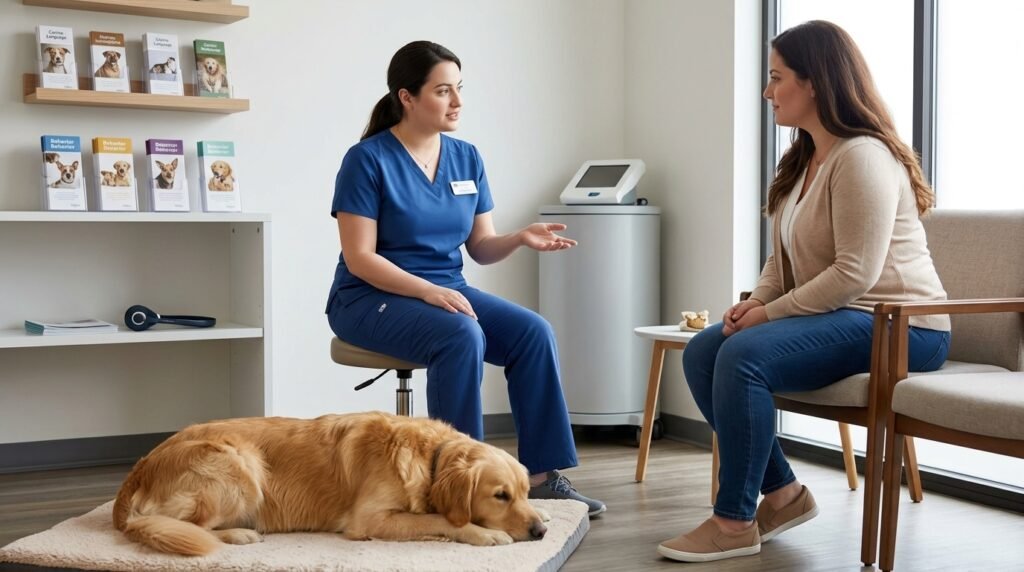
Do not make family members repeatedly approach the dog to “get them used to it.”
Management comes first.
Use distance, doors, gates, separate feeding locations, and other appropriate barriers to prevent situations that are likely to cause conflict while you obtain professional guidance.
The ASPCA’s dog bite-prevention guidance likewise emphasizes understanding canine body language and respecting signals that a dog is anxious, frightened, threatened, or uncomfortable.
Frequently Asked Questions
1. Does dog side eye always mean my dog is angry?
No. Dog side eye is an observation, not a diagnosis of an emotion. A relaxed dog may glance sideways simply because something caught their attention. Concern increases when the glance occurs with body tension, freezing, avoidance, guarding, growling, or other signs of discomfort. Always interpret the eyes together with the whole body and situation.
2. What is the difference between dog side eye and whale eye?
Side eye broadly describes looking sideways. Whale eye generally refers to visible white sclera in a context where the dog appears tense, worried, fearful, conflicted, or uncomfortable. The amount of naturally visible sclera varies among dogs, so body posture, facial tension, trigger, and changes from the individual dog’s normal appearance matter.
3. Why does my dog give me side eye when I hug them?
If your dog becomes still, turns their head away, shows more eye white, licks their lips, tries to leave, or otherwise becomes tense during a hug, they may be uncomfortable with that interaction. Release the restraint and give them a choice about continued contact. A loose, relaxed dog casually glancing during affection presents a different picture.
4. Why does my dog side-eye me around food or a toy?
A sideways look around a valued item may simply reflect awareness of your approach, but it becomes more concerning when combined with freezing, hovering, eating faster, stiffening, growling, or blocking access. Those behaviors can occur with resource guarding. Avoid forcibly taking the item and seek qualified guidance if guarding is recurring or escalating.
Conclusion
Dog side eye does not have one universal translation.
Sometimes it is nothing more than a relaxed sideways glance. In another context, especially when the eyes widen and the body becomes stiff, visible eye white may be part of a cluster of signals telling you that your dog is uncomfortable and needs more space.
The most useful habit is to stop asking what the eyes mean in isolation.
Look at the mouth, ears, tail, posture, movement, trigger, and whether your dog can freely move away. Compare what you see with your dog’s normal relaxed body language.
Most importantly, respect early communication instead of waiting for a growl, snap, or bite to confirm that the dog was uncomfortable.
Learning to read the whole dog turns a funny-looking expression into something far more useful: an opportunity to understand what your dog is communicating and respond appropriately.