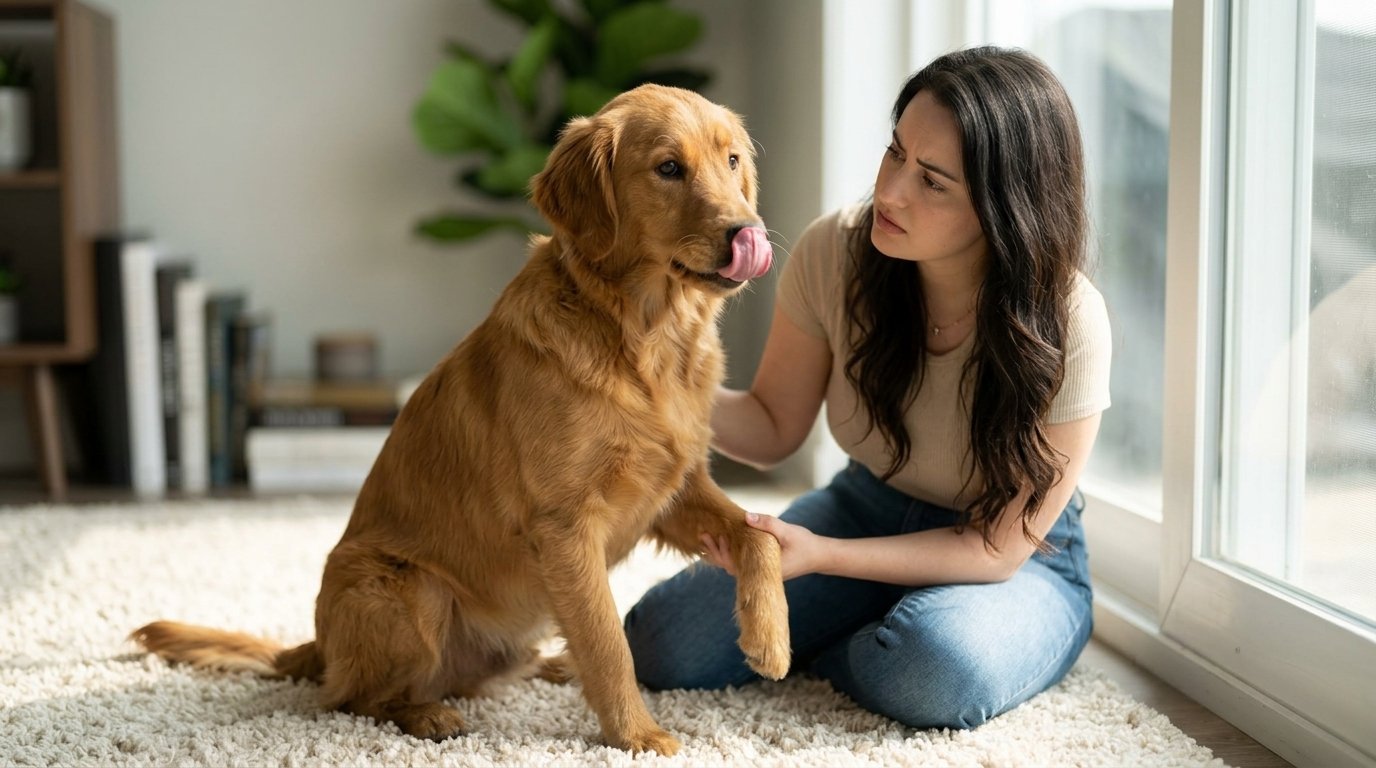
A little licking is normal for dogs. They use their tongues to groom themselves, explore interesting smells and tastes, communicate, and interact with people. But if you notice your dog suddenly licking much more than usual, repeatedly licking the same area, or seeming unable to stop, it is worth paying attention.
Dog licking excessively can have a simple behavioral explanation, but it can also happen when a dog is uncomfortable, itchy, painful, nauseated, stressed, or reacting to something in the environment. The key is to look at the entire pattern rather than assuming every licking episode means the same thing.
In this guide, you’ll learn 12 possible reasons for excessive licking, how to recognize useful clues, what you can safely do at home, and when veterinary care is appropriate.
Table of Contents
What Does Excessive Licking Look Like in Dogs?
There is no single number of licks that automatically makes a behavior “excessive.” What matters is a noticeable change from your dog’s normal behavior and whether the licking is difficult to interrupt or begins interfering with normal activities.
Dog licking excessively may look like:
- Licking you repeatedly even after you move away
- Licking the paws for long periods
- Constantly licking the lips
- Licking the legs, belly, tail, or other body areas
- Licking floors, furniture, blankets, or other objects
- Repeatedly licking the air
- Returning to the same area over and over
- Licking during periods when your dog would normally be resting
- Licking intensely enough to cause redness, hair loss, or skin damage
Context matters. A dog that gives you a few licks when you come home is very different from a dog that spends much of the evening licking the floor, lips, or body.
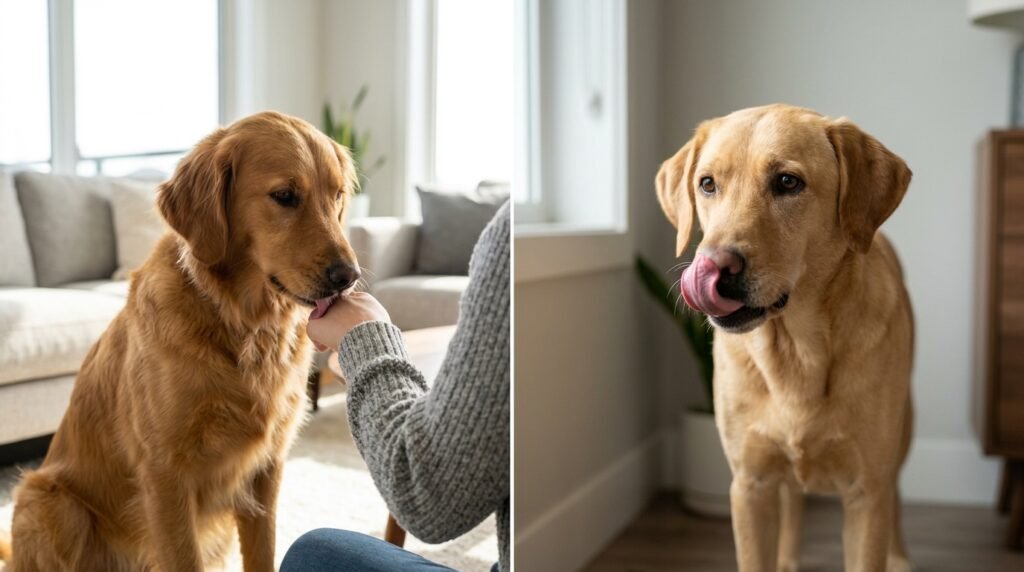
Dogs may lick people because of social communication, attention, curiosity, taste, or learned reinforcement. PetMD notes that licking can also occur as a stress-relief behavior, while Zigzag describes greeting, affection, communication, stress, pain, scent, and taste as possible explanations.
The important question is not simply, “Why does my dog lick?”
It is:
“What changed, where is my dog licking, and what else is happening at the same time?”
12 Reasons Your Dog May Be Licking Excessively
1. Your Dog Is Showing Affection or Seeking Social Interaction
Sometimes dog licking excessively is still completely behavioral.
Dogs may lick people as part of social interaction. A quick lick when you arrive home, sit beside your dog, or start petting them may simply be your dog’s way of initiating contact.
Some dogs also learn that licking produces a response. If licking consistently earns talking, petting, laughing, eye contact, or play, the behavior can become reinforced.
That does not mean your dog is being manipulative. They have simply learned that licking works.
Look at the rest of the body language.
A relaxed dog with loose muscles, a comfortable posture, a wagging tail, and normal interest in the environment is different from a dog who is stiff, avoiding eye contact, repeatedly turning away, or showing other signs of discomfort.
2. Your Dog Likes the Taste or Smell
Human skin can be surprisingly interesting to dogs.
Sweat, food residue, skin oils, lotions, and other scents can attract a dog’s highly developed sense of smell. If you recently ate something, exercised, applied a product to your skin, or handled food, your dog may become particularly interested in your hands.
This can explain why dog licking excessively sometimes appears after meals, exercise, or other activities.
A dog that licks your hands briefly after you eat is generally a very different situation from a dog that suddenly begins licking every surface in the house.
3. Attention Has Reinforced the Behavior
Dogs repeat behaviors that produce useful results.
If your dog discovers that licking causes you to talk, touch them, push them away, or otherwise react, even negative attention can become part of the reward.
For example, imagine your dog licks your arm.
You say, “Stop!”
Your dog licks again.
You push them away.
From your dog’s perspective, something interesting just happened: licking caused interaction.
If the behavior is otherwise harmless, calmly redirecting your dog and rewarding an alternative behavior can be more effective than repeatedly reacting to the licking.
4. Stress or Anxiety Is Driving Repetitive Licking
Some dogs lick when they are uncomfortable, worried, overstimulated, or stressed.
Behavioral licking may occur around:
- Visitors
- Loud noises
- New environments
- Changes in routine
- Separation
- Handling
- Conflict with another animal
- Unfamiliar people
- Exciting situations
Chewy notes that repetitive licking can sometimes be associated with stress, anxiety, or other behavioral problems. Zigzag similarly describes persistent licking as a possible stress-related behavior.
Dog licking excessively may therefore be part of a broader stress pattern.
Look for accompanying signals such as pacing, hiding, yawning, lip licking, freezing, avoidance, trembling, restlessness, or difficulty settling.
Do not automatically assume anxiety, though. Physical discomfort should be considered before deciding that repetitive licking is purely behavioral.
5. Your Dog Has Itchy Skin or Allergies
Itching is one of the most important medical reasons to investigate when licking focuses on the body or paws.
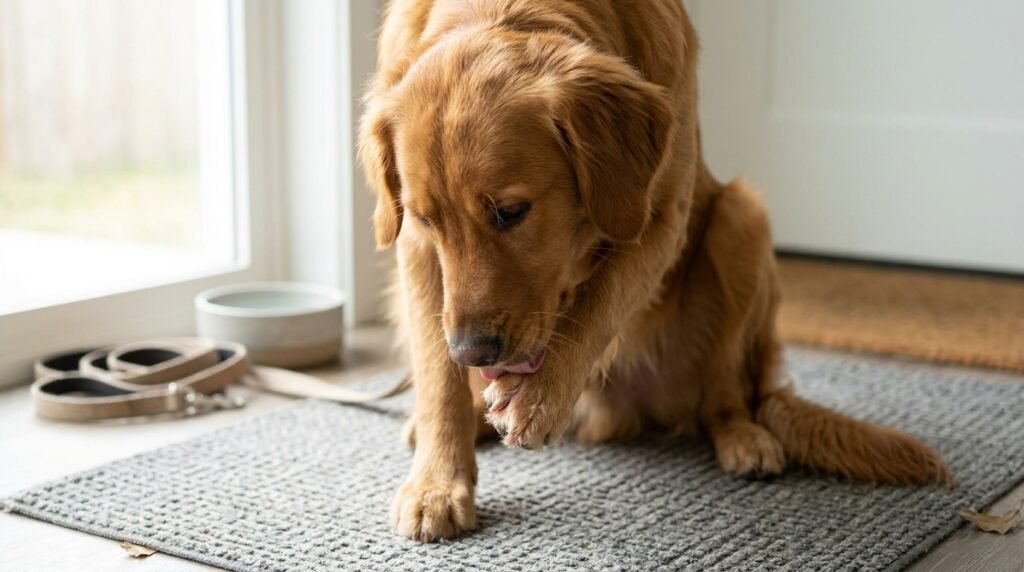
Dogs can develop skin reactions associated with environmental allergens, parasites, infections, and other causes. Allergic skin disease can cause dogs to lick and chew irritated areas, particularly their feet.
PawMindTips’ existing guide on paw licking explains that persistent licking can be associated with allergies, infections, injuries, parasites, irritants, pain, and stress.
Look for:
- Scratching
- Red skin
- Hair loss
- Recurrent ear problems
- Red or brown staining
- Chewing between the toes
- Skin odor
- Repeated skin infections
If your dog’s licking becomes worse after outdoor exposure, grass and environmental allergens may deserve particular attention.
6. A Paw, Skin Area, or Body Part Hurts
Pain can cause localized licking.
If your dog suddenly focuses on one particular paw, leg, joint, or skin area, inspect the area gently if your dog allows it.
Possible causes include:
- A small cut
- Torn nail
- Splinter
- Thorn
- Insect sting
- Irritated paw pad
- Bruising
- Joint discomfort
- Another localized injury
A sudden change is especially important.
For example, if your dog normally ignores their feet but suddenly spends 20 minutes licking one front paw and begins limping, that pattern deserves more attention than routine grooming.
Avoid digging into the paw or forcing your dog through a painful examination.
7. Your Dog Has an Oral or Dental Problem
Dogs may lick their lips or mouth more frequently when something is uncomfortable in or around the mouth.
Possible contributors include oral irritation, dental disease, something stuck in the mouth, or another source of discomfort.
Watch for additional signs such as:
- Bad breath that is noticeably worse than usual
- Drooling
- Difficulty chewing
- Dropping food
- Pawing at the mouth
- Reluctance to eat
- Swelling around the mouth
- Blood around the gums
- Changes in chewing behavior
If excessive licking appears alongside these signs, a veterinary examination is appropriate.
Do not attempt to pull an object from deep inside your dog’s mouth if you cannot safely see and remove it.
8. Nausea or Gastrointestinal Discomfort May Be Involved
One reason some dogs begin licking their lips, swallowing repeatedly, or licking nearby surfaces is gastrointestinal discomfort.
The licking itself does not tell you what the underlying problem is. It is a symptom that needs to be interpreted alongside other signs.
Pay attention to:
- Lip licking
- Repeated swallowing
- Drooling
- Reduced appetite
- Vomiting
- Loose stool
- Restlessness
- Grass eating
- Abdominal discomfort
- Changes in normal behavior
If dog licking excessively appears suddenly and is accompanied by vomiting, significant diarrhea, weakness, abdominal pain, or refusal to eat, contact your veterinarian rather than trying to treat the cause yourself.

9. Your Dog Is Reacting to an Environmental Irritant
A dog may lick after encountering something irritating.
Possible triggers include:
- Lawn products
- Cleaning residues
- Road salt
- Ice-melting products
- Dust
- Grass
- Hot pavement
- Household chemicals
- Other residues on floors or outdoor surfaces
This is particularly important when the licking begins shortly after a walk or after your dog enters an area that has recently been cleaned.
PawMindTips’ paw-licking guide notes that road salt, lawn products, cleaning residues, and other irritants can contribute to paw irritation.
If you suspect your dog encountered a potentially toxic substance, do not rely on home remedies. Contact your veterinarian or an appropriate animal poison-control service promptly.
10. Parasites or Skin Infection May Be Causing Irritation
Fleas and other parasites can cause significant itching, while bacterial or yeast-related skin problems can create irritation that encourages repeated licking.
The location of the licking can provide clues, but it cannot confirm a diagnosis.
For example, licking accompanied by itching, redness, odor, hair loss, or moist skin may indicate a skin problem that needs veterinary assessment.
Do not assume that the absence of visible fleas rules out every parasite-related problem.
Similarly, do not automatically treat red skin with leftover medication. The appropriate treatment depends on the underlying cause.
11. Boredom or Habit Has Turned Into Repetitive Behavior
Some dogs lick because they have discovered that the behavior is soothing, interesting, or simply something to do.
This may happen when a dog is:
- Understimulated
- Frequently bored
- Spending long periods inactive
- Seeking interaction
- Repeating a behavior that has been reinforced
Over time, a behavior that began for one reason can become habitual.
However, this explanation should not be used to dismiss new excessive licking.
If your dog suddenly develops repetitive licking, first consider medical and environmental causes. Once those have been appropriately addressed, enrichment and behavior modification may become useful parts of the solution.
12. Your Dog May Have Encountered Something That Needs Immediate Attention
Occasionally, excessive licking is part of a larger and more concerning picture.
This is particularly important when licking starts suddenly after possible exposure to:
- A chemical
- Medication
- Toxic food
- Household product
- Plant material
- Another potentially harmful substance
Other concerning signs may include excessive drooling, vomiting, tremors, weakness, abnormal behavior, difficulty breathing, collapse, or seizures.
If you suspect poisoning, do not wait for additional symptoms to appear before getting professional guidance. The ASPCA provides a 24-hour Animal Poison Control service for suspected toxic exposures.
How to Tell What May Be Causing the Licking
One of the most useful things you can do is stop looking at the licking in isolation.
Instead, record the pattern.
If your dog mainly licks you
Think about:
- Attention
- Greeting
- Social interaction
- Taste or smell
- Stress
- Learned behavior
A relaxed dog that gives occasional kisses is usually a different situation from dog licking excessively throughout the day.
If your dog mainly licks the paws
Think about:
- Allergies
- Irritation
- Parasites
- Infection
- Injury
- Pain
- Stress-related behavior
For persistent paw licking, see the dedicated PawMindTips guide on Why Do Dogs Lick Their Paws? 7 Causes and Safe Ways to Help for a more detailed breakdown.
If your dog mainly licks the lips
Pay attention to:
- Food
- Excitement
- Stress
- Nausea
- Oral discomfort
- Drooling
- Repeated swallowing
If your dog licks the floor or objects
Consider:
- Food residue
- Interesting smells
- Habit
- Boredom
- Stress
- Gastrointestinal discomfort
- Something unusual on the surface
If the licking started suddenly
A sudden change deserves more attention than a lifelong habit.
Ask yourself:
What changed immediately before this started?
Was there a new food, medication, cleaning product, stressful event, walk, injury, visitor, household change, or outdoor exposure?
When Dog Licking Excessively Could Mean a Medical Problem
Dog licking excessively becomes more concerning when it is accompanied by other changes.
Watch for:
- Loss of appetite
- Vomiting
- Diarrhea
- Excessive drooling
- Bad breath with mouth discomfort
- Difficulty eating
- Red or swollen skin
- Hair loss
- Sores
- Discharge
- Bleeding
- Swelling
- Limping
- Whining
- Restlessness
- Weakness
- Changes in drinking
- Changes in urination
- Trouble sleeping
- Significant behavior changes
The combination of symptoms matters.
For example, licking by itself is nonspecific. Licking plus vomiting is different. Licking plus a swollen, painful paw is different again. Licking plus breathing difficulty or collapse is an emergency.
What You Can Safely Do at Home
If your dog is otherwise acting normally and there are no emergency signs, start with observation rather than immediately trying a treatment.
1. Identify where the licking happens
Write down whether your dog is licking:
- You
- The lips
- The paws
- One specific body area
- Several body areas
- The floor
- Furniture
- Air
2. Look for visible changes
Check for redness, swelling, wounds, discharge, odor, hair loss, or anything unusual.
Do not force an examination if your dog appears painful or frightened.
3. Think about timing
Does the licking happen:
- After eating?
- After walks?
- At bedtime?
- When guests arrive?
- When your dog is alone?
- After grooming?
- During stressful situations?
Timing can provide valuable clues.
4. Remove obvious irritants
If you believe an outdoor residue is bothering your dog’s paws, gently rinse them with clean water and dry them thoroughly.
Do not use harsh chemicals or homemade mixtures.
5. Redirect harmless attention-seeking
If your dog is licking you for attention and otherwise appears comfortable, calmly redirect them toward another appropriate behavior.
You might ask for a sit, offer a toy, or reward calm behavior.
Avoid turning the interaction into a struggle.
6. Keep a short symptom diary
Record:
When → what was being licked → what happened before → how long it lasted → other symptoms
This can be surprisingly useful if you eventually need to speak with your veterinarian.
What Not to Do About Excessive Licking
When dog licking excessively becomes frustrating, it is tempting to try a quick home remedy.
Be careful.
Do not apply random creams
Dogs can lick topical products from their skin and paws. A product that is safe for people is not automatically safe for dogs.
Do not use essential oils as a DIY treatment
Concentrated essential oils can create risks for pets, particularly when they are applied directly or ingested.
Do not use leftover medication
Do not give your dog leftover antibiotics, antifungal medication, steroids, or human pain medication unless your veterinarian specifically instructs you to do so.
Do not punish the licking
Punishment may increase stress without addressing an allergy, injury, gastrointestinal problem, dental issue, or other underlying cause.
The goal should be to understand why your dog is licking, not simply to suppress the visible behavior.
When to See a Vet—and When It’s Urgent
You should arrange a veterinary appointment if the licking:
- Persists or keeps returning
- Is becoming more frequent
- Interferes with sleep or normal activity
- Causes skin damage
- Is accompanied by itching
- Causes hair loss
- Produces an odor or discharge
- Occurs with pain
- Is accompanied by limping
- Appears with appetite changes
- Happens with repeated vomiting or diarrhea
- Is associated with significant behavior changes
Persistent licking can sometimes create a cycle in which irritation leads to more licking, which causes further irritation. PawMindTips’ existing paw-licking guide highlights this pattern particularly clearly for foot-related licking.
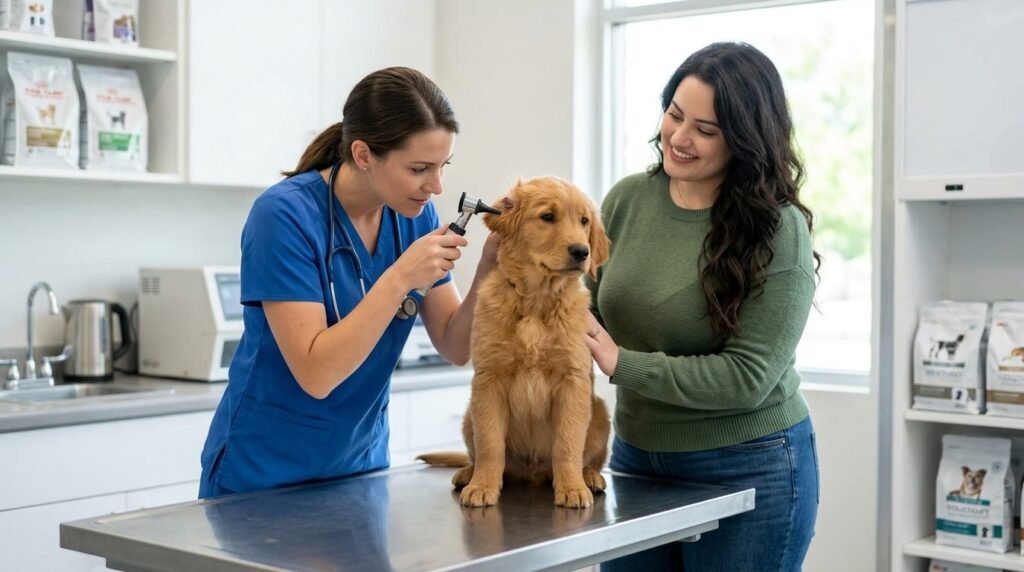
Seek urgent veterinary help if your dog has:
- Difficulty breathing
- Collapse
- Seizures
- Severe weakness
- Severe or rapidly worsening pain
- Significant bleeding
- Repeated vomiting with marked illness
- Severe abdominal distress
- Major swelling
- Suspected poisoning
- A serious injury
- Inability to stand or walk normally
If you suspect your dog has ingested a potentially toxic substance, contact a veterinarian or animal poison-control service immediately rather than waiting for the licking to stop.
The ASPCA Animal Poison Control Center is available 24/7 for suspected pet poisoning; a consultation fee may apply.
Frequently Asked Questions
Why is my dog licking everything all of a sudden?
Sudden licking can have many possible causes, including interesting tastes or smells, stress, environmental irritation, pain, nausea, oral discomfort, allergies, or another medical problem. Look at what your dog is licking and whether other symptoms appeared at the same time.
Is dog licking excessively always a sign of illness?
No. Dogs may lick because of affection, attention, taste, communication, grooming, or stress. However, a sudden or persistent increase in licking—especially with pain, vomiting, skin changes, appetite changes, or behavior changes—deserves closer attention.
Why is my dog licking their lips constantly?
Lip licking can occur during normal communication or stress, but repeated lip licking may also occur with nausea, drooling, or oral discomfort. If it is persistent or accompanied by vomiting, appetite changes, excessive drooling, or other unusual signs, contact your veterinarian.
When should I take my dog to the vet for excessive licking?
Arrange a veterinary visit when dog licking excessively persists, repeatedly returns, causes skin damage, or occurs with symptoms such as pain, limping, vomiting, diarrhea, appetite changes, swelling, discharge, or major behavior changes. Seek urgent care for severe symptoms such as collapse, seizures, breathing difficulty, serious injury, or suspected poisoning.
Conclusion
Dog licking excessively does not automatically mean your dog is sick, but a noticeable change in licking behavior deserves context.
Some dogs lick because they are greeting you, seeking attention, exploring a smell, or responding to stress. Others may lick because something is itchy, painful, irritating, or uncomfortable.
The most useful clues are where your dog licks, when it happens, how persistent it is, what changed beforehand, and which other symptoms appear alongside it.
If your dog is otherwise comfortable, start by observing the pattern and removing obvious irritants. But if the licking persists, causes physical damage, or comes with pain, vomiting, appetite changes, skin problems, weakness, or other concerning signs, involve your veterinarian.
And if the behavior appears suddenly alongside severe symptoms or possible toxin exposure, treat it as a potentially urgent problem rather than trying to diagnose it at home.