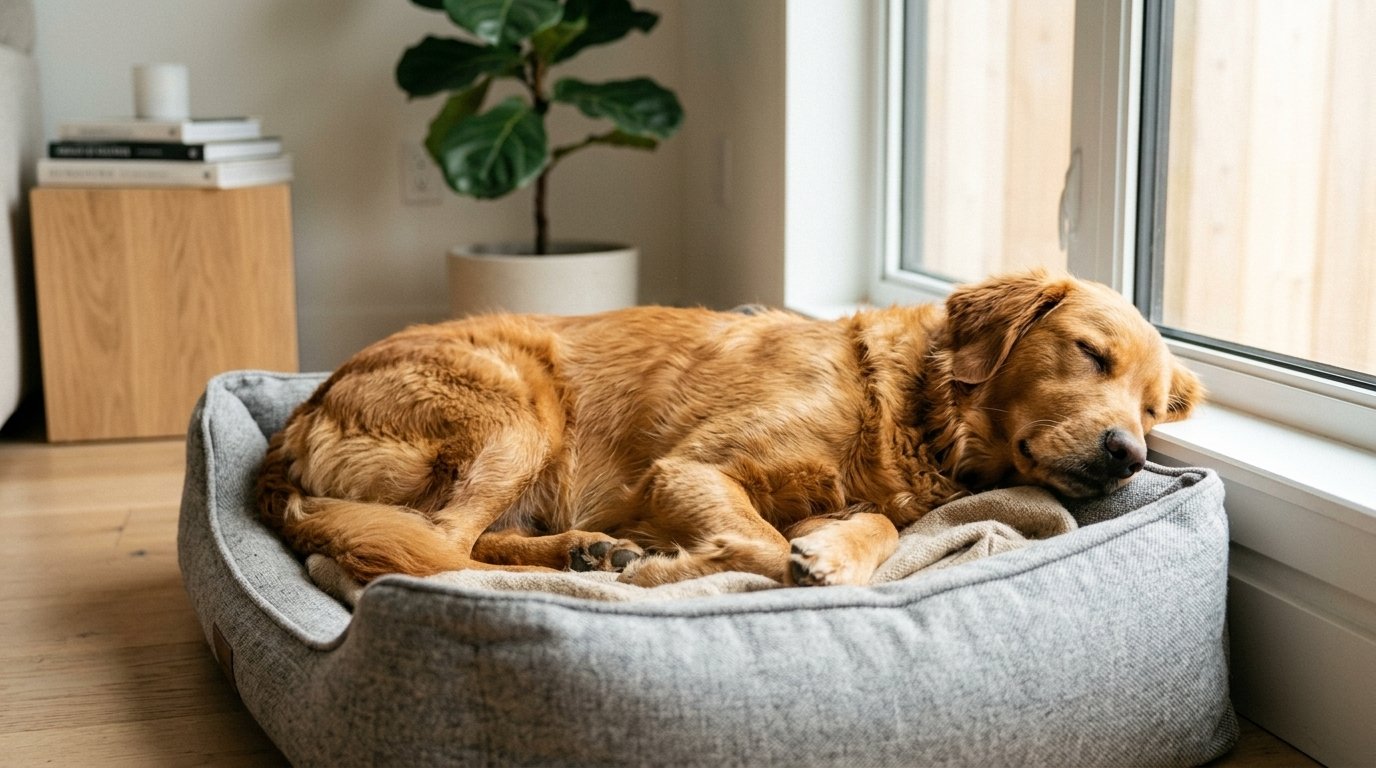
Have you ever looked at your dog sleeping and wondered how that position could possibly be comfortable? Dogs can curl into tight little balls, stretch across the floor, sleep upside down with their paws in the air, or burrow underneath a blanket. These dog sleeping positions can offer useful clues about comfort, temperature, alertness, and how secure your dog feels.
But there is an important catch: a single sleeping position does not tell you everything about your dog. Veterinary and behavior sources emphasize that dogs’ sleep postures are influenced by many factors, and scientific evidence for assigning a precise emotional meaning to every pose is limited.
So rather than treating your dog’s sleeping posture like a personality test, look at the bigger picture.
Here are nine common positions, what they usually mean, and which changes deserve closer attention.
Table of Contents
What Do Dog Sleeping Positions Actually Tell You?
Your dog’s sleeping posture is often a practical response to their environment.
They may choose a position because they:
- Feel comfortable and secure
- Want to conserve or release body heat
- Are preparing for a short nap rather than deep sleep
- Want physical contact with you or another pet
- Prefer a particular sleeping surface
- Are trying to protect themselves or feel more sheltered
- Need to accommodate stiff or uncomfortable joints
- Are responding to changes in their surroundings
For example, a dog stretched out on a cool floor during a hot afternoon may simply be trying to cool down. A dog curled tightly into a ball on a cold night may be conserving warmth.
The most important thing is to learn your dog’s normal pattern.
If your dog has always slept curled up and otherwise seems healthy, that posture is probably just part of their routine. If a dog that normally sprawls comfortably suddenly becomes restless, repeatedly changes positions, or seems unable to settle, the change is more meaningful than the specific pose itself.
That principle matters because dogs can change their posture when they are uncomfortable. Veterinary sources identify changes in posture, restlessness, difficulty settling, altered sleeping patterns, and trouble getting up as potential signs of pain.
9 Common Dog Sleeping Positions and What They Mean
Let’s look at the most common poses you may see at home.
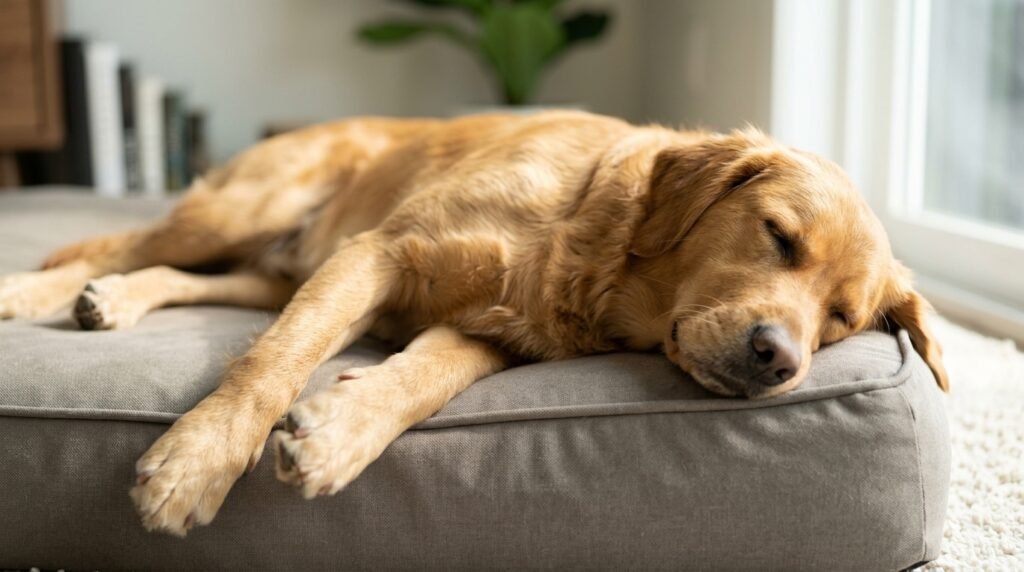
1. Sleeping on Their Side
A side sleeper lies with the body resting on one side, usually with the legs extended or loosely bent.
This is one of the clearest signs that your dog is comfortable enough to fully relax. Because the body is relatively extended and the belly may be exposed, side sleeping commonly occurs when dogs feel safe in their surroundings.
It is also a position associated with deeper rest. You may notice relaxed muscles, twitching paws, small movements, or other signs of dreaming while your dog sleeps. VCA describes side sleeping as one of the most relaxed canine sleep poses, while PetMD similarly connects it with deep, comfortable sleep.
However, don’t assume that every dog who sleeps on their side is expressing the same emotion.
Your dog may simply find the position physically comfortable.
What it usually suggests:
- Relaxation
- Physical comfort
- A sense of security
- An environment that feels familiar
- Potentially deeper sleep
If your dog happily stretches out after a walk or play session, there is usually no reason to worry.
2. Curled Up in a Ball or “Donut”
In this position, your dog curls their body into a compact circle, often tucking their paws underneath and bringing their nose toward their tail.
This is one of the most recognizable dog sleeping positions.
A tight curl can help conserve body heat because less of the body is exposed to cooler air. It can also create a physically enclosed feeling that some dogs find comfortable.
You may see this posture more often when the weather is cold, when your dog is sleeping in an unfamiliar location, or when they simply prefer a cozy sleeping position. Petplan and Casper both identify warmth and security as important reasons dogs may curl into a ball.
A curled position by itself does not mean your dog is anxious or unhappy.
Context matters.
If your dog curls up on a chilly winter night, that may be completely normal. If they suddenly begin tightly curling up while also showing stiffness, reluctance to move, reduced appetite, or difficulty getting comfortable, that is more worth discussing with your veterinarian.
3. Belly-Up With Paws in the Air
This is the classic “legs in the air” position.
Your dog lies on their back with their belly exposed and their legs relaxed or sticking upward.
It can look completely ridiculous—and usually that’s a good thing.
Dogs commonly choose this position when they are comfortable and relaxed. Exposing the belly also leaves a vulnerable area uncovered, so a dog willing to fall deeply asleep this way may feel secure in their surroundings.
There is another practical explanation: cooling.
The belly and paw-pad areas have less insulating fur than much of the body, so exposing these areas can help a dog lose heat. The American Kennel Club notes that belly-up sleeping can help dogs cool themselves and is often associated with comfort and security.
So if your dog sleeps this way on a warm day, they may simply be regulating temperature.
Common reasons include:
- Relaxation
- Feeling secure
- Cooling down
- Stretching the body
- Personal preference
You generally do not need to stop a healthy dog from sleeping on their back simply because the position looks strange.
4. The Lion or Sphinx Pose
In the lion pose, your dog lies on their belly with their head resting on their front paws or positioned above them.
It resembles a sphinx statue.
This posture often represents rest without complete disengagement. Your dog may be comfortable enough to doze but still positioned so they can get up quickly if something interesting happens.
VCA describes the sphinx position as one in which the dog can rest while remaining ready for action. Casper makes a similar observation, noting that dogs may begin sleeping this way when they expect to get up quickly.
You might see this during the daytime when your dog is resting while the family is moving around the house.
For example, your dog may lie in the sphinx position near the kitchen because they want to relax while still keeping track of what everyone is doing.
It does not automatically mean your dog is anxious.
They may simply be lightly sleeping.
5. The Superman or Sploot
The Superman position is exactly what it sounds like: your dog lies on their stomach with their front legs extended forward and their back legs stretched behind them.
This is sometimes called a sploot.
It is particularly common in puppies and playful dogs.
The position allows the dog to rest while keeping the body relatively extended. It may also help release heat through areas with less fur, particularly when the dog is lying against a cool surface.
VCA and Casper both describe the Superman position as a common posture for tired but energetic dogs.
You might see it after a vigorous play session:
Your dog runs around the yard, plays with a toy, drinks some water, and then suddenly collapses into a Superman pose.
That is generally nothing unusual.
6. Cuddled Against You or Another Pet
Some dogs want to sleep touching another living being.
They may curl against your legs, press their back against you, sleep beside another dog, or snuggle with a cat.
This often reflects a combination of warmth, familiarity, comfort, and social bonding.
Puppies naturally sleep close to littermates, so physical closeness can remain a familiar and comforting behavior later in life. Casper and other veterinary-informed sources describe cuddling as a behavior associated with comfort and social connection.
However, avoid turning this into a rigid rule that “cuddling always means your dog loves you more.”
Dogs have individual preferences.
Some dogs genuinely enjoy physical contact. Others prefer sleeping nearby without touching.
Both can be completely normal.
If your dog sleeps with you regularly, that topic is covered in more detail in our guide on [why dogs sleep with their owners].
7. Burrowed Under a Blanket
Does your dog disappear underneath blankets, pillows, or other soft materials?
This is the burrower position.
Burrowing can provide warmth, physical comfort, and a sheltered environment. Some dogs appear to enjoy creating a small enclosed sleeping space.
Your dog may also burrow when the environment feels particularly busy or when they simply want a cozy place to rest.
Petplan notes that dogs may burrow under blankets when they are cold or when they want a greater sense of security, while Casper also discusses burrowing as a way dogs may seek comfort or reduce environmental stimulation.
Make sure your dog can move freely and get out easily, particularly if they are under heavy bedding.
And if your dog begins hiding much more than usual—especially when awake—look beyond the sleeping position. Increased hiding can accompany fear, stress, or illness.
8. Sleeping With Their Head or Neck Raised
This position deserves a little more attention.
Some dogs naturally rest their head on the edge of a bed, pillow, couch cushion, or another elevated surface.
Sometimes this is simply comfortable.
But persistent head-and-neck elevation can also be associated with an attempt to make breathing easier, particularly when it occurs alongside noisy breathing, increased respiratory effort, coughing, or reduced exercise tolerance.
Petplan and Casper both recommend paying attention to accompanying breathing symptoms rather than assuming the position itself is a diagnosis.
If your dog has always slept with their head slightly elevated and is otherwise completely normal, it may simply be their preferred position.
If the behavior is new, persistent, or accompanied by breathing changes, contact your veterinarian.
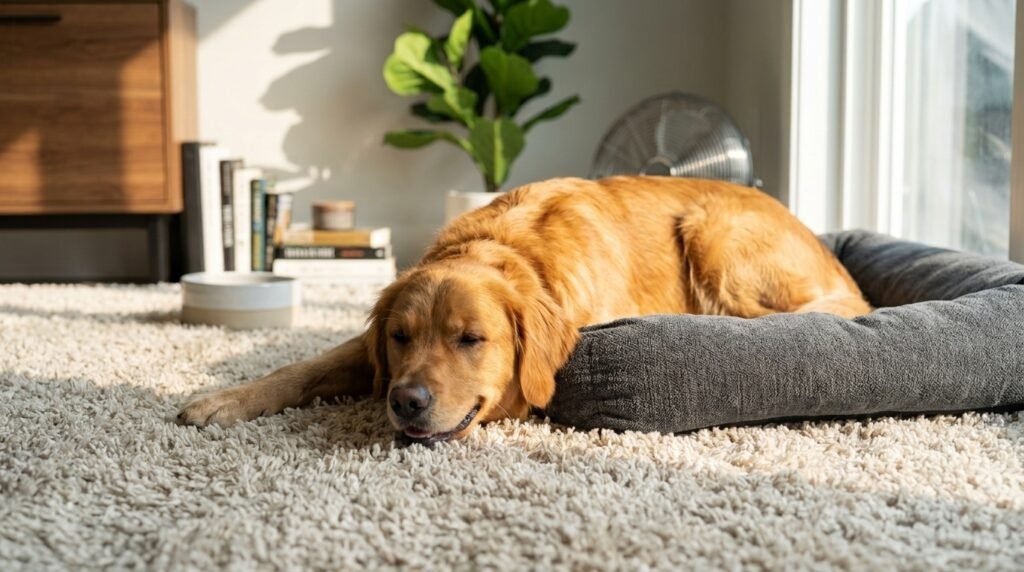
9. Sprawled Across the Floor or Cool Surface
Some dogs abandon their soft beds and stretch out across tile, hardwood, concrete, or another cool surface.
This is often about temperature.
A dog that feels warm may spread their body out to increase contact with a cooler surface. You may notice the same dog switching back to a soft, curled position when the temperature drops.
Location matters too.
A dog sleeping on a cool bathroom floor during summer is giving you different information from a dog that suddenly refuses a comfortable bed and spends most of the night pacing or lying on hard surfaces.
Think about:
- Room temperature
- Weather
- Recent exercise
- Coat thickness
- Age
- The type of sleeping surface
- Whether the behavior is new
A change in sleeping location is more meaningful when it comes with other changes in behavior.
Why Does Your Dog Keep Changing Sleeping Positions?
Dogs do not necessarily have one permanent sleeping posture.
They may change positions several times during a nap or overnight.
That is usually normal.
Temperature
Temperature is one of the simplest explanations.
When dogs are warm, they may:
- Stretch out
- Lie on cool floors
- Sleep belly-up
- Spread their legs away from their body
When they are cold, they may:
- Curl into a ball
- Burrow under blankets
- Sleep close to another pet or person
- Choose a more enclosed sleeping area
Activity
A dog that has just finished a long walk may sleep deeply on their side.
A dog taking a short daytime nap may use the lion pose because they expect to get up again soon.
Age
Puppies may sleep in unusual positions because they can fall asleep almost anywhere.
Older dogs may change their preferred posture as joints and muscles become less flexible.
A senior dog that suddenly stops using a position they previously loved is worth observing, particularly if you notice stiffness or difficulty getting up.
Environment
Dogs can alter their posture according to what is happening around them.
A quiet bedroom may encourage deeper sleep.
A busy living room may encourage lighter resting.
A crate can provide a sheltered space for a dog that already finds the crate comfortable.
Individual preference
Sometimes the explanation is simply:
Your dog likes that position.
Not every sleeping posture needs a deeper psychological interpretation.
How Temperature, Age, Breed, and Activity Affect Sleep Posture
There is no single “correct” sleeping position for every dog.
Your dog’s preferred posture can change depending on several variables.
Breed and body shape
Some physical characteristics can influence how a dog rests.
Short-nosed breeds, for example, can have different airway considerations from dogs with longer muzzles. If a brachycephalic dog consistently sleeps with its head elevated and also shows noisy or difficult breathing, veterinary advice is appropriate.
Breed can influence tendencies, but it should never be used as the only explanation for an individual dog’s behavior.
Body size
A large dog may need more floor or bed space to stretch comfortably.
A small dog may be more comfortable curled up or burrowed into a compact bed.
Coat
A thick-coated dog may seek cooler surfaces more often, while a short-coated dog may prefer blankets or warmer sleeping areas.
Activity level
A highly active dog may sleep deeply after exercise.
A dog that has spent most of the day resting may nap lightly and change positions more often.
These are general patterns—not rules.
What Your Dog’s Sleeping Location Can Tell You
Position is only half of the story.
Where your dog chooses to sleep can provide additional context.
On the floor
Your dog may prefer the cooler surface, especially in warm weather.
In their crate
A properly introduced crate can function as a comfortable resting space. If your dog voluntarily enters it to sleep, that can simply mean they enjoy the quiet, enclosed environment.
On the sofa
Your dog may prefer the softness, the location, or the opportunity to stay close to family members.
In your bed
Your dog may enjoy warmth, familiarity, comfort, and social contact.
In the sun
A sunny patch can provide desirable warmth, especially on cooler days.
But always make sure your dog can move away from the heat and has access to fresh water.
The key is to avoid interpreting location in isolation.
A dog choosing the bathroom floor on a hot afternoon is very different from a dog suddenly abandoning their normal bed because they seem unable to get comfortable.
When a Sleeping Position Could Signal Pain or Illness
This is the most important part of understanding dog sleeping positions.
A funny-looking pose is rarely a problem by itself.
A new or persistent change accompanied by other symptoms deserves attention.
Veterinary sources identify changes such as altered posture, restlessness, difficulty getting comfortable, stiffness, difficulty rising, unusual sleeping patterns, hiding, reduced activity, and changes in appetite as possible signs of pain or illness.
Watch for combinations such as:
- Suddenly refusing a previously comfortable sleeping position
- Repeatedly getting up and lying down
- Pacing instead of settling
- Difficulty getting into or out of a lying position
- Unusual stiffness
- Limping
- Hunched or abnormal posture
- Whining or groaning
- Excessive panting while resting
- Hiding more than usual
- Reduced appetite
- Unusual tiredness
- Changes in normal activity
- New breathing difficulty
- Persistent coughing or noisy breathing
One unusual sleeping pose does not diagnose pain.
But a pattern of change matters.
Cornell Veterinary Medicine specifically recommends paying attention to altered posture, restlessness, difficulty getting up, changes in sleeping habits, vocalization, appetite changes, and other behavioral changes when assessing possible pain.
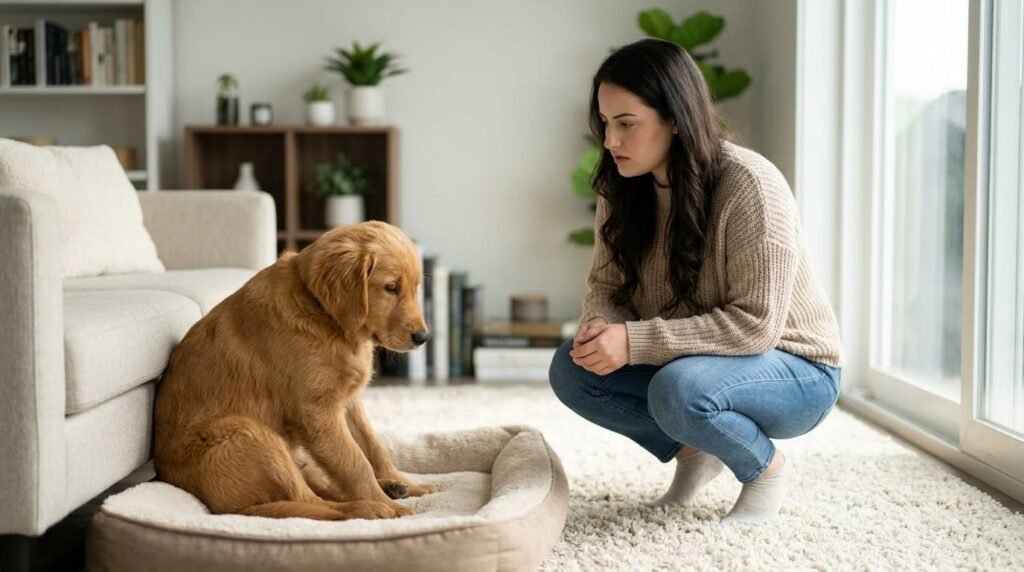
If you are concerned, take a short video of the behavior and show it to your veterinarian. Dogs sometimes behave differently in the clinic, so observations from home can provide useful context.
When breathing is involved
If your dog is struggling to breathe, breathing unusually hard at rest, repeatedly sleeping upright or with the head elevated while showing respiratory symptoms, or appears distressed, don’t try to interpret the sleeping position yourself.
Contact a veterinarian promptly.
A sleeping position can be a clue, but breathing difficulty is a medical concern that requires professional assessment.
How to Help Your Dog Sleep More Comfortably
You do not need to force your dog into a particular sleeping position.
Instead, make it easy for them to choose what feels comfortable.
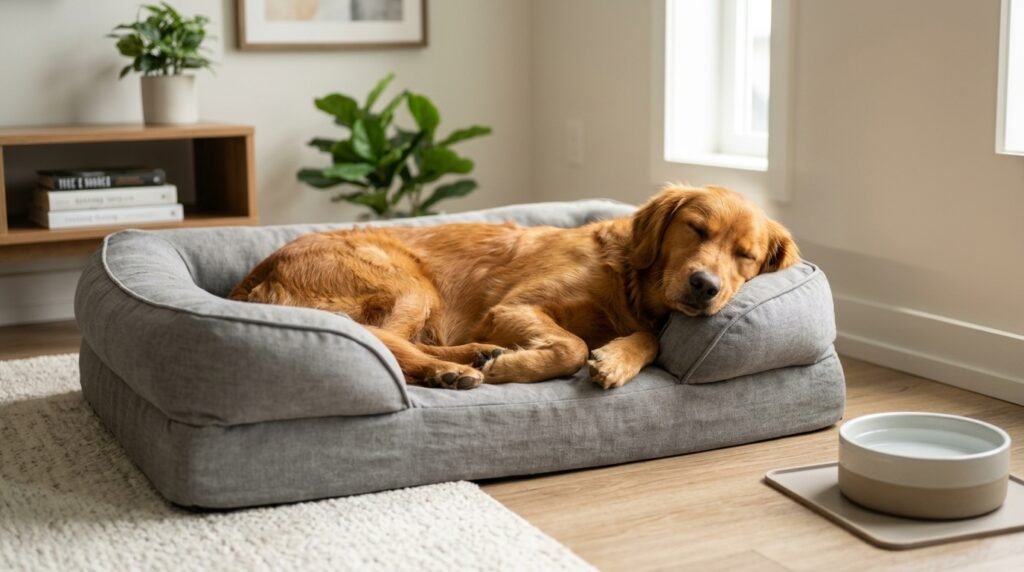
Provide an appropriate sleeping surface
Give your dog enough room to stretch, turn around, and change positions.
Older dogs or dogs with mobility problems may benefit from supportive bedding and a sleeping area that is easy to access.
Pay attention to temperature
Keep the sleeping area comfortable rather than excessively hot or cold.
During warm weather, make sure your dog has access to water and a cooler area.
During cold weather, provide a comfortable place away from drafts.
Let your dog choose
If your dog switches between the bed, floor, sofa, and other safe areas, that may simply reflect changing comfort needs.
You do not need to correct a healthy sleeping preference just because the position looks unusual.
Keep the environment predictable
Dogs often sleep better when their resting area is quiet and familiar.
If your dog is easily disturbed, consider providing a calm sleeping area where they can rest without being repeatedly interrupted.
Watch patterns, not isolated moments
This is the most useful habit you can develop.
Instead of asking:
“What does this one sleeping position mean?”
ask:
“What is normal for my dog, and has anything changed?”
That question gives you much more useful information.
FAQs
What do dog sleeping positions mean?
Dog sleeping positions can provide clues about comfort, temperature, security, alertness, and individual preference. However, one position cannot reliably reveal a dog’s exact emotional or physical condition. Look at the posture alongside behavior, environment, age, activity, and any recent changes.
Why does my dog sleep on their back with their legs in the air?
Belly-up sleeping is commonly associated with relaxation and comfort, and it can also help a dog release body heat. If your dog otherwise behaves normally, sleeping on their back is generally not something you need to stop.
Why does my dog sleep curled up in a ball?
Dogs may curl up to conserve body heat, create a cozy feeling, or feel more protected. Cold temperatures and unfamiliar environments can make this position more appealing. A sudden change to tightly curled sleeping accompanied by pain or behavioral changes deserves closer attention.
Can dog sleeping positions indicate pain?
They can provide a clue, particularly when a sleeping position changes suddenly or is accompanied by restlessness, stiffness, difficulty getting up, vocalization, reduced appetite, or other behavioral changes. A sleeping position alone cannot diagnose pain, so concerning changes should be discussed with a veterinarian.
Conclusion
Dog sleeping positions can be surprisingly informative, but they are best understood as clues rather than definitive messages.
A dog stretched out on their side may be deeply relaxed. A curled dog may be conserving warmth. A belly-up sleeper may feel comfortable and be cooling off. A Superman pose may simply be the perfect post-play nap.
What matters most is context and change.
Learn what is normal for your dog. Pay attention to temperature, activity, age, environment, and sleeping location. Then watch for meaningful changes such as restlessness, stiffness, difficulty getting comfortable, unusual posture, appetite changes, or breathing problems.
Your dog’s favorite sleeping pose may be nothing more than their favorite way to nap—but knowing their normal habits can help you notice when something really has changed.