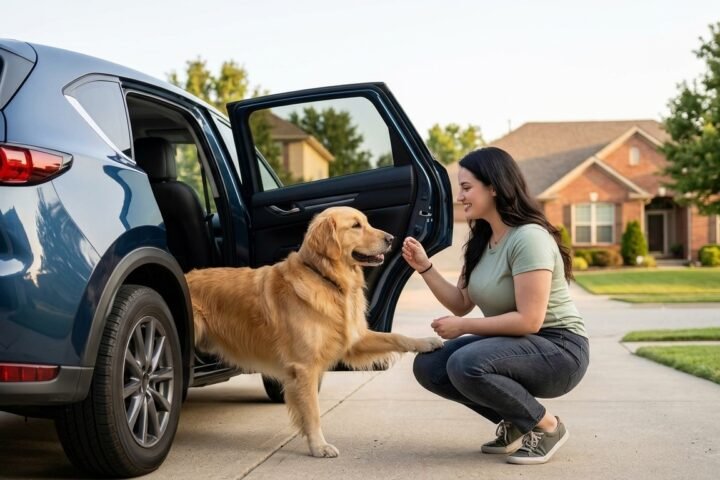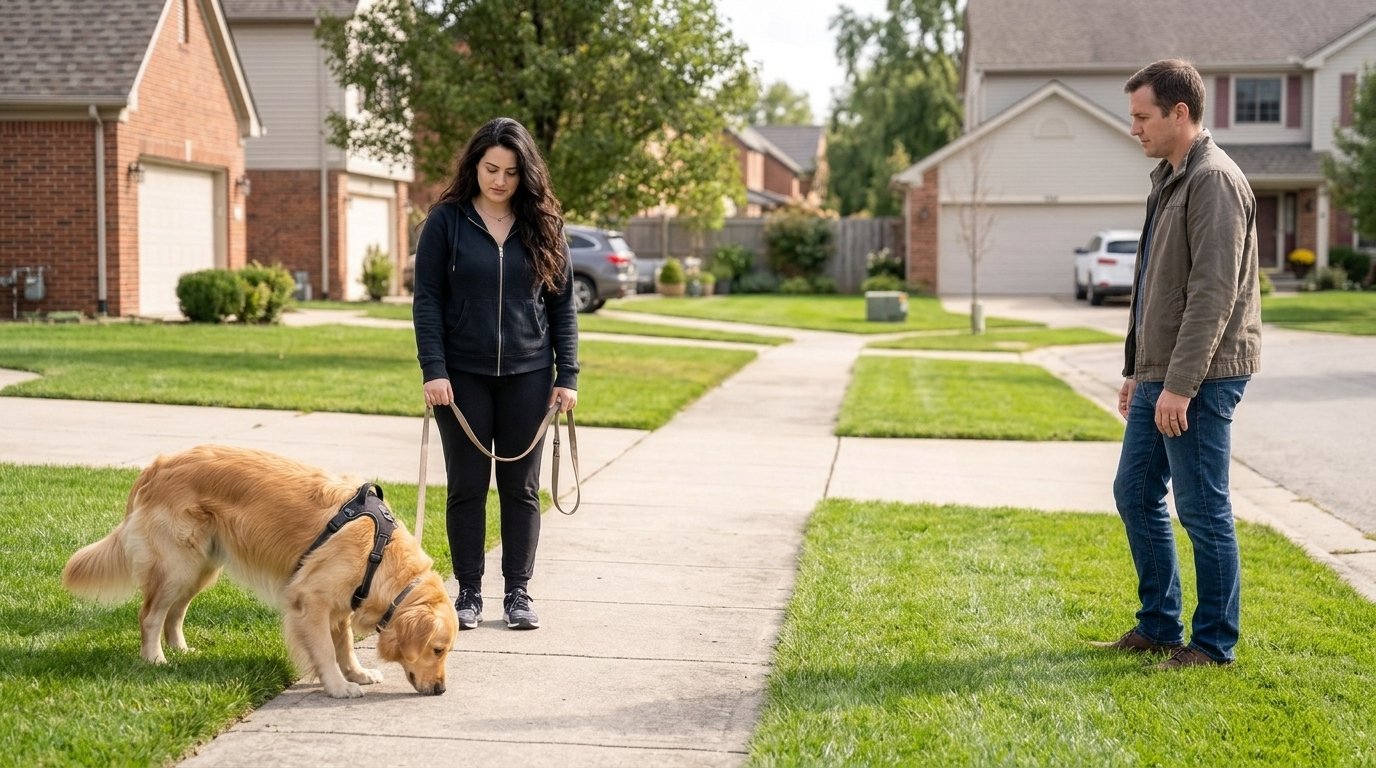
Your neighbor bends down to say hello. A moment ago, your dog was walking straight toward her. Now his nose is on the sidewalk, and your neighbor is waiting with her hand out. You can give him a little room before you decide what that sniff means.
Dog displacement behaviors are everyday actions that turn up at curious moments. A dog who wants to investigate a visitor may also feel uneasy about a hand reaching toward his face. Sniffing the ground or sitting down for a scratch can interrupt that encounter.
Of course, a sidewalk can smell wonderful, and dogs get itchy. The useful clues are what changed before the pause, what else your dog is doing, and what he chooses when the person steps back and gives him room.
Quick Answer
Dog displacement behaviors can look like sniffing or scratching when a greeting, training cue, or touch becomes difficult. Notice the timing and leave room for your dog to move away. A loose dog following a scent may simply be exploring. If scratching keeps returning to the same spot, especially during quiet time, call your veterinarian about a possible physical cause.
What makes an ordinary action a displacement behavior?
Picture a dog at an open doorway. He takes two steps toward a guest, shifts his weight back, then sits and scratches his shoulder. Approaching and hanging back both seem possible. That scratch is the part you can see. How he feels about the guest is something you can only infer.
Veterinarians use the term displacement for an ordinary action that seems out of place when an animal faces frustration or competing impulses. Wanting to investigate while feeling uneasy about getting closer is one example in the Merck Veterinary Manual’s glossary of behavior terms.
You can act on much less information than it takes to name the behavior. Ask your guest to leave the doorway clear. Your dog can then approach, watch from the hall, or wander back to bed.
Follow the nose before you interrupt
On a walk, watch where your dog’s nose goes. A scent trail might take him along a fence, around a post, then back to one tuft of grass. If the leash can stay loose and the spot is safe, let him finish. You might learn which corners he likes to investigate.
Now picture that same dog walking past the fence until a person calls him. His nose drops straight down and stays there as the person moves closer. The change in timing gives you a reason to pause the introduction. There could be something interesting underfoot.
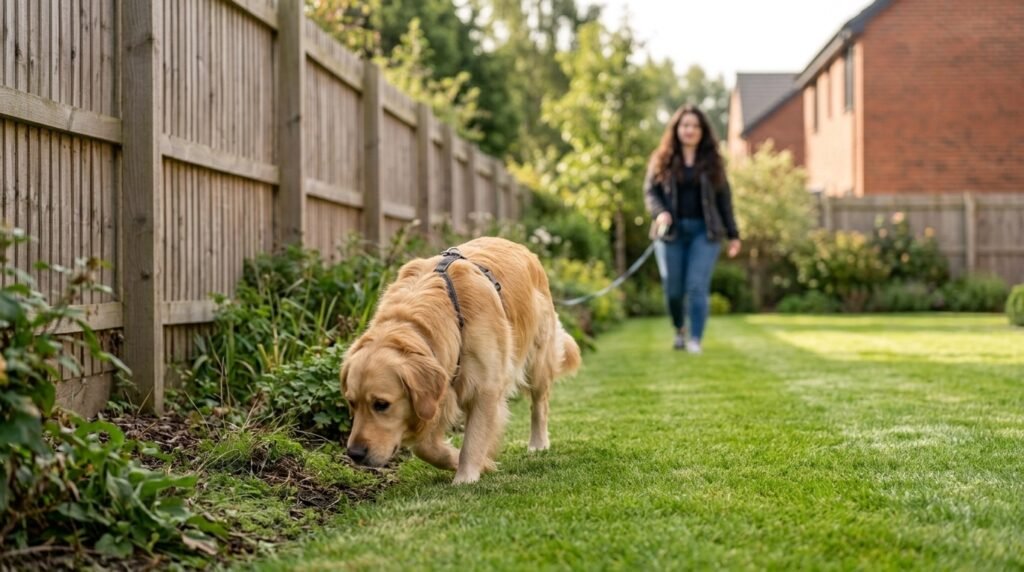
The American Kennel Club’s examples of displacement behavior include sniffing in class. Outdoors, leave room for both explanations. Your dog can catch an interesting smell and feel uneasy about company at the same time.
Check where and when your dog scratches
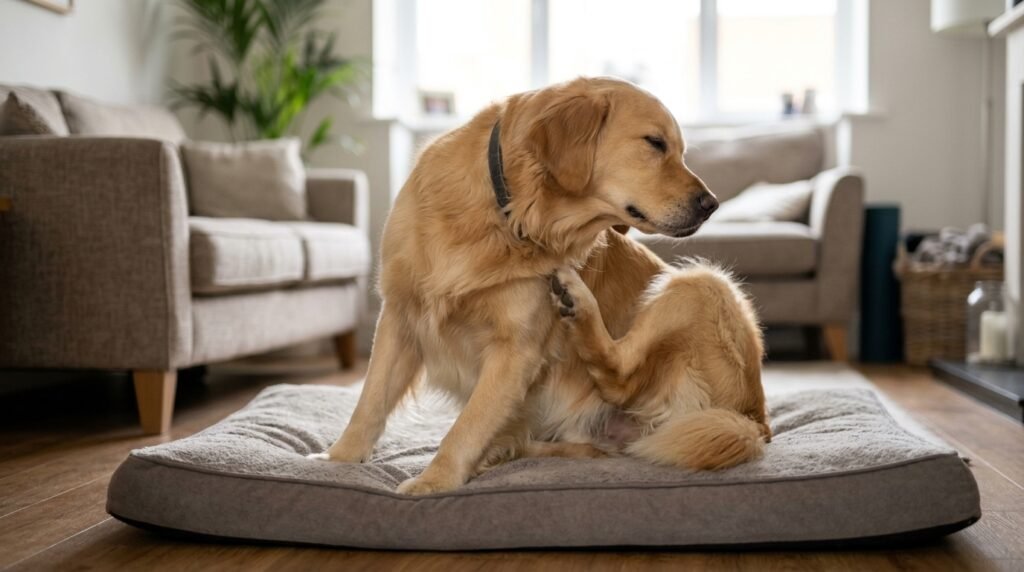
If a paw comes up halfway through a greeting, notice where it lands. Does your dog scratch once near his collar and stroll away? Or does he keep working at the same ear after the visitor has gone? A hand reaching out might explain the timing and tell you little about the itch itself.
Notice what happens when the house is quiet. Scratching the same patch during a nap, licking it after dinner, or rubbing it against the couch gives your veterinarian something concrete to investigate. You can note the side and location without asking your dog to hold still for an inspection.
Parasites, infections, and allergies are among the common causes of itching in dogs. Call your vet about recurring itch, sore skin, hair loss, or an unusual smell.
Read the few seconds around the pause
Start with what changed. A guest stood up. Another dog rounded the corner. The brush touched a tangle. Then look at your whole dog. His nose may be down while his feet stay planted and his weight shifts away. That combination gives you more to go on than the direction of his nose.
Next, make room and watch what he chooses. He might walk behind you, return to sniff the visitor’s shoes, or carry on along the fence. Let that choice guide what happens next. Returning for a sniff can mean he wants a closer look.
For a wider view, compare these moments with other signs of a stressed dog. A still picture can show a lifted paw. It cannot show whether a hand reached out just before it lifted.
Give a visitor something specific to do
When a guest is standing with an outstretched hand, it helps to give them an easy job. Ask them to put their hand down, turn a little sideways, and come sit with you. Keep the route from the doorway to your dog’s resting place clear as everyone moves inside.
Some dogs follow guests into the room as soon as the reaching stops. Let your dog smell a shoe or pass behind the chair. Keep the guest’s hands occupied with their coffee if your dog is still dipping in and backing away.
For a dog who regularly needs longer to settle, use these ways to help a nervous dog at home. On the next visit, arrange the chairs before the doorbell rings so your guest can sit down right away.
Make room when another dog approaches
A narrow sidewalk leaves few good choices when two leashed dogs meet. If yours stops to sniff as another dog heads toward you, look for space while you still have it. Take a wider path, turn down a quiet side street, or cross when traffic allows.
Give your dog time to come with you. Move in an arc if there is room and keep the leash loose enough for him to turn. Once you have space, he may resume sniffing or look back at the passing dog. Either choice gives you a chance to keep walking together.
If the next part of the sequence is often barking, see how to pass other dogs more calmly on walks. Pick a route with an easy exit for your next outing.
Simplify the cue that came before the sniff
Suppose your dog usually touches your palm with his nose in the kitchen. At class, you offer your hand and he starts sniffing the floor. There may be crumbs. There are also unfamiliar dogs nearby, more noise, and a handler waiting for an answer.
Lower your hand and give him a break. When he looks comfortable, move to a quieter corner. Offer the familiar cue once, close enough that he can reach your hand without stepping toward another dog. Reward an easy touch with a treat he enjoys.
The American Veterinary Society of Animal Behavior recommends reward-based training. If your dog still wanders away, finish for the day. Next time, try one easy repetition just outside the kitchen before asking him to do it in a crowded room.
Pause the brush and offer a choice
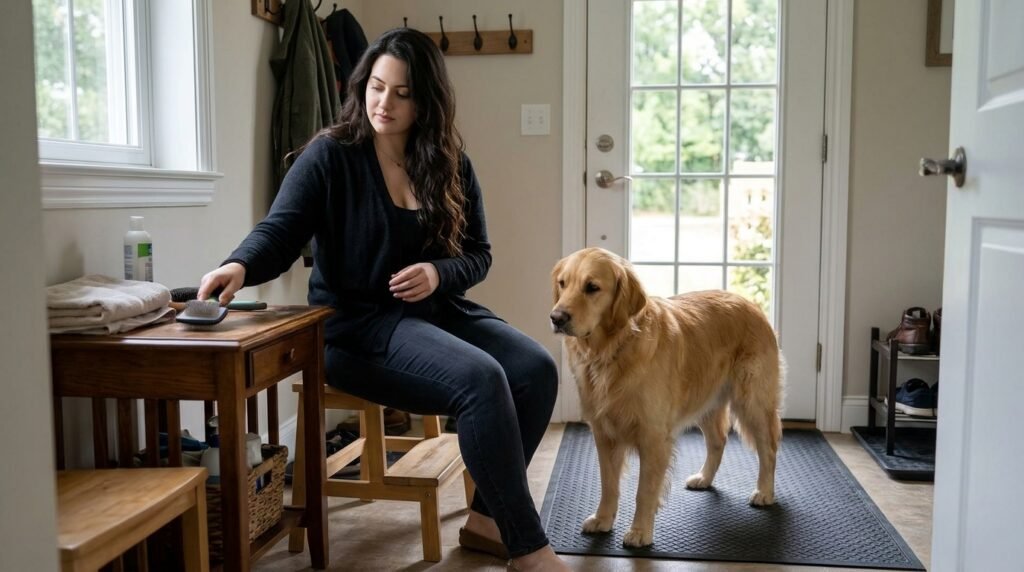
During brushing, a dog may turn away, scratch his chest, then watch the brush come back. Set it down. Look for a snag in the brush or a spot where the coat pulled. If the area seems sore, leave it alone and ask your vet how to proceed.
For routine brushing, work on a nonslip floor where your dog can walk away. On another occasion, let him see the brush from a comfortable distance. Reward him if he chooses to stay near you. Put the brush away while he is still comfortable.
When he is ready, try one gentle stroke on an area he usually enjoys and pause again. A dog who leans away gets more room. A dog who stays nearby still gets a break between strokes.
Write a note that someone else could use
After a puzzling encounter, jot down three things a person across the room could have seen. For example, a visitor bent over, the dog scratched his left shoulder, and he walked into the hall when the visitor stood up. Anyone reading that note knows the order of events.
Include one ordinary comparison if you have it. Perhaps the dog also scratched his left shoulder twice while resting after breakfast. That detail gives a vet a different lead. Or perhaps he spent breakfast asleep and scratched only when someone bent close that afternoon.
If you share care with someone else, ask what they have seen on quiet walks or evenings at home. There is no need to recreate an uncomfortable greeting for a better note. The next everyday observation is enough.
Decide when to bring in help
An occasional pause followed by comfortable activity is something you can observe. Call your veterinarian if scratching persists, if touching one area bothers your dog, or if grooming interrupts sleep or play. Describe when it happens at rest as well as during busy moments.
Repeated actions deserve attention when they start to crowd out daily life. VCA’s guide to repetitive and displacement behaviors explains how veterinarians distinguish occasional responses from patterns that interfere with normal activities. A note or a video you have can help with that conversation.
If your dog freezes, growls, or snaps when people approach, end the interaction and give him space. Ask your veterinarian about qualified behavior support before arranging another close greeting. A quiet place behind a closed door can keep the next visit manageable.
FAQs
Does my dog need to finish greeting someone?
No. Let your dog walk away, even if he approached first. You can finish talking to the person while your dog watches from a comfortable distance or settles elsewhere.
Is displacement the same as a calming signal?
The terms can describe the same gesture from different angles. Displacement describes an action that seems out of place. Calling it a calming signal suggests it affects an interaction. A single sniff gives you little evidence about what your dog intended or what the other dog understood.
Will giving my dog a break teach him to ignore me?
You can give him space and still teach the cue. Practice later in an easier setting, ask once, and reward his response. Repeating the cue while he is busy sniffing gives him little chance to succeed.
Can an itchy dog also scratch during a stressful moment?
Yes. An existing itch and an uncomfortable greeting can coincide. Give your dog space in the moment, then note whether he returns to the same area during the rest of the day. Share recurring scratching with your vet.
Conclusion
At the next greeting, give yourself one thing to watch. Notice the instant your dog’s nose drops or his paw comes up. Did someone lean closer? Did a dog appear at the end of the aisle? If you are holding a brush, did it just pass over a particular spot?
Make one small change that gives your dog a choice. Ask the visitor to lower their hand, step into a quieter aisle, or put the brush away. Wait long enough to see where your dog goes when the path is clear.
Later, pay attention during an ordinary quiet moment. A dog following a scent can enjoy his walk. A dog scratching the same sore spot on his bed deserves a call to the vet. Both decisions start with watching him.