Your dog curls up beside you, closes their eyes, and lets out a long, dramatic sigh. It almost sounds as though they’ve had the most exhausting day imaginable. But they spent most of the afternoon napping, so what’s going on?
If you’ve ever wondered, “Why does my dog sigh so much?”, the answer is usually less mysterious than it sounds. Dogs sigh for several reasons, including relaxation, natural breathing reflexes, boredom, frustration, and sometimes stress or physical discomfort.
A single sigh rarely tells the whole story. The best way to understand it is to observe what your dog was doing beforehand, how their body looks, and what happens afterward.
In this guide, we’ll explore seven possible reasons for dog sighing, explain what different sighs may mean, and help you recognize when a change in breathing or behavior deserves veterinary attention.
Table of Contents
Why Does My Dog Sigh So Much? Understanding the Behavior
A dog sigh is typically a deeper-than-usual inhalation followed by a noticeable, prolonged exhalation. Sometimes it’s almost silent. Other times, it sounds like an exaggerated human sigh.
Dogs may sigh through their noses or mouths. The sound can happen while they’re resting, interacting with people, or responding to something in their environment.
Unlike barking or growling, sighing is not always an intentional communication signal.
Sighing is also a natural breathing reflex
Sighs serve a physiological purpose. Occasional deeper breaths help maintain normal lung function, including reopening tiny air sacs called alveoli.
That means your dog doesn’t necessarily need to feel a particular emotion to sigh.
The American Kennel Club’s veterinary behavior discussion emphasizes that sighs can have physical and behavioral explanations. Context is essential when interpreting them.
Is frequent sighing normal?
For many dogs, yes.
Some dogs produce more noticeable sighs than others, and owners may hear them more often during quiet moments.
Rather than counting every sigh, ask yourself:
- Has my dog always sighed this frequently?
- Does the sigh happen mainly during relaxation?
- Is my dog eating, playing, and sleeping normally?
- Does their breathing return to a comfortable rhythm afterward?
- Have any new symptoms appeared?
A dog who sighs before falling asleep and then breathes comfortably is different from one who repeatedly makes unusual breathing sounds while struggling to rest.
The important distinction is not simply how often your dog sighs, but whether the behavior has changed and what accompanies it.
7 Possible Reasons Your Dog Sighs
There isn’t one universal translation for a dog’s sigh. However, these seven explanations can help you make sense of common situations.
1. Your dog feels relaxed and content
One of the most familiar situations is a dog sighing after settling into a comfortable position.
Imagine your Golden Retriever finishing an evening walk, drinking some water, and stretching out on their favorite bed. They close their eyes, loosen their muscles, and release a long breath.
That sigh may accompany relaxation.
Look for additional signs:
- Soft, partially closed eyes
- Loose facial muscles
- Relaxed ears
- Comfortable resting posture
- Normal, unlabored breathing
- No apparent desire to escape or move away
A relaxed sigh often occurs just before your dog falls asleep.

However, don’t assume every sigh means happiness. Even a content-looking dog may simply be taking a normal deeper breath.
2. Your dog is getting sleepy
Dogs frequently sigh while transitioning from activity to rest.
After an exciting play session or a busy day, your dog may settle into their bed and release a long breath.
You might also notice slower movements, stretching, a comfortable sleeping position, or gradually closing eyes.
These changes can indicate that your dog is preparing to sleep.
Dogs naturally change their posture and breathing patterns as they rest. The PawMindTips guide to dog sleeping positions explains how resting postures can provide useful clues about comfort without revealing a dog’s exact emotional state.
If your dog sighs, falls asleep peacefully, and continues breathing normally, there is generally little reason for concern.
3. Your dog may be bored
Sometimes a dog sighs when nothing interesting is happening.
Picture a Border Collie watching you work at your desk. Their toys are untouched, the morning walk was short, and they haven’t had much mental stimulation.
They lie down, stare toward you, and release a noticeable sigh.
Boredom is one possible explanation, particularly when the behavior appears alongside restlessness or repeated attempts to initiate activity.
Other possible signs include:
- Bringing toys to you repeatedly
- Wandering around the house
- Pawing at you for interaction
- Repeatedly changing resting spots
- Seeking stimulation through chewing or exploring
A sigh alone cannot establish boredom, though. Your dog may simply be resting.
If your dog appears interested in activity, offer a short training session, a sniffing game, or an appropriate food puzzle.
Mental enrichment can be particularly helpful for dogs that need more than physical exercise.
4. Your dog feels frustrated or disappointed
Dogs can experience frustration when something they expect doesn’t happen.
For example, your dog sees you pick up their leash and anticipates a walk. But you put the leash away and return to another task.
They settle down and sigh.
It may be tempting to interpret this as disappointment, and frustration is a plausible explanation. However, a sigh cannot prove what your dog is thinking.
Look at the broader sequence.
Did your dog become excited about an expected activity? Did they attempt to get your attention? Did the sigh occur after that activity was delayed?
A sigh combined with restless movements, repeated requests for interaction, or difficulty settling may suggest frustration.
When possible, keep daily routines reasonably predictable and reward calm behavior.
Avoid interpreting normal canine behavior as deliberate sulking or disobedience.
5. Your dog wants attention
Dogs learn through experience.
If your dog sighs loudly and you immediately respond with petting, conversation, or playtime, they may learn that sighing sometimes gets your attention.
That doesn’t mean every sigh is calculated or intentionally dramatic.
It means an ordinary behavior can become associated with a rewarding response.
You might notice your dog sighing while looking toward you, moving closer, or repeating other attention-seeking behaviors.
Consider whether they need exercise, a bathroom break, food, companionship, or simply some quiet interaction.
Give your dog appropriate attention throughout the day rather than waiting until they become restless.
If the sighing accompanies persistent barking or other vocalizations, the PawMindTips article on why dogs bark explores several additional communication and environmental triggers.
6. Your dog may be feeling stressed or anxious
Not every sigh happens in a comfortable setting.
Some dogs sigh in unfamiliar, unpredictable, or stressful environments.
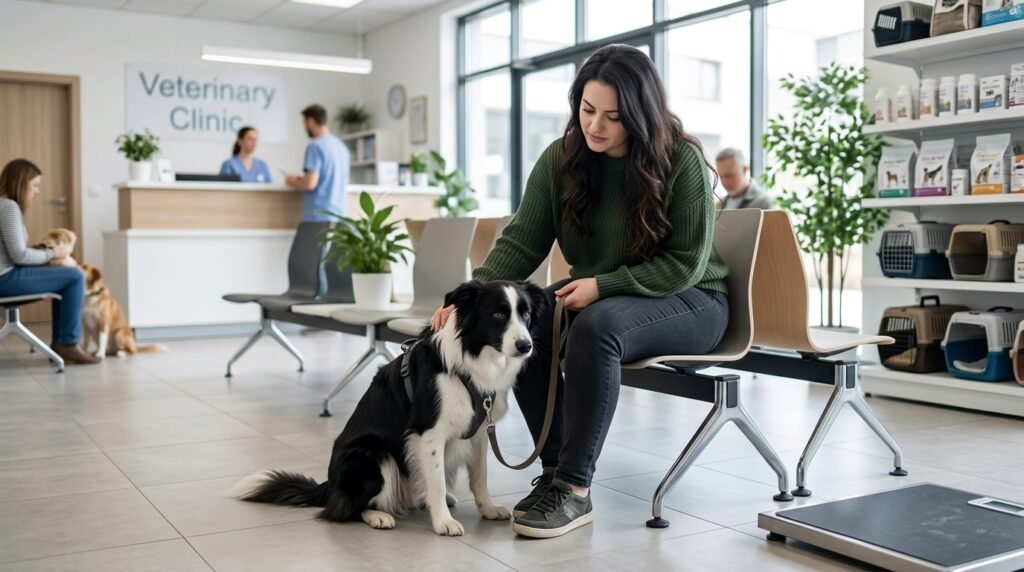
Consider a dog waiting in a veterinary clinic. They may be sitting quietly but showing a tense body, lowered posture, or repeated lip licking.
A sigh in that situation could occur alongside anxiety.
According to the veterinary-reviewed PetMD guide to dog sighing, anxiety is one possible explanation when sighing accompanies other stress signals.
Common accompanying signs include:
- Repeated yawning
- Lip licking unrelated to food
- Pacing or trembling
- Tucked tail
- Flattened ears
- Avoiding interaction
- Increased vigilance
- Difficulty settling
If these signs occur together, reduce the immediate source of stress when possible.
Give your dog space and avoid forcing interactions.
Our guide to signs of a stressed dog explains how to recognize subtle behavioral changes before they become more pronounced.
7. Your dog may be uncomfortable or in pain
Although ordinary sighing is rarely a reliable sign of pain by itself, discomfort is another possibility.
For example, an older dog with joint stiffness might move around repeatedly before finding a comfortable resting position.
They may release a deep breath once they settle.
But the sigh itself doesn’t diagnose arthritis or another medical problem.
Look for changes such as:
- Limping or stiffness
- Reluctance to climb stairs
- Difficulty lying down or standing up
- Reduced interest in activities
- Changes in appetite
- Unusual withdrawal
- Restlessness at night
- Sensitivity when touched
- Excessive panting at rest
The AKC notes that pain-related sighing is possible but generally occurs with additional indicators of discomfort.
If you notice these changes, arrange a veterinary examination.
Never give your dog human pain medication unless a veterinarian specifically instructs you to do so.
What Different Dog Sighs May Mean
The timing, surrounding behavior, and sound of a sigh often provide more useful information than its volume.
The following table offers a practical interpretation guide.
| Type of sigh | Possible meaning | What to check |
|---|---|---|
| Long sigh while lying down | Relaxation or natural breathing | Loose posture, comfortable breathing |
| Sigh before sleeping | Transition into rest | Sleepiness, calm behavior |
| Sigh while watching you | Attention seeking or anticipation | Eye contact, repeated requests |
| Sigh after play stops | Frustration or settling down | Restlessness versus relaxation |
| Sigh during a stressful event | Possible anxiety | Tucked tail, tension, lip licking |
| Sigh with repeated groaning | Vocalization or discomfort | Movement, sensitivity, behavior changes |
| Repeated unusual breaths | Possible respiratory problem | Breathing effort, speed, other symptoms |
These are possibilities rather than fixed translations.
A deep sigh versus a quiet sigh
A louder sigh doesn’t automatically indicate a stronger emotion.
A dog’s body position, anatomy, and the way air passes through their nose or mouth can affect how noticeable the sound becomes.
A large dog stretching across the couch may produce an impressive exhale without experiencing any distress.
Likewise, a quiet sigh can happen in a stressful situation.
Volume alone is not a dependable emotional measurement.
Sighing versus groaning
Some dogs make a low groaning sound while stretching, lying down, or being petted.
Groaning involves vocalization, while a sigh primarily involves a deeper breath and exhale.
The two can occur together, which makes them easy to confuse.
A relaxed dog may groan comfortably. A dog experiencing discomfort may also vocalize.
Pay attention to movement, facial expression, and whether the sound appears suddenly or repeatedly.
Sighing versus whining
Whining is generally a higher-pitched vocal sound that may occur when a dog wants something, feels excited, experiences stress, or is uncomfortable.
A sigh is usually shorter and more breath-based.
If your dog repeatedly whines while sighing, consider the situation rather than assuming the sounds mean the same thing.
Sudden or persistent vocal changes deserve veterinary attention, particularly when accompanied by pain-related behavior.
How to Read Your Dog’s Body Language
A sigh is only one small piece of canine communication.
Dogs also communicate through posture, movement, facial expressions, and responses to their surroundings.
Understanding these signals helps you avoid assigning a single emotional meaning to every sound.

Look at the eyes and face
Soft eyes and a relaxed face often accompany comfortable resting behavior.
By contrast, a tense expression, repeated scanning of the environment, or visible eye whites may occur when a dog feels uneasy.
These signs need to be interpreted together.
A dog showing the whites of their eyes is not automatically frightened, just as a dog with partially closed eyes isn’t automatically happy.
Observe the ears, tail, and posture
A relaxed dog often has loose muscles and a natural resting posture.
A worried dog may lower their body, tuck their tail, hold their ears back, or become unusually still.
However, ear and tail positions vary considerably between breeds and individual dogs.
A curled tail or naturally upright ears should not be interpreted in isolation.
Instead, learn how your dog normally looks when comfortable.
Notice lip licking and yawning
Dogs may lick their lips after eating, when anticipating food, or during normal grooming.
They can also lick their lips when stressed.
Similarly, yawning can accompany tiredness, transitions between activities, or emotional tension.
The PetMD guide to dog yawning discusses why this behavior can have several interpretations.
If your dog sighs while repeatedly licking their lips and avoiding interaction, stress may be more likely than simple relaxation.
For more context, read why dogs keep licking their lips.
Watch what happens after the sigh
One of the easiest ways to interpret dog sighing is to observe the next 30 seconds.
Does your dog close their eyes and sleep?
Do they stand up and bring you a toy?
Do they move away from someone touching them?
Or do they continue pacing and struggling to settle?
The behavior that follows may provide important clues.
A useful rule is to interpret the entire situation, not just the sound.
Why Your Dog Sighs in Specific Situations
Dog owners often notice sighing during particular everyday activities.
These situations can help narrow down possible explanations.
Why does my dog sigh when I pet them?
A dog who sighs while being gently petted may feel comfortable.
You might notice a loose body, soft eyes, and a willingness to remain close.
But some dogs sigh when they are uncomfortable with prolonged touching.
If your dog becomes stiff, turns their head away, moves away, or tries to escape, stop petting and allow them to choose whether to continue interacting.
The PetMD guide to signs a dog needs space explains why subtle body-language cues should be respected.
Don’t assume your dog enjoys an interaction simply because they aren’t growling.
Why does my dog sigh when lying next to me?
A sigh while resting beside you may accompany comfort, familiarity, or preparation for sleep.
Your dog may enjoy being close to you without needing constant physical attention.
If they remain relaxed and breathe comfortably, the sigh is usually not concerning.
However, proximity alone doesn’t prove a particular emotional state.
Observe whether your dog voluntarily chooses the spot and remains comfortable there.
Why does my dog sigh when looking at me?
A dog may sigh while looking toward you because they’re anticipating interaction, seeking attention, or simply observing you.
For example, they may have learned that looking at you sometimes results in a walk or playtime.
But eye contact and sighing don’t automatically mean your dog is asking for something.
Check the surrounding behavior.
If your dog brings you a toy, approaches the door, or repeatedly shifts their attention between you and an object, those actions may provide more information.
Why does my dog sigh when I stop petting them?
Your dog may be responding to the end of an enjoyable interaction.
They might nudge your hand, move closer, or seek more attention.
Alternatively, they may be settling down to rest.
Try briefly pausing your petting.
If your dog moves closer or actively requests more contact, you can continue gently.
If they turn away or remain still without seeking interaction, let them rest.
This approach respects your dog’s preferences rather than assuming that every sigh means they want more affection.
Why does my dog sigh at night?
Nighttime sighing often occurs when dogs are preparing to sleep or adjusting their resting position.
A dog may stretch, circle their bed, lie down, and exhale deeply.
That sequence is generally consistent with normal settling behavior.
However, repeated nighttime restlessness deserves attention.
If your dog frequently changes position, struggles to lie comfortably, coughs, or seems unable to breathe normally, contact your veterinarian.
Nighttime symptoms can sometimes reveal problems that are less noticeable during daytime activity.
Why does my puppy sigh so much?
Puppies can sigh during relaxation, sleep, or transitions between activities.
Their daily routines involve frequent periods of play and rest, so owners may notice these sounds often.
A puppy who sighs, sleeps comfortably, eats normally, and remains playful is usually not displaying a concerning sign.
But puppies should not repeatedly struggle to breathe, appear weak, or develop unusual respiratory sounds.
Seek veterinary guidance promptly if you notice these changes.
Why does my senior dog sigh more often?
Older dogs may spend more time resting, which can make their sighs more noticeable.
However, aging should not automatically be used to explain a new behavioral change.
Senior dogs may develop joint discomfort, respiratory conditions, or other health problems that affect comfort and activity.
If your older dog has recently started sighing much more often, particularly with stiffness, coughing, or reduced energy, schedule a veterinary checkup.
When Frequent Dog Sighing May Signal a Health Problem
Most ordinary dog sighs are harmless.
The concern increases when sighing is new, unusual, or accompanied by signs that your dog isn’t breathing or behaving normally.
Importantly, some sounds owners describe as sighs may actually be wheezing, coughing, groaning, or labored breathing.
These distinctions matter.
Signs that require a veterinary appointment
Contact your veterinarian if you notice:
- A sudden increase in unusual sighing
- Persistent groaning or whining
- New coughing or wheezing
- Reduced appetite or energy
- Difficulty finding a comfortable position
- New stiffness or limping
- Unexplained changes in sleeping behavior
- Repeated restlessness or apparent discomfort
A short video of the sound can help your veterinarian understand what you’re observing.
Try to record your dog’s normal posture and breathing without disturbing them.
Emergency warning signs
Seek emergency veterinary care immediately if your dog shows any of the following:
- Struggling to breathe or gasping for air
- Blue, gray, or unusually pale gums
- Collapse or loss of consciousness
- Severe breathing effort involving the chest or abdomen
- Inability to settle because of obvious respiratory distress
- Sudden weakness with abnormal breathing
Do not wait to determine whether the sound is technically a sigh.
Breathing difficulty can become life-threatening, and immediate professional assessment is essential.
How to check your dog’s resting breathing
You can observe your dog’s breathing when they’re calm or asleep.
Watch the chest rise and fall. One complete rise and fall counts as one breath.
Count breaths for 30 seconds and multiply by two.
Many healthy resting dogs breathe approximately 15–30 times per minute, although individual variation exists.
Breathing rate should always be interpreted alongside effort, posture, and your dog’s normal baseline.
A persistently elevated resting rate or noticeable increase in breathing effort deserves veterinary advice. A normal count does not rule out illness.
If your dog is visibly struggling to breathe, do not delay emergency care to count breaths.
What to Do If Your Dog Sighs Frequently
If your dog sighs often but otherwise seems healthy, a few simple observations can help you decide what to do next.
Step 1: Identify the situation
Notice when sighing happens.
Does it occur after exercise, during petting, while waiting for food, or when settling into bed?
Try to identify patterns over several days.
A dog who sighs predictably while falling asleep may be showing a different pattern from one who suddenly starts sighing repeatedly throughout the day.
Step 2: Observe the entire body
Check for signs of relaxation, stress, discomfort, or breathing difficulty.
Look at the eyes, ears, posture, tail, movement, and willingness to interact.
Don’t focus only on the sound.
Step 3: Consider exercise and enrichment
If your dog appears restless or under-stimulated, review their daily routine.
Depending on their age, health, and energy level, helpful activities may include:
- Sniff-focused walks
- Short positive-reinforcement training sessions
- Food puzzles
- Gentle interactive play
- Appropriate chew toys
- Calm companionship
Avoid increasing physical activity if your dog appears painful, exhausted, or unwell.
Step 4: Respect your dog’s personal space
If sighing occurs during cuddling or handling, observe whether your dog wants the interaction to continue.
Let them move away freely.
Avoid holding a dog in place simply because they haven’t shown obvious aggression.
A dog who feels comfortable having choices may be more willing to seek affection voluntarily.
Step 5: Track changes over time
If sighing seems unusually frequent, write down:
- When it occurs
- What your dog was doing
- Whether other sounds were present
- Changes in appetite or activity
- Any coughing, panting, or restlessness
- Whether the behavior is becoming more noticeable
This information can be useful during a veterinary appointment.
Step 6: Know when to seek professional help
If your dog seems comfortable and otherwise healthy, ordinary sighing generally doesn’t require treatment.
However, unexplained changes in breathing or behavior shouldn’t be dismissed.
Contact your veterinarian when you’re uncertain, particularly if the behavior is new or accompanied by other symptoms.
For persistent anxiety-related behaviors, your veterinarian may recommend an appropriate behavior-management plan or a qualified veterinary behavior professional.
Avoid punishment, forced exposure, or attempting to suppress normal breathing sounds.
The goal is to understand and support your dog’s needs, not eliminate every sigh.
FAQs
1. Why does my dog sigh so much when lying down?
Dogs often sigh when lying down because they’re relaxing, adjusting their position, or taking a natural deeper breath. If your dog appears comfortable and breathes normally afterward, this is generally harmless. Repeated difficulty settling or other signs of discomfort warrant veterinary advice.
2. Do dogs sigh when they are happy?
Yes, dogs may sigh while feeling relaxed and content. A soft body, comfortable posture, and calm expression can support that interpretation. However, sighing alone doesn’t prove happiness because it also occurs as a normal breathing reflex.
3. Can frequent dog sighing mean anxiety?
Sometimes. Sighing may accompany anxiety, particularly when a dog also shows pacing, trembling, lip licking, a tucked tail, or difficulty settling. The surrounding situation and other behaviors are more informative than the sigh itself.
4. When should I worry about my dog sighing?
Contact your veterinarian if sighing suddenly becomes unusual or accompanies coughing, pain, reduced activity, or changes in behavior. Seek emergency care for gasping, labored breathing, collapse, or blue or gray gums.
Conclusion
So, why does my dog sigh so much? In many cases, sighing is simply part of normal breathing or happens when a dog feels relaxed, sleepy, or comfortable.
Sometimes, sighing may accompany boredom, frustration, attention seeking, stress, or physical discomfort.
The most reliable way to understand your dog is to observe their body language, environment, and usual behavior rather than assigning a fixed meaning to one sound.
If your dog is comfortable, active, eating normally, and breathing without effort, an occasional dramatic sigh is usually nothing to worry about.
But if sighing changes suddenly or appears alongside unusual symptoms, veterinary advice is the safest next step.
Understanding these small behaviors can help you respond more thoughtfully to your dog’s needs and recognize when something truly requires attention.