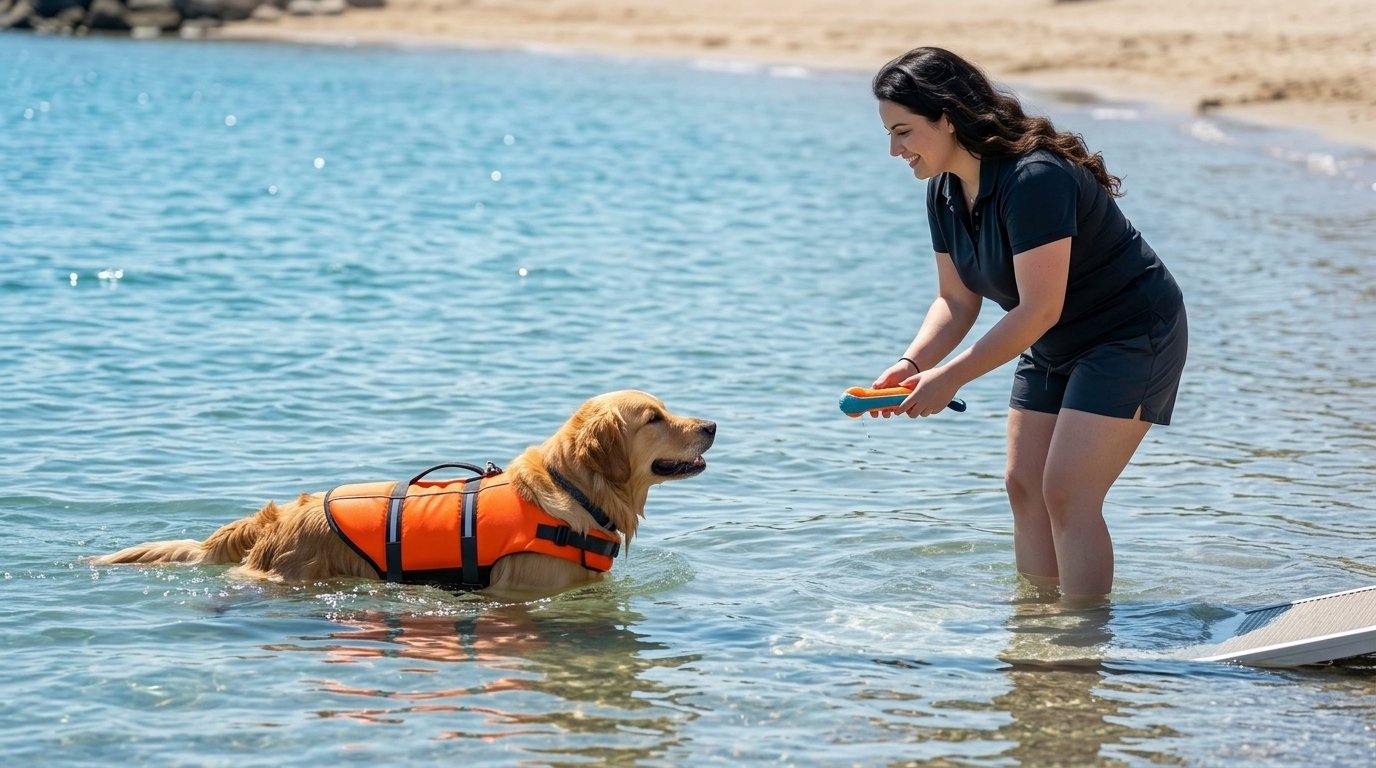
Good dog swimming safety starts before your dog ever puts a paw in the water. Swimming can be enjoyable exercise for many dogs, but being enthusiastic about water does not automatically make a dog a strong or safe swimmer.
Some dogs struggle because of their body shape, age, fitness, health, or simply lack of experience. Even confident swimmers can become exhausted, swallow too much water, encounter currents, or have difficulty finding their way out of a pool.
Pools, lakes, rivers, and beaches also present very different hazards. A backyard pool may have slippery edges and difficult exits, while a lake may have harmful algae, underwater obstacles, or changing water quality. At the beach, waves, currents, heat, sand, and salt water add another layer of risk.
That is why the safest approach combines a realistic assessment of your dog, active supervision, appropriate safety equipment, frequent breaks, and knowledge of the water itself.
This guide explains how to make swimming safer before, during, and after your dog’s time in the water.
Table of Contents
Is Your Dog Ready to Swim?
One of the biggest misconceptions about dogs and water is that all dogs instinctively know how to swim.
They don’t.
Some dogs may begin paddling when placed in water, but paddling is not the same as being a confident, efficient swimmer. AAHA’s water-safety guidance emphasizes that swimming ability varies considerably among dogs and recommends assessing a pet in controlled, shallow water before progressing to greater depth. AAHA
Consider your dog’s:
- Age
- Body shape
- Fitness
- Swimming experience
- Confidence around water
- Mobility
- Breathing
- Current medical conditions
Dogs with short muzzles, heavy bodies, short legs, limited mobility, or poor physical conditioning may find swimming particularly difficult.
Puppies and senior dogs may also tire sooner than expected.
If your dog has heart or respiratory problems, mobility limitations, a recent injury or surgery, an active skin or ear problem, or another significant health condition, ask your veterinarian whether swimming is appropriate before beginning.
Never force a frightened dog into water
A dog that refuses to enter the water does not need to be pushed, carried, thrown, or pulled into deeper water.
Forcing the experience can create panic and may make future water exposure even more difficult.
Instead, let your dog explore shallow water at their own pace. Reward calm investigation and allow them to retreat whenever they want.
The objective is not to prove that your dog can swim. It is to determine whether your dog can comfortably and safely participate.
Dog Swimming Safety Starts With a Life Jacket and Supervision
A properly fitted canine life jacket is one of the most useful pieces of equipment for water activities.
It is particularly valuable for:
- Beginner swimmers
- Puppies
- Senior dogs
- Dogs with limited endurance
- Dogs swimming in open water
- Dogs riding on boats
- Dogs whose body structure makes swimming harder
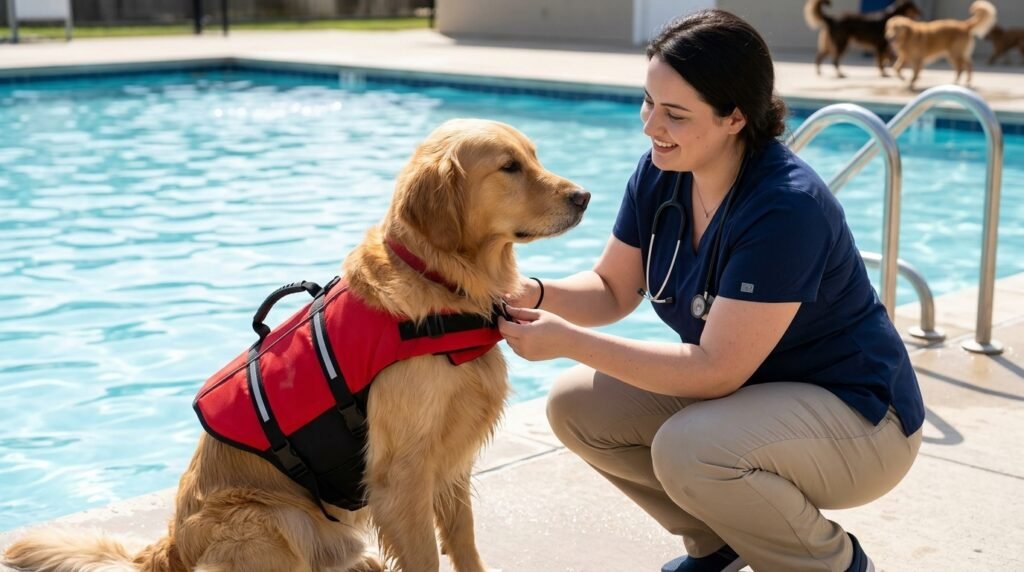
Even a strong swimmer can benefit from additional buoyancy in unpredictable open water.
How should a dog life jacket fit?
The jacket should fit snugly enough that it does not slide around the dog’s body, but it should not restrict normal movement or breathing.
AAHA recommends a comfortable, secure fit and suggests looking for visible or reflective material and a sturdy handle that can assist with getting a dog out of the water. AAHA
Before heading to a lake or beach, let your dog wear the jacket on dry land.
Check that your dog can comfortably:
- Walk
- Sit
- Turn
- Lie down
- Move their shoulders
- Breathe normally
Then test it in controlled shallow water.
A life jacket does not replace supervision
Never assume that putting a flotation device on your dog makes unsupervised swimming safe.
Stay close enough to notice changes in your dog’s swimming.
Warning signs can include:
- Slower or less coordinated paddling
- A lower head position
- Difficulty keeping the face above water
- Repeated attempts to leave the water
- Panic
- Heavy panting
- Disorientation
- Unusual weakness
Active supervision means actually watching the dog—not simply being somewhere near the pool or beach.
Introduce Your Dog to Water Gradually and Teach the Exit
Choose calm, shallow water for a dog’s first swimming experience.
Let your dog walk in voluntarily rather than placing them immediately into deep water.
You can use praise and rewards to encourage exploration, but avoid creating pressure.
Progress might look like:
Dry ground → wet paws → shallow standing water → slightly deeper water → brief supported swimming
Some dogs progress quickly. Others may need several sessions.
Either response is fine.
Teach the way out before encouraging longer swims
This is especially important with swimming pools.
A dog that accidentally falls into a pool may instinctively swim toward the nearest edge rather than toward the stairs or ramp. If the pool wall cannot be climbed, the dog can become exhausted while trying to escape.
Show your dog the steps or dog-safe ramp repeatedly.
Practice reaching the exit from different nearby locations.
AAHA specifically recommends teaching dogs how to use pool steps or a pet-friendly ramp so they have a familiar escape route if they become tired or disoriented. AAHA
A fenced pool area can add another important layer of protection by reducing unsupervised access.
Pool, Lake, and Beach Safety for Dogs
The principles of dog swimming safety remain similar wherever your dog swims, but the actual hazards change considerably with the environment.
Swimming Pool Safety
A controlled backyard pool may appear safer than a lake or ocean, but it still requires precautions.
Important pool risks include:
- Unsupervised access
- Difficult or unfamiliar exits
- Slippery surfaces
- Excessive pool-water consumption
- Pool chemicals stored within reach
- Fatigue
- Irritation from chlorine or other chemicals
A properly maintained chlorinated pool is generally different from direct exposure to concentrated pool chemicals. Keep chlorine tablets, shock treatments, and other pool-maintenance products securely inaccessible to pets.
Don’t let your dog treat the pool as a drinking bowl.
AKC’s pool-safety guidance notes that small amounts of properly maintained pool water are unlikely to harm most dogs, but dogs should still be discouraged from drinking it and should have fresh drinking water available. American Kennel Club
After swimming, rinse your dog with clean fresh water.
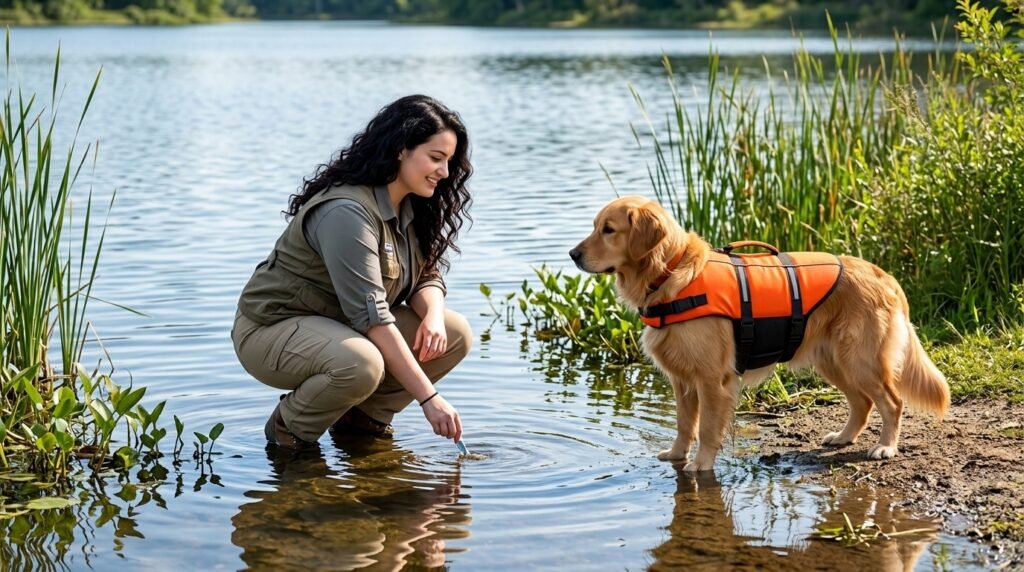
Lake and Pond Safety
Natural freshwater brings less predictable conditions.
Before allowing your dog into a lake or pond, consider:
- Water-quality advisories
- Blue-green algae warnings
- Currents
- Sudden drop-offs
- Fishing hooks and lines
- Broken glass or sharp objects
- Underwater branches
- Wildlife
- Boats
- Water temperature
Never assume that clear-looking water is automatically safe.
Blue-green algae can be extremely dangerous
Harmful cyanobacterial blooms—often called blue-green algae—deserve special attention.
According to the CDC’s guidance on harmful algal blooms and animals, dogs can become seriously ill after swallowing toxins, and potentially dangerous exposure can occur while swimming, drinking contaminated water, eating algae, or licking contaminated material from their coat. CDC
Avoid water that looks:
- Discolored
- Scummy
- Foamy
- Paint-like
- Unusually dirty or foul-smelling
More importantly, check local water advisories because dangerous toxins are not necessarily identifiable just by looking at the water. The CDC recommends following posted swimming advisories and keeping pets out when harmful algae are suspected or reported. CDC
If your dog enters water where a harmful bloom may be present, prevent them from licking their coat and rinse them promptly with clean tap water. Contact a veterinarian immediately if illness develops. CDC
Beach and Ocean Safety
Ocean swimming adds another group of hazards:
- Waves
- Rip currents and strong currents
- Tides
- Salt water
- Hot sand
- Sharp shells
- Fishing equipment
- Marine wildlife
- Heat and sun exposure
Even an experienced swimming dog can be overpowered by moving water. AAHA warns that tides and currents can create problems even for strong swimmers. AAHA
Keep your dog close and use a life jacket where conditions warrant it.
Swimming should stop if conditions become rough.
Beach safety also continues on land. Sand can become dangerously hot, particularly during the middle of the day.
If you’re visiting the water during warm weather, PawMindTips’ guide to dog care in summer explains additional precautions for heat, hydration, shade, and heatstroke.
Don’t Let Your Dog Drink the Swimming Water
Dogs often swallow some water while swimming.
The problem becomes more serious when they intentionally drink from the pool, lake, or ocean—or repeatedly swallow water while retrieving toys.
Bring clean drinking water and a portable bowl instead.
Too much fresh water can also be dangerous
An unusual but serious problem known as water intoxication can occur when a dog consumes excessive amounts of fresh water.
This may happen during prolonged swimming, diving, retrieving, or repeatedly biting at water.
Excessive water can dilute sodium in the bloodstream. AKC’s veterinary-reviewed explanation of water intoxication lists warning signs including vomiting, lethargy, bloating, loss of coordination, drooling, glazed eyes, breathing difficulty, and seizures. American Kennel Club
Don’t panic over an occasional swallowed mouthful.
Instead, reduce the risk by controlling the duration and intensity of water play, particularly if your dog repeatedly swims with their mouth open or spends long periods retrieving toys.
Salt water creates the opposite problem
At the ocean, repeatedly swallowing salt water can result in excessive sodium intake and dehydration.
Possible signs of significant saltwater ingestion include:
- Vomiting
- Diarrhea
- Weakness
- Lethargy
- Confusion or unusual behavior
- Tremors
- Seizures
Severe saltwater poisoning can be life-threatening and requires veterinary treatment. American Kennel Club
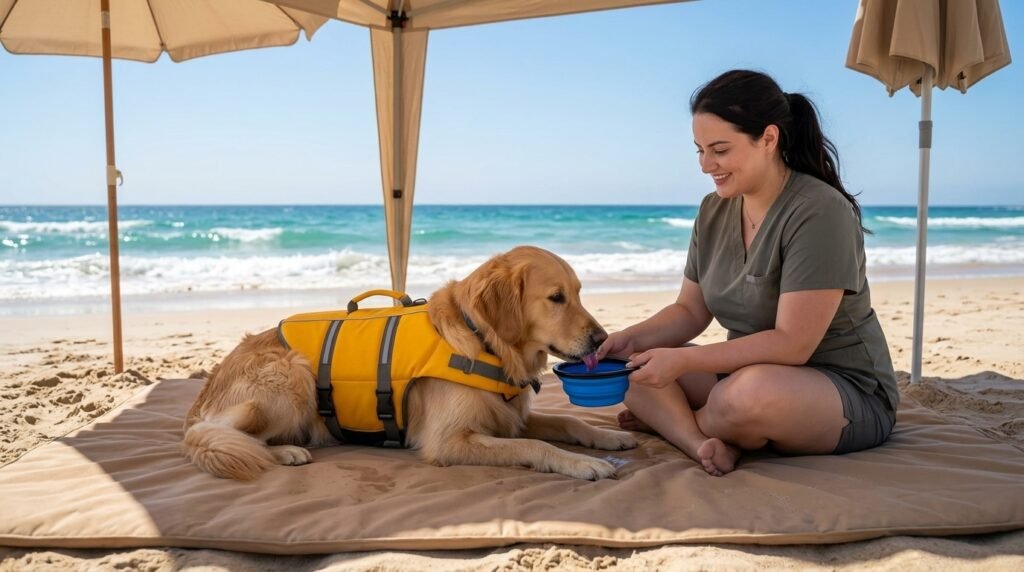
Keep fresh water readily available at the beach and interrupt swimming regularly.
If your dog keeps trying to drink ocean water, move them away from the shoreline rather than allowing the behavior to continue.
Swimming Fatigue: Know When Your Dog Needs a Break
Dogs don’t always stop an enjoyable activity when they become tired.
A dog that loves retrieving may repeatedly return to the water simply because you keep throwing the toy.
That makes you responsible for setting limits.
Swimming can be physically demanding, and fatigue increases the risk of drowning.
Watch for:
- Slower swimming
- Reduced coordination
- A lower head or rear end in the water
- Heavy panting
- Difficulty responding normally
- Reluctance to continue
- Repeated attempts to reach shore
- Trembling
- Weakness
- Difficulty standing after leaving the water
End the session before your dog reaches obvious exhaustion.
Short swimming sessions with regular rest periods are generally safer than one long, uninterrupted session.
During breaks, provide:
- Shade
- Fresh drinking water
- Time to rest
- An opportunity to urinate
- A chance to warm up if the water is cold
Hot weather creates an additional concern because swimming doesn’t eliminate the possibility of overheating. A dog can still become overheated while running on the beach, repeatedly retrieving, or exercising intensely around water.
What to Do After Your Dog Swims
Dog swimming safety doesn’t end when your dog reaches dry land.
A simple post-swim routine can help you catch problems early.
Rinse the coat
Use fresh water to rinse away:
- Chlorine
- Salt
- Sand
- Dirt
- Potential irritants
AAHA recommends rinsing and thoroughly drying dogs after swimming, paying particular attention to paws, skin folds, and areas where moisture can remain trapped. AAHA
Dry your dog thoroughly
Wet skin and trapped moisture can cause irritation in susceptible dogs.
Dry the body, paws, and skin folds carefully.
Check the ears
Look for persistent:
- Head shaking
- Scratching
- Redness
- Odor
- Discharge
- Ear sensitivity
Don’t insert cotton swabs or other objects deep into the ear canal.
If your dog regularly develops ear problems after swimming, discuss prevention with your veterinarian.
Check the paws and skin
Beach sand, rocks, shells, fishing equipment, sticks, and debris can injure paws.
Look between the toes and around the pads for cuts, irritation, foreign material, or unusual tenderness.
Finally, observe your dog after you return home.
Vomiting, coughing, extreme tiredness, abnormal behavior, difficulty breathing, weakness, or coordination problems after swimming should not automatically be dismissed as a dog simply being tired.
When Is Swimming a Veterinary Emergency?
Knowing when to stop swimming and seek help is one of the most important parts of dog swimming safety.
Seek prompt or emergency veterinary assistance if your dog:
- Has difficulty breathing
- Collapses or becomes unresponsive
- Has a seizure
- Cannot stand normally
- Becomes severely weak or disoriented
- Develops significant coughing or breathing changes after a water incident
- May have inhaled water
- Shows concerning signs after suspected harmful algae exposure
- Develops neurologic signs after drinking excessive fresh or salt water
- Cannot recover normally after being removed from the water
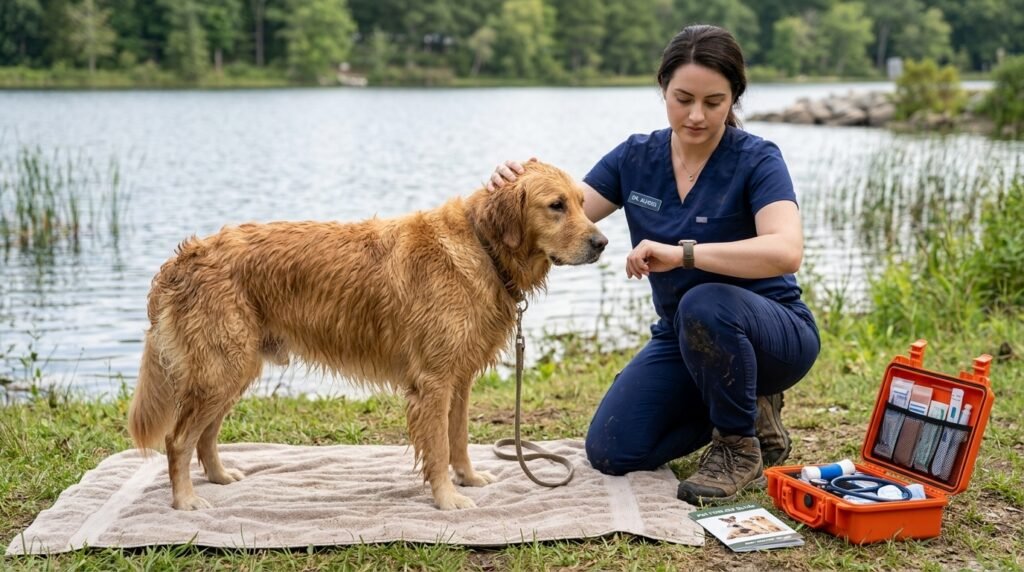
Harmful algal bloom exposure deserves particular urgency. The CDC warns that animals can become severely ill after exposure and recommends contacting a veterinarian immediately when a pet becomes sick after being in or near potentially contaminated water. CDC
What if your dog is pulled from the water and isn’t breathing?
Remove the dog from immediate danger and seek emergency veterinary assistance.
If the dog is unresponsive and not breathing normally, canine CPR may be appropriate while emergency veterinary care is being arranged. Follow proper technique rather than improvising.
PawMindTips’ Dog CPR guide explains chest compressions, rescue breaths, positioning, and what to do during a life-threatening emergency.
CPR is not a substitute for veterinary treatment. A dog involved in a serious drowning or near-drowning incident should receive veterinary assessment even if they appear to improve after being removed from the water.
Frequently Asked Questions
1. Do all dogs naturally know how to swim?
No. Some dogs are naturally more comfortable and physically capable in water than others. Body structure, age, health, conditioning, experience, and confidence can all affect swimming ability. Introduce your dog gradually in shallow water rather than assuming they can swim safely.
2. Should my dog wear a life jacket while swimming?
A properly fitted canine life jacket is strongly worth considering for inexperienced swimmers, dogs with limited stamina, open-water swimming, and boating. Even experienced swimmers can encounter fatigue or unexpected currents. A jacket should fit securely without restricting movement and ideally have a sturdy rescue handle.
3. Is lake water safe for dogs to swim in?
Not automatically. Check local water-quality and harmful-algae advisories before allowing your dog to swim. Avoid discolored, foamy, scummy, foul-smelling, or suspicious water, and don’t let your dog drink from the lake. Harmful cyanobacterial blooms can cause severe or potentially fatal illness in dogs. CDC
4. How long should I let my dog swim?
There isn’t one safe swimming duration for every dog. Age, fitness, breed, water temperature, swimming ability, weather, and intensity all matter. Start with short sessions, provide frequent breaks, and stop before your dog becomes exhausted. Slower paddling, poor coordination, heavy panting, difficulty keeping the head up, or repeated attempts to leave the water are signs to end the session.
Conclusion
Good dog swimming safety is less about whether your dog loves water and more about controlling the risks around it.
First, make sure swimming is appropriate for your dog’s health, body type, experience, and confidence. Introduce water gradually, use a properly fitted life jacket when appropriate, supervise continuously, and make sure your dog knows how to get out.
Then adjust your precautions to the environment. Pools need secure access and an obvious exit. Lakes require attention to water quality, harmful algae, currents, debris, and wildlife. Beaches require additional caution around waves, tides, salt water, sand, and heat.
Bring fresh drinking water, schedule regular breaks, and don’t allow endless retrieving or swimming simply because your dog wants to continue.
Finally, rinse and check your dog afterward and take abnormal symptoms seriously.
With preparation, supervision, and sensible limits, swimming can remain an enjoyable activity without overlooking the hazards that can turn a day in the water into an emergency.