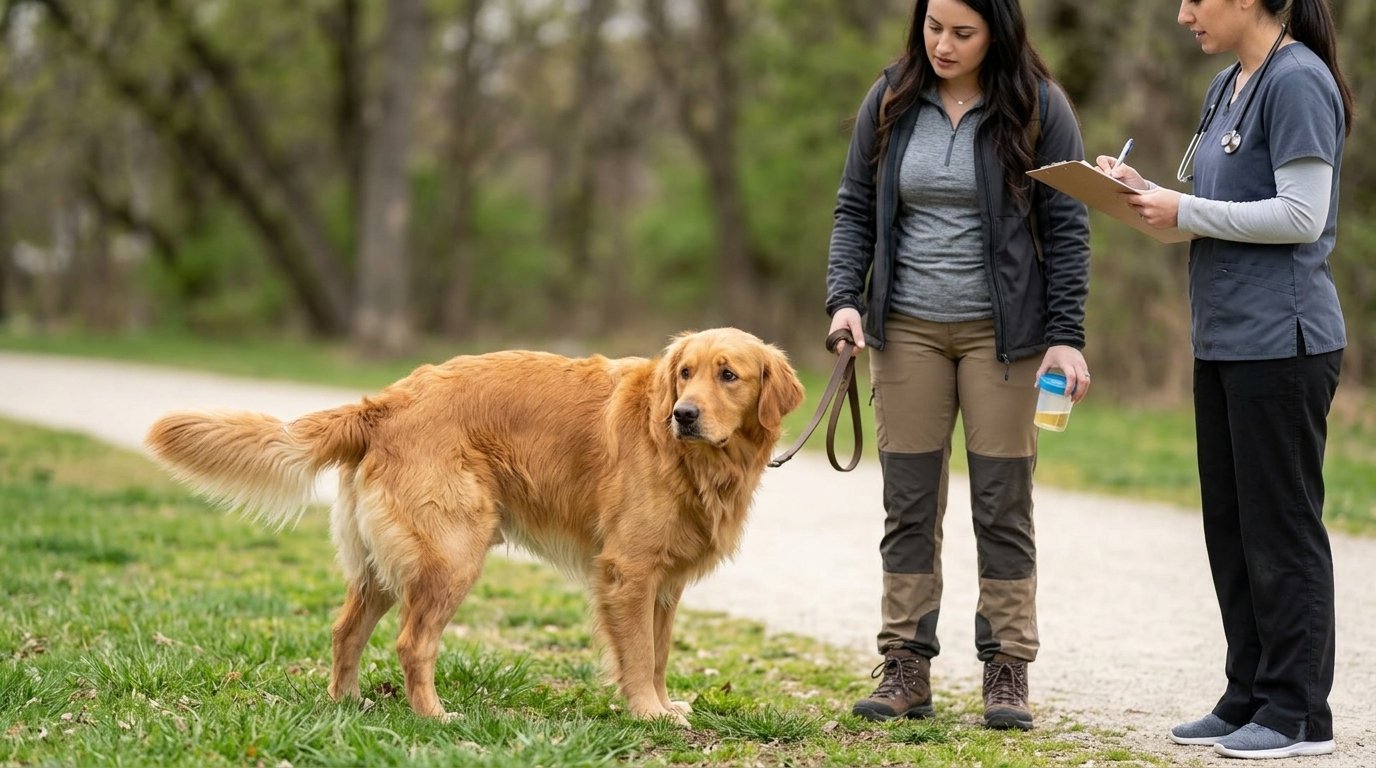
Dog urinary problems can range from a relatively straightforward bladder infection to a potentially life-threatening urinary obstruction. Changes such as frequent urination, straining, blood in the urine, accidents, urine leakage, or increased thirst should not automatically be dismissed as a behavioral issue.
The urinary system includes the kidneys, ureters, bladder, and urethra, and problems can develop anywhere along this system.
The challenge is that different conditions can produce similar symptoms. A dog that strains to urinate, for example, could have a urinary tract infection, bladder inflammation, stones, or an obstruction.
This guide explains the most common dog urinary problems, the warning signs owners should recognize, how veterinarians investigate them, and when urinary changes require urgent attention.
Table of Contents
What Are Dog Urinary Problems?
Dog urinary problems are conditions that affect the urinary tract or the normal storage and elimination of urine.
The urinary system has several important jobs. The kidneys filter waste from the blood and help regulate water and electrolyte balance, while urine travels through the ureters to the bladder before leaving through the urethra.
Problems can therefore involve:
- The kidneys
- The ureters
- The bladder
- The urethra
- The muscles and nerves involved in urination
Some conditions are caused by infection. Others involve inflammation, stones, anatomical abnormalities, kidney dysfunction, neurological problems, tumors, or hormonal and metabolic diseases.
That is why the same urinary symptom can have more than one possible cause.
For example, frequent small urinations can occur with a UTI, bladder inflammation, stones, or other lower urinary tract disorders. Veterinary testing is often necessary to determine which problem is actually present.
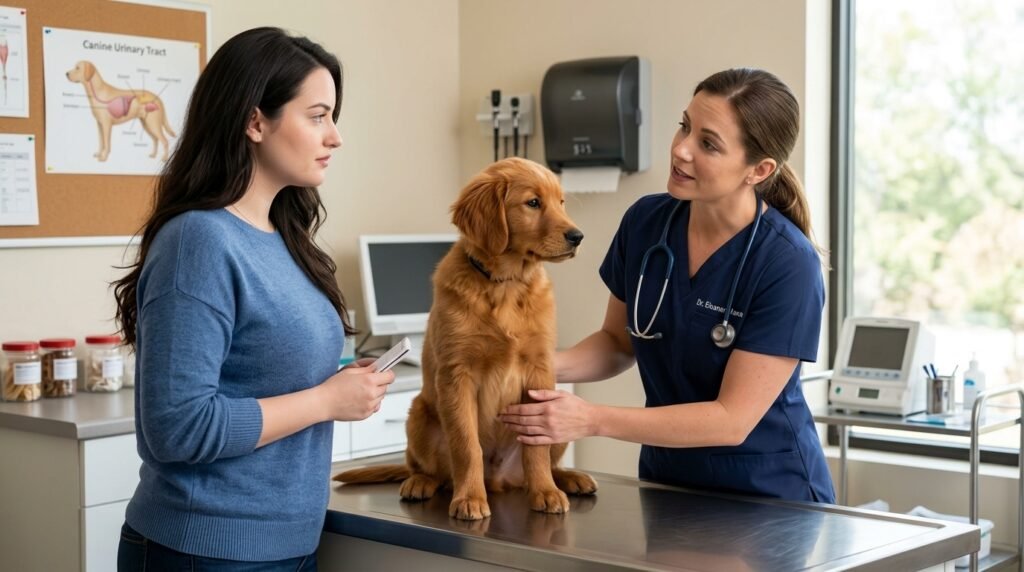
9 Common Urinary Problems in Dogs
1. Urinary Tract Infections
A urinary tract infection, commonly called a UTI, occurs when microorganisms—most commonly bacteria—infect part of the urinary tract.
UTIs often involve the bladder, although infection can occur elsewhere in the urinary system. Cornell notes that UTIs are relatively common in dogs and are particularly common in females.
Possible signs include:
- Frequent attempts to urinate
- Passing small amounts of urine
- Straining
- Whining or discomfort while urinating
- Blood in the urine
- Accidents in the house
- Licking around the urinary opening
- Changes in urine appearance or odor
A UTI cannot always be confirmed from symptoms alone because several other urinary conditions can look similar.
Veterinarians commonly use a urinalysis, and a urine culture may be needed to identify bacteria and help guide treatment.
2. Bladder Inflammation or Cystitis
Cystitis means inflammation of the bladder.
Bacterial infection is one possible cause, but bladder inflammation can also occur because of stones, tumors, anatomical abnormalities, or other causes.
A dog with cystitis may:
- Urinate frequently
- Strain to urinate
- Produce only small amounts
- Have blood in the urine
- Appear uncomfortable during urination
- Have accidents indoors
Importantly, inflammation does not automatically mean infection. That distinction matters because treatment depends on the underlying cause.
3. Bladder or Urinary Stones
Urinary stones are mineral formations that can develop within the urinary tract.
Some stones cause no obvious symptoms. Others irritate the bladder or interfere with the flow of urine.
Possible signs include:
- Frequent urination
- Straining
- Painful urination
- Blood in the urine
- Urinating in unusual places
- Slow or interrupted urine flow
The major concern is when a stone obstructs urine flow. A complete urethral obstruction is an emergency because waste products and dangerous electrolyte disturbances can develop rapidly.
4. Urinary Incontinence
Urinary incontinence means involuntary urine leakage.
You may notice:
- Wet bedding
- Small urine spots where your dog was sleeping
- Dribbling while walking
- Wet fur around the urinary opening
- Repeated dampness without your dog intentionally urinating
Some dogs develop incontinence because the mechanism responsible for keeping urine inside the bladder does not function properly. Neurological problems and anatomical abnormalities can also contribute.
Urinary leakage is not necessarily a house-training problem. If a previously house-trained dog suddenly starts leaking urine, a veterinary assessment is appropriate.
5. Kidney Disease
The kidneys play a central role in filtering waste and regulating the body’s internal environment.
Kidney problems can affect how much urine a dog produces and how much water they drink.
Possible signs include:
- Increased thirst
- Increased urination
- Reduced appetite
- Weight loss
- Vomiting
- Dehydration
- Lethargy
However, increased thirst and urination are not specific to kidney disease. Diabetes and several hormonal disorders can produce similar changes.
MSD Veterinary Manual notes that diagnosis of kidney disease may involve urine and blood testing, imaging, blood pressure measurement, and a physical examination.
6. Kidney or Upper Urinary Tract Infection
An infection can move beyond the bladder and affect the kidneys. This condition is called pyelonephritis.
Dogs may show lower urinary tract signs such as frequent or painful urination, but kidney infection can also cause:
- Fever
- Reduced appetite
- Lethargy
- Increased drinking
- Increased urination
- Abdominal discomfort
VCA explains that pyelonephritis generally involves infection of the kidneys and ureters and may occur when bacteria move upward through the urinary tract.
Because kidney infection can be more serious than a simple lower urinary infection, dogs showing systemic illness need veterinary attention.
7. Urethral Obstruction
A urethral obstruction prevents urine from leaving the bladder normally.
This is one of the most important dog urinary problems for owners to recognize because complete obstruction is an emergency.
A dog may:
- Repeatedly try to urinate
- Produce only drops
- Produce no urine
- Strain for long periods
- Cry or whine
- Have a painful abdomen
- Become increasingly depressed
- Vomit
- Lose their appetite
MSD Veterinary Manual states that complete urethral obstruction can rapidly lead to dangerous toxin and electrolyte buildup and requires immediate veterinary treatment.
If your dog repeatedly tries to urinate but cannot produce urine, do not wait to see whether it improves. Seek emergency veterinary care.
8. Neurological or Voiding Disorders
Normal urination requires coordination between the bladder, urethra, muscles, and nervous system.
Neurological problems can interfere with this process.
Dogs may develop:
- Difficulty emptying the bladder
- An abnormal urine stream
- Frequent attempts to urinate
- Dribbling
- Overflow leakage
- Incontinence
MSD Veterinary Manual explains that micturition disorders can involve problems with urine storage or urine emptying, and diagnosis generally requires a careful history, physical examination, and appropriate testing.
9. Prostate or Reproductive Conditions That Affect Urination
Some conditions outside the bladder itself can cause urinary changes.
For example, prostate disease can affect male dogs and may cause:
- Blood in urine
- Straining
- Painful urination
- Difficulty passing urine
PDSA notes that prostate problems are particularly seen in older male dogs and can affect both urination and bowel movements because of the prostate’s location.
Other diseases, including diabetes and certain hormonal disorders, can also cause increased drinking and urination.
That is why diagnosing the underlying cause matters more than simply treating the urinary symptom.
Dog Fever Symptoms: 7 Signs of a High Temperature and When to Call the Vet
Signs of Urinary Problems in Dogs
One of the easiest ways to notice a urinary problem is to know your dog’s normal bathroom routine.
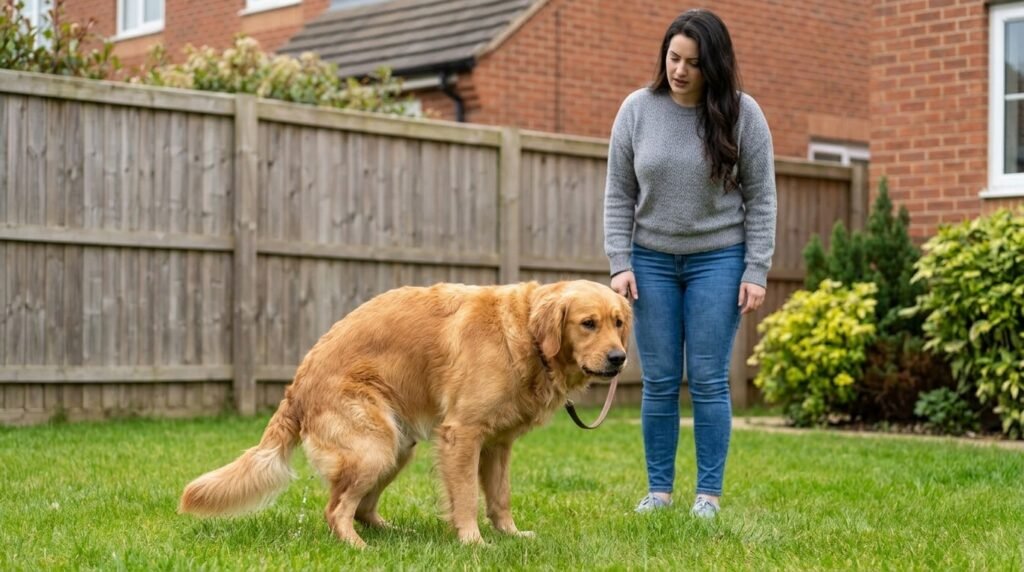
Watch for changes such as:
Frequent Urination
Your dog suddenly asks to go outside much more often or repeatedly squats without producing their normal amount.
Straining to Urinate
Your dog assumes a urinating posture but has difficulty producing urine.
Blood in the Urine
Urine may appear pink, red, brownish, or contain visible blood.
Blood can occur with infections, inflammation, stones, trauma, and other conditions, so it should not be ignored.
Accidents in the House
A previously house-trained dog that suddenly begins urinating indoors may have a medical issue rather than a training problem.
Urine Leakage
Wet bedding or urine dripping without intentional urination may indicate incontinence or another urinary disorder.
Increased Thirst
Drinking considerably more water than normal can accompany some kidney, metabolic, or hormonal conditions. It is particularly important when increased drinking occurs together with increased urination.
Pain or Vocalization
Whining, crying, restlessness, or repeatedly changing position while trying to urinate can indicate discomfort.
Excessive Licking
Repeated licking around the genital or urinary opening may occur with irritation or urinary disease.
Changes in Urine
Pay attention to unusual:
- Color
- Cloudiness
- Odor
- Amount
- Frequency
No single symptom can tell you exactly what condition your dog has. The pattern is important.
When Urinary Symptoms Could Be an Emergency
Some urinary changes should not wait for a routine appointment.
Seek emergency veterinary care if your dog:
- Cannot urinate
- Repeatedly strains but produces no urine
- Produces only a few drops despite repeated attempts
- Has severe abdominal pain
- Becomes extremely weak or depressed
- Vomits while experiencing severe urinary difficulty
- Has a known urinary obstruction
- Develops severe symptoms after trauma
Inability to urinate is the biggest red flag.
PDSA specifically advises emergency veterinary care when a dog cannot pee, while MSD describes urethral obstruction as an emergency because complete blockage can become life-threatening rapidly.
If your dog is still producing urine but has blood, frequent urination, pain, or accidents, contact your veterinarian promptly rather than assuming the problem will disappear.
How Veterinarians Diagnose Urinary Problems
Because different conditions can cause similar symptoms, veterinarians generally need more than a symptom description.
The evaluation may include:
Medical History
Your veterinarian may ask:
- When did the problem begin?
- How often is your dog urinating?
- Is your dog producing normal amounts?
- Is there blood?
- Is your dog drinking more?
- Is your dog taking any medications?
- Has this happened before?
Physical Examination
Your veterinarian may examine your dog’s abdomen, hydration status, genital area, and overall condition.
Urinalysis
A urine sample can provide information about:
- Urine concentration
- Blood
- Protein
- Glucose
- Crystals
- Inflammatory cells
- Other abnormalities
Urine Culture
When infection is suspected, a culture can help identify bacteria and determine which antibiotics may be appropriate.
Blood Tests
Bloodwork may be recommended when kidney disease, dehydration, metabolic disease, or systemic illness is suspected.
X-Rays or Ultrasound
Imaging may help identify:
- Stones
- Obstructions
- Masses
- Anatomical abnormalities
- Changes involving the kidneys or bladder
PetMD similarly notes that urinary problems may require urinalysis, bloodwork, urine culture, X-rays, ultrasound, or more advanced testing depending on the suspected cause.

Treatment and Management
There is no single treatment for all dog urinary problems.
Treatment depends entirely on the underlying condition.
Depending on the diagnosis, treatment may involve:
- Prescription medication
- Antibiotics when a bacterial infection is confirmed or appropriately suspected
- Pain management
- Increased fluid support
- Therapeutic nutrition
- Treatment of an underlying disease
- Removal of urinary stones
- Catheterization for an obstruction
- Surgery in selected cases
- Long-term management for chronic conditions
For example, a bacterial urinary infection and a urinary obstruction may produce overlapping symptoms but require completely different treatment.
This is why owners should not assume that every urinary problem is a UTI or attempt to treat it with leftover medication.
How to Support Your Dog’s Urinary Health
You cannot prevent every urinary condition, but good everyday care can support overall urinary health.
Keep Fresh Water Available
Your dog should have regular access to clean drinking water.
Monitor changes in drinking behavior as well. A sudden increase or decrease can be useful information for your veterinarian.
Maintain Regular Bathroom Opportunities
Avoid unnecessarily long periods without access to an appropriate place to urinate.
A predictable daily routine can also make it easier to notice changes in your dog’s bathroom habits.
Monitor Your Dog’s Normal Pattern
Knowing your dog’s normal frequency, volume, and routine makes abnormalities much easier to spot.
Maintain a Healthy Weight
Healthy body condition supports overall health and may be particularly important for dogs with chronic conditions.
Follow Veterinary Nutrition Advice
Dogs with recurrent stones, kidney disease, or other urinary conditions may require a specific therapeutic diet.
Do not change to a urinary diet simply because your dog has urinary symptoms. The appropriate diet depends on the diagnosis.
Take Recurrent Problems Seriously
Repeated urinary symptoms deserve investigation.
Cornell notes that recurrent UTIs can occur, particularly in dogs with underlying health problems.
If your dog repeatedly seems to have a UTI, the goal should be to determine why the problem keeps returning, not simply treat each episode independently.
When to Call Your Veterinarian
Contact your veterinarian when you notice a persistent or unusual change in urination, including:
- Frequent urination
- Straining
- Blood in urine
- New accidents
- Urine leakage
- Excessive licking
- Increased thirst
- Changes in urine appearance
- Pain during urination
- Repeated urinary problems
A previously house-trained dog that suddenly begins having urinary accidents deserves particular attention.
The American Kennel Club’s guidance on urinary changes in dogs also emphasizes that changes in urinary patterns can have many different causes and should be evaluated rather than automatically attributed to behavior.
If your dog cannot urinate, however, treat that differently: seek emergency veterinary care immediately.
Frequently Asked Questions
What are the most common urinary problems in dogs?
Common problems include urinary tract infections, bladder inflammation, urinary stones, urinary incontinence, kidney disease, kidney infections, urethral obstruction, neurological urination disorders, and prostate-related problems.
How do I know if my dog has a UTI?
Possible signs include frequent urination, small amounts of urine, straining, discomfort, blood in the urine, accidents, and licking around the urinary opening. However, these symptoms can also occur with stones, inflammation, obstruction, and other conditions, so a veterinarian may need to test the urine to determine the cause.
Is blood in my dog’s urine an emergency?
Blood in urine should be taken seriously and discussed with a veterinarian promptly. It can occur with infections, stones, inflammation, trauma, and other conditions. If blood is accompanied by an inability to urinate, severe pain, weakness, or repeated unsuccessful attempts to urinate, seek emergency care.
Why is my dog peeing so often?
Frequent urination can have several causes, including UTIs, bladder inflammation, stones, kidney disease, hormonal or metabolic disorders, and other urinary conditions. The amount of urine matters too: frequent small amounts are different from producing unusually large volumes.
What should I do if my dog cannot pee?
Treat it as a veterinary emergency. Do not wait for the problem to resolve on its own. A complete urinary obstruction can rapidly become life-threatening and requires immediate veterinary treatment.
Conclusion
Dog urinary problems can have many different causes, and the symptoms often overlap. Frequent urination, straining, blood, accidents, leakage, increased thirst, and changes in urine should all be taken seriously.
The most important thing is not to assume that every urinary change is a UTI.
A veterinarian may need urine testing, bloodwork, imaging, or other diagnostics to identify the underlying problem and choose the right treatment.
Pay attention to your dog’s normal bathroom habits, monitor meaningful changes, and contact your veterinarian when something seems unusual.
And remember the most important emergency warning: if your dog repeatedly tries to urinate but cannot produce urine, seek emergency veterinary care immediately.