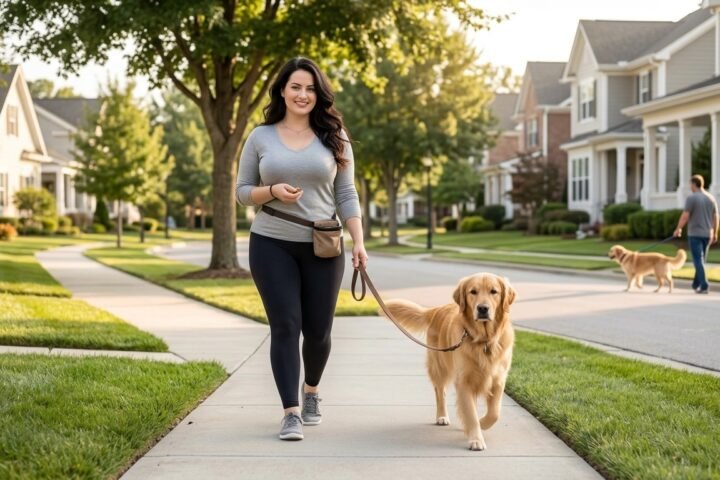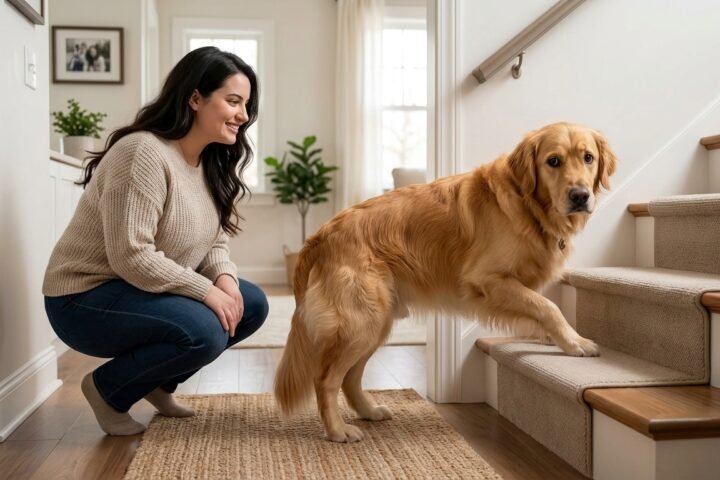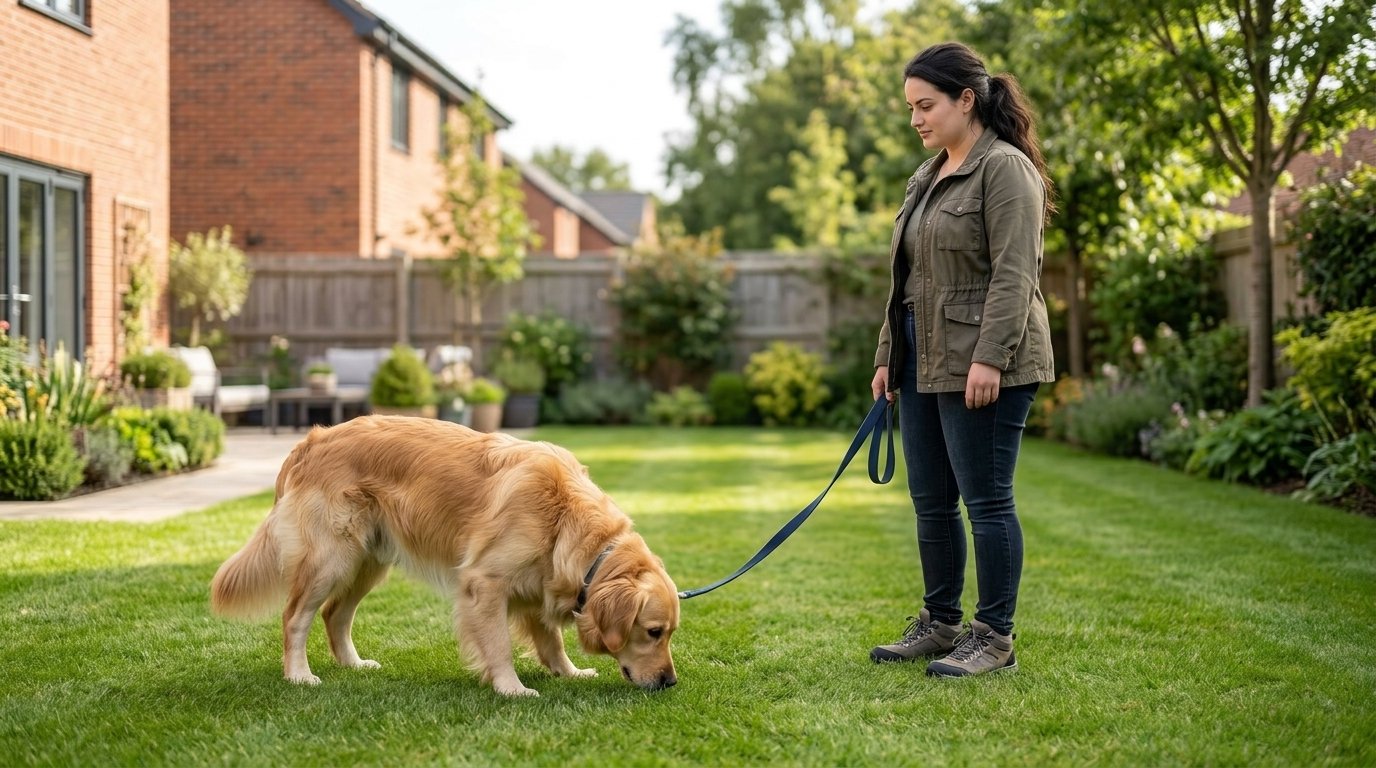
If your dog won’t poop outside but seems perfectly willing to go once you are back indoors, the problem is not necessarily stubbornness. Some dogs are uncomfortable with the outdoor environment, become too distracted to eliminate, prefer a particular surface, or have never fully learned that outside is the expected place to poop.
The frustrating part is that every unsuccessful potty trip can reinforce the wrong routine: your dog waits outside, comes indoors, relaxes, and then eliminates on the floor.
Fortunately, this pattern can often be changed with consistent management and reward-based training. The key is figuring out why your dog is holding it outside and preventing indoor accidents while you build a stronger outdoor potty habit.
Table of Contents
Why Won’t My Dog Poop Outside?
There is no single reason a dog refuses to poop outdoors.
Some dogs simply need more complete house-training. Others are uncomfortable with the surface, weather, leash, noise, other dogs, or activity around their potty area.
Possible explanations include:
- fear or anxiety outdoors
- too many distractions
- preference for carpet, pads, concrete, or another familiar surface
- discomfort with grass, wet ground, snow, or rain
- insufficient time outside
- being rushed by the owner
- discomfort pooping while on a short leash
- an inconsistent bathroom schedule
- a history of punishment around accidents
- learning that pooping immediately ends outdoor time
- a medical problem that makes defecation uncomfortable
A dog may also have more than one reason.
For example, a puppy raised primarily on indoor pads might prefer a soft absorbent surface while simultaneously finding a busy apartment courtyard overwhelming.
The first step is therefore observation rather than assuming your dog is being difficult.
Look for a pattern
For several days, note:
- when your dog eats
- when they normally poop
- which outdoor locations you use
- how long you stay outside
- weather conditions
- whether other dogs or people are nearby
- what surface your dog chooses indoors
- what your dog does immediately before an accident
The pattern can reveal useful clues.
A dog that happily poops outside early in the morning but refuses during rush hour may be struggling with environmental activity. A dog that repeatedly chooses carpet indoors but avoids grass may have developed a surface preference.
If your dog appears generally worried outdoors, PawMindTips’ guide to helping a nervous dog build confidence can help you recognize the broader fear signals that may be affecting potty trips.
Fear and Distractions Can Make Pooping Difficult
Defecating requires a dog to stop exploring and assume a relatively vulnerable posture. A dog who is constantly monitoring the environment may simply not feel relaxed enough to do that.
VCA Animal Hospitals’ guidance on house soiling notes that a dog frightened by something outdoors may become too distracted to eliminate.
Common outdoor triggers include:
- traffic
- construction sounds
- barking dogs
- unfamiliar people
- children playing
- garbage trucks
- thunderstorms
- wind
- unfamiliar yards
- crowded sidewalks
- nighttime sounds
Watch your dog’s body language.
A dog that is comfortable enough to poop will often sniff, explore, circle, and eventually settle on a spot. A worried dog may freeze, scan the environment, pull toward home, tuck the tail, repeatedly look behind them, or refuse food.
Make the potty location easier
Instead of insisting that your dog use the busiest part of the yard or sidewalk, look for a quieter option.
Keep the first goal simple: your dog should feel safe enough to sniff and explore.
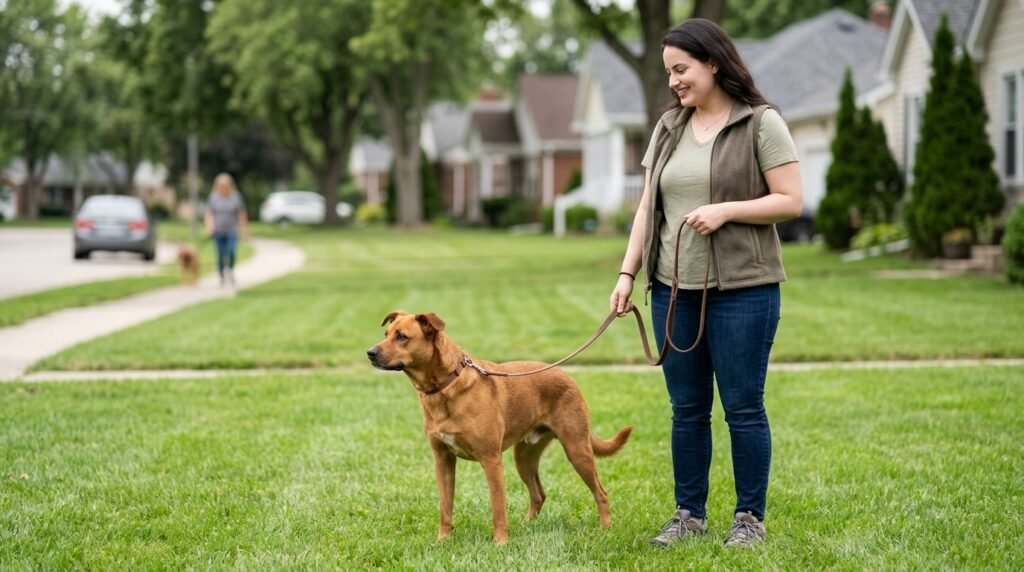
For a frightened dog, forcing a long outdoor session is not necessarily better. Gradual, calm exposure at a comfortable level can be more productive than keeping the dog in an overwhelming environment until they finally eliminate.
If one location consistently causes fear, try another appropriate potty area rather than turning every bathroom trip into a battle.
Surface Preference: Why Grass May Feel Wrong
Dogs can develop surprisingly specific preferences about where they eliminate.
A puppy that learned to poop on pads may look for a soft, absorbent surface. A dog raised with access to concrete may be reluctant to use grass. Another dog might prefer mulch, gravel, dirt, or one particular corner of the yard.
This helps explain a common scenario:
The dog won’t poop outside on grass but immediately uses the carpet indoors.
The carpet may simply feel more like the surface the dog has learned to associate with elimination.
Dogs can also become accustomed to eliminating in particular locations. The American Kennel Club’s guidance on potty training recommends gradually transitioning dogs from pads toward the desired outdoor location rather than expecting every puppy to immediately understand the change.
Help your dog transition to a new surface
Start with the outdoor surface your dog tolerates best.
If your dog reliably uses concrete but you eventually want them to use grass, you do not necessarily need to make the entire transition in one session.
Reward successful outdoor elimination first. Once the outdoor habit is strong, gradually encourage elimination closer to or on the preferred final surface.
For dogs accustomed to potty pads, a gradual transition toward the door and then outdoors may also be easier than suddenly removing the only toilet surface they understand.
Don’t keep changing the potty spot
During retraining, consistency helps.
Choose one quiet, practical outdoor bathroom area and take your dog there repeatedly. Familiar smells and surroundings can help clarify what that location is for.
Once your dog reliably eliminates there, you can practice in other locations. AKC notes that dogs benefit from practicing potty cues in multiple environments so the behavior becomes more generalized.
Why Your Dog Poops Inside Right After Being Outside
Few potty-training problems are more frustrating than spending 15 minutes outside, coming back in, and discovering poop on the floor two minutes later.
But the sequence gives you valuable information.
Outside, your dog may have been:
- distracted
- nervous
- searching for the perfect spot
- uncomfortable with the surface
- too interested in sniffing or playing
- waiting to return to a familiar indoor toilet area
Once indoors, the distractions disappear. Your dog relaxes, recognizes a familiar surface, and finally eliminates.
This can accidentally create a repeating habit:
Go outside → hold poop → come inside → eliminate → experience relief.
That relief makes the indoor location valuable to the dog even though you never intentionally rewarded it.
The solution is not to punish the indoor accident. Instead, change what happens between the unsuccessful outdoor trip and the next opportunity to poop.
Don’t give immediate unsupervised freedom
If your dog comes indoors without pooping when you reasonably expect they need to go, don’t immediately let them wander through the house.
Keep them calmly supervised.
Depending on your dog’s existing training, that could mean:
- keeping them with you on a leash
- using a puppy-safe gated area
- briefly returning them to a crate they are already comfortable using
- keeping them in the same room with you
Then take them outside again after a short interval.
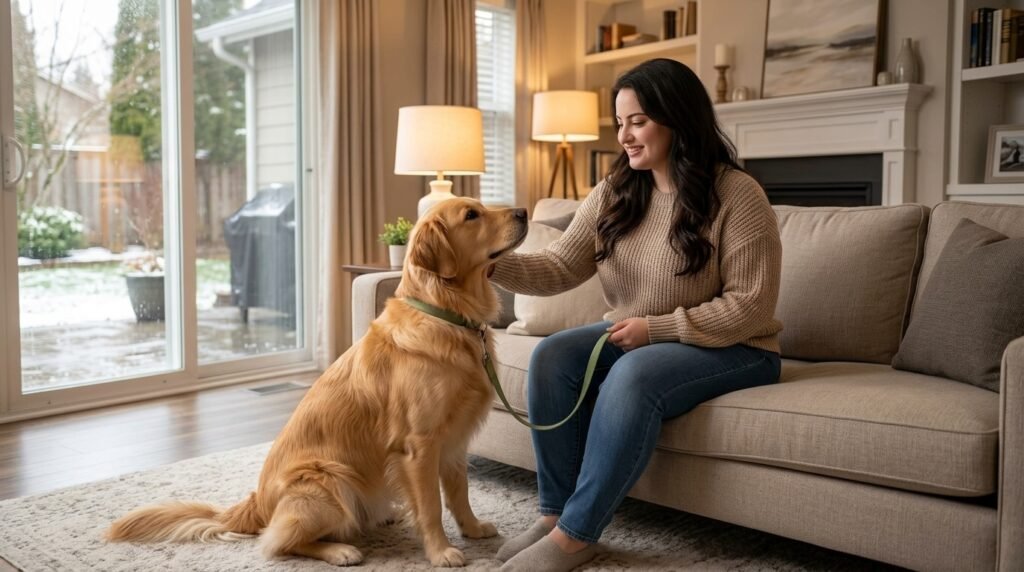
VCA’s house-training guidance similarly recommends close supervision when a dog returns indoors without eliminating so they do not immediately get an opportunity to soil the house.
This is one of the most useful changes you can make when your dog repeatedly poops indoors immediately after a potty trip.
How to Train a Dog to Poop Outside
Once medical problems have been reasonably ruled out and you understand the likely trigger, build a routine that makes outdoor success easy and worthwhile.
1. Learn your dog’s natural schedule
Dogs are easier to train when you work with their normal elimination pattern instead of randomly waiting outside.
Pay particular attention after:
- waking in the morning
- meals
- naps
- exercise
- active play
- longer periods without a bowel movement
Keep meals reasonably consistent if appropriate for your dog. A predictable feeding routine often makes bowel movements easier to anticipate.
2. Go to the same potty area
Take your dog directly to the chosen bathroom spot.
At first, potty trips should have a clear purpose. You do not need to march your dog around endlessly, but allow enough relaxed movement and sniffing for them to prepare to eliminate.
Some dogs need to walk a little before they can poop.
Others need to circle and sniff.
Give your dog sufficient leash freedom to perform those normal behaviors safely.
3. Keep distractions low
If your dog becomes fascinated by everything outdoors, start training in the least exciting appropriate location you can find.
Avoid turning the potty trip into immediate playtime.
Give your dog time to sniff, but keep the environment calm enough that elimination remains possible.
For easily frightened dogs, distance from triggers can matter even more than obedience.
4. Introduce a potty cue
You can eventually teach a phrase such as:
- “Go potty.”
- “Do your business.”
- “Go poop.”
But don’t repeat the cue continuously while your dog wanders around.
Initially, say it when your dog is clearly preparing to eliminate. With repetition, the phrase can become associated with the behavior.
AKC’s guide to teaching a potty cue recommends pairing the cue with the natural behavior first and reinforcing successful elimination.
5. Reward immediately after your dog finishes
Timing matters.
Have a high-value reward ready before you leave the house.
When your dog finishes pooping outdoors, calmly praise them and deliver the reward promptly.
You want the sequence to become:
Outdoor spot → poop → immediate reward.
Don’t wait until you are back in the kitchen to give the treat. By then, the connection between pooping and the reward may be much less clear.
6. Don’t always end the fun immediately
Imagine that your dog loves being outside.
Every time they poop, you instantly say, “Good dog,” turn around, and take them home.
From the dog’s perspective:
Pooping makes the fun outdoor time end.
Some dogs may consequently delay elimination.
AKC specifically cautions against always rushing inside immediately after successful elimination because the dog can learn that pottying ends access to enjoyable outdoor activity.
When practical, occasionally reward your dog and then allow a few minutes of sniffing or a short walk afterward.
Now pooping doesn’t predict the immediate end of everything enjoyable.
What to Do When Your Dog Doesn’t Poop During a Potty Trip
This is where consistency becomes especially important.
Suppose you know your dog probably needs to poop. You take them to their usual location, allow reasonable time, and nothing happens.
Don’t stay outside indefinitely while becoming increasingly frustrated.
Use a simple reset routine.
Step 1: Give your dog a calm opportunity
Take them to the usual potty location and allow enough time to sniff, circle, and settle.
Avoid staring at them, repeatedly commanding them to poop, or showing frustration.
Step 2: Return indoors calmly
If nothing happens, simply go back inside.
There should be no punishment and no angry reaction.
Step 3: Supervise closely
This is the critical step.
Do not allow your dog to disappear behind the sofa or wander into the bedroom.
Keep them near you so you can see signs such as:
- intense floor sniffing
- circling
- suddenly leaving the room
- pacing
- searching for a private area
- assuming a pre-defecation posture
Step 4: Try outside again
After a short supervised interval—or immediately if you notice pre-potty behavior—take your dog back to the designated location.
Repeat as necessary.
The goal is to prevent the indoor accident while giving your dog repeated opportunities to make the correct choice.
Step 5: Make successful outdoor poop highly valuable
The moment your dog finally succeeds, reward them.
For a dog with a strong history of pooping indoors, use something they genuinely value.
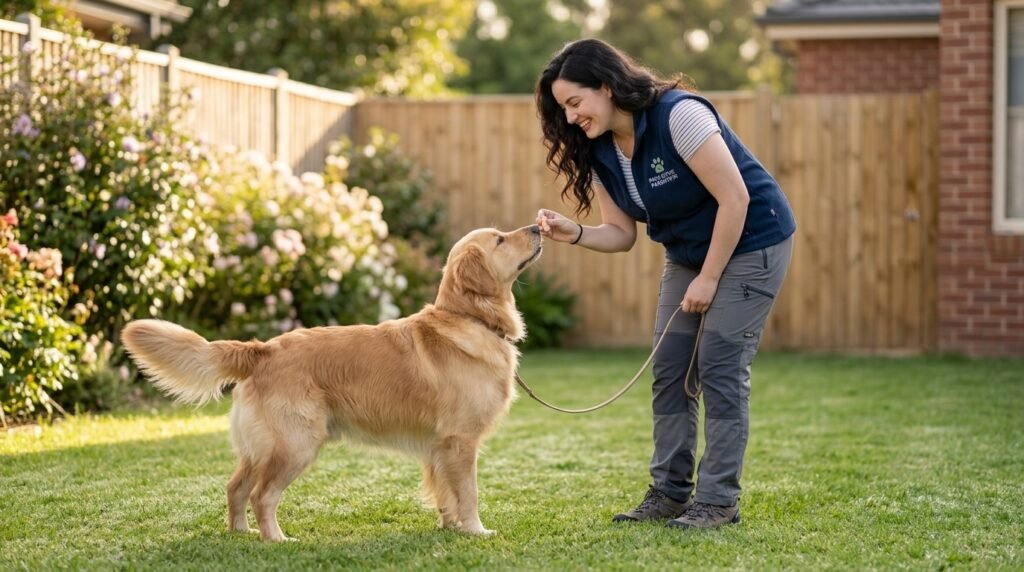
This may be:
- a favorite treat
- praise
- a short sniffing walk
- a favorite game
Over repeated successes, the outdoor behavior becomes more worthwhile and predictable.
Common Mistakes That Can Make the Problem Worse
Even well-intentioned responses can accidentally make outdoor pooping harder.
Punishing indoor accidents
Scolding after discovering poop does not clearly teach your dog where they should eliminate.
Worse, punishment can teach some dogs that pooping in front of people is unsafe.
Then the dog may hold it while you stand nearby outdoors and sneak away to poop indoors when you aren’t watching.
The ASPCA’s house-training guidance advises against scolding dogs for previously discovered accidents and emphasizes supervision and rewarding appropriate elimination instead.
Clean accidents thoroughly and focus your training energy on preventing the next one.
Assuming the dog is stubborn
Calling the behavior stubborn can cause owners to focus on correction instead of the reason.
Ask a more useful question:
What is making outdoor elimination harder than indoor elimination for this dog?
The answer might be fear, distraction, surface preference, incomplete training, physical discomfort, or simply an established routine.
Staying outside until everyone is frustrated
Longer is not always better.
If your dog is increasingly stressed, the session may become less productive.
Use manageable potty opportunities followed by close indoor supervision and another attempt.
Giving too much freedom after a failed trip
If your dog has repeatedly demonstrated that they poop indoors immediately after returning from outside, unrestricted indoor freedom sets them up to repeat the mistake.
Supervision temporarily breaks that cycle.
Using a potty spot that’s too stimulating
A dog that needs to monitor passing dogs, vehicles, children, or other activity may struggle to relax.
Try a quieter area whenever possible.
Cleaning accidents incompletely
Dogs have a much stronger sense of smell than people.
A location that seems clean to you may still carry elimination odors. Clean soiled areas thoroughly with an appropriate pet-safe enzymatic cleaner according to its directions.
VCA notes that dogs may be attracted back to previously soiled locations and recommends enzymatic products to help break down residual urine or fecal material.
Expecting instant results
Surface preferences and established habits can take time to change.
Your dog may succeed for several days and then have another accident.
Treat setbacks as information. Ask what changed: schedule, weather, supervision, food, location, household activity, or your dog’s comfort level.
When a Dog Who Won’t Poop Outside Needs a Vet
A dog won’t poop outside problem often has a behavioral or training component, but changes in elimination should not automatically be treated as training issues.
This is especially important when a previously reliable adult dog suddenly changes behavior.
Contact your veterinarian if your dog:
- repeatedly strains without producing stool
- appears painful while attempting to poop
- passes unusually hard or dry stool
- has blood in the stool
- develops persistent diarrhea
- vomits
- loses appetite
- seems unusually tired or weak
- has abdominal discomfort or swelling
- shows a sudden unexplained change in bowel habits
- has difficulty walking, squatting, or maintaining a normal elimination posture
Merck Veterinary Manual’s information on constipation in dogs explains that constipation can involve difficult or infrequent passage of dry, hard stool and that pain, environmental stress, obstruction, and other medical problems can contribute.
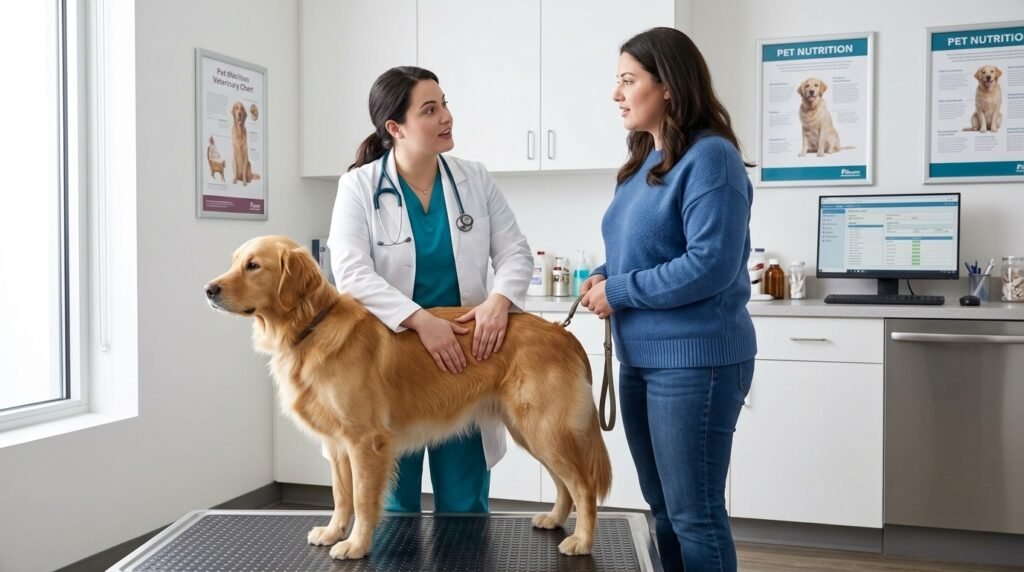
Do not assume that a dog straining repeatedly simply needs more potty training.
Likewise, if your fully house-trained dog suddenly begins eliminating indoors, a veterinary evaluation can help determine whether pain, digestive disease, mobility problems, age-related changes, or another physical issue may be contributing.
FAQs
Why won’t my dog poop outside but poops as soon as we come inside?
Your dog may feel distracted, anxious, rushed, or uncomfortable outdoors, or they may prefer an indoor surface such as carpet. Once indoors, they relax and eliminate. After an unsuccessful outdoor trip, supervise closely rather than giving immediate freedom, then try the designated outdoor potty spot again.
Why is my dog suddenly scared to poop outside?
Look for something that changed around the time the problem began, such as construction, another dog, fireworks, traffic, bad weather, a frightening encounter, or pain. Reduce exposure to obvious triggers and rebuild comfort gradually. A sudden unexplained behavior change, especially with physical symptoms, warrants veterinary advice.
What if my dog won’t poop outside on grass?
Your dog may have a surface preference based on previous experience. Start by rewarding successful elimination on an outdoor surface they accept, then gradually transition toward grass. Dogs previously trained on pads or concrete may need time to learn that another surface is also an appropriate bathroom area.
Should I stay outside until my dog poops?
Not necessarily. A very long, frustrating potty trip can create more pressure. Give your dog a reasonable calm opportunity. If they do not go, return indoors, supervise closely, and try again after a short interval or when you notice signs that they need to eliminate.
Conclusion
When your dog won’t poop outside, focus less on making them stay outdoors longer and more on understanding what prevents them from eliminating there.
Fear, distractions, surface preferences, leash discomfort, incomplete house-training, and accidentally learned routines can all contribute. Use a quiet designated potty area, learn your dog’s normal schedule, reward outdoor success immediately, and closely supervise after unsuccessful potty trips so the familiar indoor accident cannot keep repeating.
Avoid punishment. It does not teach your dog where to poop and can make elimination around you more stressful.
Most importantly, pay attention to sudden changes or signs of physical difficulty. Training can improve a learned potty habit, but straining, pain, constipation, diarrhea, or a sudden loss of previously reliable house-training deserves veterinary attention.