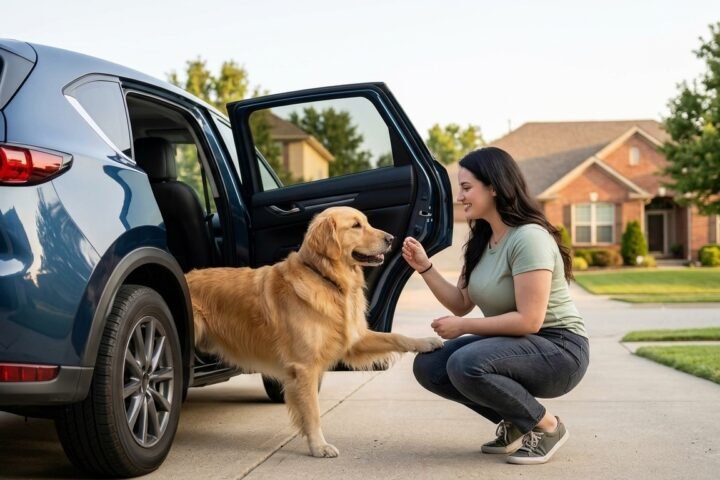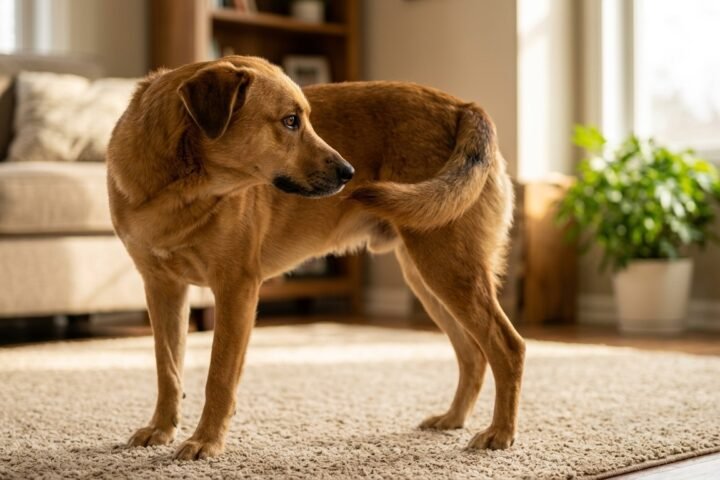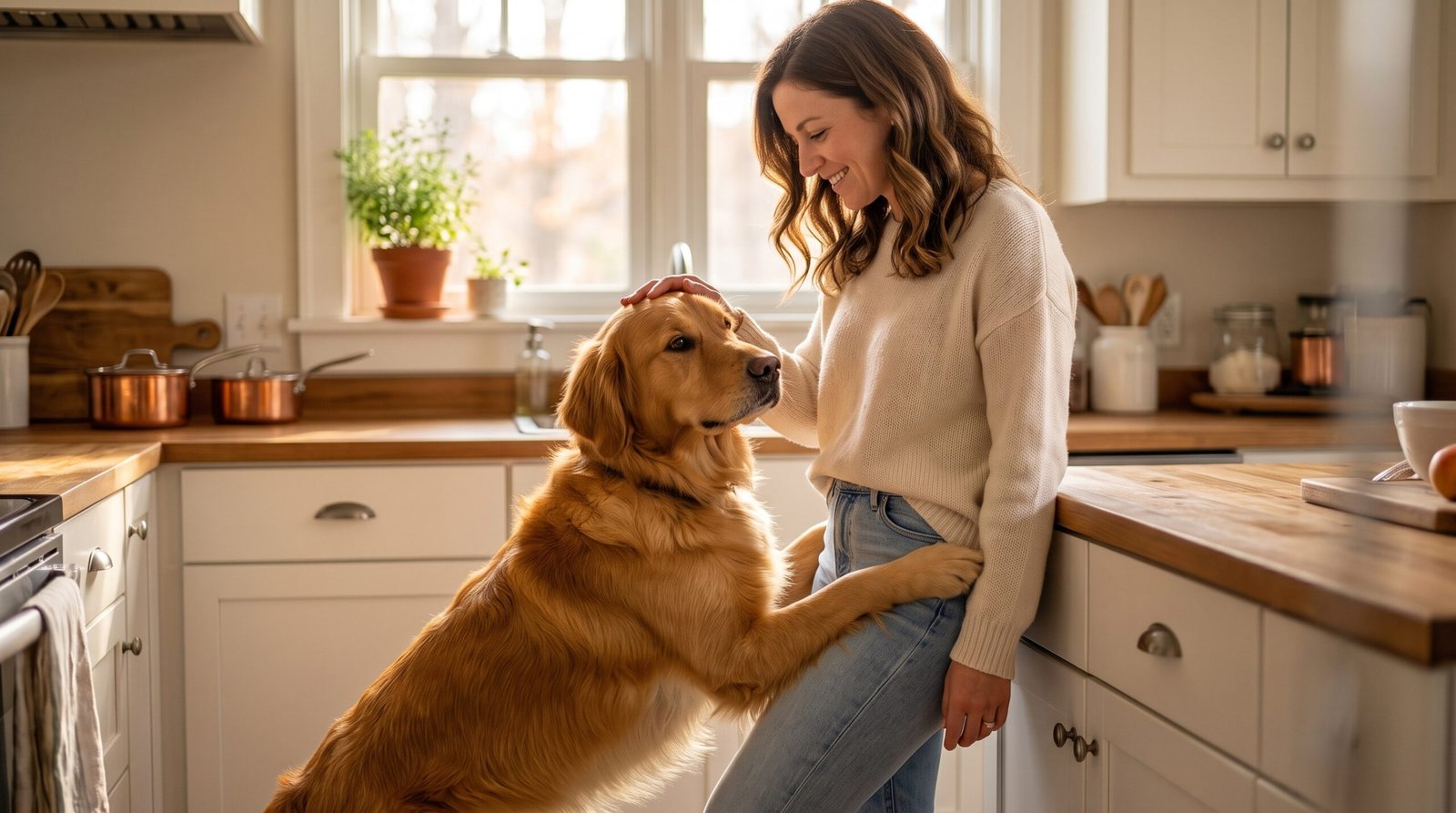
Are you your dog’s favorite person? Seeking your company, checking in during a walk, or inviting you to play can suggest that your dog enjoys interacting with you. However, no single behavior proves that you are their favorite, and dogs can form close relationships with several people.
These six behaviors are best understood in context. Consider what happened beforehand, whether your dog appears comfortable, and whether they can choose to move away. The goal is to understand your dog rather than score the strength of your bond.
Table of Contents
Why Dogs Have a Behavior Language of Their Own
Dogs communicate through posture, movement, facial expressions, and sounds. Individual preferences and previous experiences influence how they interact with people.
Researchers have found evidence of an owner-related “secure base” effect: in one experiment, dogs persisted longer at a task when their owner was present. That finding supports the importance of attachment, but it does not turn leaning, yawning, or toy-carrying into a test for a favorite person. Read the original secure-base study.

6 Behaviors to Understand in Context
1. Leaning Against You
Some dogs lean against a person while resting or seeking attention. Others seek close contact in situations they find uncomfortable. Leaning alone cannot tell you which explanation applies.
Notice the setting and your dog’s overall behavior. If they appear comfortable and welcome touch, offer gentle contact. If they seem worried, reduce the pressure around them.
You can also set a kind boundary. If you are cooking or need space, calmly guide your dog to a comfortable nearby spot. You do not have to accept every request for contact to maintain a good relationship.
2. The Yawn
Yawning can occur when a dog is tired or uncomfortable, and some dogs also yawn after seeing a person yawn. It is not a reliable measure of affection.
A 2013 study of contagious yawning found a stronger response to familiar people under its test conditions. However, the wider research has produced mixed findings, and this does not prove that a dog is identifying a favorite person.
If yawning happens during tense handling or an unfamiliar interaction, pause and look for other signs of a stressed dog. Avoid assuming the yawn is deliberate reassurance or an apology.
3. Checking In With You
AA dog may glance toward you during a walk or activity to monitor where you are, anticipate a cue, or seek information. The meaning depends on the situation and the dog’s learning history.
Looking back is not automatically evidence of “social referencing,” which involves using another individual’s response to help interpret a situation. Nor does the number of glances measure the strength of your bond.
You can acknowledge a voluntary check-in with praise or a reward. Continue using suitable leash management and safe surroundings rather than relying on eye contact to prevent your dog from running off.

4. Rolling Onto the Back
Rolling onto the back can occur during rest, play, or social interactions. It is not always an invitation for a belly rub.
A loose posture may accompany comfort, while a tense body or tucked tail can suggest unease. Consider the whole interaction before reaching toward the dog. The AKC’s body-language guide explains why individual signals need context.
If your dog welcomes touch, keep it gentle and pause periodically. Stop if they turn away, stiffen, or try to leave.
5. Bringing You a Toy or Object
Bringing an object may invite play or attention, or reflect a behavior that has been rewarded before. It does not establish that the dog is making a symbolic gift to a favorite person.
With a safe toy, you can respond with a short game if both of you want to play. If the item is unsafe, avoid chasing or grabbing; use a practiced trade when it is safe to do so. Our guide to teaching a dog to drop it explains how to build that skill.
Contact your veterinarian promptly if your dog swallows a sock, sharp object, or another potentially dangerous item.
6. Approaching After a Tense Moment
A dog may approach after conflict for several reasons, including seeking contact, responding to your movements, or showing appeasement. This does not establish that the dog is forgiving you or deliberately repairing the relationship.
End the confrontation, give the dog space, and return to calm interaction. Prevent a repeat of the situation and teach an alternative behavior using rewards. The American Veterinary Society of Animal Behavior recommends reward-based training.
For more on the distinction between human interpretations and canine behavior, read how dogs appear to apologize to humans.
What You Can Do Today
If you want to strengthen these behaviors rather than accidentally discourage them, a few small habits go a long way:
- Rather than testing whether you are your dog’s favorite person, notice which activities they choose and enjoy sharing with you.
- Offer opportunities for play, rest, and gentle contact without forcing participation.
- Reward useful behaviors and teach clear alternatives to unwanted actions.
- Allow your dog to move away when they want a break.
What to Avoid
- Using a checklist of behaviors to decide whether your dog loves you.
- Treating every yawn, tail wag, or belly-up posture as happiness.
- Forcing affection or escalating a confrontation.
- Assuming that calmly redirecting your dog will damage the relationship.
How to Help Long-Term
Make time for activities your dog enjoys and keep interactions predictable. A workable daily dog routine can help you organize walks, rest, meals, and individual attention.
Let preferences guide you: one dog may enjoy gentle contact, while another prefers a shared walk or a game. A close relationship does not require constant physical affection.
If you wonder whether you are your dog’s favorite person, pay attention during ordinary moments rather than creating a test. Does your dog choose to rest nearby, approach with a toy, or join you for an activity? Notice what happens across different situations, without calling them repeatedly or offering food to influence their choice. These observations can help you understand their preferences, but they cannot establish a ranking of the people in your household.
Being your dog’s favorite person should not become a competition between family members. Make room for different shared activities: one person might handle relaxed walks, while another enjoys short training games. Let your dog accept or decline contact, and avoid forcing cuddles to strengthen the bond. A useful goal is for your dog to feel comfortable with everyone who provides care, even when their style of interaction differs from person to person.

When to See a Vet or Professional
These behaviors are not diagnostic on their own. Seek advice if you notice:
- Sudden, dramatic behavior changes — a dog who stops leaning, checking in, or approaching you at all
- Belly reveals that look tense or fearful rather than relaxed (flattened body, tucked tail, avoided eye contact)
- Excessive yawning combined with drooling, lip-licking, pacing, or other signs of chronic stress
- Clinginess that seems driven by panic rather than affection, especially around separation
Start with your veterinarian for a sudden or concerning behavior change. They can assess possible medical contributors and advise whether a veterinary behaviorist or reward-based behavior professional would be helpful.

Frequently Asked Questions
How do I know if I’m my dog’s favorite person?
There is no simple test to confirm that you are your dog’s favorite person. Voluntarily spending time with you and appearing comfortable during shared activities can suggest a positive relationship, but these observations cannot reliably rank you against other people.
Can a dog have more than one favorite person?
Yes. Dogs are capable of forming strong attachments to multiple people in a household, though the intensity and specific behaviors shown toward each person can vary. A dog might lean on one person more but bring toys to another, depending on the nature of each relationship.
Why does my dog yawn when I’m upset with him?
A yawn during a tense interaction may accompany discomfort, but yawning can have other explanations. Pause the interaction and consider the rest of your dog’s behavior rather than interpreting the yawn as deliberate reassurance.
Is it bad if my dog doesn’t do these behaviors?
Not necessarily. Some dogs are naturally less physically demonstrative, and attachment can look different depending on breed, age, and past experience. What matters more is whether your dog seems generally comfortable and secure around you. If you notice a sudden absence of previously normal bonding behaviors, that’s worth mentioning to your vet.
Conclusion
Being your dog’s favorite person is not something a six-behavior checklist can confirm. What you can do is notice their preferences, respond thoughtfully, and make everyday interactions comfortable.
Trust is supported by consistent care and respect for the dog’s choices—not by requiring particular displays of affection.