If your dog starts scratching, licking their paws, or developing red skin after spending time outdoors, you may wonder whether grass allergies in dogs are responsible. The answer can be yes—but there is an important distinction. Dogs may react to grass pollen and other environmental allergens around grassy areas, and symptoms alone cannot prove that grass is the only trigger.
Environmental allergies commonly affect a dog’s skin, paws, ears, and sometimes eyes or respiratory system. Grass pollen can be one of several allergens involved, particularly during periods when pollen levels rise.
In this guide, you’ll learn the most common signs of grass allergies in dogs, what causes them, how veterinarians diagnose allergic skin disease, which treatments may be considered, and practical ways to reduce exposure at home.
Table of Contents
Can Dogs Really Be Allergic to Grass?
Yes, dogs can develop allergic reactions to environmental allergens associated with grass, including grass pollen.
However, saying that a dog is “allergic to grass” can sometimes oversimplify what is happening. Dogs with environmental allergies may react to multiple substances, including grass pollen, weed pollen, tree pollen, mold spores, dust mites, or other environmental allergens.
A dog also does not necessarily need to lie directly in grass to experience symptoms. Pollen can become airborne and can collect on your dog’s coat, paws, legs, and belly after outdoor activity. Your dog may then continue encountering those allergens while grooming.
This is one reason grass allergies in dogs can be difficult for owners to identify.
Grass pollen vs. the grass itself
There is an important difference between:
- an allergy involving grass pollen
- irritation caused by direct contact with a plant or lawn product
- another environmental allergy that happens to flare while your dog is outside
For example, if your dog becomes itchy after a walk, grass may be involved—but pollen from weeds or trees, fleas, mold, or another trigger may also be contributing.
That is why veterinarians generally consider the dog’s complete history, symptoms and examination rather than diagnosing a grass allergy from one symptom alone.
7 Signs of Grass Allergies in Dogs
The symptoms of grass allergies in dogs can vary from mild irritation to significant allergic skin disease. Skin-related signs are generally more noticeable than classic “hay fever” symptoms.
1. Excessive Scratching
One of the most common signs is increased itching.
Your dog may scratch their:
- paws
- face
- ears
- belly
- armpits
- groin
- legs
A dog that repeatedly scratches after outdoor activity may be reacting to an environmental allergen, although fleas, food allergies, parasites and infections can cause similar itching.
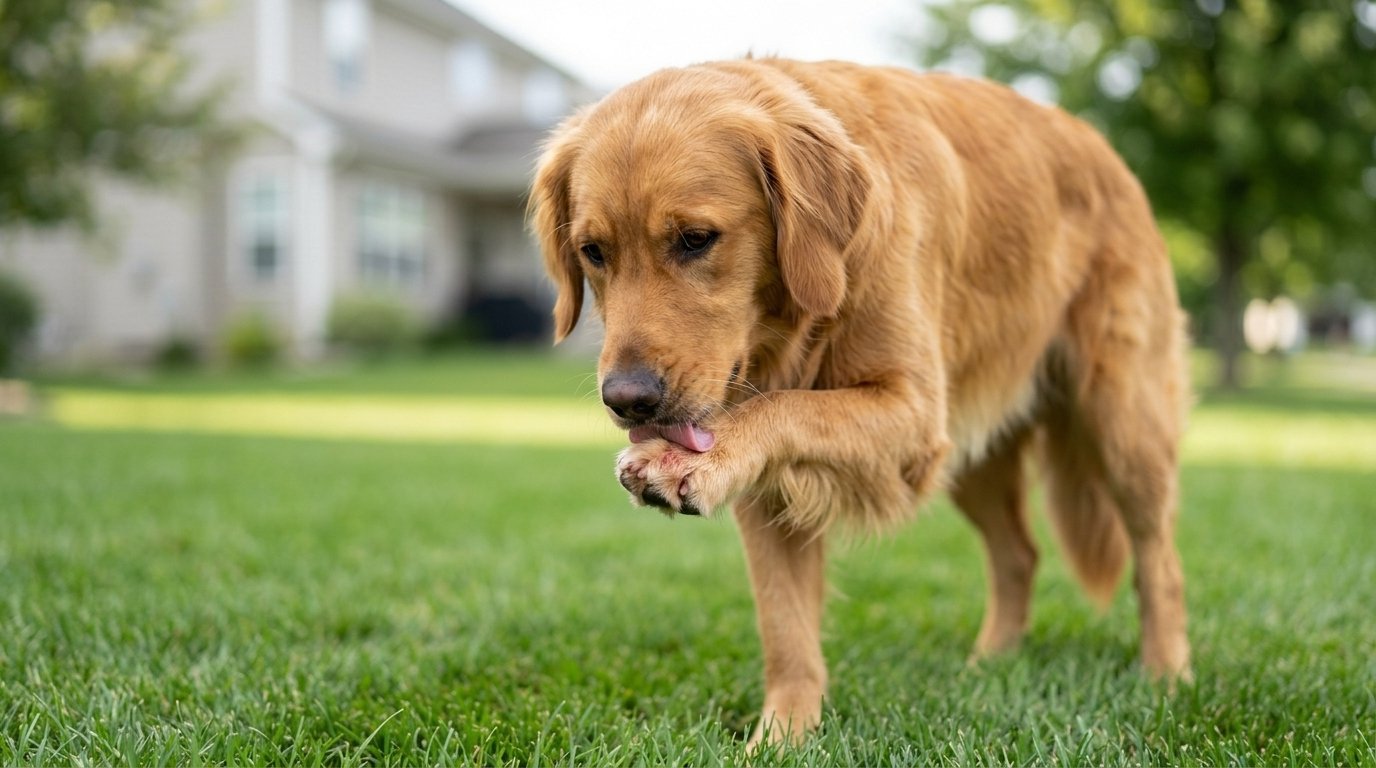
2. Constant Paw Licking or Chewing
Paw licking is another common clue.
You may notice your dog:
- licking between the toes
- chewing the tops of the paws
- licking immediately after coming indoors
- repeatedly returning to the same paw
- developing reddish-brown staining from chronic licking
The paws frequently become involved in environmental allergic disease. Cornell University notes that dogs with atopic dermatitis commonly lick and chew their feet and may develop discoloration and skin changes from chronic irritation.
3. Red or Inflamed Skin
Allergic inflammation can cause areas of the skin to become red, irritated, or inflamed.
Depending on your dog’s coat, redness may be difficult to see. You may instead notice your dog scratching or licking more than usual.

Common areas include the feet, face, ears, abdomen, armpits and other areas where allergic skin disease commonly develops.
4. Rubbing the Face
Some dogs respond to itching by rubbing their face against:
- carpets
- furniture
- bedding
- the floor
- their own legs
Repeated rubbing can further damage already irritated skin.
If your dog suddenly starts rubbing their face much more frequently, particularly during a seasonal flare, environmental allergies may be one possibility.
5. Hair Loss or Hot Spots
Persistent scratching, licking and chewing can eventually damage the skin and hair.
You may see:
- thinning hair
- bald patches
- scabs
- raw skin
- moist lesions
- hot spots
These changes are often secondary to the dog’s self-trauma rather than the original allergic reaction itself. Chronic allergic inflammation can also make bacterial or yeast infections more likely.
6. Recurrent Ear Problems
Allergic skin disease does not always look like a skin problem.
Some dogs develop recurring ear inflammation or infections. Watch for:
- frequent head shaking
- scratching at the ears
- red ear canals
- unpleasant ear odor
- increased wax
- sensitivity when the ears are touched
Recurrent ear disease can sometimes accompany environmental allergies and may be an important clue for your veterinarian.
7. Seasonal Itching or Flare-Ups
Timing can provide useful information.
If your dog’s itching consistently becomes worse during particular seasons or after spending more time outdoors, environmental allergens may be involved.
Grass and weed pollen can contribute to seasonal flare-ups, particularly during periods of increased pollen exposure. However, seasonal timing alone cannot identify the exact allergen.
Important: These seven signs are clues, not a diagnosis. Several different skin conditions can produce nearly identical symptoms.
What Causes Grass Allergies in Dogs?
Grass allergies in dogs generally involve an inappropriate immune response to an environmental substance.
Grass species produce pollen, and susceptible dogs may react when those allergens are inhaled or encounter the skin and mucous membranes.
Common environmental allergens can include:
- grass pollen
- weed pollen
- tree pollen
- mold spores
- dust mites
- other environmental particles
Veterinary sources describe this broader condition as canine atopic dermatitis or atopy. Dogs with atopic dermatitis may have a genetic predisposition, altered skin-barrier function, and immune sensitivity to environmental allergens.
Why do symptoms get worse after being outside?
Outdoor activity increases your dog’s exposure to environmental allergens.
Pollen can collect on:
- paws
- between toes
- lower legs
- belly
- facial hair
- the rest of the coat
Your dog may then lick those areas and continue exposing themselves to the allergen.
That means an outdoor exposure can sometimes lead to itching even after your dog has returned indoors.
Can any dog develop a grass allergy?
Yes.
Some breeds and individual dogs have a higher predisposition to atopic dermatitis, but environmental allergies can affect mixed-breed dogs and many different breeds. Merck Veterinary Manual lists several predisposed breeds but emphasizes that dogs of any breed can develop allergic disease.
Age can also provide a clue. Environmental allergy signs commonly begin when dogs are relatively young, although allergies can be recognized at different stages of life.
How Vets Diagnose Grass Allergies in Dogs
There is no simple home test that can tell you, “Your dog is allergic to grass.”
Diagnosis usually requires a veterinarian to consider the dog’s:
- age
- symptom history
- seasonality
- affected body areas
- flea prevention
- previous treatments
- skin and ear condition
- possible exposure to allergens
Veterinarians may also need to rule out other causes of itching.
These can include:
- fleas
- mites
- bacterial infections
- yeast infections
- food-related allergic disease
- contact irritation
- other skin disorders
AAHA’s allergic skin disease guidelines emphasize a detailed history and appropriate dermatologic evaluation. Atopy is considered a diagnosis of exclusion rather than something that can simply be confirmed by an allergy test.
Does allergy testing diagnose grass allergies?
Not by itself.
Intradermal or blood allergy testing may help identify environmental allergens that could be useful when designing allergen-specific immunotherapy. But a positive test does not automatically mean that the allergen is responsible for every symptom your dog experiences.
This distinction matters because owners can otherwise spend money on testing without understanding what the results actually mean.
Grass Allergy Treatment for Dogs
There is no single treatment that works for every dog with grass allergies in dogs.
Treatment depends on the severity of symptoms, the dog’s overall health, possible secondary infections, the seasonality of the problem, and whether other allergies are also involved.
Veterinarians may use a combination of approaches.
1. Reduce Allergen Exposure
Complete avoidance of environmental allergens can be difficult, especially when pollen is widespread.
Still, reducing exposure can help.
Simple measures include:
- wiping paws after walks
- cleaning the lower legs
- wiping the belly when needed
- bathing appropriately
- washing bedding regularly
- keeping indoor surfaces clean
These steps do not cure environmental allergies, but they can reduce the amount of allergen remaining on the dog’s body.
2. Topical Treatments
Veterinarians may recommend shampoos, wipes, mousses or other topical treatments depending on your dog’s skin condition.
Bathing can help remove allergens from the skin and coat, while some veterinary products are designed to support the skin barrier or manage secondary microbial problems.
Do not assume that more bathing is always better. Over-bathing with inappropriate products can irritate or dry the skin.
3. Medications for Itching and Inflammation
Moderate or severe allergic disease may require prescription treatment.
Depending on the dog and the clinical situation, veterinarians may consider medications that target allergic inflammation or itch.
These may include oral medications, corticosteroids in selected situations, or injectable therapies.
The specific medication and dose should come from your veterinarian because treatment needs to account for the individual dog’s age, health, other medications and possible infections.
AAHA describes allergic skin disease treatment as a multimodal process rather than a one-size-fits-all solution.
4. Allergen-Specific Immunotherapy
For some dogs with environmental allergies, a veterinarian may recommend allergen-specific immunotherapy.
The objective is different from simply controlling today’s itch. Immunotherapy is designed to gradually modify the dog’s response to selected allergens over time.

It can involve injections or oral administration depending on the treatment plan. Benefits are not immediate and may take months to develop.
5. Treat Secondary Infections
This step is easy for owners to overlook.
If your dog has repeatedly scratched or licked their skin, bacteria or yeast may contribute to worsening inflammation and itch.
A dog can therefore end up in a cycle:
allergen exposure → itching → licking/scratching → damaged skin → secondary infection → more itching
Breaking that cycle may require treatment for both the underlying allergy and the secondary infection.
How to Reduce Grass Allergy Flare-Ups at Home
If your veterinarian suspects environmental allergies, an effective home routine can make management easier.
Wipe paws after outdoor time
After walks, gently wipe your dog’s paws, including between the toes.
If your dog frequently develops irritation on the lower legs or belly, those areas may also need attention.
Use a gentle, dog-safe product recommended for your pet rather than harsh household cleaners.
Keep bedding clean
Wash your dog’s bedding regularly because environmental particles can accumulate on fabrics.
This is particularly useful during periods when outdoor allergen exposure is high.
Keep the coat clean
Regular grooming and veterinarian-approved bathing can help remove environmental allergens from the coat.
Dogs with long or dense coats may need especially careful attention to areas where pollen and debris accumulate.
Keep flea prevention consistent
Do not assume that every seasonal itch is caused by grass.
Flea allergy can cause significant itching in sensitive dogs, and a dog does not necessarily need to have an obvious flea infestation for flea allergy dermatitis to be involved.
Maintaining an appropriate flea-prevention plan is therefore an important part of investigating recurring allergic itching.
Pay attention to patterns
Keep a simple record of:
- when itching begins
- where your dog is spending time
- weather or seasonal changes
- outdoor activities
- paw licking
- ear problems
- skin changes
- response to veterinary treatment
A pattern can provide your veterinarian with useful information.
Grass Allergies vs. Other Causes of Itching
One of the biggest mistakes owners can make is assuming that every itchy dog has grass allergies in dogs.
Several conditions can look similar.
Grass or environmental allergies
These are more suspicious when itching is recurrent or seasonal and involves the paws, face, ears, belly or other typical areas.
Flea allergy
Fleas can trigger severe itching in sensitive dogs. Even when fleas are not obvious, flea allergy still needs to be considered.
Food allergy
Food-related allergic disease can produce skin itching that resembles environmental allergies. Digestive symptoms may occur in some dogs as well.
A food allergy cannot reliably be confirmed simply by changing foods randomly. Veterinary-guided elimination and challenge procedures may be needed when food allergy is suspected.
Skin infection
Bacterial or yeast infections can cause itching, redness, odor and skin changes.
They may also develop secondarily in dogs that already have allergies.

Contact irritation
A dog may also develop irritation from something that contacts the skin, such as certain products, plants or chemicals.
This is different from assuming the immune system is reacting specifically to grass pollen.
Because these conditions can overlap, persistent itching deserves a proper veterinary evaluation.
When Grass Allergy Symptoms Need Veterinary Care
Mild seasonal itching may not be an emergency, but persistent symptoms should not simply be ignored.
Arrange a veterinary examination if your dog has:
- persistent scratching
- repeated paw chewing
- recurrent ear problems
- hair loss
- hot spots
- open sores
- unpleasant skin odor
- recurring skin infections
- worsening symptoms
- itching that interferes with sleep or normal activity
Veterinary evaluation is especially important when symptoms keep returning because chronic allergic disease often requires long-term management rather than occasional treatment.
Emergency warning signs
Seek urgent veterinary care if your dog suddenly develops:
- significant facial swelling
- swelling around the throat
- difficulty breathing
- severe hives
- collapse
- extreme weakness
- repeated vomiting or diarrhea associated with a suspected allergic reaction
Severe allergic reactions can become emergencies. PetMD and veterinary references recommend immediate care when signs consistent with anaphylaxis or serious airway involvement occur.
FAQs
Can dogs be allergic to grass?
Yes. Dogs can react to grass-associated environmental allergens, particularly grass pollen. However, symptoms do not prove that grass is the only allergen involved. Dogs may react to multiple environmental triggers at the same time.
How can I tell if my dog is allergic to grass?
Look for recurring itching, paw licking, red or inflamed skin, face rubbing, ear problems or seasonal flare-ups, especially when symptoms become worse after outdoor exposure. These signs can have other causes, so a veterinarian should confirm the underlying problem.
What can I do at home for grass allergies in dogs?
You can reduce exposure by wiping your dog’s paws and coat after outdoor activity, keeping bedding clean, maintaining grooming, and following an appropriate flea-prevention plan. For persistent or significant symptoms, veterinary treatment may be necessary.
Are grass allergies in dogs curable?
Environmental allergies generally cannot be permanently cured, but they can often be managed successfully. Treatment may involve allergen reduction, topical care, medications, management of secondary infections and, in selected dogs, allergen-specific immunotherapy.
Conclusion
Grass allergies in dogs can be frustrating because the symptoms often look similar to other causes of itching. Paw licking, scratching, red skin, ear problems and seasonal flare-ups may point toward an environmental allergy, but they cannot identify grass as the exact trigger on their own.
The most useful approach is to look for patterns, reduce unnecessary allergen exposure, maintain good skin and paw hygiene, keep flea prevention consistent, and involve your veterinarian when symptoms persist or become severe.
With the right combination of veterinary care and everyday management, many dogs with environmental allergies can remain comfortable and active throughout the year.