Learning how to teach a dog to come when called gives you one of the most useful safety skills in dog ownership. A strong recall can help you move your dog away from an open gate, unfamiliar animal, hazardous object, or another risky situation. It also makes everyday walks and supervised play easier.
Begin in a quiet room, use a cheerful and consistent recall cue, and reward your dog every time they reach you. Gradually add distance, new locations, and controlled distractions while using a leash or long line for safety.
Even a well-trained dog is not a machine, however. Recall should never be treated as a guarantee around traffic, wildlife, or other serious hazards. The goal is to develop a fast, enthusiastic response while continuing to manage the environment responsibly.
Table of Contents
What Does a Reliable Recall Look Like?
A recall is more than a dog briefly looking in your direction. The complete behavior has several parts:
- Your dog hears or sees the recall cue.
- They disengage from their current activity.
- They turn toward you.
- They travel all the way to you.
- They remain close enough for you to touch or secure them.
Decide what the finished behavior should look like before training. For most households, a practical recall means the dog comes within arm’s reach and allows the owner to hold the collar or attach a leash.
Do not expect “reliable” to mean perfect in every situation. A dog who responds indoors may not understand that the same cue applies at a park filled with scents, squirrels, people, and other dogs. Dogs learn in context, so recall must be practiced in several safe environments.
Recall also differs from simply getting your dog’s attention. A dog’s name usually means, “Pay attention to me.” The word “come” or “here” should mean, “Move all the way to me.” If your dog needs more foundational help, these dog training tips for beginners explain how timing, consistency, and reinforcement shape everyday behavior.
Before You Teach Your Dog to Come When Called
Successful dog recall training starts with the right environment, equipment, and reward. Preparing these items in advance helps you avoid calling when your dog has little chance of responding.
Choose one clear recall cue
Select a short word that everyone in the household can use consistently. Common options include:
- Come
- Here
- This way
- Front
- A distinctive whistle
Avoid switching randomly between “come,” “come here,” “get over here,” and “let’s go.” Dogs can learn multiple cues, but each cue needs a clear and predictable meaning.
Say the cue once in a warm, upbeat voice. Repeating “come” five or six times teaches the dog that the first cue does not matter. Understanding how dogs connect sounds with outcomes is also important; the PawMindTips guide to words dogs understand explains why consistency and context matter more than vocabulary alone.
If “come” has repeatedly been ignored or followed by punishment, choose a fresh word and rebuild the behavior from the beginning.
Prepare high-value rewards
The reward must compete with the environment. Regular kibble may work in the kitchen but lose its value around other dogs or wildlife scents.
Possible recall rewards include:
- Tiny pieces of cooked chicken
- Small pieces of cheese, if tolerated
- Soft commercial training treats
- A favorite tug toy
- A brief game with a ball
- Praise and permission to resume playing
Keep treats small so your dog can complete several repetitions without consuming an excessive amount. Treats used in training should be included in the dog’s daily food allowance.
Test several rewards before beginning. Let your dog choose between two safe options and note which one they select first. Save especially valuable rewards for difficult recalls.
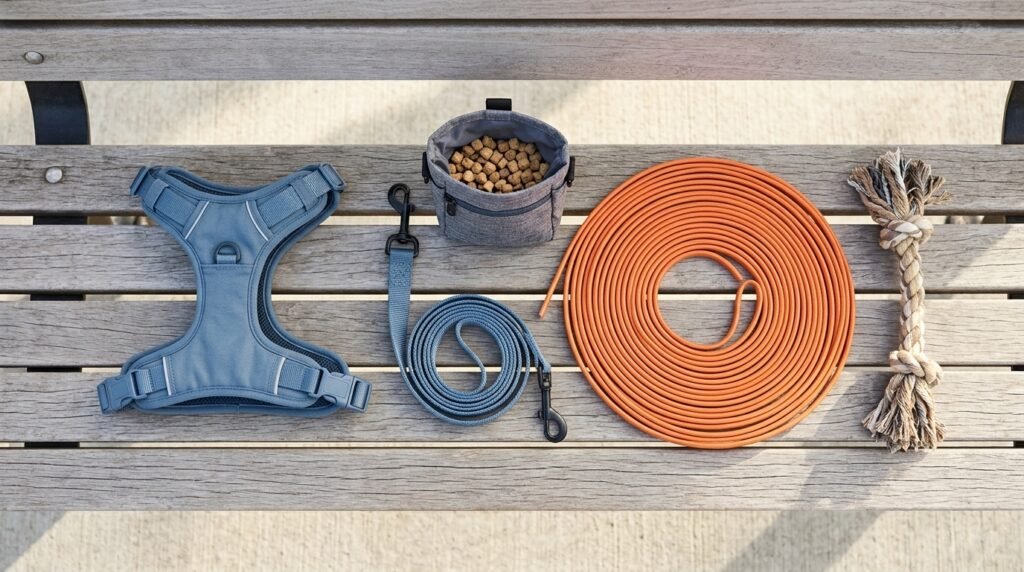
Use safe equipment
For early outdoor training, gather:
- A comfortable, properly fitted harness
- A standard leash
- A 15- to 30-foot training line
- A treat pouch
- Several high-value rewards
A long line provides controlled freedom without allowing the dog to run away. Attach it according to the manufacturer’s directions—typically to a well-fitted harness—to reduce the risk of a sudden force being applied to the neck.
Use the line in an open area where it is unlikely to wrap around people, dogs, trees, or furniture. Wear closed shoes and gloves when appropriate, and never wrap the line around your hand. A long line is a safety connection, not a tool for jerking or dragging a dog toward you.
How to Teach a Dog to Come When Called in 7 Steps
These steps progress from easy, nearly distraction-free repetitions to more realistic situations. Move forward according to your dog’s performance rather than a fixed deadline.
Step 1: Make movement toward you rewarding
Begin in a quiet room when your dog is awake and interested but not intensely occupied.
Move a few feet away. Make a light, cheerful sound, crouch slightly, or take two quick steps backward. The instant your dog begins moving toward you, praise them. When they arrive, mark the behavior with “yes” or a clicker and deliver the reward close to your legs.
At this stage, you are building the basic idea that approaching you produces something valuable. You do not need to use the recall word yet.
Repeat five to eight times and then stop. Short sessions help preserve enthusiasm.
Do not wave food in front of your dog and then walk backward for every repetition. That can make the visible food part of the cue. Your dog should learn to respond before seeing the reward.
Step 2: Introduce the recall cue
Once your dog is predictably moving toward you, add the chosen word.
Wait until your dog is already beginning to approach. Say “come” once in a happy voice. Mark and reward when they reach you.
Placing the cue just before a behavior that is already happening makes its meaning easier to learn. After several successful sessions, begin saying the cue before your dog starts moving.
The recommended sequence is:
- Get your dog’s attention.
- Say the recall cue once.
- Move backward encouragingly.
- Praise while your dog approaches.
- Mark the completed arrival.
- Deliver the reward.
The Animal Humane Society recall guide similarly recommends beginning with a valuable reward and capturing successful responses before increasing difficulty.
If the dog does not respond, do not keep repeating the word. Reduce the distance, remove a distraction, or use a playful sound to regain attention. Make the next attempt easier.
Step 3: Teach your dog to come within reach
Some dogs run toward their owners but stop several feet away. Others arrive, grab the treat, and immediately leave. That response is incomplete if you need to attach a leash during an emergency.
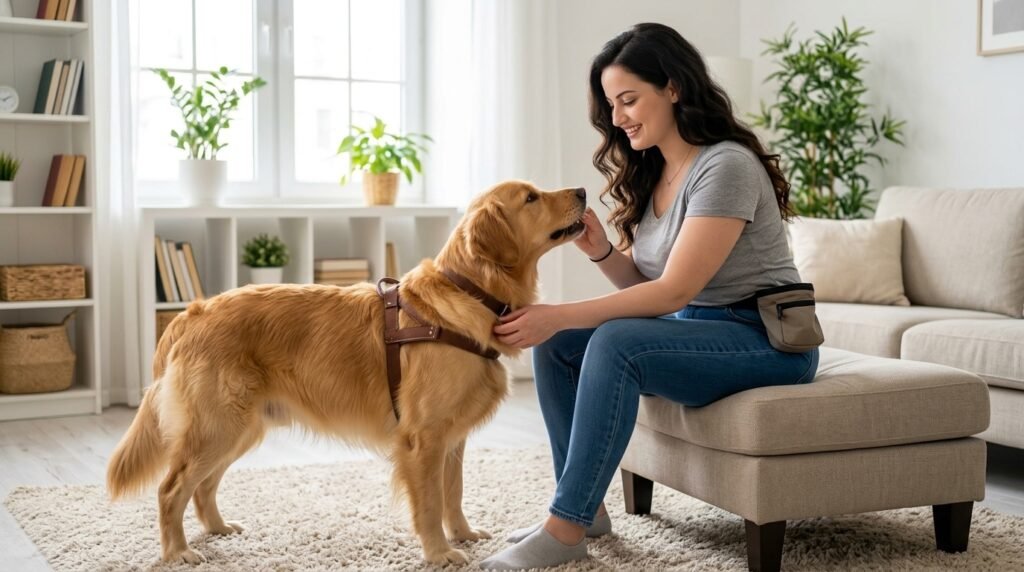
After your dog reaches you, gently touch the harness or hold the collar for one second. Mark and reward. Gradually build from a light touch to calmly holding the collar and clipping on the leash.
Practice this separately if your dog avoids hands near the collar:
- Reach toward the collar without touching it; reward.
- Briefly touch the collar; reward.
- Place one or two fingers under it; reward.
- Hold it gently for a second; reward.
- Attach the leash; reward and release.
Never grab suddenly or corner the dog. The goal is to teach that hands approaching the collar predict something pleasant.
If your dog pulls away, freezes, growls, or becomes tense, stop reaching. Return to an easier stage that your dog accepts comfortably. Do not restrain the dog to complete the exercise; seek qualified help if handling remains difficult.
Frequently release your dog after rewarding. Say a word such as “free” or “go play,” and let the enjoyable activity continue. This prevents recall from always predicting confinement or the end of fun.
Step 4: Add distance indoors
When your dog responds consistently from a few feet away, gradually increase the distance.
Practice from across the room, around a doorway, or at the opposite end of a hallway. Only change one factor at a time. If you increase distance, keep distractions low.
Two people can play a round-robin recall game. Stand several feet apart and take turns calling the dog. Each person should wait until the dog has finished receiving the previous reward before using the cue.
Hide-and-seek is another useful game:
- Ask someone to hold the dog briefly.
- Hide in an easy indoor location.
- Call once.
- Praise as the dog searches and approaches.
- Give an especially good reward when they find you.
The AKC’s recall-training guidance recommends games such as “Find Me” and family recall practice to build speed and enthusiasm.
Keep the game easy enough for the dog to succeed. Repeated failure does not make a cue stronger.
Step 5: Move outside on a leash or long line
A dog who performs beautifully in the living room may seem to forget everything outside. This does not mean the dog is stubborn. Outdoor scents, sounds, movement, and opportunities to explore are much more rewarding than a quiet room.
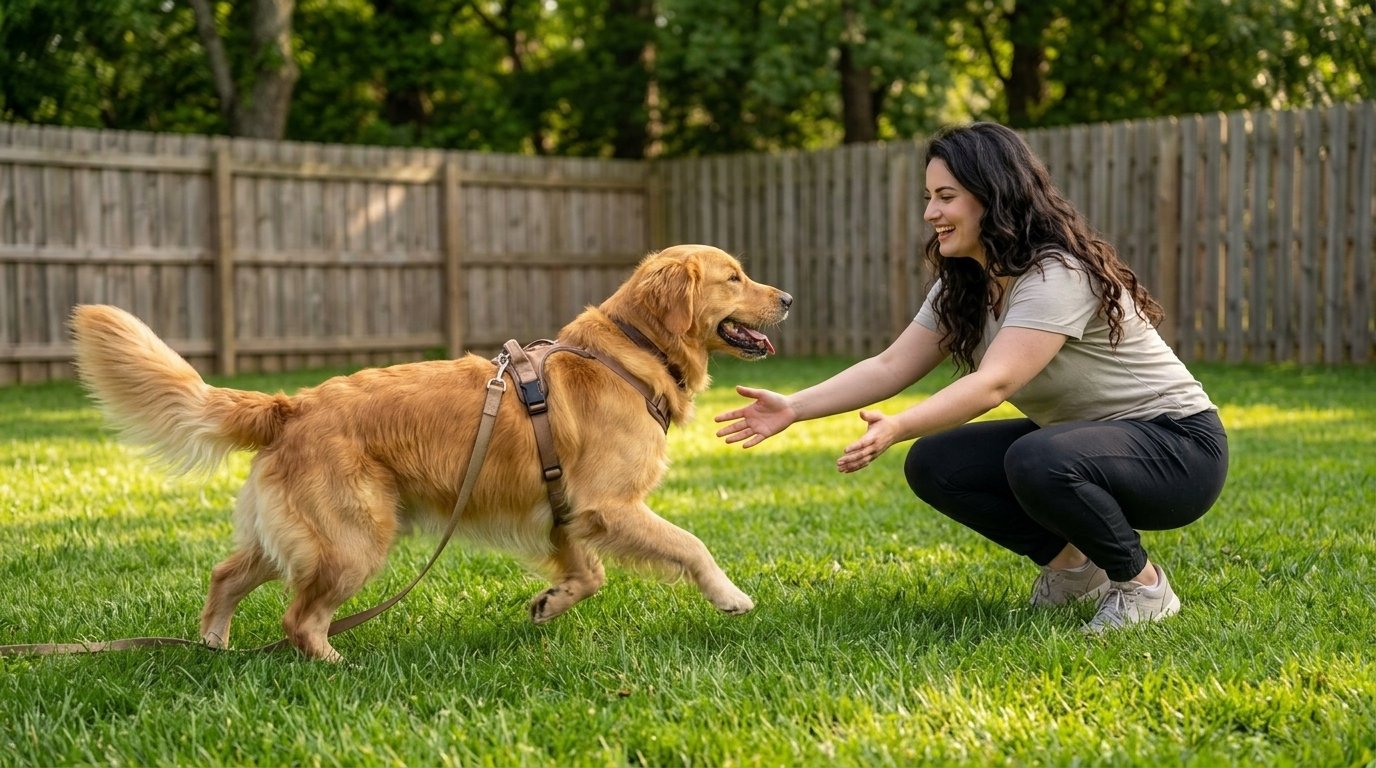
Begin in a fenced yard or another low-distraction location. Keep your dog attached to a leash or long line.
Allow the dog to look around. When they are not completely absorbed in a scent or object, say the cue once and move backward. Praise their decision to turn toward you and reward generously upon arrival.
Do not pull the dog toward you with the line. If they fail to respond, calmly shorten the distance and create an easier repetition. The line’s primary purpose is to prevent the dog from rehearsing running away.
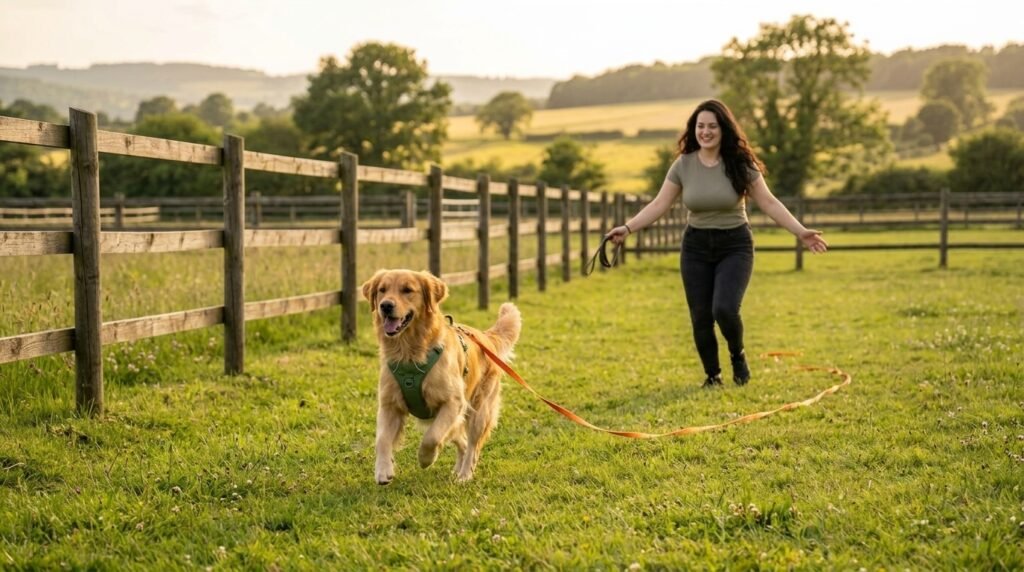
Start with only a few feet of distance. Gradually allow more of the line to remain loose as performance improves. The Best Friends Animal Society training guide also emphasizes moving from quiet practice to progressively more distracting environments while maintaining physical safety.
Step 6: Add distractions gradually
Distractions should be treated as adjustable difficulty levels. Create a list based on your individual dog.
| Difficulty | Example distractions |
|---|---|
| Low | Stationary toy, familiar person, quiet yard |
| Moderate | Food container, moving family member, distant dog |
| High | Nearby dog, wildlife scent, active play, unfamiliar park |
Traffic, active dog conflicts, and situations that cause intense fear are safety hazards, not training challenges to practice around. Keep your dog away from these situations and use secure physical management rather than testing recall.
Begin with a low-value distraction at a generous distance. Call once. When your dog turns away from the distraction and reaches you, provide a higher-value reward than usual.
Increase only one dimension at a time:
- Distance from you
- Proximity to the distraction
- Distraction intensity
- Duration of the exercise
- Novelty of the location
For example, do not simultaneously move to a crowded park, use the full length of the training line, and introduce nearby dogs. That jump makes failure likely.
Increase difficulty only after your dog responds promptly and comfortably across repeated sessions at the current level. A practice success rate is not proof that your dog is safe off leash. Continue using secure boundaries or a long line, and make the exercise easier whenever responses become slower or less consistent.
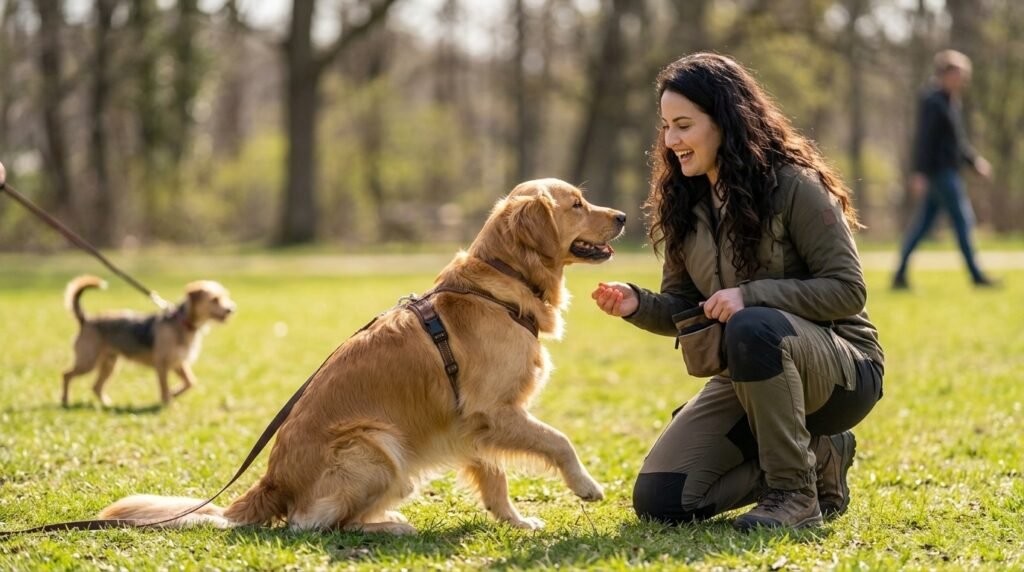
The RSPCA’s recall-training advice likewise recommends introducing distractions gradually and continuing to reward successful returns.
Step 7: Practice real-life recalls and maintain the behavior
Once your dog is succeeding around controlled distractions, weave recall into normal life.
Useful practice opportunities include:
- Calling the dog from another room before serving a meal
- Recalling during supervised yard exploration
- Calling away from mild sniffing on a long line
- Recalling during play, rewarding, and releasing the dog back to play
- Calling before opening a door or beginning a favorite activity
- Practicing in different fenced locations
Continue paying well for recall. You can vary the reward, but do not stop reinforcing the behavior abruptly. Sometimes offer one treat; other times provide several treats, a toy, praise, or permission to return to the activity.
This variable reward pattern can make responding worthwhile without requiring food to be visible beforehand.
A short recall practice can also fit into a wider manners program. The PawMindTips good manners training guide can help you combine recall with attention, polite greetings, and other foundation skills.
A Simple 7-Day Recall Training Schedule
This schedule is a starting framework, not a promise that recall can be perfected in one week. Some dogs need several weeks or months of carefully managed practice.
Day 1: Build value for approaching
Complete three sessions indoors. Reward voluntary approaches and movement toward you. Keep each session to approximately three minutes.
Day 2: Add the cue
Say the recall word as the dog begins moving toward you. Practice from only a few feet away.
Day 3: Add a collar touch
Reward the full sequence: hear the cue, approach, arrive within reach, and accept a gentle collar or harness touch.
Day 4: Increase indoor distance
Practice across a room or hallway. Add an easy hide-and-seek or round-robin game.
Day 5: Begin controlled outdoor practice
Use a leash or long line in a quiet, fenced, or otherwise secure location. Keep the first outdoor repetitions short and easy.
Day 6: Introduce one mild distraction
Use a stationary toy, distant person, or familiar low-intensity distraction. Increase reward value for successful responses.
Day 7: Practice recall and release
Call your dog away from a safe, enjoyable activity, reward generously, and release them back to it. This teaches that responding does not always end the fun.
Repeat or extend any stage as needed. Reliable recall depends on a history of successful repetitions, not simply completing seven calendar days.
Common Recall-Training Mistakes
Knowing how to teach a dog to come when called includes understanding which habits weaken the cue.
Repeating the cue
Calling “come, come, come” allows the dog to ignore the first several repetitions. Say the word once. If the dog cannot respond at that difficulty level, change the setup.
Punishing the dog after they arrive
Never scold a dog for taking too long to return. From the dog’s perspective, punishment happened after reaching you. That can make approaching you less appealing next time.
Secure the dog calmly, reward the eventual return when safe to do so, and make future practice easier.
Calling only when fun ends
If “come” always means leaving the park, ending play, taking a bath, or having nails trimmed, the cue can acquire a negative association.
During safe activities, recall your dog, reward them, and release them to resume the activity. When recall does need to end the fun, add a worthwhile reward.
Starting around overwhelming distractions
Calling a beginner away from a running squirrel, active dog play, or an exciting visitor asks for advanced performance before foundations have been built.
Control distance and use a long line. Train at the level your dog can currently manage.
Chasing the dog
Many dogs interpret chasing as a game. If the setting is safe enough, moving away from the dog, using an excited voice, or dropping into a playful posture may encourage them to follow.
Showing the reward first every time
A treat can help initiate early practice, but the dog should learn that the cue—not the sight of food—predicts reinforcement. Keep rewards concealed until the dog commits to approaching.
Practicing for too long
Long, repetitive sessions can reduce enthusiasm. Several sessions lasting two to five minutes are often more productive than one extended drill.
What to Do When Your Dog Will Not Come
A failed recall is information. Instead of labeling the dog stubborn, identify what made the response too difficult.
The environment is too distracting
Increase your distance from the distraction or move to a quieter location. Use the long line to prevent escape without pulling the dog through the exercise.
The reward is not valuable enough
Upgrade from kibble to a safe, high-value treat or favorite toy. Reserve the best option for recall training.
The cue has become irrelevant
If the dog has heard “come” hundreds of times without responding, the word may no longer have a clear meaning. Select a fresh cue such as “here” and teach it from the beginning.
Recall predicts something unpleasant
Build new associations. Call the dog, reward generously, and release them. Do this repeatedly during safe activities so coming to you no longer always predicts the loss of freedom.
The dog is fearful or uncomfortable
Fear, pain, sound sensitivity, or discomfort can affect movement and responsiveness. Do not drag, intimidate, or punish a worried dog. Reduce pressure and work in a calmer environment.
If reluctance to move appears suddenly, or if it accompanies limping, weakness, disorientation, pain, or another physical change, arrange a veterinary evaluation.
Progress has moved too quickly
Return to the most recent environment in which your dog succeeded. Shorten the distance, reduce distraction intensity, and reinforce several easy responses before trying again.
If repeated practice is not improving recall—or if fear, reactivity, aggression, or escape behavior creates a safety concern—seek help from a qualified reward-based trainer or veterinary behavior professional.
Emergency Recall and Off-Leash Safety
An emergency recall is a special cue reserved for urgent situations. It should be different from your everyday word and paired with an exceptional reward.
To introduce an emergency recall:
- Choose a distinctive word or whistle that is different from your everyday recall cue.
- Start in a quiet room, with your dog nearby and already moving toward you.
- Give the cue once, then deliver several small, high-value treats when your dog reaches you.
- After successful repetitions, give the cue just before your dog starts approaching.
- Gradually practice from slightly farther away while keeping the environment easy and secure.
- Maintain the cue with occasional rewarded practice. Do not save it only for real emergencies.
An emergency cue still requires training and cannot guarantee a response in a dangerous situation.
Do not test an emergency cue in an unsecured area simply to see whether it works. Each repetition should be planned for success.
If your dog gets loose:
- Avoid running directly after them when that encourages a chase game.
- Use a cheerful voice rather than an angry one.
- Move away from the dog when it is safe, encouraging them to follow.
- Crouch or act interested in something on the ground.
- Use a familiar recall cue only when you have a reasonable chance of success.
- Reward and secure the dog when they reach you, even if you are frightened or frustrated.
No amount of recall training makes an unfenced area automatically safe. Continue using a leash where required, especially near roads, livestock, wildlife, or other serious hazards. Follow local leash laws and only consider off-leash activity in legally permitted, appropriately enclosed locations.
Frequently Asked Questions
How long does it take to teach a dog to come when called?
A dog can begin understanding the cue within several short sessions, but dependable recall around real-world distractions usually requires weeks or months of practice. Progress depends on training history, motivation, age, temperament, environment, and consistency.
What should I do if my dog ignores the word “come”?
Stop repeating the word. Return to a quiet location, shorten the distance, and use a better reward. If the cue has a long history of being ignored or predicting unpleasant events, choose a new cue and train it from the beginning.
Can I teach an older dog to come when called?
Yes. Older dogs can learn reliable recall when training is rewarding and adapted to their physical abilities. Start with short distances and consider veterinary guidance if hearing loss, pain, reduced vision, or cognitive changes affect responsiveness.
Should I let my dog off leash after recall training?
For the safest practice, choose a securely enclosed location where off-leash activity is permitted. Successful recalls during training do not guarantee a response around unexpected distractions. Follow local leash rules and keep your dog leashed near traffic, wildlife, unfamiliar dogs, or other hazards. Continuing to use a leash is a responsible choice even after training.
Conclusion
Understanding how to teach a dog to come when called begins with making every successful return safe and worthwhile. Start indoors, introduce one consistent cue, reward complete arrivals, add collar handling, and then progress through distance and controlled distractions.
Protect the cue by avoiding punishment, unnecessary repetition, and challenges your dog is not ready to handle. Continue practicing throughout the dog’s life and use leashes, long lines, and secure spaces whenever the environment could make failure dangerous.
A reliable recall is built through hundreds of positive, carefully managed choices to return—not through one test of whether the dog will come.