Traveling With Your Dog can be an exciting way to experience new places together, but a successful trip requires more than putting your dog in the car and hitting the road. Dogs can experience anxiety, motion sickness, unfamiliar environments, heat, dehydration, and other challenges when their normal routine suddenly changes.
With the right preparation, however, many of these problems can be reduced.
Whether you’re planning a weekend road trip, visiting relatives, staying at a pet-friendly hotel, or taking a longer vacation, traveling with your dog becomes much easier when you prepare your dog’s health, safety, comfort, and routine before departure.
The American Kennel Club recommends considering your dog’s health, transportation method, destination, identification, food, water, and bathroom needs before an extended trip. The AKC’s complete dog travel guide is also a useful reference for owners planning longer journeys.
Here’s how to make traveling with your dog safer and less stressful from the moment you start planning until you arrive at your destination.
Table of Contents
1. Make Sure Your Dog Is Ready for Travel
Before planning the route, think about whether your dog is actually ready for the journey.
Some dogs love car rides. Others become nervous as soon as they see a suitcase or hear the vehicle start. Puppies, senior dogs, dogs with medical conditions, and dogs with severe anxiety may require additional preparation.
Ask yourself:
- Is my dog comfortable inside a vehicle?
- Has my dog traveled before?
- Does my dog experience motion sickness?
- Does my dog become anxious around unfamiliar people?
- Can my dog settle down in a new environment?
- Is my dog physically healthy enough for the planned trip?
For an extended journey, consider scheduling a veterinary checkup before leaving. The AKC recommends discussing your dog’s physical and mental ability to travel with your veterinarian and ensuring relevant vaccinations and records are current.
If your dog has never traveled before, don’t begin with an eight- or ten-hour drive.
Start with short trips.
A five-minute drive followed by a positive experience can be more useful than immediately exposing your dog to hours of unfamiliar travel.

This gradual approach is particularly important when traveling with your dog for the first time.
2. Update Identification and Important Documents
A lost dog is every owner’s nightmare, and unfamiliar surroundings can increase the risk of separation.
Before traveling with your dog, check that your dog’s identification information is current.
Make sure you have:
- A secure collar
- Updated identification tags
- Current contact information
- Microchip information
- Vaccination records
- Relevant health certificates
- A recent photograph of your dog
- Your veterinarian’s contact information
The AKC recommends carrying a recent photo, health records, vaccination information, and proper identification during dog travel.
For international trips, requirements can be significantly different from domestic travel. Depending on the destination, you may need specific vaccinations, certificates, permits, or other documentation.
Always verify the current requirements for your destination before departure.
Keep Digital and Physical Copies
Save important records on your phone or cloud storage, but don’t rely exclusively on your phone.
A physical copy of essential records can be useful if your battery dies or you cannot access your files.
Also keep a recent photo of your dog that clearly shows their face and body.
If you become separated, having a current photograph can make it easier to identify your dog.
3. Use the Right Safety Restraint
One of the most important rules for traveling with your dog by car is keeping your dog properly secured.
A loose dog can move around the vehicle, distract the driver, or be seriously injured during sudden braking or an accident.
Depending on your dog’s size and needs, suitable options may include:
- A properly secured travel crate
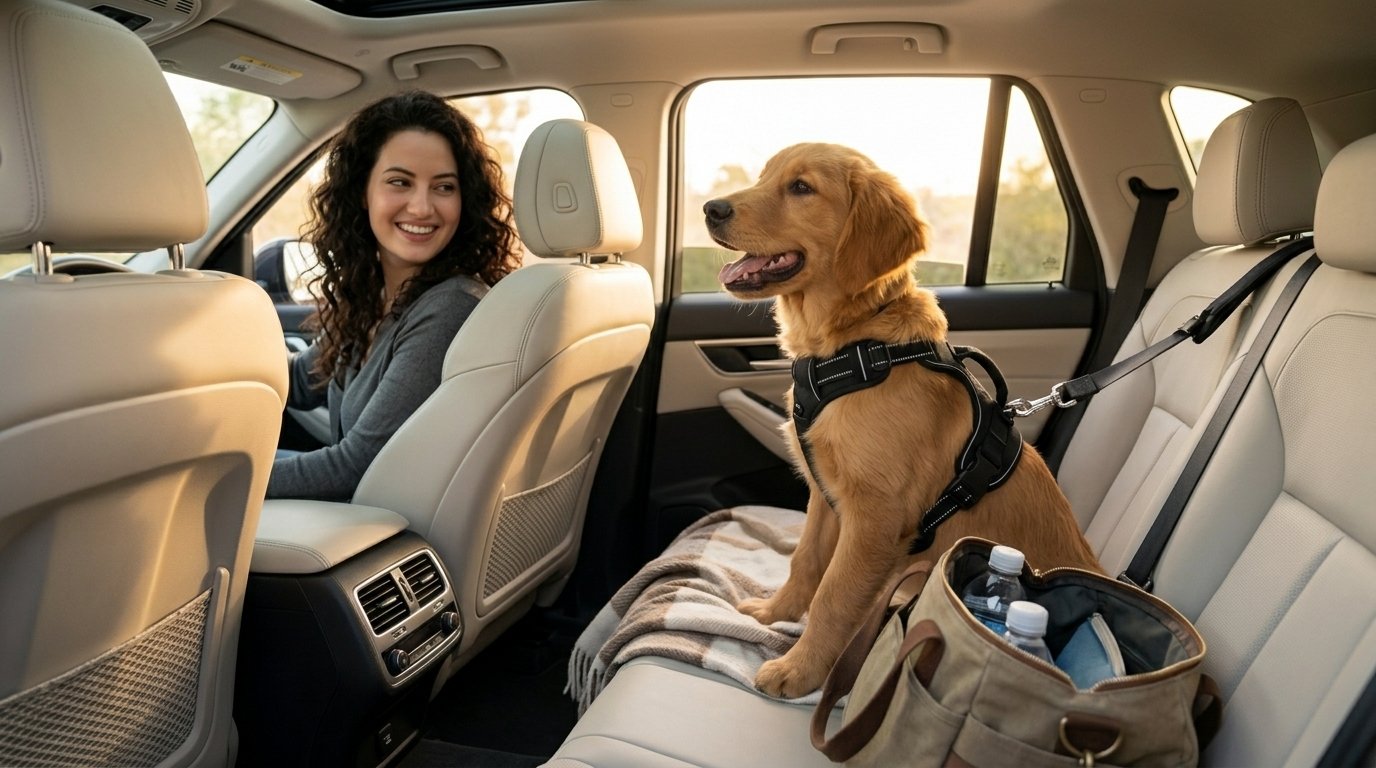
- A canine safety harness
- A suitable dog car restraint
- A secure carrier
The AKC recommends using a crate or harness attached appropriately to the vehicle’s restraint system and getting your dog accustomed to the equipment before a long journey.
Your dog should generally remain in the rear seating area rather than riding in the front passenger seat because airbags can create serious risks.
Avoid allowing your dog to move freely around the vehicle.
Also avoid allowing your dog to ride in the open bed of a pickup truck. The AKC specifically identifies this as dangerous.
Introduce the Equipment Early
Don’t buy a new harness or carrier the night before your vacation.
Let your dog investigate it at home.
Reward calm behavior.
Then practice using it during short trips.
This helps your dog understand that the equipment is normal rather than something frightening.
4. Practice Short Trips Before a Long Journey
If your dog only gets into the car for veterinarian appointments, they may develop a negative association with driving.
Before traveling with your dog on a long journey, practice several short and enjoyable trips.
For example:
Short drive → fun destination → calm activity → return home
You can gradually increase the distance as your dog becomes more comfortable.
Watch for signs of stress, including:
- Panting
- Whining
- Excessive drooling
- Trembling
- Lip licking
- Restlessness
- Repeated attempts to move around
- Vomiting
Some dogs experience motion sickness even when they aren’t particularly anxious.
The AKC recommends short practice rides and gradually preparing dogs for longer car journeys.
If your dog repeatedly becomes sick or extremely distressed, speak with your veterinarian rather than simply forcing longer journeys.
Make Practice Rides Positive
Don’t make every practice ride end at the veterinarian.
Visit a quiet park, go for a short walk, or take your dog somewhere they enjoy.
This can help create a more positive association with the vehicle.
5. Pack a Dedicated Dog Travel Bag
A well-organized travel bag can make traveling with your dog considerably easier.
Instead of putting your dog’s supplies throughout different suitcases, keep the essentials together in one accessible bag.
Consider packing:
- Regular dog food
- Water
- Food bowl
- Collapsible water bowl
- Leash
- Backup leash
- Collar
- Harness
- Identification tags
- Waste bags
- Medications
- Veterinary records
- Towels
- Cleaning supplies
- Favorite toy
- Familiar blanket
- Grooming supplies
- Travel crate or carrier
The AKC also recommends bringing your dog’s regular food, water, bowls, toys, and bathroom supplies when traveling.

Recommended Dog Travel Gear:
A dog car safety harness, travel crate or carrier, backseat dog car cover, collapsible water bowl, and portable dog travel bag can make road trips safer, cleaner, and more comfortable. Choose products that fit your dog’s size and travel needs.
Keep Food Consistent
Travel is not the best time to suddenly change your dog’s diet.
Abrupt dietary changes can cause digestive problems, especially when combined with travel stress.
Pack enough of your dog’s usual food for the entire trip and, when practical, bring some extra in case your return is delayed.
Bring Something Familiar
A favorite blanket, bed, or toy can provide a familiar smell in an unfamiliar environment.
This small detail can be especially helpful for anxious dogs.
For additional dog-care information, you can also explore the PawMindTips pet care resources.
6. Plan Regular Water, Potty, and Exercise Breaks
Long periods inside a vehicle can be uncomfortable for dogs.
When traveling with your dog, don’t wait until your dog is extremely restless before stopping.
Plan appropriate breaks along the route.
During a break:
- Secure your dog with a leash before opening the vehicle door.
- Give your dog time to use the bathroom.
- Offer fresh water.
- Allow your dog to stretch and walk.
- Clean up after your dog.
- Secure your dog again before returning to the vehicle.
The AKC recommends planning bathroom breaks and preparing dogs to relieve themselves on different surfaces, rather than relying only on grass.
Regular movement can also help some dogs remain calmer.
However, don’t try to exhaust your dog before a journey simply to make them sleep.
The goal is comfort, not exhaustion.
If you’re planning an especially long road trip, consider your dog’s normal exercise needs when building the itinerary. You can also find more dog-care guidance through PawMindTips.
7. Reduce Travel Anxiety and Motion Sickness
Not every dog enjoys traveling.
Some dogs become anxious before the journey even begins.
Others experience nausea once the vehicle starts moving.
When traveling with your dog, focus on creating predictability.
Keep Familiar Routines
Try to maintain your dog’s normal feeding, walking, and sleeping routine as much as practical.
Use Familiar Items
Bring a blanket, bed, or favorite toy from home.
Keep the Vehicle Calm
Avoid excessive noise, sudden movements, and unnecessary excitement.
Practice Gradually
Short positive trips can help dogs become more comfortable with vehicle travel.
Watch for Motion Sickness
Excessive drooling, lip licking, whining, and vomiting can indicate that your dog is struggling.
The AKC recommends short pleasant trips as part of helping dogs become more comfortable with car rides and suggests discussing persistent motion sickness with a veterinarian.
If your dog’s anxiety or nausea is severe, your veterinarian can help determine whether additional support is appropriate.
Never give your dog human medication or a sedative for travel without veterinary guidance.
8. Protect Your Dog From Heat and Other Hazards
Temperature control becomes extremely important when traveling with your dog, especially during summer.
Never leave your dog alone inside a parked vehicle.
Even when the weather initially feels comfortable, the temperature inside a vehicle can rise rapidly.
The AKC specifically advises against leaving dogs unattended in closed vehicles, particularly during warm weather.
During warm-weather travel:
- Carry sufficient water.
- Keep the vehicle appropriately ventilated.
- Use shade where appropriate.
- Avoid unnecessary stops.
- Watch your dog for signs of overheating.
- Plan travel during cooler periods when practical.
Also think about hazards outside the vehicle.
Your destination may expose your dog to unfamiliar animals, poisonous plants, parasites, rough terrain, hot pavement, bodies of water, or other environmental risks.
When traveling internationally, research animal-health and destination requirements in advance. The CDC also recommends close supervision of traveling pets and avoiding contact with unfamiliar local animals.
9. Prepare Your Destination Before Arrival
A successful trip doesn’t end when you reach the hotel or vacation rental.
The destination itself needs to be prepared for your dog.
Before traveling with your dog, confirm that your accommodation:
- Accepts dogs
- Has appropriate pet policies
- Allows your dog’s size and breed
- Clearly explains pet fees
- Has suitable walking areas
- Has rules regarding leaving dogs unattended
The AKC recommends confirming pet policies before arriving and respecting other guests, staff, and the property during your stay.
Let Your Dog Adjust Slowly
When you arrive, don’t immediately introduce your dog to every person and animal nearby.
Take a calm walk first.
Then allow your dog to investigate the new room gradually.
Place familiar items such as their blanket or toy in a quiet area.
Give your dog time to settle.
Remember, traveling with your dog doesn’t mean your dog needs to participate in every vacation activity.

Sometimes the best thing you can do is give your dog a quiet period to rest.
A Simple Dog Travel Checklist
Before traveling with your dog, review these essentials:
- Collar and updated ID tags
- Microchip information checked
- Leash and backup leash
- Safety harness or travel crate
- Regular dog food
- Fresh water
- Food and water bowls
- Medications
- Veterinary records
- Recent photograph
- Waste bags
- Familiar blanket or toy
- Towels
- Cleaning supplies
- Emergency veterinary contact
- Pet-friendly accommodation confirmed
Preparing these items ahead of time can eliminate many last-minute problems.
What About Flying With Your Dog?
The nine tips above are particularly useful for road travel, but traveling with your dog by plane requires additional planning.
Airlines can have different rules regarding:
- Carrier dimensions
- Cabin travel
- Animal reservations
- Health documentation
- Breed restrictions
- Temperature restrictions
- Number of animals permitted
- Destination requirements
The AKC notes that airline policies vary and that owners are responsible for checking current requirements with their airline and destination.
Never assume that because one airline accepts your dog, another airline will have identical rules.
Check the airline’s current pet policy directly before booking.
When Should You Talk to Your Veterinarian?
Before traveling with your dog, speak with your veterinarian if your dog:
- Has an existing medical condition
- Takes prescription medication
- Experiences severe anxiety
- Frequently vomits during travel
- Is elderly
- Is very young
- Has recently undergone surgery
- Is traveling internationally
- Has special vaccination requirements
Your veterinarian can help determine whether your dog is physically ready for the journey and whether additional preparation is appropriate.
For dogs with a history of motion sickness, your veterinarian can also discuss appropriate options rather than having you experiment with medication on your own.
FAQ About Traveling With Your Dog
Is traveling with your dog safe?
Yes, traveling with your dog can be safe when you prepare appropriately. Use suitable restraints, provide water and regular breaks, maintain identification, and monitor your dog’s comfort throughout the journey.
How often should I stop when traveling with my dog?
There is no single schedule that works for every dog. Plan regular opportunities for bathroom breaks, water, movement, and comfort. Puppies, senior dogs, and dogs with specific health needs may need more frequent stops.
What should I pack when traveling with your dog?
Essential supplies include your dog’s normal food, water, bowls, leash, collar and ID, safety equipment, medications, veterinary records, waste bags, and familiar items such as a blanket or toy.
How can I make traveling with your dog less stressful?
Practice short trips before a long journey, introduce safety equipment gradually, maintain familiar routines, bring familiar-smelling items, and keep the travel environment calm. If your dog experiences severe anxiety or motion sickness, consult your veterinarian.
Conclusion
Traveling With Your Dog can become one of the most rewarding parts of owning a dog when the journey is planned around your dog’s actual needs.
Start by checking your dog’s health and readiness. Update identification and documents, choose safe transportation equipment, practice shorter trips, pack familiar supplies, and plan regular water and bathroom breaks.
During the trip, pay close attention to your dog’s behavior.
If your dog looks comfortable, relaxed, and settled, continue with the planned routine. If your dog shows signs of severe anxiety, sickness, overheating, or distress, stop and reassess the situation.
The best trip isn’t necessarily the longest or most adventurous one.
It’s the trip where your dog arrives safe, comfortable, and ready to enjoy the destination with you.
For more practical dog-care advice, visit PawMindTips.