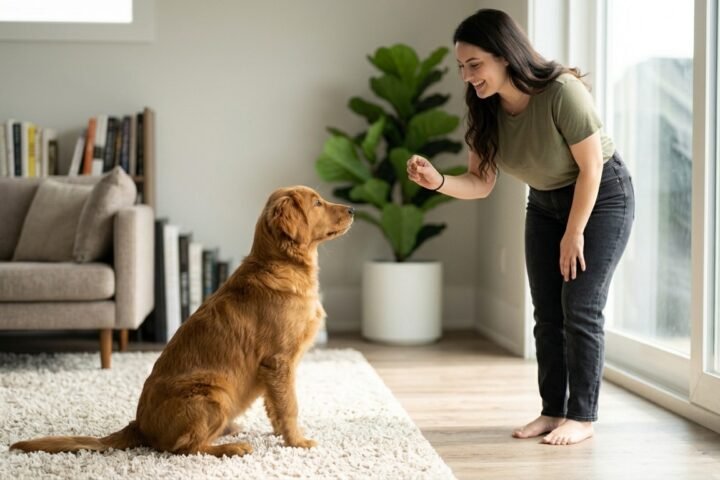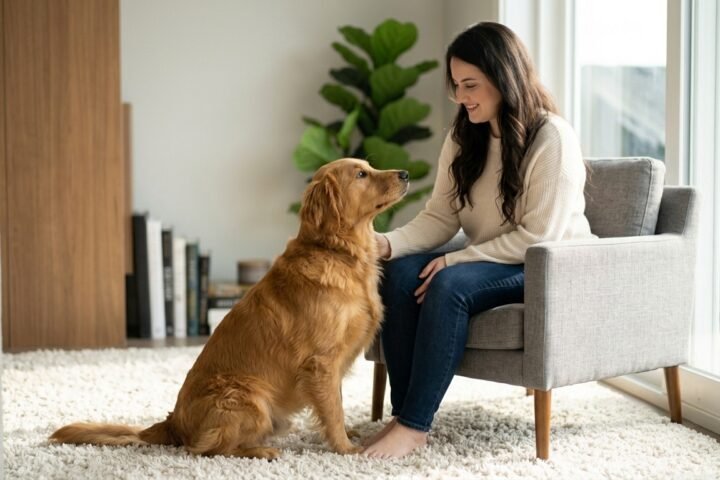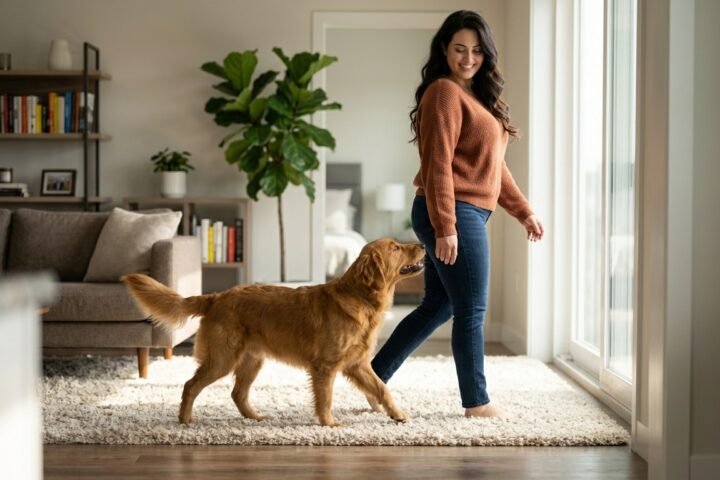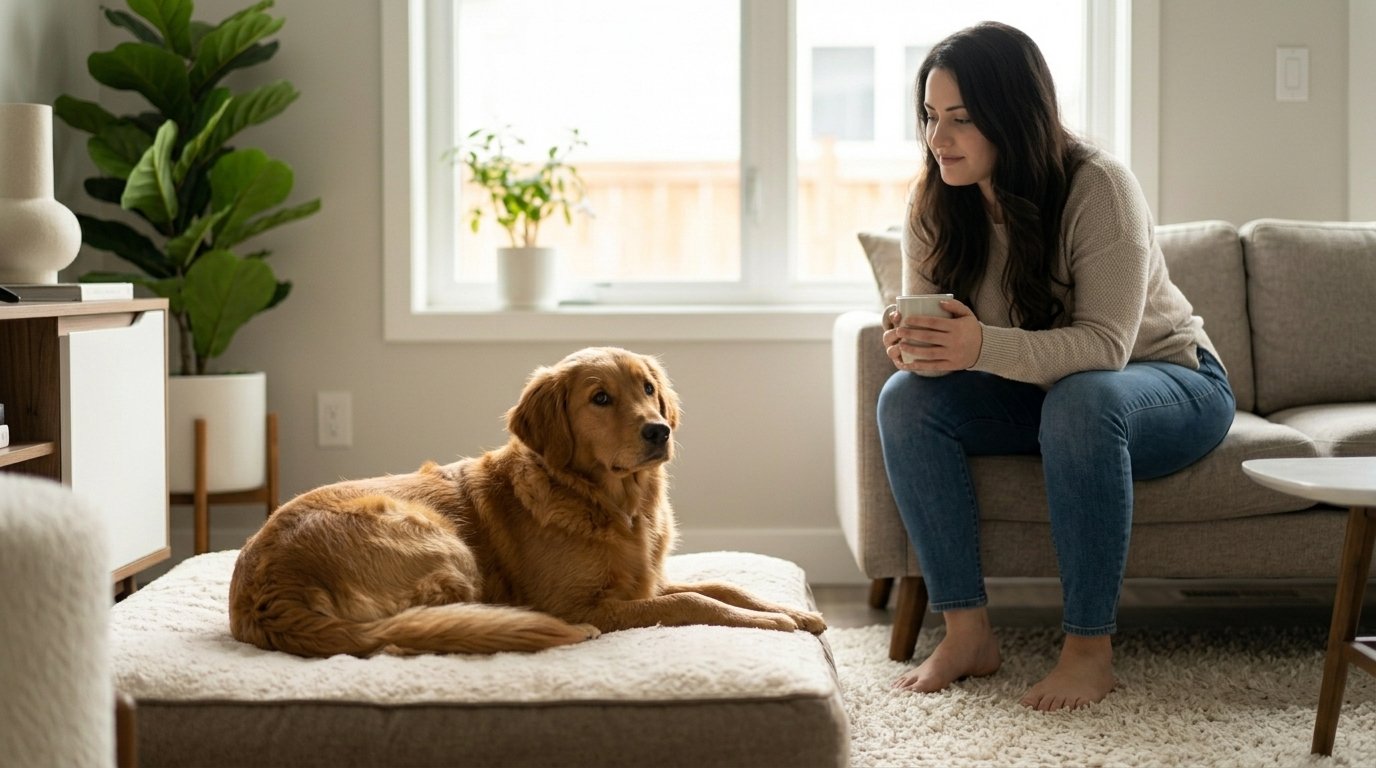
The best answer depends on your dog, the context, and the full pattern of behavior. Look at multiple signals rather than one isolated action.
A nervous dog does not need to be forced to become confident overnight. In most cases, the better approach is to create a safe environment, reduce unnecessary pressure, and give the dog time to learn that everyday life is predictable.
If you are searching for how to help a nervous dog, you may be dealing with hiding, trembling, pacing, barking, freezing, avoiding people, or difficulty settling at home. These behaviors can have different causes, so the first step is understanding what makes your dog uncomfortable.
Learning how to help a nervous dog is less about finding one magic solution and more about changing the dog’s daily experience. A quiet retreat, predictable routine, respectful interaction, reward-based training, and gradual exposure can all help.
This guide covers nine practical ways to make your home feel safer while helping your dog build trust and confidence at a comfortable pace.
Table of Contents
1. Find Out What Is Making Your Dog Nervous
The first step in how to help a nervous dog is figuring out what triggers the fear.
Some triggers are easy to identify. Your dog may become nervous when the doorbell rings, when visitors arrive, or when they hear a loud appliance. Other triggers can be less obvious.
Your dog may react to:
- Sudden movements
- Unfamiliar people
- Other animals
- Loud noises
- Being touched in certain areas
- New objects
- Slippery floors
- Changes in routine
- Being left alone
- Crowded environments
Spend a few days observing your dog without trying to change everything at once.
Write down three things:
What happened → How your dog reacted → What happened afterward
For example:
Doorbell rang → dog froze and moved behind the sofa → visitor walked toward the dog.
Patterns like this can help you understand what situations need better management.
Fear and anxiety can produce different behaviors, including avoidance, freezing, trembling, hiding, excessive alertness, and attempts to escape. Veterinary behavior resources recommend looking at the circumstances surrounding the behavior rather than treating every nervous response in exactly the same way. Merck Veterinary Manual — Behavior Problems in Dogs
Learn your dog’s early stress signals
A nervous dog does not always bark or growl.
Early signs may include:
- Turning the head away
- Lip licking
- Yawning when not tired
- Avoiding eye contact
- Lowering the body
- Freezing
- Hiding
- Trembling
- Trying to leave
- Becoming unusually quiet
- Refusing a favorite treat
These signals matter because they give you a chance to make the situation easier before your dog becomes overwhelmed.
That is one of the most important principles in how to help a nervous dog: respond to discomfort early rather than waiting for a major reaction.
2. Create a Safe Space Your Dog Can Choose
When considering how to help a nervous dog at home, start by giving your dog somewhere peaceful to retreat.
A safe space could be:
- A comfortable dog bed in a quiet corner
- An open crate your dog already enjoys
- A low-traffic room
- A quiet area behind a baby gate
- A familiar sleeping area away from visitors
The space should be available whenever your dog needs it.
More importantly, your dog should be allowed to leave and enter without being forced.
If your dog retreats to their safe space, avoid following them to give hugs, pulling them out, or repeatedly calling them back. Even friendly attention can feel overwhelming when a dog is frightened.
Instead, let the dog settle.
Add familiar bedding and perhaps one or two safe toys. Keep the area comfortable, but do not turn it into a busy entertainment zone.
A safe space should also never be used as punishment.
Give your dog control
Choice is particularly valuable for a nervous dog.
If your dog walks away from a person, allow the distance.
If your dog chooses to rest alone, let them rest.
If your dog approaches you, allow the interaction to develop naturally.

This does not mean ignoring your dog. It means communicating that they have a safe way to create distance when they need it.
For many dogs, learning that their signals will be respected is an important part of how to help a nervous dog develop trust.
3. Build a Predictable Daily Routine
Another practical part of how to help a nervous dog is making everyday life more predictable.
Your dog’s entire day does not need to run according to a strict timetable. However, keeping important activities reasonably consistent can reduce unnecessary uncertainty.
Try to maintain similar times for:
- Meals
- Bathroom breaks
- Walks
- Training
- Enrichment
- Rest
- Bedtime
For example, your dog might learn that breakfast is followed by a quiet period, a walk happens later in the morning, and the evening becomes calmer before bedtime.
Predictability does not remove every source of stress. It simply gives your dog a clearer idea of what usually happens next.
This can be especially helpful after adoption, a move, a major household change, or another stressful event.
Keep your responses consistent too
Family members should try to follow the same basic rules.
For example, if one person allows the dog to hide undisturbed while another person repeatedly pulls the dog out to socialize, the dog receives mixed messages.
Agree on simple household rules:
- Do not force greetings.
- Do not punish fear.
- Respect the safe space.
- Give the dog distance when needed.
- Reward calm behavior.
Consistency makes how to help a nervous dog much easier because everyone is working toward the same goal.
4. Let Your Dog Decide When to Interact
One of the biggest mistakes owners make when learning how to help a nervous dog is trying too hard to make friends.
People naturally want to reassure a frightened dog. They may kneel down, reach toward the dog, talk repeatedly, or try to pet them.
But a nervous dog may interpret that attention as pressure.
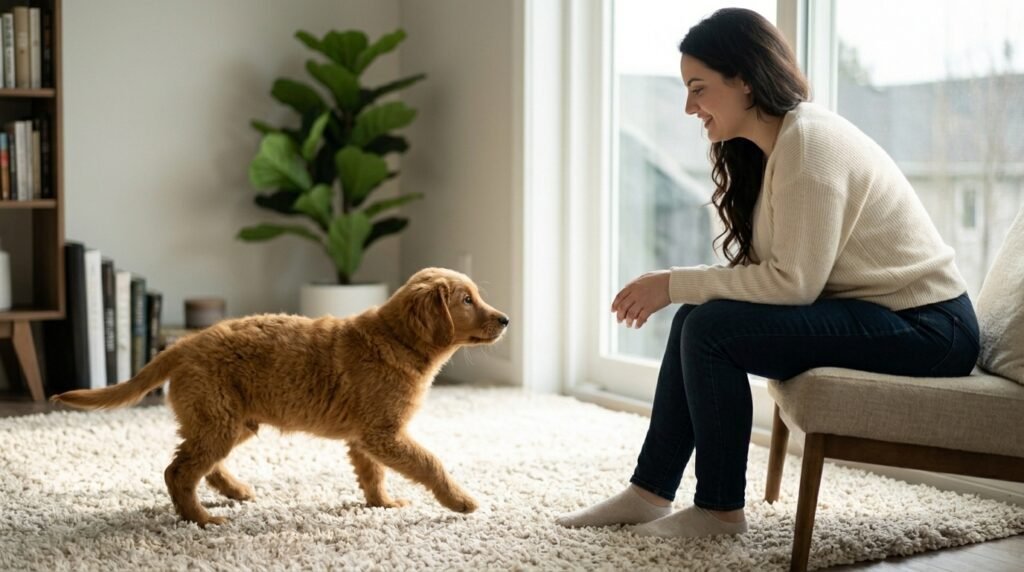
Instead, make yourself less intimidating.
Sit nearby.
Turn your body slightly sideways.
Avoid staring directly at the dog.
Keep your movements slow.
Then let your dog decide whether to approach.
If your dog comes closer, do not immediately reach over their head. Give them time to sniff and observe.
This approach teaches an important lesson:
“I can approach when I am ready, and I can move away when I need space.”
That feeling of control can make a major difference.
How visitors should behave
If your dog is nervous around guests, give visitors simple instructions.
Ask them to:
- Ignore the dog at first
- Avoid staring
- Avoid leaning over the dog
- Avoid reaching toward the dog
- Speak calmly
- Allow the dog to approach voluntarily
If the dog remains uncomfortable, do not make a greeting happen.
A successful visit does not require your dog to sit beside every guest.
Sometimes success simply means your dog stays in another room, relaxes in their safe space, and does not feel pressured.
That is still progress when you’re learning how to help a nervous dog feel secure around unfamiliar people.
How to Stop a Dog From Pulling on the Leash: 8 Effective Training Tips
5. Learn to Read Your Dog’s Body Language
Understanding body language is essential when deciding how to help a nervous dog.
Dogs communicate discomfort through posture, movement, facial expression, and behavior. Owners who recognize those signals early can often prevent situations from escalating.
A relaxed dog may show:
- Loose muscles
- Normal movement
- Soft eyes
- Natural breathing
- Interest in sniffing
- Willingness to explore
- Ability to settle
A stressed dog may show:
- Stiffness
- Freezing
- Crouching
- Avoidance
- Rapid scanning of the environment
- Trembling
- Repeated lip licking
- Attempts to escape
- Inability to settle
Look at several signals together rather than relying on one behavior.
For example, yawning can simply mean your dog is tired. But yawning combined with freezing, avoidance, and a lowered body may indicate discomfort.
Respond before the fear becomes intense
When you notice stress, change the situation if possible.
You could:
- Increase the distance from the trigger.
- Ask a visitor to step back.
- Move your dog to a quieter room.
- End the training session.
- Turn off a loud appliance.
- Give your dog access to their safe space.
The earlier you respond, the easier it may be for your dog to recover.
This is a core principle of how to help a nervous dog without forcing them beyond what they can comfortably handle.
6. Build Confidence With Small Wins
A nervous dog rarely becomes confident because of one dramatic experience.
Confidence is usually built through many small successes.
This is why how to help a nervous dog should involve activities that are easy enough for the dog to complete successfully.
You might teach:
- Touching your hand with the nose
- Looking at you when called
- Finding treats around a quiet room
- Walking calmly through a familiar area
- Exploring a harmless object
- Going onto a comfortable mat
- Following a simple cue
- Choosing to approach a trusted person
Keep sessions short.
Reward the behavior you want.
Then stop before your dog becomes frustrated.
Reward voluntary progress
Suppose your dog is cautious about a new object.
Do not drag the dog toward it.
Instead, allow the dog to look at it from a comfortable distance. If the dog chooses to investigate, reward that decision.
This creates a useful association:
New experience + choice + reward = positive learning opportunity.
Reward-based training is recommended by the American Veterinary Society of Animal Behavior, which supports reward-based methods and advises against aversive training techniques. American Veterinary Society of Animal Behavior — Position Statements
This approach is particularly important in how to help a nervous dog because punishment or intimidation can add another negative experience to an already stressful situation.
7. Introduce Scary Things Gradually
If your dog has a specific fear, gradual exposure can be more appropriate than forcing them to face it.
Common triggers include:
- Vacuum cleaners
- Doorbells
- Visitors
- Other dogs
- Cars
- Thunder
- Grooming
- Nail trimming
- Handling
- Unfamiliar objects
A common mistake is assuming that repeated exposure will automatically make the dog comfortable.
It may not.
If the experience is too intense, the dog may become more frightened.
Instead, behavior professionals often use desensitization and counterconditioning.
Desensitization means introducing the trigger at a low enough intensity that the dog can remain comfortable.
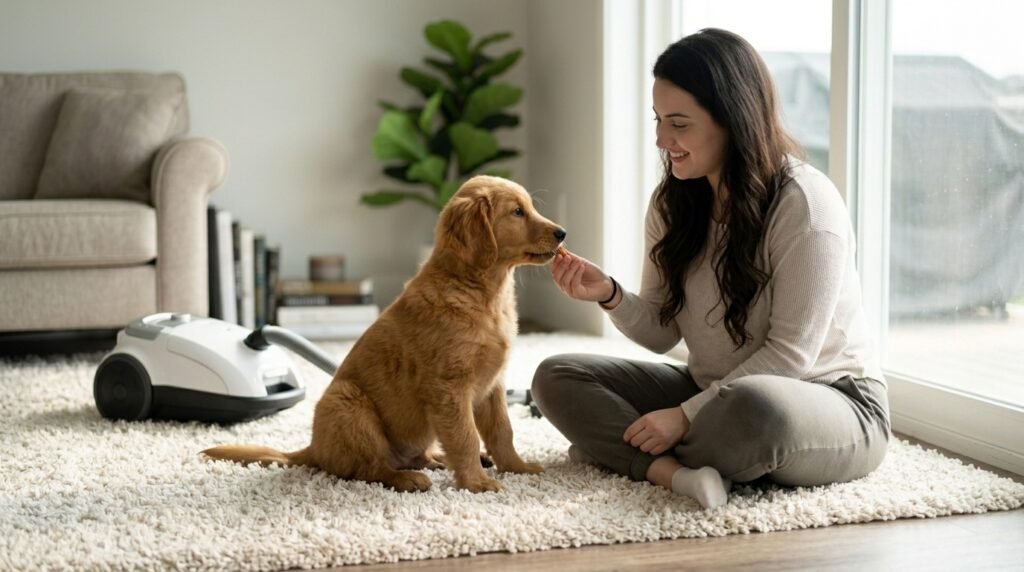
Counterconditioning means pairing the trigger with something positive.
Veterinary behavior guidance explains these techniques and emphasizes controlling the intensity of the trigger so the dog is not overwhelmed. VCA Animal Hospitals — Desensitization and Counterconditioning
Example: Your dog is afraid of the vacuum
Do not immediately switch the vacuum on beside your dog.
Instead:
Step 1: Put the vacuum somewhere your dog can see it from a comfortable distance.
Step 2: Allow your dog to notice it without forcing interaction.
Step 3: Pair calm observation with something your dog enjoys.
Step 4: End the session while your dog remains relaxed.
Step 5: Repeat gradually before increasing the difficulty.
You may eventually change one factor at a time, such as distance, movement, or sound.
If your dog freezes, trembles, tries to escape, or stops accepting food, make the exercise easier.
The purpose of how to help a nervous dog is not to prove that the dog can tolerate something frightening. The purpose is to help the dog develop a safer emotional response.
8. Use Calm Enrichment Instead of More Pressure
Some owners assume that a nervous dog simply needs more exercise.
Physical activity is important, but more stimulation is not always better.
A crowded dog park may be overwhelming.
A busy walking route may create too many triggers.
A long, intense outing may leave a fearful dog more stressed rather than more confident.
When considering how to help a nervous dog, choose enrichment that matches the dog’s current comfort level.
Try:
- Quiet sniffing walks
- Scatter feeding
- Simple scent games
- Food puzzles your dog already understands
- Safe chewing activities
- Short training sessions
- Exploring familiar areas
- Calm indoor games
Sniffing is especially useful for many dogs because it allows them to investigate their surroundings at their own pace.
The goal is not simply to exhaust the dog.
The goal is to provide safe opportunities to explore, think, and succeed.
If your dog returns from an activity more tense than before, lower the intensity.
A quiet walk with plenty of sniffing may be a better choice than an exciting outing filled with unfamiliar people and animals.
9. Know When Your Dog Needs Professional Help
Knowing when to seek help is an important part of how to help a nervous dog.
Some dogs improve with environmental changes and gradual training. Others have fears that are severe, widespread, or difficult to manage safely.
Contact your veterinarian if:
- Fear appears suddenly.
- Your dog’s behavior changes significantly.
- Anxiety is getting worse.
- Your dog seems painful.
- Eating or drinking habits change.
- Your dog cannot relax at home.
- Your dog repeatedly tries to escape.
- Your dog injures themselves.
- Your dog begins showing aggression.
- You cannot safely manage the triggers.
Sudden behavioral changes can sometimes have medical contributors. A veterinary assessment can help determine whether an underlying health problem should be considered. Merck Veterinary Manual — Diagnosis of Behavior Problems in Animals
For severe fears or phobias, professional behavior support may also be appropriate. VCA explains that significant fear and anxiety can require structured behavior modification and, in some cases, veterinary treatment. VCA Animal Hospitals — Fears, Phobias, and Anxiety
Do not punish a frightened dog for growling, barking, hiding, or attempting to escape.
Those behaviors can be signs that the dog is struggling.
The safest approach is to manage the trigger, protect everyone involved, and get professional guidance when needed.
Mistakes That Can Make a Nervous Dog More Afraid
Understanding how to help a nervous dog also means knowing what not to do.
Do not force greetings
Your dog does not need to greet every visitor.
Allowing the dog to observe from a safe distance is perfectly acceptable.
Do not pull your dog toward a scary trigger
If your dog is trying to create distance, forcing them closer can increase fear.
Give them room whenever possible.
Do not ignore subtle stress signals
Freezing, turning away, hiding, and refusing food can all be important information.
Respond before the behavior becomes more intense.
Do not punish fear
Punishment can increase stress and may damage trust.
Reward-based training provides a more appropriate foundation for fearful behavior modification. AVSAB — Humane Dog Training Position Statement
Do not move too quickly
Your dog may make progress one week and struggle the next.
That does not necessarily mean the training has failed.
Stress, illness, changes in the environment, or a difficult trigger can temporarily affect behavior.
Adjust the difficulty and continue at a manageable pace.
A Simple Daily Routine for a Nervous Dog
If you are still wondering how to help a nervous dog every day, keep the routine simple.
Morning
- Quiet bathroom break
- Breakfast
- Comfortable walk or sniffing opportunity
- Rest
Afternoon
- Calm enrichment
- Short reward-based training
- Quiet interaction
- Nap or rest period
Evening
- Predictable meal and bathroom routine
- Low-pressure enrichment
- Access to the safe space
- Reduced stimulation before bedtime
You do not need to fill every hour with training.
Rest is part of the process too.
A nervous dog needs opportunities to experience calm without constantly being asked to learn something new.
As confidence grows, you can gradually expand the dog’s experiences.
How to Help a Nervous Dog Build Long-Term Confidence
Long-term progress usually comes from consistency rather than intensity.
Keep rewarding calm choices.
Continue respecting your dog’s boundaries.
Avoid unnecessary exposure to overwhelming situations.
Give your dog opportunities to succeed.
If a particular trigger remains difficult, break it into smaller steps instead of jumping straight to the hardest version.
For example, a dog nervous around strangers may first learn to relax when a stranger is visible at a distance. Later, the person might move closer. Eventually, the dog may choose to approach.
Each stage should be based on the dog’s response.
This gradual approach is central to how to help a nervous dog because confidence develops when the dog repeatedly experiences manageable situations without being overwhelmed.
Frequently Asked Questions
How long does it take to help a nervous dog feel safe?
There is no universal timeline. Some dogs begin relaxing within days, while others need weeks or months. The timeline depends on the cause and severity of the fear, the dog’s history, the environment, and how consistently their needs are managed.
Should I comfort a nervous dog?
You can stay nearby and provide calm support if your dog seeks it. However, avoid forcing physical contact. Some dogs want gentle affection, while others feel safer when given space.
How to Help a Nervous Dog Around Visitors?
Start by removing pressure. Ask visitors to ignore the dog at first and avoid reaching, staring, or leaning over them. Let the dog decide whether to approach. If the dog remains nervous, allow them to stay in their safe space.
When should I take my nervous dog to the veterinarian?
Seek veterinary advice when fear appears suddenly, becomes severe, gets worse, interferes with normal life, or is accompanied by other physical or behavioral changes. Veterinary help is especially important when there is a risk of injury or aggression.
Conclusion
Learning how to help a nervous dog is a gradual process. Your goal is not to force confidence. Your goal is to create enough safety and positive experiences that your dog can develop confidence naturally.
Start with a safe retreat and a predictable routine. Respect your dog’s body language. Let them choose when to interact. Use reward-based training and introduce difficult triggers gradually.
Most importantly, measure progress by your dog’s comfort rather than by how quickly they become social.
With patience, consistency, and appropriate professional support when needed, a nervous dog can learn that home is a safe place and that the people around them can be trusted.
Key Takeaways
- Consider the context around the behavior.
- Look for patterns instead of relying on one signal.
- Seek qualified help when behavior is sudden, severe, or unsafe.
Frequently Asked Questions
Is every behavior a sign of the same emotion?
Not necessarily. Dogs use combinations of signals, and context matters.
When should I contact a professional?
Consider veterinary or qualified behavior support for sudden, severe, escalating, or safety-related concerns.