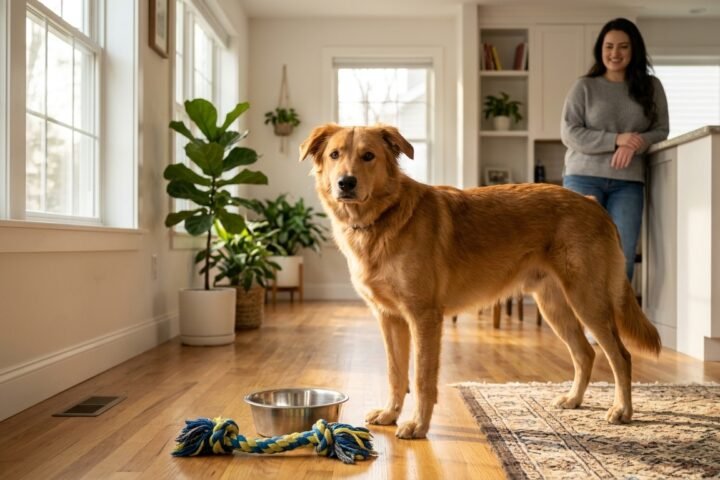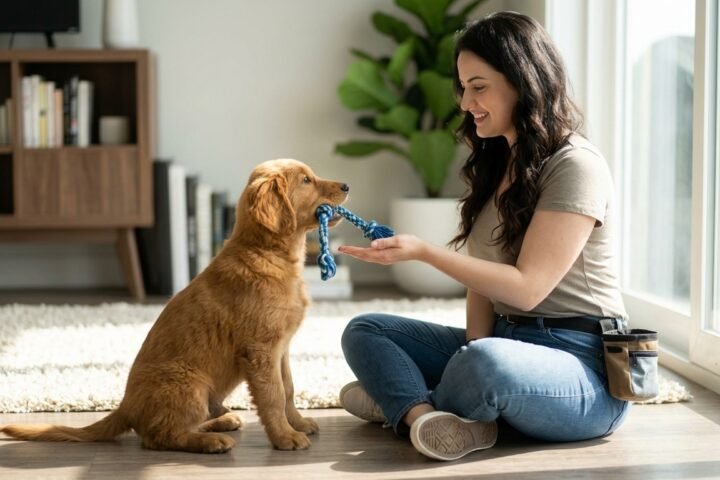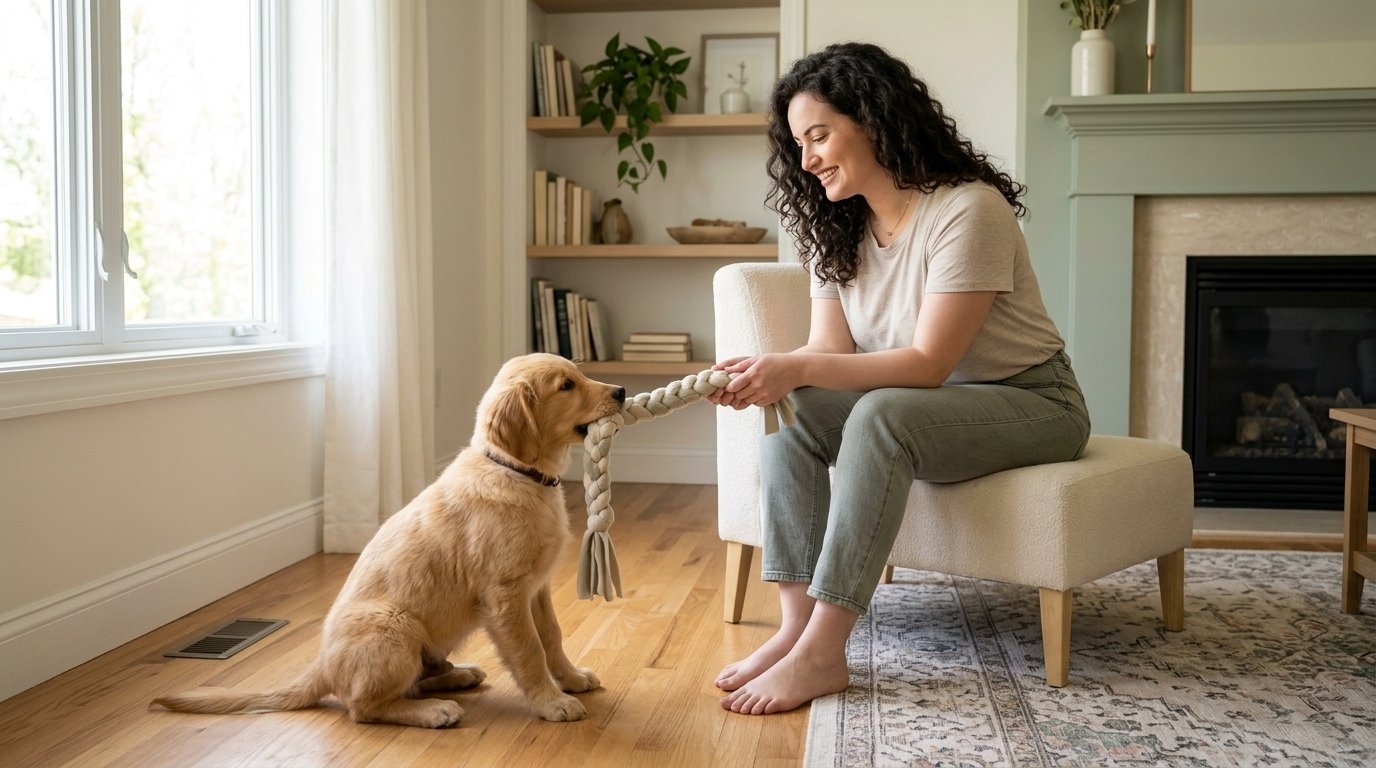
Dog mouthing is common during puppyhood and may also occur when adolescent or adult dogs become excited. Although playful mouthing is usually not intended to cause harm, sharp teeth and increasing jaw strength can make it painful—and allowing it to continue can create an unsafe habit.
The most effective response is not to frighten or physically punish your dog. Instead, teach a simple rule: teeth on people make attention stop, while calm behavior and playing with appropriate toys make good things happen.
This guide explains why dogs mouth, how to recognize potentially concerning behavior, and seven gentle ways to stop play biting.
Table of Contents
What Is Dog Mouthing?
Dog mouthing usually describes a dog putting their mouth or teeth on a person during play, exploration, or excitement. Intent cannot be judged from mouth contact alone. It may involve softly holding a hand, grabbing a sleeve, chewing fingers, nipping ankles, or making repeated open-mouth contact during play.
Mouthing is especially common in puppies. They investigate objects with their mouths, play by biting their littermates, and experience a strong need to chew while teething. Through interactions with their mother, siblings, other dogs, and people, puppies gradually learn bite inhibition—the ability to control the pressure of their jaws.
According to veterinary behavior guidance from VCA Animal Hospitals, young dogs commonly nip as a form of social play rather than because of teething alone. Chewing furniture and household objects may be more directly related to teething, while grabbing moving hands or clothing is frequently an invitation to play.
Adult dogs may mouth for several reasons:
- Excitement during greetings
- Attempts to initiate play
- Attention-seeking
- Frustration
- Overstimulation
- A history of being allowed to play with hands
- Difficulty controlling impulses
- Anxiety or discomfort with handling
The behavior’s meaning depends on the dog’s overall body language and the situation in which it occurs.
Why Does My Dog Mouth Me?
Before changing dog mouthing, identify what happens immediately before it. Behavior is easier to modify when you understand its trigger and what the dog gains from it.
Play and social interaction
Dogs naturally use their mouths during play with other dogs. Without training, a puppy may try to interact with people in the same way. Moving hands, sleeves, shoelaces, and pant legs can be especially tempting.
If grabbing you makes you wave your arms, push the dog, speak excitedly, or begin a chase, the behavior may become more rewarding.
Teething and the need to chew
Puppies usually have a strong need to chew while their adult teeth are developing. A suitable puppy-safe chew may soothe the gums and give the puppy an appropriate outlet.
Teething does not fully explain all puppy play biting, however. A puppy who jumps toward moving hands or chases ankles is probably seeking interaction in addition to oral relief.
Overexcitement
Some dogs begin gently but lose control as play intensifies. Their movements become faster, their bites become harder, and they stop responding to familiar cues.
This pattern is common during energetic greetings, wrestling games, or fast-paced play. The solution includes ending the interaction before the dog becomes overwhelmed—not waiting until the dog is completely out of control.
Fatigue
Puppies need substantial sleep. A tired puppy does not always appear sleepy; instead, the puppy may race around, grab clothes, bark, jump, or bite harder.
If mouthing predictably increases late in the day, after visitors, or following a long activity period, check whether your puppy needs a bathroom break, water, or quiet rest. The American Kennel Club’s puppy-biting guidance notes that tiredness and unmet needs can contribute to biting episodes.
Attention-seeking
Even negative attention can reinforce behavior. Talking, pushing, touching, or repeatedly saying “no” may give a social dog exactly what they wanted.
Teach the dog that calm alternatives—such as sitting, bringing a toy, or keeping four paws on the floor—are more reliable ways to gain attention.
Stress, fear, or discomfort
Not every use of a dog’s mouth is playful. A dog may make mouth contact when worried about restraint, grooming, physical handling, or an approaching person.
Watch for tension, avoidance, freezing, lip licking, tucked posture, a hard stare, or attempts to escape. The PawMindTips guide to signs of a stressed dog can help you recognize less obvious indications that a dog needs space.
Sudden mouthiness in a normally calm adult dog can also be associated with pain or illness. Arrange a veterinary examination when the behavior appears abruptly, particularly if it occurs during touch or movement.
Dog Mouthing vs. Aggressive Biting
Playful mouthing and threatening behavior can look similar at first glance, but context and body language provide important clues.
| More consistent with playful interaction | Signs to stop and assess |
|---|---|
| Loose, wiggly body | Stiff or frozen posture |
| Relaxed facial expression | Tense face or hard stare |
| Bouncy movements with pauses | Lunging with tense body language |
| Willingly switches to a toy | Contact continues or escalates despite disengagement |
| Gentle mouth pressure | Painful pressure, bruising, or broken skin |
| Relaxed interaction during play | Contact associated with guarding, unwanted handling, or attempts to escape |
These signs are clues, not a safety test or a diagnosis of aggression. Playful mouthing can still injure someone, and gentle mouth contact can occur when a dog feels uncomfortable. Consider the whole interaction and stop whenever someone feels unsafe.
Growling does not automatically prove aggression because dogs may vocalize during play. However, growling combined with stiffness, guarding, fear, lunging, repeated hard bites, or punctured skin needs to be taken seriously.
Do not test a dog by repeating the action that triggered a warning. Do not punish growling; it communicates discomfort and may help prevent a bite. Create distance and seek qualified assistance.
If a bite breaks the skin, calmly separate the dog without using your hands near the mouth. Wash the wound and obtain appropriate human medical advice. The dog should also be evaluated if pain, illness, or a sudden behavioral change could be involved.
How to Stop Dog Mouthing in 7 Gentle Steps
Successful dog-mouthing training combines prevention, redirection, immediate consequences, and reinforcement of an alternative behavior. Everyone interacting with the dog should follow the same basic process.
1. Keep appropriate toys within reach
Place toys in the locations where mouthing commonly occurs, such as near the front door, couch, yard entrance, or puppy play area.
Choose toys that create space between teeth and hands:
- Long tug toys
- Soft toys
- Durable rubber toys
- Food-dispensing toys
- Puppy-safe chews
- Braided fleece toys
When your dog approaches with a loose, playful body, present the toy before teeth reach you. Move it away from the dog along the floor to make it interesting rather than pushing it toward the dog’s face.
Praise the dog for taking the toy. Continue interacting so the toy becomes part of a satisfying social game—not merely an object offered after all attention disappears.
Choose a toy suited to your dog’s size and chewing strength. Supervise use and remove toys that develop loose pieces or damaged seams.
Redirection works best before the dog is highly aroused. If teeth are already clamped onto clothing, avoid turning the incident into tug-of-war.
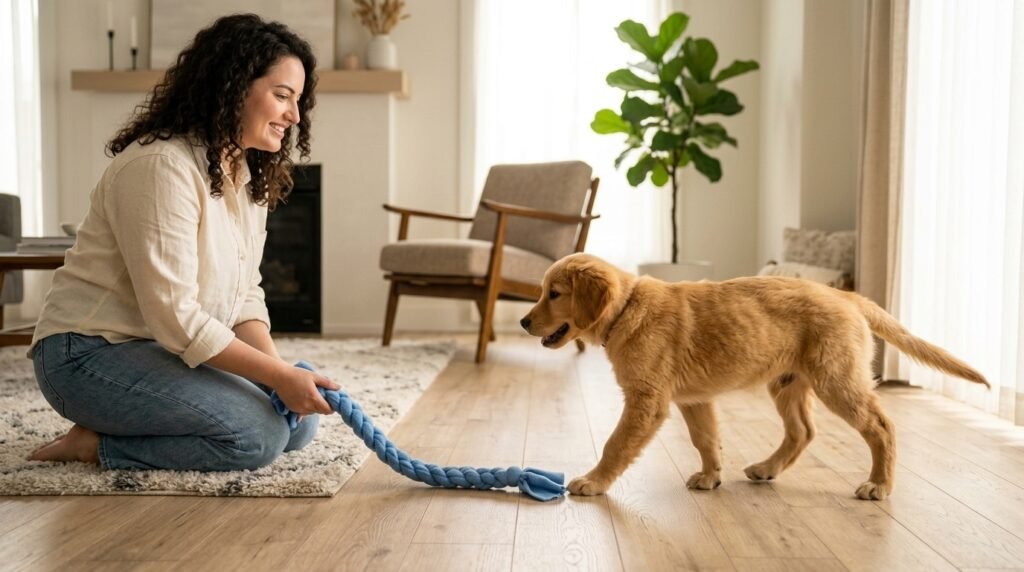
2. Make human skin and clothing boring
Fast hand movements can activate chasing and grabbing. When teeth touch you, avoid squealing, flapping your hands, shoving the dog, or pulling clothing rapidly.
For mild, playful mouthing, reduce fast movements and calmly disengage if it is safe to do so. Once the dog releases and settles, resume with an appropriate toy. Do not remain in place enduring painful bites. If contact becomes harder or the dog cannot disengage, prioritize getting safely behind a barrier and seek professional guidance.
Some trainers recommend saying “ouch.” That can interrupt certain puppies, but it excites others. If your puppy bites harder, barks, or immediately lunges back after hearing it, stop using the sound. A quiet withdrawal is clearer for that dog.
3. End attention briefly when mouthing continues
If your dog returns to your skin after redirection, quietly remove yourself for approximately 10–30 seconds.
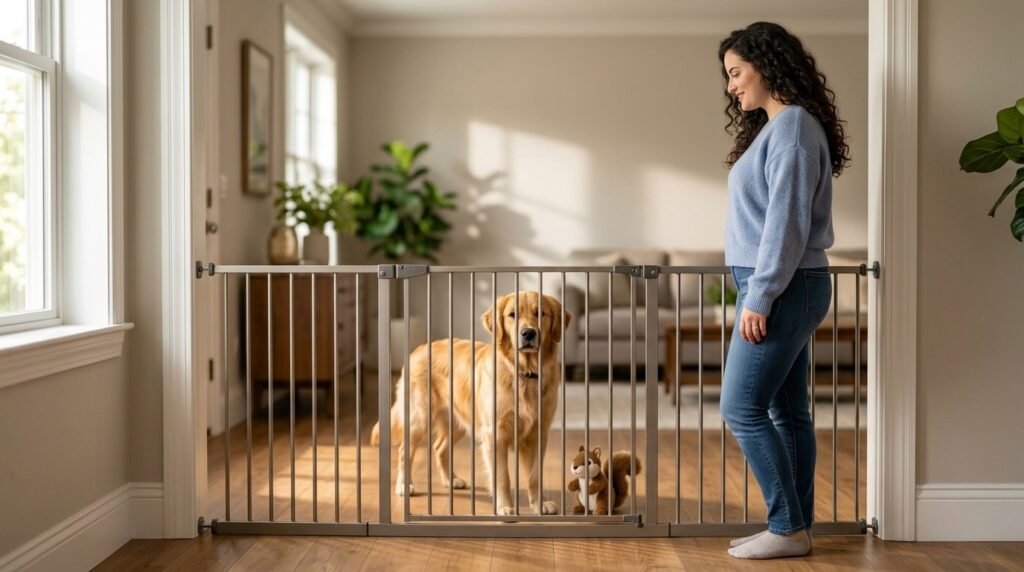
Step behind a baby gate or leave through a nearby door. Return once the dog is calm enough to try again. This is sometimes called a reverse time-out because the person leaves rather than physically carrying the dog away.
Keep the break:
- Immediate
- Calm
- Brief
- Consistent
- Free from scolding
A long isolation period is unnecessary because the dog may not connect it with the earlier behavior. Similarly, grabbing the collar and dragging the dog to another room can create conflict or feel like continued wrestling.
The Best Friends Animal Society also recommends becoming neutral and briefly removing engagement when redirection does not work.
4. Reward the behavior you want instead
Stopping an unwanted behavior is only half the training. Your dog also needs to learn what reliably earns play, petting, and attention.
Reward behaviors such as:
- Sitting before being greeted
- Keeping four paws on the floor
- Bringing a toy
- Relaxing on a mat
- Responding to “drop it”
- Moving away from clothing
- Calmly accepting petting
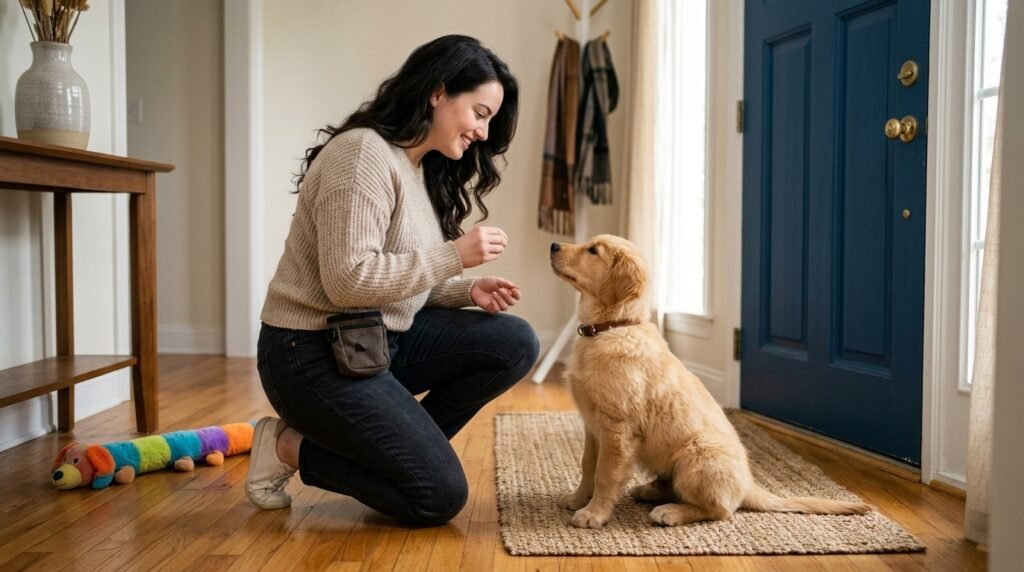
For example, approach your dog and ask for a sit. If the dog sits without mouthing, offer a treat, gentle praise, or a toy. If teeth touch your hand, withdraw briefly and try again after the dog settles.
PawMindTips’ seven-day good-manners training guide provides a broader structure for reinforcing calm, polite behavior around the home.
Keep practice sessions short. Several one- or two-minute sessions distributed throughout the day are often more productive than one long session that ends with an overstimulated puppy.
5. Manage excitement before the biting starts
Prevention gives your dog more opportunities to practice success. Track when dog mouthing happens for several days and note:
- Time of day
- People present
- Activity occurring
- Length of time since the dog slept
- Exercise or enrichment completed
- Body language before the behavior
- What happened immediately afterward
Use the pattern to intervene early. You might provide a chew before the puppy’s evening “witching hour,” greet the dog with a toy, shorten play sessions, or give the dog a quiet break after a stimulating walk.
Mental activity can help, but more excitement is not always the answer. Sniffing, food puzzles, short training games, licking activities, and adequate sleep can be more settling than nonstop running or wrestling.
6. Use consistent household rules
Mixed messages slow progress. A puppy cannot easily understand why biting one person’s hands is a game but biting another person’s hands causes anger.
Agree on a simple family rule:
Teeth touch a person → interaction pauses. Calm behavior or teeth on a toy → interaction continues.
Everyone should also avoid hand wrestling and games that encourage the dog to chase fingers, feet, or clothing. Tug is acceptable for many dogs when the dog targets the toy, releases when asked, and can pause without becoming frantic.
Practice calm starts and stops. Ask for a sit before presenting the tug toy. Pause periodically, cue “drop it,” reward the release, and resume. If teeth touch skin or clothing, end the game briefly.
7. Teach calmness and impulse control separately
A dog cannot practice self-control only when already overexcited. Teach calm behaviors during easier moments and gradually use them around more stimulating situations.
Useful skills include:
- Sit for greetings
- Go to a mat
- Drop it
- Leave it
- Hand target
- Wait at doors
- Settle with a chew
- Stay briefly before play
Teaching a dog to pause on cue creates a practical interruption before mouthing escalates. The PawMindTips guide on how to teach a dog to stay explains how to build duration and self-control gradually.
Practice releases with a toy during calm sessions, using our guide on how to teach a dog to drop it. This prepares a useful skill before an exciting game; it is not a reason to reach toward a dog who is guarding an item.
Use food, play, access to the yard, and other everyday rewards to reinforce these behaviors. The American Veterinary Society of Animal Behavior recommends reward-based training and advises against aversive methods because reward-based approaches provide welfare, learning, and relationship advantages.
Handling Common Dog-Mouthing Situations
Mouthing hands during petting
Let the dog choose whether to approach. If they seek contact, pet briefly on an area they usually enjoy, then pause. Continue only if the dog remains loose and actively seeks more contact. If they move away or do not re-engage, stop. Do not use food to distract the dog into tolerating unwanted touch.
Stop if the dog turns away, stiffens, lowers their head, or shows discomfort. A dog who mouths specifically when a body part is touched may need a veterinary examination.
Biting sleeves and pant legs
Freeze rather than pulling the fabric. Scatter a few treats away from your body if you can do so safely, then move behind a gate and obtain a toy.
For repeated incidents, arrange gates before play begins. If a trainer recommends a lightweight house line, attach it to a well-fitted harness, use it only under direct adult supervision, and avoid pulling or jerking. Remove it when supervision ends because it can become caught.
Chasing and biting ankles
Ankle biting commonly occurs when movement triggers play. Keep a toy accessible, interrupt before the dog reaches your legs, and reward the dog for following with four paws on the floor.
Practice taking one or two steps, then reward calm following. Gradually increase the number of steps. If the dog becomes frantic, stop and provide a calm break.
Mouthing visitors
Exercise and toilet the dog before guests arrive, but avoid exhausting or overexciting play immediately beforehand. Use a gate or leash to prevent rehearsal.
Ask visitors to ignore jumping and mouthing. Reward four paws on the floor, or give the dog a toy to carry. If the dog cannot remain calm, provide a comfortable separate area with a food-filled toy.
Puppy biting children
Children should not be responsible for correcting puppy biting. Their running, squealing, and rapid movements can intensify play, while their size puts their faces and hands closer to the puppy.
An adult should actively supervise every interaction. Use gates or pens when close supervision is not possible. Teach children to stand still, fold their arms, and call an adult rather than pushing, hitting, or running from the puppy.
An adult should intervene promptly and create separation; children should never be expected to tolerate bites while a training lesson continues.
The San Francisco SPCA specifically advises supervising children and puppies and avoiding physical corrections such as holding a puppy’s muzzle shut or hitting the nose.
Mistakes That Can Make Dog Mouthing Worse
Physical punishment
Hitting, pinning, alpha-rolling, shaking, muzzle-grabbing, or forcing the mouth closed may increase fear, defensive behavior, or excitement. These actions do not teach the dog what to do instead.
If previous corrections have made your dog wary, simplify interactions and allow more space. Rebuild a predictable pattern in which the dog can choose to disengage.
Repeating “no” without changing the outcome
A word has little meaning unless the consequence is clear. If you say “no” repeatedly while continuing to wrestle, talk, or push, the dog may treat your response as part of the game.
Use one consistent pattern: pause, redirect, and briefly withdraw if mouthing continues.
Jerking hands away
Rapid movement makes hands more exciting and may cause sharp puppy teeth to scrape the skin. Move slowly whenever possible and keep toys nearby so you can redirect safely.
Giving a treat immediately after a bite
If food helps you create distance during an unsafe incident, prioritize safety; do not delay getting away while asking the dog to sit or perform another cue.
During planned training, reward calm behavior before mouthing begins. If mouthing occurs, safely pause the interaction and allow a calm reset. Avoid repeatedly practicing a bite–sit–treat sequence, because the dog may learn the whole pattern rather than simply learning not to mouth.
Too much exciting exercise
Physical activity is important, but endless high-arousal games may produce a fitter dog who still cannot settle. Balance walks and play with sniffing, chewing, short training sessions, and restorative sleep.
Expecting instant improvement
Mouthing is a well-practiced and developmentally normal puppy behavior. Training should steadily reduce its force, frequency, and duration, but a single technique rarely eliminates it overnight.
How Long Does It Take to Stop Dog Mouthing?
There is no reliable timetable that applies to every dog. Progress depends on age, triggers, health, previous learning, and how consistently the household prevents and responds to mouthing. Look for gradual reductions in frequency and pressure, along with easier redirection and recovery. Seek help promptly if biting becomes harder or anyone feels unsafe.
Measure progress by more than whether mouthing occurred. Look for:
- Softer mouth pressure
- Fewer incidents per day
- Faster response to a toy
- Shorter periods of overexcitement
- Easier recovery after a break
- More frequent use of alternative behaviors
- Better ability to settle
Temporary setbacks are normal during teething, routine changes, exciting visits, adolescence, or periods of insufficient rest.
If there is no meaningful improvement after several weeks, review the dog’s triggers, sleep, enrichment, and consistency. A qualified reward-based trainer can observe details that are difficult to identify from written instructions alone.
When Dog Mouthing Needs Professional Help
Seek professional assistance promptly when:
- Teeth puncture or repeatedly bruise skin.
- Bite intensity is increasing.
- The dog freezes, stiffens, lunges, or gives a hard stare.
- Mouthing occurs around food, toys, resting places, or handling.
- The dog appears fearful or defensive.
- Children, older adults, or vulnerable people are at risk.
- The behavior began suddenly in an adult dog.
- The dog cannot be safely redirected.
- Household members are frightened.
- Consistent training is not producing improvement.
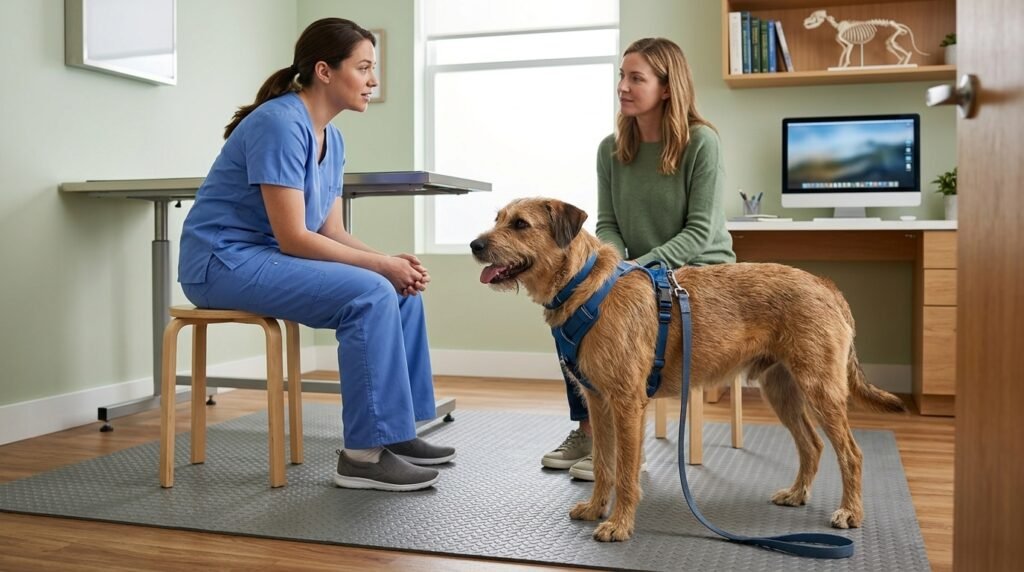
Start with a veterinarian when behavior changes suddenly or appears connected to touch, movement, eating, or physical discomfort. VCA’s overview of canine aggression includes pain and medical causes among the issues that require assessment. A training plan alone may miss an underlying health problem.
For serious or complex cases, seek a board-certified veterinary behaviorist or a qualified behavior consultant who clearly uses reward-based methods. The AVSAB’s guide to choosing a trainer explains how to evaluate methods, credentials, and warning signs before hiring someone.
Management remains essential while waiting for help. Use gates, leashes, distance, and controlled routines to prevent further incidents. Avoid intentionally exposing the dog to known triggers to “see what happens.”
Frequently Asked Questions
Is dog mouthing the same as biting?
Dog mouthing usually describes mouth contact during play, exploration, or excitement. The terms overlap: a playful dog can bite painfully, and a worried dog may use gentle mouth contact. Neither the label nor pressure alone tells you the dog’s intent. Evaluate the dog’s pressure, body language, trigger, and ability to disengage rather than relying only on the label.
Should I yelp when my puppy bites me?
A brief “ouch” or yelp interrupts some puppies, but it makes others more excited. If your puppy immediately bites harder or begins barking and jumping, remain quiet instead. Calmly stop interaction for a few seconds, then redirect the puppy to an appropriate toy.
At what age should puppy play biting stop?
Play biting usually decreases as puppies mature, complete teething, and receive consistent training. There is no exact deadline that applies to every dog. Pressure and frequency should gradually improve rather than becoming harder or more intense. Persistent or escalating biting deserves professional assessment.
Why does my dog mouth me only when excited?
Excitement reduces impulse control, and your dog may have learned that using their mouth starts or prolongs interaction. Keep a toy ready, shorten exciting activities, reward calm greetings, and pause attention immediately when teeth touch you. Practicing calm behaviors outside exciting situations will make them easier to use when needed.
Conclusion
Dog mouthing is usually driven by play, exploration, attention, or overexcitement, but it should still be addressed before it becomes a painful and unsafe habit. Provide appropriate toys, make skin and clothing uninteresting, pause attention when teeth make contact, and generously reward calm alternatives.
Consistency matters more than force. Avoid physical punishment, manage predictable triggers, protect children, and give puppies adequate opportunities to chew, play, sleep, and settle.
If mouthing becomes harder, involves tense or fearful body language, causes injuries, or appears suddenly, consult a veterinarian or qualified reward-based behavior professional rather than trying to manage the risk alone.