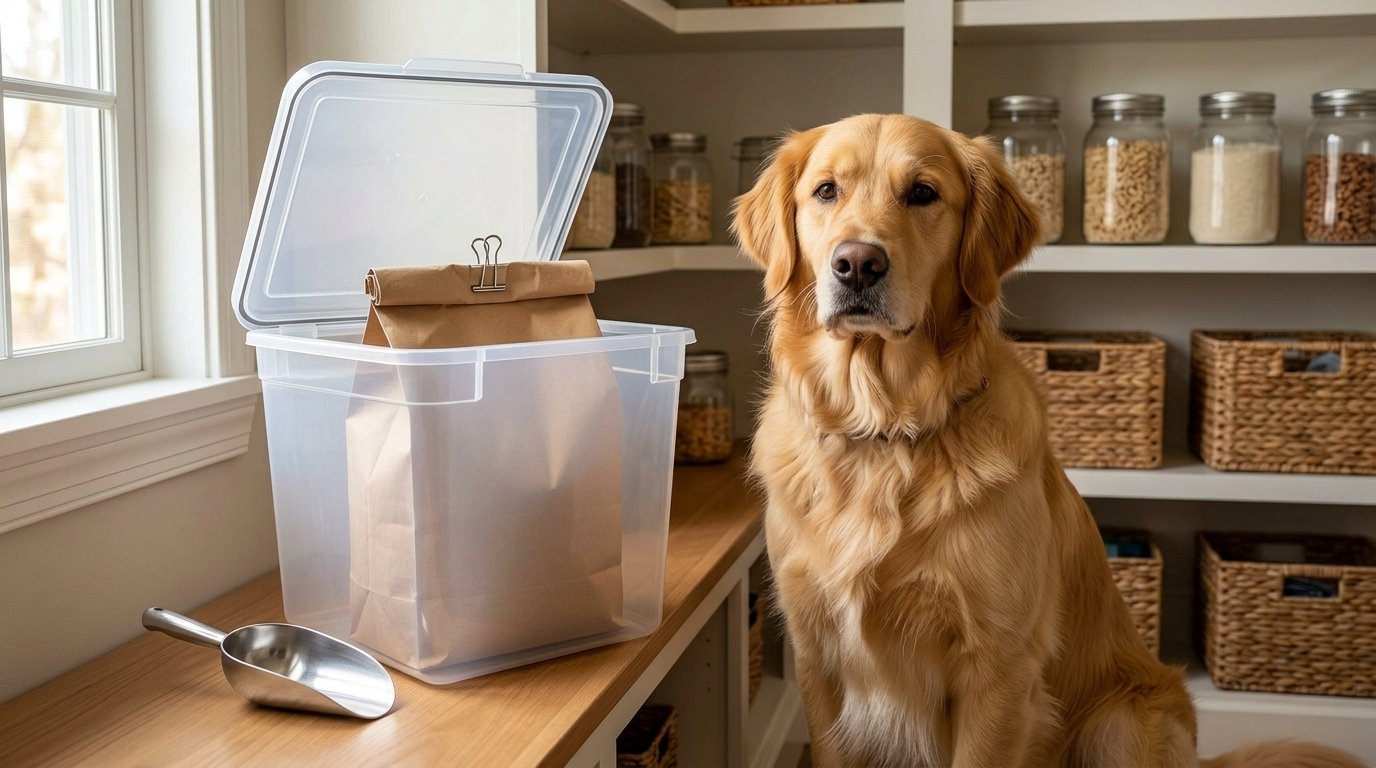
Dog food storage mistakes can turn a good bag of kibble stale long before it looks obviously spoiled. Air, heat, moisture, dirty containers, pests, and repeated handling all affect the food your dog eats. The simplest safe setup is to keep kibble in its original bag, press out excess air, close the bag securely, and place the whole bag inside a clean, dry container with a tight-fitting lid.
That routine does more than protect flavor. It preserves the product label and lot code, keeps old residue away from a new batch, and makes a recall easier to handle. This guide explains seven common mistakes, exactly how to fix them, and when food belongs in the trash rather than your dog’s bowl.
Table of Contents
Why Dog Food Storage Mistakes Matter
Dry dog food looks durable, but it is not immune to deterioration. Kibble contains fats that can oxidize after exposure to oxygen, heat, and light. Moisture can support mold growth, while an open or poorly sealed package may invite insects or rodents. Dirty scoops and bins can carry crumbs, oils, saliva, and microbes into a fresh supply.
Food handling matters to people, too. The CDC’s pet food safety guidance explains that pet food and treats can sometimes carry germs even when the products appear normal. Young children, adults 65 and older, pregnant people, and anyone with a weakened immune system need particular care around pet food, bowls, and feeding areas.
Proper storage cannot repair contaminated food, reverse a manufacturing problem, or make a product safe past obvious spoilage. What it can do is limit avoidable exposure and preserve the food as its manufacturer intended. If you are also evaluating the product itself, learn how to read beyond marketing claims in our guide to dog food fillers.
The Best Kibble Storage Setup at a Glance
Before reviewing the seven dog food storage mistakes, use this baseline:
- Keep the food in its original bag.
- Fold or roll the open top tightly and secure it with the bag’s closure or a sturdy clip.
- Put the entire bag inside a food-safe bin with a snug lid.
- Store it in a cool, dry indoor location away from direct sunlight and appliances that produce heat.
- Keep the bag’s “best by” date, lot number, UPC, and manufacturer contact details readable.
- Use a clean, dry scoop reserved for dog food.
- Wash and completely dry the empty bin before placing a new bag inside.
- Buy a bag your dog can finish within the manufacturer’s recommended period after opening.
The FDA recommends storing dry pet food in a cool, dry place below 80°F and keeping it in the original bag when possible. If you use another container, the agency advises keeping the label or recording the product information so it is available if a problem occurs.
Dog Food Storage Mistake 1: Pouring Kibble Directly Into a Bin
One of the most common dog food storage mistakes is emptying every new bag straight into a decorative plastic bin. A bin may look organized and its lid may reduce pest access, but pouring kibble directly into it removes two useful protections.
First, pet-food bags are designed for their contents. Their inner layers help reduce contact with air, moisture, and light. A household container does not necessarily provide the same barrier. Second, discarding the bag also discards the lot number, best-by date, UPC, feeding instructions, and manufacturer information. Those details are crucial if your dog becomes ill or the product is recalled.
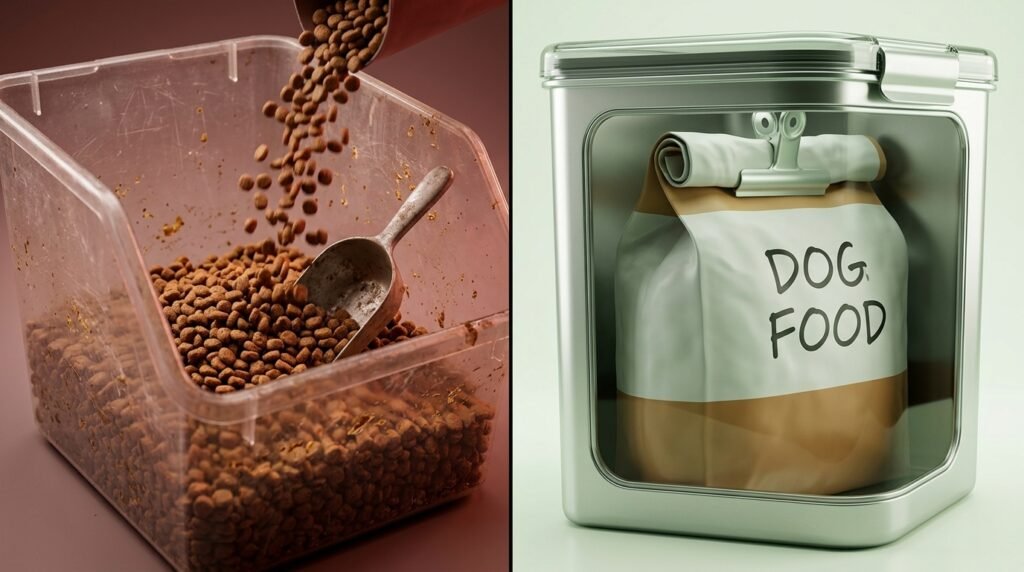
Residue presents another problem. Fats and tiny food particles cling to a bin’s corners, lid, and scratches. When a new batch is poured over the remains of an old one, older oxidized oils and contaminants mix with fresh food.
The safer fix
Place the sealed original bag inside the bin. Choose a container large enough that the bag fits without being crushed and the lid closes fully. Roll the top down after each use rather than leaving it gaping open inside the container.
If the original package is damaged and you must transfer the food, use a clean, completely dry, food-safe container. Photograph or cut out the product name, lot number, best-by date, UPC, and manufacturer contact details and keep them with the bin. Do not treat the transfer as a reason to combine brands, formulas, or batches.
Dog Food Storage Mistake 2: Using a Hot or Damp Location
A garage, porch, laundry room, shed, or sunny window may offer convenient space, but conditions there can change dramatically. Summer heat speeds fat oxidation and can reduce food quality. Humidity or condensation can introduce moisture. Outdoor-adjacent storage also gives ants, pantry moths, beetles, mice, and other pests more opportunities to reach the bag.
The FDA’s general target is a cool, dry location below 80°F. That does not mean 79°F is an ideal everyday goal; a stable, cooler indoor pantry is preferable when available. Avoid cabinets beside ovens, heating vents, water heaters, dishwashers, or pipes that sweat.
The safer fix
Select an interior cabinet or pantry that remains dry and has consistent temperatures. Keep the package off a floor that could become wet. In a humid climate, check the area for condensation and make sure the lid and bag closure remain sound.
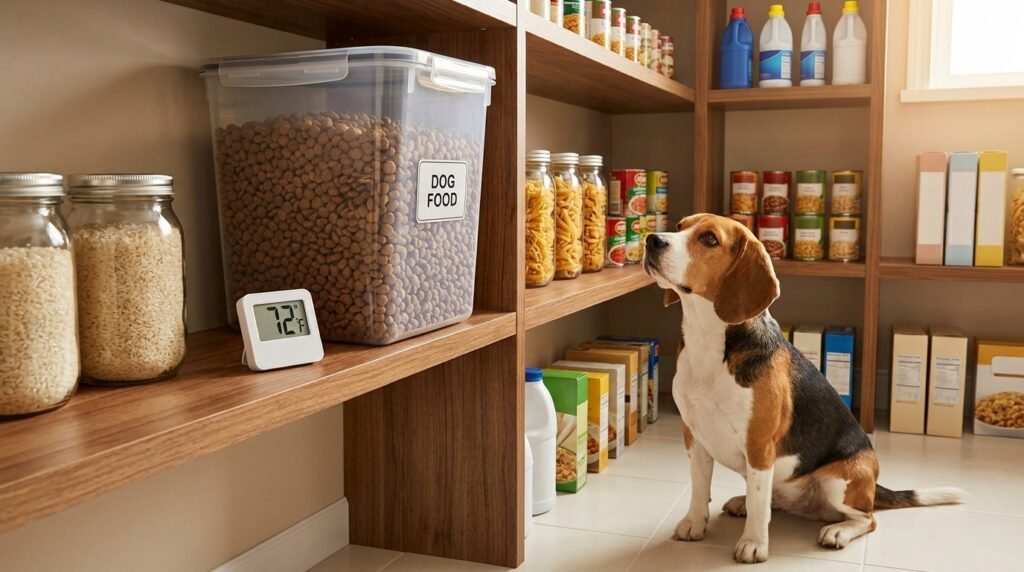
Never try to rescue damp kibble by drying it in an oven or mixing it with a fresh bag. Moisture may have affected more food than you can see. If kibble becomes wet, clumps unexpectedly, or shows mold, discard the affected supply.
Dog Food Storage Mistake 3: Leaving the Bag or Lid Open
Every opening exposes kibble to fresh air. Leaving the top unfolded, failing to engage a zipper seal, or resting a lid loosely on the bin accelerates exposure and makes access easier for pests. Even if kibble still looks normal, oxidation can change its aroma and flavor.
This is also why a huge storage container is not automatically better. A large volume of empty air remains around a small amount of food, and a cumbersome lid may be left unsealed during busy mornings.
The safer fix
After scooping, press excess air gently from the package, roll the top tightly, and secure it. Then close the outer container and check that no piece of the bag prevents the lid from sealing. Replace cracked lids, warped gaskets, or damaged clips.
If several family members feed the dog, post a simple “roll, clip, close” reminder inside the cabinet. Good kibble storage works best when the routine is easy enough for everyone to repeat.
Dog Food Storage Mistake 4: Topping Off Old Food
Topping off a bin feels efficient, but it is one of the riskier dog food storage mistakes. It mixes foods with different opening dates and possibly different lot numbers. You can no longer tell which kibble should be used first. If the older food is rancid, damp, insect-infested, or contaminated, the entire new supply may be exposed.
Mixing also complicates a recall. You may know the current bag’s lot number but not the lot of the kibble buried underneath. Even two bags of the same formula should remain identifiable as separate batches.
The safer fix
Finish one bag before opening another whenever practical. Do not pour the final handful into a new bag. If your dog is transitioning to a different food, measure the old and new products separately according to your veterinarian’s or manufacturer’s transition plan rather than blending whole bags in storage.
Mark the date you opened a bag directly on the package. Use the oldest intact bag first, and resist bulk buying unless your dog will finish the food promptly. Buying more than your dog can use is not a saving if the final portion goes stale.
Dog Food Storage Mistake 5: Reusing a Dirty or Damp Bin
An apparently empty bin still holds food dust and a film of oil. Simply adding a new bag allows that residue to remain for weeks or months. Washing helps, but adding food before the container is fully dry introduces another hazard: trapped moisture.
This mistake often occurs with the scoop as well. A scoop may touch hands, countertops, the floor, or a dog’s bowl and then return to the food. Never use a wet scoop, and do not scoop with the dog’s feeding bowl.
The safer fix
When a bag is finished, remove crumbs and wash the storage bin, lid, gasket, and scoop with hot, soapy water. Rinse them and allow every groove and corner to air-dry completely. Follow the container manufacturer’s cleaning instructions, especially if parts are dishwasher-safe or a gasket can be removed.
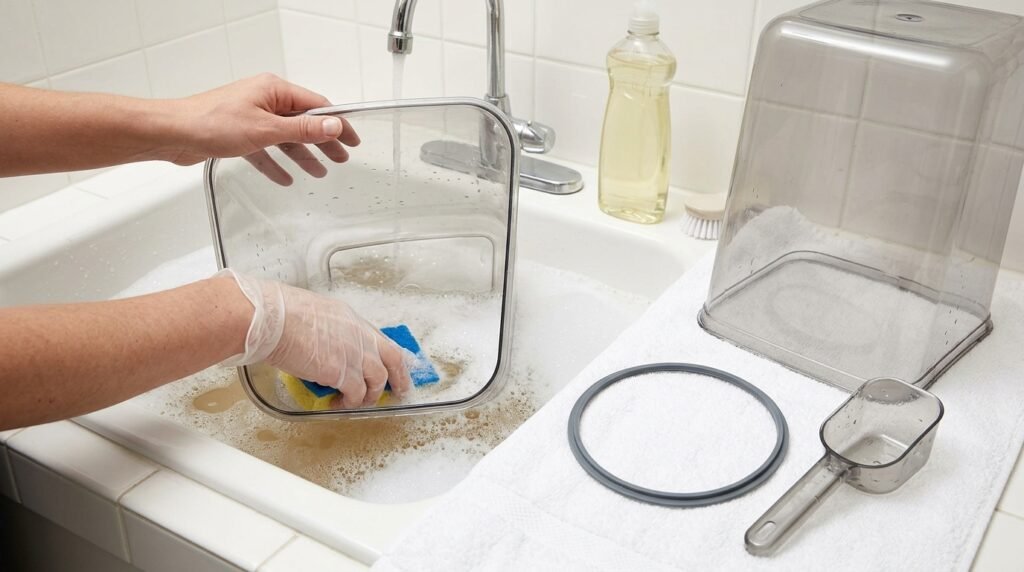
Wash pet bowls and utensils after use. The FDA advises washing bowls and scooping utensils with soap and hot water after each use. Always wash your hands with soap and water before and after handling pet food or treats. Keep pet-food preparation away from areas where human meals are prepared when possible, and supervise young children around feeding supplies.
Dog Food Storage Mistake 6: Buying an Oversized Bag
The printed best-by date usually applies to an unopened package stored as directed; it does not promise peak quality indefinitely after opening. Once the seal is broken, air and repeated handling enter the equation. There is no single after-opening deadline that fits every dry diet because formulas, fat levels, packaging, preservatives, climate, and manufacturer testing differ.
A practical rule is to buy the smallest bag that fits your budget and that your dog can finish within the brand’s stated after-opening window. Many secondary guides mention roughly four to six weeks, but the product manufacturer’s instructions should take priority. Contact the company if the package gives no guidance.
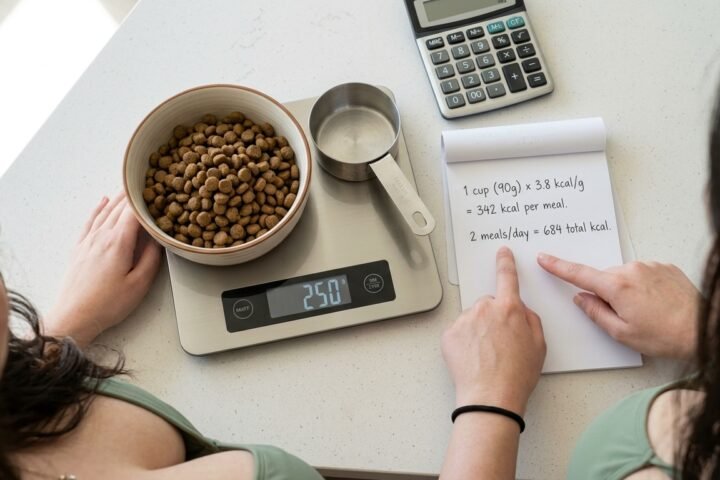
To estimate how long a bag will last, divide the bag’s weight by the amount fed per day using the same unit. Remember that the package feeding chart is only a starting point. If you sometimes replace kibble with a home-prepared diet, do not improvise the nutritional balance; use our overview of a homemade dog food recipe as a starting point for a conversation with your veterinarian. Follow your veterinarian’s calorie recommendation and use a kitchen scale for better portion precision.
The safer fix
Write the opening date on the bag and set a realistic buy size. Do not purchase a giant bag solely because its cost per pound is lower. For small dogs or homes with only one dog, two smaller sealed bags may preserve freshness better than one oversized bag—provided the total will be used before the printed dates.
Freezing kibble is not a universal solution. Packaging and formulas vary, and temperature changes can create condensation if the food is handled poorly. Ask the manufacturer whether freezing its product is recommended and how portions should be packaged and thawed.
Dog Food Storage Mistake 7: Ignoring Spoilage or Recalls
Dogs sometimes reject food for behavioral or medical reasons, but sudden refusal of a normally loved kibble deserves attention. Do not cover an odd odor with broth or mix questionable food into a fresh batch. A dog cannot confirm that a food is safe by sniffing it, and normal-looking food can still be involved in a recall.
Check kibble before serving. Warning signs include:
- A sour, paint-like, musty, or unusually rancid odor
- Visible mold, webbing, insects, larvae, rodent damage, or droppings
- Unexpected moisture, greasy coating, soft pieces, or clumping
- A meaningful color or texture change compared with a fresh batch
- A damaged, swollen, wet, or unsealed package
- Several pets refusing the same newly opened food
- Vomiting, diarrhea, marked lethargy, weakness, tremors, or other illness after eating it
Smell and appearance cannot detect every contaminant, so “it looks fine” is not proof of safety. If the food seems abnormal, stop feeding it and preserve the package details. Consult your veterinarian promptly if your dog becomes sick. Repeated vomiting, bloody diarrhea, collapse, difficulty breathing, seizures, severe weakness, or suspected toxin exposure warrants urgent veterinary care.
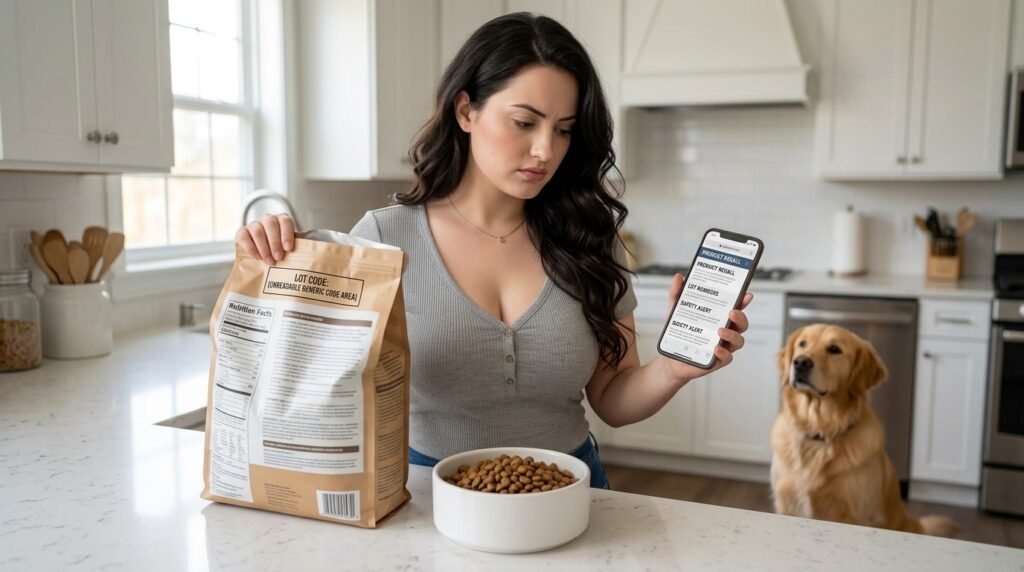
The FDA maintains current animal-food recalls and withdrawals. Compare the exact brand, product name, package size, lot number, UPC, and best-by date; do not assume that every product from a brand is included. Follow the recall notice’s disposal or return instructions rather than feeding the food “just to use it up.”
How Long Does Dry Dog Food Last After Opening?
The safest answer is: follow the package and manufacturer, not a universal internet countdown. The best-by date describes expected quality for an unopened, correctly stored product. After opening, freshness depends on the recipe, package barrier, room conditions, and how often the bag is exposed.
Use this decision hierarchy:
- Manufacturer directions: Follow an explicit “use within” statement on the package or company website.
- Opening date: Mark it clearly so you are not relying on memory.
- Storage conditions: Shorten your tolerance if the bag was exposed to heat, humidity, pests, or water.
- Sensory changes: Discard food with an off odor, visible contamination, moisture, or abnormal texture even if it is “within date.”
- Recall status: Stop and follow the notice if the matching lot is recalled, regardless of appearance.
Do not feed expired or questionable kibble to wildlife, shelters, or another household. If it is unsafe for your dog, it should not be passed along. Seal discarded food so children, pets, and wildlife cannot retrieve it, unless a recall directs you to use a specific disposal method.
A Simple Routine That Prevents Most Dog Food Storage Mistakes
Turn safe storage into a repeatable system rather than a one-time pantry project.
Every meal
- Wash your hands before and after handling the food.
- Use a dedicated, clean, dry scoop.
- Look and smell for anything unusual.
- Roll or reseal the original bag.
- Close the outer bin completely.
- Wash the food bowl and utensils with hot, soapy water after use.
Every new bag
- Check that the package is intact before purchase and again before opening.
- Confirm the product and formula are correct.
- Note the best-by date and photograph the lot number and UPC.
- Write the opening date on the bag.
- Empty and wash the bin and scoop; let both dry completely.
- Put the new bag inside only after the container is dry.
Once a month
- Inspect the pantry for crumbs, moisture, pests, or rodent activity.
- Check the container lid and gasket for damage.
- Review the FDA recall list or manufacturer alerts.
- Make sure the current bag will be finished within the brand’s recommended window.
Storage safety is only one part of feeding safely. Keep toxic human foods and household products away from curious dogs, and review what not to feed dogs plus these household items poisonous to dogs.
FAQs
Should dog food stay in the original bag inside a container?
Yes, that is generally the best setup for dry kibble. The original bag is designed to protect the food and keeps the lot number, best-by date, UPC, ingredients, and manufacturer details available. Roll or seal the bag and place the whole package inside a clean, dry container with a tight lid.
Is it safe to pour dog food into a plastic container?
It can be necessary if the bag is damaged, but direct pouring is not the preferred routine. Use a clean, completely dry, food-safe container and save all label and lot information. Wash and fully dry the container between batches; never top old food with new food.
Can dry dog food go bad before its expiration date?
Yes. Heat, humidity, air, water, pests, damaged packaging, or contamination can make food unsuitable before its best-by date. That printed date is not a guarantee after improper storage or opening. Discard food that smells rancid or musty, looks moldy, feels damp, contains pests, or is included in a recall.
What should I do if my dog ate spoiled kibble?
Stop feeding the food, keep the packaging and lot code, and call your veterinarian for case-specific advice. Tell the clinic what your dog ate, approximately how much, when it happened, and any symptoms. Seek urgent care for collapse, seizures, breathing difficulty, severe weakness, repeated vomiting, bloody diarrhea, or rapid deterioration.
Conclusion
The most preventable dog food storage mistakes are pouring kibble out of its protective bag, choosing a hot or damp location, leaving packages open, topping off old food, using dirty containers, buying oversized bags, and ignoring warning signs or recalls. A safer routine is straightforward: original bag, sealed outer bin, cool indoor pantry, clean dry tools, visible batch information, and a bag size your dog can finish promptly.
Take two minutes today to check the opening date, lid, storage temperature, and lot code. Small handling habits protect freshness, simplify recall checks, reduce waste, and help keep every meal as safe as possible.
This article provides general educational information and is not a substitute for veterinary diagnosis or treatment. Contact your veterinarian if your dog may have eaten spoiled or recalled food or develops signs of illness.