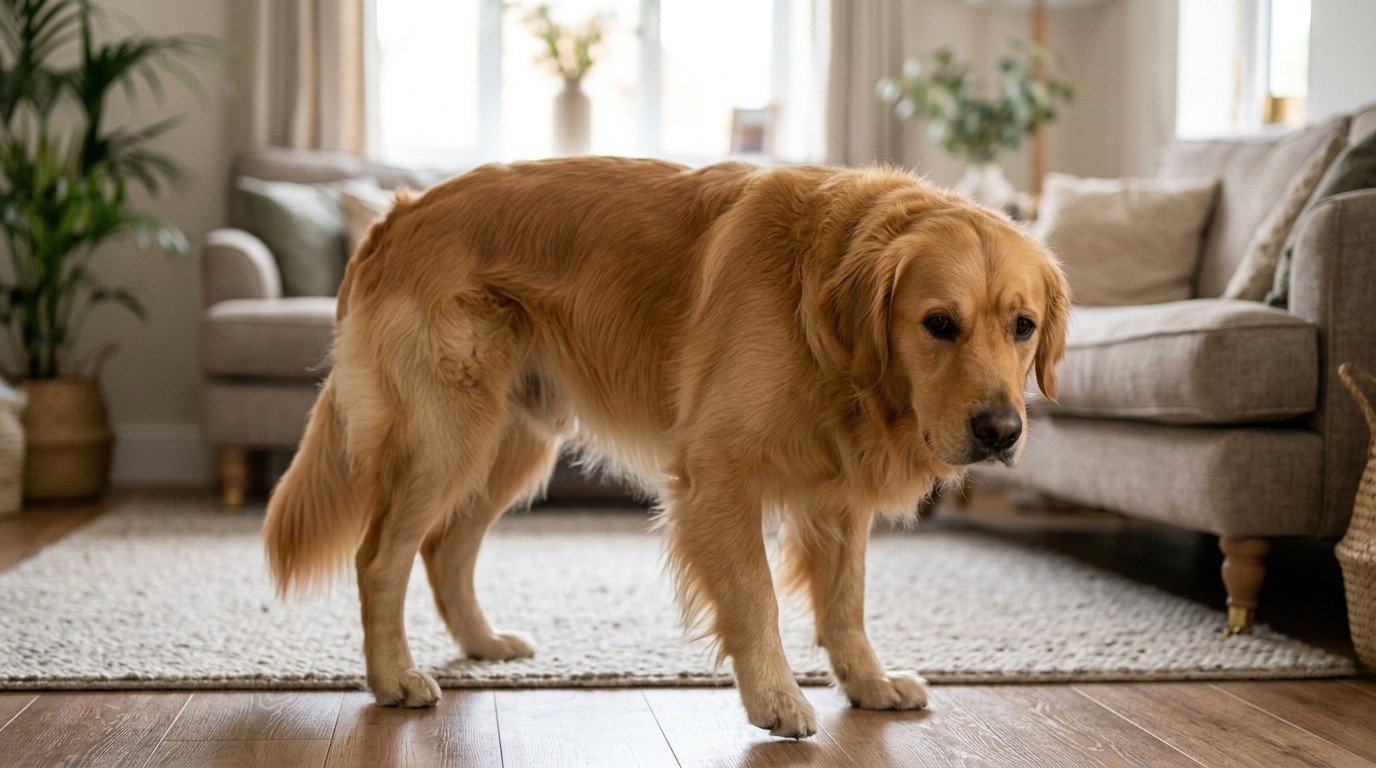
If your dog is limping but not crying, it does not necessarily mean the problem is minor. Dogs can experience pain or difficulty using a leg without whining, yelping, or showing obvious distress. A limp may result from something as simple as an injured nail or paw pad, but it can also indicate a ligament injury, joint disease, fracture, or another medical problem.
The most important thing is to look at how your dog is walking, whether they can put weight on the affected leg, how suddenly the limp started, and whether other symptoms are present. These observations can help you decide how urgently to seek veterinary care, although they cannot establish a diagnosis at home.
This guide explains seven possible causes of a dog limping without crying, what you can safely check, which warning signs require urgent attention, and what to do next.
Table of Contents
Why Is My Dog Limping but Not Crying?
Dogs do not always communicate pain through vocalization. Some continue eating, wagging their tails, greeting their owners, and showing interest in toys even when an injury or joint problem affects their movement.
Limping, also called lameness, means a dog is not using one or more legs normally. Your dog might take shorter steps, briefly lift a paw, shift weight onto the other legs, or avoid putting full weight on the affected limb.
There are several reasons a dog might limp without crying:
- Pain may be subtle. An injury can hurt during certain movements without causing constant, obvious distress.
- The problem may affect stability or movement. Joint and ligament problems can change how a dog walks even when the dog is not vocalizing.
- Your dog may still feel excited or interested in normal activities. Eating and playing do not reliably rule out pain.
- The injury may not be visible externally. Problems involving muscles, tendons, ligaments, bones, or joints may not cause an obvious wound.
- Your dog may show behavioral changes instead. Reluctance to jump, slower movement, reduced play, or repeatedly licking a paw can accompany a limp.
According to VCA Animal Hospitals’ guide to lameness in dogs, limping can result from pain or weakness affecting different parts of the musculoskeletal or nervous systems.
The key takeaway: Do not use crying as your only measure of pain. A new, unexplained limp deserves attention even when your dog otherwise seems normal.
7 Possible Causes of a Dog Limping but Not Crying
Several conditions can produce similar walking changes. The following possibilities can help you understand what a veterinarian may investigate, but the appearance of a limp alone cannot identify its cause.
1. A Paw Pad Injury, Foreign Object, or Broken Nail
Sometimes the problem starts at the paw rather than higher up the leg.
A small cut, torn nail, irritated skin between the toes, or object caught in the paw can make each step uncomfortable. These problems may cause a noticeable limp even when your dog remains alert and does not cry.
Look for:
- A cut or abrasion on a paw pad
- A cracked, split, or broken nail
- Redness between the toes
- A thorn or other visible foreign material
- Repeated licking or chewing at one paw
- A difference between the affected paw and the opposite paw
If your dog allows it, look at the paw in good lighting without squeezing it or forcing the toes apart.
Do not dig into the skin to remove a deeply embedded object. If a nail is badly damaged, the paw is bleeding, or the area is swollen, contact your veterinarian for guidance.
2. A Muscle Strain or Sprain
Dogs can strain muscles or injure soft tissues during running, jumping, rough play, slipping on a floor, or landing awkwardly.
A dog with a mild soft-tissue injury might limp after exercise but seem more comfortable while resting. However, similar symptoms can occur with more serious ligament or joint injuries.
Do not automatically assume your dog has a minor strain just because the limp started after playing.
Rest and restricted activity are sensible precautions while you arrange appropriate veterinary advice. If the limp is significant, keeps returning, or fails to improve, a veterinary examination is important.
3. A Cruciate Ligament Injury
The cranial cruciate ligament helps stabilize a dog’s knee. Injury or degeneration of this ligament can cause limping, particularly in a back leg.
Some dogs develop a noticeable limp suddenly. Others show intermittent changes in movement before the problem becomes more obvious.
You might notice that your dog:
- Puts less weight on one back leg
- Has difficulty getting up
- Hesitates before climbing stairs
- Struggles to jump into a vehicle
- Seems better at one moment and worse later
A dog does not need to cry for a knee injury to be significant. Veterinary examination is needed to assess joint stability and determine whether imaging or other tests are appropriate.
4. Arthritis or Other Joint Problems
Arthritis can cause stiffness, reduced mobility, and limping. It is more common in older dogs, but joint problems can affect younger animals too.
The signs may be subtle at first. Your dog might take longer to stand after sleeping, avoid jumping onto furniture, or seem stiff when starting a walk.
Some dogs move more comfortably after they have been walking for a short time. That pattern does not prove arthritis, however, and other conditions can cause similar symptoms.
Do not dismiss recurring limping as normal aging. A veterinarian can assess the affected joints and recommend an appropriate management plan.
5. A Fracture or Dislocated Joint
A broken bone or dislocated joint can cause substantial pain and difficulty walking. Swelling, an abnormal limb position, or refusal to bear weight may occur, but the severity is not always obvious to an owner.
Possible warning signs include:
- Suddenly refusing to use a leg
- An abnormal angle or shape of the limb
- Significant swelling
- A limp following a fall, collision, or other trauma
- A visible wound near the affected area
Suspected fractures and dislocations require prompt veterinary assessment. Do not try to straighten the leg, manipulate the joint, or apply a homemade splint.

Keep your dog as still as practical and contact a veterinary clinic for instructions on safe transport.
6. Hip or Knee Conditions
Hip dysplasia, a slipping kneecap (luxating patella), and other orthopedic conditions can affect how a dog walks.
Some dogs briefly skip or hop on a leg before returning to a more normal gait. Others may show difficulty rising, reduced activity, or reluctance to jump.
The symptoms can come and go, making the problem easy to overlook. However, an intermittent limp is not proof that the condition is harmless.
Your veterinarian can assess the joints, consider your dog’s age and breed, and decide whether diagnostic imaging is needed.
7. Nerve, Spinal, or Other Medical Problems
Not every abnormal gait originates in a paw or joint. Neurologic or spinal problems can affect coordination, limb strength, and the ability to walk normally. Infections and other medical conditions can also contribute to lameness.
Watch for signs such as:
- Dragging a paw or leg
- Knuckling, where the toes curl under during walking
- Wobbliness or loss of coordination
- Sudden weakness
- Difficulty standing
- Changes affecting more than one leg
These signs can indicate a more serious problem than an isolated mild limp. Sudden weakness, inability to walk, or dragging a limb warrants emergency veterinary assessment.
When Is a Limping Dog an Emergency?
The urgency depends on the severity of the limp, how it began, and whether other symptoms are present.
Do not wait for your dog to cry before seeking help.
Seek emergency veterinary care now if your dog:
- Cannot stand or walk, or suddenly loses the ability to use a limb
- Drags a leg or develops sudden severe weakness or poor coordination
- Has an obviously deformed limb or a suspected fracture
- Has severe bleeding or a serious open wound
- Develops major swelling or severe pain
- Has difficulty breathing, collapses, or has pale gums
- Begins limping after a major accident, such as being struck by a vehicle
These warning signs can indicate a serious injury or another urgent medical condition. Call the veterinary hospital while arranging safe transport.
Contact your veterinarian promptly if:
- Your dog refuses to put weight on the affected leg, even without other obvious emergency signs
- The limp is moderate, severe, or worsening
- You notice swelling, a damaged nail, a wound, or persistent licking
- The limp repeatedly disappears and returns
- Your dog becomes less active or has difficulty with everyday movement
- You cannot identify a clear reason for the limp
If the limp is mild but unexplained, contact your veterinarian for advice about an appropriate appointment time. Do not let a fixed waiting period override worsening symptoms or your veterinarian’s recommendations.
The VCA first-aid guide for limping dogs explains that severe pain and certain injuries should not be investigated through forceful home examination. When in doubt, seek professional guidance.
What Should You Check If Your Dog Is Limping?
If your dog is alert and comfortable enough to tolerate a brief visual check, gather information without trying to diagnose the injury.
Identify which leg is affected
Notice whether the limp involves a front leg or a back leg, and whether it appears to affect the left or right side.
Look for changes such as shorter steps, shifting weight, lifting a paw, or avoiding full contact with the ground.
Do not make your dog repeatedly walk around just to observe the limp. If movement causes distress, stop.
Look at the paw gently
If your dog permits it, inspect the paw pads, nails, and spaces between the toes.
Look for obvious cuts, broken nails, redness, or visible foreign material. Stop immediately if your dog pulls away, becomes distressed, or might bite.
Do not force the leg to bend, press hard on a painful area, or try to reproduce the limp.
Note when the limp started
Try to remember:
- When you first noticed the problem
- Whether it appeared suddenly or gradually
- Whether your dog had been running, jumping, or slipping
- Whether the limp is getting better, worse, or staying the same
- Whether your dog has difficulty rising or using stairs
- Whether other symptoms have appeared
A short video of an already-occurring limp, taken without making your dog walk unnecessarily, may help your veterinarian understand what you observed at home.
Consider your dog’s overall condition
Notice whether your dog is alert, breathing normally, eating as usual, and behaving normally for them.
These details help provide context, but normal appetite and a friendly attitude do not rule out an injury.
What to Do If Your Dog Is Limping but Not Crying
While arranging veterinary advice, focus on preventing further injury.
1. Restrict activity
Stop running, jumping, rough play, and strenuous walks. Take your dog outside only as necessary for toileting, keeping movement controlled and brief if your dog can walk safely.
Do not encourage exercise to test whether the limp has disappeared.
2. Make the environment safer
Keep your dog away from slippery floors, stairs, and furniture that encourages jumping. Use a quiet, comfortable resting area.
Avoid unnecessary movement, particularly if you suspect a fracture, spinal problem, or significant injury.
3. Avoid unapproved medication
Never give human pain relievers or leftover pet medication unless a veterinarian specifically instructs you to do so.
Some common human medicines can be toxic to dogs, and an inappropriate drug or dose can cause additional harm. Do not use medication to mask a limp instead of investigating its cause.
4. Do not massage or manipulate the leg
Avoid forceful stretching, joint bending, massage, or attempts to pop a joint back into place. These actions can worsen some injuries.
Do not apply a tight bandage or homemade splint without veterinary guidance.
5. Arrange appropriate veterinary care
Tell the clinic which leg is affected, when the limp began, whether your dog can bear weight, and whether an accident or other symptoms were involved.
Seek emergency care for the warning signs described above. If the limp is mild, contact your veterinarian for advice rather than assuming it will resolve on its own.
How Will a Veterinarian Diagnose and Treat the Limp?
The veterinarian will usually ask about the onset of the limp, recent activities, previous injuries, and changes in your dog’s movement or behavior.
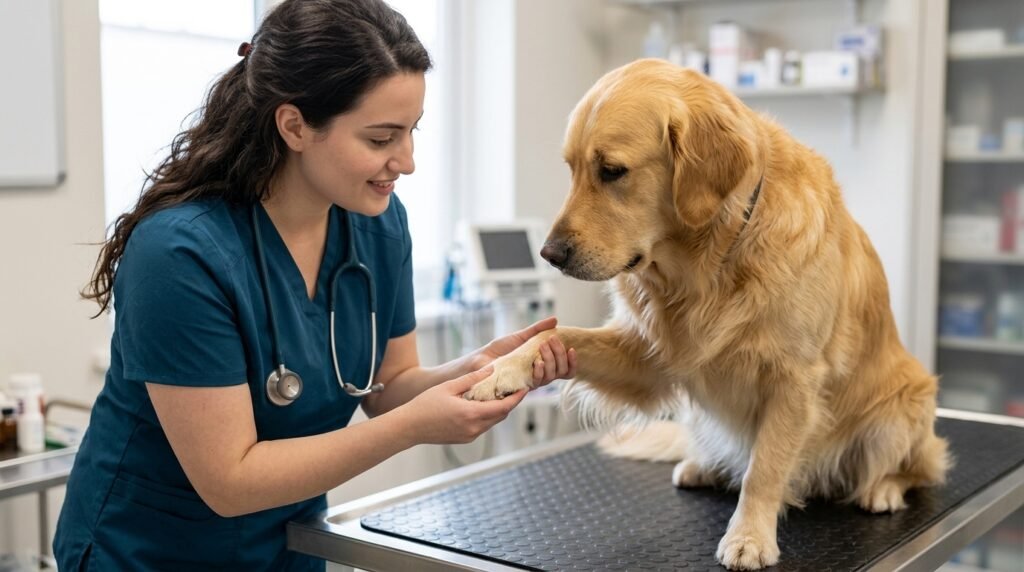
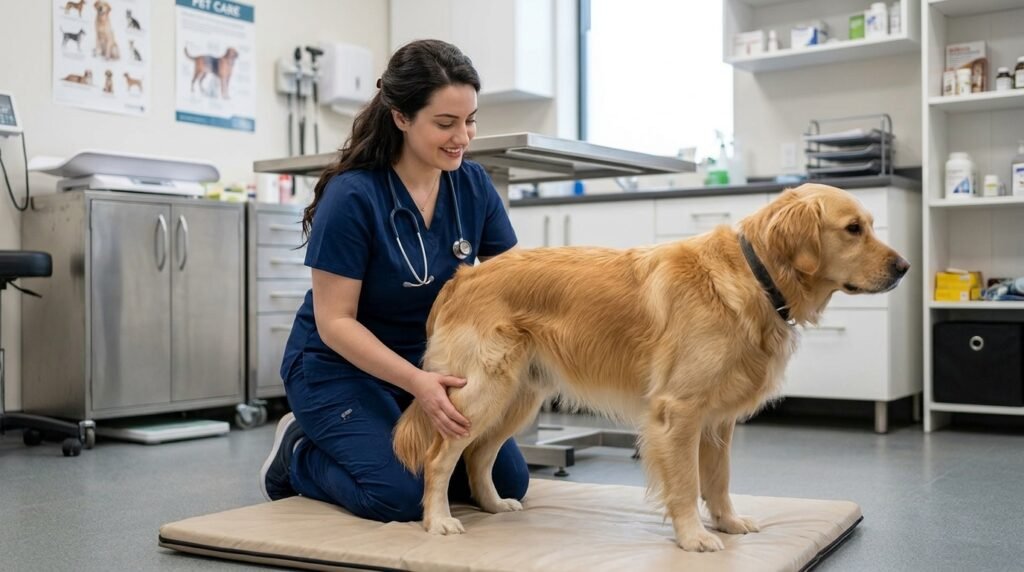
The examination may include observing your dog walk when safe, checking the paws and nails, and assessing the muscles, bones, joints, and nervous system.
Depending on the findings, the veterinarian may recommend X-rays, blood tests, or other diagnostic procedures. Not every limp requires every test, and some soft-tissue problems need a different diagnostic approach from bone injuries.
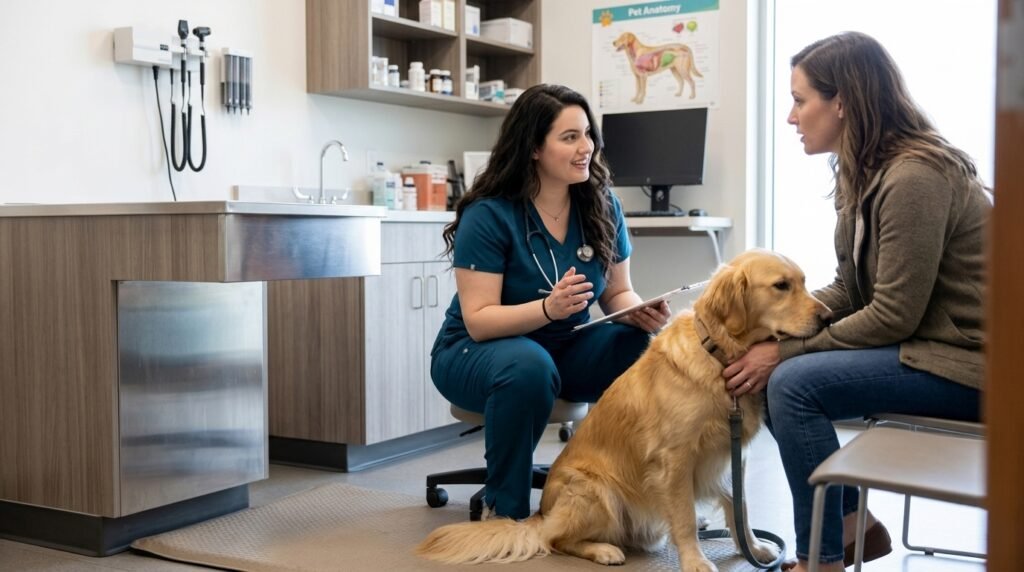
Treatment depends on the underlying cause. It might involve activity restriction, veterinarian-prescribed medication, wound care, rehabilitation, or surgery for certain injuries.
Do not assume that every limp needs surgery or that every mild limp can be treated with rest alone. The right plan depends on what is causing the abnormal movement.
Early assessment can help identify problems that require treatment and reduce the risk of aggravating an injury by continuing normal activity.
FAQs
1. Can a dog limp without being in pain?
Yes, an abnormal gait can sometimes relate to weakness or instability rather than pain alone. However, pain is a common reason dogs limp, and the absence of crying cannot reliably establish that a dog is comfortable. A new or unexplained limp should be assessed appropriately.
2. Should I let my dog walk if they are limping but not crying?
Avoid unnecessary walking, running, jumping, and play. If your dog can walk safely, keep essential toileting trips brief and controlled. If your dog cannot bear weight, has severe symptoms, or appears neurologically weak, seek urgent veterinary care rather than trying to exercise or test the leg.
3. How long should I wait before taking my limping dog to the vet?
There is no single safe waiting period for every dog. Severe, worsening, non-weight-bearing, or trauma-related limping requires prompt assessment, while emergency signs require immediate care. For a mild but unexplained limp, contact your veterinarian for individualized advice rather than waiting for crying to begin.
4. Can I give my dog pain medicine for limping?
Do not give human pain medication or leftover medication without veterinary direction. Some drugs used by people can cause serious toxicity in dogs. A veterinarian can determine whether pain relief is appropriate and choose a medication and dose based on your dog’s condition.
Conclusion
If your dog is limping but not crying, do not assume the problem is minor. Paw injuries, muscle strains, ligament damage, arthritis, fractures, joint conditions, and neurologic problems can all affect normal movement, and several may cause few obvious external signs.
Restrict strenuous activity, check the paw only if it is safe to do so, and observe how the limp began and whether it is changing. Seek emergency care for severe symptoms, inability to walk, major trauma, or signs of neurologic dysfunction. Contact your veterinarian for advice about any new, persistent, worsening, or unexplained limp.
Your dog does not have to cry to need help. Paying attention to changes in movement and seeking appropriate veterinary guidance is the safest next step.