The tree goes up, the coffee table fills with chocolate boxes, and your dog is suddenly very interested in the living room. Your cat, meanwhile, has spotted the tinsel. Christmas hazards for dogs and cats rarely look dangerous at first glance, because most hide inside normal, happy holiday routines at home.
Some festive risks are smaller than their reputation, like the poinsettia by the door. Others, like lilies in a bouquet, can send a cat to the emergency clinic. This guide sorts the real emergencies from the mild worries, plant by plant and food by food for you.
You will learn what to do if your pet eats something, which treats are safe to share, and how to set up a tree and table that keep everyone relaxed all season.
Quick Answer
Most christmas hazards for dogs and cats fall into three groups: foods, plants, and decorations. Chocolate, lilies, and tinsel are true emergencies, while poinsettia is usually mild. Keep human treats, ribbons, and breakable ornaments out of reach, secure the tree well, and call your veterinarian or a poison helpline at once if your pet swallows something risky this holiday season.
If Your Pet Eats Something: The First 10 Minutes
Stay calm and move fast. Move your pet away, shut the door, and put the rest out of reach. Note what is missing. Christmas hazards for dogs and cats often act quickly.
Call your veterinarian or the ASPCA Animal Poison Control Center at (888) 426-4435; a consultation fee may apply. The ASPCA holiday safety tips urge owners to call before signs start. Say the species, weight, item, amount, and time.
Do not induce vomiting unless a veterinarian or poison specialist tells you to do it. Never offer milk, salt, alcohol, or human medicine. If your pet drools, vomits, shakes, strains, collapses, or seems drunk or weak, skip the phone queue and drive to an emergency clinic now, and bring the packaging with you.

Hazard 1: Chocolate, Cocoa and the Gifts Under the Tree
Chocolate contains theobromine, which dogs and cats cannot clear like people can. Dark chocolate is more dangerous than milk, and baking chocolate and cocoa powder are most concentrated. The Merck Veterinary Manual guide to chocolate toxicosis explains why small amounts matter.
December hides chocolate everywhere. Boxes sit under the tree, stockings hang at nose height, and calendars and ornaments invite sniffing. Dogs cause most cases because they hunt sweets eagerly, but cats are at risk too.
Signs include vomiting, diarrhea, restlessness, and a racing heart; tremors and seizures can follow, sometimes hours later. Treat christmas hazards for dogs and cats like medicine: store every box sealed and high, hang edible gifts out of reach, and call your vet the moment you find torn foil or an empty wrapper.
Hazard 2: Holiday Foods — Xylitol, Raisins, Onions and Bones
Sugar-free candy, gum, and some baked goods and peanut butters contain xylitol, also called birch sugar. In dogs, xylitol can trigger rapid insulin release, a dangerous drop in blood sugar, and liver failure. The ASPCA list of people foods to avoid feeding pets is worth checking first.
Grapes, raisins, and currants hide in fruitcake, Christmas pudding, and mince pies. In dogs they can cause kidney failure, and no safe amount is known. Cats are affected less often, yet these foods should stay off their menu too.
Onions, garlic, chives, and leeks in stuffing and gravy damage red blood cells, and cooked or powdered forms still count. Cooked turkey, chicken, or ham bones are also among christmas hazards for dogs and cats: they splinter, choke, obstruct, and can tear the gut.

Hazard 3: Fatty Leftovers, Turkey Skin and Pancreatitis
Not every danger is a poison. Turkey skin, ham fat, gravy, and rich scraps overload the stomach, and many pets vomit or develop diarrhea afterward. One generous plate can undo a year of careful feeding.
The bigger risk is pancreatitis, an inflamed pancreas that fatty meals can trigger. Watch for a painful belly, a hunched or praying posture, repeated vomiting, and low energy, often a day or two later. This condition is painful and needs veterinary care, not a wait-and-see weekend.
Guard the trash can, a hiding place for christmas hazards for dogs and cats like bones, fat, foil, and string. Ask guests not to slip treats under the table. Our guide to what not to feed dogs covers everyday food risks beyond the season.
Hazard 4: Tinsel, Ribbon and String — the Linear Foreign Body
Tinsel is not poisonous. The danger is mechanical. Cats love shiny, moving strands, and a swallowed length of tinsel, ribbon, or string is a linear foreign body. Christmas hazards for dogs and cats do not always come in a wrapper or a bowl.
Once one end anchors, the intestine keeps moving and bunches up like fabric on a thread. The strand can saw through the gut wall and cause a life-threatening perforation. Many cases need emergency surgery to repair the damage.
If you see a strand hanging from the mouth or bottom, never pull it. Pulling can tear the intestine from inside. Call your vet at once, and watch for drooling, gagging, vomiting, hiding, and loss of appetite. Cat homes are safest when tinsel is skipped entirely this year.
Hazard 5: Lilies — the One Plant That Is a True Emergency for Cats
If one plant deserves real fear, it is the lily. True lilies and daylilies often arrive in holiday bouquets and gifts. For cats, every part is dangerous: petals, leaves, pollen licked from fur, and even vase water can trigger kidney failure.
The International Cat Care guide to lily poisoning in cats stresses how little a cat needs to swallow. Early signs can begin within hours, with drooling, vomiting, and lost appetite. Kidney failure can follow within days, so early treatment gives the best chance.
Among christmas hazards for dogs and cats, lilies carry one simple rule: no lilies in a cat home, at any height, ever. Ask florists and guests to choose other flowers. Dogs do not face the same kidney risk, but keep lilies away from them too.
Hazard 6: Poinsettia, Mistletoe, Holly and Amaryllis — Reputation vs Reality
Poinsettia has the worst reputation and one of the mildest records. Its milky sap irritates the mouth and stomach, causing drooling or mild vomiting. The ASPCA toxic and non-toxic plants list describes poinsettia toxicity as generally over-rated. Keep it out of reach, calmly.
Mistletoe and holly sit in the middle. Both upset the stomach, and some mistletoe types or larger amounts can affect the heart. Holly’s spiny leaves irritate the mouth, so hang berries and leaves above curious noses.
Amaryllis bulbs bring vomiting, drooling, and, in larger cases, tremors. Yew greenery in wreaths is far more serious, with toxins that affect the heart. For other christmas hazards for dogs and cats, photograph any plant you cannot name, check the ASPCA list, or call your vet before displaying it.

Hazard 7: The Christmas Tree Itself — Water, Needles, Lights and Tipping
A tree can fall on a climbing cat or a tugging dog. Anchor yours to a wall hook, use a stable stand, and consider a gate for playful pets. Christmas hazards for dogs and cats include the tree they sleep under nightly.
Cover the tree-water reservoir. Standing water grows bacteria, and fertilizers can upset stomachs, so a cover keeps tongues out. Pine needles, fresh or dry, can irritate or even puncture the gut, so sweep fallen needles up every day.
Lights and cords carry the sharpest risk. A chewed wire can give a potentially lethal shock, and a punctured battery burns the mouth and food pipe. Tape cords down, use protectors where you can, and unplug every light string when you leave home or go to bed.
Hazard 8: Ornaments, Candles, Batteries and Snow Globes
Glass ornaments shatter into shards that cut mouths, paws, and the gut. Metal hooks are easy to swallow, and edible decorations invite climbing. Put fragile pieces high, and choose shatterproof ornaments for low, reachable branches.
Salt-dough ornaments deserve a warning, because dogs love their salty taste. Eating them can cause salt poisoning, which is dangerous without fast care. Candles bring burn and fire risk near tails and jumping cats, so never leave a flame unattended; flameless candles glow safely.
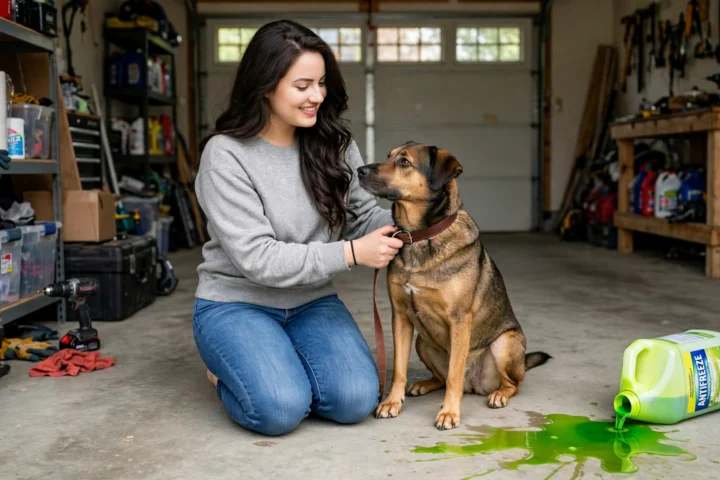
Snow globes hide a quiet danger: some contain ethylene glycol, the antifreeze chemical, sweet-tasting and highly toxic. A broken globe is an emergency call, not a simple cleanup. Our roundup of household items poisonous to dogs shows how many christmas hazards for dogs and cats already live at home.
Guests, Open Doors and Holiday Stress
The front door opens all day, and a stressed pet can slip out in seconds. Keep dogs and cats behind a gate or in a room during arrivals. Check that microchip details and ID tags are current.
Guests bring hazards in handbags and coat pockets: medicines, sugar-free gum, chocolate, and small items to chew. Store bags and coats in a closed room, not on the bed or floor. Remind visitors that table feeding is off limits, however pleading the eyes.
Give pets a calm retreat from christmas hazards for dogs and cats: a bed, water, toys, and a litter box, away from the crowds. Keep feeding and walk times steady. If New Year noise worries your dog, our guide to fear of fireworks in dogs can help you plan ahead.

How to Make Your Home Pet-Safe Before Christmas Day
Do one slow walk-through at pet height before the decorations go up. Crouch in the kitchen, by the tree, and beside the gifts, and look for anything chewable, breakable, or edible. Move christmas hazards for dogs and cats up high or behind closed doors.
Agree on house rules: no table scraps, no chocolate gifts under the tree, lids on bins, doors kept shut. Post your vet’s number and the poison helpline number on the fridge. The AVMA holiday safety advice puts finding emergency care before the holiday first.
Know your nearest 24-hour emergency clinic and save its address in your phone today. Keep your pet’s routine, food, and medicines steady through the visiting season. A plan made calmly beats a panicked midnight search.
Safe Ways to Include Your Dog or Cat in the Celebration
Your pet can share the food, safely. A few bites of plain, cooked, boneless turkey or chicken suit most pets, with no skin, gravy, or seasoning. Keep portions treat-sized, because rich new foods unsettle stomachs even when safe.
Offer festive treats made for pets, not christmas hazards for dogs and cats from the dessert tray. Our dog-friendly gingerbread treats give dogs a celebration of their own; cats enjoy plain cooked fish or a catnip toy. Introduce any new treat slowly and watch the litter box and bowl.
Include pets in the fun: a puzzle toy, a supervised photo by the tree, and an unhurried winter walk. For cold-weather outings, our winter dog care tips help keep dogs warm. Calm company is the gift most pets would choose.
FAQs
Is poinsettia really deadly for cats and dogs?
No. Poinsettia’s fearsome reputation is much bigger than its real risk. The milky sap mildly irritates the mouth and stomach, so a pet that chews a leaf may drool, lick its lips, or vomit once or twice. Most pets recover without treatment, though the plant should still sit out of reach. The plant that truly deserves fear in a cat home is the lily, which can cause kidney failure from a small taste. If your pet eats a large amount of poinsettia, will not stop vomiting, or seems unwell in any way, call your veterinarian for advice. When you are unsure which plant was eaten, photograph it and ask, because identification changes the advice. Christmas hazards for dogs and cats are easier to manage when you know which ones are mild.
My dog ate chocolate — how long before signs show and what do I do?
Do not wait for signs. Chocolate poisoning signs often begin within 6 to 12 hours, and serious signs can build after that, so act as soon as you find the evidence. Call your veterinarian or the ASPCA Animal Poison Control Center at (888) 426-4435, noting a fee may apply. Tell them the type of chocolate, the amount missing, your dog’s weight, and when it happened, and keep the packaging to read from. Dark and baking chocolate are far more dangerous than the same weight of milk chocolate. Do not induce vomiting unless the professional on the phone tells you to. Watch for vomiting, diarrhea, restlessness, a racing heart, tremors, or seizures, and drive to an emergency clinic if any appear. Early advice protects dogs better than home remedies.
Can cats eat a little turkey at Christmas?
Yes, a little plain turkey is fine for most cats. Offer a small bite of cooked, boneless, skinless white meat with no gravy, seasoning, onion, or garlic. Cats are meat eaters by nature, and a treat-sized piece makes a safe festive share for most healthy cats. Keep the portion small, because rich or new foods can upset a cat’s stomach even when the meat itself is safe. Never offer cooked bones, which splinter, and keep stuffing and gravy away, since both often contain onion and garlic. If your cat has kidney disease, a sensitive stomach, or a prescribed diet, skip the treat and ask your vet what suits. A new catnip toy includes your cat in the celebration without any food risk at all.
Is tinsel really dangerous if my cat only chewed a small piece?
Yes, it can be, so call your veterinarian for advice today. Even one strand can act as a linear foreign body once swallowed. One end may anchor while the intestine keeps moving, bunching and sometimes cutting the gut wall from inside. Do not pull any strand you can see in the mouth or at the bottom, because pulling can tear the intestine. Your vet may advise an exam now or careful watching at home, depending on the piece and your cat. Watch closely for the next few days for drooling, gagging, repeated vomiting, hiding, belly pain, or lost appetite, and return at once if any appear. The safest fix is to skip tinsel in cat homes entirely and choose paper garlands instead this year.
Conclusion
Most christmas hazards for dogs and cats are preventable with a few calm changes. Secure the tree, lift the chocolate, skip the tinsel and lilies, and guard the table and trash. The season stays fun when dangerous extras are out of reach.
Start with one walk-through today, not a perfect overhaul. Move one hazard, post the emergency numbers, and share the house rules. Small steps done early beat a midnight emergency visit, and they take minutes once you know what to look for.
Enjoy the lights, the food, and the company, with christmas hazards for dogs and cats handled in advance. Keep routines steady, treats pet-safe, and the retreat room quiet. A relaxed pet lying near the tree is the best sign that your Christmas planning worked beautifully this year.